

Technical Contents
Engineering Guide: Threaded Inserts For 3D Printed Parts
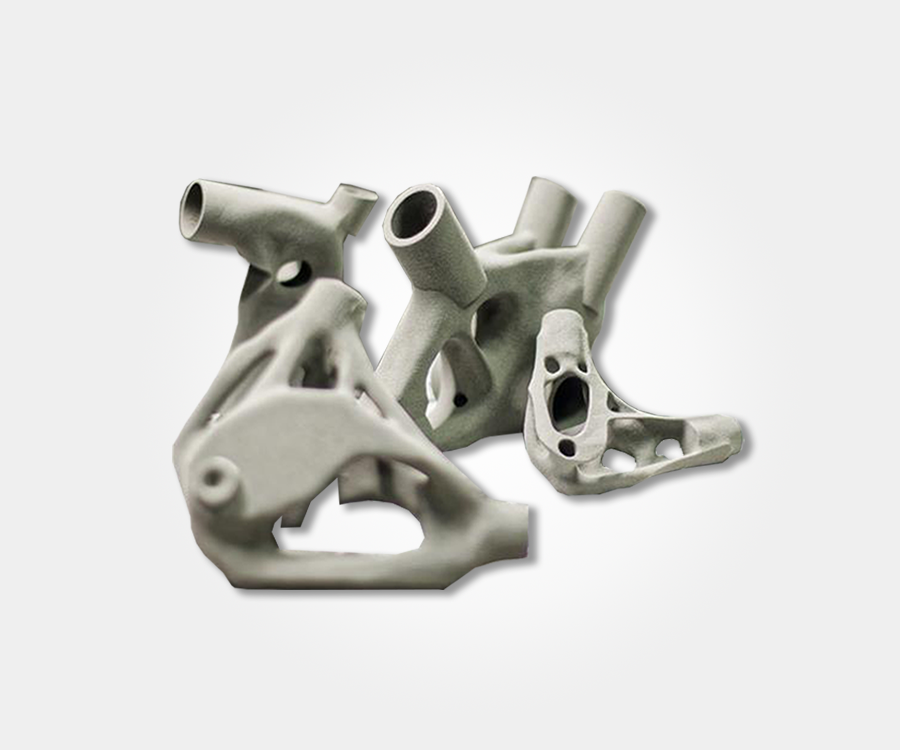
Engineering Insight: Threaded Inserts for 3D Printed Parts
In the rapidly evolving landscape of additive manufacturing, 3D printed components are increasingly deployed in mission-critical industrial applications. While 3D printing offers unparalleled design flexibility and rapid prototyping capabilities, the inherent limitations of polymer-based materials—particularly in tensile strength and thread retention—necessitate the integration of threaded inserts. These small but vital components bridge the gap between design innovation and mechanical reliability, enabling durable, load-bearing connections in otherwise fragile printed structures.
The performance of threaded inserts in 3D printed parts is directly contingent upon precision engineering. Even minor deviations in thread pitch, outer diameter, or insertion depth can compromise joint integrity, leading to thread stripping, torque failure, or misalignment under operational stress. At Wuxi Lead Precision Machinery, we understand that precision is not a luxury—it is a requirement. With over 15 years of experience serving aerospace, defense, and high-performance industrial sectors—including precision components for Olympic-grade equipment and military-grade assemblies—our manufacturing protocols are built on micron-level tolerances and rigorous quality validation.
Our threaded inserts are manufactured using CNC-machined alloy steel, stainless steel, and brass, ensuring optimal strength-to-weight ratios and corrosion resistance. Each insert is designed to be thermally or ultrasonically embedded into the 3D printed substrate, creating a metal-reinforced interface that withstands repeated assembly cycles and dynamic loading. The success of this integration hinges on exact dimensional control, both in the insert itself and in the printed cavity, which must be designed with precise clearance and interference specifications.
We collaborate closely with engineering teams to optimize insert geometry, placement, and installation methodology based on the host material (e.g., ABS, PC, Nylon), load profile, and environmental conditions. Our in-house metrology lab employs coordinate measuring machines (CMM) and optical profilometry to verify conformance to ISO 2768-mK and AS9100 standards, ensuring every batch meets the highest benchmarks for repeatability and reliability.
Below are typical specifications for our standard threaded insert series designed for polymer integration:
| Parameter | Value / Range | Material Options | Tolerance |
|---|---|---|---|
| Thread Size | M2 to M12 | Alloy Steel, 304/316 SS, Brass | ISO 965 Class 6G |
| Outer Diameter | 4.0 mm to 14.0 mm | Customizable | ±0.02 mm |
| Length | 5.0 mm to 25.0 mm | Based on load requirement | ±0.05 mm |
| Insertion Method | Thermal, Ultrasonic, Press-fit | Application-specific | N/A |
| Torque Resistance | Up to 12 Nm (M6, in PC+GF) | Tested per ASTM F1372 | Batch-certified |
| Operating Temperature | -40°C to +150°C (depending on host material) | N/A | Stable performance |
At Lead Precision, we do not merely supply inserts—we deliver engineered fastening solutions backed by proven expertise in high-stakes manufacturing environments. When failure is not an option, precision is the only standard.
Precision Specs & Tolerances
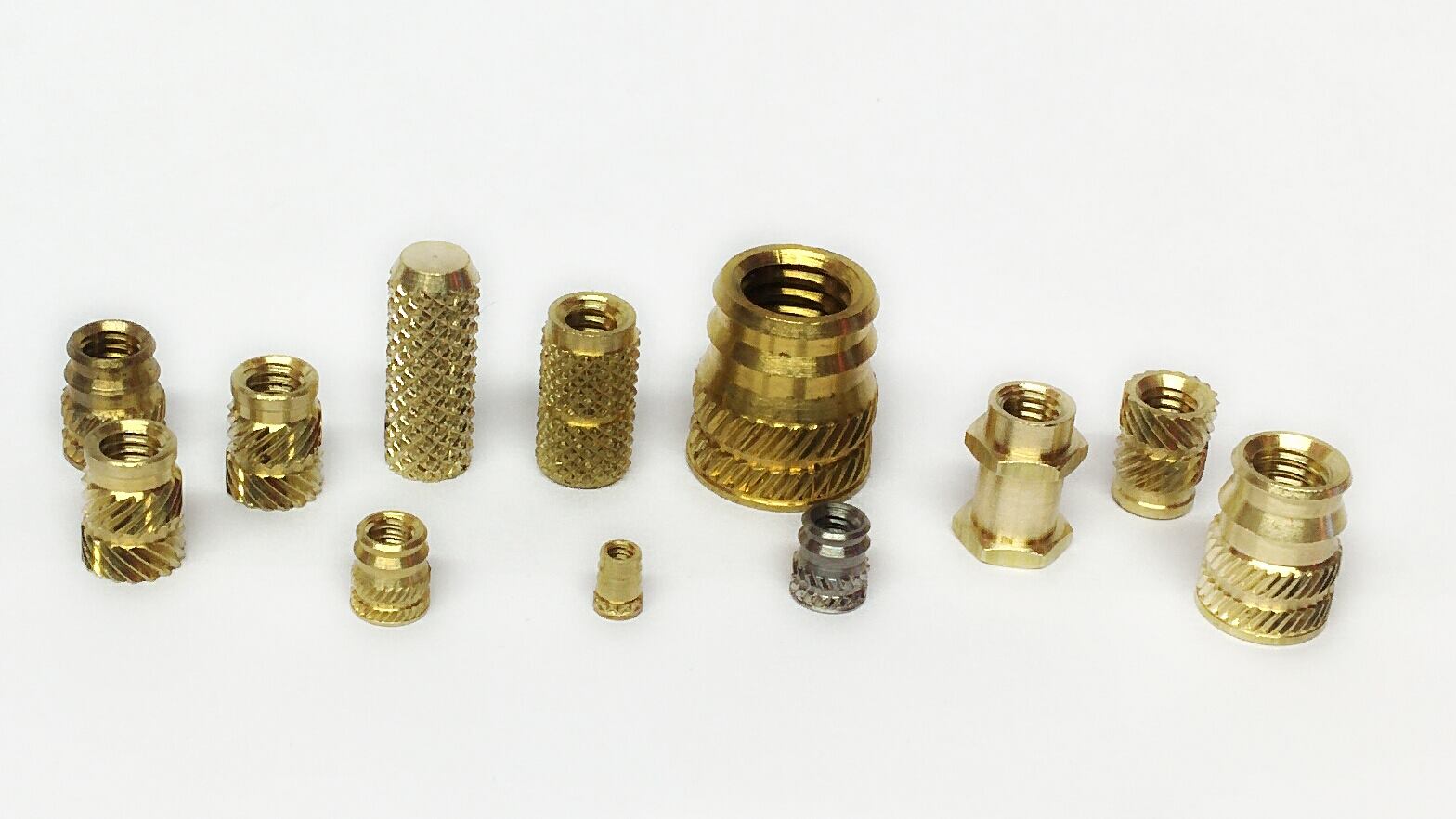
Technical Capabilities: Precision Integration of Threaded Inserts for Additive Manufacturing
Wuxi Lead Precision Machinery delivers mission-critical threaded insert solutions engineered specifically to overcome the inherent limitations of direct threading in 3D printed polymer and composite components. Our expertise lies in manufacturing ultra-precise metal inserts that ensure robust, repeatable, and durable mechanical joints within additively manufactured assemblies, directly addressing the challenges of thread stripping, pull-out, and fatigue failure common in plastic threads. This capability is fundamental for high-value applications in aerospace, medical devices, robotics, and industrial automation where connection integrity is non-negotiable.
Our core manufacturing strength resides in advanced 5-axis CNC milling and turning centers. This technology is essential for producing the complex geometries often required for optimal insert integration into printed parts, including non-orthogonal thread axes, custom knurling patterns for enhanced pull-out resistance, integrated flanges, and precisely angled seating surfaces. Unlike conventional 3-axis machining, 5-axis capability allows us to machine intricate features in a single setup, eliminating cumulative errors from multiple fixturing operations. This results in superior geometric accuracy, exceptional surface finish critical for seal integrity and stress distribution, and significantly reduced lead times for complex insert designs. We machine inserts from a wide range of materials including stainless steel (303, 304, 316), aluminum alloys, brass, and specialty alloys, selected to match the thermal, chemical, and mechanical demands of the end-use environment and the printed substrate.
Rigorous quality control is non-optional for components bearing structural loads. Every batch of threaded inserts undergoes comprehensive dimensional and geometric verification using state-of-the-art Coordinate Measuring Machines (CMM). Our CMM inspection protocol specifically targets critical insert features: thread pitch diameter and functional fit per ASME B1.1 or ISO 965 standards, precise location and perpendicularity of the thread axis relative to mounting surfaces, critical diameters, and overall form. This data-driven validation ensures inserts meet the exacting tolerances required for seamless press-fit, ultrasonic, or thermal installation into pre-machined cavities within 3D printed parts, guaranteeing consistent performance and preventing assembly line disruptions. Full inspection reports are provided with critical production runs.
The following table details the standard precision tolerances achievable for our threaded inserts, reflecting our commitment to dimensional stability and functional reliability:
| Characteristic | Tolerance Range | Applicable Standard |
|---|---|---|
| Positional Tolerance | ±0.025 mm | ISO 2768-mK |
| Thread Pitch Diameter | 6H (Internal) / 6g (External) | ASME B1.1 / ISO 965 |
| Major/Minor Diameters | h9 (External) / H9 (Internal) | ISO 286-2 |
| Concentricity | Ø0.03 mm | ISO 1101 |
| Surface Roughness (Ra) | 0.8 µm (as-machined) | ISO 1302 |
This level of precision, combined with our material science expertise and deep understanding of additive manufacturing constraints, ensures Wuxi Lead inserts provide the secure, long-lasting mechanical interface your 3D printed assemblies demand. We partner with your engineering team to optimize insert design and integration strategy for maximum performance and manufacturability.
Material & Finish Options
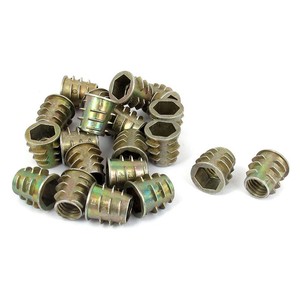
Material selection for threaded inserts in 3D printed parts is a critical decision that directly impacts the performance, durability, and suitability of the final assembly. At Wuxi Lead Precision Machinery, we specialize in custom metal manufacturing solutions tailored to high-precision applications. When integrating threaded inserts into polymer-based 3D printed components, the mechanical demands, environmental exposure, and functional lifespan of the part must guide material and finish selection.
Aluminum is a preferred choice for lightweight applications where strength-to-weight ratio is paramount. 6061-T6 and 7075-T6 aluminum alloys offer excellent machinability, good corrosion resistance, and high tensile strength. These alloys are particularly effective in aerospace, robotics, and consumer electronics where weight reduction is essential. When paired with an anodized finish, aluminum inserts gain enhanced surface hardness and improved resistance to wear and oxidation. Type II and Type III (hardcoat) anodizing are commonly applied, with the latter providing superior durability for high-stress interfaces.
Steel inserts, particularly made from alloy steels such as 4140 or stainless steels like 304 and 316, deliver superior tensile strength and load-bearing capacity. These materials are ideal for industrial machinery, automotive components, and structural assemblies exposed to high torque or vibration. Stainless steel variants offer inherent corrosion resistance, making them suitable for environments with moisture, chemicals, or outdoor exposure. For applications requiring maximum strength and fatigue resistance, heat-treated steel inserts ensure long-term reliability even under repeated assembly and disassembly cycles.
Titanium, specifically Grade 5 (Ti-6Al-4V), represents the pinnacle of performance for extreme conditions. With exceptional strength-to-density ratio and outstanding resistance to corrosion, titanium inserts are used in aerospace, medical devices, and high-performance motorsports. While more challenging to machine and higher in cost, titanium provides unmatched longevity in aggressive environments, including saltwater and elevated temperatures. Its biocompatibility also makes it a preferred option in medical-grade 3D printed instrumentation.
Surface finishing plays a complementary role in performance enhancement. Anodizing aluminum inserts not only improves wear resistance but also allows for color coding, aiding in assembly line identification. The porous nature of the anodized layer can be sealed with nickel acetate or hydrated for maximum corrosion protection. For steel, alternatives such as zinc plating or passivation (for stainless grades) may be used, though anodizing remains exclusive to aluminum.
Below is a comparative overview of key material properties and finishing options for threaded inserts:
| Material | Tensile Strength (MPa) | Density (g/cm³) | Corrosion Resistance | Common Finishes | Typical Applications |
|---|---|---|---|---|---|
| Aluminum 6061-T6 | 310 | 2.7 | Moderate (improved with anodizing) | Type II/III Anodizing | Drones, consumer electronics |
| Steel 4140 (HT) | 950–1200 | 7.85 | Low (requires plating) | Zinc Plating, Passivation | Industrial machinery, tooling |
| Stainless 316 | 620 | 8.0 | High | Passivation, Electropolish | Marine, medical, food processing |
| Titanium Ti-6Al-4V | 900–950 | 4.43 | Very High | None (native oxide layer) | Aerospace, defense, medical implants |
Selecting the optimal material and finish requires a balance of mechanical requirements, environmental factors, and cost efficiency. Wuxi Lead Precision Machinery supports OEMs with material consultation, prototyping, and volume production of custom threaded inserts engineered for integration into advanced 3D printed systems.
Manufacturing Process & QC
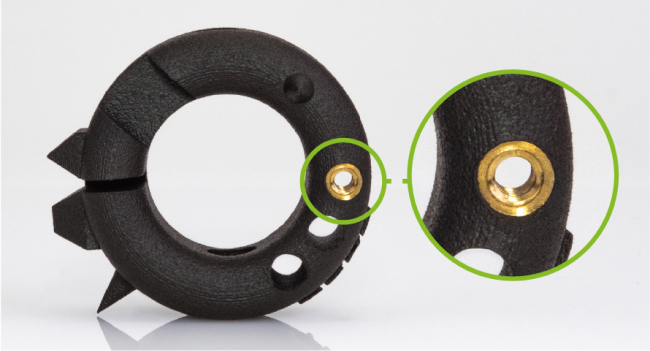
Precision Threaded Insert Production: From Design to Zero-Defect Delivery
Threaded inserts are critical reinforcement points in 3D printed assemblies, transforming fragile plastic threads into robust, reusable metal interfaces. At Wuxi Lead Precision Machinery, we execute a rigorously controlled production process ensuring every insert meets aerospace and medical-grade reliability standards. Our methodology eliminates failure points inherent in standard solutions, guaranteeing structural integrity under high torque and thermal cycling.
The process begins with collaborative design engineering. We analyze your 3D printed part geometry, material properties, and load requirements to select the optimal insert type, material, and installation method. Finite element analysis (FEA) validates stress distribution around the insert cavity, preventing print distortion or pull-out. Critical parameters like thread engagement depth, interference fit tolerance, and thermal expansion coefficients are precisely calculated. This phase prevents 95% of potential field failures by addressing root causes before metal touches machine.
Prototyping transitions theory into physical validation. Using our 5-axis CNC Swiss lathes, we produce 10-20 insert samples within 72 hours. Each sample undergoes destructive and non-destructive testing: torque testing to failure, thermal cycling between -40°C to 150°C, and X-ray computed tomography (CT) scanning to verify internal geometry and absence of voids. We install prototypes into your actual 3D printed parts using your specified method (ultrasonic, thermal, or press-fit) and validate performance against your application’s functional requirements. Only when all metrics exceed specifications do we approve the design for mass production.
Mass production implements our Zero Defects protocol through integrated process control. Raw materials undergo incoming inspection with certified mill test reports. CNC machining occurs on dedicated cells with real-time in-process gauging; every dimension is verified after roughing, semi-finishing, and final passes. Thread quality is 100% inspected using optical comparators and functional go/no-go gauges. Surface treatments like anodizing or passivation are monitored via salt spray testing per ASTM B117. Final inserts are cleaned in ultrasonic baths and packaged in ESD-safe containers. Batch traceability links each insert to machine parameters, operator logs, and inspection data. Statistical process control (SPC) charts monitor critical dimensions continuously, triggering automatic machine recalibration if trends approach tolerance limits.
This closed-loop system ensures consistent performance. Below are key specifications defining our threaded inserts for 3D printed parts:
| Parameter | Specification | Testing Standard |
|---|---|---|
| Material Options | 303/304/316 Stainless Steel, Brass, Aluminum 6061 | ASTM A276, ASTM B16 |
| Tolerance (Ø) | ±0.005 mm | ISO 2768-mk |
| Thread Class | 6H (Internal), 6g (External) | ISO 965-1 |
| Insertion Torque | 0.8-1.2 Nm (M3 in ABS) | ASTM D638 |
| Pull-Out Strength | ≥ 800 N (M3 in PLA) | ISO 14577 |
| Surface Roughness | Ra ≤ 0.8 µm | ISO 4287 |
Wuxi Lead’s process delivers inserts that integrate seamlessly with your 3D printed components, eliminating assembly failures and costly rework. We partner with you to transform prototyping insights into flawless production, ensuring every insert performs exactly as engineered. Contact our engineering team to optimize your next threaded insert application.
Why Choose Wuxi Lead Precision
Partner with Lead Precision for Engineered Threaded Insert Solutions in 3D Printed Assemblies
When precision, durability, and performance are non-negotiable in your 3D printed components, integrating high-quality threaded inserts is not just an enhancement — it’s a necessity. At Wuxi Lead Precision Machinery, we specialize in custom metal manufacturing solutions designed to bridge the gap between additive manufacturing flexibility and industrial-grade mechanical reliability. Our engineered threaded inserts are tailored for integration into polymer and composite 3D printed parts, delivering robust internal threads capable of withstanding repeated assembly, high torque loads, and demanding environmental conditions.
We understand that 3D printed parts, while excellent for rapid prototyping and complex geometries, often lack the mechanical integrity required for permanent fastening. Standard tapping or self-threading methods can lead to thread stripping, creep, or premature failure. Our threaded inserts solve these challenges by introducing a metal interface within the printed matrix, ensuring long-term structural integrity and service life. Whether your application involves aerospace enclosures, medical device housings, robotics components, or industrial tooling, our inserts provide the secure, reusable threading you demand.
Our manufacturing process combines precision CNC machining, cold forming, and optional heat treatment to produce inserts from high-performance materials including stainless steel, brass, and aluminum alloys. Each insert is dimensionally verified to ISO 2768-mK and produced under strict quality control protocols. We offer both standard and fully custom designs — adjusting outer knurl profiles, thread pitches (metric and imperial), insertion methods (ultrasonic, thermal, or press-fit), and anti-rotation features to match your specific 3D printed part geometry and functional requirements.
Collaborating with Wuxi Lead Precision means working with a partner who understands the nuances of hybrid manufacturing. We support your engineering team from concept to production, offering DFM analysis, material recommendations, and rapid prototyping services to ensure seamless integration. Our global clients rely on us not only for product quality but for responsive technical support and on-time delivery, backed by ISO 9001-certified processes.
For high-performance threaded inserts engineered to elevate your 3D printed parts, contact us today. Let our experts help you optimize strength, longevity, and assembly efficiency.
| Specification | Details |
|---|---|
| Material Options | Stainless Steel (304, 316), Brass (C3604), Aluminum (6061, 7075) |
| Thread Standards | M2 to M12 (metric), #2-56 to 1/4-20 (imperial), custom pitches |
| Insertion Method | Ultrasonic, thermal, press-fit, adhesive-bonded |
| Outer Profile | Knurled, barbed, flanged, or custom geometry |
| Tolerance | ±0.05 mm (standard), tighter on request |
| Finishes | Plain, nickel-plated, black oxide, anodized (Al) |
| Compliance | ISO 9001:2015, RoHS, REACH |
Contact us at [email protected] to discuss your next project with Wuxi Lead Precision Machinery — where precision metal meets additive innovation.
⚙️ Precision Cost Estimator
Estimate relative manufacturing effort based on tolerance.