

Technical Contents
Engineering Guide: Steel Laser Cutting
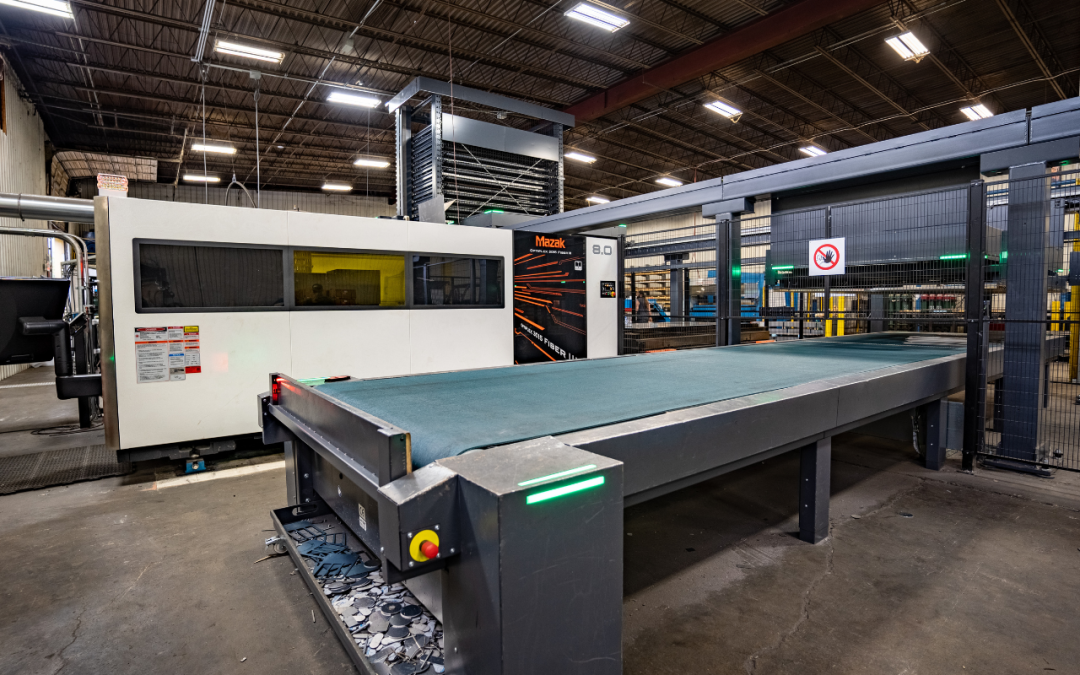
Engineering Insight: Steel Laser Cutting – The Role of Precision in Advanced Manufacturing
In the realm of modern sheet metal fabrication, steel laser cutting stands as a cornerstone technology, enabling manufacturers to achieve levels of accuracy and repeatability unattainable through traditional mechanical methods. At Wuxi Lead Precision Machinery, we recognize that precision is not merely a performance metric—it is a foundational requirement for industries where failure is not an option. From aerospace components to defense systems and large-scale infrastructure, the integrity of a final product begins with the accuracy of its cut.
Steel, as a material, presents unique challenges in laser processing due to its thermal conductivity, reflectivity, and varying alloy compositions. High-carbon and stainless steels, in particular, demand exact control over laser power, cutting speed, assist gas selection, and beam focus. Even minor deviations can result in micro-cracks, dross formation, or dimensional inaccuracies that compromise structural performance. This is where advanced laser systems, engineered with micron-level tolerance, become indispensable.
Our engineering team at Wuxi Lead has spent over a decade refining laser cutting processes for mission-critical applications. Our involvement in projects tied to Olympic-standard construction and military-grade equipment underscores our commitment to precision under extreme specifications. These high-stakes environments require not only flawless dimensional accuracy but also full traceability, material consistency, and compliance with international standards such as ISO 9001 and GB/T 19001.
Precision in steel laser cutting is not achieved through hardware alone. It is the result of integrated engineering—combining high-performance fiber lasers, rigid machine kinematics, real-time monitoring systems, and intelligent software algorithms. Our machines utilize adaptive control systems that dynamically adjust parameters based on material feedback, ensuring consistent edge quality across variable thicknesses and grades of steel.
Furthermore, precision extends beyond the cutting phase. It influences downstream operations such as bending, welding, and assembly. A deviation of even 0.1 mm in a cut profile can cascade into misalignment in final assembly, increasing scrap rates and production costs. By maintaining tight tolerances throughout the fabrication process, Wuxi Lead enables our clients to achieve higher throughput, reduced rework, and superior end-product reliability.
We understand that our clients operate in competitive, high-demand sectors where innovation and dependability go hand in hand. Our laser cutting solutions are designed not only to meet today’s standards but to anticipate tomorrow’s challenges—delivering precision that supports the evolution of advanced manufacturing.
| Specification | Detail |
|---|---|
| Laser Type | Fiber Laser |
| Power Range | 1 kW – 12 kW |
| Cutting Thickness (Mild Steel) | Up to 25 mm |
| Positioning Accuracy | ±0.03 mm/m |
| Repeatability | ±0.02 mm |
| Max Cutting Speed | 100 m/min (thin sheet) |
| Control System | CNC with Real-Time Monitoring |
| Supported Materials | Mild Steel, Stainless Steel, Alloy Steel |
Precision Specs & Tolerances
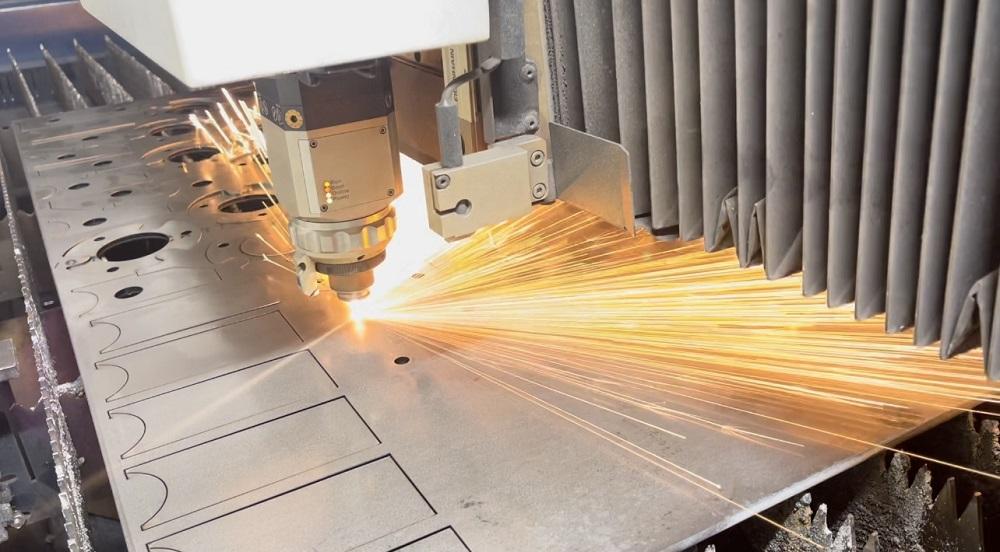
Technical Capabilities: Precision Steel Laser Cutting
Wuxi Lead Precision Machinery delivers advanced steel fabrication through state-of-the-art 5-axis CNC laser cutting systems. Our technical foundation centers on high-power fiber laser platforms integrated with true 5-axis motion control, enabling the precise processing of complex 3D geometries in structural steel, stainless steel, and alloy components. This capability extends far beyond flat sheet processing, allowing us to cut intricate contours, compound angles, and internal features on tubular sections, extrusions, and formed parts in a single setup. Material thickness ranges from 0.5 mm up to 25 mm for carbon steel and 20 mm for stainless steel, maintaining exceptional edge quality and minimal heat-affected zones critical for structural integrity and subsequent welding or finishing operations. The elimination of multiple fixturing stages inherent in 5-axis processing significantly reduces cumulative error, scrap rates, and overall production lead times for complex assemblies.
Rigorous quality control is non-negotiable in our high-precision manufacturing environment. Every critical dimension and geometric feature undergoes verification using calibrated Coordinate Measuring Machines (CMM). Our Zeiss and Hexagon CMM systems provide micron-level accuracy for first-article inspection and batch sampling, ensuring dimensional compliance against stringent customer engineering drawings and international standards. This systematic inspection protocol validates not only linear dimensions but also critical form tolerances, positional accuracy, and angular relationships defined by the 5-axis cutting process. The resulting data feeds directly into our statistical process control (SPC) framework, guaranteeing consistent dimensional repeatability and enabling proactive process optimization for sustained quality output. Our commitment to measurable precision ensures components integrate seamlessly into final assemblies, reducing downstream fit-up issues and rework costs for our clients.
The following table details our standard and precision tolerance capabilities for steel laser cutting, reflecting the performance achievable under controlled production conditions with optimal material and geometry. These values represent our typical process capability, with tighter tolerances attainable for specific applications through enhanced process controls.
| Material Thickness | Linear Tolerance (Standard) | Linear Tolerance (Precision) | Angular Tolerance | Process Capability Index (CpK) |
|---|---|---|---|---|
| ≤ 3.0 mm | ± 0.10 mm | ± 0.05 mm | ± 0.25° | ≥ 1.33 |
| 3.1 – 10.0 mm | ± 0.15 mm | ± 0.08 mm | ± 0.30° | ≥ 1.33 |
| 10.1 – 20.0 mm | ± 0.20 mm | ± 0.10 mm | ± 0.40° | ≥ 1.33 |
| > 20.0 mm | ± 0.25 mm | ± 0.15 mm | ± 0.50° | ≥ 1.33 |
These tolerances exceed standard ISO 2768 medium-class requirements and are validated through our integrated CMM inspection regime. Achieving precision tolerances requires consideration of material grade, part geometry complexity, and specific feature location; our engineering team collaborates closely with clients during the design-for-manufacturability phase to optimize parts for laser cutting and ensure target specifications are consistently met within production realities. This disciplined approach to technical capability and quality assurance underpins Wuxi Lead’s reputation for delivering mission-critical steel components with unwavering reliability.
Material & Finish Options
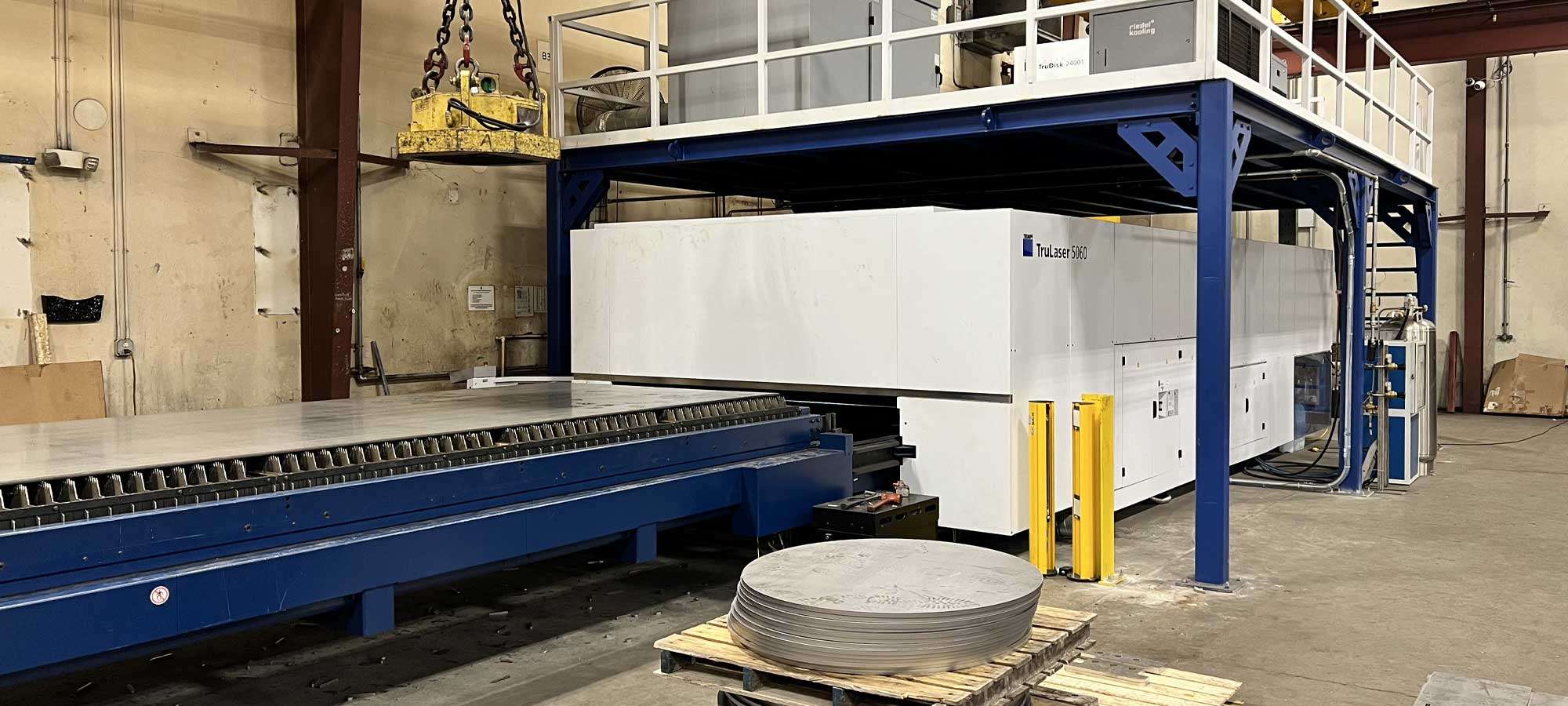
Material Selection for High-Precision Steel Laser Cutting in Sheet Metal Fabrication
Selecting the appropriate base material is critical when planning high-precision laser cutting operations, particularly in demanding industrial sectors such as aerospace, automotive, and medical device manufacturing. At Wuxi Lead Precision Machinery, we specialize in advanced steel laser cutting technologies that deliver micron-level accuracy and clean edge finishes across a range of engineering-grade metals. While the term “steel laser cutting” often refers broadly to carbon and stainless steel processing, our systems are equally optimized for aluminum and titanium—materials that offer unique performance benefits in lightweight and corrosion-resistant applications.
Carbon steel remains the most widely used material in sheet metal fabrication due to its strength, weldability, and cost efficiency. Low-carbon variants such as Q235 and Q345 are ideal for structural components, enclosures, and general machinery parts. For enhanced corrosion resistance and durability, stainless steel grades like 304 and 316 are preferred, especially in food processing, pharmaceutical, and marine environments. These materials respond exceptionally well to fiber laser cutting, producing smooth, oxide-free edges with minimal dross.
Aluminum alloys, including 5052, 6061, and 7075, are increasingly specified for applications requiring high strength-to-weight ratios and excellent thermal or electrical conductivity. While aluminum presents higher reflectivity and thermal conductivity—posing challenges for laser processing—our high-power fiber laser systems are equipped with anti-reflective safeguards and dynamic focus control to ensure consistent cut quality. Aluminum’s natural oxide layer provides inherent corrosion resistance, but for enhanced surface performance, post-processing through anodizing is recommended.
Anodizing is an electrochemical process that thickens the natural oxide layer on aluminum, significantly improving wear resistance, corrosion protection, and aesthetic finish. It also allows for color coding through dye integration, which is valuable in assembly and maintenance workflows. While anodizing does not apply to steel or titanium in the same context, titanium can undergo similar surface treatments such as passivation or nitriding to enhance surface hardness.
Titanium and its alloys, such as Grade 2 and Ti-6Al-4V, are used in extreme environments where strength at elevated temperatures, biocompatibility, and resistance to fatigue are paramount. Though more costly and challenging to cut due to its low thermal conductivity and high reactivity at elevated temperatures, titanium can be precisely processed using nitrogen-assisted laser cutting to prevent oxidation and maintain material integrity.
The table below summarizes key material properties and recommended laser processing parameters for optimal results.
| Material | Common Grades | Thickness Range (mm) | Laser Type | Assist Gas | Typical Applications |
|---|---|---|---|---|---|
| Carbon Steel | Q235, Q275 | 0.5 – 25 | Fiber Laser | Oxygen | Machinery frames, structural parts |
| Stainless Steel | 304, 316 | 0.5 – 20 | Fiber Laser | Nitrogen | Food equipment, medical devices |
| Aluminum | 5052, 6061, 7075 | 0.5 – 15 | Fiber Laser | Nitrogen | Aerospace, electronics enclosures |
| Titanium | Grade 2, Ti-6Al-4V | 0.5 – 12 | Fiber Laser | Argon/Nitrogen | Aerospace, medical implants |
At Wuxi Lead Precision Machinery, we support clients in selecting the optimal material and finishing process based on functional requirements, environmental exposure, and production volume. Our integrated fabrication solutions ensure that every cut meets the highest standards of precision and repeatability.
Manufacturing Process & QC
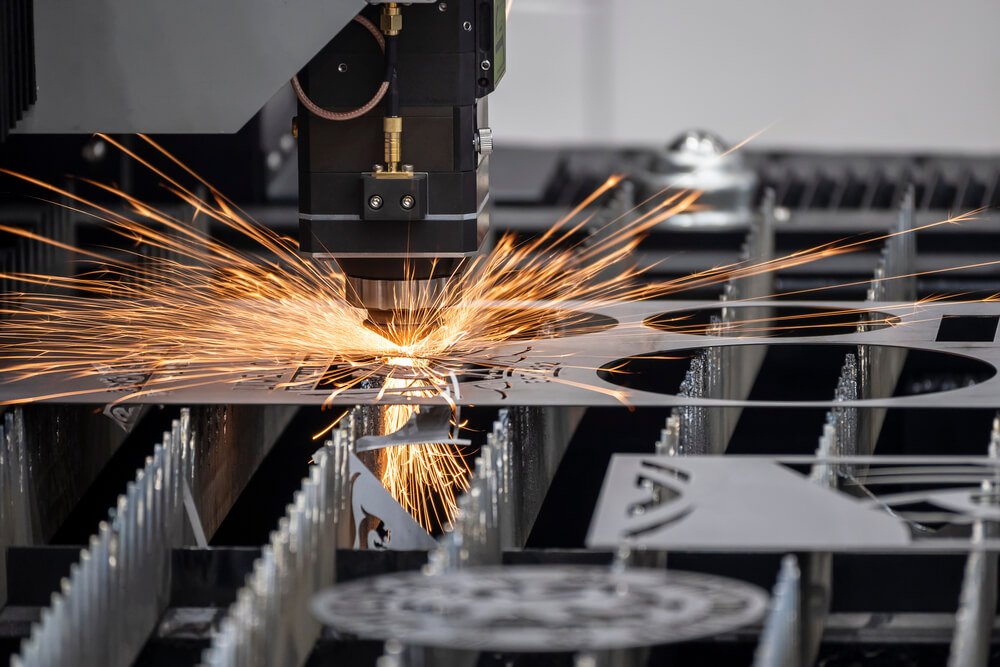
Steel Laser Cutting: Precision Engineering from Design to Zero-Defect Delivery
At Wuxi Lead Precision Machinery, steel laser cutting transcends basic fabrication—it is a rigorously controlled continuum where design intent, prototyping validation, and mass production converge under uncompromising quality protocols. Our process begins with digital design optimization, where CAD/CAM engineers collaborate with clients to refine geometries for manufacturability. Material grain orientation, thermal distortion modeling, and kerf compensation are integrated at this stage, ensuring the digital blueprint accounts for real-world physics. Nesting algorithms maximize sheet utilization while minimizing heat-affected zones, directly reducing waste and cost. This phase concludes with a digitally signed-off virtual prototype, eliminating ambiguities before metal meets laser.
Prototyping transitions theory into tangible validation. Using identical production-grade fiber lasers, we cut initial samples under full production parameters. Each prototype undergoes metrology-grade inspection: CMM validation confirms dimensional accuracy within ±0.05 mm, while cross-sectional analysis verifies edge squareness and absence of dross. Material properties are stress-tested to ensure laser parameters do not compromise structural integrity. Client feedback loops are compressed into 72-hour cycles, with engineering teams adjusting power modulation, assist gas pressure, or cutting speed based on empirical data—not assumptions. Only when every tolerance band is satisfied does the design advance.
Mass production leverages this validated foundation for zero-defect output. Our automated production cells feature real-time process monitoring: thermal cameras track melt pool stability, while in-line vision systems detect micro-burrs or edge deviations at 0.1 mm resolution. Closed-loop feedback dynamically adjusts laser focus and feed rates, compensating for material batch variations. Every sheet is traceable via QR codes, linking cut paths to machine calibration logs and operator certifications. Statistical process control (SPC) charts monitor critical parameters like positional repeatability and edge roughness, triggering automatic line stops if trends approach tolerance limits. This system ensures batch-to-batch consistency, with first-pass yield rates exceeding 99.8%.
The technical foundation for this reliability is our laser platform’s precision engineering. Key specifications guaranteeing performance are detailed below:
| Parameter | Specification | Industrial Impact |
|---|---|---|
| Laser Source | IPG Photonics Fiber, 6 kW | Clean cuts up to 25 mm mild steel; minimal dross |
| Positioning Accuracy | ±0.03 mm/m | Critical for assembly-fit components |
| Repeatability | ±0.01 mm | Ensures batch uniformity |
| Max. Cutting Speed | 100 m/min (1 mm stainless) | Optimizes throughput without quality loss |
| Material Thickness | 0.5–30 mm (mild steel) | Broad application coverage |
| Automation Integration | FMS with 10-pallet storage | Enables lights-out production |
Wuxi Lead’s process eliminates the traditional trade-off between precision and scale. By embedding quality at every phase—from digital design validation through closed-loop production control—we deliver steel components where zero defects are not an aspiration but a measurable outcome. Partner with us to transform your sheet metal requirements into flawlessly executed reality.
Why Choose Wuxi Lead Precision
Partner with Lead Precision for Unmatched Steel Laser Cutting Excellence
At Wuxi Lead Precision Machinery, we don’t just manufacture CNC laser cutting machines—we deliver precision engineering solutions that redefine productivity in modern sheet metal fabrication. As a global leader based in China, our mission is to empower forward-thinking manufacturers with cutting-edge steel laser cutting technology that ensures accuracy, speed, and long-term reliability. Whether you’re producing components for aerospace, automotive, construction, or industrial machinery, partnering with us means gaining a strategic advantage through innovation.
Our steel laser cutting systems are engineered for performance under the most demanding production environments. Utilizing high-power fiber laser sources, advanced motion control, and intelligent software integration, our machines deliver clean, burr-free cuts across a wide range of steel thicknesses—from thin gauge sheets to heavy-duty structural plates. With micron-level precision and minimal heat-affected zones, our technology ensures superior edge quality, reducing or eliminating the need for secondary finishing operations.
We understand that every manufacturing operation has unique requirements. That’s why our engineering team works closely with clients to tailor machine configurations to specific production needs. From integrated automation and material handling systems to custom work envelopes and safety enclosures, our solutions are built to scale with your business. Our commitment extends beyond equipment supply; we offer comprehensive training, installation support, and 24/7 technical service to ensure maximum uptime and operational efficiency.
Choosing Wuxi Lead Precision Machinery means investing in a future-ready fabrication process. Our machines are designed with energy efficiency, operator ergonomics, and Industry 4.0 compatibility in mind, enabling seamless integration into smart factory ecosystems. With a proven track record across Europe, North America, Southeast Asia, and beyond, we’ve earned the trust of Tier-1 suppliers and mid-sized workshops alike.
To learn how our steel laser cutting solutions can transform your production capabilities, contact us today. Our engineering and sales team is ready to provide detailed technical consultations, sample cut analysis, and customized quotations based on your material types, volumes, and precision requirements.
Reach out to us at [email protected] and take the first step toward precision, productivity, and performance. Let Wuxi Lead Precision Machinery be your long-term partner in advanced sheet metal fabrication.
| Specification | Details |
|---|---|
| Laser Type | High-Power Fiber Laser |
| Power Range | 1 kW – 12 kW |
| Max Cutting Speed | Up to 120 m/min (thin sheet) |
| Positioning Accuracy | ±0.03 mm/m |
| Material Compatibility | Mild Steel, Stainless Steel, Carbon Steel, Alloy Steel |
| Max Sheet Size | 1500 mm × 3000 mm (standard), up to 4000 mm × 12000 mm (custom) |
| Control System | Siemens, Schneider, or Custom CNC Interface |
| Automation Options | Integrated loading/unloading, pallet changers, robotic handling |
| Cooling System | Closed-loop chiller with temperature control |
| Operating Environment | 5°C – 40°C, humidity < 85% (non-condensing) |
⚙️ Precision Cost Estimator
Estimate relative manufacturing effort based on tolerance.