

Technical Contents
Engineering Guide: Silicone Turkey Mold
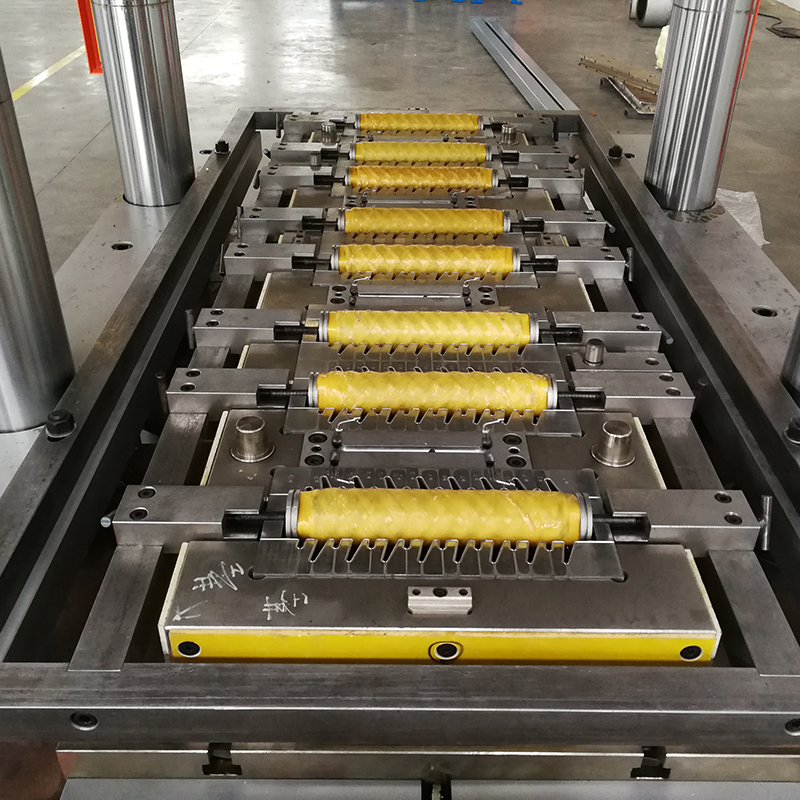
Engineering Insight: Precision in Silicone Turkey Mold Manufacturing
In the realm of custom metal manufacturing, the production of tooling for silicone casting—such as silicone turkey molds—demands a level of precision often underestimated in consumer-facing discussions. While the end product may appear simple, the mold that shapes it is the result of complex engineering, advanced material science, and micron-level accuracy. At Wuxi Lead Precision Machinery, we understand that the integrity, repeatability, and longevity of a silicone mold are directly tied to the precision of its metal counterpart. This principle holds true whether producing kitchenware or components for Olympic-standard equipment.
The silicone turkey mold, commonly used in food-grade and decorative applications, requires a master mold that ensures dimensional accuracy, surface finish fidelity, and thermal stability. Any deviation in cavity geometry or surface texture will be replicated in every cast, leading to inconsistencies in product quality, fit, and appearance. The metal mold base—typically machined from aluminum or stainless steel—must be manufactured with tight tolerances, often within ±0.02 mm, to support high-cycle silicone molding processes. This is where advanced CNC machining, multi-axis milling, and precision EDM (Electrical Discharge Machining) become critical.
At Wuxi Lead Precision Machinery, our experience extends far beyond consumer goods. We have delivered mission-critical components for military-grade systems and precision tooling used in Olympic athletic equipment, where failure is not an option. These high-stakes applications have honed our approach to quality control, material selection, and process validation—expertise we apply equally to every project, including silicone mold tooling. Our engineers utilize 3D scanning and coordinate measuring machines (CMM) to verify mold geometry, ensuring that every contour of the turkey shape—from the drumstick curvature to the breast definition—is reproduced with absolute fidelity.
Thermal management is another critical factor. Silicone molding often involves repeated heating and cooling cycles, and the metal mold must dissipate heat uniformly to prevent warping or premature wear. Our designs incorporate optimized cooling channels and stress-relieved materials to extend service life, even under high-volume production.
We recognize that clients may not always perceive the engineering depth behind a seemingly simple product. However, it is this unseen precision that separates mass-produced molds from those engineered for performance, consistency, and durability.
| Specification | Detail |
|---|---|
| Material Options | 6061-T6 Aluminum, 304/316 Stainless Steel, H13 Tool Steel |
| Tolerance | ±0.02 mm typical, down to ±0.005 mm for critical features |
| Surface Finish | Ra ≤ 0.8 µm (polished to mirror or textured as required) |
| Machining Methods | 5-axis CNC milling, Wire EDM, CNC turning |
| Quality Control | CMM inspection, 3D laser scanning, first-article reporting |
| Applications | Food-grade molds, decorative casting, industrial prototyping |
Precision is not a luxury—it is a necessity. At Wuxi Lead Precision Machinery, we bring military and Olympic-grade engineering discipline to every mold we produce, ensuring your silicone turkey mold performs flawlessly, cycle after cycle.
Precision Specs & Tolerances
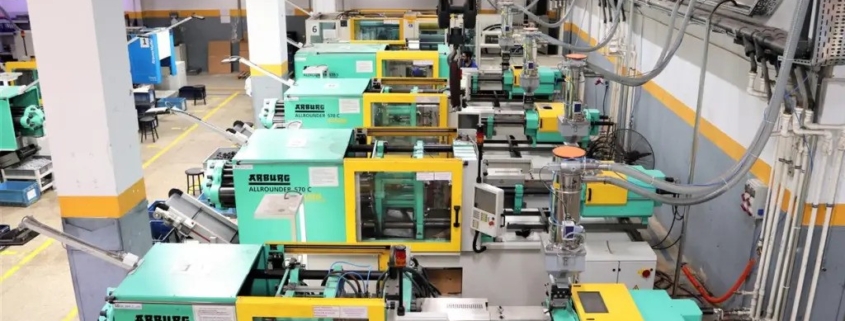
Technical Capabilities for Precision Silicone Mold Manufacturing
Wuxi Lead Precision Machinery delivers advanced manufacturing solutions specifically engineered for high-integrity silicone injection molds, including complex seasonal items like the silicone turkey mold. Our core strength lies in integrating state-of-the-art multi-axis machining with rigorous metrology to ensure every cavity and core meets the exacting demands of food-grade silicone production. This precision is non-negotiable for achieving clean part release, consistent detail replication, and extended mold service life under thermal cycling.
Our primary machining platform consists of Haas UMC-750 and DMG MORI DMU 5-axis vertical machining centers. These systems provide the simultaneous multi-axis motion essential for creating the intricate undercuts, organic contours, and fine surface textures characteristic of detailed turkey molds. Traditional 3-axis machining cannot achieve the seamless transitions required for realistic feather patterns or the complex cavity geometry without secondary operations, introducing potential alignment errors. Our 5-axis capability eliminates these risks, machining critical features in a single setup. This ensures superior micro-geometric fidelity and significantly reduces cumulative tolerances across the mold assembly. All machining operations utilize high-precision carbide tooling and optimized cutting strategies for hardened tool steels like H13 and S136, achieving surface finishes down to Ra 0.4 µm directly from the machine, minimizing post-processing requirements.
Dimensional integrity is validated through a comprehensive quality control protocol centered on Zeiss CONTURA G3 Coordinate Measuring Machines (CMM). Every critical feature of the mold base, cavities, and cores undergoes full 3D scanning against the original CAD model. This is not limited to simple point checks; our CMM routines verify complex form tolerances, positional accuracy of ejector pins and cooling channels, and the critical matching of cavity/core interfaces. This level of inspection is vital for preventing silicone flash, ensuring uniform wall thickness in the final turkey product, and guaranteeing perfect alignment during high-pressure injection cycles. Our process achieves exceptional dimensional repeatability, forming the bedrock of reliable mass production for seasonal demand surges.
The following table details the typical tolerance capabilities we achieve for silicone turkey mold components, reflecting our commitment to exceeding industry standards for this application:
| Feature Type | Tolerance Range | Application Relevance for Silicone Turkey Mold |
|---|---|---|
| Cavity/ Core Profile | ±0.01 mm | Ensures accurate replication of intricate feather details and surface texture; prevents silicone leakage (flash) |
| Critical Dimensions | ±0.005 mm | Guarantees precise fit between mold halves and inserts; maintains consistent part wall thickness |
| Positional Tolerance | ±0.008 mm | Ensures perfect alignment of ejector pins, cooling lines, and parting surfaces; critical for clean part release |
| Surface Finish (Ra) | 0.4 – 0.8 µm | Directly impacts the visual quality and non-stick properties of the final silicone turkey; reduces release force |
| Flatness (Parting) | 0.005 mm/m | Eliminates flash lines; ensures uniform clamping pressure across the entire mold face |
This combination of advanced 5-axis CNC machining and stringent CMM-based quality control delivers molds that consistently produce high-fidelity silicone turkey products meeting stringent food safety requirements. We understand the critical link between mold precision and final part quality in seasonal manufacturing. Partner with Wuxi Lead to ensure your silicone turkey production runs are characterized by zero defects, maximum uptime, and unparalleled detail reproduction, directly impacting your brand reputation and profitability. Contact our engineering team to discuss your specific tolerance and volume requirements.
Material & Finish Options
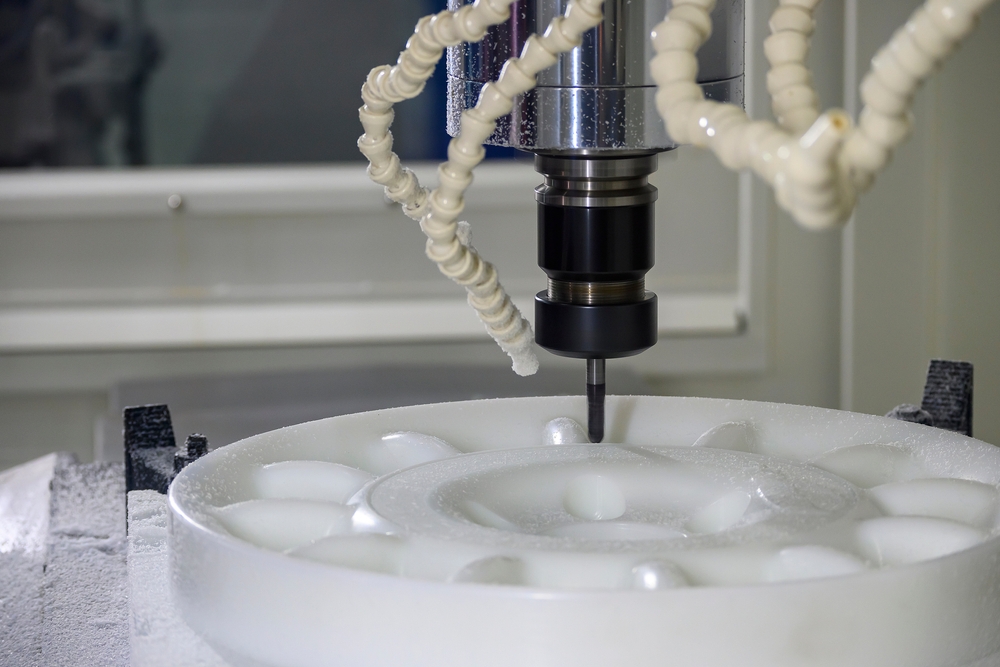
Material Selection for Silicone Turkey Mold Tooling
When manufacturing precision tooling for silicone turkey molds, material selection plays a critical role in ensuring mold longevity, dimensional accuracy, and production efficiency. At Wuxi Lead Precision Machinery, we specialize in custom metal manufacturing solutions tailored to high-volume and high-precision applications. For silicone molding, the primary materials considered are aluminum, steel, and titanium—each offering distinct advantages depending on production volume, part complexity, and thermal performance requirements.
Aluminum is widely used for low- to medium-volume production due to its excellent thermal conductivity and ease of machining. It allows for faster cycle times by facilitating rapid heat transfer during the curing process. Additionally, aluminum’s lightweight nature reduces handling strain and lowers overall tooling costs. However, its lower hardness makes it less suitable for extended production runs or abrasive silicone compounds.
Steel, particularly tool steel grades such as H13 or P20, is the preferred choice for high-volume manufacturing. With superior hardness and wear resistance, steel molds maintain dimensional stability over tens of thousands of cycles. While steel has lower thermal conductivity than aluminum, proper mold design with optimized cooling channels can mitigate this limitation. Steel is also more resistant to deformation under high clamping forces, making it ideal for automated silicone injection systems.
Titanium offers exceptional strength-to-density ratio and corrosion resistance, making it suitable for specialized applications where weight reduction and durability are critical. While not commonly used for full mold bodies due to cost and machining complexity, titanium is often applied in mold inserts or core components exposed to aggressive environments or high mechanical stress. Its biocompatibility also makes it a candidate for molds used in food-grade or medical-grade silicone production.
Surface finishing is equally important in mold performance. Anodizing, particularly hard anodizing, is a recommended finish for aluminum molds. This electrochemical process enhances surface hardness, improves wear resistance, and increases corrosion protection. A properly anodized layer can extend the service life of aluminum molds significantly while maintaining dimensional precision. For steel molds, nitriding or chrome plating is typically preferred, though anodizing is not applicable due to material composition.
Below is a comparative overview of key material properties relevant to silicone turkey mold applications.
| Material | Hardness (HRC) | Thermal Conductivity (W/m·K) | Typical Mold Life (cycles) | Common Finishes | Best Use Case |
|---|---|---|---|---|---|
| Aluminum (6061-T6) | 15–20 | 167 | 10,000 – 50,000 | Hard Anodizing | Medium-volume, rapid prototyping |
| Steel (H13) | 48–52 | 35 | 100,000+ | Nitriding, Chrome Plating | High-volume production |
| Titanium (Grade 5) | 35–40 | 7.2 | 50,000 – 100,000 | TiN Coating, Passivation | Specialized, corrosive environments |
Selecting the right material and finish requires a comprehensive understanding of production demands and operational conditions. At Wuxi Lead Precision Machinery, we support clients in making informed decisions by combining material science expertise with precision manufacturing capabilities.
Manufacturing Process & QC
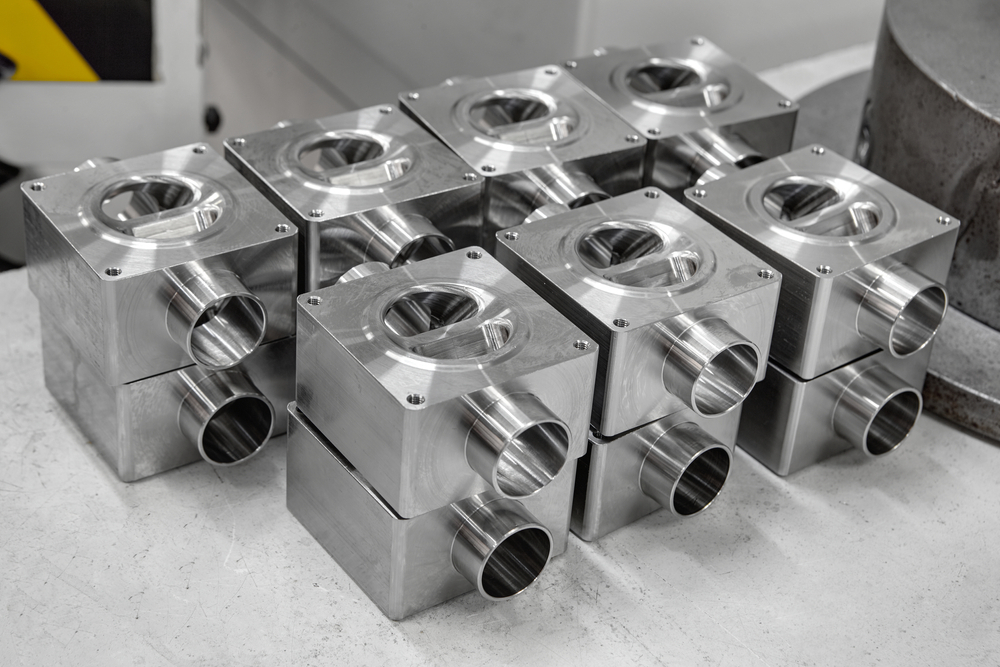
Precision Metal Tooling Process for Silicone Turkey Molds
At Wuxi Lead Precision Machinery, we engineer custom metal tooling for high-volume silicone turkey mold production. Our process eliminates defects by treating the metal mold—not the silicone—as the critical manufacturing asset. This ensures consistent cavity geometry, thermal stability, and longevity for food-grade silicone replication.
Design Phase: Precision Engineering Foundation
We begin with collaborative CAD/CAM development using client-provided turkey anatomy specifications or 3D scans. Finite Element Analysis (FEA) validates thermal distribution and structural integrity under repeated silicone curing cycles (150–200°C). Critical considerations include draft angles for silicone release, venting channels to prevent air traps, and hardened steel inserts at high-wear zones. All designs undergo mold flow simulation to optimize runner systems and minimize material waste. Client sign-off occurs only after tolerance validation to ±0.02mm on critical features.
Prototyping: Zero-Defect Validation
A single-cavity prototype mold is machined from 7075-T6 aluminum using 5-axis CNC milling. This allows rapid iteration while maintaining production-grade surface finishes. The prototype undergoes rigorous first-article inspection:
Coordinate Measuring Machine (CMM) verification against CAD nominal dimensions
Silicone test runs with food-grade platinum-cure silicone (e.g., Momentive RTV615)
Dimensional analysis of 10 consecutively molded turkeys for warpage or shrinkage
Only when all turkey molds meet ±0.1mm geometric tolerances and show zero surface defects (seams, pits, or flash) does the design lock for mass production.
Mass Production: Defect-Proof Execution
Full-scale tooling transitions to H13 tool steel for cavities and P20 for bases, ensuring 500,000+ cycles. Our production protocol enforces zero defects through:
In-process SPC monitoring of cavity dimensions during machining
Hardness testing (48–52 HRC) on critical inserts
Automated optical inspection of polished surfaces (Ra ≤ 0.4μm)
Batch-traceable heat treatment records
Every mold ships with a First Article Inspection Report (FAIR) and undergoes final validation using client-specified silicone compounds. Non-conforming units trigger root-cause analysis via our ISO 9001:2015 framework—never rework.
Critical Tooling Specifications
| Parameter | Specification | Criticality for Silicone Molding |
|——————–|———————|——————————————-|
| Cavity Tolerance | ±0.02mm | Prevents turkey shape distortion |
| Surface Roughness | Ra ≤ 0.4μm | Eliminates silicone sticking & surface defects |
| Thermal Uniformity | ±3°C at 180°C | Ensures consistent silicone cure |
| Vent Depth | 0.01–0.015mm | Prevents air entrapment in turkey details |
| Hardness (Cavities)| 48–52 HRC | Resists wear during 500k+ cycles |
This integrated approach—where metal tooling precision dictates silicone output quality—delivers 100% defect-free turkey molds. Wuxi Lead’s process reduces client validation time by 40% while guaranteeing compliance with FDA 21 CFR 177.2600 for repeated food contact. All tooling includes lifetime technical support for process optimization.
Why Choose Wuxi Lead Precision
Partner with Lead Precision for Advanced Custom Metal Manufacturing Solutions
When it comes to high-performance tooling for specialized applications like silicone turkey molds, precision engineering is non-negotiable. At Wuxi Lead Precision Machinery, we specialize in delivering custom metal manufacturing solutions that meet the exacting demands of modern food-grade silicone molding. Our expertise spans from initial design consultation to final production, ensuring every mold component meets international quality standards while optimizing cycle time, durability, and release performance.
Silicone turkey molds require intricate cavity designs, superior surface finishes, and robust structural support to withstand repeated thermal cycles. Off-the-shelf solutions often fall short in consistency and longevity. That’s where our engineered-to-order approach makes the difference. We utilize advanced CNC machining, EDM processing, and precision grinding techniques to produce mold bases, inserts, and cooling systems with tolerances as tight as ±0.002 mm. This level of accuracy ensures uniform wall thickness in final silicone products, reduces post-processing needs, and increases overall production efficiency.
Our engineering team collaborates directly with clients to analyze product geometry, material behavior, and production volume requirements. Whether you’re developing a single-cavity prototype or a multi-cavity production mold, we integrate your specifications into a robust manufacturing plan. All tooling is fabricated using high-grade P20, 718H, or H13 steels, treated with appropriate hardening and anti-corrosion coatings to extend service life in high-humidity, high-temperature environments typical in food silicone casting.
We understand that reliability and repeatability are critical in commercial food mold manufacturing. That’s why every component undergoes rigorous quality inspection using CMM, optical comparators, and 3D scanning technologies. Our process validation ensures dimensional accuracy, proper venting, and optimal ejection mechanisms—key factors in preventing defects such as tearing, warping, or incomplete filling.
Below are standard technical specifications for our custom silicone turkey mold tooling:
| Specification | Detail |
|---|---|
| Material Options | P20, 718H, H13, S136 (stainless) |
| Tolerance | ±0.002 mm |
| Surface Finish | Ra 0.2–0.8 μm (polish up to镜面) |
| Cooling System | Custom-designed conformal channels |
| Mold Base Standard | LKM, DME, or OEM equivalent |
| Machining Equipment | 5-axis CNC, EDM, CNC grinding |
| Quality Control | CMM, 3D scanning, first-article inspection |
| Lead Time | 25–45 days (based on complexity) |
| Production Capacity | 50+ molds per month |
Partnering with Wuxi Lead Precision Machinery means gaining a long-term manufacturing ally committed to innovation, precision, and operational excellence. We support global clients with full documentation, including 2D/3D drawings, material certifications, and maintenance guidelines. Our team is ready to assist with technical evaluations, design for manufacturability (DFM) reports, and logistics coordination.
For professional-grade silicone turkey mold solutions tailored to your production needs, contact us today.
Email: [email protected]
Let Lead Precision elevate your manufacturing performance.
⚙️ Precision Cost Estimator
Estimate relative manufacturing effort based on tolerance.