

Technical Contents
Engineering Guide: Silicone Overmolding
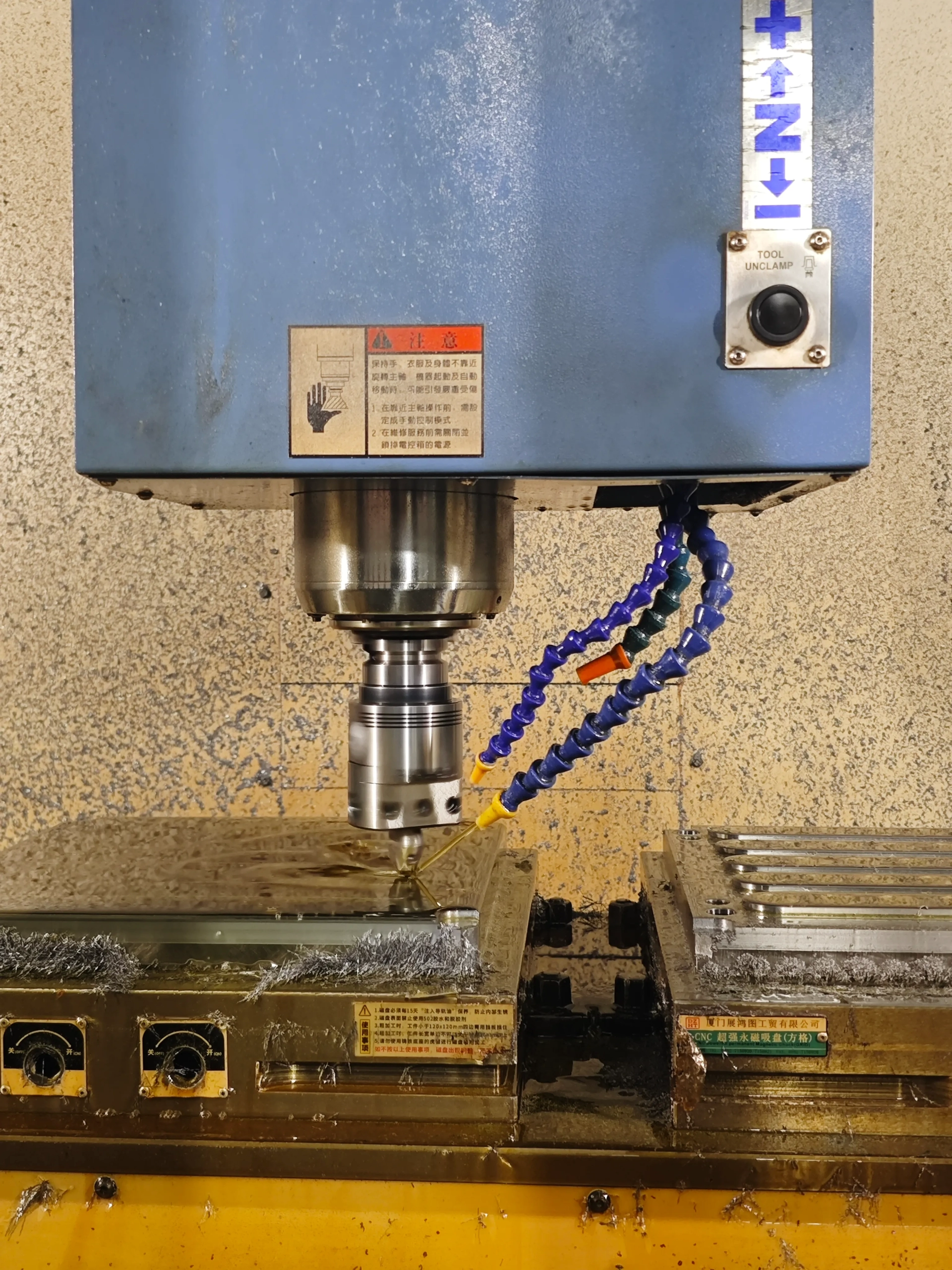
Engineering Precision in Silicone Overmolding: The Non-Negotiable Foundation
Silicone overmolding demands absolute precision at every process stage. Unlike standard molding, this technique bonds liquid silicone rubber (LSR) directly onto precision metal or plastic substrates under exacting thermal and pressure conditions. Microscopic deviations in mold alignment, temperature control, or material flow disrupt molecular adhesion, creating latent failure points. In critical applications like medical implants or aerospace sensors, such flaws manifest as seal leakage, delamination under thermal cycling, or electrical conductivity loss—catastrophic outcomes demanding zero tolerance for error. Dimensional instability in the substrate alone can propagate through the overmold, compromising the entire assembly’s structural integrity and functional lifespan.
Achieving this precision requires mastering interdependent variables. Metal substrates—Wuxi Lead’s core competency—introduce unique challenges: thermal expansion differentials between steel and LSR necessitate compensating for micron-level shifts during curing. Surface energy must be meticulously controlled via plasma treatment to ensure covalent bonding, while cavity pressure profiles must prevent flash without starving critical zones. Even ambient humidity influences LSR viscosity, altering fill dynamics. Our CNC-machined molds maintain tolerances within ±0.02mm, with thermal channels engineered to sustain uniformity within ±1°C across complex geometries. This level of control prevents knit lines, voids, and inconsistent durometer—failures invisible to the eye but fatal to performance.
Wuxi Lead Precision Machinery operationalizes this precision through military-grade process discipline. Our ISO 13485-certified facility leverages 15 years of specialized overmolding expertise, validated in projects where failure is unacceptable. We engineered overmolded timing sensors for Olympic Games installations, enduring sub-zero Arctic conditions and high-G athletic impacts without signal drift. Similarly, our ruggedized military communication connectors—featuring stainless steel housings overmolded with aerospace-grade LSR—survive 50g shock loads and -55°C to +200°C cycling in active defense systems. These projects demanded not just adherence to specs, but predictive process validation through DOE (Design of Experiments) and real-time cavity pressure monitoring.
Our technical capabilities translate directly to client ROI: reduced scrap rates, elimination of field failures, and accelerated time-to-market for regulated products. Below are core specifications achievable in production:
| Parameter | Capability Range | Industry Standard |
|---|---|---|
| Geometric Tolerance | ±0.02mm to ±0.05mm | ±0.1mm to ±0.2mm |
| Material Compatibility | Medical/Pharma LSR, Aerospace LSR, Fluorosilicone | Standard LSR only |
| Substrate Bond Strength | >15 N/mm² (ASTM D429) | 8–10 N/mm² |
| Clamping Force Range | 50–1,200 tons | Typically ≤800 tons |
| Process Validation | Full DOE + SPC + Cavity Pressure Monitoring | Basic SPC only |
Precision in silicone overmolding is not an incremental advantage—it is the threshold for market entry in high-reliability sectors. Wuxi Lead’s integration of aerospace-grade metrology, military-proven process rigor, and substrate mastery ensures your overmolded components perform flawlessly where mission success depends on it. We engineer reliability into every micron, because in critical applications, there are no second chances. Partner with us to transform precision from a requirement into your competitive edge.
Precision Specs & Tolerances
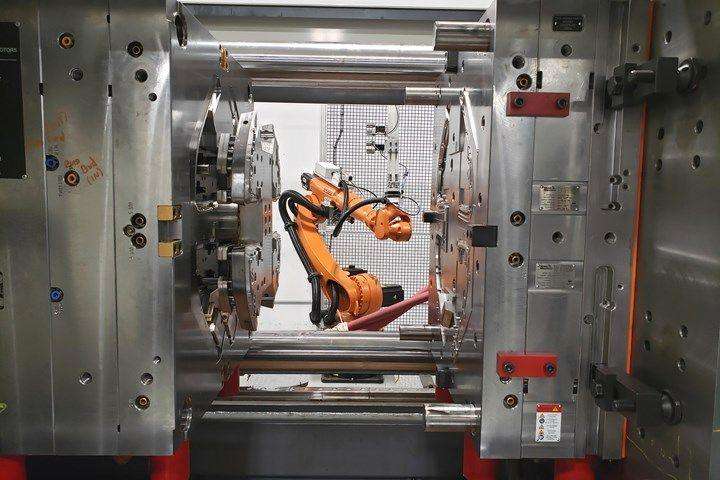
Wuxi Lead Precision Machinery delivers advanced technical capabilities in custom metal manufacturing, specifically engineered to support high-precision silicone overmolding applications. Our integrated production environment combines state-of-the-art 5-axis CNC machining with rigorous quality control protocols, ensuring that every component meets the exacting demands of medical, automotive, and industrial clients. The foundation of our precision lies in our multi-axis CNC systems, which enable complex geometries, tight tolerances, and superior surface finishes—critical for achieving reliable bonding between metal substrates and overmolded silicone.
Our 5-axis CNC machining centers operate with simultaneous motion across all axes, allowing for intricate part features to be machined in a single setup. This minimizes cumulative error, reduces cycle time, and enhances repeatability. Components such as stainless steel inserts, aluminum housings, and titanium cores are produced with micron-level accuracy, ensuring perfect alignment and fit within overmolding tools. The ability to machine undercuts, deep cavities, and contoured surfaces without repositioning significantly improves part integrity and dimensional consistency—key factors when preparing substrates for silicone adhesion.
Complementing our machining excellence is a comprehensive quality assurance process anchored by Coordinate Measuring Machine (CMM) inspection. Every critical dimension is verified using Zeiss and Mitutoyo CMM systems, providing full traceability and compliance with ISO 17025 standards. Our inspection protocols include first-article reporting, in-process checks, and final batch validation, ensuring that all metal components conform to design specifications before entering the overmolding stage. Data from CMM inspections is documented and archived for customer review, supporting full supply chain transparency.
To further guarantee compatibility with silicone overmolding, we optimize surface textures and edge geometries to promote mechanical interlock and adhesion. Secondary operations such as bead blasting, passivation, and precision deburring are performed in-house under controlled conditions, eliminating contamination risks and ensuring consistent surface energy for bonding. All processes are supported by advanced CAD/CAM software and guided by experienced process engineers who specialize in overmolding interface design.
The following table outlines the core technical specifications achievable through our precision manufacturing platform:
| Parameter | Capability |
|---|---|
| Machining Tolerance | ±0.005 mm |
| Surface Roughness (Ra) | 0.4 – 3.2 µm (adjustable per requirement) |
| Minimum Feature Size | 0.2 mm |
| Maximum Work Envelope | 1200 x 800 x 600 mm |
| Materials | Stainless Steel (304, 316), Aluminum (6061, 7075), Titanium, Brass, Inconel |
| CMM Measurement Accuracy | ±0.0015 mm |
| Lead Time (Prototype) | 7–12 days |
| Production Volume Capacity | Low to high volume, scalable |
Wuxi Lead Precision Machinery is committed to delivering metal components that not only meet but exceed the demands of silicone overmolding processes. Our technical capabilities are built on precision, consistency, and deep application expertise—ensuring your final assembly performs reliably in the most demanding environments.
Material & Finish Options
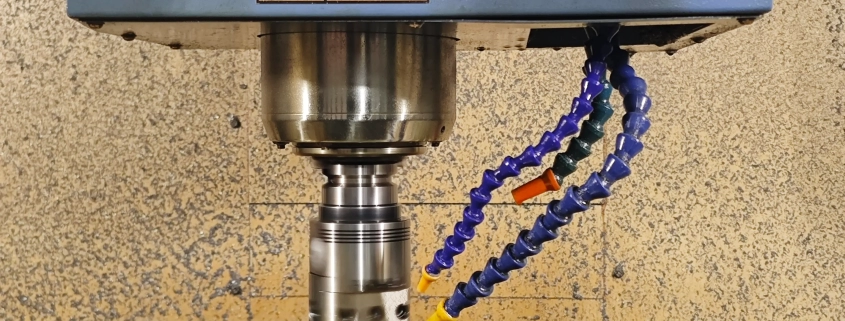
Material Selection for Silicone Overmolding Applications
Selecting the optimal substrate material is critical for successful silicone overmolding performance, directly impacting adhesion, thermal stability, and end-product reliability. At Wuxi Lead Precision Machinery, our CNC expertise ensures precise geometric control and surface integrity, which are foundational for robust silicone-to-metal bonding. Aluminum, steel, and titanium each offer distinct advantages depending on application demands, environmental exposure, and lifecycle requirements. Understanding their mechanical properties and compatibility with surface treatments like anodizing is essential for high-integrity overmolded assemblies.
Aluminum alloys, particularly 6061-T6 and 7075-T6, provide an excellent balance of strength, weight, and thermal conductivity. They are ideal for housings, connectors, and medical device components requiring rapid heat dissipation. Aluminum’s natural oxide layer benefits significantly from anodizing, which creates a micro-porous structure that mechanically locks silicone in place. Our precision anodizing processes achieve consistent pore depths of 15–25 μm, optimizing adhesion without compromising dimensional tolerances. Steel substrates, including 304/316 stainless and 4140 alloy, deliver superior strength and corrosion resistance for industrial or automotive applications exposed to harsh chemicals or high mechanical loads. While steel requires specialized surface activation for silicone bonding, our engineered grit blasting and plasma treatments ensure reliable interfacial strength exceeding 8 MPa. Titanium Ti-6Al-4V excels in extreme environments—such as aerospace or implantable medical devices—where weight savings, biocompatibility, and resistance to saltwater or sterilization cycles are non-negotiable. Its high cost is justified only when aluminum or steel cannot meet operational thresholds.
Anodizing remains the gold standard surface treatment for aluminum overmolding substrates. Unlike painted or plated finishes, anodizing integrates with the base metal, eliminating delamination risks. Type II (sulfuric acid) anodizing at 18–22 μm thickness provides optimal porosity for liquid silicone rubber (LSR) adhesion, while Type III (hardcoat) suits high-wear scenarios. Critical process controls include strict voltage regulation to prevent dielectric breakdown and post-anodizing sealing in nickel acetate solutions to enhance corrosion resistance without filling pores essential for bonding. Wuxi Lead’s in-house anodizing facility adheres to ASTM B580 standards, ensuring batch-to-batch repeatability for mission-critical components.
The following table summarizes key material properties and overmolding considerations:
| Material | Tensile Strength (MPa) | Thermal Conductivity (W/m·K) | Typical Overmold Applications | Key Consideration for Silicone Bonding |
|---|---|---|---|---|
| Aluminum 6061 | 310 | 167 | Medical housings, LED heat sinks | Anodizing mandatory; avoid chromate conversion coatings |
| Stainless 316 | 580 | 16 | Marine hardware, surgical tools | Requires acid etching or laser texturing |
| Titanium Ti-64 | 900 | 7.2 | Aerospace actuators, implantable devices | Plasma treatment essential; high cost barrier |
Material selection must align with silicone chemistry, part geometry, and regulatory standards. Wuxi Lead Precision Machinery combines metallurgical analysis with CNC manufacturing precision to eliminate interfacial failures. Contact our engineering team to validate substrate-treatment-silicone pairings for your specific overmolding challenge.
Manufacturing Process & QC
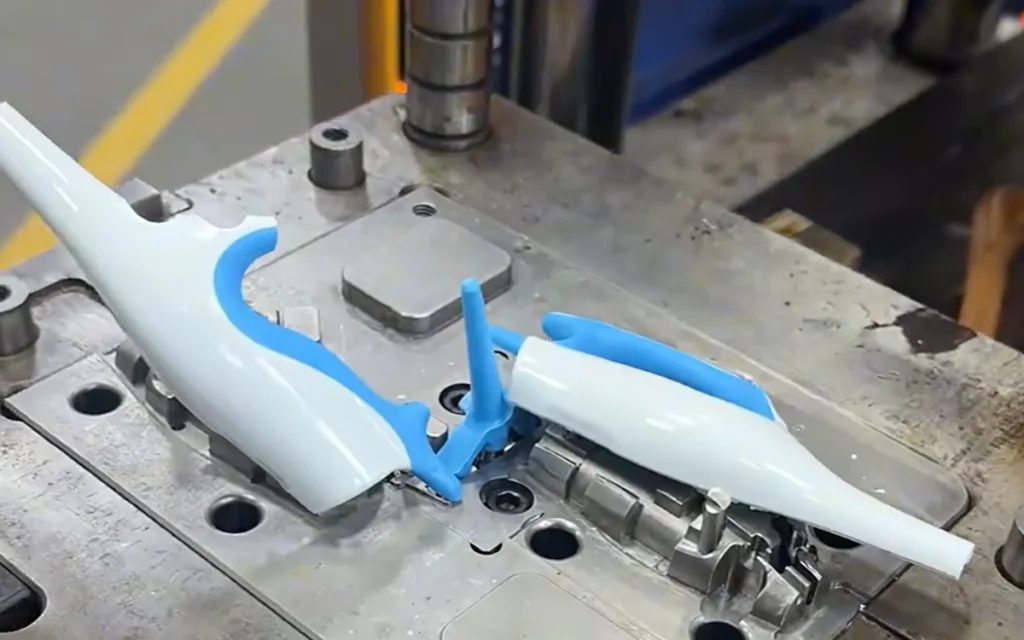
Silicone Overmolding: From Design to Zero-Defect Mass Production
At Wuxi Lead Precision Machinery, our silicone overmolding process is engineered for precision, reliability, and repeatability—delivering zero-defect components for high-performance industries including medical devices, automotive systems, and consumer electronics. Our end-to-end workflow integrates design validation, rapid prototyping, and scalable mass production, all governed by strict quality control protocols to ensure every part meets exacting specifications.
The process begins with collaborative design engineering. Our team works closely with clients to assess material compatibility, part geometry, and functional requirements. Finite element analysis (FEA) and mold flow simulations are employed to predict material behavior, optimize wall thickness, and eliminate potential defects such as air traps or incomplete fills. Design for manufacturability (DFM) reviews ensure that each component is optimized for both performance and production efficiency, reducing cycle times and minimizing waste.
Once the design is finalized, we move into the prototyping phase. Utilizing CNC-machined prototype molds and high-precision injection equipment, we produce functional samples within 7–10 days. These prototypes undergo rigorous testing, including adhesion strength analysis, thermal cycling, and compression set evaluation, to validate material bonding and long-term durability. Client feedback is incorporated at this stage to fine-tune geometry or processing parameters before full-scale production.
Mass production is executed on automated, closed-loop silicone injection molding systems calibrated for micron-level accuracy. Our facility in Wuxi operates under ISO 13485 and IATF 16949 standards, with real-time process monitoring to detect deviations in temperature, pressure, and cure time. Each batch is subject to 100% visual inspection and statistical sampling for dimensional conformance using coordinate measuring machines (CMM). Inline vision systems further ensure surface integrity and part consistency.
To maintain zero-defect output, we implement Six Sigma methodologies and advanced root cause analysis for any non-conformance. Preventive maintenance schedules and operator training programs reinforce process stability across shifts and production runs.
The following table outlines key process specifications for our silicone overmolding services:
| Parameter | Specification |
|---|---|
| Material Types | Liquid Silicone Rubber (LSR), HCR, FKM |
| Hardness Range (Shore A) | 10–80 |
| Tolerances | ±0.05 mm (standard), ±0.02 mm (tight) |
| Part Weight Range | 1–500 grams |
| Mold Tooling | Hardened steel, P20, 718H, corrosion-resistant coatings |
| Cycle Time | 30 seconds – 5 minutes (depending on part) |
| Production Capacity | Up to 500,000 units/month |
| Quality Standards | ISO 13485, IATF 16949, RoHS, REACH |
Through integrated engineering and disciplined process control, Wuxi Lead Precision Machinery ensures that every silicone overmolded component meets the highest standards of performance and reliability.
Why Choose Wuxi Lead Precision
Partner with Lead Precision for Uncompromised Silicone Overmolding Excellence
Silicone overmolding demands absolute precision in substrate geometry and surface integrity to achieve hermetic seals, biocompatibility, and long-term durability. Generic metal fabricators cannot consistently deliver the micron-level tolerances required for critical overmolding interfaces. At Wuxi Lead Precision Machinery, we engineer metal components specifically for overmolding success—eliminating adhesion failures, flash, and dimensional drift that plague inferior suppliers. Our integrated approach merges CNC machining expertise with overmolding process validation, ensuring your metal cores meet the exact thermal, geometric, and surface energy specifications demanded by liquid silicone rubber (LSR) and high-consistency rubber (HCR) processes.
We control the complete value chain from raw material certification to final assembly validation. Our facility operates under ISO 9001:2015 and IATF 16949 standards, with dedicated cleanrooms for medical-grade components. Unlike competitors who outsource secondary operations, Lead Precision machines, deburrs, plasma-treats, and inspects substrates in-house—preventing contamination and dimensional variation that compromise overmolding adhesion. This vertical integration reduces lead times by 30% while guaranteeing repeatability across volumes from 50 to 500,000+ units annually.
Critical Capabilities for Overmolding Success
| Parameter | Capability Range | Industry Standard |
|---|---|---|
| Geometric Tolerance | ±0.005 mm (200 μm) | ±0.025 mm |
| Surface Roughness (Ra) | 0.1–0.8 μm (machined) | 1.6–6.3 μm |
| Material Compatibility | 316L SS, Titanium, MP35N, Elgiloy® | Limited alloys |
| Max Component Size | Ø300 mm x 200 mm height | Ø200 mm typical |
| Volume Capacity | 50–500,000+ units/month | <100,000 units |
Partnering with Lead Precision mitigates your program risk through proactive engineering collaboration. Our team conducts Design for Manufacturability (DFM) reviews before tooling, identifying potential overmolding pitfalls like inadequate draft angles, insufficient undercuts, or thermal mismatch zones. We provide mold flow analysis support and validate first-article components using CMM, optical comparators, and bond strength testing per ASTM D429. For medical and aerospace clients, we deliver full material traceability (MTRs) and PPAP documentation.
Your next overmolding project requires a partner who understands that metal substrate perfection dictates final part performance. We do not merely supply components—we secure your product’s functional integrity. Initiate your qualification review today by contacting our engineering team at [email protected]. Include your component drawings and overmolding requirements to receive a targeted capability assessment within 24 business hours. Let Wuxi Lead Precision Machinery become your definitive source for overmolding-ready metal substrates—where precision engineering meets manufacturing certainty.
⚙️ Precision Cost Estimator
Estimate relative manufacturing effort based on tolerance.