Technical Contents
Engineering Guide: Silicone 3D Printing Service
Engineering Insight: Silicone 3D Printing Service and the Imperative of Precision
In the realm of advanced manufacturing, silicone 3D printing has emerged as a transformative capability, particularly for industries demanding high-performance elastomeric components with complex geometries. Unlike conventional silicone molding techniques, additive manufacturing enables rapid prototyping, customization, and the production of intricate internal structures that are otherwise impossible to achieve. However, the true value of silicone 3D printing lies not just in its design freedom, but in the precision with which it can reproduce specifications—down to the micron level. This precision is non-negotiable in applications where sealing integrity, biocompatibility, thermal stability, and mechanical consistency are critical.
At Wuxi Lead Precision Machinery, we recognize that silicone 3D printing is not merely a fabrication method—it is an engineering discipline. Our approach integrates material science, dimensional accuracy, and process control to deliver components that meet the exacting standards of aerospace, medical devices, and high-reliability industrial systems. With over a decade of experience in custom metal manufacturing and precision engineering, we extend the same rigor to our silicone additive processes. Our facility has supported mission-critical projects, including components used in Olympic-grade equipment and military-grade systems, where failure is not an option. This heritage of precision ensures that every silicone-printed part we produce adheres to strict tolerances and repeatability benchmarks.
Silicone 3D printing requires more than just advanced hardware; it demands deep process understanding. Parameters such as layer adhesion, cure kinetics, and post-processing techniques directly influence final part performance. At Lead Precision, we utilize industrial-grade printers with closed-loop monitoring systems to maintain consistency across production runs. Our engineers work closely with clients to optimize designs for printability, ensuring that functional requirements—such as compression set, elongation at break, and Shore hardness—are met without compromise.
We also emphasize material traceability and environmental control. All silicone resins are stored and handled under climate-regulated conditions to prevent moisture absorption and viscosity drift. Post-printing, parts undergo calibrated thermal curing cycles and, when required, surface finishing techniques such as plasma treatment or coating application to enhance durability.
The following table outlines the key technical specifications achievable through our silicone 3D printing service:
| Parameter | Capability |
|---|---|
| Layer Resolution | 25 – 100 μm |
| Build Volume | Up to 200 x 200 x 150 mm |
| Dimensional Accuracy | ±0.2% (with minimum ±0.1 mm) |
| Shore Hardness Range | 20A – 80A |
| Tensile Strength | Up to 8 MPa |
| Elongation at Break | Up to 300% |
| Operating Temperature Range | -50°C to +200°C (continuous) |
| Biocompatibility | ISO 10993-5 and USP Class VI compliant options |
| Post-Processing Options | Curing, surface smoothing, coating, metrology |
At Wuxi Lead Precision Machinery, we bridge the gap between innovation and industrial reliability. Our silicone 3D printing service is engineered for precision, validated by performance, and backed by a legacy of delivering under the most demanding conditions.
Precision Specs & Tolerances
Technical Capabilities: Precision Metal Tooling for Silicone 3D Printing Applications
Wuxi Lead Precision Machinery delivers critical metal component manufacturing expertise essential for high-performance silicone 3D printing services. While silicone additive manufacturing creates the final elastomeric part, the process fundamentally relies on precision-engineered metal tooling, molds, and support structures. Our core strength lies in producing these mission-critical metal elements with the dimensional accuracy, surface finish, and material integrity required for successful, repeatable silicone printing outcomes. We bridge the gap between advanced additive processes and the foundational precision engineering demanded by aerospace, medical, and industrial clients.
Our integrated manufacturing cell centers on advanced 5-axis CNC machining centers. These systems enable the production of complex mold cavities, intricate core pins, and highly contoured support fixtures directly from solid metal stock, eliminating assembly points that compromise seal integrity and dimensional stability. Multi-axis simultaneous machining ensures geometric complexity is achieved in a single setup, minimizing cumulative error and maximizing part fidelity. This capability is non-negotiable for creating the undercuts, fine details, and smooth release surfaces required in high-pressure silicone injection molding tooling used alongside printing processes. Complementing our machining prowess is a rigorous quality control protocol anchored by Zeiss industrial-grade Coordinate Measuring Machines (CMM). Every critical metal component undergoes comprehensive dimensional verification against the original CAD model. Our CMM inspection reports provide full traceability, validating geometric dimensioning and tolerancing (GD&T) compliance for features like flatness, concentricity, and critical bore alignments essential for mold assembly and part ejection.
The following table details the achievable geometric tolerances for metal tooling components produced for silicone printing applications, reflecting our process capability under standard production conditions:
| Feature Type | Standard Capability | Tight Tolerance Option | Measurement Method |
|---|---|---|---|
| Linear Dimensions | ±0.025 mm (±0.001″) | ±0.0125 mm (±0.0005″) | CMM / Micrometer |
| Geometric Tolerances | ±0.025 mm (±0.001″) | ±0.010 mm (±0.0004″) | CMM |
| Surface Roughness (Ra) | 0.8 µm (32 µin) | 0.4 µm (16 µin) | Profilometer |
| Hole Concentricity | Ø0.025 mm (Ø0.001″) | Ø0.0125 mm (Ø0.0005″) | CMM |
| Flatness | 0.025 mm/m (0.001″/ft) | 0.0125 mm/m (0.0005″/ft) | CMM / Optical Flat |
Achieving these tolerances consistently requires mastery of material behavior, thermal management during machining, and meticulous process validation – areas where Wuxi Lead Precision Machinery applies decades of specialized experience. We understand that deviations in the metal tooling directly translate to defects in the printed silicone part, including flash, incomplete fills, or dimensional inaccuracy. Our engineering team collaborates closely with clients during the design phase to optimize tool geometry for both manufacturability and seamless integration with silicone printing parameters. This holistic approach, combining cutting-edge 5-axis metal fabrication with uncompromising CMM-based quality assurance, ensures the metal foundation for your silicone 3D printing project meets the exacting standards of regulated industries and demanding functional applications. Precision metal tooling is not merely a component; it is the enabling factor for reliable, high-fidelity silicone additive manufacturing.
Material & Finish Options
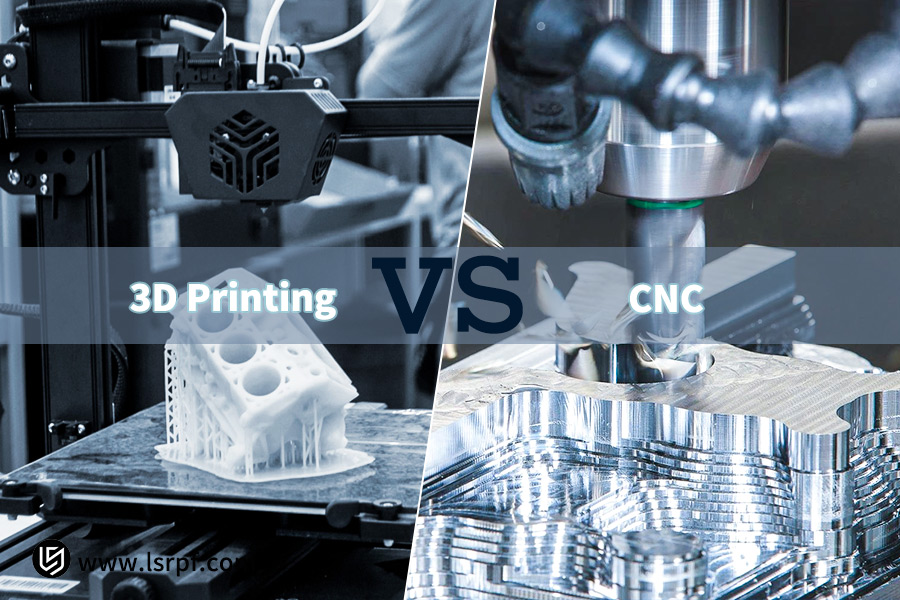
Material Selection for High-Performance Silicone 3D Printing Tooling
When integrating silicone 3D printing into advanced manufacturing workflows, selecting the right support materials for tooling and fixtures is critical. At Wuxi Lead Precision Machinery, we specialize in custom metal components engineered to complement additive processes, ensuring dimensional stability, thermal resistance, and long service life. While silicone 3D printing enables rapid prototyping of flexible, biocompatible parts, the molds, jigs, and structural supports used in tandem must be manufactured from high-precision metals such as aluminum, steel, and titanium. Each material offers distinct mechanical and thermal properties that influence performance, cost, and compatibility with downstream processing.
Aluminum is the most widely used material for silicone 3D printing tooling due to its excellent machinability, lightweight nature, and strong thermal conductivity. Grade 6061-T6 is particularly favored for prototype molds and low-volume production fixtures, offering good corrosion resistance and weldability. Its moderate strength and ease of CNC machining make it ideal for rapid turnaround. For applications requiring higher durability and extended cycle life, hardened tool steels such as H13 or P20 are recommended. These alloys withstand repeated thermal cycling and mechanical stress, making them suitable for high-volume silicone casting operations where precision and surface consistency are paramount.
Titanium, specifically Grade 5 (Ti-6Al-4V), is reserved for extreme environments where weight reduction, corrosion resistance, and high strength-to-density ratios are essential. While more costly and challenging to machine, titanium excels in aerospace and medical applications where biocompatibility and long-term reliability under stress are non-negotiable. Its low thermal expansion coefficient also makes it compatible with high-temperature silicone curing cycles, minimizing dimensional drift during processing.
Surface finish plays a pivotal role in part release, surface quality, and mold longevity. Anodizing is the preferred finishing process for aluminum tooling, enhancing surface hardness and wear resistance while providing electrical insulation. Type II (sulfuric acid) anodizing delivers a durable, decorative finish with optional dyeing for identification, while Type III (hardcoat) anodizing produces a thicker, abrasion-resistant layer suitable for high-wear tooling. For steel components, nitriding or chrome plating is typically applied to improve surface hardness and prevent silicone adhesion. Titanium components may undergo acid etching or plasma spraying to achieve the desired surface texture without compromising material integrity.
Below is a comparative overview of the key materials used in silicone 3D printing support tooling:
| Material | Tensile Strength (MPa) | Thermal Conductivity (W/m·K) | Common Applications | Typical Finish |
|---|---|---|---|---|
| Aluminum 6061-T6 | 310 | 167 | Prototyping, low-volume molds | Type II/III Anodizing |
| H13 Tool Steel | 1,700 | 35 | High-cycle injection molds | Nitriding, Chrome Plating |
| P20 Steel | 900 | 28 | Mold bases, inserts | Chrome Plating |
| Ti-6Al-4V | 950 | 7.2 | Aerospace, medical fixtures | Acid Etch, Bead Blast |
Selecting the appropriate metal and finish ensures seamless integration with silicone 3D printing systems, reducing cycle times and improving part quality. At Wuxi Lead Precision Machinery, we support clients in matching material properties to application demands, delivering fully optimized tooling solutions with tight tolerances and repeatable performance.
Manufacturing Process & QC
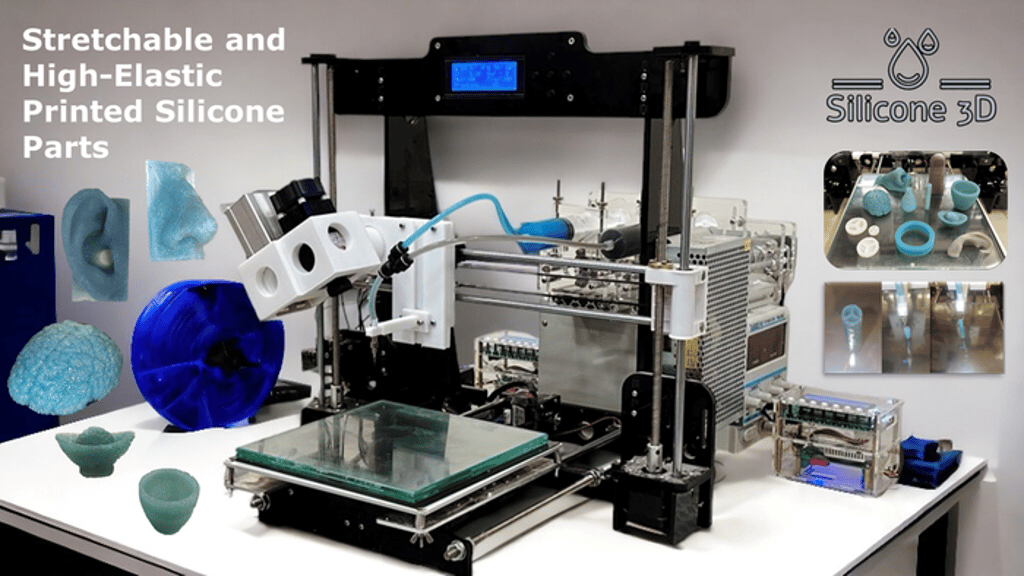
Precision Silicone 3D Printing Production Process: Zero Defects Execution
At Wuxi Lead Precision Machinery, our silicone 3D printing service integrates seamlessly with custom metal manufacturing to deliver mission-critical components for aerospace, medical, and industrial applications. We enforce a rigorously controlled three-phase workflow—Design, Prototyping, Mass Production—engineered for absolute zero defects. This discipline ensures your final parts meet stringent functional and regulatory requirements while minimizing time-to-market.
Design Phase: Engineering for Perfection
Our process begins with collaborative design validation. Our engineers conduct comprehensive Design for Additive Manufacturing (DfAM) analysis, focusing on material behavior, thermal stability, and interface compatibility with precision metal housings or assemblies. Finite Element Analysis (FEA) simulates stress points, fluid dynamics, and fatigue life under operational conditions. Critical tolerances, surface finish requirements, and biocompatibility standards (e.g., ISO 10993 for medical) are locked in during this stage. We utilize GD&T-certified CAD models and provide actionable feedback within 72 hours, eliminating geometry-related failures before physical production begins.
Prototyping Phase: Validated Performance
Prototyping is not a mere form check—it is functional validation under real-world conditions. Using our industrial-grade silicone printers, we produce 1–10 units with identical material properties and process parameters as mass production. Each prototype undergoes:
Dimensional inspection via CMM to ±0.025mm tolerance
Mechanical testing (tensile strength, elongation, compression set) per ASTM D2240
Functional validation in simulated operational environments (e.g., fluid exposure, thermal cycling)
Client approval requires documented evidence of conformance to all critical-to-quality (CTQ) metrics. Only when prototypes pass 100% of validation criteria do we release for scaling.
Mass Production: Sustained Zero Defects
Our automated production cells operate under ISO 13485-certified protocols. Every print job is governed by Statistical Process Control (SPC) with real-time monitoring of:
Silicone viscosity and pot life
Layer adhesion consistency
Curing temperature uniformity
Post-processing parameters (e.g., plasma treatment, bonding)
In-process inspections occur at 5% intervals, with full traceability via serialized part marking. Final lots undergo 100% visual inspection under 10x magnification and batch-level material certification. This closed-loop system ensures defect escape rates remain below 10 PPM.
Key Process Specifications
| Parameter | Capability Range | Control Method | Zero-Defect Target |
|---|---|---|---|
| Layer Thickness | 0.05–0.3 mm | Laser interferometry | ±2.5% tolerance |
| Shore Hardness | 10A–80A | ASTM D2240 durometer | ±3 points |
| Tensile Strength | 2–15 MPa | ISO 37 testing | Min. 95% spec |
| Dimensional Accuracy | ±0.025mm (X/Y), ±0.05mm (Z) | CMM with 5μm repeatability | 100% conformance |
| Biocompatibility | ISO 10993-5/-10 compliant | Third-party cytotoxicity test | Zero non-conformities |
This end-to-end control framework transforms silicone 3D printing from a prototyping tool into a validated production solution. By anchoring every phase in data-driven validation and cross-functional expertise—from metal interface design to silicone material science—we guarantee parts that perform flawlessly in your most demanding assemblies. Partner with us to convert complex fluidics, sealing, or damping requirements into defect-free reality.
Why Choose Wuxi Lead Precision
Partner with Lead Precision for Advanced Silicone 3D Printing and Custom Metal Manufacturing Solutions
At Wuxi Lead Precision Machinery, we specialize in delivering high-performance manufacturing solutions that bridge the gap between innovation and industrial reliability. As a trusted leader in custom metal manufacturing based in China, we extend our expertise into advanced silicone 3D printing services—engineered to meet the rigorous demands of aerospace, medical devices, automotive, and industrial equipment sectors. When you partner with Lead Precision, you gain access to a vertically integrated production ecosystem backed by precision engineering, strict quality control, and deep technical know-how.
Our silicone 3D printing service is not just about rapid prototyping; it’s about enabling functional, production-grade silicone components with complex geometries that traditional molding methods cannot achieve. Utilizing cutting-edge additive manufacturing technologies, we produce high-purity, biocompatible, and thermally stable silicone parts with excellent repeatability and surface finish. Whether you require low-volume custom runs or scalable production support, our team ensures every component meets exact material, dimensional, and performance specifications.
What sets Lead Precision apart is our dual capability in both advanced polymer processing and precision metal fabrication. This integration allows us to deliver fully assembled subsystems—where silicone-printed seals, gaskets, or membranes are seamlessly combined with CNC-machined metal housings or fluidic connectors—ensuring optimal fit, function, and reliability in real-world applications.
We understand that in high-end manufacturing, specifications matter. Below are key technical capabilities of our silicone 3D printing service:
| Specification | Detail |
|---|---|
| Material Compatibility | Platinum-cure silicone (medical grade, food-safe, high-temp variants) |
| Layer Resolution | 25–100 microns (adjustable based on part geometry) |
| Build Envelope | Up to 200 x 200 x 180 mm |
| Tensile Strength | Up to 8 MPa (dependent on formulation and post-processing) |
| Elongation at Break | Up to 1,000% |
| Post-Processing Options | Curing, surface smoothing, bonding, metrology inspection |
| Tolerances | ±0.2 mm for standard features; tighter with finishing |
| Certifications | ISO 9001 compliant; documentation available per project |
Every project begins with a technical consultation to align on design intent, environmental exposure, lifecycle requirements, and regulatory standards. Our engineers work closely with your team to optimize designs for additive manufacturing, recommend material grades, and validate prototypes before full production release.
If you are developing next-generation devices or systems requiring resilient, flexible, and precisely formed silicone components, now is the time to collaborate with a manufacturing partner who combines innovation with industrial discipline. We invite you to contact us at [email protected] to discuss your application, request a quote, or submit a design for review. At Lead Precision, we don’t just manufacture parts—we engineer performance.
⚙️ Precision Cost Estimator
Estimate relative manufacturing effort based on tolerance.