

Technical Contents
Engineering Guide: Sheet Metal Machines
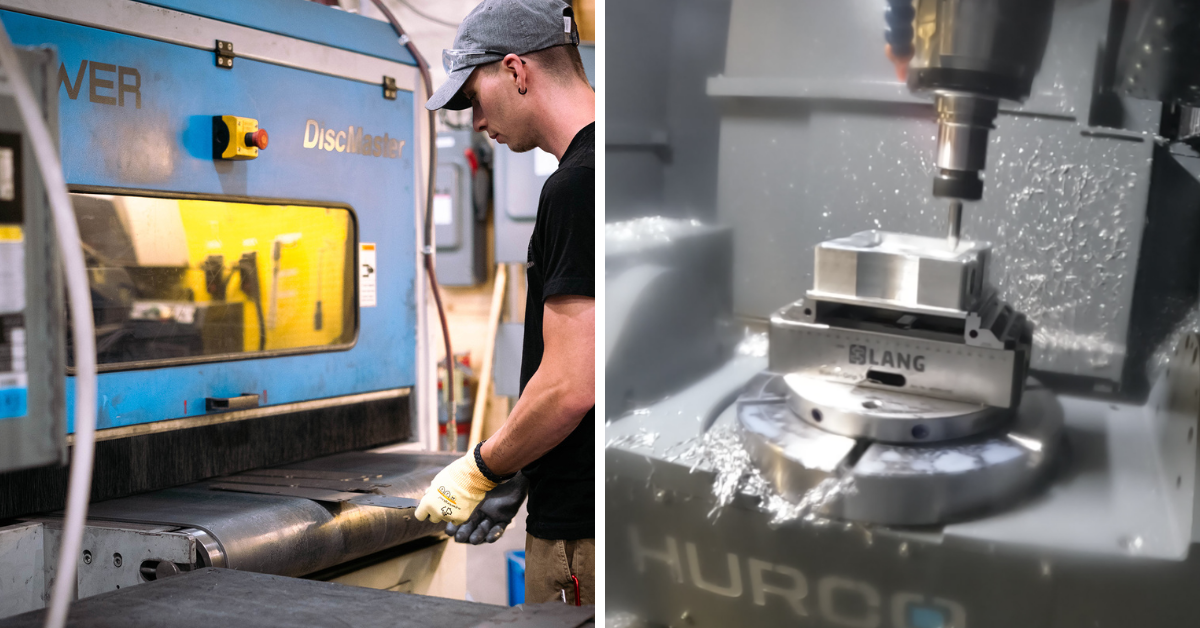
Engineering Insight Precision in Sheet Metal Fabrication
In sheet metal fabrication, precision transcends mere specification adherence; it is the fundamental determinant of structural integrity, assembly efficiency, and final product performance. Minute deviations in cut angles, bend radii, or hole placement cascade into costly downstream consequences: misaligned weldments, compromised fit during sub-assembly, excessive rework, and ultimately, field failures. The true cost of inadequate precision manifests not just in material waste but in delayed project timelines and eroded client trust. Achieving micron-level consistency across diverse alloys and thicknesses demands machines engineered beyond standard tolerances, integrating rigid kinematics, thermally stable structures, and closed-loop feedback systems capable of compensating for real-world variables like tool wear and material springback.
Wuxi Lead Precision Machinery has dedicated two decades to mastering this exacting standard. Our engineering philosophy centers on designing machines where every component, from the bed casting to the control algorithm, contributes to dimensional certainty. This commitment is rigorously validated through deployment in environments where failure is not an option. Our precision sheet metal machinery played a critical role in fabricating structural components for Beijing 2008 Olympic venues, meeting the exacting architectural tolerances required for complex geometries under intense schedule pressure. Similarly, our systems are trusted within stringent defense supply chains, producing mission-critical enclosures and chassis where dimensional accuracy directly impacts system reliability and performance in demanding operational scenarios. This proven heritage in high-stakes applications defines our approach to every machine we build.
The tangible outcome is machines that consistently deliver within micron-level repeatability, enabling manufacturers to operate confidently within tight tolerance budgets. Below are key precision specifications representative of our flagship fiber laser cutting platform, engineered for the most demanding sheet metal applications.
| Specification | Performance Metric | Industry Standard Comparison |
|---|---|---|
| Positioning Accuracy | ±0.02 mm/m | ±0.05 mm/m |
| Repeatability | ±0.01 mm | ±0.03 mm |
| Linear Axis Thermal Drift | < 0.005 mm/°C | < 0.02 mm/°C |
| Contour Cutting Tolerance | ±0.05 mm | ±0.15 mm |
| Bend Angle Repeatability | ±0.2° | ±0.5° |
This level of precision is not accidental. It results from finite element analysis optimizing structural rigidity, in-house granite-bed machining for critical sub-assemblies, and continuous calibration protocols exceeding ISO 230-2 standards. For manufacturers processing aerospace alloys, medical enclosures, or high-end electronics housings, Lead Precision machinery provides the deterministic accuracy required to eliminate scrap, streamline assembly, and guarantee product excellence. Precision is the non-negotiable foundation; our machines deliver it as standard.
Precision Specs & Tolerances
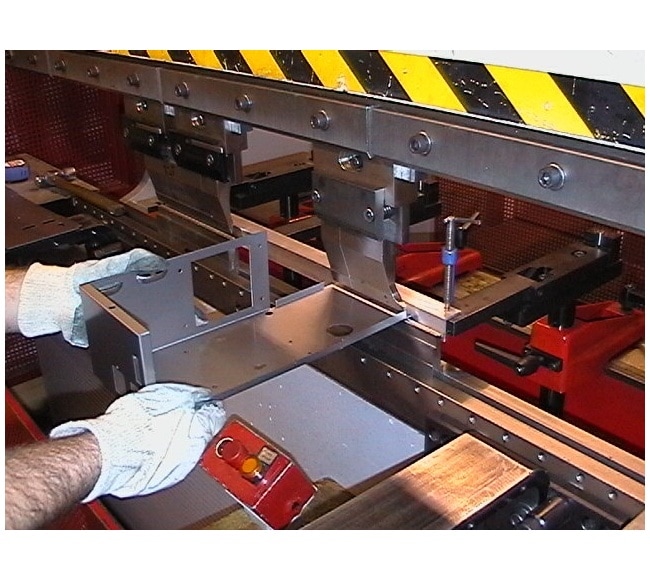
Wuxi Lead Precision Machinery delivers advanced technical capabilities in sheet metal fabrication, engineered to meet the rigorous demands of high-precision industries such as aerospace, medical devices, and industrial automation. At the core of our manufacturing excellence is a fully integrated 5-axis CNC machining platform, enabling complex geometries and tight-tolerance components that conventional 3-axis systems cannot achieve. Our 5-axis CNC machines provide simultaneous multi-directional cutting, reducing setup times and part handling while maximizing accuracy and surface finish consistency. This capability allows us to produce intricate sheet metal components with compound angles, deep cavities, and contoured features in a single operation, ensuring dimensional integrity and repeatability across production runs.
Complementing our advanced machining infrastructure is a comprehensive quality control system anchored by Coordinate Measuring Machine (CMM) inspection. Every critical component undergoes rigorous metrological verification to validate conformance to design specifications. Our CMM systems operate with sub-micron resolution, capturing detailed 3D data points across complex surfaces to verify form, position, and profile tolerances. This metrology-driven approach ensures that each fabricated part meets or exceeds international quality standards, including ISO 2768 and GD&T specifications defined in ASME Y14.5. All inspection reports are documented and archived, providing full traceability for every production batch.
Our technical expertise extends beyond machining and inspection to encompass material optimization, toolpath simulation, and in-process validation. We utilize industry-leading CAD/CAM software to simulate 5-axis toolpaths prior to machining, minimizing the risk of collisions and ensuring optimal cutting strategies. This digital validation process enhances efficiency and supports rapid prototyping and low-volume production with the same level of precision as high-volume runs. Additionally, our skilled engineering team collaborates closely with clients during the design-for-manufacturability (DFM) phase to identify opportunities for improving manufacturability, reducing lead times, and lowering total production costs.
The following table outlines the standard technical tolerances achievable across our sheet metal fabrication processes:
| Feature | Standard Tolerance | High-Precision Capability | Notes |
|---|---|---|---|
| Linear Dimensions | ±0.05 mm | ±0.02 mm | Up to 1000 mm length |
| Angular Tolerance | ±0.1° | ±0.05° | Applies to mitered and bent features |
| Hole Position | ±0.03 mm | ±0.01 mm | Relative to datum |
| Profile Tolerance | ±0.05 mm | ±0.02 mm | For complex contours |
| Surface Roughness | Ra 1.6 µm | Ra 0.4 µm | Achieved via precision finishing |
| Flatness | 0.1 mm per 300 mm | 0.05 mm per 300 mm | For post-processed surfaces |
These capabilities reflect Wuxi Lead Precision Machinery’s commitment to technical excellence, precision engineering, and consistent quality delivery in every sheet metal component we produce.
Material & Finish Options
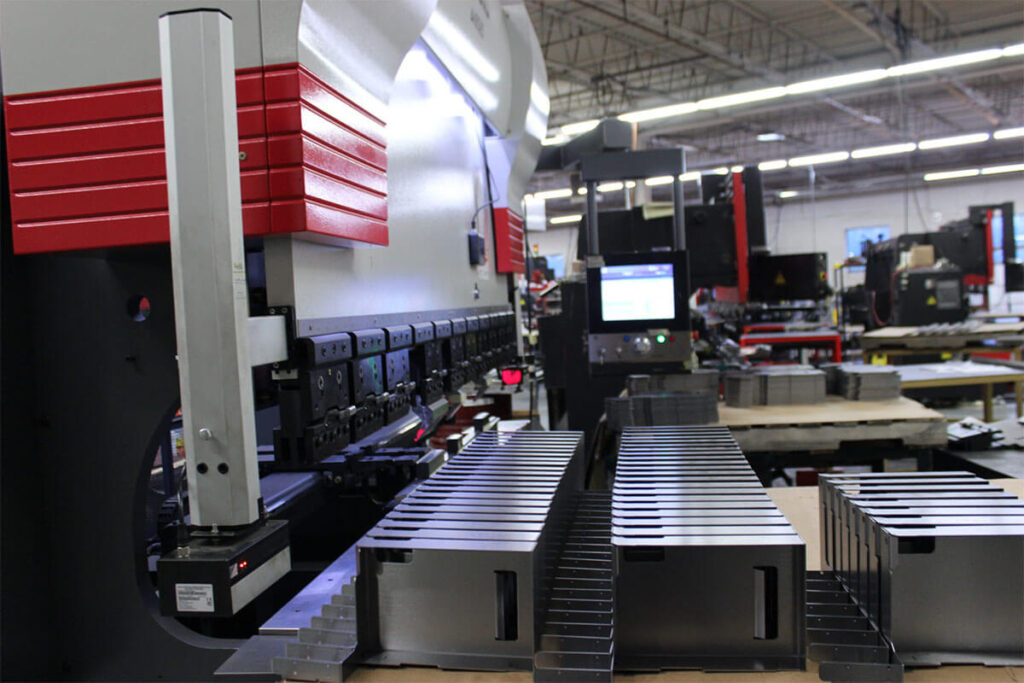
Material Selection for Precision Sheet Metal Fabrication
Selecting the optimal material is foundational to achieving performance, longevity, and cost efficiency in sheet metal fabrication. At Wuxi Lead Precision Machinery, we emphasize that material properties directly impact machine compatibility, part functionality, and post-processing requirements. Misalignment between material characteristics and application demands leads to premature failure, excessive waste, or compromised precision. This section outlines critical considerations for aluminum, steel, and titanium, alongside the role of anodizing in enhancing surface integrity.
Aluminum excels in lightweight structural applications requiring corrosion resistance and thermal conductivity. Its lower density reduces inertia in moving components, while alloys like 5052 and 6061-T6 offer balanced strength and weldability. Steel remains indispensable for high-strength, wear-resistant parts; cold-rolled steel (CRS) provides dimensional stability for enclosures, while stainless grades (e.g., 304, 316) resist chemical exposure. Titanium, though costly, is unmatched for aerospace or medical implants where extreme strength-to-weight ratios and biocompatibility are non-negotiable. Its poor thermal conductivity demands specialized tooling to prevent work hardening during cutting. Each material imposes distinct demands on laser cutters, press brakes, and CNC systems—underscoring the need for machine calibration aligned to material behavior.
Anodizing is the industry-standard finish for aluminum, transforming the surface into a durable, corrosion-resistant oxide layer. Type II (sulfuric acid) anodizing yields decorative or moderate-duty protection, while Type III (hardcoat) achieves 50–100 µm thickness for abrasion resistance in hydraulic components or aerospace brackets. Crucially, anodizing requires precise voltage control and electrolyte temperature management; inconsistent parameters cause color variation or reduced adhesion. Steel typically utilizes powder coating or plating, whereas titanium relies on passivation or specialized PVD coatings. Always confirm finish compatibility with material grade—e.g., anodizing 2024 aluminum risks exfoliation due to high copper content.
Wuxi Lead’s CNC sheet metal systems integrate real-time material databases to automate toolpath optimization and feed-rate adjustments per substrate. Our engineers collaborate with clients to audit material specifications against operational stressors, ensuring seamless transitions from design to finished part. Below is a comparative overview of key properties:
| Material | Density (g/cm³) | Tensile Strength (MPa) | Corrosion Resistance | Common Alloys | Fabrication Notes |
|---|---|---|---|---|---|
| Aluminum | 2.7 | 110–310 | High (non-ferrous) | 5052, 6061-T6, 7075 | Low melting point; requires sharp tools to avoid burrs |
| Steel | 7.8 | 370–2000 | Low (CRS); High (SS) | CRS 1008, SS 304 | Generates heat; needs robust tooling for stainless |
| Titanium | 4.5 | 900–1200 | Excellent | Grade 2, Grade 5 | Low thermal conductivity; prone to galling |
Material choice is not merely a cost exercise—it is an engineering decision affecting every fabrication stage. Partner with Wuxi Lead to leverage material science expertise and machine intelligence that transforms raw stock into mission-critical components. Our precision systems eliminate guesswork, ensuring your material investment delivers uncompromised performance.
Manufacturing Process & QC
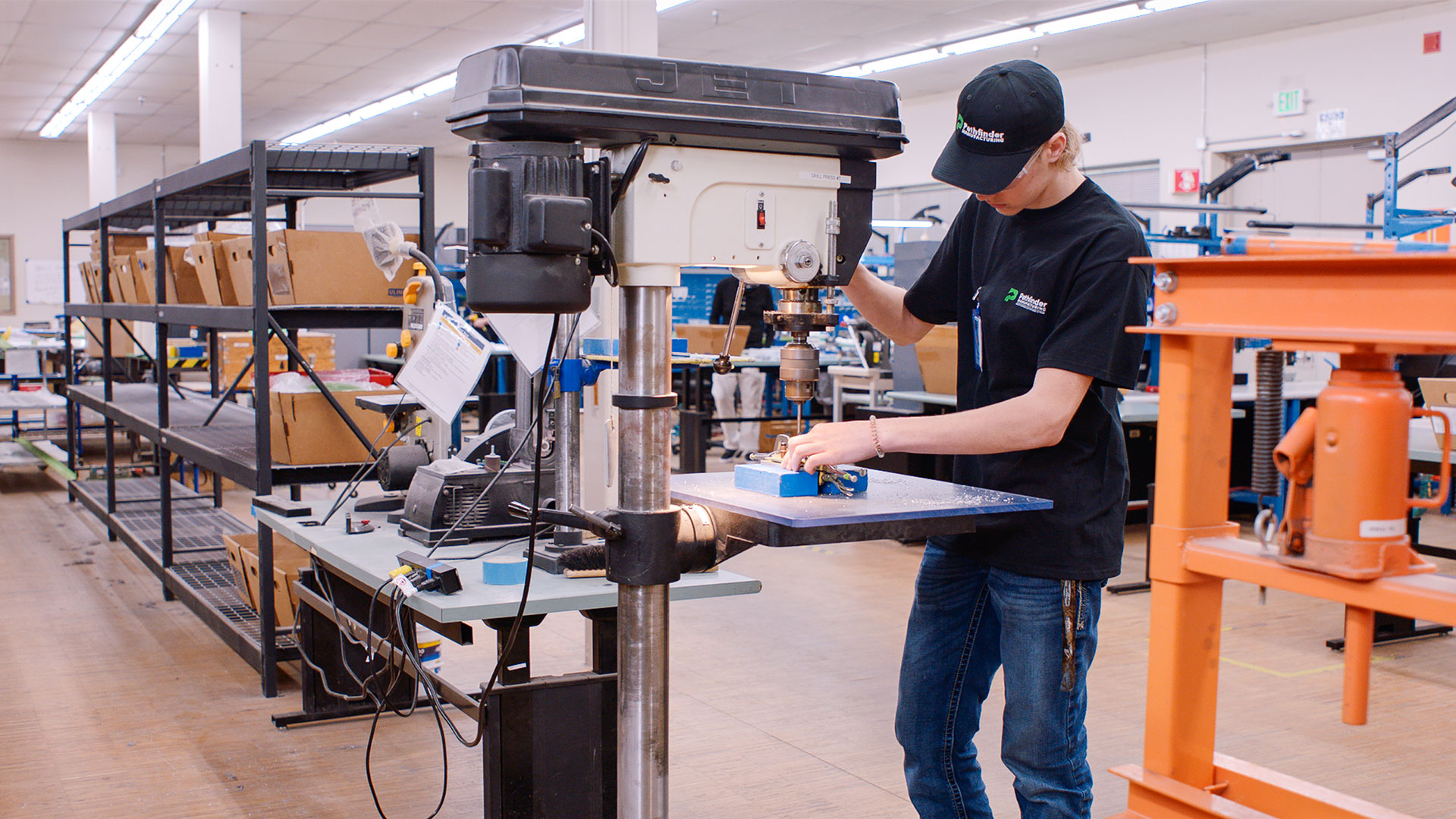
The sheet metal fabrication process at Wuxi Lead Precision Machinery is engineered for precision, consistency, and zero-defect output across every production stage. Our integrated workflow begins with Design, transitions into Prototyping, and culminates in Mass Production—each phase governed by strict quality protocols and advanced CNC technology.
Design is the foundation of defect-free manufacturing. At Wuxi Lead, our engineering team collaborates closely with clients to translate conceptual requirements into detailed 3D CAD models. Using SolidWorks, AutoCAD, and PTC Creo, we simulate material behavior, perform bend allowance calculations, and conduct DFM (Design for Manufacturability) analysis. This ensures that every component is optimized for structural integrity, material efficiency, and production feasibility. Our design validation includes interference checks, tolerance stack-up analysis, and flat pattern generation, minimizing downstream errors before any metal is cut.
Once the design is approved, we move to Prototyping. This phase is critical for verifying form, fit, and function. Utilizing our high-precision laser cutting, CNC punching, and press brake forming systems, we produce a limited batch of prototype parts. Each prototype undergoes rigorous inspection using coordinate measuring machines (CMM), optical comparators, and laser scanning. Dimensional accuracy, edge quality, and geometric tolerances are validated against the original CAD model. Any deviations trigger immediate design or process adjustments, ensuring the final design is production-ready. This iterative validation loop eliminates unforeseen issues and accelerates time-to-market.
Mass Production follows full design sign-off, leveraging automated production lines to maintain consistency at scale. Our factory integrates fiber laser cutting machines, automated panel benders, and robotic welding cells to ensure repeatability and throughput. Every production run is monitored in real time using IoT-enabled CNC systems that track machine performance, tool wear, and part quality. Statistical Process Control (SPC) methodologies are applied to detect trends and correct deviations before defects occur. In-process inspections are conducted at defined intervals, and final products undergo 100% visual and dimensional checks. All components are traceable via batch coding, and comprehensive quality reports are provided with each shipment.
Our zero-defect philosophy is supported by ISO 9001-certified processes, in-house tooling design, and a skilled workforce trained in lean manufacturing principles. From initial concept to final delivery, Wuxi Lead ensures that every sheet metal component meets the highest standards of precision and reliability.
Key production equipment specifications are as follows:
| Machine Type | Model Example | Max Working Area | Tolerance Range | Material Thickness Range |
|---|---|---|---|---|
| Fiber Laser Cutter | Bystronic ByStar | 1500 x 3000 mm | ±0.05 mm | 0.5 – 25 mm (steel) |
| CNC Turret Punch | Amada EMK Series | 1270 x 2540 mm | ±0.08 mm | 0.6 – 6.0 mm |
| CNC Press Brake | Trumpf TruBend | 4100 mm length | ±0.1° angular | 0.5 – 12 mm |
| Robotic Welding Cell | KUKA KR 500 | Custom work envelope | ±0.2 mm repeatability | 1.0 – 20 mm |
This end-to-end control ensures unmatched quality, efficiency, and scalability for OEMs and industrial partners worldwide.
Why Choose Wuxi Lead Precision
Elevate Your Sheet Metal Fabrication with Precision Engineering
As Senior CNC Engineer and Sales Director at Wuxi Lead Precision Machinery, I understand the critical demands of modern sheet metal fabrication. Global manufacturers require machines that deliver uncompromising accuracy, operational resilience, and seamless integration into high-volume production environments. Our engineering team in Wuxi has spent 15 years refining German-inspired mechanics with Chinese manufacturing agility, resulting in systems that minimize downtime while maximizing ROI. We solve the industry’s persistent challenges: thermal drift in laser cutting, inconsistent bending repeatability, and control system latency during complex nesting operations.
Partnering with Lead Precision means accessing proven technology engineered for the most stringent industrial applications. Our machines undergo 72-hour continuous load testing against ISO 230-2 standards, ensuring sub-0.03mm positional accuracy even in 40°C workshop conditions. This reliability translates directly to reduced scrap rates and accelerated throughput for clients in aerospace, automotive, and medical device manufacturing. Below are key specifications from our flagship series, validated across 200+ global installations:
| Machine Model | Max Tonnage (kN) | Bed Size (mm) | Positioning Accuracy (mm) | Control System |
|---|---|---|---|---|
| P-3015 Laser | 6000 | 3000×1500 | ±0.01 | Siemens 840D SL |
| B-250 Press Brake | 2500 | 2500 | ±0.02 | Delem DA66T Pro |
| F-1200 Fiber | 4000 | 1200×600 | ±0.008 | Mitsubishi M800 |
| C-4005 Punch | 400 | 4000×5000 | ±0.015 | Amada APSS |
These systems are not merely equipment purchases—they form the foundation of a strategic partnership. Our dedicated application engineers collaborate with your team from feasibility analysis through production ramp-up, providing on-site training and real-time remote diagnostics via our proprietary LeadSmart IoT platform. We guarantee 95% spare parts availability within 72 hours globally, backed by ISO 9001-certified service protocols.
The competitive edge in sheet metal fabrication today hinges on precision that scales. Wuxi Lead Precision Machinery delivers this through relentless engineering focus and client-centric support structures. Do not accept incremental improvements when transformative capability is within reach. Contact our technical sales division directly to initiate a confidential capability assessment. Email [email protected] with subject line: Precision Partnership Inquiry. Include your target material thickness range, annual production volume, and current bottleneck description. Our engineering team will respond within 4 business hours with a tailored solution proposal—not a generic brochure.
Your next-generation fabrication line requires partners who speak the language of tolerances, not just transactions. Let us demonstrate how Lead Precision machinery becomes your silent operational advantage. The industry’s most demanding specifications await your command.
⚙️ Precision Cost Estimator
Estimate relative manufacturing effort based on tolerance.