

Technical Contents
Engineering Guide: Sheet Metal Designs
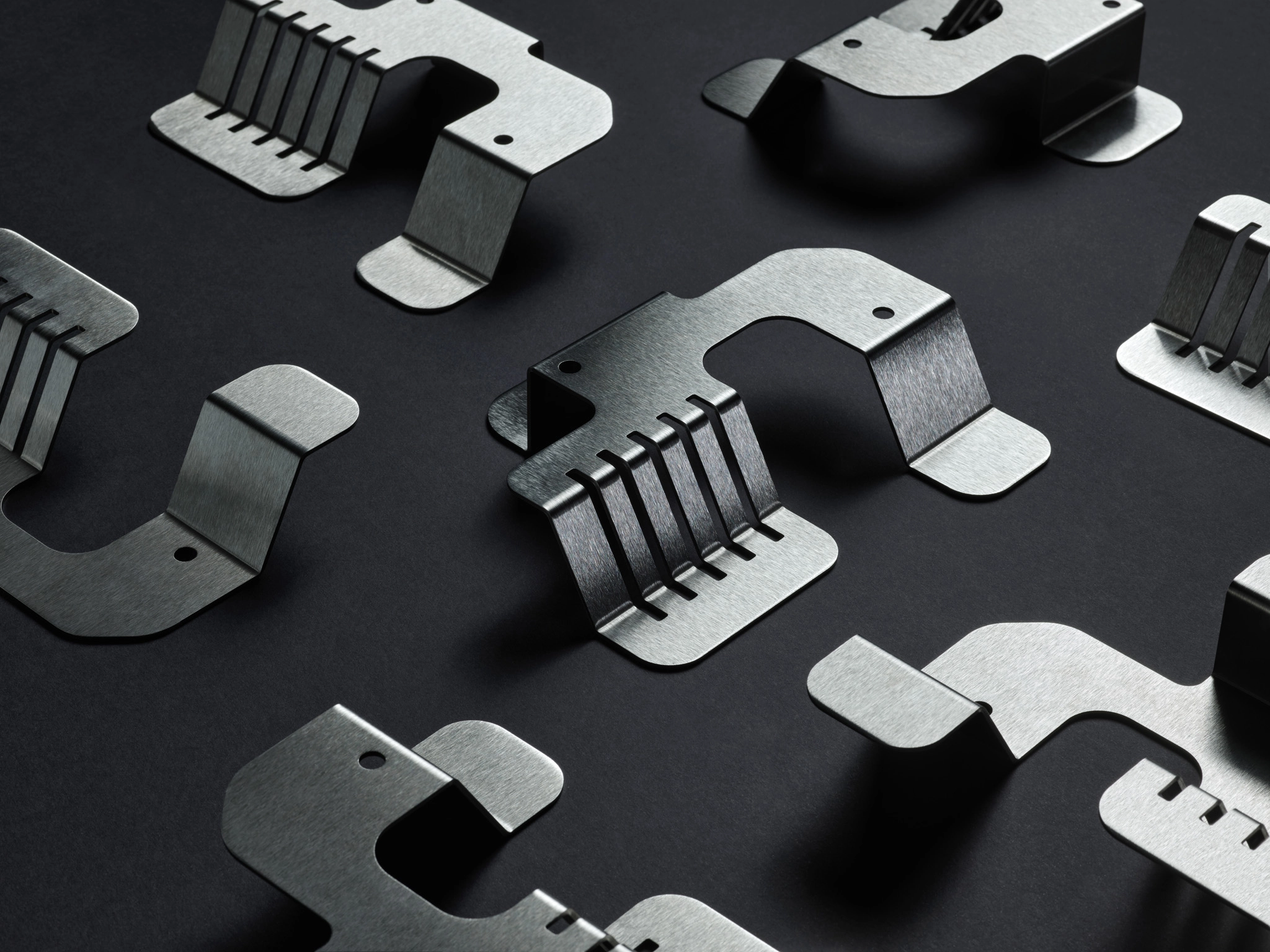
Engineering Insight: Precision in Sheet Metal Design
In high-end manufacturing, the integrity of a product begins not with its assembly, but with the precision embedded in its design. At Wuxi Lead Precision Machinery, we recognize that sheet metal fabrication is not merely a process—it is an engineering discipline where tolerances, material behavior, and geometric complexity converge to define performance. Precision in sheet metal design ensures not only dimensional accuracy but also structural reliability, functional compatibility, and long-term durability across demanding applications.
Our experience in serving mission-critical sectors—including Olympic-standard sports infrastructure and defense systems—has reinforced a fundamental truth: microscopic deviations in design translate into macroscopic failures in operation. Whether fabricating enclosures for aerospace avionics or structural supports for high-impact environments, the margin for error is effectively zero. This demands a design philosophy rooted in first-principle engineering, where every bend, cut, and hole is calculated with respect to material grain, thermal expansion, and load distribution.
At Lead Precision, our engineering team applies advanced finite element analysis (FEA) and 3D simulation tools during the design phase to anticipate stress points, deformation risks, and assembly variances. This proactive approach allows us to optimize for manufacturability while maintaining strict adherence to client specifications. Our decades of experience in precision sheet metal fabrication enable us to identify potential failure modes before cutting the first sheet—reducing waste, accelerating time-to-market, and ensuring compliance with international quality standards such as ISO 9001 and MIL-STD-810.
Material selection further underscores the importance of precision. We work with a range of alloys—including stainless steel, aluminum 5052/6061, and galvanized carbon steel—each requiring unique handling parameters. Our design protocols account for springback, kerf width in laser cutting, and K-factor variations in bending, ensuring that the final part matches the CAD model within ±0.05 mm tolerance.
The following table outlines key precision specifications achievable at Wuxi Lead Precision Machinery:
| Parameter | Standard Tolerance | High-Precision Capability |
|---|---|---|
| Laser Cutting Accuracy | ±0.1 mm | ±0.05 mm |
| CNC Bending Angle Tolerance | ±0.2° | ±0.1° |
| Hole Positioning | ±0.15 mm | ±0.08 mm |
| Sheet Thickness Range | 0.5 mm – 10 mm | 0.8 mm – 6 mm (optimal) |
| Surface Roughness (Ra) | ≤1.6 µm | ≤0.8 µm |
| Feature-to-Feature Accuracy | ±0.1 mm | ±0.05 mm |
Our work on Olympic-grade installations—where aesthetic perfection meets structural rigor—and our contributions to military-grade enclosures—requiring EMP shielding and vibration resistance—demonstrate our capacity to deliver under uncompromising standards. Precision in sheet metal design is not an option; it is the foundation upon which reliability, safety, and innovation are built. At Wuxi Lead Precision Machinery, we engineer every design as if failure is not an option—because in many cases, it isn’t.
Precision Specs & Tolerances
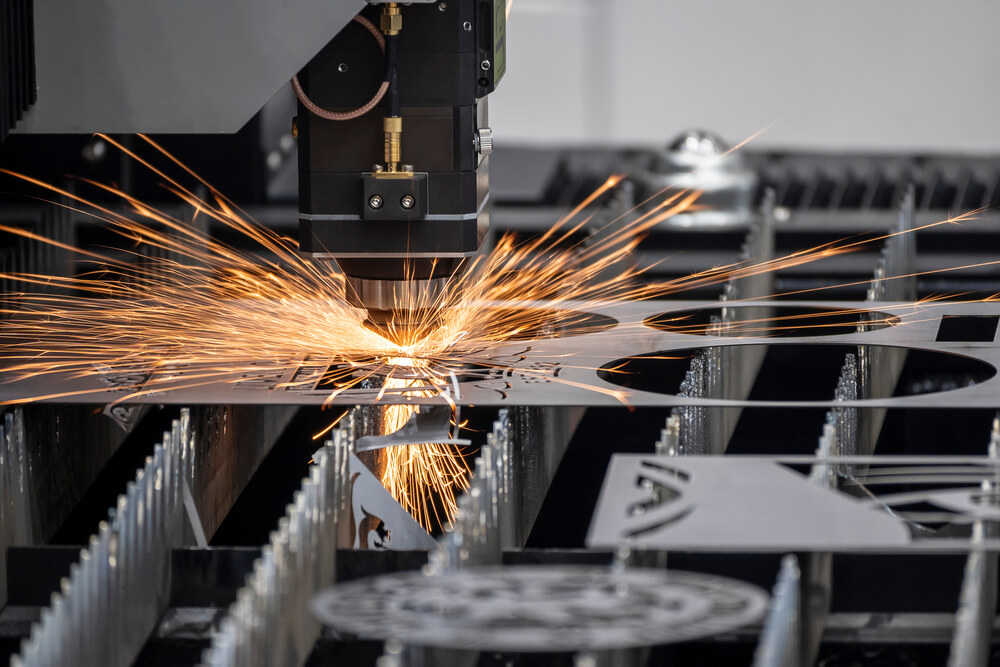
Technical Capabilities: Precision Sheet Metal Fabrication Engineered for Excellence
Wuxi Lead Precision Machinery delivers uncompromising precision and versatility in sheet metal fabrication, leveraging advanced technology and rigorous quality control to meet the most demanding engineering specifications. Our core strength lies in the seamless integration of state-of-the-art 5-axis CNC machining centers within our sheet metal workflow. This capability transcends traditional limitations, enabling the production of complex, three-dimensional sheet metal components with exceptional accuracy and reduced setup times. The simultaneous multi-axis movement allows for intricate contouring, precise hole placement at compound angles, and the creation of sophisticated features in a single, efficient operation. This eliminates cumulative errors inherent in multiple setups, significantly enhancing geometric integrity and dimensional consistency across high-mix, low-to-medium volume production runs essential for aerospace, medical, and advanced industrial applications.
Precision is non-negotiable. Every component undergoes stringent validation through our comprehensive Coordinate Measuring Machine (CMM) inspection process. Utilizing calibrated Zeiss and Mitutoyo CMM systems, we perform full first-article inspections and critical in-process verification against the original CAD model. This metrology-driven approach ensures absolute conformance to geometric dimensioning and tolerancing (GD&T) requirements, providing clients with certified dimensional data reports for complete traceability and quality assurance. Our quality management system, certified to ISO 9001:2015 standards, governs every stage from material intake to final shipment, guaranteeing adherence to global manufacturing expectations.
Our technical proficiency encompasses the full spectrum of sheet metal processes, including high-tolerance laser cutting, precision CNC punching, automated bending with angle feedback control, and expert welding (TIG, MIG, spot). We handle materials ranging from standard cold-rolled and stainless steels to specialized alloys like aluminum 6061-T6, 5052, and titanium, with thicknesses typically from 0.5mm to 6.0mm. Material certifications and lot traceability are standard practice. The synergy between our 5-axis CNC technology and CMM-based quality control establishes a robust foundation for producing components where micron-level accuracy directly impacts final product performance and assembly success.
The following table details our standard achievable tolerance ranges for critical sheet metal features, reflecting the capability enabled by our integrated 5-axis and metrology systems:
| Feature Category | Standard Tolerance Range | Tight Tolerance Capability (Requires Specific Design Review) |
|---|---|---|
| Linear Dimensions | ±0.1 mm | ±0.05 mm |
| Hole Position | ±0.15 mm | ±0.08 mm |
| Bend Angle | ±0.5° | ±0.25° |
| Bend Radius Consistency | ±0.2 mm | ±0.1 mm |
| Flatness (per 100mm) | 0.15 mm | 0.08 mm |
| Hole Diameter (Drilled) | +0.1 / -0.05 mm | +0.05 / -0.025 mm |
These capabilities are not merely specifications; they represent our commitment to being a true engineering partner. We collaborate closely with client design teams during the DFMA phase to optimize manufacturability, ensuring designs leverage our precision capabilities while minimizing cost and lead time. Wuxi Lead Precision Machinery provides the technical depth and quality rigor required to transform complex sheet metal designs into flawless, high-performance components ready for integration into your critical systems.
Material & Finish Options
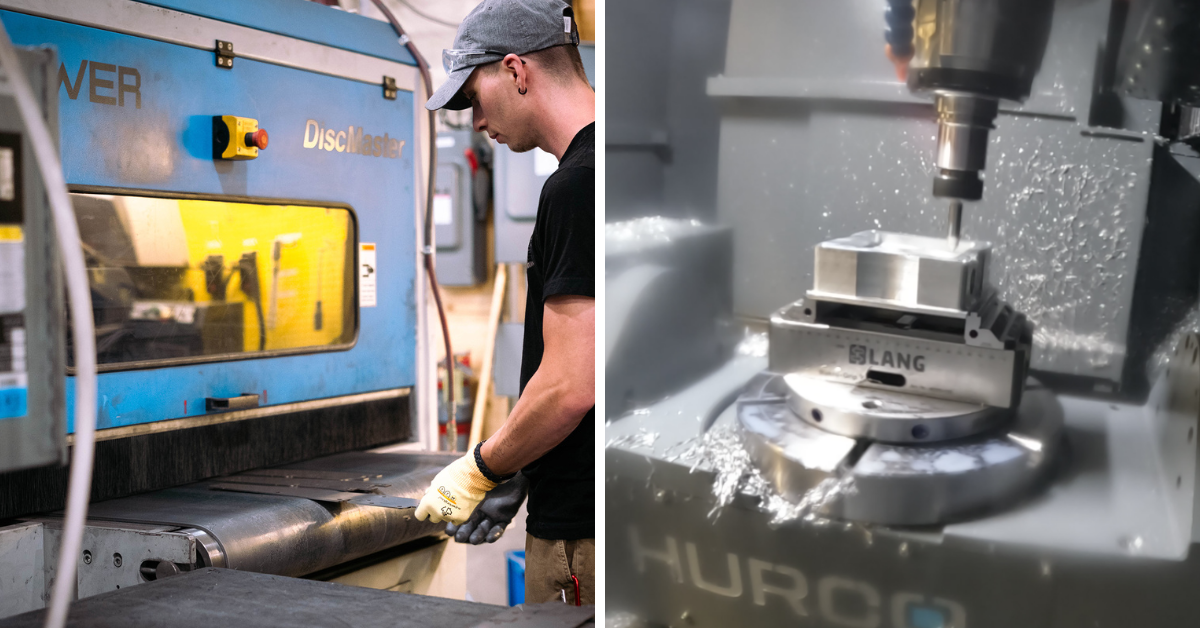
Material selection is a critical step in the sheet metal fabrication process, directly influencing product performance, durability, and cost-efficiency. At Wuxi Lead Precision Machinery, we prioritize material compatibility with design intent, environmental exposure, and functional requirements. The most widely used materials in precision sheet metal fabrication are aluminum, steel, and titanium—each offering distinct mechanical and chemical properties suited to specific industrial applications.
Aluminum is favored for its excellent strength-to-weight ratio, corrosion resistance, and electrical conductivity. It is ideal for aerospace, electronics, and transportation applications where weight reduction is essential. Grade 6061-T6 is commonly selected for structural components due to its weldability and moderate strength, while 5052-H32 is preferred for complex forming operations. Aluminum naturally forms a protective oxide layer, but for enhanced surface durability and aesthetic control, anodizing is recommended.
Steel remains the backbone of industrial sheet metal fabrication. Cold-rolled steel (CRS) offers superior surface finish and dimensional accuracy, making it suitable for enclosures, chassis, and machinery frames. Stainless steel, particularly grades 304 and 316, provides outstanding corrosion resistance and high-temperature performance. Grade 316, with its molybdenum content, excels in marine and chemical environments. While steel is more prone to oxidation than aluminum, proper finishing mitigates this limitation.
Titanium is used in high-performance sectors such as aerospace, medical devices, and defense. Its exceptional strength-to-density ratio, biocompatibility, and resistance to extreme temperatures make it invaluable despite higher material and processing costs. Grade 2 is commonly used for general corrosion resistance, while Grade 5 (Ti-6Al-4V) is selected for high-stress applications. Titanium requires specialized tooling and handling due to its low thermal conductivity and tendency to gall during machining.
Surface finishing significantly enhances both functionality and appearance. Anodizing, primarily applied to aluminum, is an electrochemical process that thickens the natural oxide layer, improving wear resistance, corrosion protection, and adhesion for paint or primers. Type II (sulfuric acid) anodizing is standard for decorative and moderate-duty applications, while Type III (hardcoat anodizing) delivers a thicker, harder surface for industrial and military use. Anodized finishes can be dyed in various colors for branding or identification purposes.
The following table summarizes key material properties and recommended applications:
| Material | Common Grades | Tensile Strength (MPa) | Density (g/cm³) | Key Properties | Typical Applications |
|---|---|---|---|---|---|
| Aluminum | 6061-T6, 5052-H32 | 290–320 | 2.7 | Lightweight, corrosion-resistant, conductive | Enclosures, heat sinks, aerospace parts |
| Carbon Steel | 1018, CR1080 | 370–500 | 7.85 | High strength, cost-effective, weldable | Industrial frames, machinery panels |
| Stainless Steel | 304, 316 | 515–620 | 8.0 | Corrosion-resistant, hygienic, durable | Medical devices, food processing |
| Titanium | Gr 2, Gr 5 | 345–1000 | 4.5 | High strength-to-weight, biocompatible | Aerospace, defense, medical implants |
At Wuxi Lead Precision Machinery, we support clients in selecting the optimal material and finish based on application demands, lifecycle requirements, and production scalability. Our engineering team provides material certification and process validation to ensure compliance with international quality standards.
Manufacturing Process & QC
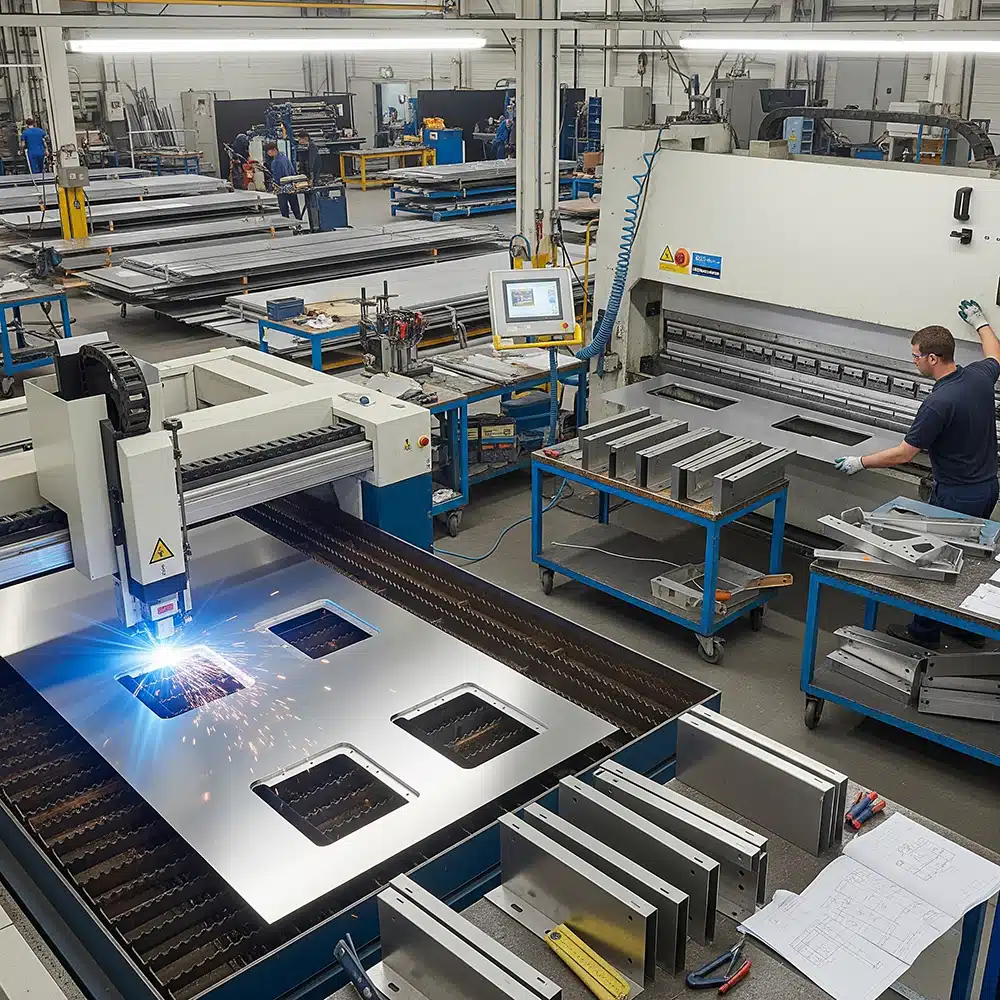
Sheet Metal Production Process: Precision Engineering from Concept to Volume
At Wuxi Lead Precision Machinery, our sheet metal fabrication process is engineered for uncompromising quality and efficiency, rigorously structured into three interdependent phases: Design, Prototyping, and Mass Production. This integrated workflow is the cornerstone of our Zero Defects commitment, ensuring every component meets exacting global standards.
Design Phase: Engineering Flaw Prevention
The foundation begins with meticulous digital design validation. Our engineering team utilizes advanced CAD/CAM software (SolidWorks, Siemens NX) to model parts, rigorously analyzing manufacturability, material stress points, and geometric dimensioning. Critical factors like bend allowances, K-factors, and tooling clearance are simulated to eliminate inherent design flaws before physical production. We enforce strict adherence to international standards (ISO 2768, GD&T ASME Y14.5) during this stage, collaborating closely with client engineering teams to optimize designs for precision fabrication and cost-effectiveness. This proactive approach prevents 90% of potential defects at the source.
Prototyping Phase: Validating Precision
Physical validation occurs through rapid, high-fidelity prototyping. Utilizing our state-of-the-art CNC punch presses, laser cutters (Amada LC series), and press brakes (Trumpf TruBend), we produce functional prototypes matching final production intent. This phase is critical for verifying design assumptions, material behavior, and assembly fit. Every prototype undergoes comprehensive metrology using CMMs (Zeiss CONTURA) and optical comparators to validate dimensional accuracy against the digital model. Client feedback is incorporated iteratively, ensuring the design is perfected before committing to volume tooling. Prototyping is not merely a sample step; it is the definitive test of our Zero Defects strategy.
Mass Production: Sustained Excellence
Transitioning to volume production leverages the validated process parameters established during prototyping. Our automated production lines, featuring integrated material handling and real-time process monitoring, maintain consistent output. Statistical Process Control (SPC) is continuously applied to critical dimensions, with immediate corrective actions triggered by any deviation. In-line automated optical inspection (AOI) systems scan parts for surface defects, burrs, and dimensional variances at line speed, ensuring only conforming parts proceed. This closed-loop system, combined with rigorous first-article inspection (FAI) protocols, guarantees batch-to-batch uniformity and eliminates escape defects.
Zero Defects Implementation
Achieving Zero Defects requires systemic rigor beyond individual phases. We implement Failure Mode and Effects Analysis (FMEA) proactively, deploy operator training with certified quality checkpoints, and maintain full material traceability. Every process parameter is documented and controlled, from raw material certification to final packaging. Our quality management system (ISO 9001:2015 certified) ensures continuous improvement is embedded in daily operations.
Critical Sheet Metal Fabrication Specifications
| Parameter | Standard Capability | Tight Tolerance Option | Measurement Method |
|——————–|————————–|————————|————————–|
| Material Thickness | 0.5 mm – 6.0 mm | 0.3 mm – 10.0 mm | Micrometer, Ultrasonic |
| Linear Tolerance | ±0.1 mm | ±0.05 mm | CMM, Optical Comparator |
| Bend Angle | ±1.0° | ±0.5° | Angle Gauge, CMM |
| Hole Position | ±0.15 mm | ±0.08 mm | CMM, Pin Gages |
| Surface Roughness | Ra 3.2 µm (as formed) | Ra 1.6 µm (post-process)| Profilometer |
This disciplined progression—from intelligent design through validated prototyping to controlled mass production—ensures Wuxi Lead delivers sheet metal components that consistently achieve Zero Defects, meeting the most demanding aerospace, medical, and industrial automation requirements. Precision is not an outcome; it is our engineered process.
Why Choose Wuxi Lead Precision
Partner with Lead Precision for Unmatched Sheet Metal Fabrication Excellence
At Wuxi Lead Precision Machinery, we understand that precision, reliability, and speed are non-negotiable in high-end manufacturing. As a trusted leader in sheet metal fabrication based in Wuxi, China, we specialize in transforming complex design concepts into high-accuracy, production-ready components. Our advanced manufacturing capabilities, combined with decades of engineering expertise, make us the preferred partner for global OEMs, automation integrators, and industrial equipment manufacturers.
We don’t just fabricate parts—we engineer solutions. From prototyping to full-scale production, our end-to-end services include laser cutting, CNC bending, precision welding, surface treatment, and full assembly. Every process is executed under strict quality control protocols, ensuring dimensional accuracy and repeatability down to ±0.05 mm. Whether you’re developing next-generation medical devices, robotics, or industrial enclosures, our team collaborates closely with your engineers to optimize designs for manufacturability, cost-efficiency, and performance.
Our facility is equipped with state-of-the-art machinery from Amada and Trumpf, enabling us to handle a wide range of materials—including stainless steel, aluminum, carbon steel, and copper—up to 6 mm thickness with maximum part dimensions of 3000 x 1500 mm. With in-house tooling and programming, we reduce lead times and maintain full control over quality at every stage.
Below are key specifications that define our sheet metal fabrication capabilities:
| Specification | Detail |
|---|---|
| Material Types | Stainless Steel, Aluminum, Carbon Steel, Copper, Galvanized Steel |
| Thickness Range | 0.5 mm – 6.0 mm |
| Max Part Size | 3000 mm × 1500 mm |
| Tolerance | ±0.05 mm (standard), tighter upon request |
| Cutting Technology | Fiber Laser Cutting (Amada, Trumpf) |
| Bending | CNC Press Brakes, up to 100-ton capacity |
| Welding | TIG, MIG, Spot Welding |
| Surface Finishes | Powder Coating, Anodizing, Passivation, Sandblasting |
| Prototyping Lead Time | 5–7 working days |
| Production Lead Time | 10–15 working days (scalable) |
| Quality Standards | ISO 9001:2015 Certified, First Article Inspection (FAI), PPAP Support |
We pride ourselves on transparency, technical agility, and on-time delivery—no matter the complexity. Our clients benefit from real-time project tracking, detailed inspection reports, and dedicated engineering support throughout the product lifecycle.
If you’re looking for a strategic manufacturing partner who combines precision engineering with scalable production, it’s time to work with Wuxi Lead Precision Machinery. Let us help you bring your sheet metal designs to life with unmatched quality and efficiency.
Contact us today at [email protected] to discuss your project requirements, request a quote, or schedule a factory audit. Our engineering team is ready to support your next breakthrough in manufacturing.
⚙️ Precision Cost Estimator
Estimate relative manufacturing effort based on tolerance.