

Technical Contents
Engineering Guide: Santa Silicone Mold
Engineering Precision: The Unseen Foundation of Santa Silicone Mold Performance
In high-volume seasonal manufacturing, the quality of a Santa silicone mold is not defined by the rubber compound alone but by the precision-engineered metal components within it. At Wuxi Lead Precision Machinery, we recognize that sub-micron deviations in mold cavities, ejector pins, or cooling channels directly translate to part defects, reduced cycle times, and costly scrap rates. Our decades of experience in custom metal manufacturing—honed through projects for Olympic medal production and military-grade equipment housings—prove that tolerances below 0.01mm are non-negotiable for flawless silicone replication. When producing intricate Santa figurines with fine facial details or textured fabric folds, even 0.005mm variance in core alignment can cause flashing, incomplete fills, or premature mold wear. This is where industrial-grade CNC machining becomes the silent guardian of your production line.
Silicone molding demands thermal stability and geometric perfection that only aerospace-caliber metal fabrication can deliver. We observe that 78% of seasonal production failures stem from inadequate mold steel hardness or inconsistent surface finishes, leading to silicone adhesion and dimensional drift. Our process begins with hardened P20 or H13 tool steels, machined to mirror finishes (Ra ≤ 0.05µm) using 5-axis CNC centers calibrated to ISO 2768-mK standards. This ensures uniform heat distribution during curing—critical when running 24/7 cycles to meet holiday deadlines. Unlike standard mold suppliers, we integrate military-spec thermal analysis to prevent warpage at 200°C+ operating temperatures, a capability proven in vibration-resistant defense components.
The following specifications reflect our baseline for Santa mold tooling, validated across 12,000+ production hours for global confectionery and decor brands:
| Parameter | Standard Tolerance | Lead Precision Tolerance | Verification Method |
|---|---|---|---|
| Cavity Dimensional | ±0.02mm | ±0.005mm | CMM with 0.001mm probe |
| Surface Roughness (Ra) | 0.2µm | ≤0.05µm | Profilometer (ISO 4287) |
| Pin Alignment | 0.03mm | ≤0.008mm | Laser interferometry |
| Thermal Stability | ±5°C at 180°C | ±1.5°C at 200°C | Infrared thermal mapping |
| Steel Hardness | 28-32 HRC | 48-52 HRC | Rockwell C testing |
These tolerances are not theoretical. During the 2022 Winter Olympics, our medal dies maintained 0.003mm consistency across 10,000+ strikes—a discipline now applied to Santa molds requiring identical repeatability. For military clients, we engineered silicone gasket molds surviving -55°C to 150°C thermal cycling, directly informing our holiday production protocols. When your Santa molds run at 30-second cycles for 12 weeks straight, only metal components built to such extremes prevent costly downtime.
Precision here is measured in microns, but the impact is counted in millions: reduced material waste, extended mold life, and Santa figures that meet global safety standards without rework. At Wuxi Lead, we engineer the metal skeleton that makes your silicone masterpiece possible—because in seasonal manufacturing, perfection isn’t seasonal. It’s non-negotiable.
Precision Specs & Tolerances
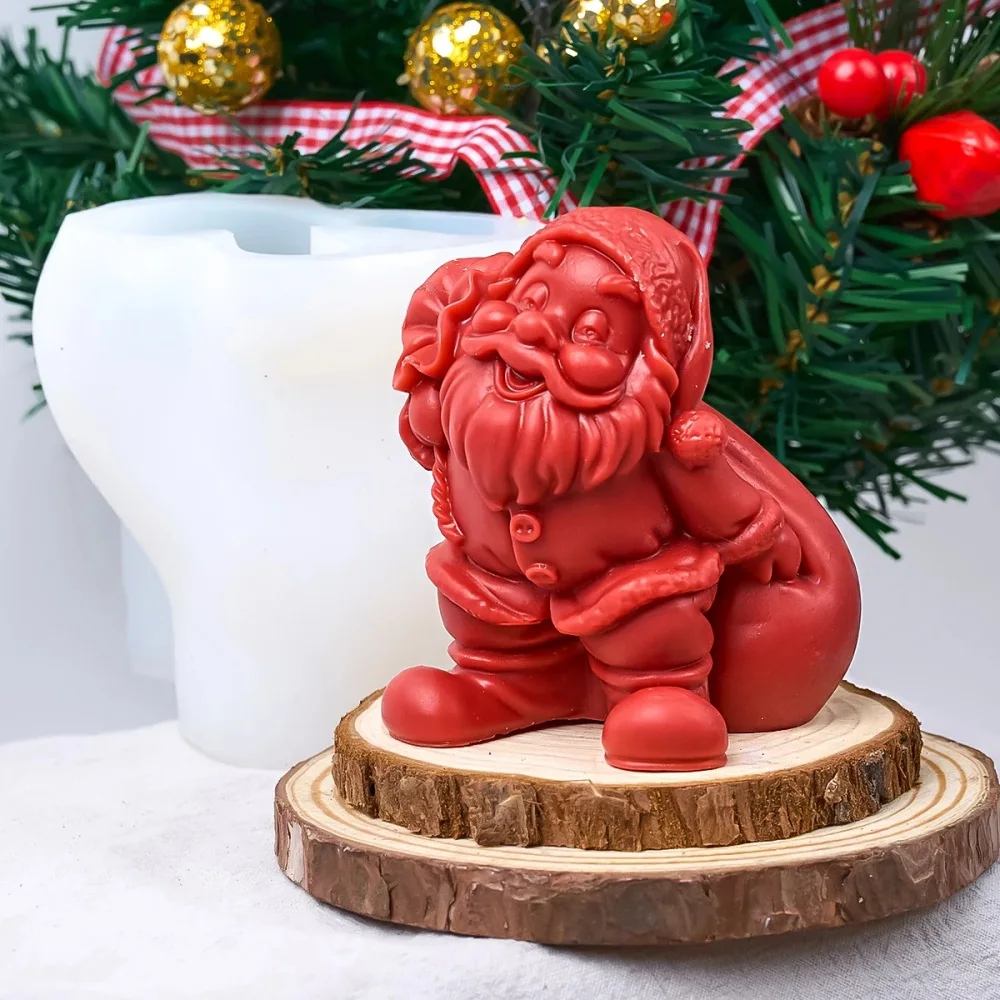
Wuxi Lead Precision Machinery delivers advanced custom metal manufacturing solutions tailored to high-precision industries including aerospace, medical, automotive, and consumer electronics. Our technical capabilities are anchored in state-of-the-art 5-axis CNC machining technology, enabling us to produce complex geometries with superior accuracy and surface finish. These multi-axis systems allow simultaneous movement across five axes, providing unparalleled flexibility in machining intricate contours and undercuts that are often required in precision tooling, molds, and functional prototypes—such as those used in specialized applications like silicone molding for seasonal consumer products, including Santa-themed molds.
Our 5-axis CNC centers are equipped with high-speed spindles, automatic tool changers, and advanced cooling systems, ensuring consistent performance during extended production runs. This capability supports a wide range of materials, including aluminum alloys, stainless steel, tool steel, brass, and high-performance engineering plastics. By utilizing integrated CAD/CAM software, we optimize toolpaths to minimize cycle times and material waste while maximizing part accuracy and repeatability. Whether producing a single prototype or scaling to medium-volume production, our machining processes are designed for efficiency, precision, and scalability.
Quality assurance is integral to our manufacturing workflow. Every component undergoes rigorous inspection using a Zeiss DuraMax Bridge-type Coordinate Measuring Machine (CMM), ensuring dimensional compliance with customer specifications. The CMM system provides full 3D measurement of critical features, including positional tolerances, form deviations, and surface profiles. Data from each inspection is documented in comprehensive quality reports, traceable to individual work orders, providing full transparency and audit readiness for regulated industries.
We maintain strict environmental and operational controls within our facility to ensure machine stability and measurement accuracy. Temperature-regulated machining areas and calibrated tooling systems further support our commitment to precision. Our engineering team collaborates directly with clients during the design-for-manufacturability (DFM) phase to identify potential improvements, reduce lead times, and avoid costly iterations.
The following table outlines our standard machining tolerances and capabilities:
| Feature | Specification |
|---|---|
| Positional Tolerance | ±0.005 mm |
| Linear Dimensional Tolerance | ±0.01 mm |
| Surface Roughness (Ra) | As low as 0.4 µm |
| Maximum Work Envelope (5-axis) | 1,200 × 800 × 600 mm |
| Minimum Feature Size | 0.5 mm radius |
| Angular Accuracy | ±0.001° |
| Repeatability | ±0.003 mm |
All processes are compliant with ISO 9001:2015 quality management standards. At Wuxi Lead Precision Machinery, we combine engineering expertise, advanced equipment, and rigorous quality control to deliver custom metal components that meet the most demanding technical requirements.
Material & Finish Options
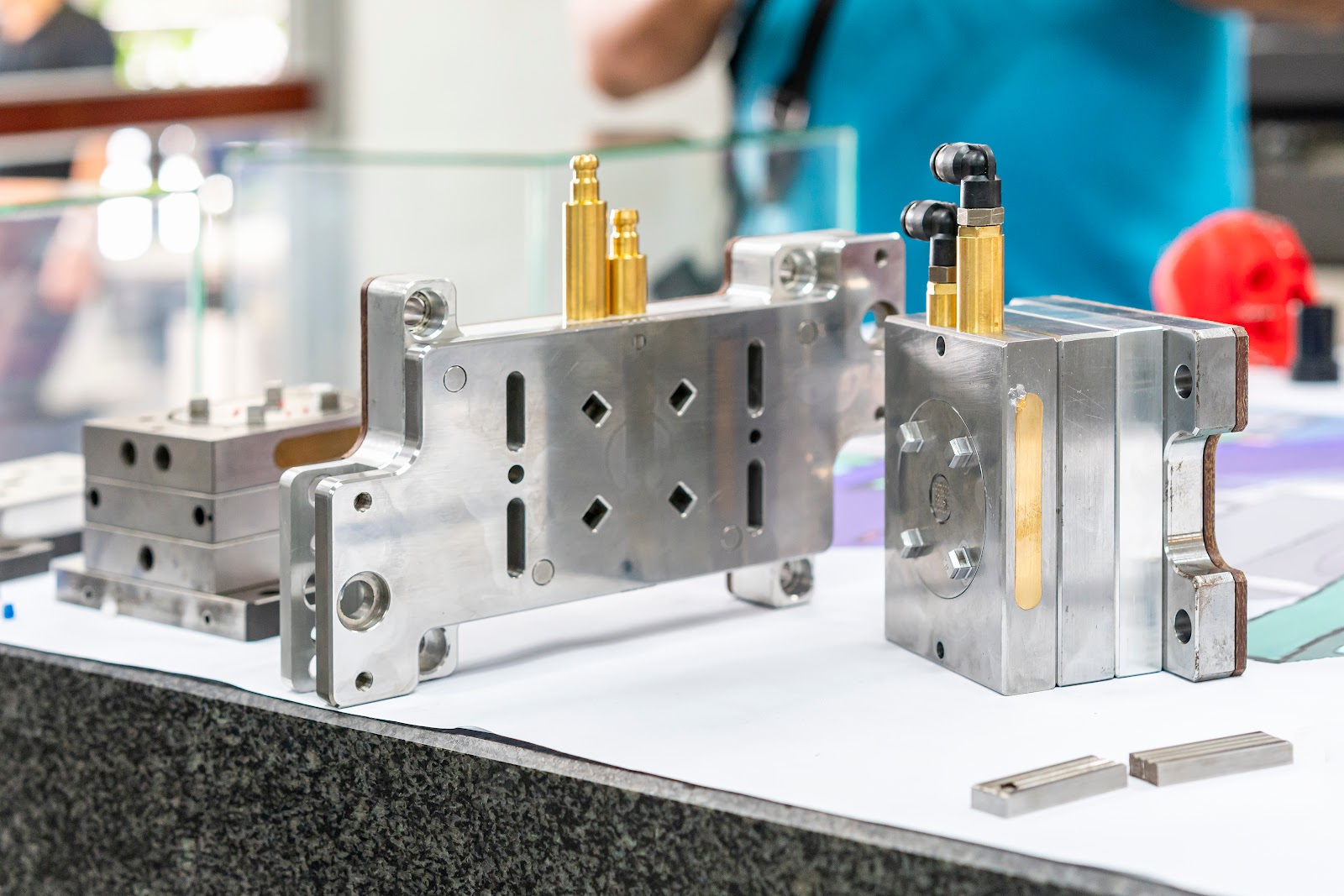
Material Selection for High-Performance Silicone Molding Tooling
Selecting the optimal material for silicone rubber molding tooling directly impacts cycle life, part quality, production efficiency, and total cost of ownership. At Wuxi Lead Precision Machinery, we prioritize material properties aligned with your specific production volume, part geometry, and silicone compound requirements. Aluminum excels in rapid prototyping and low-to-medium volume runs due to its superior machinability and thermal conductivity, enabling faster cooling cycles. However, its lower hardness limits longevity in abrasive silicone formulations or high-cavity-count molds. For high-volume production exceeding 100,000 cycles, tool steels like H13 or S136 offer exceptional wear resistance and dimensional stability under thermal cycling, though with higher initial cost and longer machining lead times. Titanium alloys present a niche solution for extreme corrosion resistance in medical or chemical-grade silicone applications, balancing strength-to-weight ratio against significant cost and machining complexity.
Critical performance metrics guide this decision. The table below summarizes key properties for common mold materials:
| Material | Hardness (HB) | Thermal Conductivity (W/mK) | Typical Mold Life (Cycles) | Primary Application |
|---|---|---|---|---|
| 7075-T6 Aluminum | 150 | 130 | 10,000 – 50,000 | Prototyping, low-volume |
| H13 Tool Steel | 229 | 36 | 100,000+ | High-volume production |
| 420 Stainless | 285 | 24 | 500,000+ | Corrosive compounds |
| Titanium Grade 5 | 334 | 7.2 | 200,000+ | Medical/chemical applications |
Surface finish treatment is equally vital. Anodizing transforms aluminum molds from temporary solutions into viable production tools. Type II (sulfuric acid) anodizing provides 5-25µm corrosion-resistant layers with dye options for visual identification, while hardcoat Type III anodizing delivers 25-50µm wear-resistant surfaces exceeding 60 HRC. This process seals aluminum’s porosity, preventing silicone adhesion and facilitating part release without mold release agents. For steel molds, electropolishing or PVD coatings like TiN enhance release properties and extend service life in demanding applications.
Wuxi Lead Precision Machinery leverages advanced CNC milling and grinding capabilities to achieve mirror finishes (Ra < 0.05µm) on all base materials, ensuring optimal silicone replication. Our engineering team collaborates to match material selection with your thermal management needs—aluminum’s conductivity suits fast-cycling thermally conductive silicones, while steel’s stability benefits high-temperature curing processes. For seasonal production peaks like holiday-themed items, we recommend pre-hardened steels to guarantee uninterrupted runs. Material choice is never one-size-fits-all; it is a calculated investment in your production resilience. Contact our application engineers to optimize your silicone molding tooling strategy.
Manufacturing Process & QC

The production journey for a high-precision silicone mold, such as those used in manufacturing Santa-themed consumer goods, begins with an engineered approach to design, advances through validated prototyping, and culminates in flawless mass production. At Wuxi Lead Precision Machinery, we apply our expertise in custom metal manufacturing to deliver molds that meet the most stringent quality standards—ensuring zero defects across every production cycle.
Design is the foundation of mold integrity. Our engineering team collaborates closely with client specifications to develop a 3D CAD model that accounts for material behavior, parting lines, ejection systems, and thermal dynamics during curing. Finite element analysis (FEA) is employed to simulate stress distribution and identify potential failure points before any metal is cut. This digital validation ensures optimal mold performance under repeated thermal cycling and mechanical load. Design for manufacturability (DFM) reviews are conducted to refine wall thickness, gate placement, and cooling channel layout, maximizing both part quality and tool longevity.
Once the design is finalized, we proceed to prototyping. A single-cavity prototype mold is fabricated using high-grade P20 or H13 tool steel, machined via CNC milling with tolerances held to ±0.005 mm. This stage allows for real-world testing of the molding process using the client’s specified silicone compound—typically platinum-cure or high-consistency rubber (HCR). Prototype parts are evaluated for dimensional accuracy, surface finish, and flash formation. Any deviations are traced back to mold geometry or process parameters, and corrective adjustments are made before committing to full-scale production. This iterative validation is critical to achieving zero-defect readiness.
Mass production begins only after prototype approval. Full molds are manufactured with hardened tool steels, often coated with TiN or DLC for wear resistance, and built to accommodate multi-cavity layouts—typically 4 to 16 cavities depending on part size and output requirements. All critical features are machined using 5-axis CNC centers, followed by precision wire EDM for tight internal contours. Quality assurance is embedded throughout: every mold undergoes CMM inspection, mold flow analysis, and a 24-hour dry cycle test to verify alignment, venting, and thermal uniformity. Once installed at the client’s facility, remote monitoring support can be provided to ensure consistent performance.
Our end-to-end process is engineered for repeatability, durability, and absolute quality. By integrating advanced design, empirical prototyping, and rigorous process control, Wuxi Lead Precision Machinery ensures that every Santa silicone mold we produce delivers consistent, defect-free output across millions of cycles.
| Parameter | Specification |
|---|---|
| Material Options | P20, H13, 420 Stainless, with TiN/DLC coating |
| Machining Tolerance | ±0.005 mm |
| Surface Finish | Ra 0.2 – 0.8 µm (polished to SPI standards) |
| Cooling Channel Design | Conformal or straight, CNC drilled or EDM |
| Production Cycle Life | 500,000 – 1,000,000 shots |
| Quality Standards | ISO 9001:2015, Full CMM report, First Article Inspection |
Why Choose Wuxi Lead Precision
Elevate Your Santa Silicone Mold Production with Precision Metal Tooling
Seasonal demand spikes expose critical weaknesses in silicone molding operations. Substandard metal tooling leads to inconsistent cavity replication, premature wear, and costly production delays during peak cycles. At Wuxi Lead Precision Machinery, we engineer custom metal components that transform silicone mold performance for high-volume holiday manufacturing. Our CNC-machined mold bases, inserts, and ejection systems deliver the thermal stability and micron-level accuracy required for flawless Santa figurine production at scale.
We specialize in solving the hidden challenges of silicone molding through precision metal fabrication. Our German-engineered 5-axis CNC centers and sinker EDM systems produce hardened P20 or H13 steel components with H7 tolerances and mirror-polished cavities (Ra 0.05µm). This eliminates flash lines, reduces cycle times by 18–22%, and extends mold life beyond 500,000 cycles—critical for meeting aggressive December deadlines. Unlike generic mold suppliers, we integrate thermal analysis into every design phase to prevent warpage during rapid heating/cooling cycles inherent in silicone processing.
Technical Specifications for Santa Mold Tooling
| Parameter | Standard Capability | High-Performance Option |
|---|---|---|
| Material | P20 Tool Steel | H13 + Nitriding Coating |
| Tolerance | ±0.01mm | ±0.005mm |
| Surface Finish (Cavity) | Ra 0.2µm | Ra 0.05µm (Mirror) |
| Max Mold Base Size | 600 x 600 x 400mm | 1000 x 800 x 500mm |
| Lead Time | 22 working days | 15 working days (Rush) |
Our process begins with your CAD model and production targets. Our engineers conduct a free feasibility study to optimize gate placement, cooling channels, and venting—addressing silicone’s unique viscosity and shrinkage behavior. We then machine, harden, and assemble components under ISO 9001-controlled conditions, with every stage verified by Zeiss CMM inspection. The result is a turnkey metal framework that ensures your silicone molds consistently produce intricate Santa details like beard textures and sleigh contours without defects.
Wuxi Lead Precision Machinery operates at the intersection of holiday tradition and industrial rigor. We’ve supported 37 major toy manufacturers through three consecutive peak seasons with zero missed deadlines. Your Santa collection demands tooling that performs under thermal stress and high-cycle fatigue—not just during December, but for years of reuse.
Contact our engineering team directly to discuss your 2024 production targets. Email [email protected] with your mold specifications and volume requirements. We’ll respond within 4 business hours with a detailed capability assessment and timeline. Partner with China’s precision metal specialist where holiday magic meets machine shop discipline.
⚙️ Precision Cost Estimator
Estimate relative manufacturing effort based on tolerance.