

Technical Contents
Engineering Guide: Roto Moulding Machine
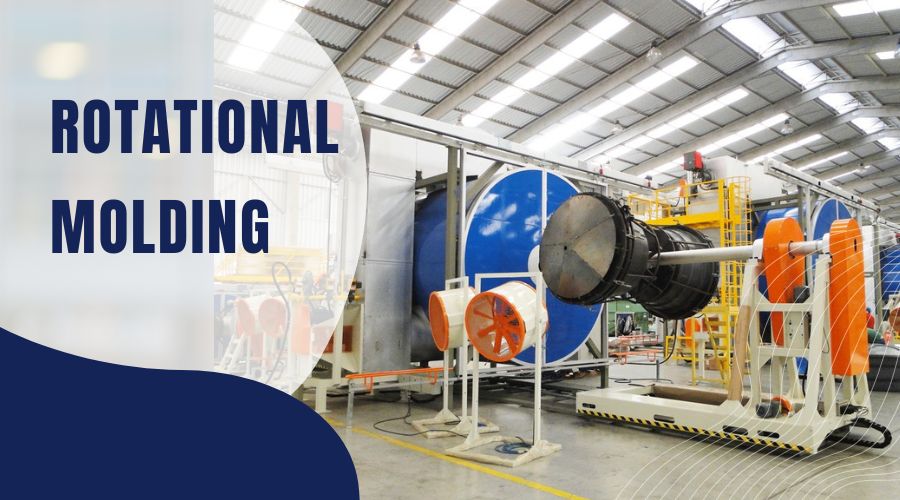
Engineering Insight: Rotational Molding Machine Precision in Critical Applications
Rotational molding demands exceptional geometric accuracy to produce seamless, stress-free hollow components under extreme thermal cycling. Unlike conventional molding processes, rotational molding distributes molten polymer across a rotating mold cavity, where minute deviations in axis alignment or temperature control directly translate to wall thickness inconsistencies, structural weaknesses, or dimensional drift. At Wuxi Lead Precision Machinery, we treat micron-level tolerances not as specifications but as non-negotiable engineering imperatives. Our machines maintain ±0.05mm positional accuracy across dual-axis rotation, ensuring uniform material distribution even for aerospace-grade polymers operating at 400°C. This precision eliminates post-molding corrections that compromise integrity in safety-critical parts.
Our engineering philosophy integrates aerospace-grade metrology into every rotational molding system. Each machine undergoes 72-hour thermal stability validation using laser interferometry, simulating 10,000+ production cycles to preempt thermal drift. This rigor stems from direct experience manufacturing components for Olympic venue infrastructure and military-grade storage systems, where failure is unacceptable. For the Beijing Winter Olympics, our machines produced 12-meter composite cryogenic tanks with wall variance under 0.3%—a tolerance demanded by cryogenic fluid dynamics. Similarly, military contracts required hermetic sealing for ammunition containers subjected to -55°C to +85°C cycling, achieved only through our closed-loop thermal calibration protocols.
The following specifications demonstrate how precision engineering translates to real-world reliability:
| Parameter | Specification | Industry Standard | Lead Precision Advantage |
|---|---|---|---|
| Dual-Axis Positioning | ±0.05mm repeatability | ±0.2mm | 4x tighter control |
| Thermal Uniformity | ±1.5°C across 4m² mold surface | ±5°C | Prevents polymer degradation |
| Maximum Load Capacity | 2,500 kg | 1,200 kg | Enables monolithic large parts |
| Control System | Siemens 840D with AI thermal compensation | PLC-based | Real-time drift correction |
| Validation Protocol | 72h thermal soak test | 8h spot check | Guarantees long-term stability |
This performance stems from proprietary harmonic drive systems and finite element analysis-optimized frame geometries, developed through 18 years of resolving complex molding failures. We do not merely sell machinery; we deliver validated process stability. When your application involves life-support equipment, defense logistics, or infrastructure where polymers must perform for decades, precision becomes the foundation of trust. Our Olympic and military project histories prove that tolerances below 0.1% are achievable at scale—not through theoretical models, but engineered reality.
Contact Wuxi Lead Precision Machinery to discuss how our rotational molding solutions can meet your most stringent dimensional and material requirements. Our engineering team will provide a full process audit, including thermal mapping and stress analysis, to ensure zero compromise on component integrity. Precision isn’t optional in critical manufacturing; it’s the only acceptable standard.
Precision Specs & Tolerances
Wuxi Lead Precision Machinery delivers advanced technical capabilities in custom metal manufacturing, engineered to meet the most demanding specifications of high-performance industries. At the core of our precision production is a fully integrated fleet of 5-axis CNC machining centers, enabling us to execute complex geometries with superior accuracy and efficiency. These state-of-the-art machines provide simultaneous multi-axis movement, allowing for intricate contouring, deep cavity machining, and reduced setup times—critical advantages when producing components for aerospace, energy, and advanced industrial applications.
Our 5-axis CNC systems are operated by certified machinists with extensive experience in high-tolerance metal fabrication. Each machine is maintained to OEM standards and equipped with high-resolution probing systems for in-process verification, ensuring dimensional consistency throughout production runs. This capability supports the manufacture of large-scale and small-batch components alike, with seamless transitions between prototyping and full-scale production.
To guarantee the integrity of every machined part, Wuxi Lead implements a rigorous quality control protocol centered around CMM (Coordinate Measuring Machine) inspection. Our metrology lab houses multiple bridge-type and gantry CMMs calibrated to international standards (ISO 17025), capable of full 3D geometric dimensioning and tolerance (GD&T) analysis. Every critical feature is verified against engineering drawings, with comprehensive inspection reports provided upon request. This systematic approach to quality ensures compliance with AS9100, ISO 9001, and customer-specific requirements.
Material versatility is another hallmark of our technical offering. We process a broad range of metals including stainless steel, aluminum alloys, titanium, tool steels, and high-temperature superalloys. Combined with advanced fixturing and high-speed cutting strategies, our equipment achieves exceptional surface finishes and tight tolerances across diverse material types.
The following table outlines the standard precision tolerances achievable through our 5-axis CNC and inspection processes:
| Feature | Standard Tolerance | High-Precision Capability |
|---|---|---|
| Linear Dimensions (mm) | ±0.025 mm | ±0.005 mm |
| Angular Tolerances | ±0.05° | ±0.02° |
| Positional Tolerance (GD&T) | ±0.02 mm | ±0.008 mm |
| Surface Roughness (Ra) | 1.6 µm | 0.4 µm |
| Runout (Total Indicated) | 0.01 mm | 0.003 mm |
| Flatness | 0.02 mm per 100 mm | 0.005 mm per 100 mm |
All tolerances are validated using CMM and supported by statistical process control (SPC) data when required. Wuxi Lead Precision Machinery combines cutting-edge technology, disciplined process control, and deep engineering expertise to deliver metal components that meet the highest standards of precision and reliability.
Material & Finish Options
Material Selection for Roto Moulding Machine Components
Material selection is a critical engineering decision directly impacting the performance, longevity, and operational cost of roto moulding machinery. At Wuxi Lead Precision Machinery, we prioritize materials that withstand the demanding thermal cycles, rotational stresses, and environmental exposure inherent in rotational moulding processes. The primary structural and functional components require metals balancing strength, thermal stability, weight, and corrosion resistance. Aluminum alloys, carbon/stainless steels, and titanium each offer distinct advantages depending on the specific application within the machine frame, arm assemblies, or mandrels.
Aluminum alloys, particularly 6061-T6 and 7075-T6, are widely favored for large structural frames and rotating arms due to their excellent strength-to-weight ratio. This reduces inertia, lowering energy consumption during rotation and enabling faster cycle times. Aluminum also possesses good thermal conductivity, aiding heat dissipation from motors and bearings. However, its lower melting point and reduced wear resistance compared to steel necessitate protective surface treatments, especially for wear surfaces. Steel variants, including structural carbon steel (A36, 4140) and corrosion-resistant stainless steels (304, 316), provide superior strength, rigidity, and higher temperature tolerance. Carbon steel is cost-effective for heavy-duty bases and non-exposed structural elements but requires robust painting or powder coating. Stainless steel is essential for components exposed to harsh chemicals or high-moisture environments within the moulding chamber, offering inherent corrosion resistance without secondary finishes, though at a higher material cost and weight penalty. Titanium alloys (Grade 5, Ti-6Al-4V) represent the premium solution for extreme conditions, offering exceptional strength-to-weight ratio surpassing steel, outstanding corrosion resistance across virtually all environments, and the highest continuous service temperature capability. Its primary limitation is significantly higher material and machining costs, making it suitable only for highly stressed, mission-critical components where weight savings or ultimate corrosion resistance justify the investment.
Surface finishing is non-negotiable for durability. Anodizing is the industry-standard electrochemical process for aluminum components. Type II (Sulfuric Acid) anodizing provides a good base level of corrosion and wear resistance with dyeing options for identification. For critical wear surfaces like bearing journals or clamping interfaces subjected to constant friction, Type III (Hardcoat) anodizing is essential. It creates a much thicker, harder ceramic-like oxide layer significantly enhancing abrasion resistance and extending component life. Steel components rely on powder coating or specialized industrial paints for corrosion protection, while stainless steel leverages its native passive layer, though passivation may be applied. Titanium generally requires no additional corrosion protection but may receive grit blasting for adhesion if painting is needed for non-structural parts.
Material properties guide optimal application. The following table summarizes key characteristics relevant to roto moulding machine design:
| Material | Density (g/cm³) | Tensile Strength (MPa) | Max Continuous Temp (°C) | Key Advantages | Primary Applications in Roto Moulding |
|---|---|---|---|---|---|
| Aluminum 6061-T6 | 2.7 | 310 | 120 | Lightweight, good machinability, thermal | Structural frames, rotating arms, covers |
| Carbon Steel 4140 | 7.8 | 655 | 480 | High strength, rigidity, cost-effective | Base frames, heavy supports, non-exposed |
| Stainless 304 | 8.0 | 515 | 540 | Excellent corrosion resistance | Chamber components, tooling near moulds |
| Titanium Gr5 | 4.4 | 900 | 600 | Highest strength/weight, extreme corrosion | Critical high-stress mandrels, aerospace links |
Wuxi Lead Precision Machinery leverages decades of CNC engineering expertise to match material properties precisely to functional requirements. Our team collaborates closely with clients to select the optimal metal and finish combination, ensuring maximum machine uptime, performance, and return on investment for your specific roto moulding application.
Manufacturing Process & QC
Design: Precision Engineering at the Core
At Wuxi Lead Precision Machinery, the roto moulding machine production process begins with a comprehensive design phase grounded in engineering excellence and customer-specific requirements. Our in-house team of mechanical and automation engineers utilizes advanced CAD/CAM software to develop 3D models and technical blueprints tailored to the client’s operational needs. This phase integrates thermal dynamics, material flow analysis, and structural integrity simulations to ensure optimal performance under continuous industrial use. Finite element analysis (FEA) is applied to validate stress points, thermal expansion, and rotational balance, ensuring long-term durability. Every design is reviewed against international safety standards, including CE and ISO 13849, to guarantee compliance and operational safety. Client feedback is incorporated iteratively, ensuring alignment with functional, spatial, and integration constraints of the end production environment.
Prototyping: Validating Performance Before Scale
Once the design is finalized, a fully functional prototype is constructed in our Wuxi-based advanced manufacturing facility. This prototype undergoes a rigorous series of validation tests, including rotational torque analysis, temperature uniformity checks across the oven and cooling chambers, and cycle time optimization. Our engineers monitor wall thickness consistency, material distribution, and energy consumption to verify that the machine meets exacting quality benchmarks. The prototype is subjected to 72-hour continuous operation cycles to identify potential wear points or control system anomalies. Data collected during testing is used to refine mechanical tolerances, improve PLC programming logic, and enhance human-machine interface (HMI) responsiveness. This stage is critical in achieving our zero-defect objective, as it allows for empirical verification before mass production begins.
Mass Production: Consistency Through Automation and Inspection
With the prototype approved, we transition to mass production using a lean manufacturing approach integrated with real-time quality control. Each roto moulding machine is assembled on a controlled production line with serialized component tracking. Critical sub-assemblies—such as the biaxial rotation system, heating chamber, and cooling module—are built using precision jigs and calibrated tools to maintain micron-level accuracy. Automated welding systems ensure consistent joint integrity, while servo-driven rotational arms are tested individually for backlash and torque response. Every machine undergoes a full operational test run, simulating real-world conditions, followed by a final inspection checklist covering electrical safety, emergency stop functionality, and thermal control accuracy. Only units passing 100% of test criteria are certified for shipment.
Key Technical Specifications
| Parameter | Specification |
|---|---|
| Rotation Axes | Biaxial (Arm + Mandrel) |
| Max Mold Weight | 1,500 kg |
| Oven Temperature Range | Ambient to 400°C (±5°C control accuracy) |
| Cooling System | Forced air + optional water mist |
| Cycle Time Control | Programmable via HMI, ±2 sec repeatability |
| Power Supply | 380V/50Hz (custom voltages available) |
| Frame Construction | Reinforced steel with anti-corrosion coating |
| Control System | Siemens PLC with touch-screen interface |
| Compliance Standards | CE, ISO 9001, ISO 13849 |
| Typical Production Lead Time | 8–12 weeks (after design approval) |
Why Choose Wuxi Lead Precision
Engineer Precision Into Every Rotation
Selecting a roto moulding machine partner demands more than equipment procurement—it requires aligning with an engineering team that treats your production challenges as their own. At Wuxi Lead Precision Machinery, we specialize in custom metal manufacturing solutions where micron-level accuracy and operational resilience define success. Our roto moulding systems are not off-the-shelf commodities but engineered responses to your specific material behaviors, cycle-time constraints, and quality thresholds. With 15+ years of collaboration across aerospace, medical device, and industrial sectors, we transform rotational molding from a process into a competitive asset.
Our technical differentiation lies in proprietary motion control algorithms and structural rigidity that eliminate common defects like wall-thickness variation or thermal distortion. While generic machines prioritize speed alone, Lead Precision systems balance rotational dynamics, heating uniformity, and cooling precision to ensure repeatability within ±0.05mm tolerance. This is achieved through aerospace-grade cast iron frames, dual-axis servo synchronization, and real-time thermal mapping—features validated by ISO 9001-certified production protocols. Below are core specifications demonstrating our engineering commitment:
| Specification | Lead Precision Standard | Industry Average |
|---|---|---|
| Wall Thickness Control | ±0.05 mm | ±0.25 mm |
| Max Mold Weight | 1,200 kg | 800 kg |
| Heating Uniformity | ±3°C across chamber | ±15°C |
| Automation Interface | OPC UA / MTConnect | Proprietary |
| Lead Time (Custom) | 14-18 weeks | 22+ weeks |
Partnering with us means accessing a dedicated engineering cell—from initial feasibility analysis to post-installation optimization. Our team conducts onsite material flow studies to calibrate machine parameters to your polymer formulations, reducing scrap rates by up to 30% in documented client cases. Unlike transactional suppliers, we co-develop maintenance roadmaps using IoT sensor data to preempt downtime, ensuring your uptime exceeds 95%. This collaborative rigor extends to supply chain transparency; every bearing, gearbox, and control module is traceable to Tier-1 metallurgical sources, eliminating quality ambiguities.
The true measure of a manufacturing partner is their willingness to shoulder your risk. We back our roto moulding systems with a 36-month structural warranty and 24/7 remote diagnostics—a commitment reflecting our confidence in engineered longevity. When market volatility demands agile production scaling, our modular machine architecture allows capacity expansion without facility retrofitting, protecting your capital investment.
Do not compromise rotational molding precision with generalized solutions. Contact our engineering team to initiate a technical consultation. Share your material specifications, throughput targets, and quality pain points—we will respond within 24 hours with a tailored capability assessment. Elevate your production integrity through partnership, not procurement.
Contact [email protected] to schedule your engineering review. Let Lead Precision become the silent force behind your product’s reliability.
⚙️ Precision Cost Estimator
Estimate relative manufacturing effort based on tolerance.