

Technical Contents
Engineering Guide: Prototype Machining Services
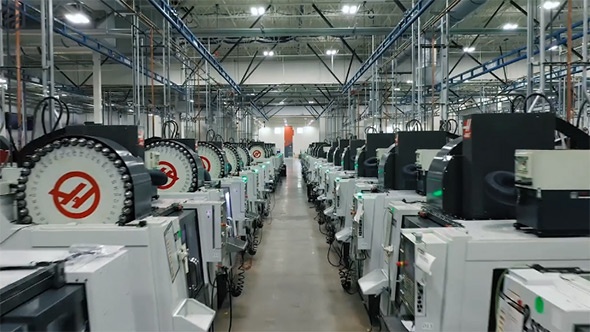
Engineering Insight: The Critical Role of Precision in Prototype Machining Services
In the realm of custom metal manufacturing, prototype machining services serve as the foundation for innovation, product validation, and engineering refinement. At Wuxi Lead Precision Machinery, we recognize that the success of any advanced mechanical system—whether for aerospace, defense, or high-performance industrial applications—begins with a prototype that mirrors the final product in both form and function. Precision is not merely a quality metric; it is a prerequisite for reliability, safety, and performance under extreme conditions.
Our experience in delivering prototype machining services to support Olympic-grade equipment and military-grade systems underscores the uncompromising standards required in high-stakes environments. In these applications, even a micron-level deviation can lead to catastrophic failure or suboptimal performance. This level of accountability shapes our engineering philosophy: every prototype must be machined to exacting tolerances, with full traceability, material integrity, and dimensional consistency.
Precision in prototype machining goes beyond the capability of advanced CNC equipment. It demands a holistic approach that integrates skilled engineering oversight, rigorous process validation, and real-time quality assurance. At Lead Precision, our CNC machining centers operate with tolerances as tight as ±0.002 mm, supported by in-house metrology labs equipped with coordinate measuring machines (CMM), optical comparators, and surface finish testers. This enables us to verify geometric accuracy and surface integrity at every stage of production.
Furthermore, our engineers work closely with clients during the design-for-manufacturability (DFM) phase to identify potential risks, optimize material selection, and recommend machining strategies that enhance both performance and cost-efficiency. Whether working with titanium alloys for aerospace frames or hardened steels for defense mechanisms, our team ensures that each prototype not only meets but exceeds functional expectations.
The value of precision becomes evident when transitioning from prototype to production. A well-executed prototype reduces development cycles, minimizes costly redesigns, and accelerates time-to-market. For industries where performance under stress is non-negotiable, such as military systems or elite sports technology, the fidelity of the prototype directly correlates with end-product success.
At Wuxi Lead Precision Machinery, our legacy of supporting mission-critical applications is a testament to our technical mastery and unwavering commitment to precision. We do not simply manufacture prototypes—we engineer confidence.
Prototype Machining Capabilities at Wuxi Lead Precision Machinery
| Specification | Capability |
|---|---|
| Machining Tolerances | ±0.002 mm |
| Maximum Work Envelope (XYZ) | 1200 mm × 800 mm × 600 mm |
| Materials Supported | Aluminum Alloys, Stainless Steel, Titanium, Inconel, Brass, Tool Steels |
| CNC Equipment | 3-axis, 4-axis, 5-axis Machining Centers |
| Surface Finish | As fine as Ra 0.4 µm |
| Quality Standards | ISO 9001:2015, Full First Article Inspection (FAI) Reports |
| Lead Time (Typical) | 7–15 days, based on complexity |
Precision Specs & Tolerances
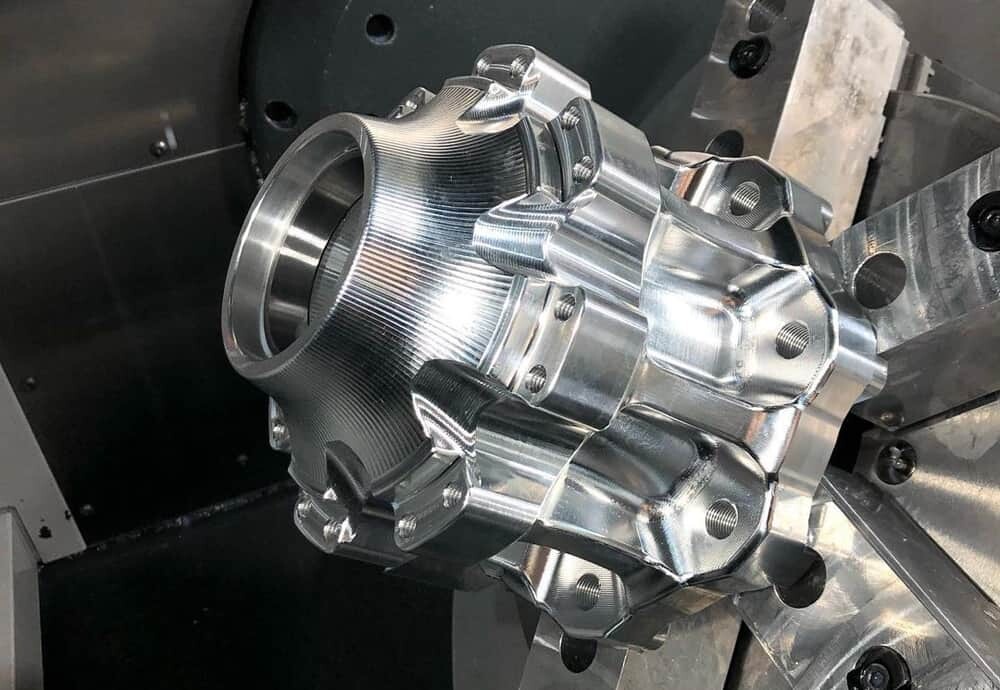
Technical Capabilities for Precision Prototype Machining
Wuxi Lead Precision Machinery delivers engineering-grade prototype machining services engineered for complex, high-integrity metal components. Our focus extends beyond basic fabrication to achieving production-intent accuracy during the critical development phase. This capability ensures prototypes functionally validate designs under real-world conditions, minimizing costly redesigns and accelerating time-to-market. We specialize in low-volume, high-mix production where material integrity, geometric complexity, and dimensional stability are non-negotiable.
Our core strength lies in advanced 5-axis CNC milling and turning centers, enabling single-setup machining of intricate geometries unattainable with 3-axis systems. This technology eliminates cumulative error from multiple fixturing operations, critical for maintaining tight tolerances across compound angles and organic surfaces. Capable of processing demanding alloys—including aerospace-grade titanium, Inconel, stainless steel, and aluminum—we achieve superior surface finishes and structural fidelity. Machine tool rigidity, thermal compensation systems, and in-process probing (Renishaw) ensure repeatability, even for thin-walled features or deep cavities requiring micron-level control.
Quality validation is embedded in every workflow through comprehensive Coordinate Measuring Machine (CMM) inspection. Utilizing Zeiss CONTURA systems with automated programming, we perform full first-article inspections against CAD models, generating AS9102-compliant reports with GD&T analysis. This provides traceable, objective verification of all critical features, including positional tolerances, profile deviations, and surface contours. Our metrology lab operates under ISO 17025 guidelines, with temperature-stable environments ensuring measurement certainty.
Tolerance execution is geometry and material-dependent, but our standard capabilities consistently meet demanding industry benchmarks. The following table outlines achievable precision ranges for common prototype features:
| Feature | Standard Tolerance | Tight Tolerance | Notes |
|---|---|---|---|
| Critical Dimensions | ±0.025 mm (±0.001″) | ±0.005 mm (±0.0002″) | Material-dependent; achievable on features < 150 mm |
| Holes (Drilled) | ±0.025 mm (±0.001″) | ±0.010 mm (±0.0004″) | Depth-to-diameter ratio < 4:1 |
| Flatness | 0.025 mm (0.001″) | 0.005 mm (0.0002″) | Over 100 mm surface area |
| Positional Tolerance | ±0.025 mm (±0.001″) | ±0.010 mm (±0.0004″) | Relative to datum; verified via CMM |
| Surface Roughness | Ra 0.8 µm (32 µin) | Ra 0.4 µm (16 µin) | Machined finish; excludes polishing |
These tolerances reflect our standard production capability for geometries under 300 mm; extended ranges require engineering review. Prototypes are machined using production-intent toolpaths and parameters, ensuring dimensional behavior accurately predicts final manufacturing outcomes. By integrating 5-axis precision with metrology-grade verification, Wuxi Lead provides prototypes that serve as reliable functional benchmarks—not merely visual models—reducing development risk for clients in aerospace, medical, and advanced industrial sectors. This technical rigor transforms early-stage validation into a strategic asset for product success.
Material & Finish Options
Material Selection for Prototype Machining Services
Selecting the appropriate material is a critical step in the prototype development process, directly influencing performance, durability, and manufacturability. At Wuxi Lead Precision Machinery, we specialize in high-precision prototype machining services using premium-grade metals, including aluminum, steel, and titanium. Each material offers distinct mechanical properties and cost considerations, making them suitable for different engineering applications across aerospace, automotive, medical, and industrial sectors.
Aluminum is one of the most widely used materials in prototyping due to its excellent strength-to-weight ratio, corrosion resistance, and machinability. Grade 6061-T6 is particularly favored for general-purpose prototypes, offering good weldability and dimensional stability. It is ideal for lightweight structural components, enclosures, and functional test models where weight reduction is a priority. For more demanding applications, 7075-T6 provides higher strength, often used in aerospace and defense prototypes.
Steel, particularly stainless steel 304 and 316, is selected when superior strength, wear resistance, and temperature stability are required. Stainless steel 316 stands out for its excellent corrosion resistance, especially in marine and medical environments, due to its molybdenum content. These materials are commonly used in high-stress mechanical parts, surgical instruments, and fluid-handling components. While heavier than aluminum, steel offers unmatched durability and long-term reliability under harsh conditions.
Titanium, specifically Grade 5 (Ti-6Al-4V), is the material of choice for high-performance prototypes in aerospace, biomedical, and motorsport applications. It combines exceptional strength, low density, and outstanding resistance to extreme temperatures and corrosion. Despite its higher cost and more challenging machining requirements, titanium’s biocompatibility and fatigue resistance make it indispensable for critical components such as aircraft fittings and medical implants.
Surface finish selection further enhances material performance. Anodizing is a widely used electrochemical process for aluminum parts, improving surface hardness, wear resistance, and aesthetic quality. Type II anodizing provides moderate protection with optional coloring, while Type III (hardcoat anodizing) delivers a thick, durable oxide layer suitable for high-wear environments. All anodized finishes are compatible with tight-tolerance machining, ensuring dimensional integrity.
Below is a comparative overview of key materials used in our prototype machining services.
| Material | Grade | Tensile Strength (MPa) | Density (g/cm³) | Key Properties | Common Applications |
|---|---|---|---|---|---|
| Aluminum | 6061-T6 | 310 | 2.7 | Lightweight, corrosion-resistant, machinable | Enclosures, brackets, test models |
| Aluminum | 7075-T6 | 572 | 2.8 | High strength, fatigue-resistant | Aerospace, defense components |
| Stainless Steel | 304 | 505 | 8.0 | Durable, weldable, moderate corrosion resistance | Industrial, food processing |
| Stainless Steel | 316 | 570 | 8.0 | Excellent corrosion resistance | Marine, medical devices |
| Titanium | Ti-6Al-4V | 950 | 4.4 | High strength-to-weight, biocompatible | Aerospace, implants, racing parts |
At Wuxi Lead Precision Machinery, we support material certification, first-article inspection, and finish validation to ensure every prototype meets exact design specifications. Our engineering team collaborates closely with clients to recommend optimal material and finish combinations based on application requirements, environmental exposure, and production scalability.
Manufacturing Process & QC
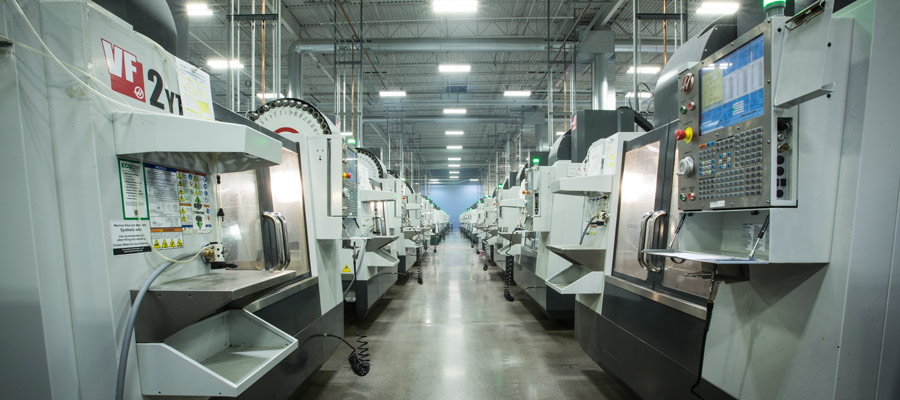
Precision Manufacturing Process: From Concept to Zero-Defect Production
At Wuxi Lead Precision Machinery, our production process is engineered for absolute reliability, transforming client concepts into flawless metal components through three rigorously controlled phases. This integrated workflow ensures manufacturability, validates performance, and guarantees scalability while adhering to our core Zero Defects mandate. The journey begins with collaborative Design for Manufacturability (DFM) analysis. Our engineering team reviews every CAD model, identifying potential geometric conflicts, material constraints, or process inefficiencies before metal is cut. We provide actionable feedback on feature feasibility, tolerance stack-ups, and optimal material selection—aluminum, steel, titanium, or exotic alloys—to prevent downstream issues. This proactive phase reduces iterations, accelerates time-to-market, and establishes the foundation for defect prevention.
Prototyping transitions validated designs into physical reality under full production conditions. Utilizing advanced 3-5 axis CNC milling and turning centers, we produce functional prototypes matching final production quality. Critical dimensions undergo comprehensive metrology via CMM, optical comparators, and surface finish testers against the original specifications. This stage is not merely validation; it is a stress test for the entire manufacturing system. We analyze tool paths, fixture stability, and material behavior to refine processes, ensuring the prototype performs identically to the intended mass-produced part. Client sign-off at this stage confirms both form/function and process readiness.
Mass production leverages the perfected workflow from prototyping, scaled with uncompromising quality control. Every batch undergoes statistical process control (SPC), with real-time monitoring of critical parameters like tool wear, thermal drift, and dimensional stability. Automated in-process gauging and 100% critical feature inspection eliminate drift. Our closed-loop system triggers immediate corrective action if deviations approach tolerance limits, preventing non-conforming parts from progressing. First-article inspection reports and batch traceability documentation accompany all deliveries, providing auditable proof of Zero Defects execution. This phase delivers consistent, high-volume output with the same precision as the initial prototype.
Key process specifications ensure seamless phase transition and quality continuity:
| Phase | Key Activities | Typical Tolerances | Lead Time (Standard) | Quality Focus |
|---|---|---|---|---|
| Design | DFM Analysis, Material Selection, CAD Validation | N/A | 1-3 Days | Preventing manufacturability flaws |
| Prototyping | Functional Part Production, Metrology Validation | ±0.005 mm | 5-10 Days | Process validation & performance |
| Mass Production | SPC, In-Process Gauging, Batch Traceability | ±0.002 mm (Tight) | 10-25 Days | Zero Defects execution & consistency |
Achieving Zero Defects requires embedding quality into every phase, not inspecting it in at the end. At Wuxi Lead, our integrated Design-Prototyping-Production system, governed by stringent process controls and metrology, transforms precision requirements into defect-free reality. We partner with clients to ensure their specifications are not just met, but consistently exceeded across every component delivered.
Why Choose Wuxi Lead Precision
Partner with Lead Precision for Unmatched Prototype Machining Excellence
When it comes to bringing precision-engineered concepts to life, Wuxi Lead Precision Machinery stands at the forefront of custom metal manufacturing. As a trusted partner for global engineering teams, OEMs, and R&D departments, we specialize in high-accuracy prototype machining services that accelerate product development cycles without compromising quality. Our mission is simple: deliver machined prototypes that meet exact design specifications, on time, and with full traceability.
Located in Wuxi, China, our ISO 9001-certified facility combines advanced CNC machining technology with decades of engineering expertise. We understand that prototypes are more than just early versions—they are critical validation tools that influence design decisions, investor confidence, and time-to-market. That’s why every component we produce undergoes rigorous quality control, from raw material inspection to final dimensional verification using CMM and optical measurement systems.
Our capabilities span 3-axis, 4-axis, and 5-axis CNC milling, precision turning, and multi-tasking machining centers, enabling us to handle complex geometries and tight tolerances as tight as ±0.005 mm. Whether you’re developing aerospace components, medical devices, or industrial automation systems, we support a wide range of materials including aluminum alloys, stainless steel, titanium, brass, and engineering plastics.
We pride ourselves on seamless collaboration. From the moment you submit your design, our engineering team engages in a thorough manufacturability review, offering DFM feedback to optimize part performance and reduce lead times. With rapid prototyping cycles typically completed in 5–10 business days, we ensure your project stays on schedule.
Below are key technical specifications that define our prototype machining capabilities.
| Specification | Detail |
|---|---|
| Machining Processes | 3-axis, 4-axis, 5-axis CNC milling; CNC turning; multi-axis milling/turning |
| Tolerances | ±0.005 mm (standard), down to ±0.002 mm (high precision) |
| Maximum Work Envelope | 1200 × 600 × 500 mm (XYZ) |
| Materials | Aluminum (6061, 7075), Stainless Steel (303, 304, 316), Titanium (Grade 2, 5), Brass, Copper, PEEK, Delrin |
| Surface Finishes | As-machined, bead blast, anodizing (Type II & III), passivation, powder coating |
| Lead Times | 5–10 days for standard prototypes; expedited options available |
| Quality Standards | ISO 9001:2015, First Article Inspection (FAI), PPAP documentation available |
At Wuxi Lead Precision Machinery, we don’t just manufacture prototypes—we enable innovation. Our clients rely on us not only for technical precision but also for responsive communication, NDA protection, and full transparency throughout the production process.
Take the next step in your product development journey. Contact us today at [email protected] to discuss your prototype requirements, request a quote, or schedule a virtual tour of our facility. Let Lead Precision be your strategic manufacturing partner in turning ideas into precision-engineered reality.
⚙️ Precision Cost Estimator
Estimate relative manufacturing effort based on tolerance.