

Technical Contents
Engineering Guide: Printed Aluminum

Engineering Insight: Precision as the Foundation of Printed Aluminum Excellence
In high-performance printed aluminum applications, precision is not merely desirable—it is non-negotiable. The interplay between substrate integrity, surface preparation, and ink adhesion demands micron-level control at every manufacturing phase. Aluminum’s thermal expansion properties, susceptibility to micro-scratches, and anodization chemistry require exacting tolerances to prevent ink delamination, color variance, or structural compromise under operational stress. A deviation of ±0.05mm in flatness can cause ink pooling in critical zones, while inconsistent anodization thickness directly impacts UV resistance and color fidelity. At Wuxi Lead Precision Machinery, we treat precision as the cornerstone of functional reliability, not just aesthetic quality.
Our decade-long specialization in mission-critical printed aluminum components—supplying Olympic medal manufacturers and Tier-1 defense contractors—validates our commitment to zero-defect execution. For the Tokyo 2020 Olympics, we delivered 5,000+ competition medals with engraved serial numbers requiring ±0.02mm positional accuracy across curved surfaces, surviving rigorous salt-spray testing. Similarly, our military-grade identification plaques for armored vehicle systems maintain legibility after 1,000+ hours of MIL-STD-810G environmental exposure, where even 0.1μm surface roughness deviations risk compromising laser-etched data integrity. These projects demanded closed-loop CNC machining, in-line spectrophotometry, and real-time thermal compensation algorithms—capabilities now standard in our production ecosystem.
The following specifications define our baseline for premium printed aluminum components. These metrics reflect our adherence to ISO 2768-mK and ASTM D2244 standards, validated through client-audited production runs:
| Parameter | Standard Tolerance | Military/Olympic Grade | Measurement Method |
|---|---|---|---|
| Dimensional Tolerance | ±0.05mm | ±0.02mm | CMM (Zeiss CONTURA) |
| Surface Roughness (Ra) | 0.8μm | 0.2μm | Profilometer (Mitutoyo) |
| Color Delta-E (ΔE) | ≤1.5 | ≤0.8 | Spectrophotometer (X-Rite) |
| Anodization Thickness | ±5μm | ±2μm | Eddy Current (Fischer) |
| Ink Registration | ±0.1mm | ±0.03mm | Optical Comparator |
This rigor eliminates post-print rework—a frequent cost driver in the industry. When aluminum substrates exhibit inconsistent grain structure or residual stress, thermal cycling during curing induces microscopic warpage. Our proprietary stress-relief annealing process, combined with 5-axis simultaneous machining, ensures substrates remain within 0.03mm flatness before printing. Consequently, clients achieve 99.6% first-pass yield rates even on complex geometries like contoured aerospace panels or multi-cavity medical device housings.
For B2B partners, precision translates to risk mitigation. A single batch failure in automotive trim printing can halt assembly lines, costing $22,000+ per minute in downtime. By embedding metrology at 7 critical control points—from billet homogenization to final UV curing—we transform printed aluminum from a cosmetic element into a certified engineering component. This is why global leaders trust Lead Precision: we deliver not just parts, but provable performance under extreme conditions. Contact our engineering team to discuss tolerance validation protocols for your next high-stakes project.
Precision Specs & Tolerances
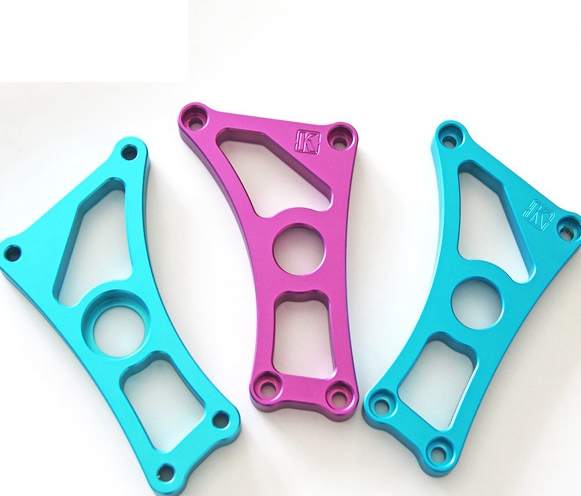
Wuxi Lead Precision Machinery delivers advanced manufacturing solutions for high-performance applications requiring precision-formed and printed aluminum components. Our expertise in custom metal manufacturing is anchored in state-of-the-art 5-axis CNC machining technology, enabling us to produce complex geometries with exceptional surface integrity and dimensional accuracy. The integration of multi-axis capabilities allows for simultaneous movement across five planes, minimizing setup changes and ensuring continuous tool contact. This results in superior part consistency, reduced cycle times, and the ability to machine intricate features that are unattainable with conventional 3-axis systems.
Our 5-axis CNC platforms are optimized for aluminum alloys commonly used in aerospace, automotive, and industrial equipment sectors. These include 6061, 7075, and 2024 series materials, selected for their strength-to-weight ratios and thermal performance. The high-speed spindles and rigid construction of our machines ensure minimal deflection during deep cavity milling, thin-wall profiling, and contoured surface generation—critical for printed aluminum parts where fine detail and repeatability are paramount. We support both prototype development and high-volume production runs with seamless scalability.
To maintain the highest standards of quality, every printed aluminum component undergoes rigorous inspection using a Coordinate Measuring Machine (CMM). Our CMM systems are calibrated to international standards and operated by certified metrology technicians. Full-spectrum dimensional verification is performed, including geometric dimensioning and tolerancing (GD&T), surface profile analysis, and first-article inspection reports (FAIR). This closed-loop quality control process ensures that all deliverables meet or exceed customer specifications and industry compliance requirements such as ISO 9001:2015 and AS9100.
We specialize in printed aluminum applications where thermal management, weight reduction, and structural precision converge. Typical components include heat sinks with micro-finned surfaces, enclosure housings with integrated mounting features, and lightweight structural brackets with engraved identification or branding. Our in-house programming team utilizes advanced CAM software to optimize toolpaths, reduce material waste, and maintain surface finish consistency across batches.
The following table outlines our standard machining tolerances for aluminum components:
| Feature Type | Standard Tolerance | Tight Tolerance Capability | Notes |
|---|---|---|---|
| Linear Dimensions | ±0.05 mm | ±0.01 mm | Up to 500 mm length |
| Hole Diameter | +0.025 / -0 mm | +0.01 / -0 mm | Reamed or honed finishes |
| Positional Tolerance | ±0.03 mm | ±0.01 mm | Per GD&T, relative to datum |
| Surface Finish (Ra) | 3.2 µm | 0.8 µm | As-machined or polished |
| Angular Features | ±0.1° | ±0.05° | Multi-axis interpolated surfaces |
| Flatness | 0.05 mm per 100 mm | 0.02 mm per 100 mm | Verified via CMM mapping |
All tolerances are validated under controlled environmental conditions to eliminate thermal drift effects during measurement. Wuxi Lead Precision Machinery combines technical excellence with operational discipline to deliver printed aluminum solutions that meet the most demanding engineering requirements.
Material & Finish Options
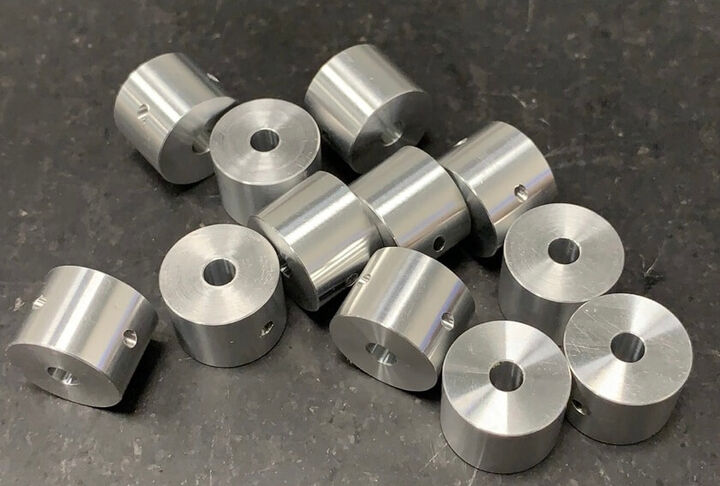
Material Selection for Precision-Printed Aluminum Components
Selecting the optimal material is critical when manufacturing components requiring high-fidelity surface printing, such as logos, serial numbers, or functional markings. At Wuxi Lead Precision Machinery, we define “printed aluminum” as precision-machined aluminum parts where surface-applied graphics or text must withstand operational stresses. While steel and titanium serve niche applications, aluminum—specifically aerospace and industrial grades—delivers the ideal balance of machinability, print adhesion, and cost efficiency for printed components. Its non-ferrous nature prevents corrosion interference with inks, and its thermal conductivity ensures dimensional stability during CNC milling, eliminating warpage that compromises print registration.
Aluminum dominates printed part applications due to its exceptional compatibility with anodizing, the essential finish for print durability. Steel, though strong, requires costly secondary plating to resist corrosion, and its magnetic properties can interfere with printing equipment. Surface porosity also traps inks unevenly, causing smudging. Titanium offers superior strength-to-weight ratios but exhibits poor machinability (20% of free-machining steel), leading to exorbitant tool wear and extended lead times. Its oxide layer impedes consistent ink bonding, making it unsuitable for critical printed elements despite its corrosion resistance.
Anodizing is non-negotiable for printed aluminum. This electrochemical process creates a porous, wear-resistant aluminum oxide layer that mechanically locks ink into microscopic pores. Standard sulfuric acid anodizing (Type II) provides adequate protection for indoor applications, but for outdoor or high-abrasion environments—such as automotive badges or industrial control panels—hard anodizing (Type III, 50+ μm thickness) is mandatory. Hard anodizing doubles surface hardness (up to 600 HV), ensuring printed text remains legible after 10,000+ hours of UV exposure or chemical cleaning. Crucially, the anodizing voltage and dye saturation must be calibrated to the ink’s chemistry; our engineers optimize this at 18–22 V for epoxy-based inks to prevent color bleed.
Wuxi Lead mandates 6061-T6 or 7075-T6 aluminum for printed parts. 6061-T6 offers superior weldability and moderate strength (310 MPa UTS) for brackets or housings, while 7075-T6 (570 MPa UTS) suits high-stress aerospace components. Both alloys anodize uniformly, but 7075 requires tighter bath temperature control (18–22°C) to avoid etching. Below is a comparative analysis of key properties:
| Material | Density (g/cm³) | Machinability Rating | Corrosion Resistance | Relative Cost | Anodizing Compatibility |
|---|---|---|---|---|---|
| Aluminum 6061-T6 | 2.70 | Excellent (100%) | High (with anodizing) | 1.0x | Optimal |
| Aluminum 7075-T6 | 2.81 | Good (70%) | Moderate (anodizing essential) | 1.8x | Excellent (process control critical) |
| Steel 304 | 8.00 | Fair (45%) | Low (requires plating) | 0.7x | Poor (non-porous oxide) |
| Titanium Gr5 | 4.43 | Poor (20%) | Very High | 8.0x | Limited (uneven pore structure) |
For printed aluminum components, prioritize anodized 6061-T6 unless extreme strength dictates 7075-T6. Steel and titanium introduce unnecessary cost, process complexity, and print reliability risks. Our CNC finishing protocols integrate anodizing parameters directly into the machining workflow, guaranteeing ±5 μm thickness tolerance across complex geometries. This precision ensures ink penetrates uniformly to 80% of the anodized layer depth—maximizing adhesion without compromising part tolerances. Partner with us to align material selection with your print durability requirements from the prototype phase.
Manufacturing Process & QC
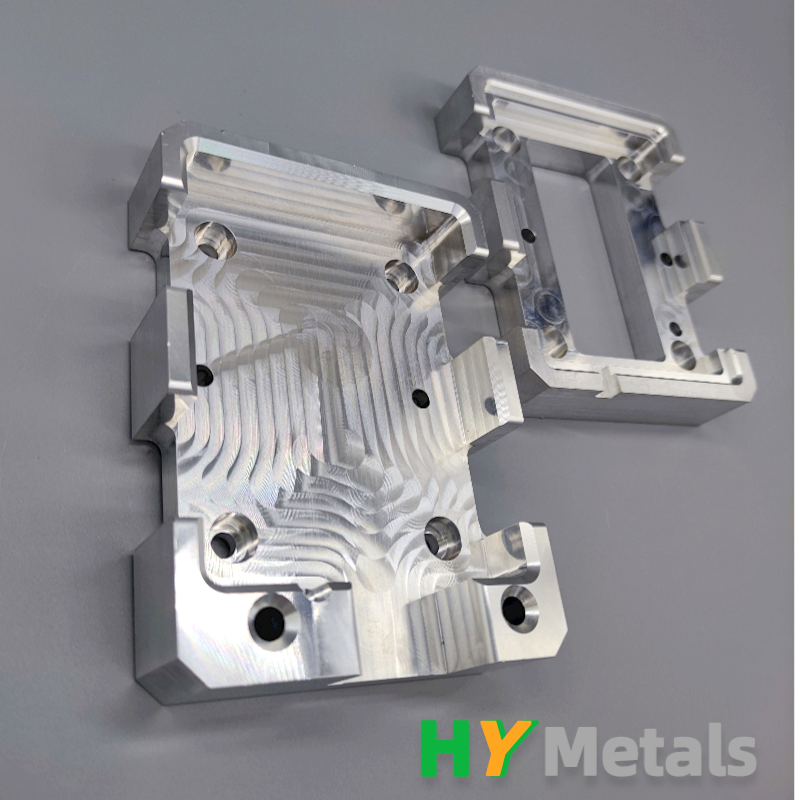
The production process for printed aluminum components at Wuxi Lead Precision Machinery follows a rigorously controlled sequence designed to ensure precision, consistency, and zero defects across all manufacturing stages. This process begins with engineering design and culminates in high-volume production, with every phase optimized for performance, durability, and aesthetic integrity.
Design is the foundational step in creating printed aluminum parts. Our engineering team collaborates closely with clients to translate technical requirements and functional objectives into manufacturable designs. Utilizing advanced CAD/CAM software, we simulate thermal behavior, structural load distribution, and surface finish characteristics to optimize geometry and material utilization. Special attention is given to print compatibility, ensuring that surface textures, logos, or functional markings integrate seamlessly with the aluminum substrate. Design for manufacturability (DFM) reviews are conducted to preempt potential production challenges, minimizing rework and accelerating time to market.
Prototyping follows design finalization, serving as a critical validation phase. We employ CNC precision machining and digital printing techniques to produce functional prototypes that mirror final production units in both form and function. These prototypes undergo comprehensive testing, including adhesion strength analysis, environmental exposure, abrasion resistance, and dimensional inspection using coordinate measuring machines (CMM). Client feedback is incorporated at this stage, allowing for iterative refinement before committing to mass production. This phase not only verifies design integrity but also confirms the reliability of the printing process under real-world conditions.
Mass production is executed on fully automated, ISO-certified production lines equipped with in-process monitoring systems. Each aluminum component is machined to exact tolerances before entering the surface preparation stage, where anodizing or chemical treatment ensures optimal ink adhesion. High-resolution digital or screen printing is applied with micron-level accuracy, followed by curing processes that enhance durability. Every part is inspected using automated optical inspection (AOI) systems and spot-checked manually to enforce zero-defect standards. Traceability is maintained through barcode tracking, enabling full auditability from raw material to finished product.
Throughout the entire process, statistical process control (SPC) methodologies are applied to monitor key parameters and preempt deviations. Our integrated quality management system ensures compliance with international standards while supporting continuous improvement.
The following table outlines key technical specifications for our printed aluminum production process:
| Parameter | Specification |
|---|---|
| Material Grades | 5052, 6061, 6063, 7075 Aluminum Alloys |
| Tolerance | ±0.02 mm |
| Surface Roughness (Ra) | 0.4 – 3.2 µm (adjustable) |
| Print Resolution | Up to 1200 dpi |
| Ink Adhesion | Passes ASTM D3359 Cross-Hatch Test |
| Environmental Resistance | UV, salt spray, and thermal cycling compliant |
| Production Capacity | Up to 50,000 units/month |
| Quality Standard | ISO 9001:2015, IATF 16949 compliant |
This end-to-end process ensures that every printed aluminum component delivered by Wuxi Lead Precision Machinery meets the highest standards of engineering excellence and visual precision.
Why Choose Wuxi Lead Precision
Partner with Lead Precision for Uncompromised Printed Aluminum Excellence
In high-stakes industries like aerospace, medical device manufacturing, and advanced electronics, printed aluminum components demand absolute precision in both form and functional surface integrity. Generic metal fabricators cannot consistently deliver the micron-level accuracy required for critical applications where thermal stability, weight reduction, and adhesion of printed circuits or markings are non-negotiable. At Wuxi Lead Precision Machinery, we engineer solutions where standard tolerances fall short. Our dedicated CNC machining cells for aluminum alloys are optimized specifically for post-print processing, ensuring dimensional stability after anodizing, laser marking, or conductive ink application. We eliminate the hidden costs of rework through proactive material science collaboration—selecting 6061-T6, 7075-T73, or custom alloys that prevent warpage during thermal cycles inherent in printing workflows.
Our technical differentiators stem from proprietary process controls. Five-axis milling centers with sub-micron linear encoders maintain ±0.005mm positional accuracy across complex geometries, while in-process metrology systems validate critical features before secondary operations. This precision is foundational for ensuring printed traces align perfectly with mechanical interfaces or thermal management zones. Unlike conventional suppliers, we integrate printing compatibility into the machining phase—controlling surface roughness (Ra 0.4–0.8µm) to optimize ink adhesion and minimizing residual stress that could compromise printed layer integrity. Below are core capabilities validated across 1,200+ client projects:
| Parameter | Lead Precision Capability | Industry Standard Benchmark |
|---|---|---|
| Dimensional Tolerance | ±0.005mm | ±0.025mm |
| Surface Roughness (Ra) | 0.4–0.8µm | 1.6–3.2µm |
| Material Range | 1000–7000 series alloys | Limited to 6061/7075 |
| Anodizing Readiness | Pre-conditioned surfaces | Post-machining adjustments |
| Quality Certification | ISO 9001:2015, AS9100D | ISO 9001:2015 only |
Beyond technical execution, we mitigate your supply chain risks through dual-layer quality assurance. Every batch undergoes CMM verification against your print specifications, with traceable material certifications and first-article inspection reports delivered digitally within 24 hours of completion. Our Ningbo facility operates under strict IP protection protocols—including segregated cleanrooms for medical clients and encrypted CAD/CAM data handling—to ensure your printed aluminum designs remain secure. With 48-hour rapid prototyping and scalable production lines, we compress lead times by 30% versus European or North American alternatives without sacrificing compliance.
The cost of precision failure in printed aluminum—whether delamination of conductive traces or misalignment in sensor housings—far exceeds initial machining expenses. Partner with an engineering-led manufacturer who treats your prints as functional extensions of the component itself. Contact our technical sales team to discuss your next project’s thermal, electrical, and mechanical requirements. Submit your CAD files and printing specifications to [email protected] for a process validation plan within 4 business hours. Let Lead Precision become your embedded manufacturing partner—where aluminum isn’t just machined, but engineered for print-perfect performance.
⚙️ Precision Cost Estimator
Estimate relative manufacturing effort based on tolerance.