

Technical Contents
Engineering Guide: Plastic Christmas Blow Molds

Engineering Insight: The Critical Role of Precision in Plastic Christmas Blow Molds
In the specialized field of custom metal manufacturing for seasonal consumer goods, plastic Christmas blow molds represent a unique intersection of artistic design and high-precision engineering. These molds, used to produce festive figurines such as Santa Claus, reindeer, and snowmen through rotational or injection blow molding, demand exacting tolerances to ensure consistent wall thickness, surface finish, and structural integrity. At Wuxi Lead Precision Machinery, we understand that even a deviation of ±0.05 mm can result in part failure, material waste, or compromised visual quality—issues that are unacceptable in high-volume holiday production.
Precision in blow mold fabrication is not merely about dimensional accuracy; it encompasses thermal management, material selection, and cavity symmetry. The mold must uniformly transfer heat during the cooling phase to prevent warping or shrinkage, particularly in large, hollow plastic components. Our engineering team employs advanced simulation software to model thermal gradients and predict material behavior, ensuring optimal cooling channel placement and uniform cycle times. This level of control is critical when producing molds that will run continuously for months in overseas manufacturing facilities during peak production cycles.
Wuxi Lead Precision Machinery brings over 15 years of experience in high-stakes precision manufacturing, including projects for Olympic-grade equipment and military defense systems. These applications demand zero-failure performance under extreme conditions—a standard we apply rigorously to every plastic Christmas blow mold we engineer. The same metallurgical analysis used in aerospace components informs our choice of P20 or H13 tool steels, hardened and polished to a mirror finish to ensure easy demolding and long service life. Our CNC machining centers, calibrated to micron-level accuracy, produce cavity blocks with repeatability that supports high-volume output without degradation in part quality.
Our clients rely on us not only for technical excellence but also for a deep understanding of the global holiday supply chain. We design molds with modular features that allow for quick changeovers, reducing downtime during seasonal production surges. Additionally, we integrate venting systems and ejector pin layouts that minimize flash and part deformation—common pain points in complex organic shapes typical of Christmas characters.
Below are key specifications that define our standard for plastic Christmas blow mold performance:
| Specification | Detail |
|---|---|
| Material Options | P20, H13, 420 Stainless Steel |
| Tolerance | ±0.02 mm |
| Surface Finish | Ra 0.2–0.8 μm (mirror to semi-gloss) |
| Cooling Channel Design | Optimized via thermal simulation |
| Mold Life | 500,000+ cycles |
| Machining Accuracy | 5-axis CNC, ±2 μm repeatability |
| Quality Standards | ISO 9001:2015, DFMEA reviewed |
At Wuxi Lead Precision Machinery, we treat every blow mold as a mission-critical component. Our fusion of military-grade precision and seasonal industry insight ensures that our clients meet market demand with reliability, efficiency, and unmatched product quality.
Precision Specs & Tolerances
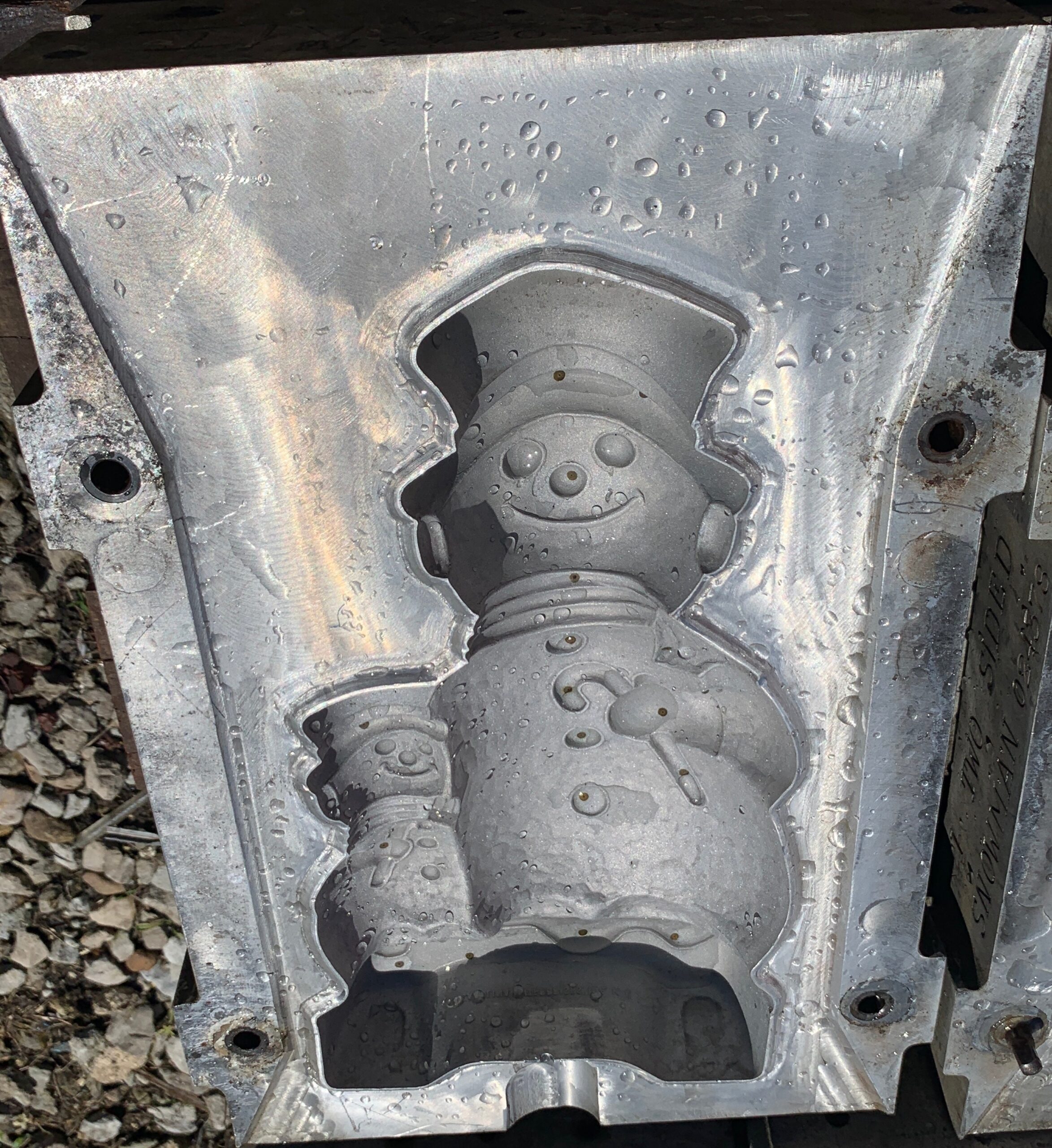
Technical Capabilities for Precision Plastic Christmas Blow Mold Manufacturing
Wuxi Lead Precision Machinery delivers uncompromising precision in custom metal tooling for plastic blow molding applications, specifically engineered for high-volume Christmas decoration production. Our advanced manufacturing ecosystem centers on multi-axis CNC technology and rigorous metrology, ensuring molds meet the exacting demands of intricate holiday designs—thin walls, fine surface textures, and complex geometries—while maximizing part consistency and tool longevity.
Our facility leverages state-of-the-art 5-axis CNC machining centers, enabling single-setup processing of mold cavities, cores, and manifolds with exceptional accuracy. This eliminates cumulative fixturing errors inherent in 3-axis workflows, critical for maintaining uniform wall thickness in delicate ornament shapes like snowflakes, stars, or figurines. Simultaneous 5-axis contouring achieves seamless transitions across compound curves and undercuts, directly translating CAD models into mold surfaces with minimal hand finishing. Material removal rates are optimized for tool steels (P20, H13) and aluminum alloys, reducing lead times without sacrificing surface integrity. All machining operations adhere to strict thermal compensation protocols, ensuring dimensional stability across production runs.
Quality control is anchored by Zeiss CONTURA G2 Coordinate Measuring Machines (CMM), providing full 3D verification of mold components against nominal CAD data. Every critical feature—draft angles, parting lines, cooling channels, and ejector pin locations—undergoes comprehensive inspection. Our CMM routines validate geometric dimensioning and tolerancing (GD&T) callouts, including profile tolerances and positional accuracy, with traceable NIST-certified results. This systematic approach prevents costly mold rework and ensures first-article approval success with global clients.
The following table details our standard precision capabilities for blow mold components:
| Feature Category | Capability | Standard Tolerance Range |
|---|---|---|
| Linear Dimensions | 5-Axis Milling & Turning | ±0.005 mm (±0.0002″) |
| Geometric Form | Profile of Surface | 0.010 mm (0.0004″) |
| Positional Accuracy | Hole Patterns & Core Pins | ±0.008 mm (±0.0003″) |
| Surface Finish | Cavity/Core Machining | Ra 0.4 µm (16 µin) |
| Parting Line Match | CMM-Validated Assembly | ≤ 0.02 mm (0.0008″) |
These tolerances are consistently achieved across mold sizes up to 1,200 x 800 x 600 mm, supporting multi-cavity configurations for seasonal production scalability. Tight control over cooling channel placement (±0.01 mm) ensures uniform thermal management, directly reducing cycle times and minimizing warpage in thin-walled plastic parts. By integrating precision manufacturing with closed-loop quality validation, Wuxi Lead ensures molds deliver 500,000+ cycles with minimal maintenance—translating to lower cost-per-part and accelerated time-to-market for your Christmas product lines. Partner with us to transform complex decorative concepts into production-ready tooling, backed by engineering rigor and measurable performance outcomes.
Material & Finish Options

Material selection is a critical phase in the development of high-performance plastic Christmas blow molds, directly influencing production efficiency, part quality, and tooling longevity. At Wuxi Lead Precision Machinery, we specialize in custom metal manufacturing for precision blow mold tooling, offering expert guidance in selecting the optimal base material and surface treatment to meet your production demands. The three primary materials used in blow mold construction—aluminum, steel, and titanium—each offer distinct advantages depending on volume, complexity, and operational conditions.
Aluminum is widely favored for low- to medium-volume production due to its excellent thermal conductivity and machinability. It allows for faster cycle times by facilitating rapid heat transfer during the blow molding process, reducing cooling periods. Its lightweight nature also simplifies mold handling and integration into automated systems. While not as wear-resistant as steel, aluminum molds are ideal for prototyping and seasonal production runs typical in the Christmas décor industry.
Steel, particularly hardened tool steels such as P20 or H13, is the preferred choice for high-volume manufacturing. It offers superior durability, dimensional stability, and resistance to wear and deformation under repeated thermal cycling. For manufacturers producing millions of units annually, steel molds provide a longer service life and reduced maintenance costs over time. However, steel’s lower thermal conductivity compared to aluminum may extend cycle times, requiring careful cooling channel design to optimize efficiency.
Titanium, though less common due to cost and machining complexity, presents unique benefits in specialized applications. Its exceptional strength-to-density ratio and corrosion resistance make it suitable for aggressive environments or molds requiring extreme durability without added weight. While not standard for conventional Christmas blow molds, titanium may be considered for niche, high-stress components or integrated mold features where longevity under harsh conditions is paramount.
Surface finishing, particularly anodizing, plays a vital role in enhancing mold performance. Anodizing aluminum increases surface hardness, improves wear resistance, and provides a non-stick oxide layer that aids in part ejection and reduces resin adhesion. Type II (sulfuric acid) and Type III (hardcoat) anodizing are commonly applied, with the latter recommended for molds subject to frequent use or abrasive materials. For steel molds, alternative treatments such as chrome plating or nitriding are typically used to achieve similar protective and release properties.
Below is a comparative overview of key material properties relevant to blow mold applications.
| Material | Thermal Conductivity (W/m·K) | Hardness (HRC) | Typical Mold Life (Cycles) | Common Finishes | Best Use Case |
|---|---|---|---|---|---|
| Aluminum (7075-T6) | 130 | 40–50 | 50,000 – 200,000 | Anodizing (Type II/III) | Prototyping, seasonal production |
| Steel (P20) | 30 | 28–32 | 500,000 – 1M+ | Chrome plating, Nitriding | High-volume, long-run production |
| Titanium (Grade 5) | 7 | 35–45 | 1M+ (in optimal conditions) | TiN coating, Passivation | Specialized, high-durability parts |
At Wuxi Lead Precision Machinery, we evaluate each project’s production volume, part geometry, resin type, and cost targets to recommend the most suitable material and finish combination. Our engineering team ensures every mold is optimized for performance, longevity, and seamless integration into your manufacturing workflow.
Manufacturing Process & QC

Plastic Christmas Blow Mold Production: Zero Defects Through Precision Engineering
At Wuxi Lead Precision Machinery, we execute plastic Christmas blow mold manufacturing through a rigorously controlled three-phase process. This methodology ensures zero defects while meeting the exacting seasonal demands of global OEMs. Our approach integrates advanced CNC technology with statistical process control, transforming conceptual designs into flawless production assets.
Design Phase: Engineering Perfection from Inception
Our engineering team initiates every project with comprehensive CAD/CAM analysis, focusing on parting lines, draft angles, and cooling channel optimization specific to intricate Christmas ornament geometries. Finite element analysis (FEA) validates structural integrity under high-pressure blow molding cycles, while mold flow simulation predicts material behavior to eliminate sink marks or warpage. Critical to seasonal success, we enforce Design for Manufacturing (DFM) protocols early, reducing iterations by 40% and ensuring cavity alignment tolerances remain within ±0.05mm. All designs comply with ISO 9001 standards and client-specific material specifications, including FDA-grade resins for decorative applications.
Prototyping: Validation Under Production Conditions
Prototypes are machined in-house using 5-axis CNC centers to verify design functionality before mass production. We utilize aluminum 7075-T6 for rapid iteration, achieving surface finishes of Ra 0.8µm to mimic final steel tooling. Each prototype undergoes 50+ validation cycles at production-equivalent pressures (1.0–4.0 MPa), with real-time monitoring of parison control, cooling efficiency, and ejection dynamics. Dimensional inspection via CMM confirms critical features—such as ornament suspension points and base stability—meet geometric dimensioning and tolerancing (GD&T) requirements. Only after achieving 100% first-article approval do we proceed to production tooling.
Mass Production: Sustained Zero-Defect Execution
Production molds are fabricated from pre-hardened P20 or H13 tool steel, CNC-machined to ±0.02mm accuracy with mirror-polished cavities (Ra 0.2µm). Our facility implements closed-loop process control: sensors track temperature gradients within ±1°C and pressure variances under 0.5%, while automated vision systems inspect 100% of molded parts for flash, thickness deviations, or surface blemishes. Statistical Process Control (SPC) charts monitor cavity-to-cavity consistency across multi-cavity tools, with automatic machine shutdown triggering at 2σ deviations. This system achieves <50 PPM defect rates, critical for holiday supply chains where delays are unacceptable.
Key Technical Specifications
| Parameter | Prototype Specification | Production Specification |
|---|---|---|
| Material | Aluminum 7075-T6 | P20/H13 Tool Steel |
| Tolerance | ±0.05mm | ±0.02mm |
| Surface Finish | Ra 0.8µm | Ra 0.2µm (Mirror Polish) |
| Pressure Range | 1.0–4.0 MPa | 1.0–4.0 MPa (SPC Controlled) |
| Cavity Count | 1–2 | 1–16 |
| Cooling Time | Validated per geometry | Optimized ±1.5 sec |
| Defect Rate Target | N/A (Validation Phase) | <50 PPM |
Wuxi Lead’s integrated process eliminates traditional handoffs between design, prototyping, and production teams. By embedding zero-defect protocols at each stage—from simulation-driven design to AI-augmented production monitoring—we deliver blow molds that consistently achieve 99.98% uptime during peak seasonal runs. Contact our engineering team to discuss how our certified processes mitigate your Christmas production risks.
Why Choose Wuxi Lead Precision
Partner with Wuxi Lead Precision Machinery for Advanced Plastic Christmas Blow Molds
When precision, durability, and design complexity define your production needs, partnering with Wuxi Lead Precision Machinery ensures your plastic Christmas blow molds meet the highest industrial standards. As a leading custom metal manufacturing provider based in Wuxi, China, we specialize in engineering high-performance blow molds tailored specifically for seasonal decorative products. Our expertise spans from concept modeling to final mold delivery, ensuring your Christmas lighting and figurine production runs efficiently, consistently, and at scale.
At Lead Precision, we understand that blow molding for holiday décor demands more than just aesthetic appeal—it requires structural integrity, repeatability, and material compatibility. Our engineering team leverages advanced CNC machining, surface finishing techniques, and 3D simulation software to produce molds that deliver flawless part release, uniform wall thickness, and extended service life. Whether you are manufacturing large illuminated snowmen, reindeer figures, or intricate nativity sets, our molds are built to handle complex geometries and high-cycle production environments.
We work closely with global clients to align technical specifications with market demands. Our in-house R&D department collaborates with your design team to optimize draft angles, cooling channels, and parting lines, minimizing cycle times and reducing scrap rates. All molds are manufactured using premium-grade tool steels such as P20, 718H, or H13, depending on production volume and resin type, ensuring resistance to wear, corrosion, and thermal fatigue.
Our commitment to quality is reinforced through rigorous inspection protocols, including CMM verification, mold flow analysis, and first-article testing. Every plastic Christmas blow mold shipped from our facility undergoes comprehensive performance validation to guarantee seamless integration into your existing production lines.
Below are typical specifications for our custom blow molds:
| Specification | Details |
|---|---|
| Mold Material | P20, 718H, H13, or customer-specified tool steel |
| Machining Tolerance | ±0.005 mm |
| Surface Finish | Mirror polish, texture (MT-11000), or custom coating |
| Part Complexity | High (multi-cavity, undercut features, internal ribs) |
| Cooling System | Optimized conformal cooling channels |
| Cycle Life | 500,000+ cycles (depending on material and maintenance) |
| Lead Time | 4–8 weeks (based on complexity and customization) |
| Compatible Resins | HDPE, LDPE, PP, recycled polyolefins |
Partnering with Wuxi Lead Precision Machinery means gaining a reliable, technically advanced manufacturing ally focused on your long-term success. We support clients across Europe, North America, and Southeast Asia with end-to-end mold solutions, responsive technical service, and post-delivery support.
For inquiries, engineering consultations, or to request a quote for your next Christmas blow mold project, contact us today at [email protected]. Let us help you bring festive innovation to life—on time, within specification, and at competitive cost.
⚙️ Precision Cost Estimator
Estimate relative manufacturing effort based on tolerance.