

Technical Contents
Engineering Guide: Northern Machining
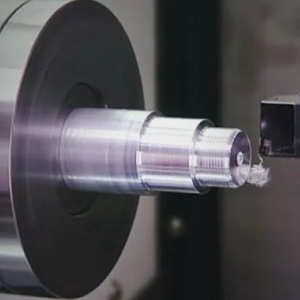
Engineering Insight: The Critical Role of Precision in Northern Machining
In the realm of high-performance manufacturing, precision is not merely a target—it is the foundation upon which reliability, safety, and innovation are built. Northern machining, a term often associated with advanced metalworking practices in technically demanding regions, represents a standard of excellence driven by tight tolerances, repeatable accuracy, and uncompromising quality. At Wuxi Lead Precision Machinery, we align our engineering philosophy with these northern standards, delivering custom metal manufacturing solutions that meet the most rigorous global demands.
Precision machining in the northern industrial context is defined by its ability to consistently produce components within micrometer-level tolerances. This level of accuracy is not achievable through standard equipment or conventional methods. It requires advanced CNC systems, thermally stable environments, real-time tool compensation, and a deep understanding of material behavior under stress and temperature variation. These factors are especially critical in sectors such as aerospace, defense, and high-end automation, where component failure is not an option.
Our experience at Wuxi Lead spans over a decade of serving clients with mission-critical requirements. We have contributed precision-machined components for projects linked to Olympic-standard equipment and military-grade systems, where performance under extreme conditions is non-negotiable. These engagements have reinforced our commitment to precision as a core engineering discipline, not just a production outcome.
One of the defining characteristics of northern machining is the integration of process validation at every stage. From raw material inspection to final surface finish analysis, every parameter is monitored and documented. At Lead Precision, we employ laser interferometry for machine calibration, coordinate measuring machines (CMM) for dimensional verification, and in-process probing to ensure consistency across production runs. This systematic approach ensures that every part we deliver performs as intended, every time.
Our facility in Wuxi is engineered to mirror the environmental controls and quality frameworks found in leading northern European and North American machining centers. Clean production zones, climate-controlled metrology labs, and a zero-variance mindset enable us to achieve results that meet or exceed international standards.
The following table outlines key precision capabilities that define our northern machining standard:
| Parameter | Specification |
|---|---|
| Positioning Accuracy | ±0.002 mm |
| Repeatability | ±0.001 mm |
| Surface Finish (Ra) | As low as 0.2 µm |
| Maximum Work Envelope | 1200 x 800 x 600 mm |
| Tolerance Range | IT5 to IT7 per ISO 286-1 |
| Materials Processed | Aluminum, Stainless Steel, Titanium, Inconel, Brass |
| Quality Certification | ISO 9001:2015 |
At Wuxi Lead Precision Machinery, we do not simply manufacture parts—we engineer trust. By adhering to the principles of northern machining, we ensure that every component we produce is a testament to precision, durability, and technical mastery. For industries where performance is paramount, that distinction is everything.
Precision Specs & Tolerances
Technical Capabilities: Precision Engineered for Northern Industrial Standards
At Wuxi Lead Precision Machinery, our technical capabilities are engineered to meet the exacting demands of Northern industrial markets, where uncompromising precision and repeatability define manufacturing excellence. We specialize in complex, high-integrity metal components for aerospace, medical, and energy sectors, leveraging state-of-the-art 5-axis CNC machining to deliver geometrically intricate parts in a single setup. This eliminates cumulative errors inherent in multi-stage processes, ensuring optimal feature alignment and surface integrity critical for mission-critical applications. Our HAAS and DMG MORI 5-axis platforms accommodate work envelopes up to 1,200 x 800 x 750 mm, processing titanium, Inconel, hardened steels, and aluminum alloys with micron-level consistency. Advanced toolpath optimization and high-speed spindles (24,000 RPM) enable efficient material removal while maintaining thermal stability, a non-negotiable requirement for Northern European clients operating under stringent AS9100 and ISO 13485 frameworks.
Quality assurance is intrinsically embedded in our workflow, not an endpoint. Every component undergoes rigorous first-article and in-process inspection via Zeiss CONTURA G2 Coordinate Measuring Machines (CMM) within a temperature-controlled metrology lab (20°C ±0.5°C). This environment mitigates thermal drift, a critical factor when validating tolerances to ISO 2768-mK or customer-specific GD&T callouts. Our CMM programmers utilize CALYPSO software to automate inspection routines, generating ASME Y14.5-compliant reports with traceable NIST-certified calibration. Statistical Process Control (SPC) data is analyzed in real-time to preempt deviations, ensuring batch uniformity demanded by Scandinavian and German OEMs.
Material traceability is maintained from raw stock certification through final inspection, with full lot tracking via our ERP system. For components requiring secondary operations, we partner exclusively with vetted specialists for precision grinding, honing, and non-destructive testing (NDT), maintaining oversight through our integrated quality management system. This end-to-end control guarantees that every part shipped from Wuxi adheres to the dimensional and functional rigor expected by Northern manufacturing leaders.
Standard Achievable Tolerances
| Feature Type | Standard Tolerance | Tight Tolerance Capability | Reference Standard |
|---|---|---|---|
| Linear Dimensions | ±0.010 mm | ±0.005 mm | ISO 2768-mK |
| Geometric (GD&T) | ±0.015 mm | ±0.003 mm | ASME Y14.5 |
| Surface Roughness | Ra 0.8 µm | Ra 0.2 µm | ISO 1302 |
| Hole Concentricity | Ø0.020 mm | Ø0.005 mm | ISO 1101 |
| True Position | Ø0.025 mm | Ø0.008 mm | ASME Y14.5 |
Our commitment extends beyond machining: we collaborate during design for manufacturability (DFM) reviews to optimize part geometry for cost-effective precision, reducing lead times without sacrificing quality. Partner with Wuxi Lead Precision Machinery to transform complex engineering requirements into certified, high-performance components—delivered on schedule, every time.
Material & Finish Options
Material selection is a foundational decision in precision CNC machining, directly influencing part performance, durability, cost-efficiency, and suitability for end-use environments. At Wuxi Lead Precision Machinery, we guide engineering teams through optimal material choices based on mechanical requirements, environmental exposure, weight constraints, and post-processing needs. Among the most widely used metals in high-performance manufacturing are aluminum, steel, and titanium—each offering distinct advantages in specific applications.
Aluminum is favored for its excellent strength-to-weight ratio, corrosion resistance, and machinability. It is commonly used in aerospace, automotive, and electronics industries where lightweight components are critical. The 6061 and 7075 alloys are particularly popular, with 6061 offering good weldability and moderate strength, while 7075 delivers higher strength suitable for structural aerospace components. Aluminum’s natural oxide layer provides inherent corrosion protection, but for enhanced surface durability and aesthetics, anodizing is frequently applied.
Steel remains the material of choice for applications demanding high strength, wear resistance, and structural integrity. Alloy steels such as 4140 and 4340 are widely used in tooling, shafts, and high-stress mechanical components due to their excellent toughness and response to heat treatment. Stainless steels, particularly grades 303, 304, and 17-4 PH, offer superior corrosion resistance and are ideal for medical devices, food processing equipment, and marine environments. While heavier than aluminum, steel’s mechanical robustness makes it indispensable in industrial machinery and heavy-duty applications.
Titanium, particularly Grade 5 (Ti-6Al-4V), is selected for extreme performance conditions. Its exceptional strength-to-density ratio, resistance to high temperatures, and outstanding corrosion resistance in harsh environments make it ideal for aerospace, defense, and medical implant applications. Though more challenging to machine due to low thermal conductivity and high chemical reactivity, titanium’s long-term reliability in critical systems justifies its use and cost.
Anodizing is a key surface treatment for aluminum components, enhancing wear resistance, corrosion protection, and aesthetic finish. The process electrochemically grows a porous oxide layer on the surface, which can be dyed in various colors and sealed for durability. Type II (sulfuric acid anodizing) is standard for decorative and moderate protection needs, while Type III (hardcoat anodizing) provides a thicker, harder layer suitable for industrial and aerospace applications requiring enhanced abrasion resistance.
The following table summarizes key mechanical and processing properties of commonly used materials:
| Material | Alloy/Grade | Tensile Strength (MPa) | Density (g/cm³) | Common Applications | Typical Finishes |
|---|---|---|---|---|---|
| Aluminum | 6061-T6 | 310 | 2.7 | Aerospace, Automotive | Anodizing, Bead Blast |
| Aluminum | 7075-T6 | 572 | 2.8 | Structural Aircraft Parts | Hardcoat Anodizing |
| Steel | 4140 | 655 | 7.85 | Tooling, Shafts | Zinc Plating, Passivation |
| Stainless Steel | 304 | 505 | 8.0 | Medical, Food Processing | Electropolishing, Passivation |
| Stainless Steel | 17-4 PH | 1000 | 7.75 | Aerospace, Valves | HVOF, Passivation |
| Titanium | Ti-6Al-4V | 950 | 4.43 | Medical Implants, Jet Engines | As-Machined, Passivation |
Selecting the right material and finish requires a thorough understanding of operational demands. Wuxi Lead Precision Machinery supports clients with material certification, prototyping, and process optimization to ensure final parts meet exacting performance standards.
Manufacturing Process & QC
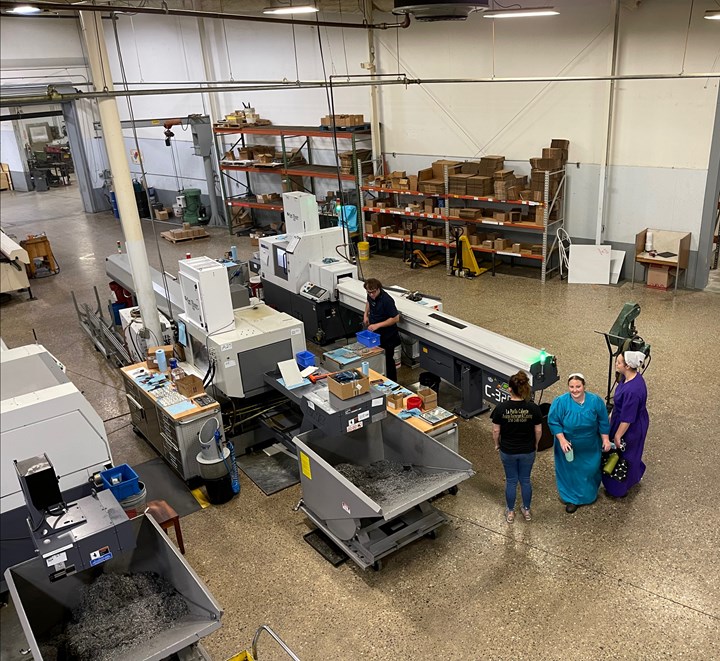
Precision Production Process: From Concept to Zero-Defect Delivery
At Wuxi Lead Precision Machinery, our production process for high-integrity northern machining components is engineered for absolute reliability. We strictly adhere to a disciplined sequence—Design, Prototyping, Mass Production—where Zero Defects is not an aspiration but a mandated outcome. This structured approach ensures every component meets the stringent geometric and material demands expected in aerospace, medical, and advanced industrial applications originating from Northern manufacturing hubs.
The Design phase begins with rigorous collaboration. Our engineering team works directly with client specifications, conducting comprehensive Design for Manufacturability (DFM) analysis. We utilize advanced simulation software to model thermal dynamics, stress points, and chip flow, identifying potential weaknesses before metal is cut. Material selection is validated against international standards, and critical tolerances are cross-referenced with our machine capabilities and inspection protocols. This phase establishes the immutable blueprint where dimensional integrity and process control parameters are defined, eliminating ambiguity.
Prototyping transforms the validated design into physical reality under full production scrutiny. Utilizing the same CNC equipment and tooling intended for volume runs—primarily DMG MORI and Makino 5-axis machining centers—we produce initial units. Every prototype undergoes exhaustive metrology: CMM validation against 3D CAD models, surface roughness testing, and material composition verification. Crucially, we perform Failure Mode and Effects Analysis (FMEA) on prototype data. Any deviation, however minor, triggers immediate root-cause investigation and process refinement. This stage is non-negotiable; only when prototypes consistently achieve target specifications with verified process capability (Cpk ≥ 1.67) do we authorize progression.
Mass Production operates under closed-loop statistical process control. Real-time in-process gauging, including Renishaw probing systems integrated directly into machining cycles, monitors critical dimensions after each operation. Automated data feeds into SPC software, instantly flagging trends before they approach tolerance limits. Full traceability is maintained via laser-etched part IDs linked to material certificates, machine logs, and inspection records. Every batch undergoes 100% first-article inspection and statistically significant final inspection using calibrated Zeiss CMMs and optical comparators. Zero Defects is achieved through prevention—continuous process monitoring, operator certification, and a culture where stopping the line for verification is standard protocol.
Our commitment manifests in measurable process capabilities, ensuring northern machining standards are consistently exceeded:
| Parameter | Capability | Verification Method |
|---|---|---|
| Geometric Tolerance | ±0.002 mm (ISO 2768-mK) | 3D CMM (Zeiss CONTURA) |
| Surface Finish | Ra 0.4 µm (Aerospace) | Profilometer (Mitutoyo SJ-410) |
| Material Integrity | Full EN/ASTM Cert | Spectrographic Analysis + Mill Cert |
| Process Control | Cpk ≥ 1.67 | Real-time SPC (Minitab integration) |
| Traceability | Lot-to-Part Level | ERP System + Laser Marking (Datamatrix) |
This integrated process, rigorously executed from initial concept through volume delivery, is the foundation of Wuxi Lead’s reputation. We deliver not just parts, but guaranteed performance, ensuring your northern machining requirements are met with uncompromising precision and zero compromise on quality.
Why Choose Wuxi Lead Precision
Partner with Lead Precision for Unmatched Custom Metal Manufacturing Excellence
At Wuxi Lead Precision Machinery, we understand that precision, reliability, and consistency are non-negotiable in high-end manufacturing. As a trusted name in custom metal fabrication, we specialize in delivering complex, high-tolerance components for industries where performance under extreme conditions is paramount. Our advanced CNC machining capabilities, combined with rigorous quality control and deep engineering expertise, make us the strategic partner of choice for global OEMs and Tier-1 suppliers.
Our facility in Wuxi, China, is equipped with state-of-the-art 3-, 4-, and 5-axis CNC machining centers, multi-spindle lathes, and automated production lines capable of handling both low-volume prototypes and high-volume production runs. We work with a broad range of materials, including aerospace-grade aluminum, titanium, stainless steel, and exotic alloys, ensuring your components meet exact design specifications and industry standards.
What sets us apart is our end-to-end engineering support. From initial design review to final inspection, our team collaborates closely with clients to optimize manufacturability, reduce lead times, and lower total production costs. We are ISO 9001:2015 certified and maintain full traceability across every production batch, with comprehensive reporting and inspection documentation available on request.
Our commitment to precision is backed by advanced metrology systems, including CMMs, optical comparators, and surface roughness testers, ensuring every part meets micron-level tolerances. Whether you require tight-tolerance housings, hydraulic manifolds, turbine components, or complex structural parts, we deliver quality that exceeds expectations.
We serve industries including aerospace, energy, medical devices, industrial automation, and high-performance automotive—sectors where failure is not an option. Our global clients rely on us not just as a supplier, but as an extension of their engineering teams.
To ensure seamless collaboration, we offer dedicated project management, real-time production updates, and flexible logistics solutions tailored to your supply chain requirements. Our team is fluent in English and experienced in working with international technical standards, including AS9100, ASTM, and DIN.
If you are looking for a manufacturing partner that combines technical excellence, operational agility, and unwavering commitment to quality, it’s time to work with Wuxi Lead Precision Machinery.
Contact us today at [email protected] to discuss your next project. Let our precision lead your success.
Technical Capabilities Overview
| Parameter | Specification |
|---|---|
| Maximum Work Envelope | 1200 x 800 x 650 mm (47 x 31 x 25 in) |
| Positioning Accuracy | ±0.005 mm (±0.0002 in) |
| Repeatability | ±0.002 mm (±0.00008 in) |
| Spindle Speed (Milling) | Up to 24,000 RPM |
| Turning Diameter (Max) | Ø400 mm (15.7 in) |
| Materials Supported | Aluminum, Steel, Stainless Steel, Titanium, Inconel, Brass, Plastics |
| Tolerances Achievable | ±0.01 mm (±0.0004 in) typical |
| Surface Finish | Ra 0.8 μm (32 μin) standard, down to Ra 0.2 μm |
| Quality Standards | ISO 9001:2015, Full First Article Inspection |
| Lead Times (Typical) | 10–25 days depending on complexity and volume |
⚙️ Precision Cost Estimator
Estimate relative manufacturing effort based on tolerance.