

Technical Contents
Engineering Guide: Monster Machining

Engineering Insight Precision at Scale in Monster Machining
Monster machining represents the pinnacle of custom metal manufacturing where component size defies conventional limits. We define it as the production of monolithic metal structures exceeding 5 meters in length or 10 metric tons in weight requiring micron-level tolerances. These are not merely large parts; they are mission-critical elements for hydroelectric turbine shafts, aerospace test rigs, and particle accelerator components where geometry dictates system performance. At this scale, precision transcends specification—it becomes the non-negotiable foundation for structural integrity and operational longevity. A mere 0.05mm per meter deviation in a 15-meter component compounds to a catastrophic 0.75mm positional error, inducing destructive vibration or premature wear in high-stress assemblies. Thermal growth alone during machining can exceed standard tolerance bands, demanding real-time compensation strategies impossible without advanced metrology integration.
The physics of monster machining intensifies precision challenges exponentially. Gravitational sag alters part geometry during fixturing, while residual stresses from forging manifest unpredictably during material removal. We combat this through proprietary stress-relief protocols and in-process laser alignment systems that monitor deflection at 200 data points per second. Our 5-axis gantry mills feature granite bases with active thermal stabilization, maintaining ±0.002°C ambient control—a necessity when machining nickel-based superalloys where 1°C fluctuation induces 12µm/m thermal growth. This level of environmental mastery separates true monster machining capability from standard large-part production.
Wuxi Lead Precision Machinery has engineered solutions where failure is not an option. Our facility holds AS9100 certification with traceability to NIST standards, proven through delivery of Olympic infrastructure components requiring sub-50µm flatness over 12-meter spans for Beijing Winter Games structural frameworks. More critically, we maintain active qualification for defense applications involving classified aerospace subsystems where positional accuracy below 25µm directly impacts national security platforms. This heritage informs our approach: every monster machining project undergoes Failure Modes and Effects Analysis (FMEA) specific to scale-induced variables, ensuring first-article success on components where rework is physically impossible.
Our technical parameters reflect this commitment to extreme-scale precision:
| Parameter | Capability Range | Measurement Standard |
|---|---|---|
| Max Work Envelope | 18m x 6m x 4m | ISO 230-2 |
| Positional Tolerance | ±0.015mm over 10m | Laser Interferometer |
| Surface Flatness | ≤0.03mm/m² | Electronic Level Array |
| Material Range | Titanium to Cast Iron | ASTM/GB Standards |
| In-Process Metrology | Real-time 3D Scanning | 0.001mm Resolution |
Precision in monster machining is not an incremental improvement—it is the absolute prerequisite for viability. At Wuxi Lead, we engineer the invisible margins that transform massive metal into perfectly functioning systems, ensuring your most demanding projects achieve operational excellence from the first rotation. This is where scale meets science, and tolerance defines triumph.
Precision Specs & Tolerances
Wuxi Lead Precision Machinery delivers advanced technical capabilities in custom metal manufacturing, engineered to meet the rigorous demands of high-performance industries such as aerospace, energy, medical, and advanced automation. At the core of our production capacity is a fully integrated 5-axis CNC machining platform, enabling us to execute complex geometries with exceptional precision and surface finish. These multi-axis systems allow simultaneous movement across five planes, providing unparalleled access to intricate features and undercuts that traditional 3-axis machines cannot achieve. This capability significantly reduces setup time, improves part accuracy, and ensures consistency across both prototyping and high-volume production runs.
Our 5-axis machining centers are equipped with high-speed spindles, automatic tool changers, and real-time tool wear compensation, ensuring tight adherence to dimensional requirements across diverse materials—including titanium, Inconel, stainless steel, aluminum alloys, and specialty composites. The flexibility of our CNC systems allows rapid reconfiguration for custom projects, supporting rapid iteration and agile manufacturing cycles without compromising quality.
Quality assurance is embedded into every phase of production. Each component undergoes comprehensive inspection using a Coordinate Measuring Machine (CMM) to validate geometric accuracy, positional tolerances, and surface integrity. Our CMM systems are calibrated to international standards and operated by certified metrology technicians, ensuring traceability and compliance with ISO 10360 and AS9100 requirements. In addition to first-article inspections, we perform in-process and final inspections to guarantee that every part meets the exact specifications defined by our clients.
To further ensure reliability, we maintain a climate-controlled inspection environment to eliminate thermal distortion during measurement. All inspection data is documented and archived, providing full traceability for critical components. This disciplined approach to quality control supports mission-critical applications where failure is not an option.
The following table outlines the standard tolerances achievable through our 5-axis CNC machining and inspection processes:
| Feature | Standard Tolerance | Precision Capability | Measurement Method |
|---|---|---|---|
| Linear Dimensions | ±0.005 mm | ±0.002 mm | CMM, High-Resolution Micrometers |
| Angular Tolerances | ±0.05° | ±0.02° | CMM, Optical Comparator |
| Positional Tolerance | ±0.01 mm | ±0.005 mm | CMM |
| Surface Finish (Ra) | 0.8 μm | 0.2 μm | Surface Roughness Tester |
| Flatness | 0.01 mm per 100 mm | 0.005 mm per 100 mm | CMM, Precision Leveling |
| Circular Runout | 0.01 mm | 0.005 mm | CMM, Precision Probes |
Our technical capabilities are reinforced by a continuous investment in workforce development, process optimization, and cutting-edge technology. At Wuxi Lead Precision Machinery, we do not simply manufacture parts—we engineer precision solutions for the world’s most demanding applications.
Material & Finish Options
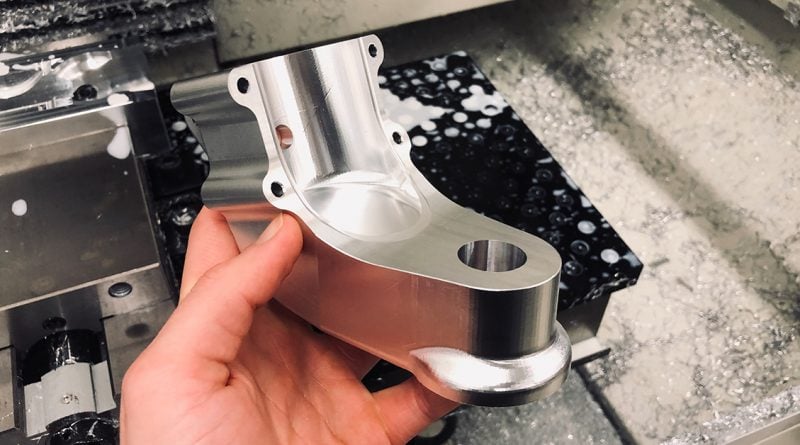
Material Selection for Extreme-Scale Precision Machining
Selecting the optimal material is foundational for success in monster machining applications where part scale, structural integrity, and environmental exposure demand rigorous engineering judgment. At Wuxi Lead Precision Machinery, we prioritize material properties that directly impact machinability, final component performance, and lifecycle cost under extreme operational loads. Misalignment here risks catastrophic failure, excessive waste, or premature wear, negating even the most precise CNC execution. Our engineering team evaluates each project against specific functional requirements to recommend the ideal alloy and subsequent finishing process.
Aluminum alloys, particularly 6061-T6 and 7075-T6, dominate aerospace and high-performance automotive structural components due to their exceptional strength-to-weight ratio. These grades machine efficiently at scale, minimizing tool wear during extended cuts, while providing adequate corrosion resistance. Aluminum is the strategic choice when thermal management requirements or weight reduction targets are critical, though its lower absolute strength necessitates careful design for ultra-high-load interfaces.
Structural and tool steels like 4140, 4340, and 1045 remain indispensable for applications demanding maximum tensile strength, wear resistance, and dimensional stability under immense force. These alloys withstand crushing loads and abrasive environments encountered in heavy machinery and oilfield equipment. While requiring robust tooling strategies and slower feed rates compared to aluminum, modern CNC techniques at Wuxi Lead ensure precise feature control even in massive steel forgings or castings.
Titanium Grade 5 (Ti-6Al-4V) is the premium solution for mission-critical components in aerospace landing gear, marine propulsion, and medical implants where unparalleled corrosion resistance combined with high strength at elevated temperatures is non-negotiable. Its low thermal conductivity presents significant machining challenges at monster scales, demanding specialized toolpaths, rigid setups, and strict thermal management to prevent work hardening and tool failure. The material cost premium is justified only when its unique properties are essential.
Anodizing is the definitive surface treatment for aluminum monster-machined parts. Type II (sulfuric acid) anodizing provides substantial corrosion and wear resistance with dyeing capability for identification, while Type III (hardcoat) anodizing delivers extreme surface hardness for sliding or abrasive wear zones. This electrochemical process enhances durability without dimensional compromise, critical for maintaining tight tolerances on large, complex geometries. Anodizing thickness and sealing must be precisely controlled to meet aerospace or military specifications.
Key mechanical properties guide initial material screening. The following table compares critical parameters for common monster machining alloys:
| Material | Density (g/cm³) | Tensile Strength (MPa) | Corrosion Resistance | Machinability Rating | Relative Cost |
|---|---|---|---|---|---|
| Aluminum 7075-T6 | 2.81 | 503 – 572 | Moderate | Excellent | Medium |
| Steel 4140 | 7.85 | 655 – 965 | Low (unprotected) | Good | Low |
| Titanium Ti-6Al-4V | 4.43 | 900 – 1100 | Excellent | Fair | High |
Material selection is not merely a specification box to tick; it is an integrated engineering decision impacting every phase from CNC programming to in-service performance. Wuxi Lead Precision Machinery leverages decades of extreme-scale machining experience to partner with your engineering team, ensuring the chosen material and finish deliver optimal functionality, durability, and cost-efficiency for your most demanding applications. Contact our applications engineering group for a project-specific material analysis.
Manufacturing Process & QC
At Wuxi Lead Precision Machinery, our production process is engineered for precision, consistency, and zero-defect outcomes in custom metal manufacturing. Designed for high-end industrial clients requiring “monster machining” capabilities—large-scale, high-tolerance, and mission-critical components—we follow a rigorously controlled workflow that spans from initial design to full-scale mass production.
The process begins with collaborative design engineering. Our team works directly with client specifications, utilizing advanced CAD/CAM software and finite element analysis (FEA) to simulate performance under real-world conditions. This phase includes material selection, geometric optimization, and manufacturability assessment to ensure every component meets functional, thermal, and structural requirements. Design for manufacturability (DFM) reviews are conducted to eliminate inefficiencies and prevent potential failure points before any material is cut.
Once the design is finalized, we proceed to prototyping. Utilizing 5-axis CNC machining, wire EDM, and high-speed milling, we produce functional prototypes with tolerances as tight as ±0.002 mm. These prototypes undergo comprehensive metrology testing using coordinate measuring machines (CMM), laser scanning, and surface finish analysis. The goal is not only to validate dimensional accuracy but also to verify performance under load, temperature, and dynamic stress. Clients receive detailed inspection reports, first-article test data, and material certifications. This stage is critical for identifying and correcting deviations early, ensuring zero defects in downstream production.
Upon prototype approval, we transition seamlessly into mass production. Our automated production cells, equipped with real-time tool monitoring, adaptive machining controls, and in-process gauging, maintain consistent quality across batches of any size. Every component is traceable through our digital manufacturing execution system (MES), which logs machine parameters, operator inputs, and inspection results. Statistical process control (SPC) is applied continuously to detect trends and preempt variations before they affect output.
Our commitment to zero defects is reinforced by a multi-stage quality gate system. Each part undergoes pre-machining material verification, in-process dimensional checks, and final post-processing inspection. Non-conforming parts are automatically quarantined, and root cause analysis is initiated within hours.
The following table outlines key capabilities across our production process:
| Parameter | Design Phase | Prototyping Phase | Mass Production Phase |
|---|---|---|---|
| Tolerance Control | ±0.01 mm (design intent) | ±0.002 mm | ±0.005 mm |
| Lead Time | 3–7 days | 7–14 days | 15–30 days (batch-dependent) |
| Materials Supported | Aluminum, Steel, Titanium, Inconel, Brass | Full range, including exotic alloys | Same, with bulk sourcing |
| Inspection Coverage | DFM & FEA validation | 100% CMM + functional testing | SPC + AQL 0.65 sampling |
| Equipment Utilized | CAD/CAM, Simulation Tools | 5-axis CNC, EDM, CMM | Automated CNC cells, MES |
This end-to-end process ensures that every component we deliver meets the highest standards of precision, durability, and repeatability—essential for aerospace, energy, semiconductor, and advanced industrial applications.
Why Choose Wuxi Lead Precision
Partner with Lead Precision: Your Engineered Solution for Monster Machining Challenges
When your project demands exceed conventional manufacturing limits—when tolerances tighten under massive scale, thermal stability becomes non-negotiable, and failure is not an option—you require a partner forged in operational discipline and technical mastery. Wuxi Lead Precision Machinery exists precisely at this intersection of extreme scale and micron-level precision. We do not merely machine parts; we engineer confidence into the structural backbone of aerospace propulsion systems, next-generation energy infrastructure, and heavy industrial platforms where global operations hinge on your component’s integrity. Our facility in Wuxi integrates 15 years of specialized expertise in high-complexity, large-envelope CNC machining with a vertically integrated ecosystem. This includes in-house material science analysis, proprietary fixturing protocols for distortion control, and closed-loop metrology calibrated to ISO 17025 standards. We transform your most demanding “monster machining” blueprints—components measuring meters in scale yet demanding tolerances under 0.005mm—into certified, on-specification reality. This capability stems from our dedicated heavy machining division, purpose-built for sustained performance on workpieces others cannot stabilize or accurately measure.
Our technical infrastructure is engineered for your most critical applications. The table below details core specifications enabling reliable execution of oversized, high-precision projects:
| Capability Parameter | Specification Detail | Industrial Relevance |
|---|---|---|
| Maximum Work Envelope | 6,000 x 3,500 x 2,200 mm (XYZ) | Accommodates full-scale structural aerospace frames |
| Max Part Weight Capacity | 120,000 kg | Supports heavy castings for power generation turbines |
| Positioning Accuracy | ≤ 0.008 mm over full travel | Ensures dimensional stability under thermal load |
| Repeatability | ≤ 0.003 mm | Guarantees batch consistency for mission-critical spares |
| In-Process Metrology | On-machine probing + CMM verification | Eliminates setup errors on complex geometries |
| Material Expertise | Titanium alloys, Inconel, High-strength steels | Proven success with difficult-to-machine alloys |
Choosing Lead Precision means engaging a technical collaborator, not just a vendor. Our engineering team embeds early in your design phase, conducting manufacturability analysis to prevent costly iterations and identify optimization opportunities specific to large-part dynamics. We understand that a 0.02mm deflection in a 3-meter component translates to catastrophic system failure downstream. Our process control systems monitor spindle load, thermal drift, and vibration in real-time, automatically compensating to maintain specification adherence. This proactive approach minimizes scrap risk and accelerates time-to-assembly for your end product. Every project undergoes rigorous first-article inspection with full traceability, providing auditable proof of conformance demanded by AS9100 and NADCAP frameworks.
The cost of supply chain uncertainty for high-value, low-volume components is measured in operational downtime and reputational damage. Partner with an organization where precision at scale is our daily mandate. Contact our engineering team directly to discuss your specific “monster machining” challenge. Send your toughest geometry, material specification, and performance requirements to [email protected]. Include reference code MP-CTA-2024 for expedited technical review. Let us demonstrate how Lead Precision becomes the silent force ensuring your most ambitious projects achieve flawless mechanical reality. Your next breakthrough component starts with a single, decisive engineering conversation.
⚙️ Precision Cost Estimator
Estimate relative manufacturing effort based on tolerance.