

Technical Contents
Engineering Guide: Molding Tooling
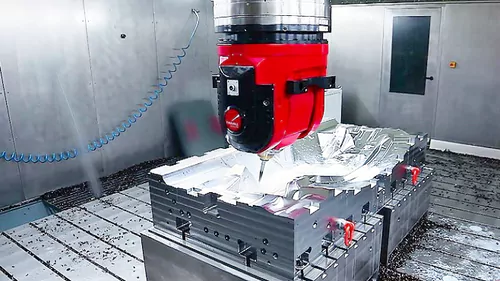
Engineering Insight: The Critical Role of Precision in Molding Tooling
In high-end custom metal manufacturing, molding tooling serves as the foundation for producing consistent, high-integrity components across industries ranging from aerospace to defense and advanced consumer goods. At Wuxi Lead Precision Machinery, we recognize that the performance, longevity, and reliability of a mold are directly tied to the precision with which it is engineered and fabricated. Even micron-level deviations can lead to part defects, increased cycle times, or premature tool failure—factors that compromise both quality and cost-efficiency in production.
Precision in molding tooling is not merely a technical specification; it is a systemic requirement that influences material selection, thermal management, surface finish, and dimensional stability. Our engineering team employs advanced CNC machining, 5-axis milling, and coordinate measuring machine (CMM) validation to ensure every mold meets exacting tolerances. This disciplined approach allows us to deliver tooling capable of withstanding high-volume runs while maintaining repeatability across thousands of cycles.
Wuxi Lead Precision Machinery’s expertise in molding tooling has been rigorously tested in applications where failure is not an option. We have contributed to projects for Olympic-grade equipment, where performance under pressure demands flawless manufacturing, and supplied critical components for military-grade systems requiring extreme durability and environmental resistance. These experiences underscore our ability to meet the highest standards of precision, reliability, and regulatory compliance.
Our facility integrates design-for-manufacturability (DFM) analysis at the earliest stages, enabling us to optimize mold geometry, cooling channels, and ejection mechanisms before production begins. This proactive engineering reduces trial-and-error during mold trials, shortens lead times, and enhances overall tool performance. Furthermore, we utilize premium-grade tool steels and advanced surface treatments such as nitriding and PVD coating to extend service life and resist wear, corrosion, and thermal fatigue.
The following table outlines key specifications that define our molding tooling capabilities:
| Specification | Capability |
|---|---|
| Tolerance Range | ±0.002 mm |
| Maximum Mold Size | 2000 x 1500 x 1200 mm |
| Tool Steel Options | H13, S136, 2344, P20, 718H |
| Surface Finish | Ra 0.05 µm (mirror polish available) |
| Machining Equipment | 5-axis CNC, EDM, CNC grinding |
| Quality Assurance | CMM inspection, GD&T reporting, First Article Inspection (FAI) |
| Lead Time (Average) | 4–8 weeks, depending on complexity |
At Wuxi Lead Precision Machinery, we treat every molding tooling project as a mission-critical endeavor. Our combination of technical precision, rigorous quality control, and proven performance in elite industrial applications positions us as a trusted partner for clients demanding excellence in custom metal manufacturing. Precision isn’t just what we deliver—it’s how we think, design, and build.
Precision Specs & Tolerances

Technical Capabilities: Precision Engineered for Demanding Molding Tooling
Wuxi Lead Precision Machinery delivers uncompromising precision for complex molding tooling applications through integrated advanced manufacturing systems. Our core strength lies in multi-axis machining mastery, specifically leveraging DMG MORI CTX beta 1250 and Hermle C 800 U milling centers. These 5-axis CNC platforms enable single-setup machining of intricate mold cavities, cores, and electrodes, eliminating cumulative error from multiple fixtures. High-speed spindles (up to 24,000 RPM) and sub-micron linear encoders ensure exceptional surface integrity and geometric accuracy on hardened steels (up to 60 HRC), titanium, and aluminum alloys. This capability directly translates to reduced lead times, minimized hand-finishing, and superior part consistency for injection, blow, and die-casting molds.
Rigorous quality assurance is non-negotiable in molding tooling. Every component undergoes comprehensive metrology using Zeiss CONTURA G2 coordinate measuring machines (CMM) with VAST gold probes and Calypso software. We perform 100% first-article inspection against CAD models, validating critical dimensions, GD&T callouts, and complex freeform surfaces. In-process checks at defined stages prevent scrap escalation, while final reports include full traceability data—material certs, machine logs, and CMM results—ensuring compliance with ISO 9001:2015 and customer-specific protocols. This closed-loop system guarantees tooling performs reliably over millions of cycles.
Our technical specifications reflect industry-leading tolerances achievable across standard production runs. The table below details typical capabilities for common molding tooling components:
| Process | Standard Tolerance | Surface Finish (Ra) | Material Compatibility |
|---|---|---|---|
| 5-Axis Milling | ±0.005 mm | 0.4 – 0.8 µm | P20, H13, S136, 718, Titanium |
| Precision Turning | ±0.003 mm | 0.2 – 0.4 µm | 420SS, Aluminum, Brass |
| Micro-EDM | ±0.002 mm | < 0.2 µm | Tungsten Carbide, Hardened Steel |
| Mirror Polishing | ±0.001 mm | < 0.05 µm | Optical Grade Steels |
These tolerances are consistently maintained through environmental controls (20±1°C车间), predictive maintenance on all equipment, and operator certification per AS9100 standards. We specialize in molding tooling requiring tight positional accuracy between core/cavity inserts, thermal management channels within 0.02 mm true position, and venting features critical for zero-defect production. By combining 5-axis flexibility with metrology-grade validation, Wuxi Lead eliminates secondary operations, reduces total cost of ownership, and accelerates time-to-market for your molding systems. Partner with us for tooling that meets the most stringent global automotive, medical, and consumer electronics requirements.
Material & Finish Options

Material selection is a critical phase in the development of high-performance molding tooling, directly influencing part quality, production efficiency, and tool longevity. At Wuxi Lead Precision Machinery, we specialize in custom metal manufacturing solutions tailored to the exacting demands of advanced industrial applications. Our expertise in precision machining enables us to guide clients through optimal material choices—primarily aluminum, steel, and titanium—each offering distinct mechanical properties and performance characteristics suited to specific molding requirements.
Aluminum is widely favored for prototyping and low-to-medium volume production due to its excellent machinability, thermal conductivity, and lightweight nature. It allows for rapid tool fabrication and faster cycle times, making it ideal for applications where speed and cost-efficiency are priorities. However, aluminum’s lower hardness and wear resistance limit its use in high-volume or high-temperature molding processes.
Steel, particularly tool steel grades such as P20, H13, and S136, remains the standard for long-run production tooling. Its superior hardness, wear resistance, and dimensional stability under thermal cycling ensure extended service life and consistent part accuracy. Hardened steels are especially suitable for injection molding of engineering plastics and abrasive materials. While steel tools require longer lead times and higher initial costs, their durability delivers a lower cost per cycle in high-volume manufacturing.
Titanium, though less common in conventional molding tooling, offers exceptional strength-to-density ratio and corrosion resistance. Its use is typically reserved for specialized applications such as aerospace or medical molding components where weight reduction and biocompatibility are paramount. Titanium’s high cost and challenging machinability necessitate advanced CNC capabilities, which Wuxi Lead Precision Machinery provides through our state-of-the-art machining centers and experienced engineering team.
Surface finishing plays a complementary role in enhancing tool performance and lifespan. Anodizing, particularly for aluminum tooling, significantly improves surface hardness, wear resistance, and corrosion protection. Type II (sulfuric acid) anodizing provides a decorative and protective layer, while Type III (hardcoat anodizing) delivers a thick, durable ceramic-like surface capable of withstanding abrasive molding environments. Anodized layers also offer electrical insulation and improved release characteristics, reducing the need for mold release agents and minimizing part contamination.
Below is a comparative overview of key material properties relevant to molding tooling applications:
| Material | Hardness (HRC) | Tensile Strength (MPa) | Thermal Conductivity (W/m·K) | Typical Applications |
|---|---|---|---|---|
| Aluminum 6061 | 15–20 | 310 | 167 | Prototyping, low-volume molds |
| P20 Steel | 28–32 | 900–1100 | 30 | Medium-to-high volume injection molds |
| H13 Steel | 48–52 | 1300–1600 | 28 | High-pressure, high-temperature molds |
| Titanium Grade 5 | 36–40 | 900–1000 | 7 | Aerospace, medical specialty tools |
At Wuxi Lead Precision Machinery, we integrate material science with precision engineering to deliver molding tooling solutions optimized for performance, longevity, and cost-effectiveness. Our team collaborates closely with clients to select the appropriate material and finish based on production volume, part complexity, and environmental conditions.
Manufacturing Process & QC
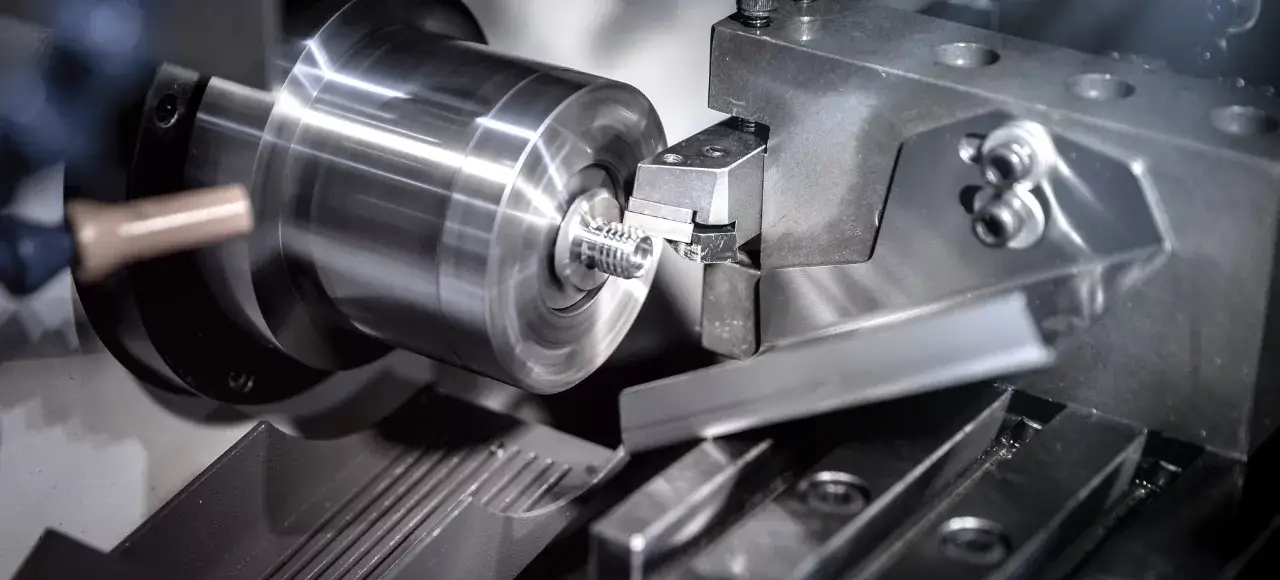
Precision Molding Tooling: The Zero-Defect Production Process
Wuxi Lead Precision Machinery delivers mission-critical molding tooling through a rigorously controlled production sequence, engineered to eliminate defects before they reach your production line. Our integrated workflow spans design validation, pre-production verification, and high-volume manufacturing, all anchored to ISO 13485 and AS9100 standards. This ensures every cavity, core, and ejection system performs identically across millions of cycles.
The process begins with design finalization, where our engineering team leverages 3D CAD/CAM simulations and finite element analysis (FEA) to predict thermal distortion, stress points, and material flow. Critical dimensions are defined using geometric dimensioning and tolerancing (GD&T) per ASME Y14.5, with all interfaces validated for clash-free operation under dynamic load conditions. Design outputs are locked only after client sign-off on simulated fill patterns and cooling efficiency reports.
Following validation, pre-production tooling enters a closed-loop prototyping phase. Single-cavity demonstrators are machined using hardened tool steels on 5-axis DMG MORI centers, achieving micron-level positional accuracy. Each prototype undergoes 72-hour stress testing under production-equivalent parameters, with real-time data captured via embedded sensors. Dimensional conformance is verified through CMM inspection against the original CAD model, generating full-first-article reports (FAIR) that include surface roughness mapping and hardness cross-sections. Only statistically validated process capability (CpK ≥1.67) clears the tool for replication.
Mass production commences with multi-cavity tool replication under strict environmental controls. All machining occurs in temperature-stabilized cleanrooms (±0.5°C), utilizing in-process probing for on-the-fly compensation of thermal drift. Hardened components are ground to mirror finishes using Struers abrasive systems, while conformal cooling channels are fabricated via metal additive processes for optimal thermal management. Every stage enforces automated SPC monitoring: 100% of critical features are checked via vision systems between cycles, with real-time feedback adjusting feed rates to maintain tolerances. Non-conforming lots trigger immediate root-cause analysis using our proprietary defect-tracking AI.
This seamless integration of predictive engineering, empirical validation, and closed-loop manufacturing guarantees zero-defect output. Our clients consistently achieve sub-0.1 PPM defect rates in final molded components, directly attributable to the robustness of our tooling foundation.
Key Tooling Specifications
| Parameter | Standard Specification | Measurement Method |
|---|---|---|
| Material Grade | NAK80, P20, H13 (AISI) | Spectrographic Analysis |
| Linear Tolerance | ±0.005 mm | Zeiss CONTURA CMM |
| Surface Roughness | Ra 0.05 µm (cavity) | Mitutoyo SJ-410 Profiler |
| Hardness | 52-54 HRC (core) | Wilson Hardness Tester |
| Parallelism | ≤0.002 mm/m | Granite Surface Plate |
| Cooling Uniformity | ±1.5°C across cavity | Infrared Thermal Imaging |
Why Choose Wuxi Lead Precision
Partner with Lead Precision for Unmatched Expertise in Molding Tooling and Custom Metal Manufacturing
At Wuxi Lead Precision Machinery, we understand that precision, reliability, and consistency are non-negotiable in high-performance manufacturing. As a leading provider of custom metal manufacturing solutions based in China, we specialize in delivering advanced molding tooling systems engineered to meet the exacting demands of industries such as automotive, aerospace, medical devices, and consumer electronics. Our commitment to excellence is reflected in every component we produce, ensuring your production lines operate with maximum efficiency and minimal downtime.
Our team of seasoned engineers and CNC specialists combines decades of industry experience with state-of-the-art technology to develop tailor-made molding tools that exceed expectations. From initial concept and design to final production and quality validation, we maintain full control over the manufacturing process. This vertical integration allows us to guarantee tight tolerances, superior surface finishes, and rapid turnaround times—critical factors when bringing complex parts to market under tight deadlines.
We utilize advanced CNC machining centers, precision EDM systems, and automated inspection equipment, including CMM and optical measurement technologies, to ensure every mold meets international quality standards. Whether you require single-cavity prototypes or multi-cavity production molds for high-volume runs, our facility is equipped to handle projects of any scale and complexity.
Our clients choose Wuxi Lead Precision Machinery not only for our technical capabilities but also for our customer-first approach. We act as a true manufacturing partner, offering design for manufacturability (DFM) analysis, material selection guidance, and real-time project updates to keep you informed at every stage. With ISO 9001 certification and a rigorous quality management system, we ensure traceability, consistency, and compliance across all deliverables.
Below are key technical specifications that define our molding tooling capabilities:
| Specification | Detail |
|---|---|
| Maximum Mold Size | 1200 mm × 800 mm × 800 mm |
| Tolerance Range | ±0.002 mm |
| Surface Finish | Ra 0.05 µm to Ra 0.8 µm (polished or textured) |
| Materials Supported | P20, 718H, S136, H13, 420 Stainless Steel, Aluminum 7075, and custom alloys |
| Machining Equipment | 3-axis, 4-axis, and 5-axis CNC centers; Wire & Sinker EDM |
| Quality Assurance | Full CMM reporting, first-article inspection, and PPAP documentation available |
| Lead Time | 15–35 days (depending on complexity and cavity count) |
When you partner with Wuxi Lead Precision Machinery, you gain more than a supplier—you gain a strategic ally committed to your success. Our global logistics network ensures timely delivery to North America, Europe, and Asia, while our technical support team remains available for post-delivery assistance and mold maintenance guidance.
For a seamless, precision-driven manufacturing experience, contact us today at [email protected]. Let us help you transform your molding tooling challenges into competitive advantages.
⚙️ Precision Cost Estimator
Estimate relative manufacturing effort based on tolerance.