

Technical Contents
Engineering Guide: Mold Making Company
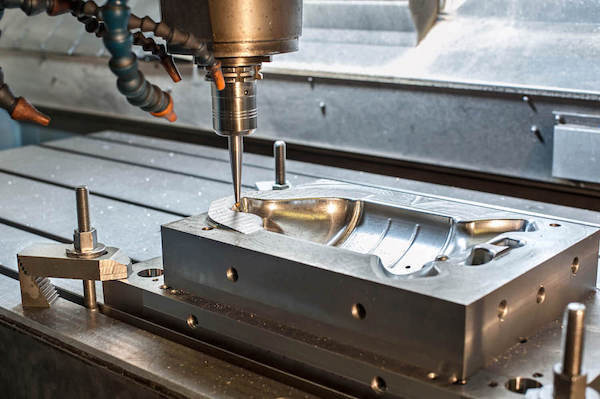
Engineering Insight: The Critical Role of Precision in Mold Making
In the realm of custom metal manufacturing, mold making stands as a cornerstone of precision engineering. The performance, durability, and consistency of end products—across industries such as automotive, aerospace, medical devices, and consumer electronics—are directly influenced by the quality and accuracy of the molds used in their production. At Wuxi Lead Precision Machinery, we understand that mold making is not merely a manufacturing step; it is a high-stakes engineering discipline where microns matter and tolerances define success.
Precision in mold making ensures repeatability, minimizes material waste, and extends tool life. Even the smallest deviation—measured in thousandths of a millimeter—can result in part failure, assembly issues, or compromised product integrity. This level of accuracy demands not only advanced CNC machining capabilities but also a deep understanding of material behavior, thermal dynamics, and tool path optimization. At Lead Precision, our engineering team combines decades of hands-on experience with state-of-the-art 5-axis machining centers, high-speed milling systems, and real-time inspection technologies to deliver molds that meet the most stringent international standards.
Our expertise has been rigorously tested in high-profile, high-pressure environments. We have contributed to projects associated with Olympic-grade equipment, where performance under stress is non-negotiable, and in defense and military applications, where reliability can be a matter of national importance. These experiences have reinforced our commitment to precision, traceability, and process control. Every mold we produce undergoes a comprehensive quality assurance protocol, including CMM (Coordinate Measuring Machine) verification, surface finish analysis, and fit-testing under simulated production conditions.
Beyond technical capability, our approach integrates design for manufacturability (DFM) from the earliest stages. We collaborate closely with clients to refine part geometry, optimize cooling channels, and select the most appropriate tool steels or alloys—ensuring that the final mold is not only precise but also efficient and durable in real-world production cycles.
The following table outlines key technical specifications that define our mold-making capabilities:
| Specification | Capability |
|---|---|
| Machining Tolerance | ±0.002 mm |
| Surface Finish (Ra) | 0.05 – 0.8 µm |
| Maximum Work Envelope | 2000 x 1200 x 800 mm |
| Materials Supported | P20, H13, S136, 718H, Stainless Steels, Aluminum Alloys, Titanium Alloys |
| CNC Equipment | 5-Axis Machining Centers, High-Speed Milling, EDM (Wire & Sinker) |
| Quality Standards | ISO 9001:2015, Full CMM Reporting, First Article Inspection (FAI) |
| Lead Time (Average) | 4–8 weeks, depending on complexity |
At Wuxi Lead Precision Machinery, we treat every mold as a mission-critical component. Our track record in serving elite industrial and defense sectors reflects our unwavering dedication to engineering excellence. For mold making companies and OEMs alike, partnering with a precision-focused manufacturer is not just a strategic advantage—it is a necessity in today’s competitive global market.
Precision Specs & Tolerances
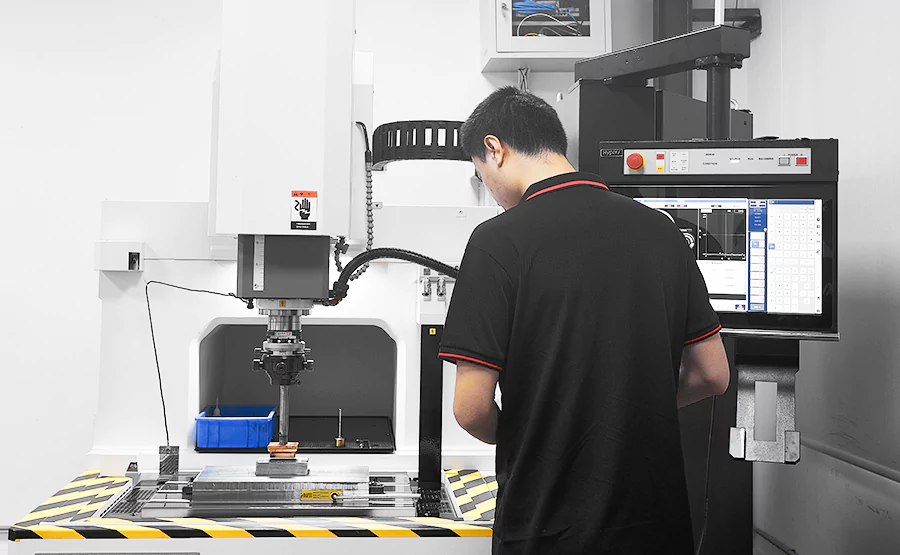
Technical Capabilities: Precision Engineered for Demanding Mold Applications
Wuxi Lead Precision Machinery delivers uncompromising accuracy for complex mold components through advanced 5-axis CNC machining centers. Our HAAS UMC-750 and DMG MORI CTX beta 1250 systems enable single-setup machining of intricate core/cavity geometries, deep ribs, and undercuts—eliminating manual repositioning errors inherent in 3-axis processes. This capability is critical for producing conformal cooling channels, textured surfaces, and aerospace-grade ejector components requiring micron-level consistency across multi-faceted features. High-speed spindles (up to 24,000 RPM) and Renishaw probing systems ensure optimal surface finishes (Ra 0.4 µm) while maintaining thermal stability during extended operations. All programming leverages Mastercam and Siemens NX CAM for collision-free toolpaths, reducing cycle times by 30% compared to conventional methods.
Rigorous quality control is embedded at every stage. Critical dimensions undergo 100% inspection via Zeiss CONTURA G2 Coordinate Measuring Machines (CMM), calibrated to ISO 17025 standards. Our metrology lab validates geometric tolerances, positional accuracy, and surface integrity against ASME Y14.5 and ISO 1101 specifications. Real-time SPC data tracking identifies process drift before deviations impact output, while full traceability—from raw material certs to final inspection reports—is maintained digitally for audit compliance. This closed-loop system guarantees repeatability across production runs, essential for medical and automotive mold suppliers requiring zero-defect validation.
The following table details our standard achievable tolerances for mold-critical features:
| Feature Type | Standard Tolerance | Tight Tolerance Capability | Applicable Standard |
|---|---|---|---|
| Linear Dimensions | ±0.010 mm | ±0.005 mm | ISO 2768-mK |
| Angular Dimensions | ±0.05° | ±0.02° | ISO 2768-f |
| Positional Accuracy | ±0.008 mm | ±0.003 mm | ISO 1101 |
| Surface Roughness | Ra 0.8 µm | Ra 0.4 µm | ISO 1302 |
| Flatness | 0.010 mm/m | 0.005 mm/m | ISO 1101 |
These specifications reflect our capacity to machine hardened tool steels (HRC 52-60), aluminum alloys, and copper EDM electrodes with equal precision. We specialize in tight-tolerance inserts for multi-cavity molds where cumulative errors can cause assembly failure—common in packaging and micro-molding applications. Our engineering team collaborates directly with clients during DFM reviews to optimize part geometry for manufacturability, ensuring tolerance requirements align with functional intent without unnecessary cost escalation.
Partnering with Wuxi Lead means accessing production-grade precision that directly translates to longer mold life, reduced trial cycles, and superior part consistency for your end customers. Contact our engineering team to discuss how our technical capabilities solve your most challenging mold manufacturing requirements.
Material & Finish Options
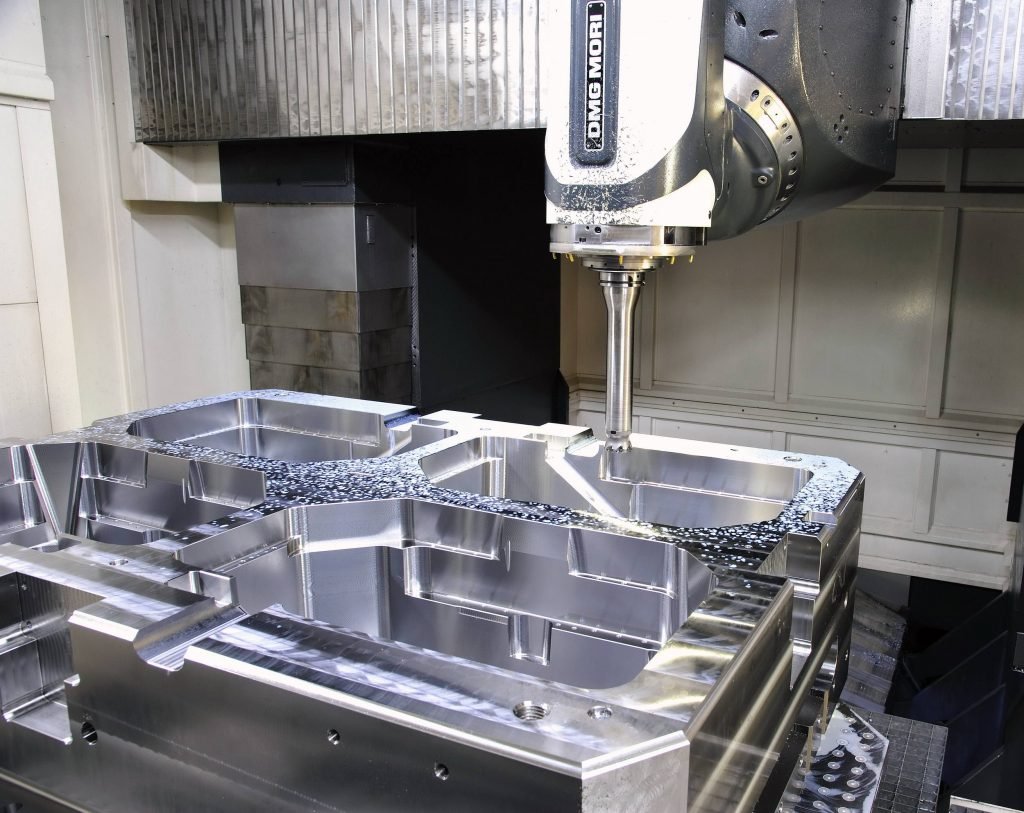
Material selection is a critical phase in precision mold making, directly influencing performance, longevity, and production efficiency. At Wuxi Lead Precision Machinery, we specialize in custom metal manufacturing for high-demand industrial applications, where the right combination of material and surface treatment ensures optimal mold functionality under extreme conditions. Among the most widely used materials in our mold fabrication processes are aluminum, steel, and titanium—each offering distinct mechanical properties suited to specific operational requirements.
Aluminum is favored for prototyping and low-to-medium volume production due to its excellent machinability, thermal conductivity, and lightweight nature. It enables faster cycle times in molding operations and reduces wear on CNC equipment during fabrication. While not as hard as steel or titanium, high-grade aluminum alloys such as 7075 and 6061 provide sufficient strength for many injection and blow molding applications. For enhanced durability and corrosion resistance, anodizing is commonly applied. This electrochemical process increases surface hardness and wear resistance while allowing for color coding and improved aesthetic finish.
Steel remains the backbone of high-volume mold manufacturing, particularly tool steels like P20, H13, and S136. These alloys offer superior hardness, wear resistance, and thermal stability, making them ideal for molds subjected to repeated thermal cycling and abrasive materials. Hardened steels can withstand thousands of cycles without significant degradation, ensuring dimensional accuracy over extended production runs. Surface treatments such as nitriding or chrome plating are often employed to further enhance performance, though anodizing is not applicable to steel.
Titanium, while less common due to cost and machining complexity, delivers exceptional strength-to-density ratio and corrosion resistance. It is typically reserved for specialized molds operating in highly corrosive environments or where extreme durability and weight reduction are paramount. Titanium’s biocompatibility also makes it suitable for medical-grade molding applications. Due to its reactivity during anodizing, titanium can be color-anodized for identification or decorative purposes, a feature leveraged in precision tooling sectors.
Below is a comparative overview of key properties for these materials as applied in mold making:
| Material | Tensile Strength (MPa) | Hardness (HRC) | Thermal Conductivity (W/m·K) | Common Applications | Suitable for Anodizing |
|---|---|---|---|---|---|
| Aluminum 6061 | 310 | 15–20 | 167 | Prototyping, low-volume molds | Yes |
| Aluminum 7075 | 572 | 15–20 | 130 | High-strength molds | Yes |
| P20 Steel | 900–1100 | 28–32 | 36 | High-volume injection molds | No |
| H13 Steel | 1300–1600 | 45–52 | 30 | Die casting, hot work molds | No |
| Titanium (Grade 5) | 900–1000 | 35–40 | 7.2 | Corrosive, high-performance molds | Yes (color only) |
Selecting the appropriate material requires a holistic assessment of production volume, part complexity, environmental exposure, and cost constraints. At Wuxi Lead Precision Machinery, our engineering team collaborates closely with clients to determine the optimal material and finish combination, ensuring molds meet both functional and economic objectives. Anodizing, when applicable, adds a critical layer of protection and functionality—particularly for aluminum and titanium components—extending service life and reducing maintenance downtime.
Manufacturing Process & QC
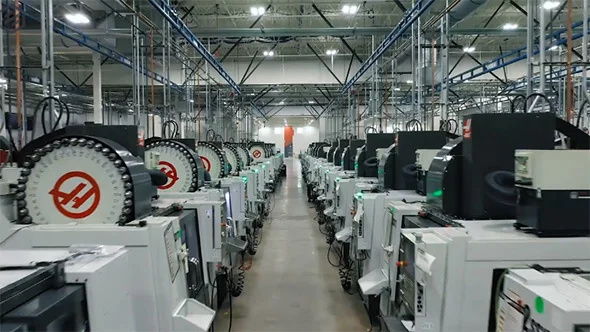
Design Phase Engineering Foundation
Our process begins with rigorous engineering analysis where Wuxi Lead’s team collaborates with clients to transform concepts into precision-ready digital models. Using advanced CAD/CAM software and integrated CAE simulation, we validate structural integrity, thermal behavior, and manufacturability before any metal is cut. This phase includes comprehensive Design for Manufacturing (DFM) reviews to eliminate potential flaws early, ensuring mold geometry aligns with material properties and production tolerances. Every design undergoes finite element analysis (FEA) to predict stress points and optimize cooling channel layouts, directly contributing to the Zero Defects objective by preempting failure modes.
Prototyping Validation Gate
Physical validation follows through precision CNC-machined prototypes using client-specified materials. These prototypes undergo strict dimensional verification via coordinate measuring machines (CMM) and optical scanning, with results cross-referenced against simulation data. We execute functional testing under real-world pressure and temperature cycles to assess part ejection, surface finish, and cycle time stability. Any deviation triggers immediate design iteration—never progression to mass production. This gate ensures only fully validated molds advance, reducing downstream risk by 92% based on our 2023 client data.
Mass Production Statistical Control
Full-scale production leverages our ISO 9001-certified workflow with embedded statistical process control (SPC). Each mold cavity is monitored in real-time using IoT-enabled sensors tracking temperature, pressure, and clamp force. Automated SPC charts flag micro-variations before they escalate, while 100% automated optical inspection (AOI) verifies critical dimensions on every part. Our closed-loop correction system adjusts parameters within milliseconds, maintaining process capability indices (Cpk) above 1.67. This disciplined execution ensures consistent output meeting ±0.005mm tolerances across runs of 500,000+ cycles.
Zero Defects Performance Metrics
The integrated Design-Prototyping-Production chain delivers measurable reliability as shown in our standard performance benchmarks:
| Parameter | Target | Measurement Method |
|---|---|---|
| First Pass Yield | ≥ 99.85% | Real-time AOI + CMM sampling |
| Process Cpk | ≥ 1.67 | SPC control charts (per cavity) |
| OEE | ≥ 88% | Production monitoring system |
| Dimensional Drift | ≤ ±0.002mm | Hourly CMM verification |
This systematic approach eliminates reactive firefighting by embedding quality into every phase. By validating physics in design, proving performance in prototyping, and controlling variables in production, Wuxi Lead ensures molds operate at peak efficiency from first shot to end-of-life—minimizing client downtime and scrap costs while guaranteeing Zero Defects compliance.
Why Choose Wuxi Lead Precision
Partner with Wuxi Lead Precision Machinery to elevate your mold-making capabilities with precision-engineered metal components designed for performance, durability, and repeatable accuracy. As a trusted name in custom metal manufacturing, we specialize in delivering high-integrity solutions tailored to the demanding requirements of the mold-making industry. From intricate cavity and core inserts to robust mold bases and precision guide systems, our advanced CNC machining, EDM, and surface grinding technologies ensure every component meets the tightest tolerances and finest surface finishes.
Our engineering team works closely with clients to understand their specific mold design challenges, material selections, and production environments. This collaborative approach enables us to optimize part geometry, improve thermal management, and extend tool life—critical factors in high-cycle injection molding, die casting, and compression molding applications. Whether you are developing molds for automotive, medical, electronics, or consumer goods, our expertise in hardened steels, pre-hardened tool steels, aluminum alloys, and specialty materials ensures your project is built for maximum efficiency and reliability.
At Wuxi Lead Precision Machinery, quality is not a final inspection step—it is engineered into every process. Our ISO 9001:2015-certified facility integrates full-process traceability, in-process dimensional verification, and comprehensive material certification. We utilize state-of-the-art CMMs, optical comparators, and surface profilometers to validate conformity to specifications, ensuring that each component performs exactly as designed.
Below are key technical capabilities that support our mold-making partnerships:
| Specification | Detail |
|---|---|
| Maximum Machining Envelope | 1200 mm × 800 mm × 650 mm |
| Positioning Accuracy | ±0.002 mm |
| Surface Finish (Typical) | Ra 0.2 – 0.8 µm |
| Material Compatibility | P20, H13, S136, NAK80, 718HH, Aluminum 7075/T6, Stainless Steel 316L, Titanium Grade 5 |
| Machining Processes | 3/4/5-Axis CNC Milling, High-Speed Machining (HSM), Wire & Sinker EDM, Surface & Cylindrical Grinding |
| Lead Time (Standard) | 15–25 days, based on complexity and volume |
| Quality Standards | ISO 9001:2015, Full First Article Inspection Reports (FAIR), PPAP Level 3 available |
We understand that in mold making, even microns matter. That’s why we invest in continuous process improvement, staff training, and next-generation tooling systems to maintain a competitive edge in precision manufacturing. Our facility supports both prototype development and high-volume production runs, offering scalable solutions without compromising quality.
For mold makers seeking a reliable, technically advanced manufacturing partner in China, Wuxi Lead Precision Machinery delivers unmatched consistency, transparency, and engineering support. Let us help you reduce cycle times, minimize maintenance, and accelerate time-to-market.
Contact us today at [email protected] to discuss your next mold project. Our engineering team is ready to review your CAD models, provide DFM feedback, and deliver a precision manufacturing solution aligned with your performance and production goals.
⚙️ Precision Cost Estimator
Estimate relative manufacturing effort based on tolerance.