
Technical Contents
Engineering Guide: Long Lathe Turning
Engineering Insight: The Critical Imperative of Precision in Long Lathe Turning
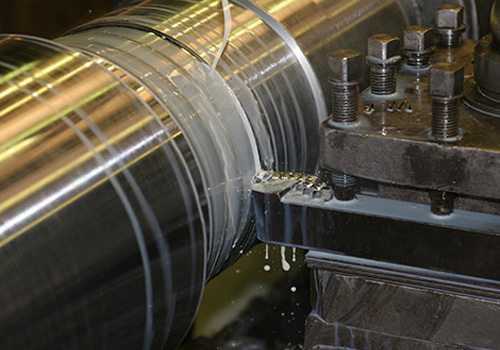
Long lathe turning represents a fundamental yet demanding capability within precision CNC machining, essential for producing extended cylindrical components where geometric integrity and dimensional accuracy are non-negotiable. Unlike standard turning operations, long parts introduce significant engineering challenges: deflection under cutting forces, thermal growth along the workpiece length, vibration management, and maintaining tight tolerances over extended distances. These factors exponentially increase the risk of taper, ovality, or surface finish deviations. For industries like aerospace, defense, and high-end industrial equipment, such deviations are not merely quality issues; they directly impact system performance, safety, and longevity. The ability to consistently achieve true roundness, straightness, and surface finish specifications over lengths exceeding 1 meter separates capable suppliers from true precision partners.
At Wuxi Lead Precision Machinery, we confront these challenges daily through engineered solutions and rigorous process control. Our approach begins with machine selection: utilizing high-rigidity CNC lathes featuring reinforced beds, precision ground guideways, and advanced thermal compensation systems specifically designed for long-part stability. Process optimization is equally critical. We implement sophisticated cutting strategies, including optimized toolpath sequencing, controlled depth-of-cut progression, and real-time in-process measurement to actively mitigate deflection and thermal effects. Material behavior is meticulously analyzed; different alloys respond uniquely to heat and stress during extended machining cycles, requiring tailored parameters. This level of control is not theoretical for us. It is proven in production. We have successfully manufactured mission-critical long-turned components for Olympic timing systems demanding sub-micron repeatability and for military applications requiring strict adherence to MIL-STD specifications under demanding environmental conditions. This experience underscores our commitment to delivering parts where failure is not an option.
The table below outlines the core precision capabilities our long turning processes consistently achieve for demanding client applications:
| Specification Category | Capability | Typical Application Context |
|---|---|---|
| Tolerance Capability | ±0.001 mm (±0.00004″) | Aerospace shafts, optical mounts |
| Maximum Length (Precision) | 3000 mm (118″) | Industrial drive shafts, actuators |
| Roundness / TIR | ≤ 0.002 mm (≤ 0.00008″) | Hydraulic piston rods, bearing journals |
| Surface Roughness (Ra) | 0.4 µm (16 µin) achievable | Sealing surfaces, high-speed rotors |
| Material Range | Steels, Stainless, Ti, Inconel | Defense components, energy systems |
| Process Validation | Full CMM reporting, SPC traces | Military contracts, medical devices |
Precision in long lathe turning transcends meeting a drawing; it is about guaranteeing functional performance in the final assembly. It requires deep metallurgical understanding, advanced machine technology, and a culture of uncompromising process discipline. Wuxi Lead Precision Machinery leverages its proven experience in the most exacting sectors to ensure every long-turned component we deliver meets the highest standards of accuracy and reliability, directly contributing to the success and safety of our clients’ end products. When dimensional stability over length is paramount, our engineered processes deliver the required geometric integrity.
Precision Specs & Tolerances
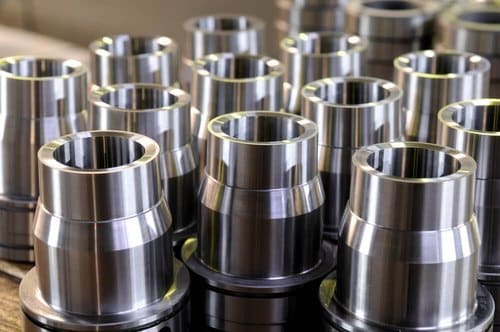
Wuxi Lead Precision Machinery delivers advanced long lathe turning solutions engineered for high-precision, complex components in mission-critical industries. Our expertise in 5-axis CNC turning enables us to produce extended-length parts with exceptional accuracy, surface finish, and geometric consistency. Designed for aerospace, energy, medical, and industrial automation sectors, our long lathe turning services combine cutting-edge technology with rigorous quality control to meet the most demanding specifications.
At the core of our technical capabilities is a fleet of state-of-the-art 5-axis CNC lathes equipped with live tooling, Y-axis milling, and sub-spindles. These machines allow us to perform complete machining operations in a single setup, minimizing part handling and maximizing repeatability. The integration of multi-axis functionality enables simultaneous turning, milling, drilling, and contouring on long workpieces—ranging from 500 mm to 2,000 mm in length—without sacrificing precision. This level of flexibility reduces cycle times, improves throughput, and ensures tighter geometric control across extended features.
Our 5-axis CNC systems are optimized for hard turning, deep groove machining, and complex profile generation on a wide range of materials, including high-strength alloys, stainless steels, titanium, and engineered plastics. Advanced toolpath strategies and real-time tool compensation ensure consistent dimensional accuracy over the entire length of the component. In-process probing and adaptive control systems further enhance machining stability, particularly during high-speed operations on slender or thin-walled geometries.
Quality assurance is embedded throughout the production workflow. Every long-turned component undergoes comprehensive inspection using coordinate measuring machines (CMM) to validate dimensional conformity and geometric tolerances. Our CMM systems are calibrated to international standards and operated by certified metrology technicians, ensuring traceable and repeatable measurement results. Full inspection reports, including first-article inspection (FAI) and production part approval process (PPAP) documentation, are provided to support customer compliance requirements.
We maintain strict environmental and operational controls in our machining facility to minimize thermal drift and vibration, critical factors in long-part accuracy. Our engineers employ finite element analysis (FEA) and simulation software during process planning to anticipate deflection and optimize support strategies such as steady rests and follow rests. This proactive approach ensures that even the most challenging long-turning applications meet specified tolerances and surface quality standards.
The following table outlines our standard technical specifications and achievable tolerances for long lathe turning operations.
| Parameter | Specification |
|---|---|
| Maximum Workpiece Length | 2,000 mm |
| Maximum Diameter (Swing) | 500 mm |
| Axis Configuration | 5-Axis CNC with Y-axis and sub-spindle |
| Spindle Speed | Up to 6,000 RPM |
| Positioning Accuracy | ±0.005 mm |
| Repeatability | ±0.003 mm |
| Dimensional Tolerance | ±0.01 mm (standard), ±0.005 mm (tight) |
| Geometric Tolerance (Runout) | ≤ 0.01 mm |
| Surface Roughness (Ra) | 0.4 μm to 1.6 μm (standard), down to 0.2 μm |
| Materials | Stainless Steel, Titanium, Alloy Steel, Inconel, Aluminum, Plastics |
| Inspection Method | CMM, Optical Comparator, Micrometry |
Wuxi Lead Precision Machinery is committed to delivering long lathe turning solutions that combine engineering excellence with measurable precision. Our capabilities are backed by ISO 9001-certified processes and a continuous improvement culture focused on performance, reliability, and customer success.
Material & Finish Options
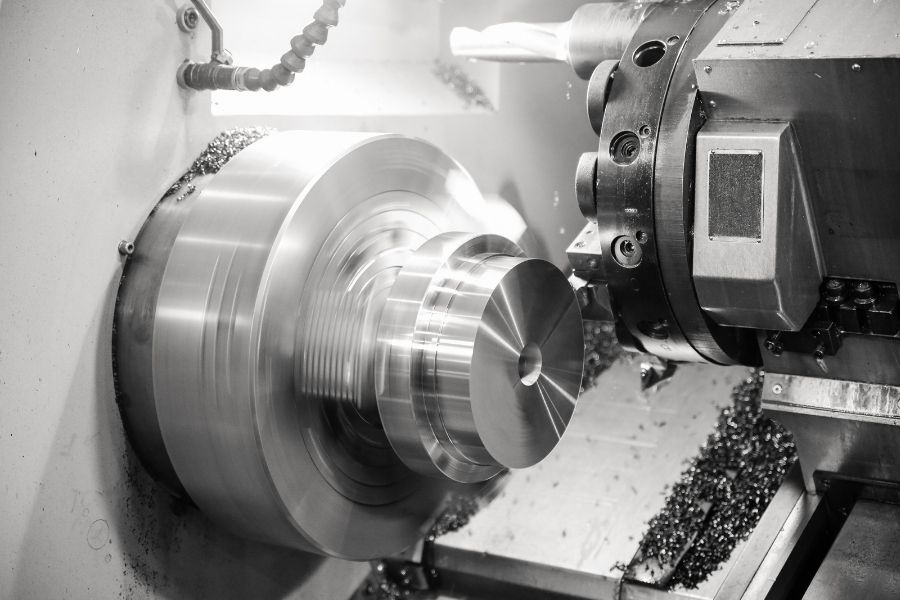
Material Selection for Long Lathe Turning Operations
Selecting the optimal material is paramount for successful long lathe turning, where part length introduces significant challenges like deflection, vibration, and thermal management. At Wuxi Lead Precision Machinery, we prioritize material properties that align with both the functional requirements of the component and the inherent demands of machining extended geometries. Aluminum alloys, carbon/tool steels, and titanium each present distinct advantages and machining considerations critical for dimensional stability and surface integrity in long turning applications.
Aluminum alloys, particularly 6061 and 7075, are favored for their excellent machinability, low density, and good thermal conductivity. These properties help dissipate heat generated during prolonged cutting, reducing the risk of thermal distortion in long workpieces. However, their lower stiffness compared to steel necessitates careful support strategy design and potentially reduced cutting parameters to minimize chatter and deflection. Aluminum is ideal for aerospace fittings, hydraulic components, and housings where weight savings are critical. Steel variants, including 4140, 4340, and 304/316 stainless, offer superior strength, stiffness, and wear resistance. This inherent rigidity combats deflection in long parts but demands robust machine tooling, rigid setups, and appropriate tool geometries to manage higher cutting forces and heat generation. Steels are the standard choice for high-strength shafts, pins, and structural components requiring durability. Titanium alloys, such as Grade 5 (Ti-6Al-4V), present the greatest machining challenge due to low thermal conductivity, high chemical reactivity, and tendency for work hardening. These factors significantly increase heat concentration at the cutting edge during long turning operations, accelerating tool wear and risking part damage. Success requires specialized tooling, very controlled cutting parameters, and meticulous coolant application to manage heat and prevent galling.
Anodizing remains the dominant surface finish for aluminum components, enhancing corrosion resistance, wear properties, and providing electrical insulation. For long turned parts, Type II (sulfuric acid) anodizing offers a good balance of protection and cost, while Type III (hardcoat) delivers superior abrasion resistance for demanding applications. Critical considerations include maintaining consistent part geometry during racking to ensure uniform coating thickness along the entire length and verifying dimensional tolerances post-anodizing, as the process adds measurable thickness. Steel components typically utilize plating (e.g., zinc, chrome) or passivation for corrosion resistance, not anodizing. Titanium benefits from anodizing primarily for aesthetic color coding or minor corrosion enhancement in specific environments, though its natural oxide layer provides excellent inherent protection.
Material performance characteristics directly influence long turning feasibility and process parameters. The following table summarizes key properties relevant to extended machining operations.
| Material Group | Key Alloys | Thermal Conductivity (W/m·K) | Machinability Rating | Primary Long Turning Challenge | Typical Finish |
|---|---|---|---|---|---|
| Aluminum | 6061, 7075 | 150-180 | Excellent (A) | Low stiffness causing deflection | Type II/III Anodizing |
| Steel | 4140, 304SS | 25-50 | Moderate (B-C) | High cutting forces generating heat | Plating, Passivation |
| Titanium | Ti-6Al-4V | 6-7 | Poor (D) | Heat concentration & work hardening | Anodizing (color), As-Machined |
Partnering with an experienced precision manufacturer like Wuxi Lead ensures material selection is optimized for your specific long turning application, balancing performance requirements with manufacturability and cost-effectiveness. Our engineering team rigorously evaluates material behavior to implement the precise support, tooling, and parameters needed for flawless long-part production.
Manufacturing Process & QC
Design: The Foundation of Precision
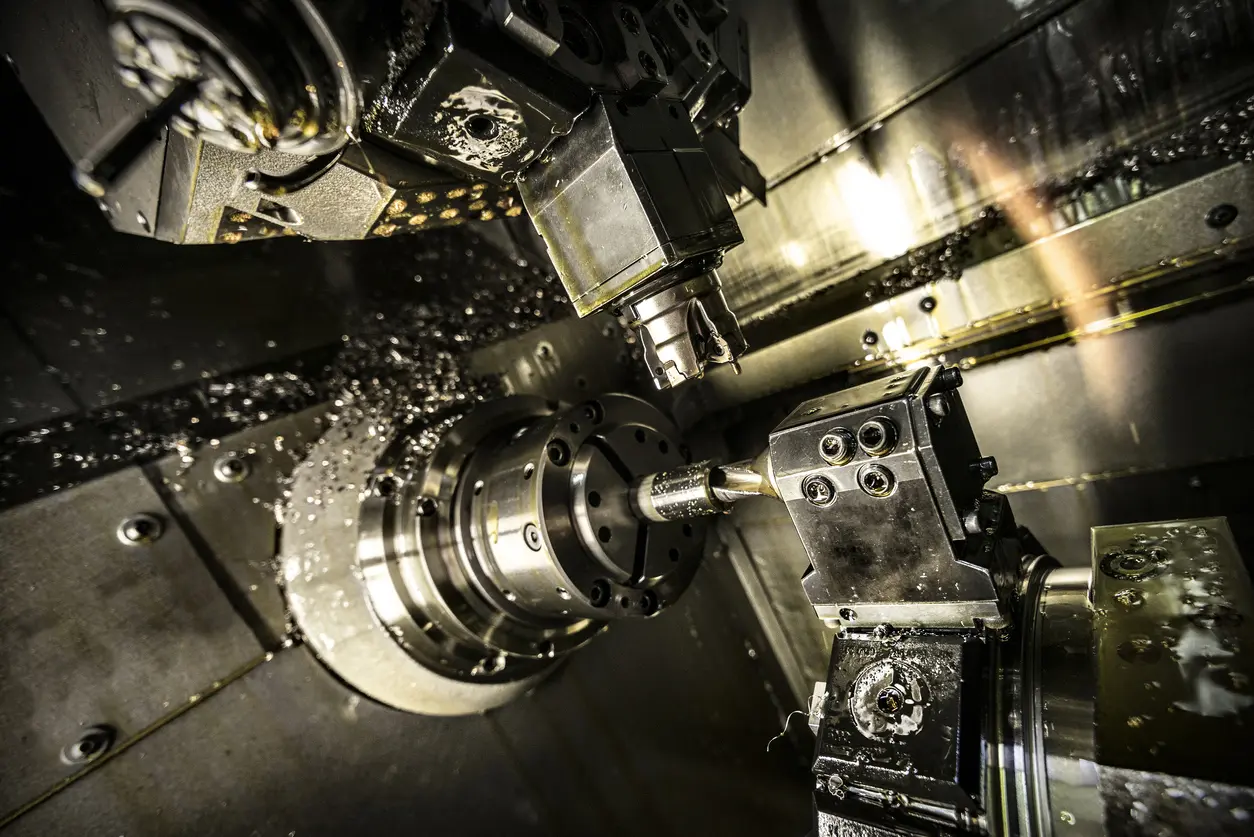
At Wuxi Lead Precision Machinery, the long lathe turning process begins with meticulous design engineering. Our team collaborates closely with clients to translate technical blueprints and functional requirements into optimized manufacturing plans. Utilizing advanced CAD/CAM software, we simulate the complete turning cycle, ensuring dimensional accuracy, material efficiency, and toolpath integrity. Finite element analysis (FEA) is applied where necessary to predict stress points and thermal deformation, especially critical in long, slender components prone to deflection. Every design is validated for manufacturability (DFM), minimizing risks before any material is cut. This phase establishes the foundation for zero-defect production by embedding precision into the earliest stage of development.
Prototyping: Validating Performance and Tolerance
Once the design is finalized, we proceed to prototype manufacturing under full production conditions. Prototyping is not a scaled-down effort but a complete replication of the intended mass production environment, using the same CNC lathes, tooling, and inspection protocols. This ensures that any potential issues—such as vibration, tool wear, or clamping instability in long workpieces—are identified and corrected early. Each prototype undergoes rigorous metrological evaluation using coordinate measuring machines (CMM), laser interferometers, and surface roughness testers. Dimensional conformity, cylindricity, taper control, and surface finish are verified against ISO 2768 and client-specific standards. Feedback from this stage is integrated into final process adjustments, guaranteeing that the transition to mass production is seamless and defect-free.
Mass Production: Precision at Scale with Zero Defects
With design and prototype approval, we initiate high-volume turning operations on our precision long lathes. These machines are equipped with steady rests, follow-up supports, and dynamic vibration damping systems to maintain stability over extended workpiece lengths. Our CNC turning centers feature real-time tool wear compensation, in-process probing, and automated bar feeding systems to ensure consistency across thousands of parts. At Wuxi Lead, zero defects is not a goal—it is a requirement. To achieve this, we implement continuous SPC (Statistical Process Control), 100% critical dimension inspection via automated gauging, and traceability down to the individual bar lot and machine shift. All operators are trained in Six Sigma principles, and every production run is monitored through our integrated quality management system.
Typical Long Lathe Turning Specifications
| Parameter | Specification Range |
|---|---|
| Maximum Workpiece Length | Up to 3,000 mm |
| Maximum Turning Diameter | Ø2 to Ø150 mm |
| Spindle Speed | 50 – 6,000 rpm (variable by material) |
| Positioning Accuracy | ±0.005 mm |
| Repeatability | ±0.002 mm |
| Surface Roughness (Ra) | As low as 0.4 µm |
| Materials Supported | Steel, Stainless Steel, Aluminum, Brass, Titanium, Inconel |
| Tolerances Achieved | IT6 to IT7 per ISO 286-2 |
| Production Capacity | 50 – 5,000+ units per batch |
Through disciplined execution across design, prototyping, and mass production, Wuxi Lead Precision Machinery delivers long lathe turned components with uncompromising quality, on time and to the tightest tolerances demanded by aerospace, medical, and high-performance industrial sectors.
Why Choose Wuxi Lead Precision
Partner with Lead Precision: Solve Your Long Lathe Turning Challenges
When standard CNC lathes reach their limits on extended components, production bottlenecks escalate. Complex aerospace spindles, energy sector shafts, or medical device housings exceeding 1500mm demand specialized capabilities few manufacturers possess. Wuxi Lead Precision Machinery delivers engineered solutions for high-tolerance long turning where others compromise on accuracy, repeatability, or throughput. With 15+ years of precision machining expertise and ISO 9001-certified processes, we transform your most demanding long turning projects from risk to reliability.
Our dedicated long turning division operates state-of-the-art CNC lathes engineered for stability over extreme lengths. Unlike modified standard machines, our equipment features reinforced bed structures, dual-turret synchronization, and real-time thermal compensation to maintain micron-level precision across full travel. We consistently achieve ±0.005mm tolerances on parts up to 3000mm in length—eliminating the runout, chatter, and concentricity drift that plague conventional setups. This capability translates to reduced scrap rates, faster cycle times, and seamless integration into your assembly line without secondary corrections.
Technical Capabilities for Long Turning Applications
| Parameter | Specification | Industry Impact |
|---|---|---|
| Max Turning Length | 3000 mm | Eliminates multi-setup for long shafts |
| Max Diameter | 650 mm | Accommodates large-diameter aerospace components |
| Positioning Accuracy | ±0.003 mm | Ensures critical bearing fit compliance |
| Repeatability | ±0.002 mm | Guarantees batch consistency |
| Spindle Power | 37 kW (High Torque Configuration) | Maintains finish quality on tough alloys |
| Material Range | Titanium, Inconel, Stainless, Exotic Alloys | Supports mission-critical industries |
These specifications are not theoretical benchmarks. They are validated daily in our Wuxi facility through continuous in-process metrology using laser interferometers and CMM verification. Every component undergoes rigorous first-article inspection to your engineering drawings, with full traceability from raw material to shipping. Our engineers collaborate during your design phase to optimize manufacturability—reducing lead times by up to 30% through intelligent feature sequencing and fixture design.
The true cost of long turning failures extends beyond scrap: delayed launches, assembly line stoppages, and reputational damage. Partnering with Lead Precision mitigates these risks through proactive engineering partnership. We allocate dedicated project managers and machine cells to your program, ensuring transparent communication from RFQ to delivery. Our clients in European aerospace and North American energy sectors rely on us because we treat your production schedule as our own operational priority.
Do not let long turning limitations constrain your next project. Contact our engineering team today to discuss your specific requirements. Email [email protected] with your part drawings or specifications. Our technical sales engineers will respond within 24 business hours with a capability assessment and actionable timeline. Secure your production schedule with a partner who measures success in your on-time delivery—not just machine uptime. Wuxi Lead Precision Machinery: Where extreme length meets extreme precision.
⚙️ Precision Cost Estimator
Estimate relative manufacturing effort based on tolerance.