Technical Contents
Engineering Guide: Lithium Aluminum Alloy
Engineering Insight: Lithium Aluminum Alloy in High-Precision Manufacturing
Lithium aluminum alloy represents a critical advancement in lightweight, high-strength materials engineering, particularly in aerospace, defense, and high-performance automotive applications. The integration of lithium into aluminum matrices reduces density by up to 10% while increasing stiffness by as much as 20%, making it an ideal candidate for components where mass reduction and structural integrity are paramount. However, these performance benefits are only fully realized when the material is processed with exceptional precision. At Wuxi Lead Precision Machinery, we understand that the margin for error in machining lithium aluminum alloys is exceptionally narrow, requiring advanced CNC systems, thermal stability controls, and real-time monitoring to maintain dimensional accuracy and surface integrity.
The inherent reactivity of lithium with moisture and oxygen, combined with aluminum’s sensitivity to thermal deformation, demands a controlled manufacturing environment. Even minor deviations in toolpath calibration or coolant application can result in microcracking, residual stress, or dimensional drift. Lead Precision has developed proprietary protocols for dry machining and inert atmosphere milling to mitigate oxidation risks during high-speed contouring. Our 5-axis CNC platforms, equipped with in-process probing and adaptive feedback loops, ensure tolerances remain within ±0.005 mm across complex geometries—critical for structural airframe components and kinetic defense systems.
Our expertise in lithium aluminum alloy processing is not theoretical. Wuxi Lead Precision Machinery has delivered mission-critical components for Olympic-level sporting equipment, where aerodynamic efficiency and weight distribution directly impact athletic performance. More significantly, we have supported classified defense programs requiring MIL-STD-810 compliance, demonstrating our capacity to meet the most stringent quality and traceability standards. These projects underscore our ability to balance material science with micron-level precision engineering.
The following table outlines key mechanical properties and machining parameters for the 2195 and 8090 series lithium aluminum alloys, commonly used in high-stress environments:
| Property | 2195-T8 Aluminum-Lithium | 8090-T851 Aluminum-Lithium |
|---|---|---|
| Density (g/cm³) | 2.67 | 2.55 |
| Tensile Strength (MPa) | 475 | 480 |
| Yield Strength (MPa) | 430 | 415 |
| Elastic Modulus (GPa) | 76 | 78 |
| Elongation at Break (%) | 9 | 10 |
| Thermal Conductivity (W/m·K) | 130 | 135 |
| Recommended Cutting Speed (m/min) | 250–350 | 220–300 |
| Typical Tolerance Range | ±0.005 mm | ±0.008 mm |
Precision in lithium aluminum alloy manufacturing is not merely a technical requirement—it is a strategic advantage. At Wuxi Lead Precision Machinery, our decades of experience in advanced metal fabrication, validated through Olympic and military-grade applications, position us as a trusted partner in pushing the boundaries of what lightweight structural materials can achieve. When performance cannot be compromised, our engineering discipline ensures every component meets the highest standard of reliability and accuracy.
Precision Specs & Tolerances
Technical Capabilities for Lithium Aluminum Alloy Manufacturing
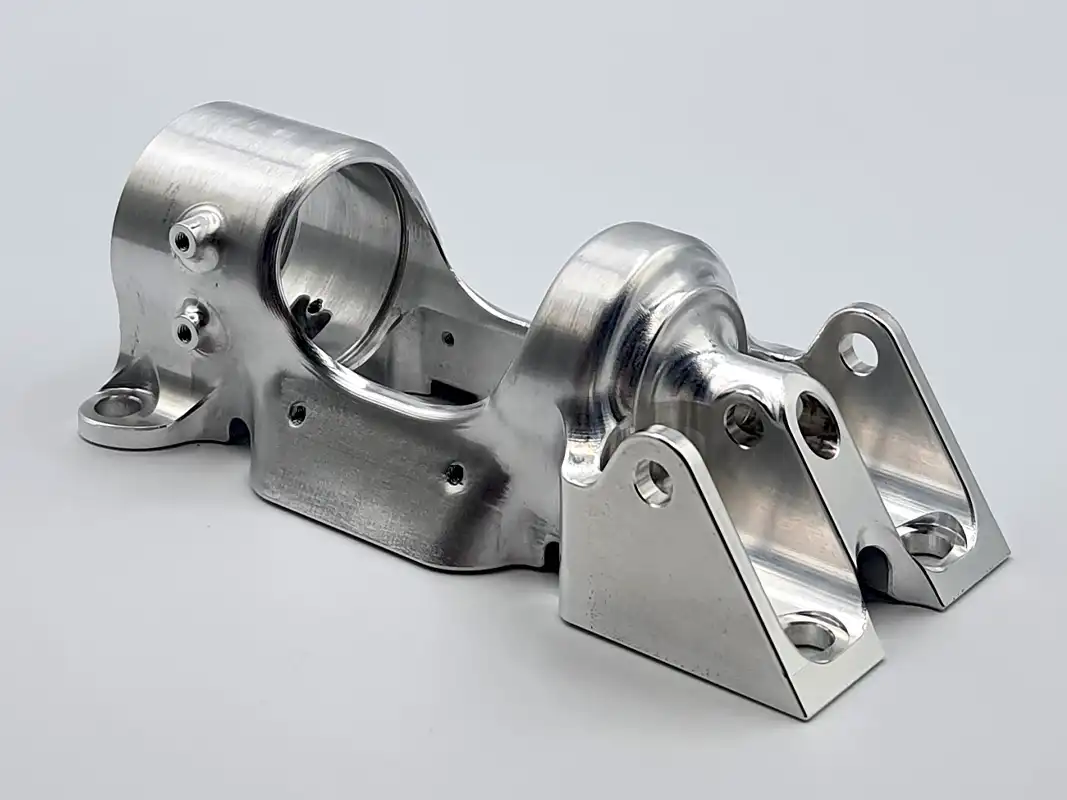
Wuxi Lead Precision Machinery delivers uncompromising precision in lithium aluminum alloy components, addressing the material’s unique challenges including thermal sensitivity, low ductility, and reactivity. Our integrated approach combines advanced 5-axis CNC machining with rigorous metrology protocols to ensure dimensional stability and structural integrity critical for aerospace and high-performance applications. Lithium aluminum alloys demand specialized toolpath strategies to manage heat generation and minimize microstructural distortion; our engineering team implements optimized cutting parameters, cryogenic cooling, and high-frequency spindle control to preserve material properties while achieving micron-level accuracy.
Our 5-axis CNC systems, featuring Makino MAG4 and DMG MORI CTX beta 1250 platforms, enable complex geometries in a single setup. This eliminates cumulative errors from multiple fixturing stages—a critical advantage for thin-walled lithium aluminum structures prone to deformation. Simultaneous 5-axis interpolation allows undercuts, compound angles, and organic contours without sacrificing surface finish. All machines operate within ISO Class 7 cleanroom environments with temperature stabilization at 20±0.5°C, counteracting the high coefficient of thermal expansion inherent in lithium aluminum alloys. Custom fixturing using low-clamp-force vices prevents part distortion during machining, while real-time tool wear compensation ensures consistent edge quality.
Quality assurance is anchored by Zeiss CONTURA G2 CMM systems with VAST XXT scanning probes, providing full 3D validation against CAD models. Every component undergoes first-article inspection per AS9102 standards, with automated reporting of GD&T deviations. Our metrology suite includes optical comparators for burr detection and X-ray fluorescence for material composition verification, ensuring compliance with AMS 4922 and AMS 4915 specifications. Statistical process control (SPC) data from every production run is archived for traceability, enabling proactive adjustment of machining parameters to maintain tolerance bands.
The table below defines achievable tolerances for lithium aluminum alloys under controlled production conditions:
| Feature Type | Standard Capability | Enhanced Capability |
|---|---|---|
| Linear Dimensions (mm) | ±0.025 | ±0.005 |
| Angular Tolerances (°) | ±0.1 | ±0.02 |
| Positional GD&T (mm) | ±0.03 | ±0.008 |
| Surface Roughness (Ra) | 0.8 µm | 0.2 µm |
| Flatness (mm/m) | 0.02 | 0.005 |
These specifications reflect outcomes after stress-relief cycles specific to lithium aluminum alloys, where residual stress management is non-negotiable. Our process includes intermediate stress-relief annealing between roughing and finishing stages, preventing post-machining warpage. By harmonizing machine capability, material science expertise, and closed-loop quality control, Wuxi Lead ensures lithium aluminum components meet the most stringent aerospace and defense requirements. Clients receive not just parts, but certified data packages validating every micron of conformance to mission-critical designs.
Material & Finish Options
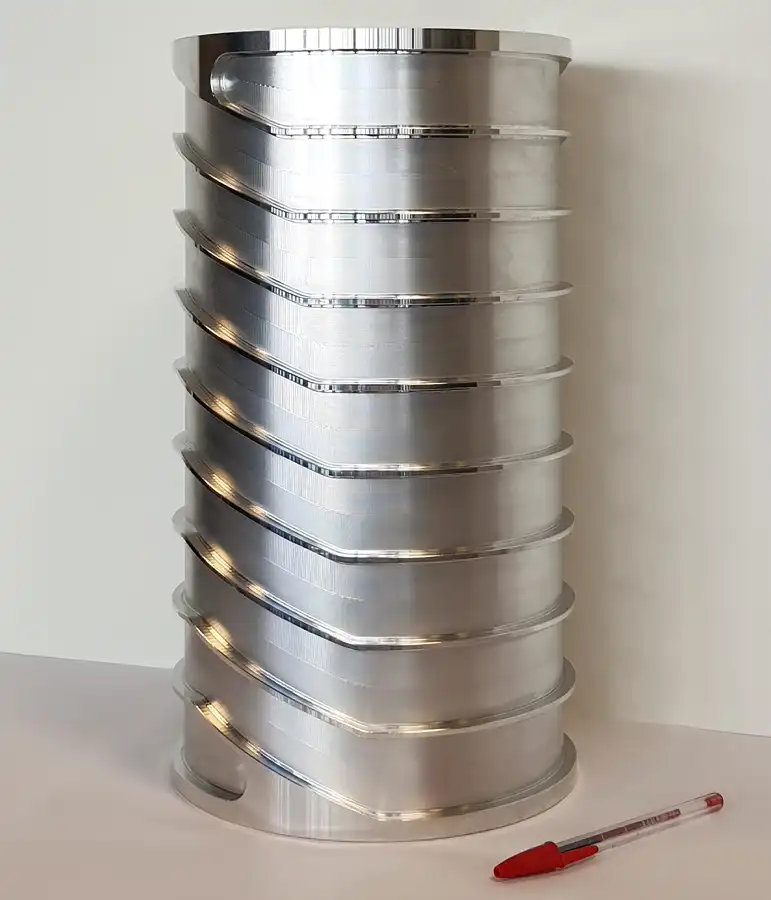
Material selection is a critical step in high-precision manufacturing, particularly in industries such as aerospace, electric vehicles, and advanced electronics where performance under stress, weight efficiency, and long-term durability are paramount. At Wuxi Lead Precision Machinery, we specialize in custom metal manufacturing using premium-grade aluminum, steel, and titanium—each offering distinct mechanical and chemical properties tailored to specific engineering demands.
Aluminum alloys, especially those in the 6000 and 7000 series, are widely used for their excellent strength-to-weight ratio, corrosion resistance, and machinability. These alloys are ideal for structural components in lightweight applications, including battery enclosures and chassis systems in lithium-ion battery packs. When enhanced with heat treatment (T6 temper), aluminum achieves superior tensile strength, making it a preferred choice for load-bearing yet lightweight assemblies. In contrast, steel—particularly 304 and 4140 grades—delivers unmatched tensile strength and wear resistance, suitable for high-stress environments such as industrial tooling and heavy machinery frames. While heavier than aluminum, steel provides exceptional dimensional stability and longevity under continuous mechanical load. Titanium, specifically Grade 5 (Ti-6Al-4V), offers a unique balance of high strength, low density, and outstanding resistance to extreme temperatures and corrosive environments. Its biocompatibility and fatigue resistance make it ideal for aerospace components and medical devices, though it requires specialized machining techniques due to its low thermal conductivity and high reactivity.
Surface finishing plays a crucial role in enhancing both performance and appearance. Anodizing is the most effective post-processing method for aluminum components. This electrochemical process thickens the natural oxide layer, significantly improving wear resistance, corrosion protection, and electrical insulation. Type II (sulfuric acid) anodizing is commonly used for general industrial applications, providing a durable, decorative finish that accepts dye coloring. For extreme environments, Type III (hardcoat) anodizing delivers a much thicker, harder surface layer—up to 50–75 µm—capable of withstanding abrasive conditions and prolonged outdoor exposure. Unlike aluminum, steel is typically finished with electroplating, powder coating, or passivation, while titanium benefits from treatments such as sandblasting, polishing, or thermal oxidation depending on the functional requirements.
Below is a comparative overview of key mechanical properties for selected materials commonly used in our precision manufacturing processes.
| Material | Tensile Strength (MPa) | Yield Strength (MPa) | Density (g/cm³) | Corrosion Resistance | Common Finishes |
|---|---|---|---|---|---|
| Aluminum 6061-T6 | 310 | 276 | 2.70 | High | Anodizing, Sandblasting |
| Steel 4140 | 655 | 415 | 7.85 | Moderate | Electroplating, Painting |
| Steel 304 | 515 | 205 | 8.00 | High | Passivation, Polishing |
| Titanium Ti-6Al-4V | 900 | 830 | 4.43 | Very High | Thermal Oxidation, Polishing |
At Wuxi Lead Precision Machinery, we support clients in selecting the optimal material and finish combination based on application environment, mechanical load, and lifecycle expectations. Our engineering team provides full consultation from design to delivery, ensuring every component meets exacting industry standards.
Manufacturing Process & QC
Lithium Aluminum Alloy Production Process: Precision Engineering from Concept to Volume
At Wuxi Lead Precision Machinery, manufacturing critical components from lithium aluminum alloys demands an uncompromising, integrated process. These advanced materials, prized for exceptional strength-to-weight ratios in aerospace and defense, require meticulous control at every stage to achieve true Zero Defects performance. Our methodology rigorously links Design, Prototyping, and Mass Production, eliminating error propagation through systemic validation.
The Design phase is foundational. Our engineering team collaborates closely with clients, utilizing advanced FEA and computational fluid dynamics (CFD) simulations specific to lithium-aluminum’s unique thermal and mechanical behavior. We focus intensely on manufacturability, optimizing geometries to minimize residual stress and distortion during machining and heat treatment. Critical factors like anisotropic properties, sensitivity to thermal cycling, and weldability are modeled exhaustively. This proactive approach ensures the digital twin is inherently producible, preventing 80% of potential defects before metal is cut. Material selection adheres strictly to AMS and ASTM standards for grades like AA 2099 and AA 2195.
Prototyping transitions the validated design into physical reality under full production conditions. We employ our high-precision 5-axis CNC machining centers with thermal compensation and inert atmosphere welding capabilities where required. Each prototype undergoes rigorous dimensional inspection via CMM and laser scanning against the original CAD model, alongside non-destructive testing (NDT) such as X-ray and ultrasonic inspection to verify internal integrity. Metallurgical analysis confirms microstructure and properties meet stringent aerospace specifications. This phase is not merely validation; it is the critical stress test for the entire manufacturing system, identifying any hidden process vulnerabilities. Client sign-off on prototype performance and documentation is mandatory before volume release.
Mass Production leverages the perfected process parameters established during prototyping. Our automated production cells, featuring real-time SPC monitoring and in-process gauging, maintain absolute consistency. Lithium aluminum’s sensitivity necessitates tightly controlled environmental conditions within machining cells and strict adherence to specialized cutting tool geometries and coolant strategies to prevent galling or thermal damage. Every component undergoes 100% dimensional verification against critical-to-quality characteristics, with full traceability from raw material lot to finished part. Our Zero Defects commitment is operationalized through closed-loop corrective actions; any deviation triggers immediate process adjustment, not just part rejection. Continuous data analytics from production feed back into design and process refinement.
This seamless integration ensures lithium aluminum components meet the most demanding performance and reliability requirements. Below are key specifications defining our production capability for these advanced alloys.
| Parameter | Specification Range | Control Standard |
|---|---|---|
| Alloy Grades | AA 2099, AA 2195, AA 2196 | AMS 4915, AMS 4920 |
| Typical Tempers | T8, T851, T861 | ASTM B209 |
| Dimensional Tolerance | ±0.025 mm (standard) | ISO 2768-mK |
| ±0.005 mm (critical features) | Client Specific | |
| Surface Roughness (Ra) | 0.8 µm (machined) | ISO 1302 |
| 1.6 µm (as-welded) | Client Specific | |
| NDT Requirements | 100% X-ray / Ultrasonic (critical) | AMS 2658, ASTM E1444 |
| Traceability | Full Lot Traceability (MTRs) | AS9100 Rev D |
Wuxi Lead’s disciplined execution across Design, Prototyping, and Mass Production transforms the challenges of lithium aluminum alloy manufacturing into a guarantee of precision-engineered reliability for your most critical applications.
Why Choose Wuxi Lead Precision
Partner with Lead Precision for Advanced Lithium Aluminum Alloy Manufacturing Solutions
In the rapidly evolving landscape of high-performance materials, lithium aluminum alloys stand at the forefront of innovation, offering unmatched strength-to-density ratios, superior thermal conductivity, and exceptional corrosion resistance. These properties make them indispensable in aerospace, electric mobility, defense, and next-generation energy systems. At Wuxi Lead Precision Machinery, we specialize in the custom manufacturing of lithium aluminum alloy components with micron-level precision, ensuring your engineering demands are met with uncompromising quality and reliability.
Our expertise lies in transforming complex design specifications into fully functional, high-integrity metal components through advanced CNC machining, precision casting, and proprietary heat treatment processes. With over a decade of experience in high-end metal manufacturing, we have developed a deep understanding of the metallurgical sensitivities of lithium aluminum alloys—materials that require stringent control over temperature, atmosphere, and tooling dynamics during processing. Our facility in Wuxi is equipped with closed-environment machining centers, real-time monitoring systems, and a dedicated R&D team focused exclusively on lightweight, high-strength alloys.
When you partner with Lead Precision, you gain more than a supplier—you gain a technical collaborator. From initial material selection and prototype development to full-scale production and post-processing validation, our engineers work alongside your team to optimize designs for manufacturability, performance, and cost-efficiency. We adhere to international quality standards, including ISO 9001:2015 and AS9100 for aerospace applications, and provide full traceability with every batch produced.
Whether you are developing structural components for unmanned aerial vehicles, battery enclosures for electric aircraft, or lightweight housings for high-speed rail systems, our manufacturing capabilities are engineered to meet the most demanding specifications.
Below are key technical specifications we support for lithium aluminum alloy processing:
| Parameter | Capability |
|---|---|
| Alloy Grades | AA 2099, AA 2195, AA 2096, Custom Formulations |
| Tolerances | ±0.005 mm (micron-level precision) |
| Maximum Part Size | 2,500 mm × 1,200 mm × 800 mm |
| Surface Finish | Ra 0.4 µm to Ra 3.2 µm (customizable) |
| Machining Processes | 5-axis CNC, High-Speed Milling, Turning |
| Secondary Operations | Heat Treatment, Anodizing, Shot Peening |
| Quality Certification | ISO 9001:2015, AS9100, Full Material Traceability |
| Lead Time (Prototype) | 15–25 days (based on complexity) |
| Production Capacity | Up to 50,000 units annually per project |
At Wuxi Lead Precision Machinery, we are committed to enabling breakthroughs in lightweight engineering through precision manufacturing. Our mission is to serve as a strategic extension of your engineering team, delivering components that meet the highest standards of performance and consistency.
To begin your next project with a trusted partner in lithium aluminum alloy manufacturing, contact us today at [email protected]. Let us turn your advanced material challenges into precision solutions.
⚙️ Precision Cost Estimator
Estimate relative manufacturing effort based on tolerance.