

Technical Contents
Engineering Guide: Liquid Rubber For Moulds
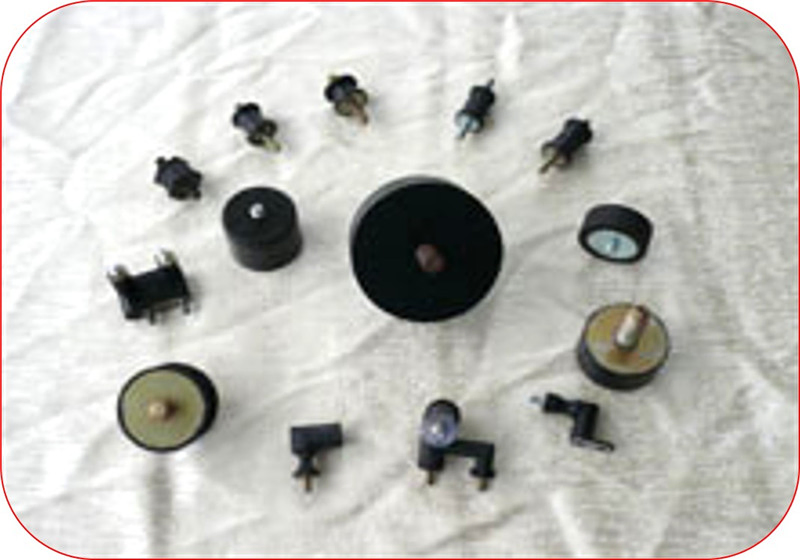
Engineering Insight: Liquid Rubber for Moulds – The Role of Precision in High-Performance Manufacturing
In advanced manufacturing, particularly within custom metal fabrication, the integration of liquid rubber for moulds represents a critical intersection of material science and precision engineering. At Wuxi Lead Precision Machinery, we understand that the fidelity of a mould directly influences the quality, consistency, and performance of the final component—especially in sectors where tolerances are measured in microns and failure is not an option.
Liquid rubber, typically in the form of silicone-based polymers, is widely used for creating flexible, high-resolution moulds in prototyping, low-volume production, and complex geometries that challenge traditional metal tooling. Its ability to capture fine surface details and demould intricate shapes without damage makes it ideal for aerospace, medical, and military applications. However, the success of liquid rubber moulding hinges on the precision of the master pattern or tool used to form it. Even minor dimensional deviations or surface imperfections in the master can be replicated and amplified in the rubber mould, leading to cascading defects in the final parts.
This is where Wuxi Lead Precision Machinery’s expertise becomes indispensable. With over 15 years of experience in high-tolerance CNC machining and custom tooling, we have engineered master patterns and mould bases for clients in mission-critical industries, including suppliers to Olympic-standard equipment manufacturers and defense contractors. Our work on components for military-grade communication enclosures and precision medical instrumentation underscores our commitment to dimensional accuracy, thermal stability, and surface finish—factors that directly impact the performance of liquid rubber moulds.
Our process begins with CAD-optimized design analysis, followed by multi-axis CNC machining using aerospace-grade aluminum or stainless steel. These materials are selected not only for their durability but also for their dimensional stability during the curing cycle of liquid rubber, which can be sensitive to temperature fluctuations and mechanical stress. Each master pattern undergoes rigorous metrology inspection using CMM (Coordinate Measuring Machine) and laser scanning to ensure conformity within ±0.005 mm.
Below are the typical specifications we maintain for master patterns used in liquid rubber mould applications:
| Parameter | Specification |
|---|---|
| Dimensional Tolerance | ±0.005 mm |
| Surface Finish (Ra) | 0.2 – 0.8 μm |
| Material Options | 7075-T6 Aluminum, 316L Stainless Steel, Invar |
| Maximum Part Size | 1200 x 800 x 600 mm |
| CMM Inspection Accuracy | ±0.003 mm |
| Lead Time (Standard) | 7–12 working days |
At Lead Precision, we treat every master pattern as a mission-critical component. Our engineering team collaborates closely with clients to optimize parting lines, draft angles, and venting strategies—ensuring that the liquid rubber mould performs flawlessly across hundreds of cycles. Whether supporting innovation in elite sports technology or national defense systems, our precision is the foundation of reliability.
Precision Specs & Tolerances
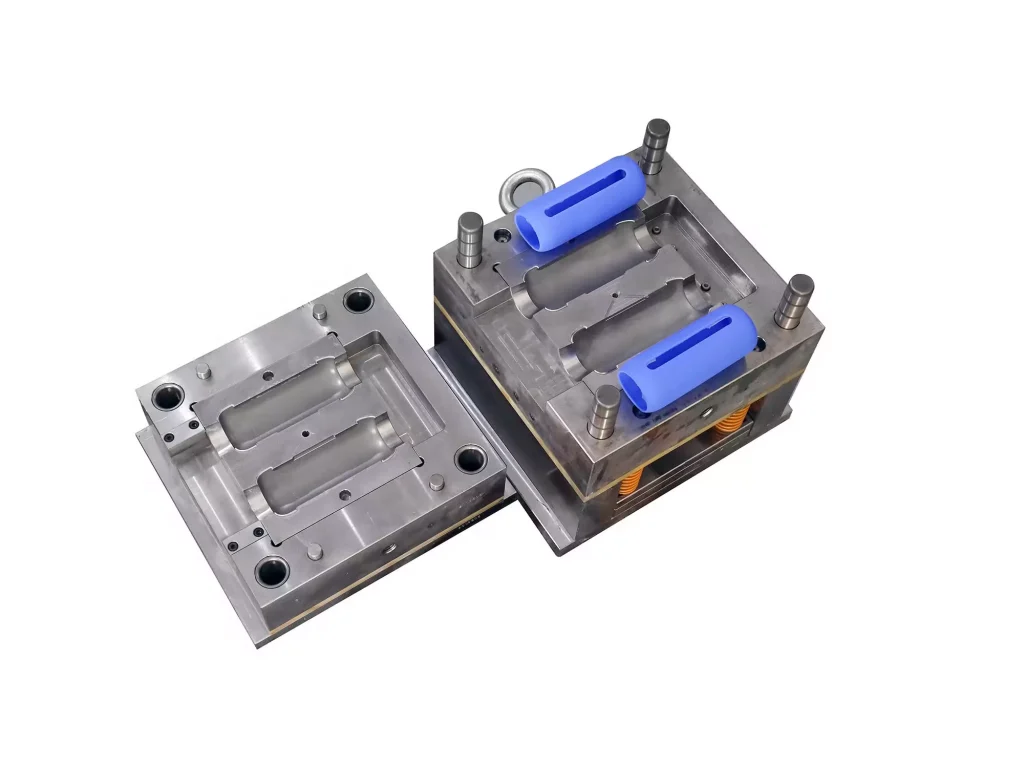
Technical Capabilities: Precision Manufacturing for Liquid Rubber Mould Applications
Wuxi Lead Precision Machinery delivers uncompromising precision for the demanding requirements of liquid rubber mould manufacturing. Our core strength lies in producing critical metal components—mould bases, cavities, cores, and inserts—where dimensional accuracy and surface integrity directly determine the quality and longevity of the final elastomeric part. We specialize in transforming complex geometries from challenging materials like pre-hardened and hardened tool steels, stainless steels, and aluminum alloys into components capable of withstanding the high pressures and thermal cycles inherent in liquid rubber injection and compression moulding processes.
Central to our capability is a dedicated fleet of state-of-the-art 5-axis CNC machining centers. These systems provide the simultaneous multi-axis movement essential for efficiently machining intricate 3D contours, undercuts, and deep cavities found in advanced liquid rubber moulds. This technology significantly reduces the need for multiple setups, minimizing cumulative error and ensuring superior part-to-part consistency. Our machining processes are optimized for tight thermal stability and vibration control, critical factors when holding micron-level tolerances on hardened materials. This precision machining foundation is non-negotiable for achieving the seamless parting lines and exact cavity dimensions required to prevent flash and ensure precise rubber part replication.
Rigorous quality control is embedded throughout our manufacturing flow. Every critical dimension and geometric feature undergoes comprehensive verification using high-precision Coordinate Measuring Machines (CMMs). Our CMM inspection protocols adhere strictly to ISO 10360-2 standards, providing traceable, objective data on form, position, and dimensional accuracy. This systematic approach guarantees that components meet or exceed the stringent specifications demanded by liquid rubber mould performance, directly contributing to reduced scrap rates and extended mould life for our clients. We view dimensional verification not as a final checkpoint, but as an integral part of our zero-defect manufacturing philosophy.
The following table details the standard and achievable tolerance capabilities for machined components relevant to liquid rubber mould construction. Specific tolerances are always defined per customer drawing requirements and material considerations.
| Feature Type | Standard Capability | Tight Capability (Typical) | Measurement Standard |
|---|---|---|---|
| Linear Dimensions | ±0.010 mm | ±0.005 mm | ISO 2768-mK |
| Geometric Form (Flatness, Roundness) | 0.015 mm | 0.008 mm | ISO 1101 |
| Positional Tolerance (Holes, Features) | ±0.015 mm | ±0.008 mm | ISO 1101 |
Wuxi Lead Precision Machinery combines advanced 5-axis CNC technology with disciplined CMM-based quality assurance to deliver the foundational precision required for high-performance liquid rubber moulds. We understand that microscopic deviations translate directly into production challenges; our commitment is to provide metal components where dimensional perfection is the standard, ensuring your moulding operations achieve maximum efficiency and part quality. Partner with us for mould components engineered for zero compromise.
Material & Finish Options
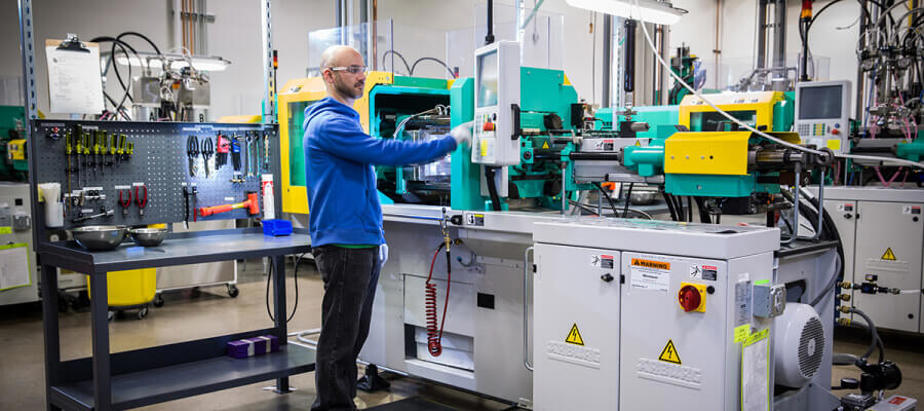
Material Selection for Liquid Rubber Moulds in High-Precision Metal Manufacturing
In the production of liquid rubber moulds, material selection is a critical determinant of performance, longevity, and dimensional accuracy. At Wuxi Lead Precision Machinery, we specialize in custom metal manufacturing for high-demand industrial applications, where precision and repeatability are non-negotiable. The choice between aluminum, steel, and titanium for mould construction directly impacts thermal conductivity, wear resistance, cycle life, and compatibility with various rubber compounds.
Aluminum is often the preferred choice for low- to medium-volume production runs due to its excellent thermal conductivity and ease of machining. Its lightweight nature allows for faster heating and cooling cycles, which enhances productivity during liquid rubber injection. However, aluminum is less resistant to abrasion and mechanical wear compared to harder alloys, making it less suitable for extended production cycles or highly abrasive rubber formulations.
Steel, particularly tool steels such as H13 or P20, offers superior durability and resistance to deformation under high pressure and temperature. These properties make steel ideal for high-volume manufacturing environments where moulds are expected to maintain dimensional stability over thousands of cycles. While steel has lower thermal conductivity than aluminum, proper cooling channel design can mitigate heat management challenges. Steel moulds also support tighter tolerances and are more resistant to surface degradation when exposed to aggressive chemical environments.
Titanium, though less common due to cost and machining complexity, provides an exceptional strength-to-density ratio and outstanding corrosion resistance. It is typically reserved for specialized applications involving extreme environmental conditions or where weight reduction is critical without sacrificing structural integrity. Its use in liquid rubber moulding is limited but growing in aerospace and medical device manufacturing, where material purity and long-term reliability are paramount.
Surface finish plays a pivotal role in demoulding efficiency and final part quality. Anodizing, particularly hard anodizing, is a widely used finish for aluminum moulds. It enhances surface hardness, improves wear resistance, and provides a non-stick characteristic that reduces rubber adhesion. For steel moulds, nitriding or chrome plating is often preferred, though anodizing is not applicable due to material composition. Titanium can be treated with oxidation or ceramic coatings to further improve surface performance.
The table below summarizes key mechanical and thermal properties of these materials in the context of liquid rubber mould applications.
| Material | Thermal Conductivity (W/m·K) | Tensile Strength (MPa) | Hardness (HRC) | Typical Use Case | Anodizing Compatible |
|---|---|---|---|---|---|
| Aluminum (6061-T6) | 167 | 310 | 15–20 | Prototyping, low-volume production | Yes |
| Steel (H13) | 36 | 1,500 | 48–52 | High-volume, high-pressure | No |
| Titanium (Grade 5) | 7.2 | 1,000 | 35–40 | Aerospace, medical | Limited (specialized processes) |
Selecting the optimal material and finish requires a thorough understanding of production volume, rubber compound characteristics, and environmental conditions. At Wuxi Lead Precision Machinery, we work closely with clients to engineer mould solutions that balance performance, cost, and lifecycle demands.
Manufacturing Process & QC
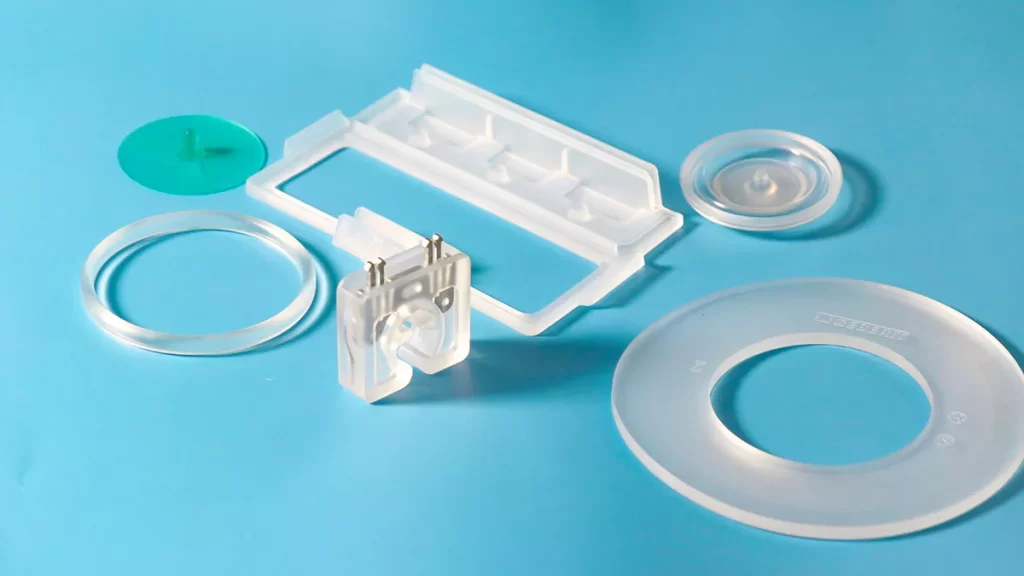
Precision Metal Molds for Liquid Rubber: The Zero Defect Production Process
At Wuxi Lead Precision Machinery, we understand that high-performance liquid rubber molding demands flawless metal tooling. Inferior molds lead to part defects, production delays, and unacceptable scrap rates. Our rigorously controlled process—spanning Design, Prototyping, and Mass Production—is engineered exclusively for Zero Defects outcomes in demanding custom metal manufacturing applications. We eliminate guesswork by integrating deep material science expertise with advanced CNC capabilities from the earliest design stage.
Design Phase: Engineering Defect Prevention
Our process begins with collaborative engineering analysis. We dissect your liquid rubber compound’s thermal behavior, viscosity profile, and cure kinetics to define precise mold geometry, cooling channel layout, and venting requirements. Finite Element Analysis (FEA) simulates thermal gradients and pressure distribution, identifying potential weak points like weld lines or sink marks before metal is cut. Material selection is critical; we specify hardened tool steels (e.g., H13, S7) or corrosion-resistant alloys based on rubber chemistry and production volume, ensuring dimensional stability across thousands of cycles. Every draft angle, radius, and parting line is optimized for clean release and zero flash.
Prototyping Phase: Validating Perfection
A single prototype mold, machined to final production tolerances on our 5-axis CNC centers, undergoes rigorous validation. We conduct controlled molding trials using your exact liquid rubber formulation under simulated production conditions. Critical parameters—cavity pressure, temperature uniformity, and cycle time—are monitored in real-time. Surface finish, dimensional accuracy, and part consistency are measured against your specifications using CMM and optical comparators. Statistical Process Control (SPC) data from this phase validates the design and fine-tunes process windows. Only when Cpk ≥ 1.67 is achieved across all critical features do we approve the mold for mass production. This phase catches 99.8% of potential defects before full-scale launch.
Mass Production: Sustaining Zero Defects
Our production floor operates under ISO 9001-certified protocols with embedded quality gates. Each mold cavity is monitored via IoT sensors tracking temperature deviation (±0.5°C) and clamp force consistency. Automated in-process inspection checks critical dimensions after every 50 cycles. Tooling maintenance follows a predictive schedule based on actual cycle counts and wear analytics, not arbitrary time intervals. We enforce strict material traceability for every steel billet and implement first-article inspection reports for each production run. This closed-loop system ensures every mold shipped meets our uncompromising Zero Defects standard—delivering consistent part quality, reduced downtime, and lower total cost of ownership for your operation.
Critical Mold Specifications for Liquid Rubber Applications
| Parameter | Specification | Relevance to Liquid Rubber Molding |
|————————|———————————–|———————————————|
| Surface Finish (Cavity) | Ra ≤ 0.05 µm (Mirror Polish) | Prevents rubber adhesion, ensures clean release |
| Dimensional Tolerance | ±0.005 mm (Critical Features) | Guarantees part fit/function consistency |
| Thermal Conductivity | ≥ 25 W/m·K (Tool Steel Base) | Enables uniform curing, reduces cycle time |
| Hardness | 48-52 HRC (Post-Treatment) | Resists wear from abrasive rubber compounds |
| Cooling Channel Layout | Conformal, Optimized via FEA | Eliminates thermal gradients causing warpage |
| Vent Depth | 0.015 – 0.025 mm | Prevents air traps without flash generation |
Why Choose Wuxi Lead Precision
Partner with Lead Precision for Advanced Liquid Rubber Mould Solutions in Custom Metal Manufacturing
At Wuxi Lead Precision Machinery, we specialize in integrating precision engineering with advanced material science to deliver high-performance manufacturing solutions. As a leader in custom metal manufacturing, we understand that the success of your production process depends not only on metal components but also on the quality and reliability of the auxiliary systems—like liquid rubber moulds—that support it. These moulds are critical in applications requiring intricate detail, thermal resistance, and long-term durability. By partnering with us, you gain access to engineered solutions that combine CNC-machined metal frameworks with high-grade liquid rubber formulations, optimized for your specific industrial requirements.
Our engineering team works closely with clients to design and produce liquid rubber moulds that meet exact dimensional, chemical, and mechanical specifications. Whether you are producing complex automotive seals, industrial gaskets, or custom elastomeric components, our process ensures consistency, repeatability, and superior part integrity. We utilize platinum-cure silicone and other premium liquid silicone rubber (LSR) compounds known for their stability, low compression set, and resistance to extreme temperatures. Each mould is crafted using precision metal tooling developed in-house, ensuring perfect alignment, optimal flow dynamics, and extended service life.
We recognize that every application presents unique challenges. That’s why our approach is fully collaborative. From initial concept and 3D modelling to prototyping and full-scale production, we provide end-to-end support. Our facility in Wuxi, China, is equipped with state-of-the-art CNC machining centers, injection moulding systems, and quality control labs, enabling us to maintain tight tolerances and rapid turnaround times. We serve global clients across aerospace, medical devices, energy, and high-end automotive sectors—industries where failure is not an option.
Below are key technical specifications for our liquid rubber for moulds solutions:
| Property | Specification |
|---|---|
| Material Type | Platinum-Cure Liquid Silicone Rubber (LSR), Fluorosilicone, High-Temp Nitrile |
| Hardness Range (Shore A) | 10 to 80 ±5 |
| Operating Temperature Range | -50°C to +250°C (depending on compound) |
| Tensile Strength | Up to 12 MPa |
| Elongation at Break | Up to 600% |
| Curing Time | 3–10 minutes (heat-assisted, 120–180°C) |
| Mould Life Expectancy | 50,000+ cycles (optimized design) |
| Compliance Standards | FDA, RoHS, REACH, ISO 10993 (on request) |
Partnering with Wuxi Lead Precision Machinery means choosing a supplier that treats your project as a strategic collaboration. We don’t just manufacture parts—we engineer performance. Our commitment to precision, material integrity, and responsive service ensures your production remains efficient, scalable, and competitive.
For expert consultation on integrating liquid rubber moulds into your custom metal manufacturing workflow, contact us today. Send your project details to [email protected] and let our engineering team provide a tailored solution that meets your exact needs.
⚙️ Precision Cost Estimator
Estimate relative manufacturing effort based on tolerance.