

Technical Contents
Engineering Guide: Injection Moulding Machine Plastic
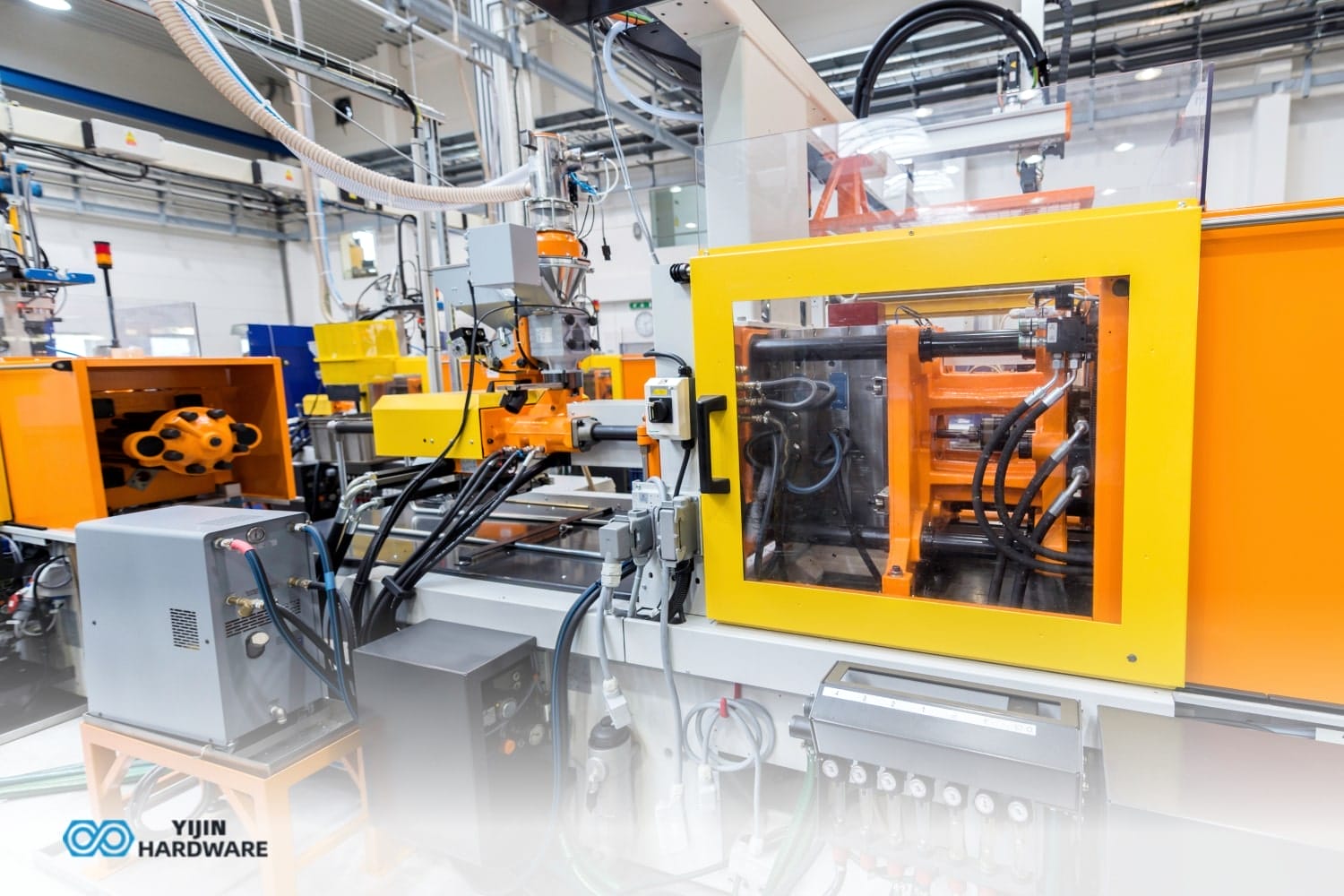
Engineering Insight: Injection Moulding Machine Plastic Components
In high-performance industrial applications, the reliability and precision of injection moulding machine plastic components are not merely operational considerations—they are engineering imperatives. At Wuxi Lead Precision Machinery, we specialize in the custom manufacturing of critical metal components that support and enhance the performance of plastic injection moulding systems. These machines operate under extreme thermal cycles, high pressures, and repetitive mechanical stress, demanding metal parts with micron-level accuracy and exceptional durability.
The precision of metal components—such as tie bars, platen plates, ejector pins, and barrel housings—directly influences the consistency, quality, and repeatability of plastic part production. Even minor deviations in flatness, parallelism, or surface finish can lead to flash, short shots, or premature wear. This is especially critical in sectors such as medical devices, aerospace, and automotive, where component tolerances are non-negotiable. Our engineering team applies advanced CNC machining, stress-relieving treatments, and precision grinding techniques to ensure each part meets the exacting demands of modern injection moulding machinery.
Wuxi Lead Precision Machinery brings over two decades of experience in high-tolerance metal manufacturing, with a proven track record in projects requiring military-grade precision and Olympic-standard reliability. Our work has supported equipment used in national infrastructure projects and high-stakes industrial automation systems where failure is not an option. This depth of experience enables us to anticipate mechanical behavior under load, optimize material selection, and deliver components that enhance machine longevity and performance.
We routinely work with high-strength alloy steels, stainless steels, and wear-resistant tool steels, machining parts up to 2,500 mm in length with tolerances held within ±0.005 mm. Surface finishes are controlled to Ra ≤ 0.4 µm where required, ensuring optimal sealing, alignment, and fatigue resistance. Every component undergoes rigorous in-process and final inspection using coordinate measuring machines (CMM) and laser alignment systems, guaranteeing compliance with international quality standards.
The integration of precision metal components into plastic injection moulding machines is a testament to the synergy between material science and mechanical engineering. At Wuxi Lead, we do not manufacture plastic parts—we build the high-precision metal foundations that make their consistent, high-volume production possible.
Key Manufacturing Specifications
| Parameter | Capability |
|---|---|
| Maximum Part Length | 2,500 mm |
| Tolerance Control | ±0.005 mm |
| Surface Finish (Ra) | As low as 0.4 µm |
| Materials | 42CrMo, P20, H13, Stainless Steel 316, Tool Steels |
| Machining Processes | CNC Milling, Turning, Grinding, Boring |
| Inspection Equipment | CMM, Laser Tracker, Surface Profiler |
| Certifications | ISO 9001:2015, In-House Military Grade QA |
Precision Specs & Tolerances

Technical Capabilities for Precision Injection Moulding Machine Components
Wuxi Lead Precision Machinery delivers mission-critical metal components for high-performance injection moulding systems. Our expertise centers on manufacturing complex mould bases, inserts, ejector systems, and structural elements where micron-level accuracy directly impacts plastic part quality, cycle time, and tool longevity. We specialize in transforming advanced alloy specifications—such as P20, H13, S136, and maraging steels—into components that withstand extreme thermal cycling and mechanical stress inherent in modern plastic processing.
Our core manufacturing capability leverages state-of-the-art 5-axis CNC machining centers, enabling single-setup production of geometrically intricate features essential for precision mould construction. This technology eliminates cumulative alignment errors from multiple fixtures, ensuring critical datums for cavity-cores, cooling channels, and parting surfaces are maintained within stringent tolerances. Complex undercuts, conformal cooling geometries, and non-orthogonal parting lines are executed with superior surface integrity, reducing hand-finishing requirements and accelerating time-to-production for your mould assemblies. Material removal strategies are optimized for hardened steels, preserving dimensional stability and minimizing residual stress.
Quality assurance is rigorously embedded throughout production. Every component undergoes comprehensive Coordinate Measuring Machine (CMM) inspection against original CAD models, with full traceability to material certificates and process parameters. Our Zeiss CONTURA CMM systems provide sub-micron verification of critical dimensions, geometric tolerances, and surface profiles. All inspection reports are digitally archived and accessible to clients, ensuring complete transparency and compliance with ISO 9001 standards. This closed-loop validation process guarantees that components meet the exacting demands of high-cavitation, multi-shot, and micro-injection moulding applications.
The following table details our standard and achievable tolerance capabilities for machined mould components, verified through CMM inspection:
| Feature Type | Standard Tolerance (mm) | Tight Tolerance Capability (mm) | Measurement Method |
|---|---|---|---|
| Linear Dimensions | ±0.010 | ±0.003 | CMM |
| Geometric (Flatness) | 0.020 per 100mm | 0.005 per 100mm | CMM |
| Geometric (Perpendicularity) | 0.020 | 0.008 | CMM |
| Hole Diameter (Reamed) | ±0.005 | ±0.002 | CMM / Air Gage |
| Positional (Holes) | ±0.015 | ±0.005 | CMM |
These capabilities translate directly into enhanced mould performance for plastic manufacturers. Precise cavity-core alignment minimizes flash and parting-line mismatch, while optimally finished surfaces reduce ejection force and prevent cosmetic defects on finished plastic parts. Tight control over cooling channel geometry ensures uniform thermal management, critical for dimensional stability in engineering-grade resins. Partnering with Wuxi Lead means your injection moulding systems achieve maximum uptime, consistent part quality, and extended service life—fundamental requirements for competitive plastic part production. We engineer metal solutions that make your plastic manufacturing excellence repeatable.
Material & Finish Options
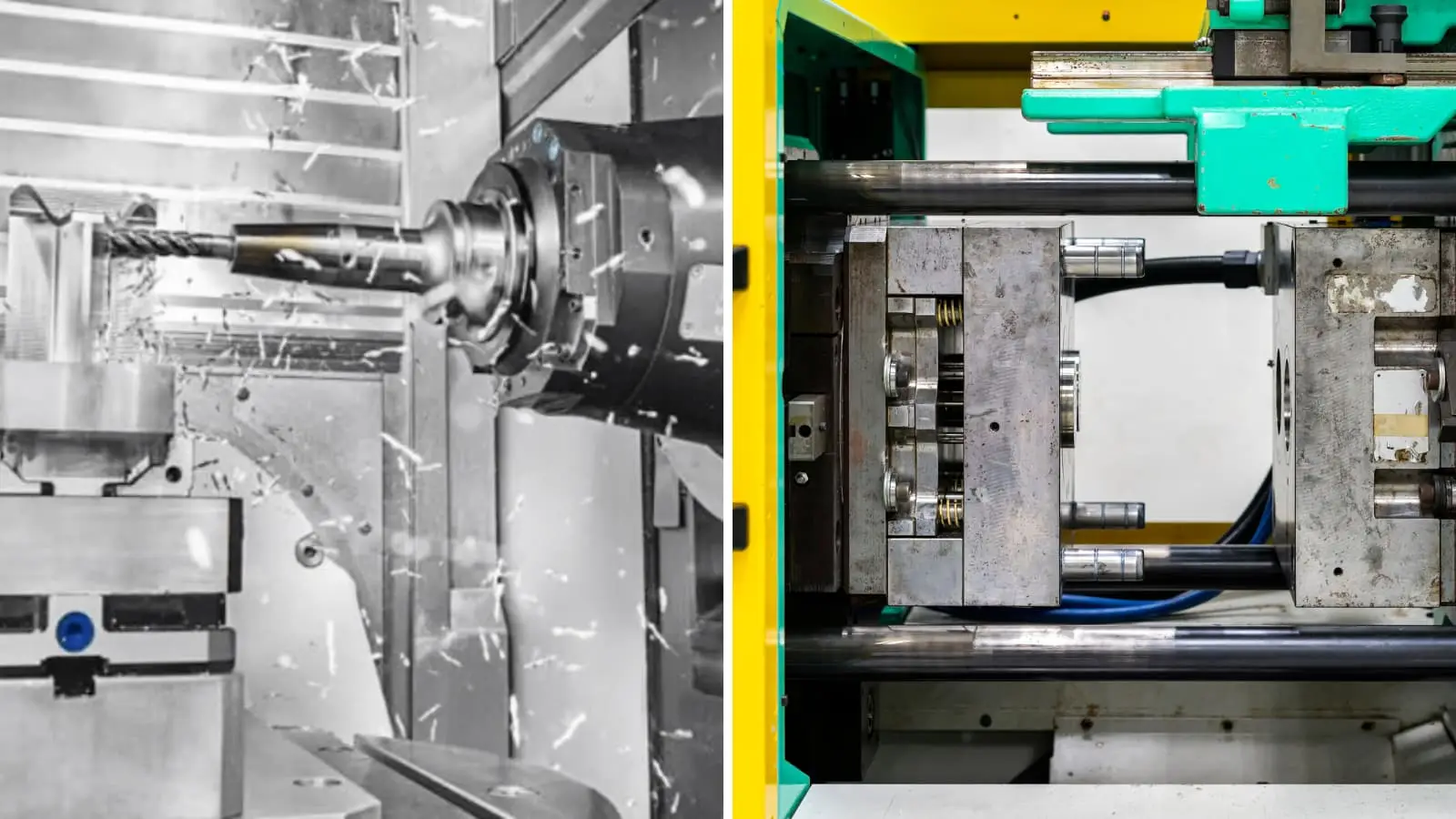
Material selection is a critical phase in the development of high-performance injection moulding machine components, where precision, durability, and thermal efficiency directly influence production output and part quality. At Wuxi Lead Precision Machinery, we specialize in custom metal manufacturing for advanced industrial applications, offering expert guidance in selecting the optimal material and surface treatment for your specific operational requirements. The most frequently specified metals for injection moulding machine plastic components are aluminum, steel, and titanium—each offering distinct mechanical and thermal properties tailored to different production environments.
Aluminum is widely used for mould bases and non-wear-intensive components due to its excellent thermal conductivity, lightweight nature, and machinability. It allows for faster cycle times by efficiently dissipating heat, making it ideal for prototype runs and low-to-medium volume production. However, aluminum has lower wear resistance compared to steel and titanium, limiting its use in high-volume or abrasive material processing.
Steel, particularly tool steel variants such as P20, H13, and S136, remains the standard for high-volume injection moulding applications. It provides superior hardness, wear resistance, and dimensional stability under prolonged exposure to high pressure and temperature. Steel components are essential when processing engineering-grade plastics or filled resins that impose high mechanical stress on the mould. While heavier and more challenging to machine than aluminum, steel delivers extended service life and reduced maintenance intervals in continuous production settings.
Titanium is selected for specialized applications requiring extreme strength-to-density ratio, corrosion resistance, and performance at elevated temperatures. Though less common due to higher cost and machining complexity, titanium excels in corrosive environments or where weight reduction is critical without sacrificing structural integrity. It is typically reserved for high-end, mission-critical components in aerospace or medical-grade plastic processing systems.
Surface finishing further enhances material performance, with anodizing being a preferred treatment for aluminum parts. Anodizing increases surface hardness, improves wear and corrosion resistance, and provides electrical insulation. Hard anodizing (Type III) is particularly effective for components exposed to friction or chemical exposure, creating a durable, porous oxide layer that can be sealed for maximum protection.
The following table summarizes key mechanical and thermal properties of the three materials:
| Material | Density (g/cm³) | Tensile Strength (MPa) | Thermal Conductivity (W/m·K) | Hardness (HB) | Common Applications |
|---|---|---|---|---|---|
| Aluminum (6061-T6) | 2.7 | 310 | 167 | 95 | Mould bases, prototypes, cooling plates |
| Steel (H13) | 7.8 | 1,560 | 35 | 230 | Core/cavity inserts, high-wear components |
| Titanium (Ti-6Al-4V) | 4.4 | 900 | 7.2 | 360 | Aerospace connectors, corrosive environment parts |
Selecting the right material and finish ensures optimal performance, longevity, and cost-efficiency in injection moulding machine plastic systems. At Wuxi Lead Precision Machinery, we combine advanced CNC manufacturing with material science expertise to deliver custom solutions engineered for your production demands.
Manufacturing Process & QC

Precision Metal Manufacturing for Injection Moulding Machine Components
Wuxi Lead Precision Machinery delivers the critical metal foundation enabling high-performance plastic injection moulding. Our specialized production process rigorously transforms engineering specifications into flawless machine components, ensuring the stability and precision required for zero-defect plastic part production. This process is strictly focused on manufacturing the metal structures, platens, tie bars, and hydraulic units constituting the injection moulding machine itself, not the plastic end products.
The process begins with collaborative Design Engineering. Our team works directly with OEMs to translate machine performance requirements into manufacturable metal component designs. Finite Element Analysis (FEA) validates structural integrity under extreme clamping forces and thermal cycles. Material selection prioritizes high-grade alloy steels and cast irons for wear resistance and dimensional stability. Every geometric tolerance, surface finish requirement, and heat treatment specification is meticulously defined to meet the exacting demands of modern injection moulding applications, directly impacting the machine’s ability to produce consistent plastic parts.
Prototyping & Validation is non-negotiable. We fabricate initial metal components using our advanced CNC machining centers, including multi-axis milling and precision turning. These prototypes undergo rigorous metrology: Coordinate Measuring Machines (CMM) verify dimensional accuracy against CAD models, while surface profilometers confirm critical finish requirements. Functional testing on simulated machine platforms assesses fit, alignment, and initial performance under load. This phase identifies and resolves potential manufacturing or design issues before mass production, preventing costly errors downstream and safeguarding the machine’s future plastic output quality.
Zero-Defect Mass Production leverages our fully integrated manufacturing ecosystem. Components progress through dedicated CNC machining cells with automated tool compensation and in-process gauging. Statistical Process Control (SPC) monitors key characteristics in real-time, triggering immediate corrective action if trends approach tolerance limits. Final inspection employs 100% verification of critical dimensions using calibrated equipment, alongside mandatory non-destructive testing (NDT) like ultrasonic inspection for critical structural castings. Our ISO 9001-certified quality management system, embedded with Six Sigma principles, ensures every metal part shipped meets the uncompromising standards required for reliable, high-uptime injection moulding machine operation.
The precision of the metal machine directly dictates plastic part quality. Our process guarantees the dimensional stability and repeatability essential for eliminating flash, short shots, and dimensional drift in plastic production. Below are key capabilities ensuring machine component integrity:
| Specification Category | Capability Range | Critical for Injection Moulding Machine |
|---|---|---|
| Dimensional Tolerance | ±0.005 mm (Machined) | Platen flatness, tie bar alignment |
| Surface Roughness (Ra) | 0.4 µm to 1.6 µm | Hydraulic cylinder bores, sliding surfaces |
| Material Hardness | HRC 40-55 (Heat Treated) | Wear plates, ejector components |
| Geometric Tolerance | 0.01 mm / 1000 mm | Frame rigidity, parallelism |
| In-Process SPC Monitoring | Real-time, multi-parameter | Consistent clamping force, shot repeatability |
Wuxi Lead Precision Machinery’s disciplined metal manufacturing process is the indispensable cornerstone for injection moulding machine builders demanding ultimate reliability and zero-defect plastic part production. We engineer precision into every metal component.
Why Choose Wuxi Lead Precision
Partner with Lead Precision for Advanced Injection Moulding Machine Plastic Solutions
At Wuxi Lead Precision Machinery, we specialize in delivering high-performance, custom-engineered solutions for the injection moulding industry. As a trusted leader in precision metal manufacturing, we understand the critical role that durable, high-tolerance components play in the efficiency and reliability of plastic injection moulding machines. Our expertise spans the full lifecycle of machine element production—from initial design and material selection to CNC machining, heat treatment, and final quality validation. When you partner with us, you gain access to a vertically integrated manufacturing ecosystem engineered to support the most demanding industrial applications.
Our facility in Wuxi, China, is equipped with state-of-the-art CNC machining centers, precision grinding equipment, and advanced metrology systems, enabling us to produce critical plastic injection moulding components such as barrel sleeves, screw elements, heating flanges, and nozzle tips with micron-level accuracy. We work with high-grade alloy steels, nitrided steels, and wear-resistant materials designed to withstand high pressure, thermal cycling, and abrasive polymer feeds. Every component is manufactured under strict ISO 9001-certified processes, ensuring consistent quality, repeatability, and long service life.
We recognize that injection moulding machine OEMs and maintenance providers require more than just parts—they need a strategic manufacturing partner capable of scaling production, reducing lead times, and offering technical collaboration. Our engineering team works closely with clients to optimize designs for manufacturability, improve wear resistance, and enhance thermal performance. Whether you require low-volume prototypes or high-volume production runs, we offer flexible manufacturing solutions tailored to your operational demands.
Below are key technical specifications for our standard injection moulding machine plastic components:
| Specification | Detail |
|---|---|
| Material Options | 38CrMoAlA, 42CrMo, SKD61, Nitrided Steel, Wear-Resistant Alloys |
| Diameter Range | Ø20 mm – Ø250 mm |
| Length Range | 300 mm – 3,000 mm |
| Tolerance | ±0.01 mm (bore and outer diameter) |
| Surface Roughness | Ra ≤ 0.4 μm (ground finish) |
| Hardness | 58–62 HRC (after nitriding or quenching) |
| Straightness | ≤ 0.03 mm/m |
| Processing Methods | CNC Turning, Grinding, Deep Hole Drilling, Nitriding, Precision Boring |
| Quality Standards | ISO 9001:2015, Full Material Traceability, 100% Dimensional Inspection |
Partnering with Wuxi Lead Precision Machinery means investing in reliability, precision, and long-term value. We are committed to supporting global clients with responsive communication, on-time delivery, and technical expertise rooted in over a decade of specialized manufacturing experience.
For inquiries, technical collaboration, or custom quotations, contact us today at [email protected]. Let us help you elevate the performance and durability of your injection moulding machine plastic systems with engineered precision you can trust.
⚙️ Precision Cost Estimator
Estimate relative manufacturing effort based on tolerance.