Technical Contents
Engineering Guide: Extrusion Moulding Vs Injection Moulding
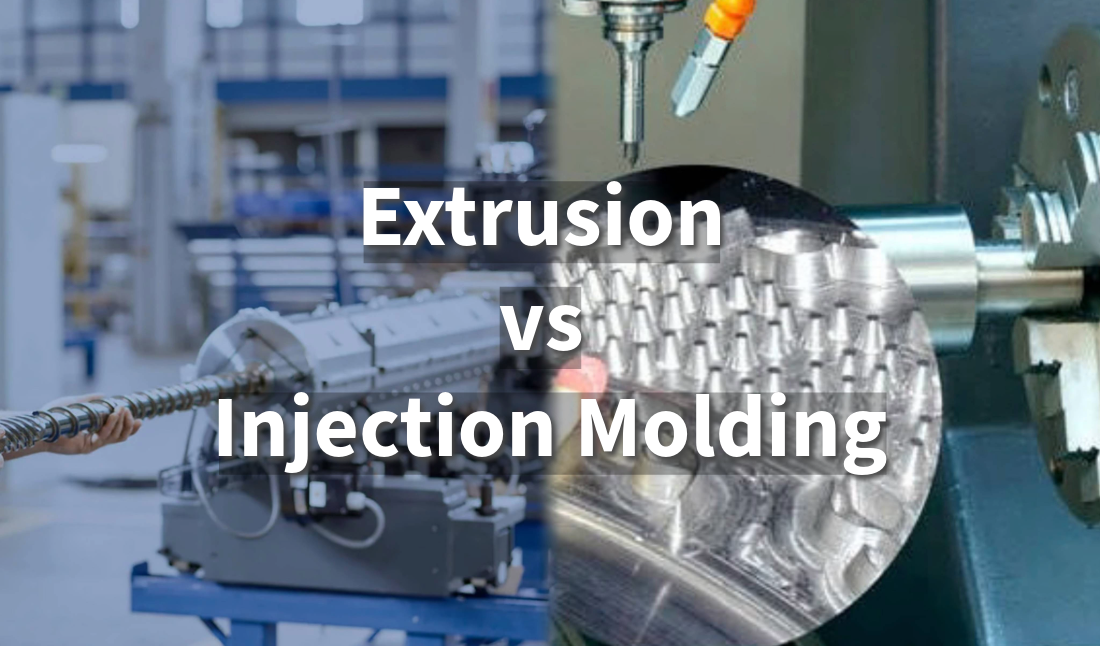
Engineering Insight: Extrusion Moulding vs Injection Moulding in High-Precision Metal Manufacturing
In the realm of custom metal manufacturing, the selection between extrusion moulding and injection moulding is not merely a matter of process preference—it is a strategic engineering decision that directly impacts part integrity, production scalability, and long-term performance. At Wuxi Lead Precision Machinery, we recognize that precision is the cornerstone of advanced manufacturing, particularly when serving high-stakes industries such as aerospace, defense, and Olympic-grade equipment systems. Both extrusion and injection moulding offer distinct advantages, but their suitability hinges on the dimensional tolerances, material behavior, and functional demands of the final component.
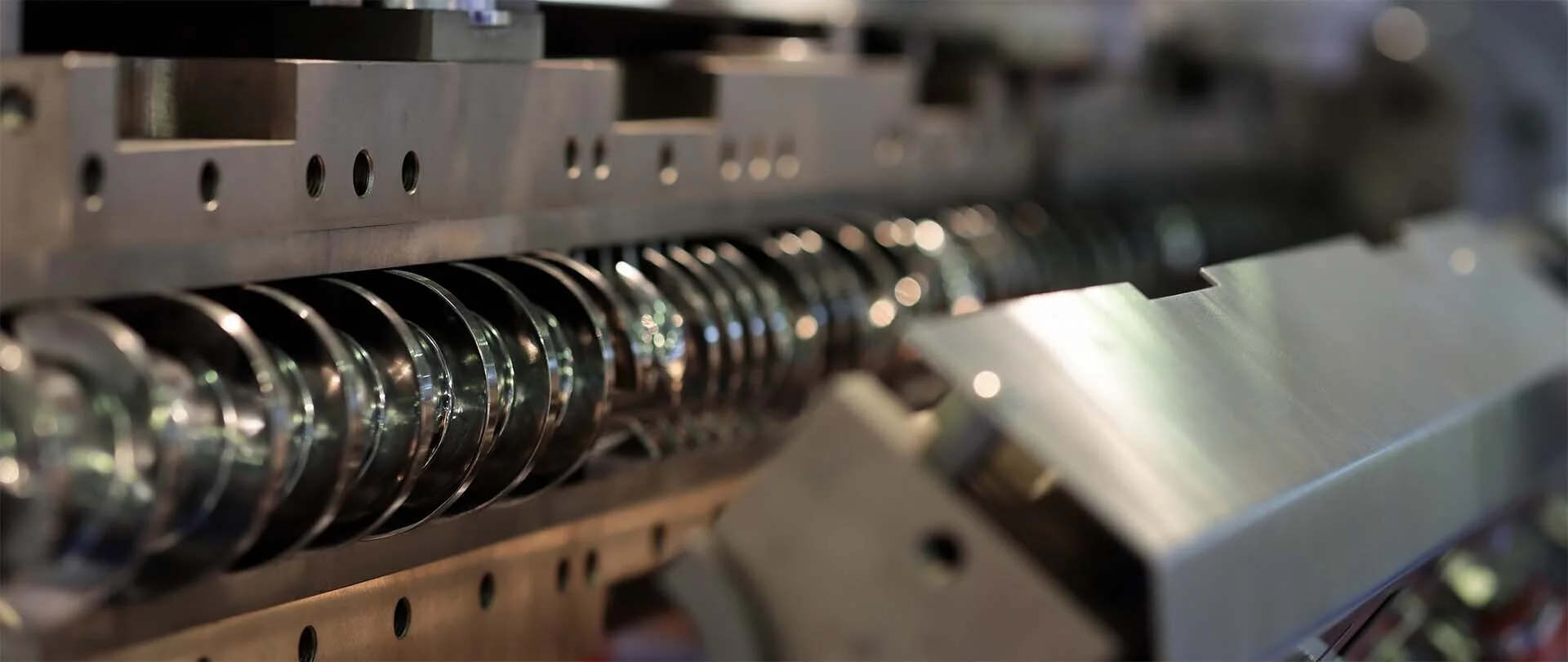
Extrusion moulding involves forcing molten metal through a die to create long, continuous profiles with consistent cross-sectional geometry. This method excels in producing structural components such as rails, frames, and heat sinks, where uniformity and mechanical strength are paramount. Due to the continuous nature of extrusion, it is highly efficient for high-volume runs of linear or symmetrical parts. However, achieving micron-level precision in extruded profiles demands advanced die design, temperature control, and post-processing calibration—areas where Wuxi Lead has demonstrated mastery through our collaborations on military-grade vehicle components and precision guide systems used in Olympic timing and tracking equipment.
Injection moulding, by contrast, involves injecting molten metal under high pressure into a closed die cavity, enabling the production of complex, three-dimensional geometries with tight tolerances. This process is ideal for intricate parts with undercuts, internal features, or non-uniform wall thicknesses. The challenge lies in managing material flow, shrinkage, and residual stress—all of which can compromise dimensional accuracy if not precisely controlled. Our engineering team employs finite element analysis (FEA) and real-time process monitoring to ensure repeatability within ±0.02 mm, a standard required by our defense sector clients and high-performance sports technology partners.
The choice between these processes must be guided by a deep understanding of material science, thermal dynamics, and end-use requirements. At Wuxi Lead Precision Machinery, over 15 years of refining both extrusion and injection techniques have enabled us to deliver mission-critical components that meet international quality benchmarks, including ISO 9001 and AS9100.
Below is a comparative overview of key technical specifications relevant to precision metal manufacturing:
| Parameter | Extrusion Moulding | Injection Moulding |
|---|---|---|
| Typical Tolerance | ±0.05 mm | ±0.02 mm |
| Material Utilization | High (continuous profile) | Moderate (sprue and runner loss) |
| Complexity of Geometry | Limited to uniform cross-section | High (3D complex shapes) |
| Production Speed | High (continuous) | Moderate to high (cycle-based) |
| Tooling Cost | Moderate | High |
| Post-Processing Requirements | Often required (cutting, machining) | Minimal (near-net shape) |
| Ideal Applications | Structural rails, heat sinks | Enclosures, connectors, housings |
Precision is not an outcome—it is an engineered standard. At Wuxi Lead, we integrate process intelligence, material expertise, and rigorous quality control to ensure every component meets the exacting demands of modern industry.
Precision Specs & Tolerances
Technical Capabilities: Precision Metal Component Manufacturing
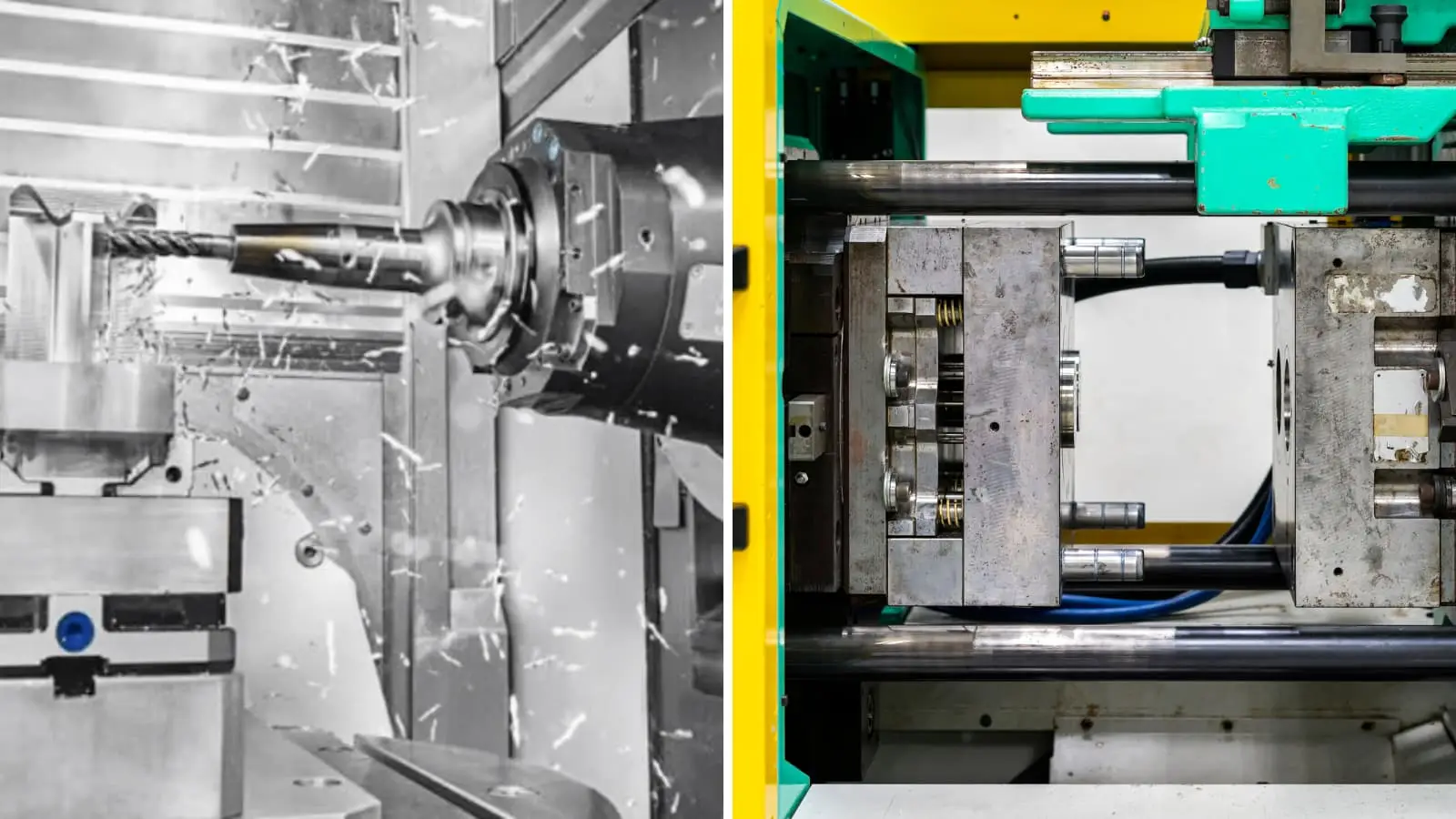
Wuxi Lead Precision Machinery delivers advanced metal component manufacturing solutions, specializing in complex geometries requiring micron-level accuracy. While extrusion and injection molding are predominantly plastic processes, our expertise extends to the analogous high-precision metal forming and machining techniques essential for demanding industrial applications. We excel in producing critical metal parts through state-of-the-art subtractive manufacturing, particularly leveraging multi-axis CNC machining for components where traditional molding processes reach material or geometric limitations in metal.
Our core capability centers on 5-axis CNC machining centers, enabling the production of intricate metal components from challenging alloys including aerospace-grade aluminum, titanium, stainless steel, and high-strength tool steels. This technology eliminates the need for multiple setups, significantly reducing cumulative error and handling time while maintaining exceptional geometric integrity. Complex contours, deep cavities, undercuts, and organic shapes are achieved in a single operation, ensuring superior part consistency and surface finish unattainable through secondary operations. This capability is critical for components requiring tight tolerances across multiple features, such as hydraulic manifolds, turbine blades, medical implant fixtures, and precision aerospace brackets.
Rigorous quality control is non-negotiable. Every critical dimension undergoes verification using calibrated Coordinate Measuring Machines (CMM). Our Zeiss and Hexagon CMM systems perform comprehensive dimensional analysis against CAD models, validating form, position, profile, and surface characteristics. This systematic inspection process, integrated into our production workflow, guarantees that every component meets or exceeds the most stringent industry specifications before shipment. Statistical Process Control (SPC) data is maintained, providing traceability and enabling continuous process refinement.
The following table details the standard precision tolerances achievable across our typical production envelope using optimized 5-axis CNC machining and verified through CMM inspection. These values represent our standard capability; tighter tolerances are attainable for critical features with specific process planning.
| Feature | Capability Context | Standard Tolerance Range |
|---|---|---|
| Linear Dimensions | General Machining (up to 500mm) | ±0.010 mm |
| Positional Accuracy | Hole Patterns / Critical Features | ±0.005 mm |
| Angular Tolerances | Complex Geometries / Datum Referencing | ±0.005° |
| Surface Finish | Critical Sealing/ Bearing Surfaces | Ra 0.4 µm (16 µin) |
| Geometric Form | Flatness / Roundness / Cylindricity | 0.008 mm per 100mm |
This combination of advanced 5-axis CNC technology, deep metallurgical understanding, and uncompromising CMM-based quality assurance forms the foundation of Wuxi Lead Precision Machinery’s ability to deliver mission-critical metal components. We transform complex design requirements into reality, ensuring dimensional integrity, material performance, and functional reliability for the most demanding applications in aerospace, energy, medical technology, and high-end industrial equipment. Partner with us for precision metal manufacturing where tolerances define success.
Material & Finish Options
Material Selection for Extrusion Moulding vs Injection Moulding in Custom Metal Manufacturing
When evaluating extrusion moulding versus injection moulding for custom metal manufacturing, material selection plays a pivotal role in determining performance, durability, and cost-efficiency. At Wuxi Lead Precision Machinery, we guide clients through the optimal pairing of materials and processes based on application requirements. While injection moulding is traditionally associated with plastics, advancements in metal injection moulding (MIM) have expanded its use for small, complex metal components. Extrusion moulding, by contrast, remains a dominant method for shaping metals like aluminum, steel, and titanium into long, consistent profiles.
Aluminum is the most widely used material in extrusion due to its excellent strength-to-weight ratio, thermal conductivity, and corrosion resistance. It is particularly well-suited for aerospace, automotive, and architectural applications where lightweight and high-performance profiles are essential. Aluminum extrusions can be easily post-processed, including through anodizing, which significantly enhances surface hardness and wear resistance.
Steel, especially stainless and alloy variants, is favored when high tensile strength, structural integrity, and resistance to extreme environments are required. While less common in standard extrusion due to higher processing temperatures, steel is viable for specialized profiles in industrial machinery and defense applications. In metal injection moulding, steel powders are commonly used to produce intricate, high-density components such as gears and fasteners, where precision and repeatability are critical.
Titanium, though more expensive and challenging to process, offers unparalleled strength-to-density ratios and exceptional resistance to corrosion and high temperatures. It is typically reserved for mission-critical applications in aerospace, medical implants, and marine engineering. Due to its high reactivity at elevated temperatures, titanium extrusion requires controlled environments, and its use in MIM is limited to niche, high-value components.
Surface finishing, particularly anodizing, is a key consideration in aluminum extrusions. Anodizing creates a durable, non-conductive oxide layer that improves corrosion resistance and allows for color customization. While not applicable to steel or titanium in the same way, these materials may undergo passivation, plating, or thermal spraying depending on operational demands.
The following table outlines key material properties and process compatibility for extrusion and metal injection moulding:
| Material | Density (g/cm³) | Tensile Strength (MPa) | Common Applications | Suitable for Extrusion | Suitable for MIM | Anodizing Compatible |
|---|---|---|---|---|---|---|
| Aluminum | 2.7 | 110–570 | Aerospace, Automotive | Yes | Limited | Yes |
| Steel | 7.8 | 400–2000 | Industrial, Structural | Yes (specialized) | Yes | No |
| Titanium | 4.5 | 900–1200 | Medical, Aerospace | Yes (controlled) | Limited | No |
Understanding the interplay between material characteristics and manufacturing processes ensures optimal component design and lifecycle performance. At Wuxi Lead Precision Machinery, we support clients in selecting the right combination of material, process, and finish to meet exacting industrial standards.
Manufacturing Process & QC
Precision Metal Manufacturing: From Design to Zero-Defect Production
At Wuxi Lead Precision Machinery, we execute a rigorously controlled production sequence for both extrusion and injection moulding processes, ensuring uncompromising quality in custom metal components. Our methodology bridges conceptual design to high-volume output through integrated engineering disciplines, eliminating defects before they reach the production floor. The foundation lies in advanced digital design validation. Engineers utilize multi-physics simulation software to model material flow, thermal dynamics, and structural stresses specific to aluminum, stainless steel, or specialty alloys. This phase identifies potential weaknesses in part geometry or tooling interfaces, allowing iterative refinement without physical prototyping waste. Critical tolerances and surface finish requirements are locked in during this stage, aligning with ISO 2768-mK or customer-specific standards.
Prototyping transitions virtual models into tangible validation. For extrusion, we employ CNC-machined die inserts and controlled billet heating to produce initial profiles, verifying dimensional stability across thermal cycles. Injection moulding prototyping leverages our high-pressure MIM (Metal Injection Moulding) systems, where feedstock behavior is analyzed under precise pressure curves. Every prototype undergoes CMM inspection and metallurgical testing, cross-referencing results against simulation data. This closed-loop verification ensures the production tooling will replicate design intent exactly, reducing time-to-market by up to 30% while confirming material suitability.
Mass production activates our zero-defect ecosystem. Extrusion lines feature real-time laser micrometers and AI-driven thermal control, adjusting ram speed and quenching rates to maintain ±0.05mm profile consistency. MIM cells integrate in-mould sensors that monitor cavity pressure and ejection forces, automatically rejecting parts outside 0.3% dimensional thresholds. Full automation minimizes human intervention, while our centralized SPC (Statistical Process Control) dashboard tracks 50+ parameters per machine second. Every batch includes destructive testing of sacrificial samples for microstructure integrity and mechanical properties, certified to ASTM E8/E8M. This end-to-end traceability—linking raw material certs to final inspection reports—guarantees compliance for aerospace, medical, and energy sector applications where failure is not an option.
Key Process Specifications Comparison
| Parameter | Metal Extrusion | Metal Injection Moulding (MIM) |
|---|---|---|
| Material Range | Aluminum Alloys, Copper, Brass | Stainless Steel, Tool Steels, Superalloys |
| Typical Tolerance | ±0.05mm to ±0.2mm | ±0.3% to ±0.5% of dimension |
| Surface Finish (Ra) | 0.8μm to 3.2μm | 0.4μm to 1.6μm |
| Lead Time (Tooling) | 8-12 weeks | 10-14 weeks |
| Ideal Part Complexity | Linear Profiles, Hollow Sections | Net-Shape 3D Geometries, Undercuts |
Wuxi Lead’s integrated approach transforms design specifications into flawless metal components by embedding quality at every phase. Our investment in closed-loop metrology and material science expertise ensures that extrusion and MIM processes deliver not just parts, but certified performance—proving that zero defects is an executable standard, not an aspiration. Partner with us to convert your most demanding metal fabrication challenges into supply chain advantages.
Why Choose Wuxi Lead Precision
When it comes to high-precision custom metal manufacturing, the choice between extrusion moulding and injection moulding can significantly impact your product’s performance, cost-efficiency, and time to market. At Wuxi Lead Precision Machinery, we understand that selecting the right process is not just about technical capabilities—it’s about aligning manufacturing methodology with your product goals, material requirements, and production scale.
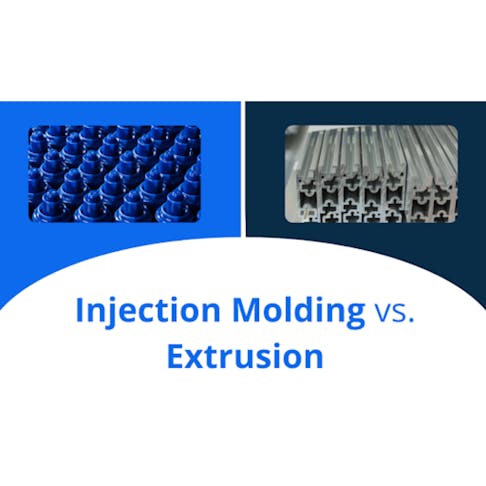
Extrusion moulding excels in producing long, continuous profiles with consistent cross-sectional geometry, making it ideal for structural components, rails, heat sinks, and architectural elements. Our advanced extrusion systems support a wide range of aluminum, copper, and specialty alloys, ensuring dimensional accuracy and superior surface finish. Injection moulding, on the other hand, offers unmatched versatility for complex, high-volume metal parts, particularly in automotive, aerospace, and consumer electronics. With our high-pressure die casting and metal injection moulding (MIM) technologies, we deliver intricate geometries with tight tolerances, reducing the need for secondary machining.
Choosing the right partner means more than access to state-of-the-art equipment—it means working with a team that combines engineering insight with manufacturing excellence. At Lead Precision, our engineers collaborate closely with clients during the design and prototyping phases to optimize part geometry, material selection, and process efficiency. Whether you’re scaling up from prototype to mass production or refining an existing component for improved performance, our end-to-end manufacturing solutions ensure reliability, repeatability, and compliance with international quality standards.
We pride ourselves on transparency, responsiveness, and technical accountability. Every project is managed with a focus on lean manufacturing principles, minimizing waste and lead times while maximizing precision and yield. Our facility in Wuxi is equipped with real-time monitoring systems and automated quality control, enabling traceability and consistency across production batches.
Below is a comparison of key capabilities across our extrusion and injection moulding platforms:
| Parameter | Extrusion Moulding | Injection Moulding (MIM) |
|---|---|---|
| Material Options | Aluminum, Copper, Brass Alloys | Stainless Steel, Tool Steel, Superalloys |
| Tolerance Range | ±0.05 mm – ±0.2 mm | ±0.02 mm – ±0.1 mm |
| Surface Finish (Ra) | 0.8 – 3.2 µm | 0.4 – 1.6 µm |
| Production Volume | Medium to High | High to Very High |
| Lead Time (Prototype) | 10–15 days | 12–18 days |
| Secondary Operations | Cutting, Drilling, Bending, Anodizing | Sintering, Heat Treatment, Plating |
| Ideal Applications | Profiles, Heat Sinks, Frames | Gears, Connectors, Surgical Tools |
Partnering with Wuxi Lead Precision Machinery means gaining a strategic ally in precision manufacturing. We don’t just produce parts—we engineer solutions. Our team is ready to support your next project with technical consultation, rapid prototyping, and scalable production capacity.
Contact us today at [email protected] to discuss your specific requirements and discover how our expertise in extrusion and injection moulding can drive your product’s success.
⚙️ Precision Cost Estimator
Estimate relative manufacturing effort based on tolerance.