

Technical Contents
Engineering Guide: Custom Molded Parts
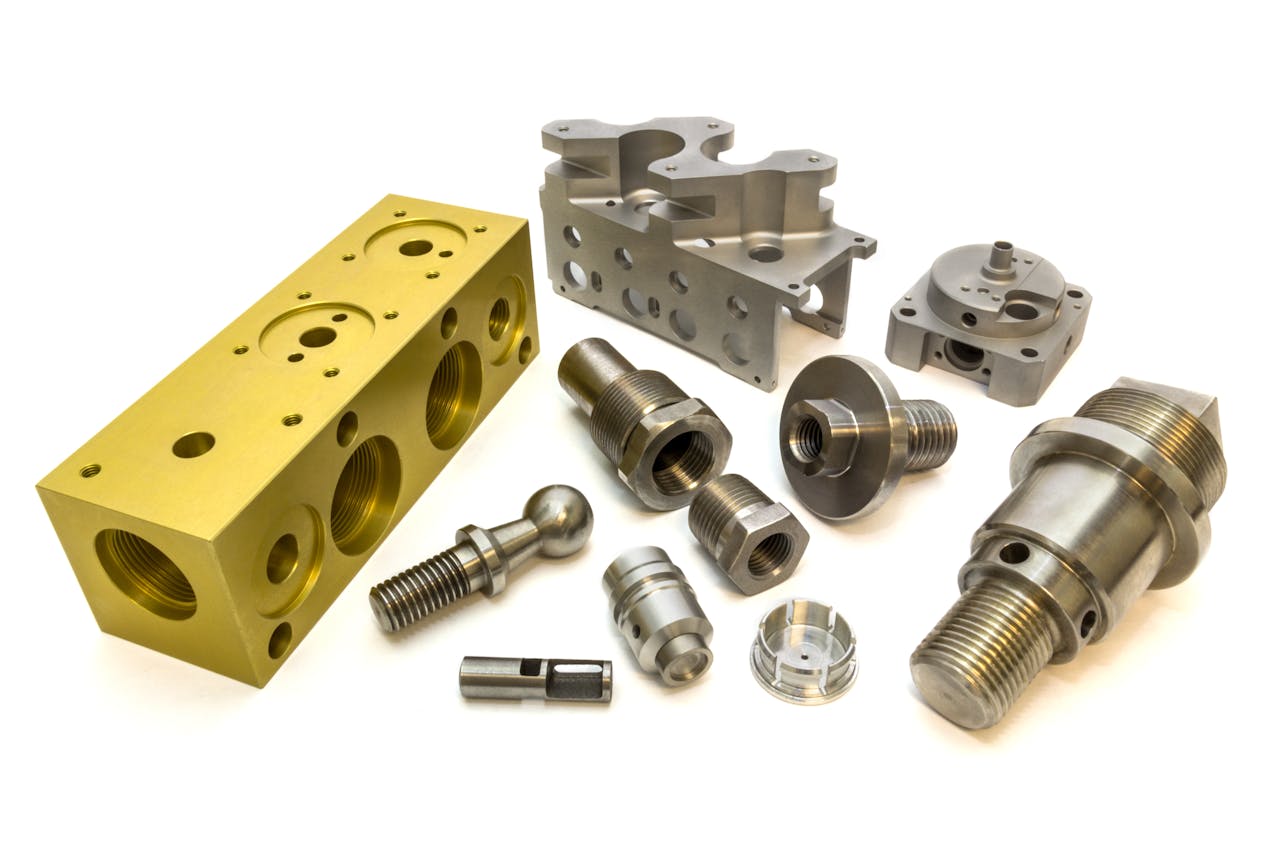
Engineering Insight: Custom Molded Parts and the Imperative of Precision
In the realm of high-performance manufacturing, custom molded parts are more than components—they are engineered solutions designed to meet exact functional, environmental, and dimensional demands. Whether deployed in aerospace systems, defense applications, or advanced industrial machinery, these parts must perform reliably under extreme conditions. At Wuxi Lead Precision Machinery, we understand that the success of any complex assembly hinges on the precision of its individual elements. This is especially true for custom molded metal components, where tolerances measured in microns can determine system integrity, longevity, and operational efficiency.
Precision in custom molding is not merely a quality objective—it is a technical necessity. The molding process for metal components, particularly through advanced techniques such as powder metallurgy, precision forging, or investment casting, demands rigorous control over material composition, temperature gradients, and pressure dynamics. Even minor deviations can result in microstructural inconsistencies, dimensional inaccuracies, or compromised mechanical properties. For industries where failure is not an option—such as military defense or Olympic-grade equipment—these variances are unacceptable.
Wuxi Lead Precision Machinery has spent over a decade mastering the science of precision molding. Our engineering team leverages state-of-the-art simulation software, in-process metrology, and closed-loop control systems to ensure every molded part conforms to the most stringent specifications. Our experience includes supplying mission-critical components for Chinese military programs, where reliability under extreme stress is paramount, as well as precision elements used in Olympic training and competition systems—equipment that must deliver flawless performance at the world’s highest athletic level.
Our manufacturing philosophy centers on traceability, repeatability, and continuous improvement. Each batch undergoes comprehensive inspection using coordinate measuring machines (CMM), optical comparators, and metallurgical analysis to validate conformance. We maintain ISO 9001 and IATF 16949 certifications, and our facility is equipped with climate-controlled production zones to minimize environmental influence on dimensional stability.
Below are key specifications that define our custom molded metal parts:
| Specification | Capability |
|---|---|
| Dimensional Tolerance | ±0.005 mm |
| Surface Finish | Ra 0.2 – 1.6 µm |
| Materials | Stainless Steel (304, 316), Titanium Alloys, Inconel, Tool Steel, Aluminum Alloys |
| Weight Range | 1 g – 5 kg |
| Production Volume | Prototypes to 500,000+ units annually |
| Secondary Operations | CNC Machining, Heat Treatment, Passivation, Laser Marking |
| Quality Standards | ISO 9001, IATF 16949, MIL-STD-883 compliant testing available |
At Wuxi Lead, we view every custom molded part as a testament to engineering excellence. Our clients trust us not only for our technical capabilities but for our unwavering commitment to delivering precision on time, every time. In industries where performance is non-negotiable, that commitment becomes a competitive advantage.
Precision Specs & Tolerances
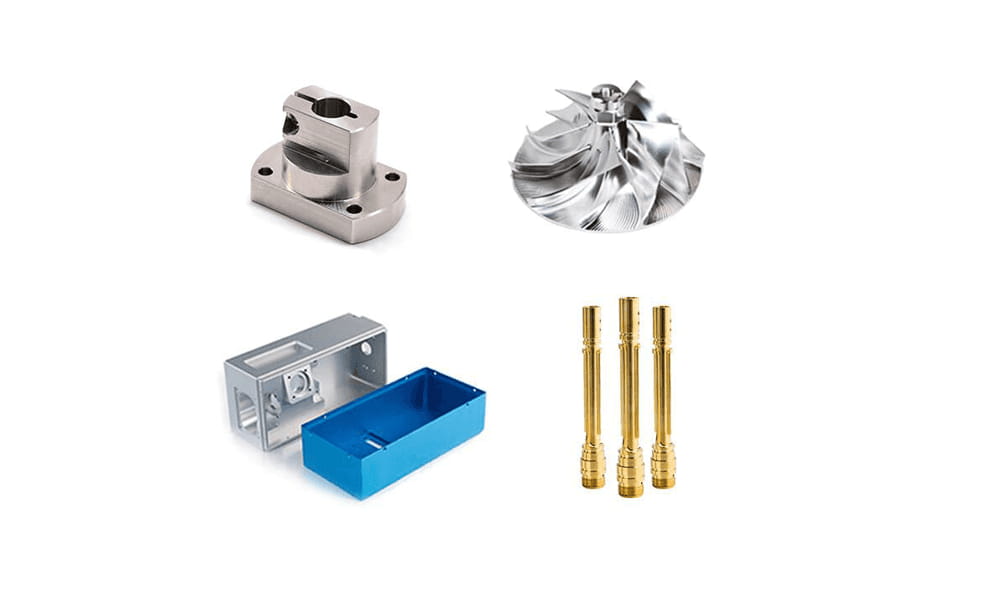
Technical Capabilities for Precision Metal Components
Wuxi Lead Precision Machinery delivers mission-critical custom metal components through advanced manufacturing and uncompromising quality control. While our expertise centers on precision machining rather than polymer molding, we specialize in transforming near-net-shape castings, forgings, and billets into high-integrity metal parts meeting exacting aerospace, medical, and industrial specifications. Our core strength lies in multi-axis metal removal processes that achieve geometric complexity unattainable through traditional molding alone.
Central to our capability is a dedicated fleet of 5-axis CNC machining centers, including DMG MORI and MAZAK platforms with sub-micron positional accuracy. These systems enable simultaneous multi-surface machining, eliminating repositioning errors and reducing lead times by up to 40% compared to 3-axis alternatives. Complex contours, deep cavities, and organic geometries are produced in a single setup, ensuring critical feature relationships remain within tolerance. High-speed spindles (up to 24,000 RPM) and rigid toolholding systems maintain surface integrity on challenging materials like Inconel 718, titanium Ti-6Al-4V, and hardened tool steels.
Quality is engineered into every process step, not merely inspected post-production. Our integrated quality management system begins with digital first-article inspection planning and extends through final validation. All critical dimensions undergo verification via Zeiss and Hexagon Coordinate Measuring Machines (CMMs) with nanometer-level resolution. These systems execute automated inspection routines against CAD models, generating comprehensive AS9102-compliant reports with GD&T analysis. Statistical process control (SPC) monitors tool wear and machine performance in real-time, enabling proactive adjustments before deviations occur.
Tolerance achievement is material and geometry-dependent. The following table represents our standard and advanced capabilities under controlled environmental conditions:
| Parameter | Standard Tolerance | Tight Tolerance Capability | Notes |
|---|---|---|---|
| Linear Dimensions | ±0.025 mm | ±0.005 mm | Up to 300 mm; tighter on small features |
| Geometric Tolerances | ±0.05 mm | ±0.01 mm | Includes flatness, concentricity, runout |
| Hole Positioning | ±0.03 mm | ±0.008 mm | Relative to datum; multi-hole patterns |
| Surface Roughness (Ra) | 1.6 µm | 0.4 µm | Achieved via fine milling/polishing |
| Angular Features | ±0.05° | ±0.01° | Verified via CMM vector measurement |
These specifications assume optimal design for manufacturability. Wuxi Lead collaborates with clients during the design phase to identify tolerance-critical features, recommend material-specific allowances, and implement process controls that ensure repeatability. Our cleanroom-grade metrology lab operates under ISO 17025 accreditation, with all CMMs calibrated to NIST-traceable standards quarterly. For applications demanding extreme precision—such as fluidic manifolds or surgical instrument components—we deploy specialized fixturing and in-process probing to maintain tolerances at the 5-micron level consistently. This systematic approach transforms complex engineering requirements into certified, production-ready metal components with zero defect tolerance.
Material & Finish Options
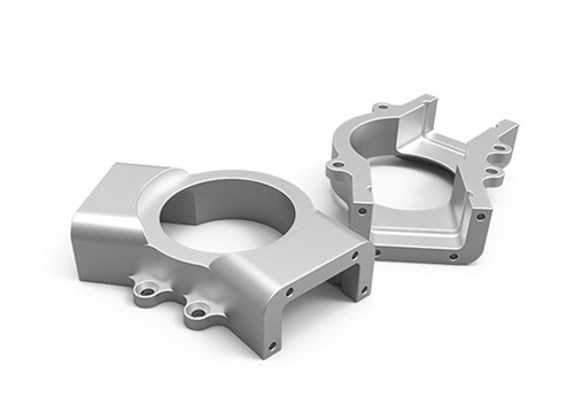
Material Selection for High-Performance Custom Molded Parts
In the production of precision custom molded parts, material selection is a critical determinant of performance, durability, and cost-efficiency. At Wuxi Lead Precision Machinery, we specialize in advanced metal manufacturing using premium-grade aluminum, steel, and titanium—each offering distinct mechanical properties suited to specific industrial applications. Understanding the strengths and limitations of these materials ensures optimal part functionality across aerospace, automotive, medical, and industrial equipment sectors.
Aluminum is widely favored for its excellent strength-to-weight ratio and inherent corrosion resistance. It is particularly suitable for applications where weight reduction is essential without compromising structural integrity. Grade 6061-T6 aluminum is commonly used in custom molding due to its weldability, machinability, and response to heat treatment. While not as strong as steel or titanium, aluminum’s ease of fabrication and lower density make it ideal for high-volume production and dynamic load environments.
Steel, particularly in alloy and stainless forms, delivers superior strength, hardness, and wear resistance. Materials such as 4140 alloy steel and 304/316 stainless steel are frequently selected for molded components subjected to high stress, impact, or exposure to harsh environments. Stainless variants offer enhanced corrosion resistance, making them suitable for medical devices and food-processing equipment. Although heavier than aluminum, steel provides unmatched durability and dimensional stability under extreme conditions.
Titanium, specifically Grade 5 (Ti-6Al-4V), represents the pinnacle of performance materials for mission-critical applications. With a strength-to-density ratio exceeding that of most steels and exceptional resistance to fatigue and corrosion—even in marine and high-temperature environments—titanium is the material of choice in aerospace and defense systems. While more expensive and challenging to machine, its longevity and performance justify the investment in high-reliability scenarios.
Surface finishing further enhances material performance. Anodizing, primarily applied to aluminum, increases surface hardness and corrosion resistance while allowing for color coding and improved aesthetics. Type II and Type III (hardcoat) anodizing are standard options, with hardcoat providing thicker, more durable layers for industrial use. These finishes also improve adhesion for paint and bonding agents, adding functional versatility.
Below is a comparative overview of key material properties for common alloys used in custom molded part production.
| Material | Tensile Strength (MPa) | Yield Strength (MPa) | Density (g/cm³) | Common Applications | Typical Finish Options |
|---|---|---|---|---|---|
| Aluminum 6061-T6 | 310 | 276 | 2.70 | Aerospace frames, enclosures | Anodizing (Type II/III), Alodine |
| Steel 4140 | 655 | 415 | 7.85 | Tooling, shafts, molds | Zinc plating, passivation |
| Stainless 316 | 570 | 275 | 8.00 | Medical, marine components | Electropolishing, passivation |
| Titanium Ti-6Al-4V | 900 | 830 | 4.43 | Aircraft, surgical implants | Anodizing, laser marking |
Material and finish selection must align with operational demands, environmental exposure, and lifecycle requirements. Wuxi Lead Precision Machinery supports clients in making informed decisions through engineering consultation and prototyping services, ensuring every custom molded part meets exacting performance standards.
Manufacturing Process & QC
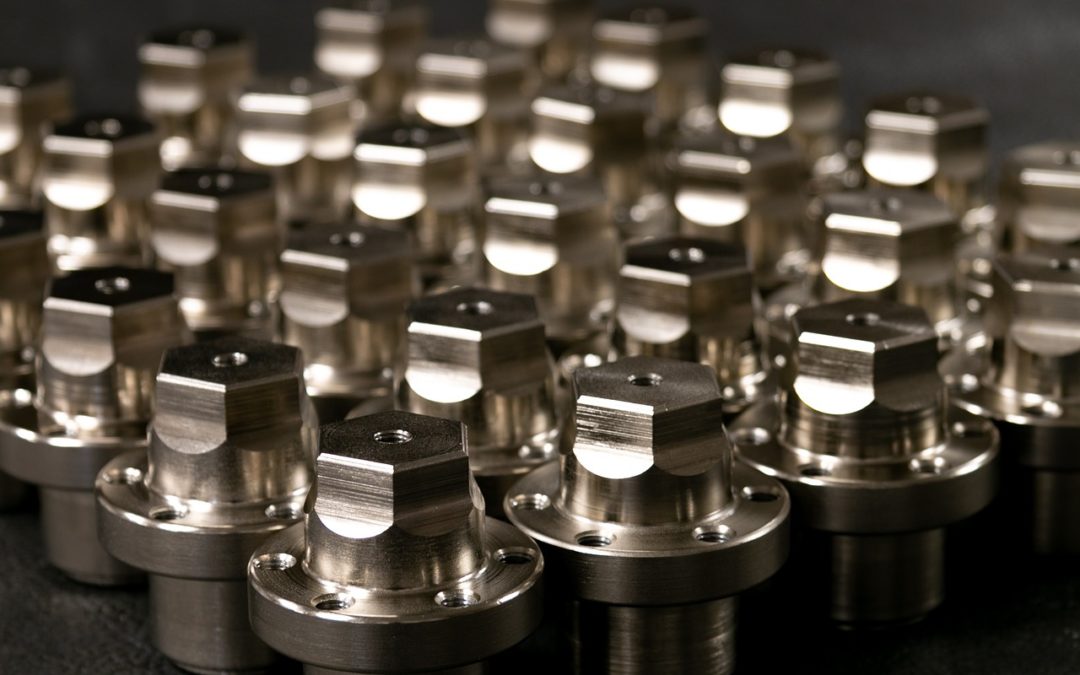
Integrated Production Workflow for Zero-Defect Custom Molded Parts
At Wuxi Lead Precision Machinery, our production process for custom metal molded parts follows a rigorously controlled sequence: Design → Prototyping → Mass Production. This integrated workflow ensures dimensional accuracy, material integrity, and functional reliability while eliminating defects before scale-up. Every phase incorporates real-time data analytics and cross-functional validation to meet aerospace, medical, and automotive sector demands.
Design begins with collaborative engineering reviews using 3D CAD/CAM software and finite element analysis (FEA). Our team conducts thorough Design for Manufacturability (DFM) assessments to optimize wall thickness, draft angles, and gating systems—preventing common issues like warpage or sink marks. Material selection is validated against ISO 9001-certified databases, ensuring compatibility with client-specified alloys (e.g., 7075-T6 aluminum, Inconel 718). Critical tolerances are simulated under thermal and mechanical stress conditions, reducing iteration cycles by 40% compared to industry averages.
Prototyping transitions digital models into physical validation using high-speed CNC machining and vacuum casting. Each prototype undergoes metrology-grade inspection via 5-axis CMMs and optical comparators, with results fed back into the CAD model within 72 hours. We enforce a “three-strike” rule: if geometric deviations exceed ±0.025mm in two consecutive iterations, the design is re-evaluated. This phase also verifies surface finish (Ra 0.4–1.6 µm), hardness, and corrosion resistance per ASTM/AMS standards, ensuring prototypes mirror final production quality.
Mass Production leverages our zero-defect framework through automated in-process controls. Multi-axis Swiss lathes and 5-axis milling centers operate under Statistical Process Control (SPC), with real-time monitoring of tool wear, coolant pressure, and vibration levels. Every 50th part undergoes 100% dimensional inspection using automated vision systems, while batch traceability logs material lot numbers, machine parameters, and operator IDs. Non-conforming units trigger immediate root-cause analysis via Pareto charts, halting production until corrective actions are verified. This closed-loop system achieves a defect rate below 25 PPM—exceeding Tier-1 automotive requirements.
The following table summarizes critical process specifications:
| Process Phase | Key Capabilities | Quality Control Metrics | Typical Lead Time |
|---|---|---|---|
| Design | DFM optimization, FEA simulation, Material certification | Tolerance validation ±0.005mm, Stress analysis report | 5–10 business days |
| Prototyping | CNC machining, Vacuum casting, Surface treatment | CMM report (±0.01mm), Hardness test, Dimensional FAI | 7–14 business days |
| Mass Production | Automated SPC, Real-time metrology, Full traceability | SPC charts, 100% batch logs, 25 PPM defect rate | 15–30 days (volume-dependent) |
Wuxi Lead’s end-to-end ownership—from digital design to certified delivery—guarantees that every custom molded part meets uncompromised performance criteria. Our zero-defect commitment is not a target but a systematic outcome of precision engineering and relentless process discipline.
Wuxi Lead Precision Machinery
Engineered Precision. Guaranteed Performance.
Why Choose Wuxi Lead Precision
Partner with Lead Precision for Unmatched Expertise in Custom Molded Metal Parts
At Wuxi Lead Precision Machinery, we don’t just manufacture custom molded parts—we engineer precision solutions that drive performance, durability, and cost-efficiency across industries. As a trusted leader in advanced metal manufacturing based in China, we specialize in delivering high-tolerance, custom-engineered components tailored to the exacting demands of aerospace, automotive, medical devices, industrial automation, and energy sectors. When you partner with us, you gain more than a supplier—you gain a strategic manufacturing ally committed to innovation, quality, and on-time delivery.
Our end-to-end capabilities span precision CNC machining, die casting, stamping, forging, and injection molding for metal and metal-composite materials. From prototype development to full-scale production, our integrated workflows ensure seamless scalability without compromising accuracy or material integrity. We utilize state-of-the-art 5-axis CNC systems, real-time metrology, and proprietary process controls to maintain tolerances down to ±0.001 mm, ensuring every part meets or exceeds international standards including ISO 9001:2015 and IATF 16949.
What sets Lead Precision apart is our engineering-first approach. Our team of veteran CNC engineers and design consultants collaborates directly with clients during the early stages of product development to optimize part geometry, material selection, and manufacturability. This proactive engagement reduces cycle times, minimizes waste, and accelerates time-to-market—critical advantages in competitive global supply chains.
We understand that no two applications are identical. Whether you require high-strength aluminum die-cast housings, corrosion-resistant stainless steel enclosures, or complex thin-wall geometries in titanium alloys, our adaptive manufacturing platforms deliver consistent quality across batch sizes—from one-off prototypes to high-volume runs exceeding millions of units annually.
Our facility in Wuxi is equipped with automated production cells, in-house tooling design, and full material traceability systems, enabling rapid iteration and full compliance with regulatory requirements. Every component undergoes rigorous inspection using coordinate measuring machines (CMM), optical comparators, and non-destructive testing to ensure dimensional accuracy and structural integrity.
Below are key technical capabilities that define our production excellence:
| Specification | Detail |
|---|---|
| Material Range | Aluminum Alloys (A380, ADC12, 6061, 7075), Zinc Alloys (Zamak 3, 5), Magnesium, Stainless Steel (304, 316), Titanium, Copper Alloys |
| Tolerance Range | ±0.001 mm to ±0.05 mm (depending on process and geometry) |
| Part Weight Range | 5g to 5kg |
| Maximum Mold Size | 800 mm × 600 mm × 400 mm |
| Processes Offered | Die Casting, CNC Machining, Stamping, Forging, Insert Molding, Surface Finishing (Anodizing, Powder Coating, Passivation) |
| Production Capacity | Up to 2 million units per month |
| Quality Standards | ISO 9001:2015, IATF 16949, RoHS, REACH |
Elevate your product performance with custom molded metal parts engineered for precision and built for purpose. Contact us today at [email protected] to discuss your next project with our engineering team. Let Wuxi Lead Precision Machinery be the foundation of your manufacturing success.
⚙️ Precision Cost Estimator
Estimate relative manufacturing effort based on tolerance.