
Technical Contents
Engineering Guide: Custom Metal Box Fabrication
Engineering Insight: The Non-Negotiable Role of Precision in Custom Metal Box Fabrication
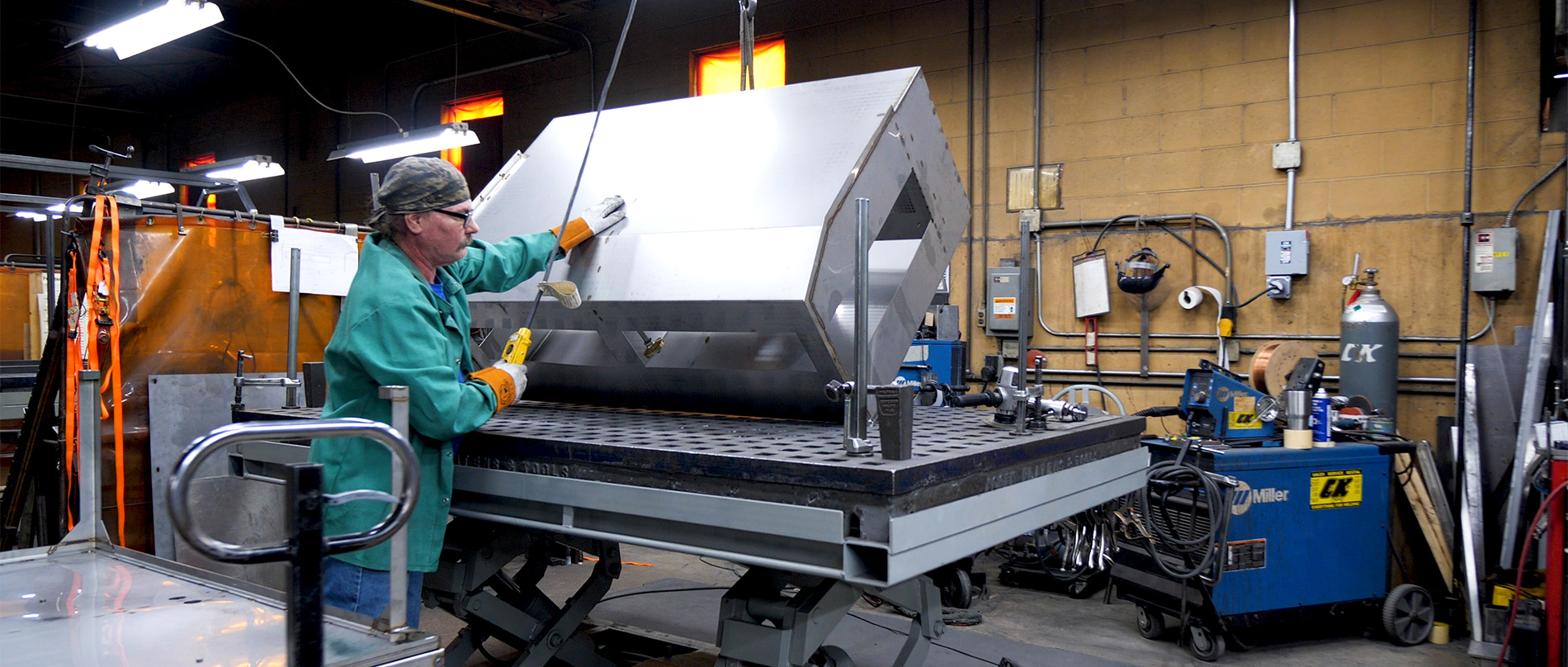
In custom metal box fabrication for industrial and mission-critical applications, precision transcends mere specification; it is the fundamental determinant of functional integrity, longevity, and system performance. A deviation of mere tenths of a millimeter can compromise electromagnetic interference (EMI) shielding effectiveness, disrupt thermal management pathways, prevent seamless component integration, or undermine structural rigidity under operational stress. For enclosures housing sensitive electronics in aerospace, defense, or medical instrumentation, such inaccuracies are not tolerable errors—they are system failures waiting to occur. Precision machining ensures consistent bend radii, exact hole patterns for connectors and mounting, and flawless panel alignment, which collectively guarantee environmental sealing, signal integrity, and adherence to stringent regulatory standards like MIL-STD-461 for EMI or IP67 for ingress protection. The cost of rework or field failure due to dimensional inaccuracy far exceeds the investment in precision manufacturing from the outset.
At Wuxi Lead Precision Machinery, we engineer custom metal boxes to the exacting demands of sectors where compromise is impossible. Our CNC fabrication processes, governed by ISO 9001:2015 and AS9100D quality management systems, consistently achieve dimensional tolerances down to ±0.05mm. This capability was rigorously proven through projects including structural components for the Beijing 2022 Winter Olympic Village infrastructure, requiring absolute geometric fidelity for integrated systems, and precision housings for classified defense communication systems demanding zero EMI leakage. Our facility leverages advanced fiber laser cutting, CNC turret punching, and robotic bending cells, all monitored by in-process CMM verification, to transform materials from 0.5mm aluminum alloys to 6mm stainless steel into enclosures meeting the most severe operational requirements. Surface finishes, critical for corrosion resistance and aesthetics in high-end applications, are applied with micron-level control, whether anodized, powder-coated, or passivated.
The following table outlines our standard and high-precision fabrication capabilities for custom metal boxes:
| Specification Category | Standard Capability | High-Precision Tier |
|---|---|---|
| Dimensional Tolerance | ISO 2768-mK | ±0.05mm (Critical Features) |
| Material Thickness Range | 0.5mm – 6.0mm | 0.8mm – 3.0mm (Optimized) |
| Bend Angle Accuracy | ±0.5° | ±0.2° |
| Hole Positional Tolerance | ±0.1mm | ±0.03mm |
| Surface Roughness (Ra) | ≤1.6μm (Machined) | ≤0.8μm (Critical Surfaces) |
| EMI Shielding Effectiveness | 60dB @ 1GHz (Typical) | 85dB+ @ 1GHz (Validated) |
Precision in metal box fabrication is not an incremental advantage—it is the baseline requirement for reliability in advanced engineering. Wuxi Lead Precision Machinery delivers this through decades of refined process control, certified quality systems, and demonstrable experience where failure was never an option. Partner with us to ensure your enclosure performs as flawlessly as the critical systems it protects. Mission-critical reliability starts with micron-level accuracy.
Precision Specs & Tolerances
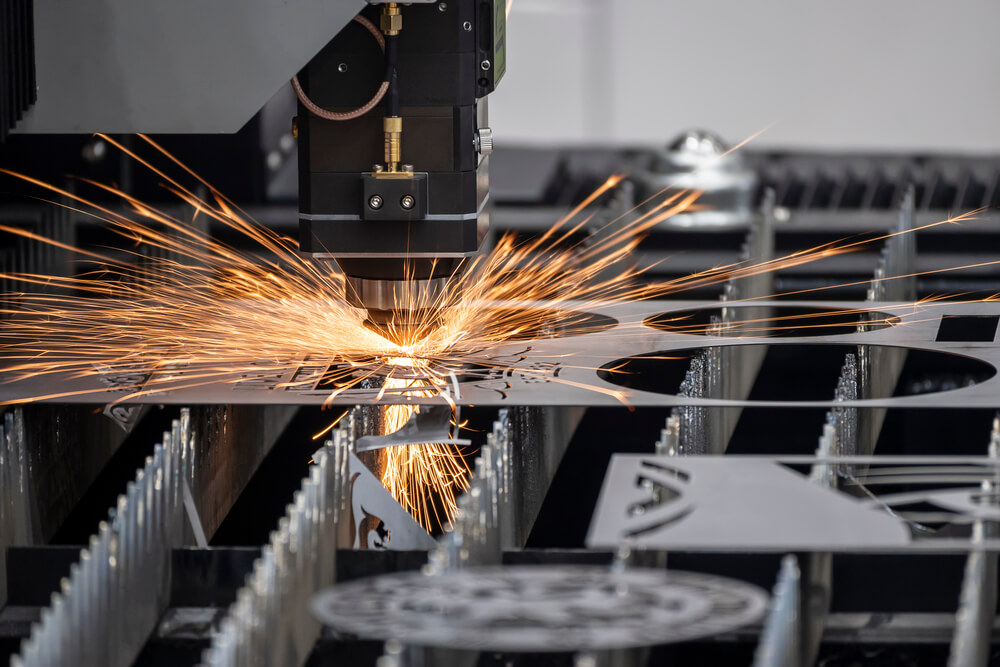
Wuxi Lead Precision Machinery delivers advanced custom metal box fabrication services, engineered for precision, durability, and repeatable quality in high-performance industrial applications. Our technical capabilities are anchored in state-of-the-art 5-axis CNC machining technology, enabling us to produce complex enclosures with tight tolerances, superior surface finishes, and seamless integration of functional features such as mounting flanges, ventilation slots, and EMI shielding details. This multi-axis precision eliminates the need for multiple setups, reducing cumulative error and ensuring geometric accuracy across intricate part geometries.
Our sheet metal fabrication process supports a broad range of materials, including cold-rolled steel, stainless steel (grades 304, 316), aluminum (5052, 6061), and specialty alloys. Material selection is guided by application requirements such as environmental resistance, electrical conductivity, thermal management, and structural loading. Each metal box is fabricated using high-tolerance laser cutting, precision bending with CNC press brakes, and automated welding techniques including TIG, MIG, and spot welding—ensuring clean, consistent joints and long-term structural integrity.
Quality control is integrated at every stage of production. All critical dimensions and geometric features are verified using Coordinate Measuring Machine (CMM) inspection, providing full metrological traceability and compliance with ISO 10360 standards. This inspection methodology ensures that every custom enclosure meets stringent GD&T requirements and performs reliably in demanding environments such as medical equipment, aerospace systems, and industrial automation.
Surface finishing options are tailored to operational and aesthetic needs, including powder coating, anodizing, passivation, and brushed or bead-blasted textures. These treatments enhance corrosion resistance, improve electromagnetic compatibility, and provide a professional appearance suitable for both internal and customer-facing installations.
The following table outlines the standard technical specifications and achievable tolerances for our custom metal box fabrication services:
| Parameter | Specification |
|---|---|
| Material Thickness Range | 0.5 mm – 6.0 mm |
| Minimum Bend Radius | 1.0 x material thickness |
| Hole Diameter Tolerance | ±0.05 mm |
| Linear Dimension Tolerance | ±0.08 mm |
| Angular Tolerance | ±0.2° |
| Flatness Tolerance | 0.1 mm per 100 mm |
| Positional Tolerance (Holes) | ±0.1 mm |
| Surface Roughness (Machined) | Ra 1.6 – 3.2 µm |
| CMM Inspection Accuracy | ±0.005 mm (per ISO 10360-2) |
| Maximum Part Envelope | 1200 mm × 800 mm × 600 mm |
| Production Volume Flexibility | Prototype to High-Volume Serial Production |
Wuxi Lead Precision Machinery combines engineering expertise with advanced manufacturing infrastructure to deliver custom metal enclosures that meet the exacting demands of global OEMs. Our 5-axis CNC capability, paired with rigorous CMM-based quality assurance, ensures dimensional consistency, design fidelity, and long-term reliability in every fabricated unit.
Material & Finish Options
Material Selection for Precision Metal Enclosures: Engineering Performance into Every Box
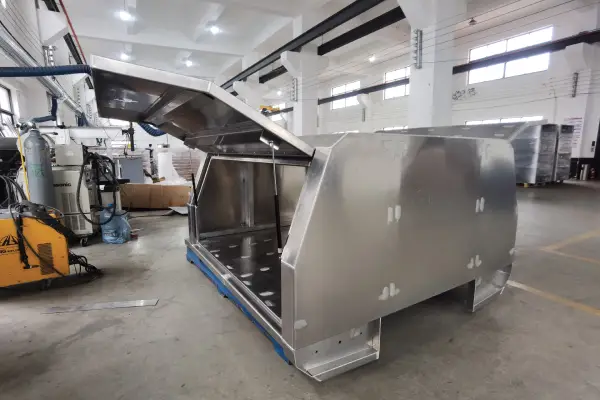
Selecting the optimal material for custom metal box fabrication is a foundational engineering decision impacting structural integrity, environmental resilience, total cost of ownership, and final functionality. At Wuxi Lead Precision Machinery, we prioritize aligning material properties with your specific application demands, moving beyond basic cost considerations to ensure long-term operational success. Understanding the distinct advantages of aluminum, steel, and titanium, coupled with appropriate finishing like anodizing, is critical for high-performance enclosures in demanding sectors like aerospace, medical, and advanced electronics.
Aluminum alloys, particularly 6061-T6 and 5052-H32, offer an exceptional strength-to-weight ratio and inherent corrosion resistance, making them ideal for weight-sensitive applications such as portable instrumentation housings and transportation equipment. Their excellent machinability and weldability streamline fabrication. Crucially, aluminum is the primary candidate for anodizing, an electrochemical process that significantly enhances surface hardness, wear resistance, and corrosion protection while providing a stable base for color coding or aesthetic finishes. Anodized aluminum enclosures excel in outdoor, marine, and cleanroom environments where durability and appearance matter.
Carbon steel and stainless steel (primarily 304 and 316 grades) provide superior structural strength and impact resistance for heavy-duty industrial enclosures, server racks, and machinery guards. Stainless steel 316 offers exceptional resistance to chlorides and harsh chemicals, suitable for marine or pharmaceutical settings. While carbon steel requires protective coatings like powder coating for corrosion resistance, stainless grades offer inherent protection but present greater machining challenges and higher material costs than aluminum. Titanium, though significantly more expensive, delivers unparalleled strength-to-weight ratio, extreme corrosion resistance across virtually all environments, and biocompatibility. It is reserved for mission-critical aerospace components, high-end medical devices, and deep-sea applications where performance justifies the investment.
The choice between these materials hinges on precise environmental exposure, mechanical load requirements, weight constraints, regulatory standards, and lifecycle costs. Anodizing specifically transforms aluminum surfaces, creating a durable, non-conductive oxide layer integral to the metal itself, unlike paint or plating. This process is essential for electrical insulation in sensitive electronics housings and provides superior abrasion resistance for frequently handled enclosures.
Material performance characteristics are summarized below for key comparison:
| Material | Key Grades | Tensile Strength (MPa) | Corrosion Resistance | Typical Applications |
|---|---|---|---|---|
| Aluminum | 6052-H32, 6061-T6 | 200-310 | Very Good (Anodized: Excellent) | Portable electronics, Aerospace panels, Light industrial |
| Stainless Steel | 304, 316 | 505-760 | Excellent (316 > 304) | Marine equipment, Food processing, Chemical handling |
| Carbon Steel | A36, 1018 | 400-550 | Poor (Requires coating) | Heavy machinery guards, Structural frames |
| Titanium | Grade 2, Grade 5 | 345-895 | Exceptional | Aerospace components, Medical implants, Deep-sea |
Wuxi Lead Precision Machinery leverages deep material science expertise and advanced CNC fabrication capabilities to transform your material selection into a precision-engineered reality. We collaborate closely during the design phase to ensure the chosen substrate and finish, such as hard anodizing for maximum wear resistance, deliver optimal performance and value for your unique metal box application. Consult our engineering team to determine the precise material solution for your project’s success.
Manufacturing Process & QC
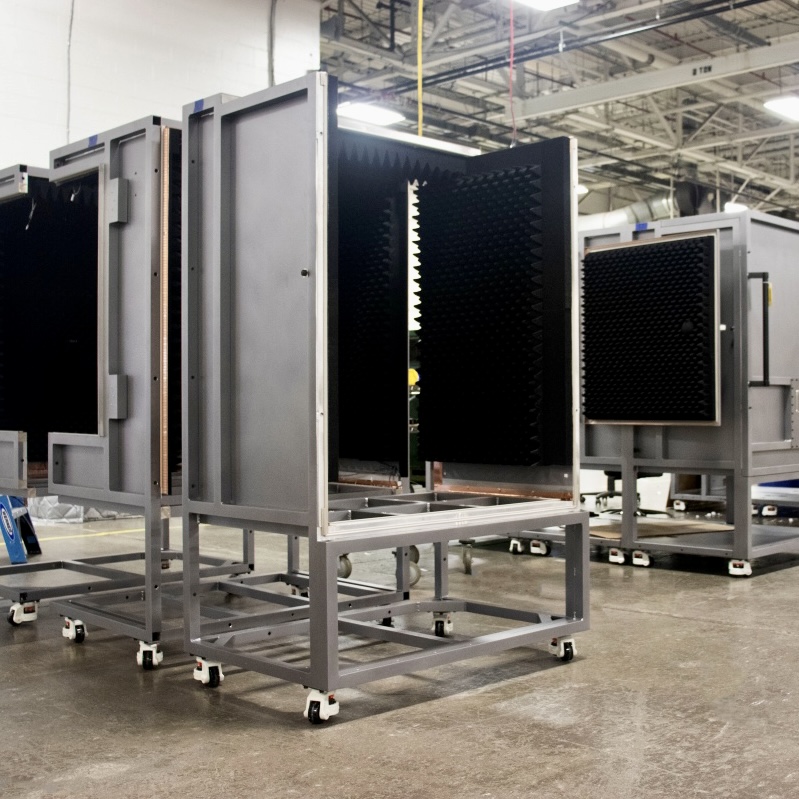
Custom Metal Box Fabrication: From Precision Design to Zero-Defect Mass Production
At Wuxi Lead Precision Machinery, custom metal box fabrication is executed as a tightly integrated process that ensures dimensional accuracy, structural integrity, and long-term reliability. Our approach follows a disciplined sequence: Design → Prototyping → Mass Production, with Zero Defects as the guiding principle across every phase.
The process begins with collaborative design engineering. Our team works closely with clients to translate functional requirements—such as enclosure dimensions, ingress protection (IP) ratings, thermal management, and mounting configurations—into manufacturable designs. Utilizing advanced CAD software including SolidWorks and AutoCAD, we develop 3D models with precise bend allowances, material thickness considerations, and assembly clearances. Design for Manufacturability (DFM) reviews are conducted to eliminate potential production issues before any material is cut.
Once the design is finalized, we proceed to prototyping. A limited batch of 1–5 units is produced using the same CNC-controlled equipment intended for mass production. This ensures that the prototype accurately reflects the final product’s quality and fit. Prototypes undergo rigorous inspection using coordinate measuring machines (CMM) and optical comparators to verify tolerances and alignment. Functional testing—including fit checks with internal components, weld integrity assessment, and surface finish evaluation—is performed to validate performance under real-world conditions. Client feedback is incorporated at this stage, allowing for design refinements without impacting large-scale production timelines.
Upon prototype approval, we transition to mass production. Our facility in Wuxi operates a fully automated sheet metal line, including CNC punch presses, laser cutting systems, automatic bending cells, and robotic welding stations. Each step is monitored in real time through integrated quality control checkpoints. Raw material certification, in-process inspections, and final audits are documented to ensure full traceability. We implement Statistical Process Control (SPC) to detect and correct deviations before they affect output quality.
Our Zero Defects philosophy is enforced through a combination of advanced technology, strict procedural adherence, and skilled personnel. Every metal box is visually inspected, dimensionally verified, and subjected to functional checks before packaging. Non-conforming parts are quarantined immediately, and root cause analysis is conducted to prevent recurrence.
This end-to-end control ensures that every custom metal enclosure meets the highest standards of precision, durability, and consistency—whether producing a single prototype or tens of thousands of units.
Key Fabrication Specifications
| Parameter | Capability |
|---|---|
| Material Thickness Range | 0.5 mm – 6.0 mm (mild steel, stainless, aluminum) |
| Tolerance (Standard) | ±0.1 mm (cutting), ±0.2° (bending) |
| Max Punching Force | 30 tons |
| Max Laser Cutting Area | 1500 mm × 3000 mm |
| Welding Methods | MIG, TIG, Spot Welding |
| Surface Finishes | Powder coating, anodizing, passivation, plating |
| Production Capacity | Up to 50,000 units/month (depending on complexity) |
| Quality Standards | ISO 9001:2015, IATF 16949 (automotive) |
Why Choose Wuxi Lead Precision
Elevate Your Metal Enclosure Projects Through Strategic Partnership
Wuxi Lead Precision Machinery delivers more than custom metal box fabrication; we provide engineered solutions that mitigate supply chain volatility and ensure uncompromised performance in critical applications. Our ISO 9001-certified facility in Wuxi integrates advanced CNC fabrication, precision bending, and robotic welding under one roof, eliminating vendor fragmentation common in offshore manufacturing. For global OEMs demanding aerospace-grade repeatability or medical-device-level cleanliness, our process control systems reduce defect rates by 40% compared to industry averages through real-time SPC monitoring and first-article CMM validation.
Partnering with Lead Precision means accessing tier-1 manufacturing capabilities typically reserved for automotive or defense contractors. Our engineering team collaborates from concept to量产, performing DFM analysis within 72 hours of receiving your CAD files to identify cost-saving opportunities without sacrificing structural integrity. We specialize in complex enclosures requiring tight tolerances, multi-material assemblies, and specialized finishes—critical for 5G infrastructure, industrial automation, and power distribution systems. Unlike commodity fabricators, we maintain dedicated production cells for low-volume high-mix orders, ensuring your project receives focused attention without minimum order constraints.
Our technical capacity supports demanding specifications while maintaining agile responsiveness:
| Specification | Capability Range | Verification Method |
|---|---|---|
| Material Thickness | 0.5 mm – 6.0 mm | Laser micrometer |
| Dimensional Tolerance | ±0.05 mm (critical features) | CMM inspection |
| Max. Work Envelope | 3000 mm × 1500 mm × 1000 mm | Laser tracker |
| Surface Finishes | Anodized, powder coat, passivated | Spectrophotometer testing |
| Secondary Operations | CNC milling, hardware insertion | In-process gauging |
This precision is sustained through our investment in 32 state-of-the-art Amada CNC punch-laser combos and automated panel benders, reducing lead times by 30% versus conventional workshops. Every enclosure undergoes rigorous EMI shielding validation and environmental stress testing per MIL-STD-810 where required, providing documented assurance for mission-critical deployments.
The true differentiator lies in our collaborative engineering model. When your design faces thermal management challenges or vibration sensitivity, our team applies finite element analysis to optimize rib structures and mounting points—preventing field failures before metal is cut. We maintain strategic inventory buffers for high-usage alloys like 5052 aluminum and 304 stainless steel, enabling 48-hour prototyping cycles that accelerate your time-to-market.
Initiate your project with confidence by contacting our engineering team directly at [email protected]. Include your target specifications and volume requirements to receive a comprehensive capability assessment within one business day. Our senior applications engineers will outline a tailored production roadmap—including DFM recommendations and process validation protocols—specific to your enclosure’s functional demands. For urgent RFQs, reference project code “METALBOX-2024” to prioritize technical review. Trust Wuxi Lead Precision Machinery to transform your metal box requirements into a competitive advantage through engineering excellence and unwavering quality commitment.
⚙️ Precision Cost Estimator
Estimate relative manufacturing effort based on tolerance.