

Technical Contents
Engineering Guide: Copper Casting Molds
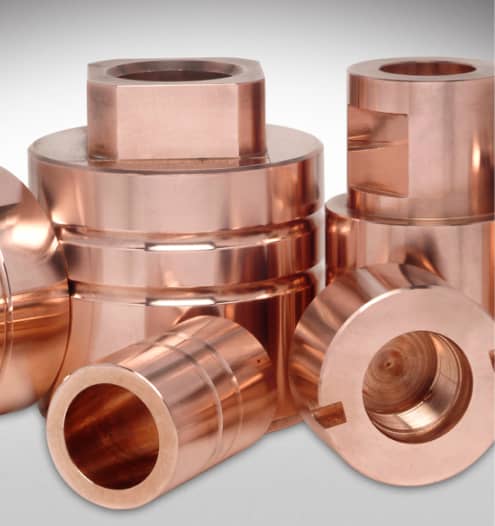
Engineering Insight: The Critical Role of Precision in Copper Casting Molds
In high-performance industrial applications, copper casting molds represent a convergence of material science, thermal dynamics, and micron-level engineering. The success of a casting operation—whether for electrical connectors, heat exchangers, or aerospace components—depends fundamentally on the precision and durability of the mold. At Wuxi Lead Precision Machinery, we understand that even a deviation of ±0.01 mm can lead to part failure, reduced conductivity, or accelerated wear in service. This is why our approach to copper mold manufacturing emphasizes dimensional accuracy, thermal stability, and long-term repeatability.
Copper and its alloys are prized for their excellent thermal conductivity and machinability, but these same properties introduce challenges during mold design. Thermal expansion, localized hot spots, and cyclic fatigue require molds that are not only dimensionally precise but also engineered to manage heat flux efficiently. Our engineering team employs finite element analysis (FEA) and computational fluid dynamics (CFD) to simulate casting cycles, optimizing cooling channel placement and structural reinforcement. This predictive modeling ensures that each mold performs consistently across thousands of cycles, minimizing downtime and scrap rates.
Our experience in delivering mission-critical components for Olympic-standard facilities and military-grade systems underscores our commitment to precision. For example, molds used in the production of high-current busbars for Olympic venues required not only exact geometries to ensure uniform current distribution but also surface finishes that prevented arcing and hotspots. Similarly, defense applications demanded molds capable of withstanding extreme thermal cycling without deformation—a requirement met through advanced copper-chromium alloys and precision CNC contouring.
At Wuxi Lead, every copper casting mold is a custom solution. We begin with a detailed analysis of the client’s casting alloy, cycle time, and end-use environment. This data informs material selection, toolpath strategy, and inspection protocols. Our 5-axis CNC machining centers, calibrated to sub-micron tolerances, ensure that complex geometries are reproduced with absolute fidelity. Post-machining, each mold undergoes rigorous metrological validation using coordinate measuring machines (CMM) and laser scanning to confirm conformity to specifications.
The result is a mold that delivers consistent part quality, extended service life, and reduced maintenance costs—critical advantages in high-volume, high-stakes manufacturing environments.
Typical Specifications for Custom Copper Casting Molds at Wuxi Lead Precision Machinery
| Parameter | Specification Range |
|---|---|
| Material Options | Oxygen-free copper, CuCrZr, CuBe2, GlidCop |
| Dimensional Tolerance | ±0.01 mm to ±0.005 mm |
| Surface Finish (Ra) | 0.2 µm to 0.8 µm (polished as required) |
| Max Mold Size | 1200 mm × 800 mm × 600 mm |
| Cooling Channel Precision | ±0.02 mm positional accuracy |
| Thermal Cycle Endurance | >50,000 cycles (tested) |
| Machining Equipment | 5-axis CNC, Wire EDM, High-Speed Milling |
| Quality Assurance | Full CMM report, First Article Inspection (FAI), Material Certification |
Precision Specs & Tolerances
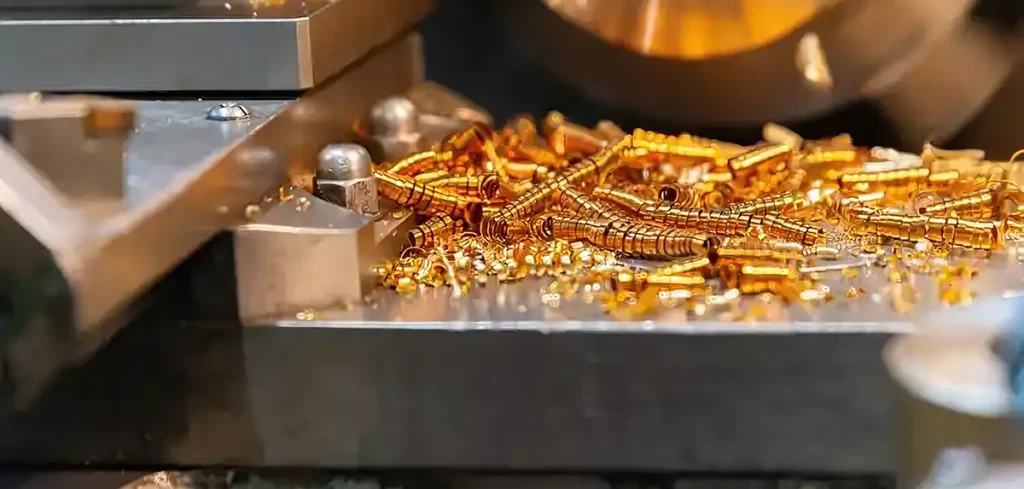
Technical Capabilities: Precision Copper Casting Mold Manufacturing
Wuxi Lead Precision Machinery delivers uncompromising accuracy for copper casting molds through integrated advanced manufacturing and metrology systems. Our core competency lies in transforming complex copper alloy geometries—critical for high-conductivity applications in aerospace, energy, and industrial tooling—into dimensionally stable, production-ready tooling. Copper’s exceptional thermal conductivity presents unique machining challenges, including thermal distortion and material adhesion. We address these through purpose-built 5-axis CNC machining centers operating under strict thermal stability protocols.
Our DMG MORI and Hermle 5-axis platforms feature high-torque spindles optimized for copper alloys like C18150 and C10100. Simultaneous 5-axis motion eliminates repositioning errors, ensuring seamless contouring of intricate mold cavities, cooling channels, and parting lines. In-process probing dynamically compensates for thermal drift during extended operations, maintaining tolerances even during multi-day machining cycles. All cutting parameters are validated via simulation software to prevent chatter and surface finish degradation inherent to copper’s gummy characteristics.
Quality assurance is non-negotiable. Every mold undergoes full 3D validation using Zeiss CONTURA CMM systems calibrated to ISO 17025 standards. Our inspection protocol captures critical features—including draft angles, radii, and interface surfaces—with traceable reports detailing GD&T compliance. Surface roughness is verified to Ra 0.4 µm or better using portable profilometers, ensuring optimal casting release and longevity. This closed-loop process guarantees molds meet the exact thermal and mechanical demands of high-pressure die casting or continuous casting operations.
The following table defines our standard capability envelope for copper casting molds. Tighter tolerances are achievable through engineering collaboration for mission-critical applications.
| Feature Category | Capability Scope | Standard Tolerance Range |
|---|---|---|
| Linear Dimensions | Up to 1200 mm | ±0.005 mm |
| Geometric Accuracy | Profile, Position, Runout | ±0.003 mm |
| Surface Finish | Machined Surfaces | Ra 0.4 µm (max) |
| Critical Radii | Internal/External | ±0.002 mm |
| Hole Positioning | Multi-axis Interpolation | ±0.004 mm |
| Draft Angles | Complex Surfaces | ±0.1° |
Our engineering team collaborates from the design phase to optimize mold geometry for manufacturability, reducing lead times by 25% versus industry benchmarks. By leveraging 5-axis efficiency and rigorous CMM validation, we eliminate costly trial-and-error in casting production. Copper molds manufactured at Wuxi Lead consistently achieve 50,000+ cycles in high-volume applications, directly enhancing our clients’ operational uptime. Contact our technical sales team to discuss thermal distortion mitigation strategies for your next copper mold project.
Material & Finish Options
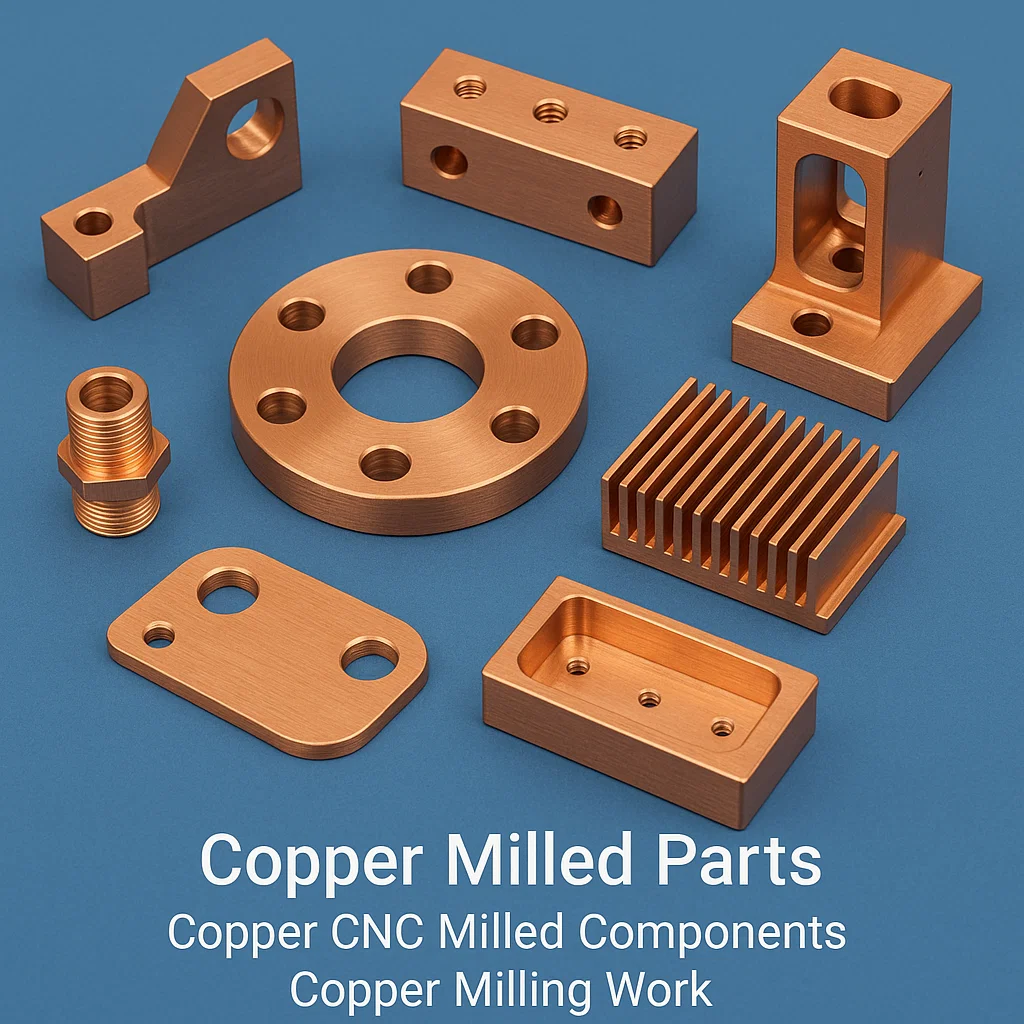
Material Selection for High-Performance Copper Casting Molds
Selecting the appropriate material for copper casting molds is critical to ensuring dimensional accuracy, thermal efficiency, and extended service life. At Wuxi Lead Precision Machinery, we specialize in custom-engineered solutions that align material properties with production demands. The three primary materials used in mold fabrication—aluminum, steel, and titanium—each offer distinct advantages depending on casting volume, complexity, and thermal management requirements.
Aluminum alloys are widely employed in low- to medium-volume copper casting operations due to their excellent thermal conductivity and lightweight nature. This facilitates rapid heat dissipation, reducing cycle times and minimizing thermal fatigue. Aluminum molds are particularly suitable for prototyping and short-run production where quick turnaround and cost efficiency are priorities. However, their lower hardness and wear resistance make them less ideal for high-volume, continuous casting applications.
Steel, particularly tool steels such as H13 and P20, remains the standard for high-volume copper casting molds. These alloys provide superior strength, hardness, and resistance to thermal cycling and mechanical wear. Steel molds maintain dimensional stability under prolonged exposure to molten copper, making them ideal for industrial-scale operations. While they exhibit lower thermal conductivity compared to aluminum, proper cooling channel design mitigates this limitation. Steel’s durability ensures a longer operational lifespan, justifying the higher initial investment in high-throughput environments.
Titanium alloys represent a premium option for specialized applications requiring extreme corrosion resistance and high strength-to-density ratios. Though not commonly used for full mold bodies due to cost and machining complexity, titanium is occasionally integrated into critical mold components exposed to aggressive environments or high mechanical stress. Its biocompatibility and resistance to oxidation also make it suitable for niche applications in medical or aerospace-related copper casting.
Surface finishing plays a pivotal role in mold performance and longevity. Anodizing is a widely adopted post-processing technique, especially for aluminum molds. This electrochemical process forms a durable, corrosion-resistant oxide layer that enhances surface hardness and reduces adhesion of molten copper. Hard anodizing, in particular, can increase surface hardness to over 60 HRC, significantly improving wear resistance. For steel molds, alternative treatments such as nitriding or PVD coatings are typically preferred due to the limitations of anodizing on ferrous materials.
The table below summarizes key material properties and applications for copper casting molds.
| Material | Thermal Conductivity (W/m·K) | Hardness (HRC) | Typical Use Case | Surface Treatment |
|---|---|---|---|---|
| Aluminum | 120–180 | 40–50 (hard anodized) | Prototyping, low-volume casting | Hard anodizing |
| Steel (H13) | 30–35 | 48–52 | High-volume, industrial casting | Nitriding, PVD coating |
| Titanium | 7–10 | 35–40 | Specialized, high-corrosion environments | Anodizing (Type II/III) |
Material selection must be guided by a comprehensive evaluation of production volume, thermal demands, and cost constraints. At Wuxi Lead Precision Machinery, we work closely with clients to engineer mold solutions optimized for performance, durability, and total cost of ownership.
Manufacturing Process & QC
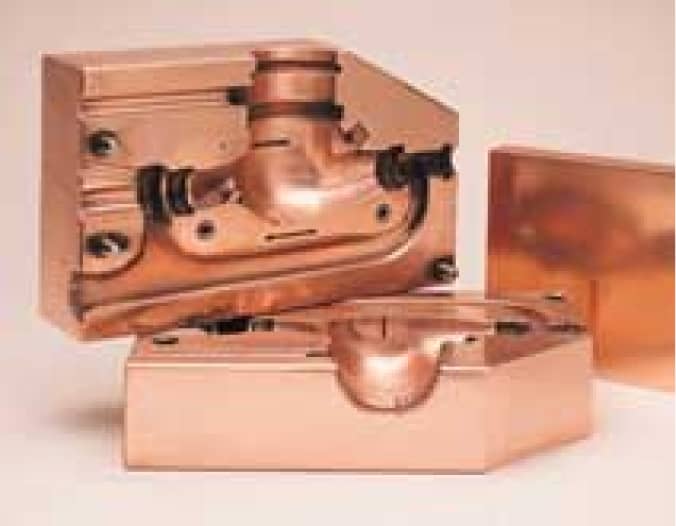
Copper Casting Mold Production: Precision Engineering from Concept to Zero Defects
At Wuxi Lead Precision Machinery, our copper casting mold production process is engineered for uncompromising quality and performance in high-volume manufacturing. We integrate advanced engineering with rigorous validation to ensure every mold meets the exacting thermal and mechanical demands of copper alloy casting, eliminating defects before they reach your production line. Our three-phase methodology—Design, Prototyping, Mass Production—forms the backbone of our Zero Defects commitment.
The Design phase begins with deep collaboration to translate your casting geometry, material specifications, and production volume into a manufacturable mold solution. Our engineering team utilizes integrated CAD/CAM/CAE platforms, performing detailed thermal stress simulations and flow analysis to optimize cooling channel layouts, gating systems, and structural integrity. Critical factors like thermal fatigue resistance, dimensional stability under cyclic heating, and precise ejection mechanics are modeled to preempt potential failure modes. Material selection is paramount; we specify high-conductivity copper alloys such as C18150 or C18200 based on your specific thermal load and wear requirements, ensuring optimal heat extraction and longevity.
Prototyping transforms validated digital models into physical test assets. We employ multi-axis CNC machining centers with sub-micron accuracy to fabricate prototype molds from the selected copper alloy. These prototypes undergo exhaustive functional testing within controlled casting trials using your specified alloy and process parameters. We meticulously measure thermal cycling performance, surface finish replication, dimensional accuracy of cast parts, and mold wear characteristics. Metallurgical analysis confirms material integrity, while real-time data logging identifies micro-defects invisible to standard inspection. Only after achieving flawless casting results across multiple cycles—and implementing any necessary design refinements—does the mold proceed to full-scale production.
Mass Production leverages our certified zero-defect manufacturing ecosystem. Each production mold is machined on dedicated, temperature-stabilized CNC equipment using rigorously controlled toolpaths and in-process metrology. Our closed-loop quality system integrates automated optical inspection (AOI) for surface topology, CMM verification of critical dimensions after each machining stage, and 100% ultrasonic testing for subsurface integrity. Real-time thermal monitoring during final mold conditioning ensures uniform heat distribution. Every component is traceable via serialized barcoding, with full documentation of material certs, process parameters, and inspection results. This systematic elimination of variation guarantees molds deliver consistent, defect-free castings from the first shot to the millionth cycle.
Critical Copper Mold Specifications Achieved
| Parameter | Standard Capability | High-Performance Option | Measurement Method |
|---|---|---|---|
| Material | C18150 Chromium Copper | C18200 Zirconium Copper | ASTM B0043 / Spectro |
| Dimensional Tolerance | ±0.010 mm | ±0.005 mm | CMM (ISO 10360-2) |
| Surface Roughness (Ra) | 0.4 µm | 0.2 µm | Profilometer (ISO 4287) |
| Thermal Conductivity | ≥ 85% IACS | ≥ 92% IACS | Laser Flash Analysis |
| Cyclic Fatigue Life | 50,000+ shots | 150,000+ shots | Simulated Production Run |
This end-to-end process, governed by ISO 9001:2015 and IATF 16949 standards, transforms copper casting from a production challenge into a strategic advantage. Partner with Wuxi Lead to engineer molds where zero defects are not an aspiration—they are the baseline.
Why Choose Wuxi Lead Precision
Partner with Lead Precision for Unmatched Expertise in Copper Casting Mold Manufacturing
When precision, durability, and performance define your production success, partnering with a trusted leader in custom metal manufacturing becomes essential. At Wuxi Lead Precision Machinery, we specialize in the design and production of high-performance copper casting molds engineered for demanding industrial applications. Our advanced engineering capabilities, combined with decades of metallurgical expertise, enable us to deliver molds that enhance casting efficiency, extend service life, and reduce operational downtime.
Copper casting molds require exacting standards in thermal conductivity, dimensional accuracy, and mechanical strength. Every mold we produce is custom-built to meet the unique thermal and mechanical demands of your casting process. Whether you are involved in continuous casting, electroslag remelting, or precision billet production, our team collaborates closely with your engineers to optimize mold geometry, cooling channel design, and material selection. We utilize high-grade oxygen-free copper, tellurium copper, and chromium zirconium alloys—materials selected for their superior heat transfer and resistance to thermal fatigue.
Our in-house CNC machining centers, wire EDM systems, and 3D metrology equipment ensure micron-level tolerances and repeatable quality across every production run. From prototype development to full-scale series manufacturing, we maintain strict process control and documentation to meet ISO 9001 standards and your specific quality requirements.
We understand that in high-volume metal casting, even minor inconsistencies in mold performance can lead to significant losses. That’s why we integrate thermal simulation and finite element analysis (FEA) into our design phase, predicting thermal gradients and stress points before manufacturing begins. This proactive engineering approach minimizes trial runs and accelerates time-to-production.
Below are key specifications we routinely achieve in our copper casting mold manufacturing:
| Specification | Capability |
|---|---|
| Material Options | OFE Copper, CuCrZr, CuTe, GlidCop |
| Tolerance | ±0.005 mm |
| Surface Finish | Ra ≤ 0.4 µm (polished zones) |
| Max Mold Size | 2,500 mm length × 800 mm width × 1,200 mm height |
| Cooling Channel Precision | ±0.01 mm positional accuracy |
| Design Integration | FEA & thermal flow simulation |
| Quality Standards | ISO 9001:2015, Full CMM inspection reports |
At Wuxi Lead Precision Machinery, we don’t just manufacture molds—we build long-term partnerships based on reliability, innovation, and technical excellence. Our global clients in aerospace, automotive, and industrial equipment sectors rely on our solutions to maintain competitive advantage in high-stakes manufacturing environments.
Take the next step toward superior casting performance. Contact us today at [email protected] to discuss your custom copper casting mold requirements with our engineering team. Let Lead Precision be your strategic manufacturing partner in achieving unmatched quality and efficiency.
⚙️ Precision Cost Estimator
Estimate relative manufacturing effort based on tolerance.