

Technical Contents
Engineering Guide: Compression Moulding Machine Price
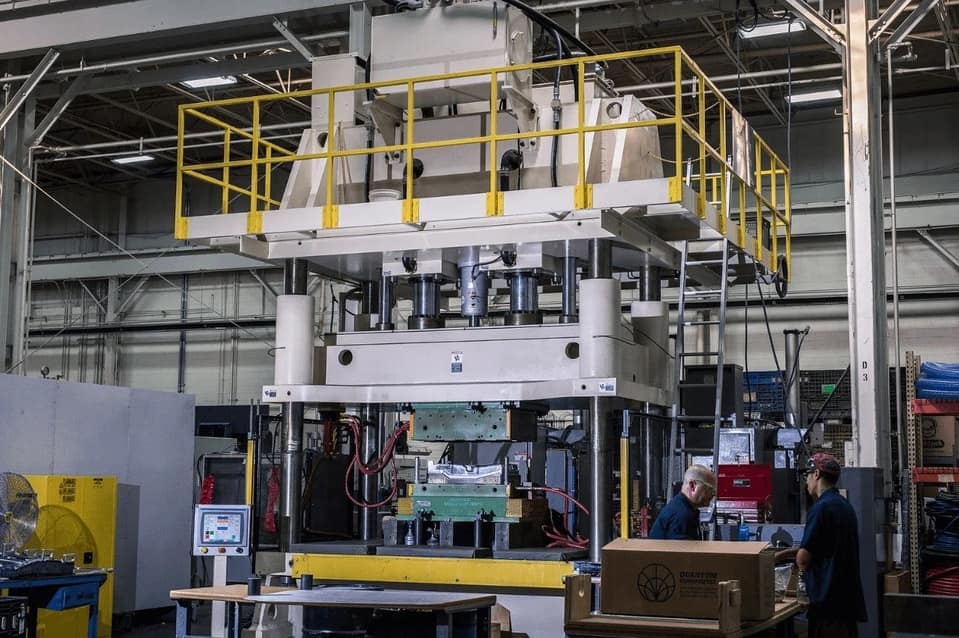
Engineering Insight: Precision as the True Determinant of Compression Moulding Machine Value
In high-performance metal manufacturing, the initial price tag of a compression moulding machine is a dangerously incomplete metric for procurement decisions. True cost assessment must center on precision engineering capabilities and their direct impact on part integrity, yield, and total cost of ownership. Compression moulding demands exceptional control over pressure distribution, thermal uniformity, and cycle repeatability. Minute deviations in platen parallelism or temperature gradients translate directly into part warpage, inconsistent density, or material degradation—especially critical for aerospace, defense, and high-end industrial components where failure is not an option. A machine priced lower upfront but lacking micron-level accuracy inevitably incurs far higher costs through scrap, rework, secondary operations, and production delays. The investment must align with the uncompromising tolerances your application requires.
Wuxi Lead Precision Machinery’s engineering philosophy treats precision not as a feature, but as the foundational requirement. Our machines are engineered for applications where specifications leave zero margin for error. This is proven in deployments supporting Olympic-standard sporting equipment requiring perfect material consistency under extreme stress, and in mission-critical military hardware where component failure is unacceptable. These projects demanded and received machines capable of maintaining platen flatness within ±0.01mm across full tonnage ranges and achieving thermal uniformity exceeding ±1.5°C across large mould surfaces—specifications far beyond standard industrial baselines. Our experience stems from solving the most demanding challenges, where price was secondary to absolute performance validation.
The technical differentiators justifying our value proposition are quantifiable. Below is a comparison of core precision parameters defining machine capability versus typical market offerings:
| Parameter | Lead Precision Standard | Typical Market Baseline |
|---|---|---|
| Platen Flatness (Loaded) | ≤ ±0.01 mm | ≤ ±0.05 mm |
| Parallelism Tolerance | ≤ ±0.02 mm | ≤ ±0.10 mm |
| Temperature Uniformity | ≤ ±1.5 °C | ≤ ±3.0 °C |
| Pressure Control Range | 0.1% – 100% F.S. | 1% – 100% F.S. |
| Closed-Loop Control | Full Digital Servo-Hydraulic | Basic Proportional Valves |
| Repeatability (Cycle) | ±0.5% | ±2.0% |
These specifications are not theoretical; they are validated daily in our clients’ production environments handling superalloys, advanced composites, and high-purity metals. The higher initial investment in a Lead Precision machine delivers immediate ROI through near-zero scrap rates on complex geometries, elimination of costly post-moulding corrections, and extended tooling life due to balanced force application. When tolerances are non-negotiable and material costs are significant, the machine price becomes a minor factor against the value of guaranteed precision output. Contact Wuxi Lead Precision Machinery to discuss how our engineered solutions transform compression moulding cost structures for mission-critical metal components.
Precision Specs & Tolerances
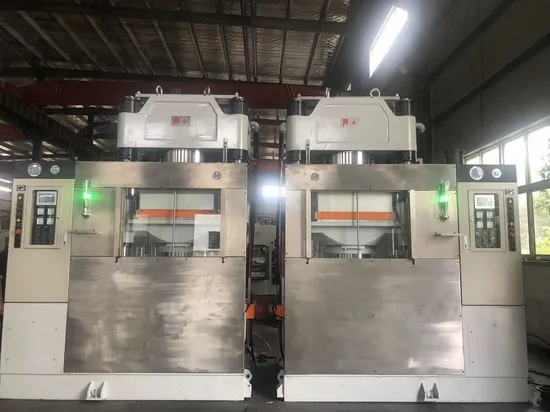
Wuxi Lead Precision Machinery delivers advanced technical capabilities in custom metal manufacturing, leveraging state-of-the-art compression moulding and precision CNC technologies to meet the stringent demands of high-performance industries. Our facility integrates engineering excellence with rigorous quality assurance, ensuring every component meets exact design specifications and functional requirements. At the core of our machining capabilities is a fleet of 5-axis CNC machines, enabling us to produce complex geometries with superior accuracy and surface finish. These machines allow simultaneous multi-directional cutting, reducing setup times and part handling while maintaining tight tolerances across intricate features.
Our 5-axis machining centers support the production of high-integrity metal components used in aerospace, energy, automotive, and industrial equipment sectors. With the ability to machine a wide range of materials—including tool steels, stainless steels, aluminum alloys, and high-temperature superalloys—we ensure optimal material performance under extreme operational conditions. This flexibility, combined with in-house tooling design and programming expertise, allows us to deliver fully customized solutions tailored to client-specific applications.
Quality is embedded in every phase of our manufacturing process. Each component undergoes comprehensive inspection using a Coordinate Measuring Machine (CMM), ensuring dimensional conformity with design intent. Our CMM system provides traceable, high-resolution measurement data, validating geometric accuracy down to micrometer levels. This metrology-backed quality control process is essential for compression moulding components, where precise fit, alignment, and surface consistency directly impact performance and longevity.
We maintain strict adherence to international quality standards, with documented inspection reports and full process traceability for every production batch. Our engineering team collaborates closely with clients during the design-for-manufacturability phase, offering technical input to optimize part geometry, material selection, and production efficiency—ultimately reducing lead times and minimizing total cost of ownership.
The following table outlines the standard technical tolerances we consistently achieve through our integrated manufacturing and inspection systems:
| Feature | Standard Tolerance | Precision Capability (Optimized) |
|---|---|---|
| Linear Dimensions | ±0.025 mm | ±0.005 mm |
| Positional Tolerance | ±0.03 mm | ±0.01 mm |
| Flatness | 0.02 mm per 100 mm | 0.005 mm per 100 mm |
| Circular Runout | 0.02 mm | 0.005 mm |
| Surface Roughness (Ra) | 1.6 µm | 0.4 µm (polished finish) |
| Angular Tolerance | ±0.1° | ±0.05° |
These capabilities are consistently maintained across production volumes, from prototype development to high-volume manufacturing. By combining 5-axis CNC precision, advanced compression moulding techniques, and CMM-verified quality control, Wuxi Lead Precision Machinery ensures every component meets the highest standards of performance, reliability, and repeatability.
Material & Finish Options
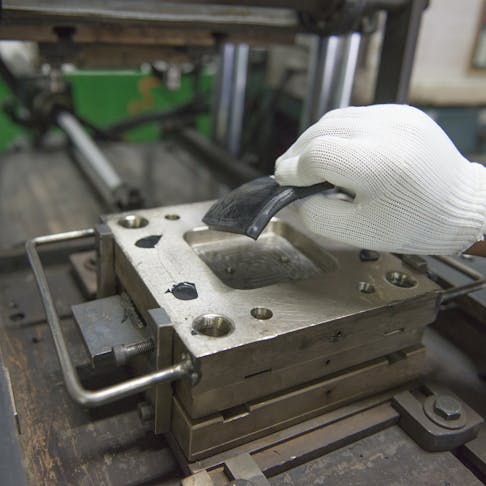
Material Selection for Compression Moulding Machine Components
Material selection critically impacts the performance, longevity, and total cost of ownership for compression moulding machines. At Wuxi Lead Precision Machinery, we emphasize that the optimal choice balances mechanical requirements, thermal management, production volume, and initial investment. Selecting inferior materials leads to premature wear, dimensional instability under thermal cycling, and unplanned downtime, ultimately increasing the effective machine price per part. Conversely, over-specifying adds unnecessary capital cost without proportional return. Aluminum alloys, tool steels, and titanium each serve distinct applications within the machine structure and mould tooling.
Aluminum, particularly 7075-T6, offers an exceptional strength-to-weight ratio and superior thermal conductivity. This makes it ideal for large platens, bolster plates, and non-critical structural components where rapid heat dissipation is beneficial and extreme wear resistance is secondary. Its lower density reduces machine inertia, aiding dynamic performance. While cost-effective for initial fabrication, aluminum requires careful consideration for high-pressure or abrasive material applications due to lower hardness compared to steel. Anodizing significantly enhances surface hardness and corrosion resistance for aluminum parts.
Tool steels, especially H13 (1.2344), are the industry standard for mould cavities, cores, and high-stress components subjected to intense pressure and thermal cycling. H13 provides outstanding toughness, thermal fatigue resistance, and the ability to maintain hardness at elevated operating temperatures common in compression moulding. This translates directly to longer mould life, consistent part quality over millions of cycles, and reduced maintenance costs. The higher initial material and machining cost of H13 is typically justified by its superior longevity in demanding production environments.
Titanium alloys (e.g., Ti-6Al-4V) are reserved for highly specialized applications involving extreme corrosion resistance requirements, such as processing aggressive composite resins or in specific aerospace applications. While offering excellent strength-to-weight ratio and corrosion immunity, titanium presents significant challenges: very high material cost, difficult machinability, and potential for galling. Its use is generally not cost-effective for standard compression moulding machine structures but may be warranted for critical, replaceable inserts in corrosive scenarios.
Surface finishing, particularly anodizing for aluminum components, is not merely cosmetic. Type II (sulfuric acid) anodizing provides good corrosion resistance and a base for painting. Type III (hard coat) anodizing creates a much thicker, denser, and significantly harder ceramic layer, drastically improving wear resistance and surface durability for moving parts or areas subject to abrasion. Proper anodizing thickness and sealing are essential to prevent premature coating breakdown.
The following table summarizes key mechanical and thermal properties relevant to compression moulding machine component selection:
| Material | Yield Strength (MPa) | Thermal Conductivity (W/m·K) | Max Continuous Temp (°C) |
|---|---|---|---|
| Aluminum 7075-T6 | 503 | 130 | 125 |
| Tool Steel H13 | 1035 | 28 | 540 |
| Titanium Ti-6Al-4V | 880 | 7.2 | 600 |
Choosing the right material requires a detailed analysis of your specific process parameters, production volume, and part quality requirements. Wuxi Lead Precision Machinery engineers collaborate closely with clients to select the optimal material solution, ensuring the machine delivers maximum value and minimizes the true cost per moulded part over its operational lifespan. Consult our technical team for a tailored assessment.
Manufacturing Process & QC
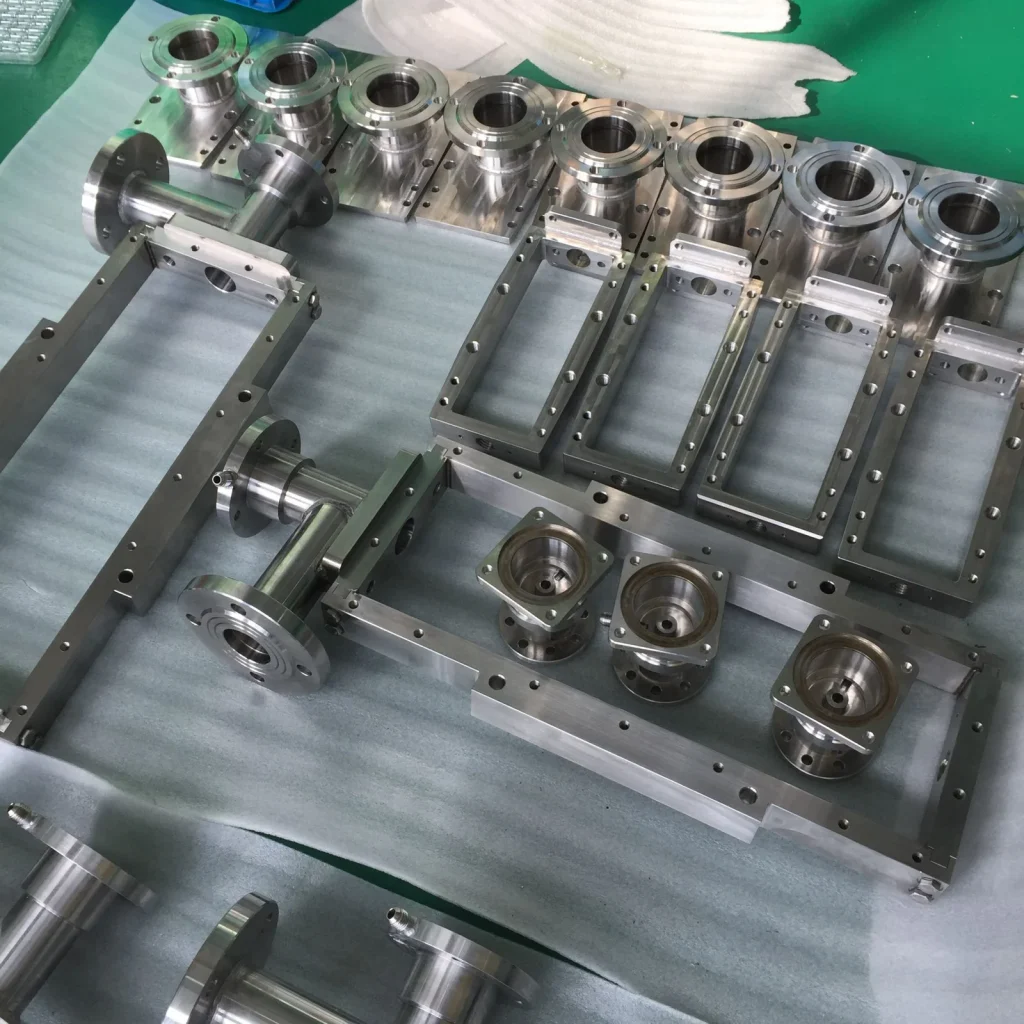
In the realm of custom metal manufacturing, compression moulding stands as a cornerstone process for producing high-strength, dimensionally stable components. At Wuxi Lead Precision Machinery, our approach integrates precision engineering with rigorous quality control to deliver compression moulding solutions that meet the most demanding industrial standards. The production workflow is structured into three critical phases: Design, Prototyping, and Mass Production—each engineered to ensure zero defects and maximum repeatability.
The process begins with Design, where engineering expertise converges with advanced simulation software. Our team collaborates closely with clients to analyze part geometry, material requirements, and performance conditions. Finite Element Analysis (FEA) is employed to predict stress distribution, flow behavior, and potential deformation under compression. This digital validation ensures optimal tooling design, minimizing trial iterations and enhancing cycle efficiency. Material selection—typically high-grade steel, aluminum alloys, or specialty composites—is finalized based on thermal stability, wear resistance, and end-use environment.
Following design approval, the Prototyping phase commences. A pilot batch is produced using the same compression parameters and tooling intended for full-scale production. This phase serves dual purposes: functional validation and process refinement. Components are subjected to dimensional inspection via Coordinate Measuring Machines (CMM), hardness testing, and non-destructive evaluation (NDE) to confirm compliance with ISO 9001 standards. Any deviations are traced back to root causes—be it temperature gradient, pressure inconsistency, or material batch variation—and corrected before scale-up.
Mass Production is executed on fully automated hydraulic presses equipped with real-time monitoring systems. Each cycle is logged for pressure, temperature, dwell time, and ejection force, ensuring full traceability. Our machines feature closed-loop control systems that automatically adjust parameters to maintain consistency across thousands of cycles. Inline vision systems and robotic handling reduce human intervention, minimizing contamination and handling errors. All final parts undergo 100% visual inspection and batch sampling for metallurgical analysis.
Throughout the entire process, the principle of zero defects is enforced through continuous process verification and preventive maintenance protocols. Statistical Process Control (SPC) charts are maintained for critical dimensions, enabling early detection of process drift. This disciplined methodology ensures that every component delivered meets exacting tolerances and performance criteria.
Key technical specifications of our standard compression moulding systems are outlined below:
| Parameter | Specification |
|---|---|
| Max. Compression Force | 500 to 5000 Tons |
| Platen Size Range | 800 x 800 mm to 2000 x 2000 mm |
| Temperature Control Range | Ambient to 450°C (adjustable in 1°C increments) |
| Control System | Siemens PLC with HMI interface |
| Repeatability Tolerance | ±0.02 mm |
| Cycle Time (typical) | 60–180 seconds |
| Power Supply | 380V, 50Hz, 3-phase |
| Safety Compliance | CE, ISO 9001, GB/T 28001 |
This integrated approach—grounded in precision, data-driven control, and relentless quality focus—defines Wuxi Lead Precision Machinery’s leadership in advanced compression moulding technology.
Why Choose Wuxi Lead Precision
Strategic Partnership for Precision Compression Moulding Excellence
In high-precision metal compression moulding, machine price is merely the entry point to a far more critical equation: total cost of ownership and long-term operational reliability. Wuxi Lead Precision Machinery does not sell equipment; we deliver engineered solutions that transform your production economics. Our CNC-integrated compression moulding systems are designed for aerospace, medical, and defense applications where dimensional integrity and repeatability are non-negotiable. Choosing a low-cost machine often invites hidden expenses—excessive scrap rates, unplanned downtime, and costly recalibrations—that erode margins over time. Partner with Lead Precision to convert capital expenditure into a strategic asset that guarantees yield stability and reduces per-part costs.
Our engineering team collaborates with you from initial feasibility analysis through to full-scale implementation. We reject one-size-fits-all approaches. Instead, we tailor machine specifications to your exact material properties—be it high-strength alloys, titanium, or nickel-based superalloys—and part complexity. This precision engineering extends beyond the press itself. Our proprietary control systems synchronize temperature profiles, pressure curves, and dwell times with micron-level accuracy, ensuring consistent grain structure and eliminating porosity in critical components. The result is a machine that pays for itself through reduced material waste, extended tool life, and certification compliance on the first run.
Consider the technical differentiators that define true value in compression moulding:
| Critical Specification | Lead Precision Standard | Industry Baseline | Impact on Production Value |
|---|---|---|---|
| Tonnage Range | 500–5000 T | 300–3000 T | Enables large, complex aerospace forgings without secondary operations |
| Platen Parallelism Tolerance | ±0.01 mm | ±0.05 mm | Eliminates flash in thin-walled medical implants; reduces post-machining |
| Closed-Loop Control System | Siemens 840D with AI analytics | PLC-based basic control | Predicts maintenance needs; optimizes energy use by 18% on average |
| Repeatability (±) | 0.005 mm | 0.02 mm | Ensures Cpk >1.67 for mission-critical parts; avoids batch rejections |
These specifications are not theoretical benchmarks. They are proven in our ISO 13485-certified facility, where we validate every machine against your specific component requirements before shipment. Our clients achieve 98.7% first-pass yield rates—industry averages hover near 89%—directly attributable to our engineering rigor.
Do not let initial price obscure the cost of compromised precision. Request a confidential production cost analysis today. Email our engineering team at [email protected] with your target material, part geometry, and annual volume. We will respond within 24 hours with a detailed proposal including ROI projections, machine configuration schematics, and validation test protocols. This is how industry leaders secure supply chain resilience: through partnerships grounded in engineering truth, not transactional pricing. Let Lead Precision become your certified solution provider for compression moulding excellence. Your next-generation component demands nothing less.
⚙️ Precision Cost Estimator
Estimate relative manufacturing effort based on tolerance.