

Technical Contents
Engineering Guide: Commercial Sheet Metal Fabrication
Engineering Insight Commercial Sheet Metal Fabrication
Precision in commercial sheet metal fabrication transcends basic dimensional accuracy; it defines functional integrity, assembly compatibility, and long-term product reliability. In high-stakes industries like aerospace, medical devices, and defense, tolerances below ±0.05mm are non-negotiable. Even minor deviations in bend angles, hole placement, or edge consistency cascade into costly field failures, warranty claims, and reputational damage. At Wuxi Lead Precision Machinery, we engineer precision into every stage—from material selection to final inspection—ensuring components perform flawlessly under operational stress. Our ISO 9001-certified processes integrate advanced metrology, including CMM and laser scanning, to validate geometric integrity against CAD models, eliminating guesswork and rework.
This rigor stems from direct experience delivering mission-critical components for Olympic infrastructure projects and military supply chains. For the Beijing 2022 Winter Olympics, we produced structural enclosures for timing systems requiring thermal stability across -30°C to 50°C environments, with flatness tolerances under 0.1mm per meter. Similarly, our work for defense contractors demands adherence to MIL-STD-810G vibration and shock specifications, where a single misaligned bracket could compromise sensor calibration. Such projects instilled our philosophy: precision is not a target but a baseline.
Our technical capabilities are engineered to exceed commercial standards while optimizing cost efficiency. The table below outlines core specifications achievable across our production ecosystem:
| Parameter | Standard Capability | Advanced Capability |
|---|---|---|
| Material Thickness | 0.5mm – 6.0mm | 0.3mm – 12.0mm (specialized) |
| Tolerance (Bending) | ±0.1° | ±0.05° (CNC-controlled) |
| Hole Position Accuracy | ±0.1mm | ±0.03mm (laser-guided) |
| Surface Roughness (Ra) | ≤1.6µm | ≤0.8µm (precision finishing) |
| Equipment Utilized | Amada CNC Turrets, Press Brakes | 5-Axis Laser Cutters, Stamping Presses |
This precision-driven approach directly impacts your bottom line. Consistent tolerances reduce assembly time by up to 30% and scrap rates by 25%, as validated in recent automotive tier-1 supplier collaborations. We prioritize design-for-manufacturability analysis early in the quoting phase, identifying potential tolerance conflicts before metal is cut. For instance, our team recently re-engineered a medical device chassis by adjusting bend sequences, achieving ±0.08mm flatness without secondary machining—saving the client $18,000 per production run.
In commercial fabrication, precision is the silent differentiator between a commodity part and a value-adding component. Wuxi Lead Precision Machinery leverages Olympic-grade discipline and military-grade validation to ensure your sheet metal assemblies meet not just today’s requirements, but the unspoken demands of tomorrow’s reliability. Partner with us to transform precision from a cost center into your competitive advantage.
Precision Specs & Tolerances
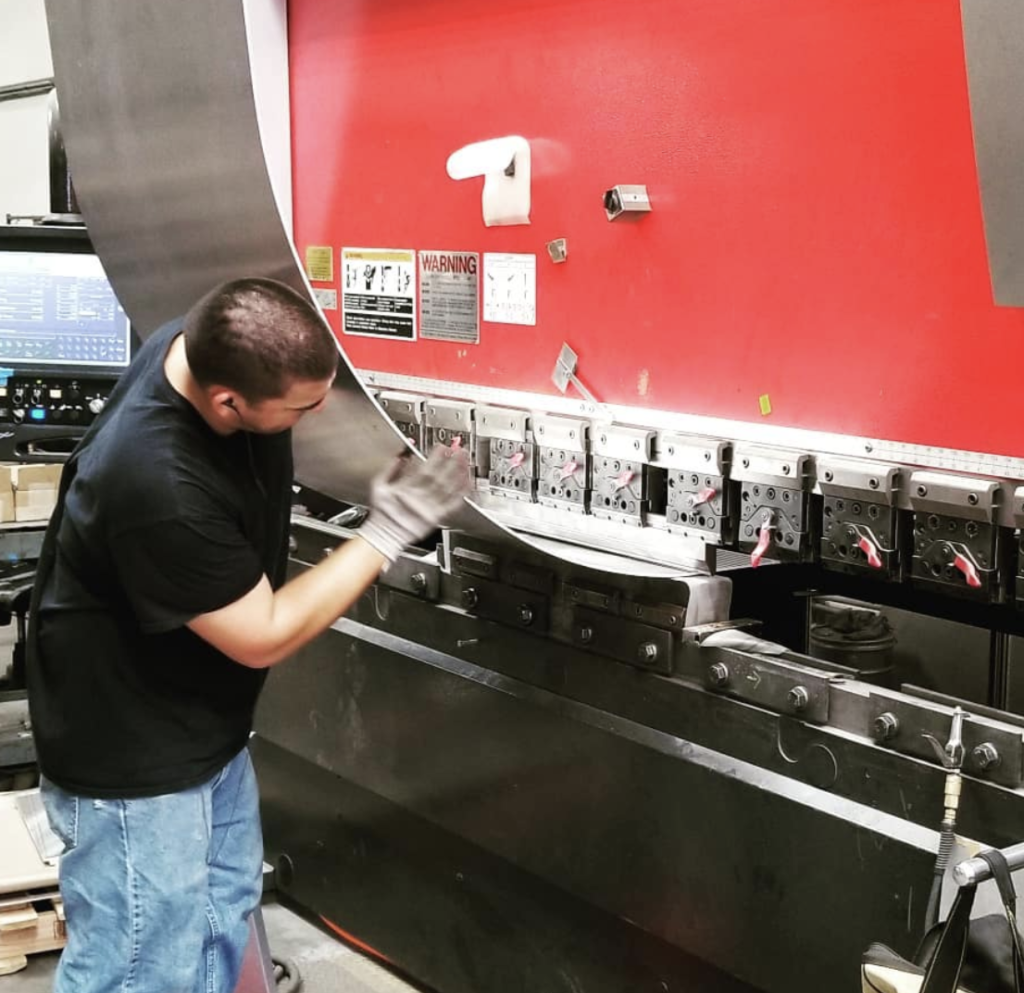
Wuxi Lead Precision Machinery delivers advanced commercial sheet metal fabrication services engineered for precision, repeatability, and performance in high-demand industrial applications. Our technical capabilities are anchored in state-of-the-art 5-axis CNC machining technology, enabling complex geometries and tight-tolerance components that meet the rigorous standards of aerospace, medical, energy, and automation sectors. By integrating multi-axis control with high-speed cutting dynamics, we achieve superior surface finishes and dimensional accuracy across a broad range of sheet metal materials, including stainless steel, aluminum, carbon steel, and specialty alloys.
Our 5-axis CNC platforms provide simultaneous movement across all axes, allowing for intricate contouring and feature integration in a single setup. This minimizes cumulative error, reduces lead times, and enhances part consistency. These systems are optimized for both prototyping and high-volume production, supporting rapid tool changes and adaptive fixturing to accommodate diverse component configurations. Coupled with advanced CAM programming, our machining centers execute precise toolpath strategies that maximize material removal efficiency while preserving structural integrity.
Quality control is central to our manufacturing philosophy. Every fabricated component undergoes rigorous inspection using a Coordinate Measuring Machine (CMM) to validate dimensional compliance against engineering drawings. Our CMM systems operate with sub-micron resolution, ensuring traceable, repeatable verification of critical features such as hole positioning, flatness, angularity, and profile tolerances. Data from inspections are documented and archived for full production traceability, meeting ISO 9001 standards and client-specific quality requirements.
We maintain strict process controls throughout the fabrication workflow—from laser cutting and bending to welding and finishing—ensuring that each stage contributes to the final part’s precision. Our skilled technicians monitor material grain direction, spring-back behavior, and thermal distortion to fine-tune forming parameters in real time. This attention to material science and process dynamics allows us to consistently achieve tight tolerances across complex sheet metal assemblies.
The following table outlines our standard achievable tolerances for key fabrication processes:
| Process | Dimensional Tolerance | Angular Tolerance | Feature Position Tolerance | Surface Flatness |
|---|---|---|---|---|
| 5-Axis CNC Machining | ±0.005 mm | ±0.1° | ±0.01 mm | 0.02 mm per 100 mm |
| Laser Cutting | ±0.05 mm | ±0.2° | ±0.1 mm | 0.05 mm per 100 mm |
| Precision Bending | ±0.1 mm | ±0.5° | ±0.2 mm | 0.1 mm per 100 mm |
| Hole Drilling/Tapping | ±0.01 mm | — | ±0.02 mm | — |
| Welding (Post-Process) | ±0.2 mm | ±1.0° | ±0.3 mm | 0.3 mm per 100 mm |
These specifications reflect our commitment to excellence in commercial sheet metal fabrication. At Wuxi Lead Precision Machinery, we combine cutting-edge technology with disciplined quality assurance to deliver components that perform reliably in the most demanding environments.
Material & Finish Options
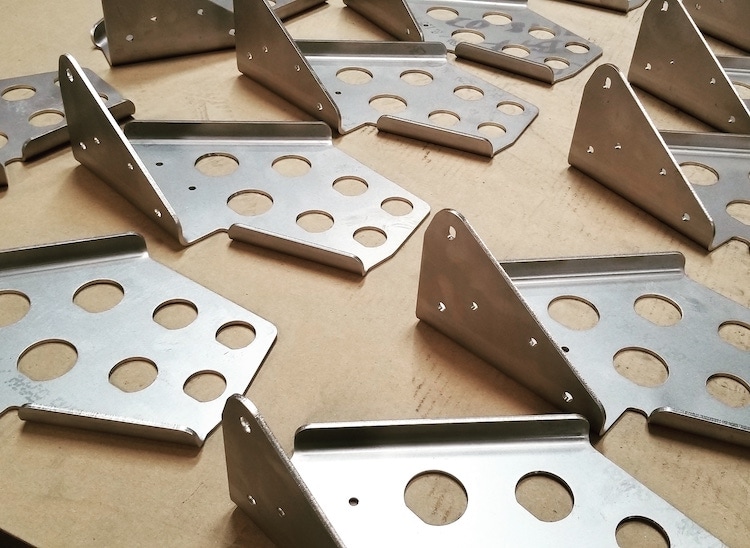
Material Selection for Precision Sheet Metal Fabrication
Material choice fundamentally impacts part performance, manufacturability, and lifecycle cost in commercial sheet metal fabrication. At Wuxi Lead Precision Machinery, we prioritize aligning material properties with your functional requirements, environmental exposure, and budget constraints. Below, we detail critical considerations for aluminum, steel, and titanium, alongside anodizing as a premier finish solution.
Aluminum Alloys
Aluminum 6061-T6 dominates aerospace, electronics, and transportation applications due to its optimal strength-to-weight ratio, weldability, and corrosion resistance. Its lower density reduces shipping costs and energy consumption in dynamic assemblies. However, aluminum requires careful handling during bending to avoid cracking in thicker gauges. We recommend it for enclosures, brackets, and heat sinks where weight savings and electrical conductivity are paramount. Avoid aluminum in high-wear sliding interfaces without hard anodizing.
Steel Variants
Cold-rolled steel (CRS) and stainless steel 304 offer superior strength and durability for structural components, machinery frames, and medical equipment. CRS provides excellent formability and cost efficiency for painted or powder-coated parts but requires protective finishes in humid or corrosive environments. Stainless 304 delivers inherent corrosion and heat resistance, making it ideal for food processing, chemical, and marine applications. Note that stainless steel demands specialized tooling for cutting and forming to prevent work hardening and galling.
Titanium
Titanium Grade 2 is reserved for extreme conditions—such as aerospace, defense, and biomedical implants—where unparalleled strength-to-weight ratio, biocompatibility, and resistance to saltwater or acids are non-negotiable. Its high cost and challenging machinability necessitate rigorous design validation. We deploy titanium only when aluminum or stainless steel cannot meet mission-critical performance thresholds, optimizing material usage to minimize waste.
Anodizing as a Critical Finish
Anodizing electrochemically enhances aluminum surfaces, creating a durable, non-conductive oxide layer that resists wear and corrosion. Type II (sulfuric acid) anodizing is standard for decorative and moderate-duty applications, while Type III (hard anodizing) achieves 50–70 μm thickness for aerospace and military specs. Crucially, anodizing does not alter part dimensions significantly—a key advantage over plating—but requires precise racking to ensure uniform coverage. Lead times increase by 3–5 days versus bare aluminum; factor this into production planning.
Comparative Material Specifications
| Material | Typical Thickness Range | Tensile Strength (MPa) | Corrosion Resistance | Relative Cost (vs. CRS) |
|---|---|---|---|---|
| Aluminum 6061-T6 | 0.5–6.0 mm | 310 | Moderate (excellent with anodizing) | 1.8x |
| Stainless 304 | 0.8–10.0 mm | 515 | Excellent | 3.0x |
| Titanium Grade 2 | 0.5–4.0 mm | 450 | Exceptional | 8.0x |
Material selection must balance performance demands with fabrication realities. At Wuxi Lead, our engineers collaborate early in your design phase to recommend optimal materials and finishes—reducing prototyping iterations and accelerating time-to-market. Consult our team to validate your requirements against real-world production capabilities and cost structures.
Manufacturing Process & QC
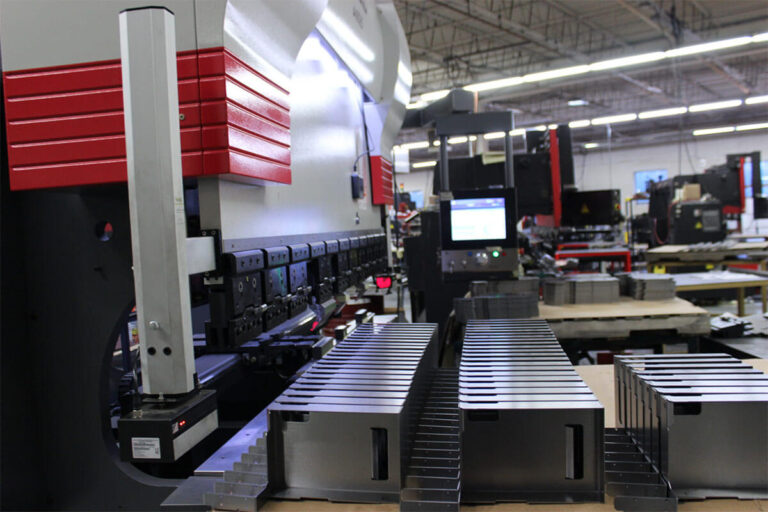
Design: The Foundation of Precision Fabrication
At Wuxi Lead Precision Machinery, the commercial sheet metal fabrication process begins with a meticulously engineered design phase. This stage integrates client specifications with advanced CAD/CAM software to ensure dimensional accuracy, material compatibility, and manufacturability. Our engineering team conducts thorough design for manufacturability (DFM) analysis, identifying potential structural weaknesses, weld distortions, or tolerance stacking before any metal is cut. By leveraging 3D modeling and simulation tools, we optimize part geometry, nesting efficiency, and toolpath strategies to minimize waste and maximize throughput. This proactive approach ensures that every design is not only functional but also optimized for high-volume repeatability and zero-defect production.
Prototyping: Validating Performance and Precision
Once the design is finalized, we proceed to prototype fabrication—serving as a critical validation step before mass production. Using the same equipment and materials intended for full-scale runs, we produce functional prototypes under real-world conditions. These prototypes undergo comprehensive inspection using coordinate measuring machines (CMM), laser scanning, and first article inspection (FAI) reports to verify conformance to GD&T standards. Feedback from functional testing, fit checks, and client review is incorporated iteratively, ensuring all design assumptions are validated. This stage is essential for detecting hidden inefficiencies and confirming that the production process will deliver consistent, defect-free components.
Mass Production: Scalable Excellence with Zero Defects
With prototype approval, Wuxi Lead transitions seamlessly into high-volume manufacturing. Our fully integrated production line combines automated laser cutting, CNC punching, precision bending, and robotic welding systems to maintain tight tolerances and exceptional consistency. Real-time process monitoring, statistical process control (SPC), and in-line quality checks are embedded at every stage to prevent defects before they occur. Each component is traceable through our digital manufacturing execution system (MES), enabling full process transparency and rapid root cause analysis if deviations arise. Our zero-defect philosophy is enforced through rigorous employee training, preventive maintenance schedules, and a closed-loop corrective action (CAPA) system that continuously improves process reliability.
Key Production Specifications
| Parameter | Specification | Notes |
|---|---|---|
| Material Thickness Range | 0.5 mm – 25 mm | Carbon steel, stainless steel, aluminum, copper alloys |
| Tolerance Accuracy | ±0.05 mm to ±0.1 mm | Depending on process and part complexity |
| Max Part Dimensions | 4000 mm × 2000 mm | For laser cutting and bending |
| Surface Roughness (Ra) | Ra 0.8 – 6.3 µm | Adjustable based on finishing requirements |
| Production Capacity | Up to 50,000 units/month | Scalable based on part complexity |
| Quality Standards | ISO 9001:2015, ISO 14001, IATF 16949 | Full compliance with automotive and industrial OEMs |
Through disciplined execution across design, prototyping, and mass production, Wuxi Lead Precision Machinery ensures every fabricated component meets the highest standards of quality, performance, and reliability.
Why Choose Wuxi Lead Precision
Partner with Lead Precision for Uncompromised Sheet Metal Excellence
In the demanding landscape of commercial sheet metal fabrication, selecting a manufacturing partner transcends transactional procurement. It requires aligning with an entity that integrates engineering rigor, process mastery, and unwavering commitment to your product’s success. Wuxi Lead Precision Machinery stands as your strategic collaborator, engineered to transform complex designs into high-integrity components with zero margin for error. Our ISO 9001-certified facility in Wuxi, China, operates at the convergence of advanced automation and meticulous craftsmanship, ensuring every bracket, enclosure, and structural element meets aerospace, medical, and industrial equipment standards. We do not merely cut and bend metal; we solve dimensional, material, and scalability challenges before they reach your assembly line.
Precision begins with capability. Our integrated production ecosystem leverages German-engineered machinery and proprietary quality protocols to deliver consistency across micro-batches and high-volume runs. The table below details our core fabrication specifications, reflecting our capacity to handle your most stringent requirements:
| Process | Material Range | Tolerance Capability | Max Dimensions | Key Technology |
|---|---|---|---|---|
| Fiber Laser Cutting | Steel, SS, Al, Cu | ±0.05mm | 4000 x 2000 mm | 12kW IPG Resonator |
| CNC Turret Punching | Steel, SS, Al | ±0.08mm | 2500 x 1250 mm | 60-station Amada EMG |
| Press Brake Forming | Steel, SS, Al, Ti | ±0.1° angular | 6000 x 400 ton | 3D Laser-Probed Backgauging |
| Robotic Welding | Steel, SS, Al | ±0.2mm linear | Custom fixtures | FANUC M-2000iA with CDD |
| Surface Finishing | All compatible metals | Ra ≤ 0.8µm | 5000 x 2500 mm | Automated Powder Coating |
This technical foundation enables proactive collaboration. From Design for Manufacturability (DFM) analysis to first-article inspection reports, we embed quality into every phase. Our engineers partner with your R&D team to optimize material utilization, reduce assembly complexity, and accelerate time-to-market—without compromising structural integrity. When your project demands sub-0.1mm tolerances in 6mm stainless steel or rapid iteration for prototyping, our closed-loop feedback systems and real-time SPC data ensure predictability.
The cost of fabrication errors extends far beyond rework: delayed launches, compromised safety margins, and reputational risk. Partnering with Lead Precision mitigates these through transparency and accountability. We provide full traceability via digital work orders, material certifications aligned with EN 10204 3.1, and dedicated project management from PO to shipment. This is not outsourcing; it is extending your engineering capability with a partner invested in your product’s lifecycle success.
Initiate your precision fabrication partnership with actionable insight. Contact our engineering team at [email protected] with your CAD files and target specifications. Within 24 hours, receive a comprehensive DFM assessment, feasibility report, and transparent cost breakdown—no obligation. Let Wuxi Lead Precision Machinery become the silent force behind your product’s reliability, one micron-perfect component at a time. Your standards define our process; your success validates our expertise.
⚙️ Precision Cost Estimator
Estimate relative manufacturing effort based on tolerance.