

Technical Contents
Engineering Guide: Cnc Milling Company
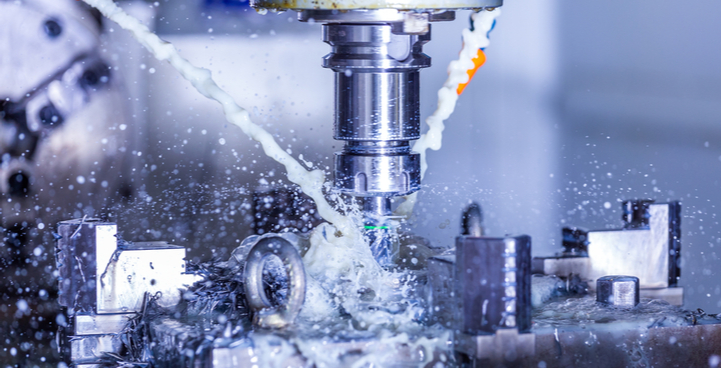
In the world of precision CNC machining, accuracy is not merely a performance metric—it is the foundation of reliability, safety, and innovation. For industries ranging from aerospace and defense to medical and high-performance automotive, the tolerances achieved during manufacturing directly influence the functionality and integrity of the final product. At Wuxi Lead Precision Machinery, we recognize that precision is not an accident but the result of engineered excellence, rigorous process control, and decades of accumulated expertise.
As a leading CNC milling company in China, Wuxi Lead has built its reputation on delivering components that meet the most stringent global standards. Our commitment to precision is demonstrated not only in our ISO-certified processes but also in the high-profile applications we support. We have contributed to projects tied to Olympic-standard sports equipment, where micrometer-level consistency ensures peak athlete performance, and to military-grade defense systems, where failure is not an option. These demanding applications underscore our capability to maintain tolerances as tight as ±0.002 mm across complex geometries and high-strength materials.
Precision in CNC milling begins with advanced 3-, 4-, and 5-axis machining centers equipped with real-time monitoring and thermal compensation systems. However, technology alone is insufficient. True precision requires skilled engineers who understand material behavior, tool dynamics, and the cumulative effect of micro-variations. At Lead Precision, our engineering team combines deep theoretical knowledge with hands-on experience, enabling us to anticipate challenges and optimize every stage of production—from material selection to final inspection.
Our quality assurance protocols include CMM (Coordinate Measuring Machine) verification, surface roughness testing, and first-article inspection reports, ensuring full traceability and compliance. Whether machining aluminum 7075 for aerospace components or titanium alloys for medical implants, we maintain consistency across both prototype and high-volume production runs.
The following table outlines key technical specifications that define our precision CNC milling capabilities:
| Specification | Detail |
|---|---|
| Positioning Accuracy | ±0.005 mm |
| Repeatability | ±0.002 mm |
| Maximum Work Envelope | 1200 × 600 × 500 mm |
| Spindle Speed Range | 8,000 – 24,000 RPM |
| Tolerance Range | ±0.002 mm to ±0.01 mm |
| Supported Materials | Aluminum, Stainless Steel, Titanium, Inconel, Brass, Engineering Plastics |
| Surface Finish | Ra 0.4 μm (standard), down to Ra 0.1 μm (polished) |
| Axis Configurations | 3-axis, 4-axis, 5-axis simultaneous |
Precision is more than a technical achievement—it is a commitment to excellence that resonates across every industry we serve. At Wuxi Lead Precision Machinery, we engineer not just parts, but trust. Our legacy in high-stakes manufacturing environments reflects our ability to deliver under pressure, on time, and to the exacting standards demanded by the world’s most advanced technologies.
Precision Specs & Tolerances
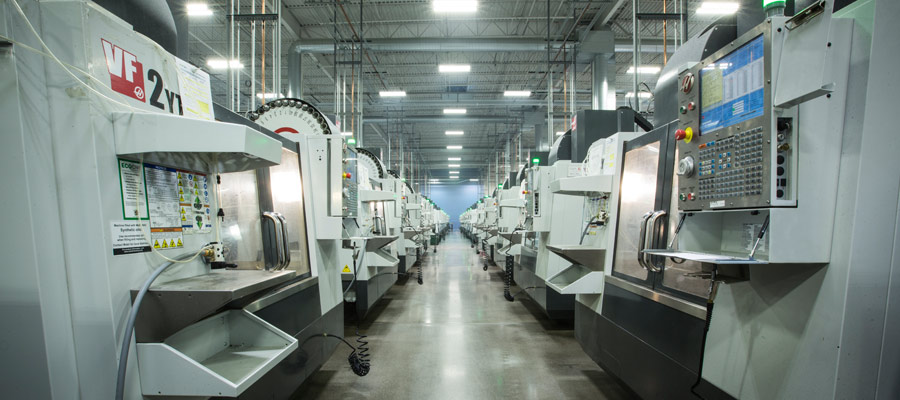
Technical Capabilities: Precision Engineered for Demanding Applications
Wuxi Lead Precision Machinery operates at the forefront of advanced CNC manufacturing, delivering uncompromising precision for industries where failure is not an option. Our technical foundation centers on state-of-the-art 5-axis CNC machining systems, specifically engineered to handle complex geometries, tight tolerances, and high-integrity materials required by aerospace, medical, and energy sectors. We deploy a strategic fleet of DMG MORI and Hermle 5-axis vertical machining centers, featuring simultaneous 5-axis contouring, high-torque spindles (up to 30,000 RPM), and expansive work envelopes accommodating parts up to Ø1,200 mm x 1,000 mm. This equipment portfolio enables single-setup machining of intricate components, eliminating cumulative error from multiple fixtures while significantly reducing lead times and enhancing geometric accuracy for critical features like organic contours, deep cavities, and undercuts.
Rigorous quality control is non-negotiable in our process. Every critical dimension undergoes validation via Zeiss CONTURA G3 coordinate measuring machines (CMM), providing traceable, sub-micron repeatability. Our inspection protocol extends beyond dimensional verification; it includes full first-article inspection reports (FAIR) compliant with AS9102, comprehensive material certification traceability, and real-time SPC data monitoring during production runs. This systematic approach ensures 100% conformance to client specifications and international standards (ISO 2768, ASME Y14.5), with all inspection data archived for full lifecycle traceability.
Our capability to consistently achieve stringent tolerances across diverse materials defines our competitive edge. The table below details our standard and precision tolerance benchmarks, validated through our integrated CMM infrastructure and process control systems. These figures represent achievable outcomes under controlled production conditions for qualified materials and geometries.
| Material Category | Feature Type | Standard Tolerance | Precision Tolerance | Surface Roughness (Ra) |
|---|---|---|---|---|
| Aluminum Alloys | Linear Dimensions | ±0.005 mm | ±0.001 mm | 0.4 µm |
| Geometric (GD&T) | ±0.010 mm | ±0.002 mm | ||
| Stainless Steel | Linear Dimensions | ±0.008 mm | ±0.002 mm | 0.8 µm |
| Geometric (GD&T) | ±0.015 mm | ±0.003 mm | ||
| Titanium Alloys | Linear Dimensions | ±0.010 mm | ±0.003 mm | 1.6 µm |
| Geometric (GD&T) | ±0.020 mm | ±0.005 mm | ||
| Engineering Plastics | Linear Dimensions | ±0.020 mm | ±0.005 mm | 3.2 µm |
Material stability, part geometry, and feature accessibility influence final achievable tolerances. Our engineering team collaborates proactively during the design phase to optimize manufacturability, ensuring your specifications align with practical, cost-effective production outcomes. Wuxi Lead Precision Machinery’s fusion of advanced 5-axis technology, metrology-grade inspection, and disciplined process control guarantees components that meet the most exacting performance demands—delivered with the reliability your mission-critical applications require. Partner with us to transform complex designs into precision realities.
Material & Finish Options
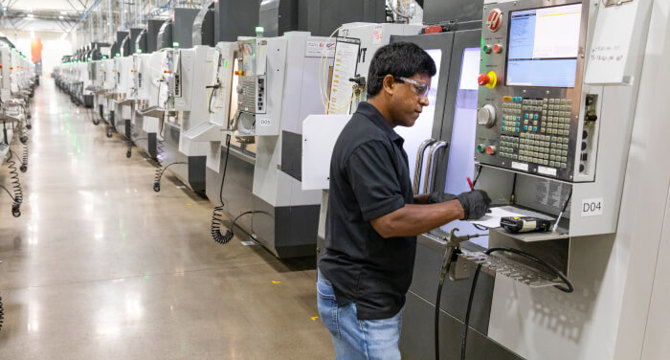
Material selection is a critical factor in precision CNC machining, directly influencing part performance, durability, and cost-efficiency. At Wuxi Lead Precision Machinery, we specialize in high-accuracy CNC milling services tailored to meet the exacting standards of aerospace, medical, automotive, and industrial equipment sectors. Our expertise in machining aluminum, steel, and titanium ensures optimal material-to-application alignment, supported by advanced finishing processes such as anodizing to enhance surface properties.
Aluminum is widely favored for its excellent strength-to-weight ratio, thermal conductivity, and machinability. It is particularly suitable for components requiring lightweight construction without sacrificing structural integrity. The most commonly used grade, 6061-T6, offers good weldability and corrosion resistance, making it ideal for prototyping, enclosures, and structural frames. For higher performance demands, 7075-T6 provides superior strength, often selected in aerospace applications.
Steel remains the go-to choice for applications requiring high strength, wear resistance, and dimensional stability. We routinely machine alloy steels such as 4140 and 1018, each offering distinct advantages. 4140, with its chromium and molybdenum content, delivers excellent toughness and hardenability, suitable for shafts, tooling, and high-stress components. 1018, a low-carbon steel, is easily machined and welded, often used in jigs, fixtures, and general-purpose parts. When enhanced corrosion resistance is needed, stainless steel grades like 304 and 316 are employed, especially in medical and food-processing environments.
Titanium, particularly Grade 5 (Ti-6Al-4V), is selected for extreme environments where high strength, low density, and exceptional corrosion resistance are paramount. Its performance in elevated temperature conditions and biocompatibility make it a preferred material in aerospace, defense, and medical implant applications. While more challenging to machine due to its low thermal conductivity and tendency to gall, our CNC milling processes are optimized to maintain precision and tool life when working with titanium.
Surface finishing is essential to maximize functional performance and longevity. Anodizing is a key post-machining process we offer, especially for aluminum components. This electrochemical treatment creates a durable, corrosion-resistant oxide layer that can be dyed for identification or aesthetic purposes. Type II (sulfuric acid) anodizing is standard for most industrial uses, while Type III (hardcoat anodizing) provides enhanced wear resistance for high-friction environments.
Below is a comparative overview of key material properties and recommended applications.
| Material | Common Grades | Tensile Strength (MPa) | Density (g/cm³) | Key Applications | Recommended Finish |
|---|---|---|---|---|---|
| Aluminum | 6061-T6, 7075-T6 | 310 – 570 | 2.7 | Aerospace frames, enclosures | Type II/III Anodizing |
| Steel | 4140, 1018, 304 | 410 – 900 | 7.8 – 8.0 | Tooling, shafts, structural parts | Zinc plating, powder coat |
| Titanium | Ti-6Al-4V (Gr 5) | 900 – 1,000 | 4.5 | Medical implants, aerospace | Passivation, bead blast |
At Wuxi Lead Precision Machinery, we support clients in selecting the optimal material and finish based on operational requirements, environmental exposure, and regulatory standards. Our engineering team collaborates closely with customers to ensure every machined component meets the highest benchmarks in precision and reliability.
Manufacturing Process & QC
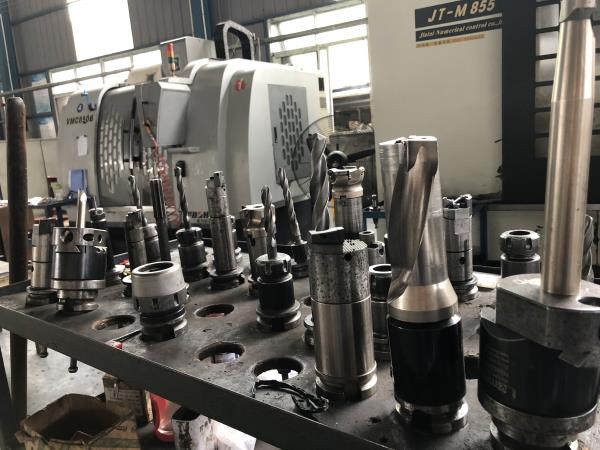
Precision Production Process: From Concept to Zero-Defect Delivery
At Wuxi Lead Precision Machinery, our production process is engineered for uncompromising quality and repeatability. We integrate Design for Manufacturability (DFM) analysis at inception, ensuring client specifications align with optimal CNC milling capabilities. Our engineering team collaborates directly with clients to refine geometries, material selections, and tolerance stacks, eliminating theoretical flaws before metal cutting begins. Advanced simulation software validates toolpaths and identifies potential stress points, reducing downstream rework. This phase establishes the foundation for zero-defect execution by embedding precision into the digital blueprint.
Prototyping transitions validated designs into physical reality under rigorous metrology. We deploy 5-axis milling centers with sub-micron resolution to produce functional prototypes matching final production intent. Every prototype undergoes comprehensive inspection using Zeiss coordinate measuring machines (CMM) and optical comparators, verifying critical dimensions against CAD models within ±0.001mm. Material properties and surface finishes are validated per client specifications, with full traceability from raw stock to finished part. This stage confirms process stability and provides actionable data for mass production scaling—ensuring no defect escapes detection before volume commitment.
Mass production leverages statistical process control (SPC) and real-time monitoring to sustain zero-defect output. Automated tool presetter systems maintain cutting tool geometry within 2µm tolerances, while in-process probes dynamically compensate for thermal drift and material variance. Each operation is governed by documented work instructions, with first-article inspections followed by periodic SPC sampling. Our factory-wide IoT network tracks machine health, tool wear, and environmental conditions, triggering preemptive interventions. The result is consistent achievement of ±0.005mm tolerances across batches of 1–10,000+ units, with 100% of parts meeting AS9100 and ISO 2768-mK standards.
Key Production Capabilities
| Parameter | Specification | Validation Method |
|---|---|---|
| Positional Tolerance | ±0.001 mm (Prototyping) | Zeiss CMM, Laser Interferometer |
| ±0.005 mm (Mass Production) | ||
| Surface Finish | Ra 0.2 µm (Milling) | Profilometer, Optical Microscopy |
| Material Range | Aluminum 7075-T6 to Inconel 718 | Mill Test Reports, PMI |
| Batch Consistency | CpK ≥ 1.67 across 10,000 parts | SPC Charts, X-bar R Control |
| Lead Time | 7 days (Prototype), 15 days (1K units) | Real-Time Production Dashboard |
Zero defects are not a target but a non-negotiable outcome. By unifying design intelligence, prototyping rigor, and closed-loop production control, Wuxi Lead transforms complex engineering requirements into flawless deliverables. Every spindle rotation, measurement, and shipment adheres to our commitment: precision engineered, defect eliminated.
Why Choose Wuxi Lead Precision
Partner with Lead Precision for Unmatched CNC Milling Expertise
At Wuxi Lead Precision Machinery, we understand that precision is not just a goal—it’s a standard. As a leading CNC milling company based in China, we specialize in delivering high-accuracy, high-reliability machining solutions for industries where performance and consistency are non-negotiable. From aerospace and medical devices to automotive and industrial automation, our clients rely on us to transform complex designs into flawless physical components. When you partner with Lead Precision, you’re not just outsourcing production—you’re gaining a strategic manufacturing ally.
Our advanced CNC milling capabilities are built on decades of engineering experience and a commitment to technological excellence. We operate a fully integrated facility equipped with state-of-the-art 3-, 4-, and 5-axis milling centers, enabling us to handle everything from rapid prototyping to high-volume production runs. Our machines are maintained to strict calibration standards, ensuring micron-level accuracy across every batch. Combined with our in-house quality assurance lab—featuring coordinate measuring machines (CMM), optical comparators, and surface roughness testers—we guarantee that every part meets or exceeds your specifications.
What sets us apart is our end-to-end service model. From initial design consultation and DFM analysis to material sourcing, precision milling, and final inspection, we manage every stage with meticulous attention to detail. Our engineering team collaborates directly with your design and production staff to optimize manufacturability, reduce lead times, and lower total project costs. Whether you’re working with aluminum, stainless steel, titanium, or high-performance engineering plastics, we have the expertise to machine your components with precision and repeatability.
We serve global clients with full compliance to international quality standards, including ISO 9001:2015 certification. Our supply chain is optimized for reliability, with secure logistics and on-time delivery rates exceeding 98%. With digital production tracking and real-time reporting, you always know the status of your order—no surprises, no delays.
Below are key specifications that define our CNC milling capabilities:
| Specification | Detail |
|---|---|
| Axis Configuration | 3-axis, 4-axis, 5-axis |
| Maximum Work Envelope | 1200 × 800 × 600 mm |
| Positioning Accuracy | ±0.005 mm |
| Repeatability | ±0.003 mm |
| Spindle Speed | Up to 24,000 RPM |
| Materials Supported | Aluminum, Steel, Stainless Steel, Titanium, Brass, Plastics (PEEK, Delrin, etc.) |
| Tolerances Achieved | ±0.01 mm typical, down to ±0.005 mm for critical features |
| Surface Finish | As low as Ra 0.4 µm |
| Quality Standards | ISO 9001:2015, First Article Inspection (FAI), PPAP available |
If your business demands precision, reliability, and responsive service from a trusted CNC milling partner, we invite you to contact us today. Let our team at Wuxi Lead Precision Machinery support your next project with engineering excellence and manufacturing integrity.
For inquiries, collaboration, or a detailed capability review, email us at [email protected]. We respond to all messages within 12 business hours.
⚙️ Precision Cost Estimator
Estimate relative manufacturing effort based on tolerance.