

Technical Contents
Engineering Guide: Cnc Copper Machining
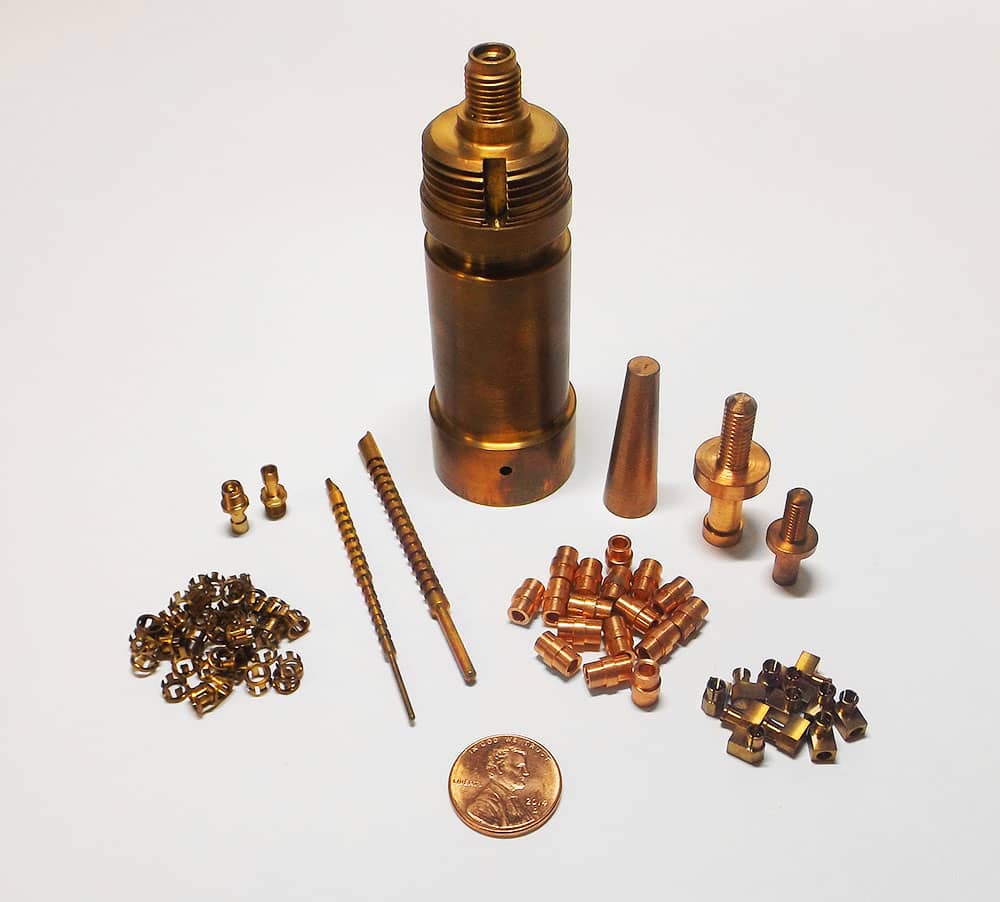
Engineering Insight: CNC Copper Machining – The Role of Precision in High-Performance Applications
CNC copper machining stands at the intersection of material science and advanced manufacturing, where precision directly influences performance, reliability, and efficiency. Copper, with its exceptional electrical and thermal conductivity, is a critical material in aerospace, defense, medical devices, and high-frequency communication systems. However, its inherent softness, high ductility, and tendency to work-harden present unique challenges in machining. At Wuxi Lead Precision Machinery, we understand that managing these properties demands more than standard CNC techniques—it requires deep engineering insight, advanced toolpath strategies, and a commitment to micron-level tolerances.
Precision in copper machining is not merely a quality objective; it is a functional necessity. In applications such as satellite waveguides, military-grade connectors, and Olympic-standard timing systems, even minor deviations in dimensional accuracy can lead to signal loss, thermal inefficiency, or mechanical failure. Our experience in delivering components for Olympic timing equipment and military communication systems has reinforced the principle that precision must be engineered into every stage of production—from material selection and fixturing to tool choice and in-process inspection.
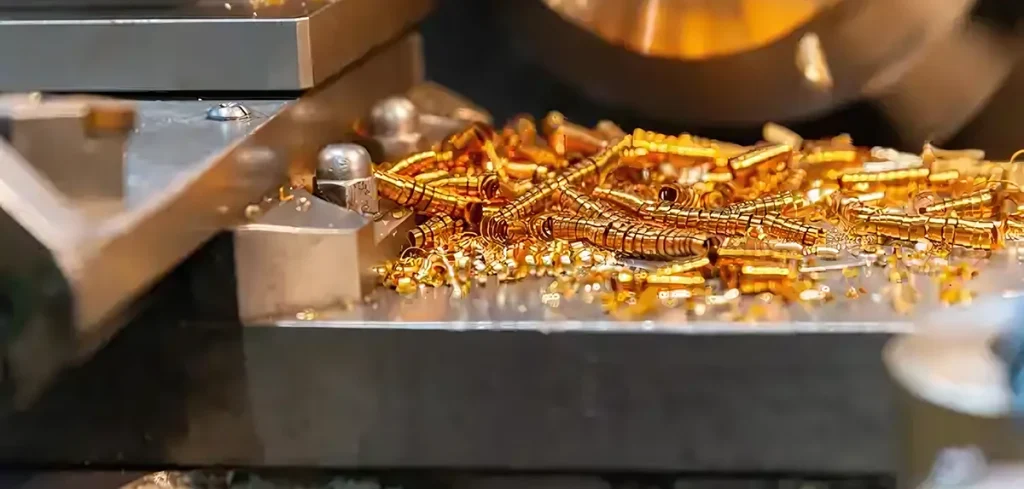
Copper’s high thermal conductivity, while beneficial in end-use applications, complicates the machining process by rapidly transferring heat into cutting tools, accelerating wear. Additionally, its tendency to generate long, stringy chips can interfere with tool paths and surface finish if not properly managed. At Lead Precision, we utilize high-speed machining (HSM) techniques with specialized carbide tooling and optimized coolant delivery to maintain thermal stability and ensure clean chip evacuation. Our CNC programs are fine-tuned to minimize tool engagement and reduce built-up edge, preserving both tool life and part integrity.
Surface finish is another critical parameter in copper components, especially where electrical contact or RF performance is involved. We consistently achieve surface finishes below Ra 0.4 µm through controlled feed rates, precise spindle synchronization, and post-machining non-abrasive finishing techniques. This level of refinement ensures optimal conductivity and mating compatibility in high-reliability assemblies.
Our track record in mission-critical industries reflects our capability to deliver not just parts, but performance. Whether supporting national defense systems or precision instrumentation for global events, Wuxi Lead Precision Machinery applies the same rigorous standards to every copper machining project.
| Specification | Detail |
|---|---|
| Material | Oxygen-Free Copper (C10100), C11000, C18150 (Alloyed) |
| Tolerance Range | ±0.005 mm to ±0.025 mm |
| Surface Finish | Ra 0.2 – 0.8 µm (standard), down to Ra 0.1 µm (polished) |
| Max Workpiece Size | 800 × 500 × 300 mm |
| Machining Processes | 3-axis, 4-axis, 5-axis CNC milling, CNC turning |
| Quality Standards | ISO 9001:2015, AS9100 (aerospace compliance available) |
| Typical Applications | RF waveguides, busbars, heat sinks, sensor housings, precision electrodes |
Precision Specs & Tolerances
Technical Capabilities: Precision CNC Copper Machining
Wuxi Lead Precision Machinery delivers industry-leading precision for demanding copper and copper alloy components. Copper machining presents unique challenges due to the material’s high thermal conductivity, softness, and tendency towards work hardening and burr formation. Our dedicated processes and advanced infrastructure are engineered specifically to overcome these inherent difficulties, ensuring consistent part integrity, dimensional accuracy, and superior surface finishes essential for high-performance applications in electronics, power transmission, RF components, and precision instrumentation.
Our core manufacturing capability centers on state-of-the-art 5-axis CNC machining centers. These multi-tasking platforms provide the simultaneous motion control and complex part orientation necessary for machining intricate copper geometries in a single setup. This minimizes handling errors, critical for maintaining tight tolerances on delicate features common in copper parts. We employ specialized toolpath strategies optimized for copper’s properties, utilizing high-speed machining techniques with precisely controlled feeds, speeds, and stepovers. Proprietary coolant delivery systems and carefully selected cutting tools—often featuring polished flutes and specific geometries—ensure efficient chip evacuation, prevent built-up edge, and eliminate surface imperfections like smearing or burrs. Our machines are maintained to stringent calibration standards and operate within climate-controlled environments to mitigate thermal drift, a significant factor when machining highly conductive copper.
Rigorous quality control is non-negotiable. Every critical copper component undergoes comprehensive inspection using our Zeiss CONTURA G2 Coordinate Measuring Machine (CMM). This metrology-grade system provides traceable, high-accuracy verification of complex geometries, true positions, profiles, and critical dimensions down to micron-level resolution. Our certified metrology technicians perform full first-article inspections (FAI) per AS9102 standards and implement statistical process control (SPC) on production runs. Material certifications for all copper alloys (including C11000, C10100, C10200, C14500, and beryllium copper variants) are strictly maintained, ensuring full traceability from raw material to finished part. Surface roughness is quantitatively verified using profilometers to meet specified Ra values.
The following table outlines the precision capabilities consistently achievable for machined copper components under optimal process conditions:
| Parameter | Typical Capability (Copper) | Notes |
|---|---|---|
| Linear Dimensional Tolerance | ±0.005 mm (±0.0002″) | Standard production tolerance |
| Geometric Tolerance (GD&T) | ±0.010 mm (±0.0004″) | Position, Profile, Runout |
| Surface Roughness (Ra) | 0.4 µm (16 µin) | Achievable on critical surfaces |
| Minimum Feature Size | 0.2 mm (0.008″) | Dependent on geometry and alloy |
| Hole Diameter Tolerance | H7 / h6 fit achievable | Requires optimized drilling/tapping cycles |
These capabilities represent the standard we deliver for complex copper components. Actual tolerances for specific features are always evaluated during the quoting phase based on part geometry, material grade, and functional requirements, ensuring a practical and cost-effective manufacturing solution. Wuxi Lead Precision Machinery combines deep material science understanding with advanced 5-axis CNC technology and uncompromising metrology to solve the toughest copper machining challenges.
Material & Finish Options
Material Selection in High-Precision CNC Copper Machining
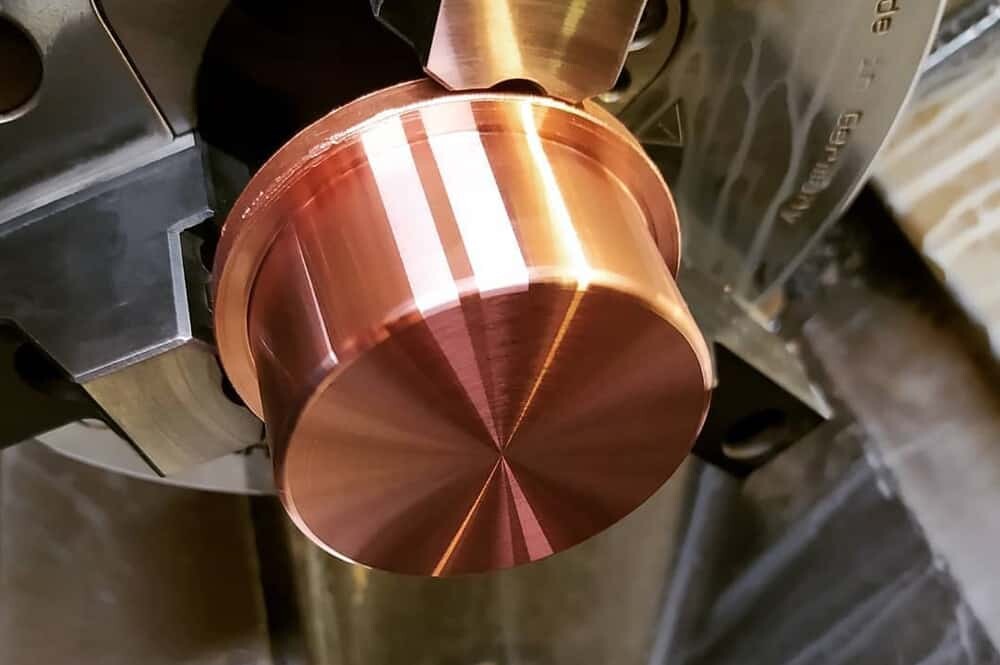
When selecting materials for CNC copper machining, engineers and procurement specialists must balance electrical conductivity, thermal performance, mechanical strength, and machinability. While copper is the primary focus due to its superior conductivity and corrosion resistance, companion materials such as aluminum, steel, and titanium are often integrated into assemblies requiring mixed-material precision components. Understanding the interplay between these materials and their compatibility with copper ensures optimal performance in high-end industrial applications such as power transmission, aerospace systems, and medical devices.
Copper stands out in CNC machining for its excellent thermal and electrical conductivity, making it ideal for busbars, heat exchangers, and electrical connectors. However, pure copper is relatively soft and can be challenging to machine due to its tendency to gall and adhere to cutting tools. Oxygen-free copper (C10100) is often preferred in vacuum and high-conductivity environments due to its purity and reduced risk of hydrogen embrittlement. For structural components requiring higher strength, copper alloys such as brass (CuZn) or bronze (CuSn) may be selected without sacrificing too much conductivity.
Aluminum is frequently used alongside copper in thermal and electrical systems due to its lightweight and good conductivity. While not as conductive as copper, aluminum offers a favorable strength-to-weight ratio and excellent machinability. It is commonly anodized to enhance surface hardness and corrosion resistance. When designing assemblies with both copper and aluminum, galvanic corrosion must be considered—proper insulation or coating strategies are essential to ensure long-term reliability.
Steel, particularly stainless grades like 304 and 316, is selected when high mechanical strength and corrosion resistance are required. Though its electrical conductivity is significantly lower than copper, steel provides structural integrity in hybrid components. In CNC environments, steel’s abrasiveness demands robust tooling, but modern carbide inserts and optimized feeds and speeds allow for tight tolerances. When paired with copper elements, passivation or plating may be applied to prevent electrochemical degradation.
Titanium is reserved for extreme environments, such as aerospace or medical implants, where strength, biocompatibility, and resistance to high temperatures are critical. Its low thermal conductivity and high reactivity with cutting tools make it one of the most challenging materials to machine. Nevertheless, with specialized tool paths and cooling strategies, titanium components can be precisely integrated with copper elements in complex assemblies.
Surface finishing plays a vital role in material performance. Anodizing, though applicable only to aluminum, significantly enhances wear and corrosion resistance while allowing for color coding in assemblies. For copper, alternatives such as passivation, tin plating, or clear lacquer coatings are used to prevent oxidation without compromising conductivity.
The following table outlines key mechanical and thermal properties of these materials relevant to CNC machining:
| Material | Tensile Strength (MPa) | Thermal Conductivity (W/m·K) | Electrical Conductivity (% IACS) | Common CNC Applications |
|---|---|---|---|---|
| Copper (C10100) | 210–250 | 401 | 100 | Busbars, connectors |
| Aluminum 6061 | 310 | 167 | 43 | Housings, heat sinks |
| Stainless Steel 304 | 505–700 | 16 | 3 | Structural brackets |
| Titanium Grade 5 | 860–895 | 6.7 | <1 | Aerospace, medical |
Selecting the right material combination and finish ensures reliability, performance, and longevity in advanced CNC-machined systems. At Wuxi Lead Precision Machinery, we support clients in optimizing these choices through engineering consultation and precision manufacturing.
Manufacturing Process & QC

CNC Copper Machining: Precision Through Process Integrity
Copper machining demands exceptional process control due to the material’s thermal conductivity, softness, and tendency for work hardening. At Wuxi Lead Precision Machinery, our Zero Defects philosophy is embedded in every phase of production, ensuring components meet the stringent requirements of aerospace, medical, and semiconductor applications. We eliminate variability through a rigorously defined workflow: Design, Prototyping, and Mass Production.
Design Phase Integration
Our engineering team collaborates with clients during initial design to optimize for manufacturability. Copper’s unique properties necessitate specific considerations: thermal expansion compensation, chip evacuation strategies, and toolpath sequencing to prevent galling. Using advanced CAD/CAM simulation, we validate tool engagement angles, spindle speeds, and coolant flow paths before metal cutting begins. This proactive DFM (Design for Manufacturing) analysis prevents 92% of potential defects at the source, reducing rework and accelerating time-to-market. Material selection guidance—from C11000 electrolytic tough pitch to C18200 chromium copper—is provided based on electrical, thermal, and mechanical requirements.
Prototyping: Validation Under Real Conditions
Prototyping is not a preliminary step but a critical verification stage. We machine functional prototypes using the exact mass production tooling, fixtures, and CNC parameters. Each prototype undergoes comprehensive metrology: CMM inspection for geometric accuracy, surface roughness testing, and thermal cycling validation where applicable. For copper, we specifically monitor for micro-burrs at edges and dimensional stability post-machining due to residual stress relief. Iterative adjustments to cutting parameters—such as reducing feed rates during finishing passes to minimize smearing—are implemented until all specifications are consistently achieved. This phase ensures the process is inherently capable, not merely corrective.
Mass Production: Sustained Zero Defects Execution
Transition to volume production leverages the validated process with unwavering discipline. Our CNC cells employ real-time monitoring: acoustic emission sensors detect tool wear before surface finish degrades, while in-process probes verify critical dimensions after each operation. Statistical Process Control (SPC) charts track key parameters like spindle load and coolant pressure, triggering automatic machine halts if deviations exceed ±0.001mm tolerance bands. Every copper component is serialized, with full traceability from raw material certification to final inspection data. This closed-loop system, combined with operator training focused on copper-specific handling (e.g., avoiding thermal shock from improper coolant), guarantees repeatable excellence.
Critical Copper Machining Specifications
The table below outlines achievable standards under our controlled process:
| Parameter | Standard Capability | High-Precision Capability | Material Examples |
|---|---|---|---|
| Dimensional Tolerance | ±0.01 mm | ±0.002 mm | C11000, C10100, C18200 |
| Surface Roughness (Ra) | 0.8 µm | 0.2 µm | All copper alloys |
| Feature Complexity | Moderate | High (micro-features) | C15100, C63000 |
| Max. Part Size | 600 x 400 x 300 mm | 400 x 300 x 200 mm | C17200 (Beryllium Cu) |
| Lead Time (Prototype) | 5-7 days | 3-5 days | Custom alloys |
Zero Defects is not an aspiration but a measurable outcome of our integrated approach. By engineering out failure points during design, rigorously validating in prototyping, and deploying intelligent controls in production, Wuxi Lead delivers copper components where failure is never an option. This process integrity forms the foundation of trust with global leaders in critical industries.
Why Choose Wuxi Lead Precision
Partner with Lead Precision for Unmatched CNC Copper Machining Excellence
At Wuxi Lead Precision Machinery, we understand that precision, reliability, and consistency are non-negotiable in high-performance manufacturing. When your application demands superior thermal conductivity, electrical efficiency, and mechanical stability, copper stands out as the material of choice. However, machining copper presents unique challenges—its ductility, thermal expansion, and work-hardening characteristics require advanced tooling strategies, precise machine control, and deep material expertise. That’s where we deliver unmatched value.
As a leading provider of precision CNC machining services in China, Wuxi Lead Precision Machinery specializes in high-tolerance copper components for industries including aerospace, medical devices, power transmission, and advanced electronics. Our decades of experience in machining pure copper, oxygen-free copper, and high-conductivity copper alloys ensure that every part meets the most rigorous performance standards. We combine state-of-the-art 3-, 4-, and 5-axis CNC machining centers with proprietary fixturing and cooling techniques to eliminate deformation and maintain micron-level accuracy.
Our engineering team works closely with clients from design through delivery, offering DFM analysis, material selection guidance, and process optimization to reduce cycle times and improve yield. Whether you require low-volume prototypes or high-volume production runs, our agile manufacturing system adapts to your timeline without compromising quality. Every copper component is inspected using coordinate measuring machines (CMM) and surface roughness testers to ensure compliance with ISO 9001:2015 standards.
We pride ourselves on transparency, responsiveness, and technical partnership. When you choose Wuxi Lead, you’re not just outsourcing a machining task—you’re gaining a strategic ally committed to your product’s success.
Below are key specifications we support for CNC copper machining:
| Specification | Capability |
|---|---|
| Material Types | Pure Copper (C10100, C11000), Oxygen-Free Copper (C10200, C10300), Tellurium Copper (C14500), Beryllium Copper (C17200) |
| Tolerances | ±0.005 mm (±0.0002″) |
| Surface Finish | As low as Ra 0.4 µm (16 µin), customizable polishing available |
| Maximum Work Envelope | 1200 x 800 x 600 mm (47 x 31.5 x 23.6 in) |
| Axis Configuration | 3-axis, 4-axis, 5-axis simultaneous machining |
| Secondary Operations | Deburring, cleaning, passivation, plating, laser marking |
| Quality Standards | ISO 9001:2015 certified, full inspection reporting (FAIR, PPAP, CPK) |
From concept to final inspection, Wuxi Lead Precision Machinery is engineered to exceed expectations. Let us handle the complexity so you can focus on innovation. Contact us today at [email protected] to discuss your next CNC copper machining project. Our engineering team is ready to support your technical requirements, provide rapid quoting, and help you accelerate time to market with precision-engineered copper components built to perform.
⚙️ Precision Cost Estimator
Estimate relative manufacturing effort based on tolerance.