

Technical Contents
Engineering Guide: Cnc Brass
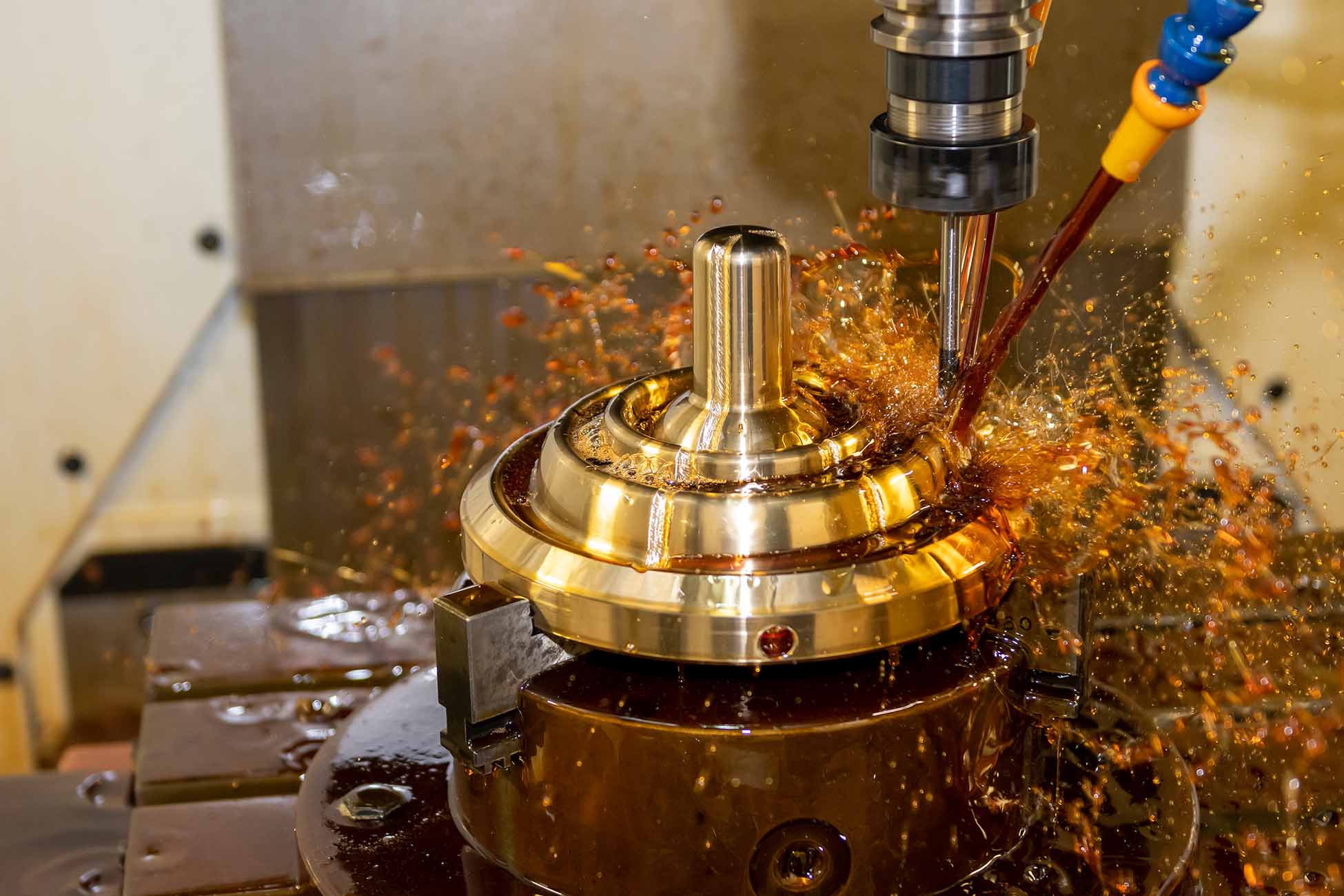
Engineering Insight: Precision Imperatives in CNC Brass Machining
Brass remains a cornerstone material in high-performance manufacturing due to its exceptional machinability, corrosion resistance, and electrical conductivity. However, achieving true precision in CNC brass components demands far more than standard machining protocols. The inherent properties of brass—its tendency toward galling, sensitivity to thermal expansion, and the critical need for flawless surface finishes in sealing or conductive applications—elevate precision from a desirable outcome to a non-negotiable engineering requirement. Minute deviations in dimensional tolerances or surface integrity can cascade into catastrophic failures in final assemblies, particularly within aerospace hydraulic systems, medical instrumentation, or high-frequency connectors where brass is often specified. At Wuxi Lead Precision Machinery, we recognize that brass machining excellence hinges on mastering the interplay between material science, ultra-stable machine dynamics, and real-time process control. Sub-micron thermal compensation systems and adaptive feed-rate algorithms are not optional extras; they are fundamental to mitigating brass’s thermal sensitivity and ensuring geometric accuracy across production runs. Surface finish requirements often dip below Ra 0.4μm, necessitating specialized tool geometries and meticulous coolant management to prevent built-up edge and micro-fractures that compromise part function.
Our engineering approach integrates decades of specialized brass machining experience, rigorously validated in applications where failure is unacceptable. We have consistently delivered components meeting the extreme demands of Olympic timing systems and critical military communication hardware, where brass parts must perform flawlessly under dynamic stress and environmental extremes. This heritage informs every aspect of our process, from initial material certification to final metrology. Precision brass machining is not merely about hitting a dimension; it is about guaranteeing predictable material behavior, consistent mechanical properties, and absolute reliability in the field. The cost of inaccuracy in these high-stakes sectors vastly outweighs the investment in true precision manufacturing capability.
The table below outlines key brass grades we specialize in and the precision parameters we consistently achieve:
| Material Grade | Typical High-End Applications | Max Spindle Speed (SFM) | Critical Tolerance Range (mm) | Surface Finish (Ra μm) |
|---|---|---|---|---|
| C36000 (Free-Cutting) | Aerospace fittings Military connectors | 800 – 1200 | ±0.002 – ±0.005 | 0.2 – 0.8 |
| C26000 (Cartridge) | Hermetic seals RF waveguides | 600 – 900 | ±0.003 – ±0.008 | 0.4 – 1.0 |
| C46400 (Naval Brass) | Marine actuators Hydraulic manifolds | 400 – 600 | ±0.005 – ±0.010 | 0.8 – 1.6 |
Wuxi Lead Precision Machinery leverages this deep material-specific expertise and our ISO 9001:2015 certified processes to transform brass from a readily machinable alloy into a precision-engineered solution. Our commitment extends beyond the machine shop; we partner with clients during design for manufacturability (DFM) to optimize brass component geometry for both performance and producibility at scale. When your application demands brass components where every micron matters, our proven precision engineering capability—forged in the crucible of Olympic and military specifications—delivers the reliability your critical systems require. Contact our engineering team to discuss how we can ensure your brass components meet the highest standards of accuracy and performance.
Precision Specs & Tolerances
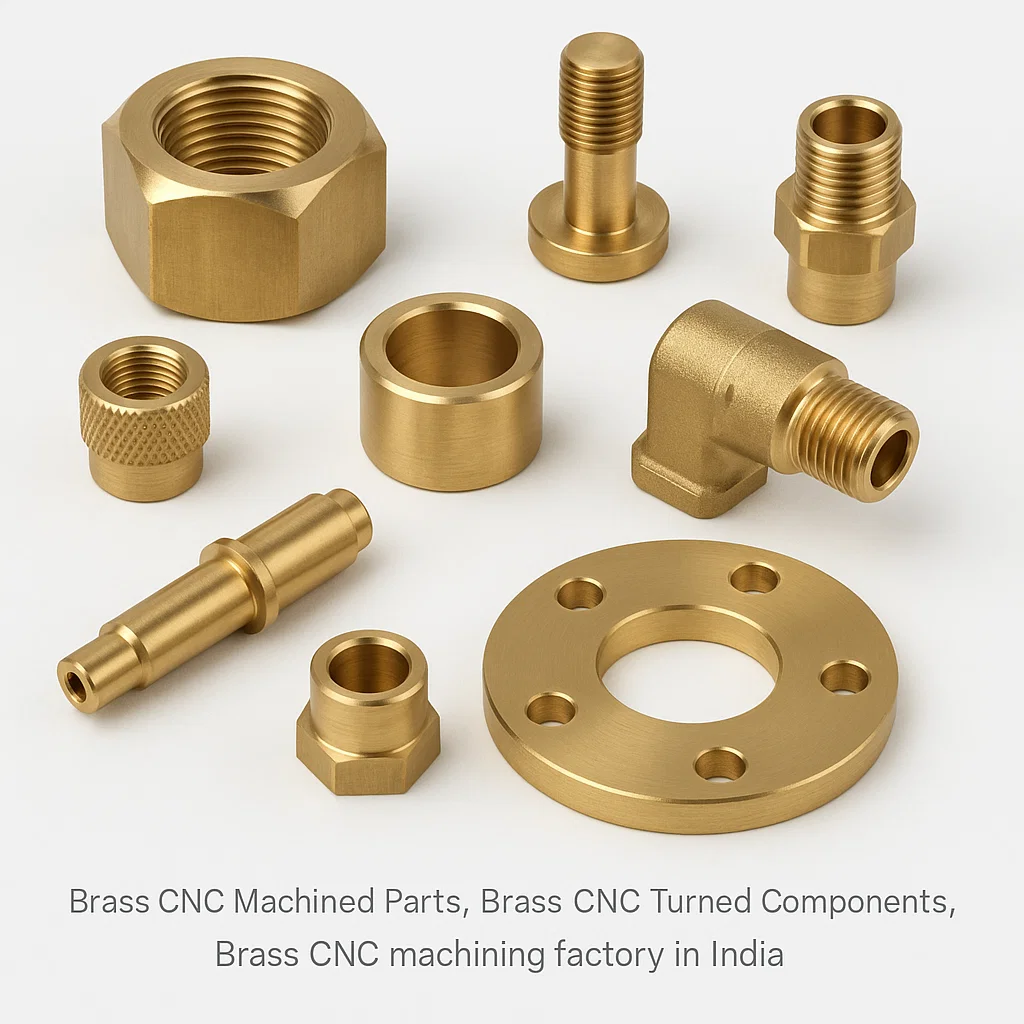
Wuxi Lead Precision Machinery delivers advanced precision CNC machining services tailored for high-performance applications in aerospace, medical, automation, and industrial equipment sectors. Our technical capabilities are anchored in state-of-the-art 5-axis CNC machining technology, enabling us to produce complex, high-integrity brass components with exceptional accuracy and surface finish. Brass, known for its excellent machinability, corrosion resistance, and electrical conductivity, is a preferred material in precision engineering, and our processes are optimized to leverage these properties to the fullest.
Our 5-axis CNC machining centers provide simultaneous multi-axis movement, allowing for intricate geometries to be machined in a single setup. This reduces cumulative errors from multiple fixturing stages and significantly improves dimensional consistency. Equipped with high-speed spindles, rigid tooling systems, and real-time monitoring, our machines maintain tight control over cutting parameters, ensuring optimal chip removal rates and surface integrity. The integration of advanced CAM software enables precise toolpath generation, minimizing cycle times while maintaining micron-level accuracy.
Quality assurance is embedded throughout our manufacturing workflow. Every brass component undergoes rigorous inspection using a Coordinate Measuring Machine (CMM), ensuring compliance with the most stringent dimensional and geometric tolerances. Our CMM system supports full 3D measurement, GD&T analysis, and automated reporting, providing full traceability for every production batch. In addition to CMM, we employ optical comparators, surface roughness testers, and hardness gauges to validate material and surface properties.
Our commitment to precision is reflected in the tolerances we consistently achieve across a wide range of brass alloys, including C36000, C37700, and C46400. These tolerances are maintained under controlled environmental conditions to eliminate thermal drift and ensure repeatability.
The following table outlines our standard achievable tolerances for CNC-machined brass components:
| Feature | Standard Tolerance | Tight Tolerance Capability |
|---|---|---|
| Linear Dimensions (up to 100 mm) | ±0.025 mm | ±0.010 mm |
| Linear Dimensions (100–300 mm) | ±0.050 mm | ±0.020 mm |
| Hole Diameter (Drilled) | ±0.025 mm | ±0.012 mm |
| Hole Diameter (Reamed) | ±0.010 mm | ±0.005 mm |
| Positional Tolerance | ±0.030 mm | ±0.015 mm |
| Flatness | 0.03 mm per 100 mm | 0.01 mm per 100 mm |
| Surface Roughness (Ra) | 1.6 µm | 0.4 µm |
| Angular Tolerance | ±0.1° | ±0.05° |
These specifications demonstrate our ability to meet demanding engineering requirements for critical components such as connectors, valves, fittings, and precision housings. With a fully integrated production and quality control system, Wuxi Lead Precision Machinery ensures that every CNC brass part is manufactured to the highest standards of precision, reliability, and consistency.
Material & Finish Options
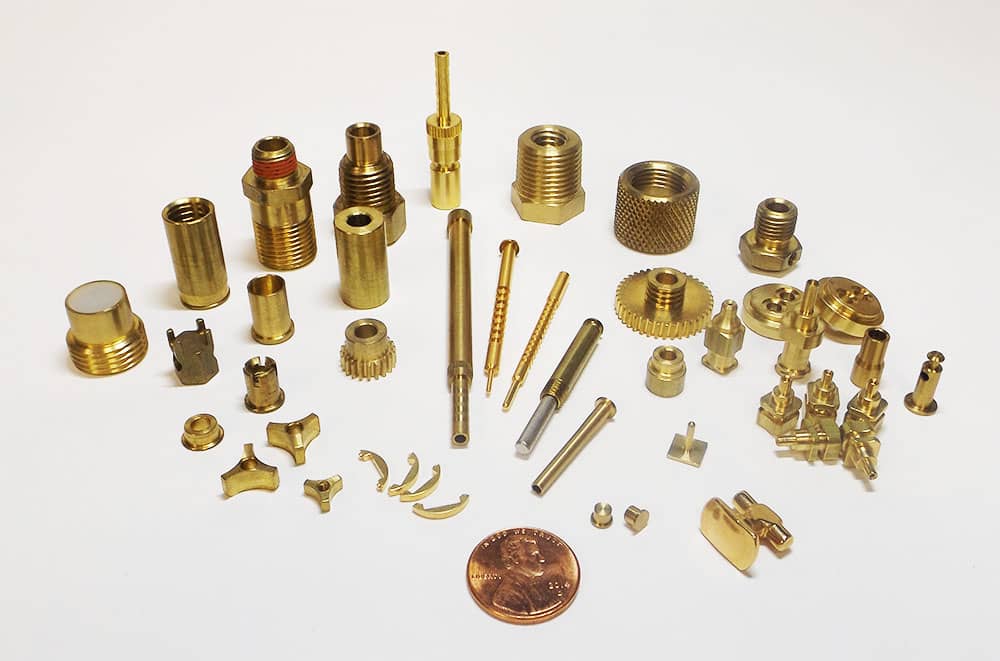
Strategic Material Selection for Precision CNC Machining
Material choice fundamentally impacts part performance, manufacturability, and lifecycle cost in high-precision CNC applications. At Wuxi Lead Precision Machinery, we prioritize aligning material properties with your functional requirements, environmental exposure, and geometric complexity. Aluminum alloys offer an optimal strength-to-weight ratio and excellent thermal conductivity, making them ideal for aerospace components, heat sinks, and lightweight structural parts. Grade 6061-T6 provides balanced machinability and corrosion resistance, while 7075-T6 delivers superior strength for critical load-bearing applications. Steel remains indispensable for high-wear, high-strength scenarios. Stainless steel 304 ensures robust corrosion resistance in medical or marine environments, whereas 4140 alloy steel excels in high-torque automotive or industrial machinery components due to its hardenability and fatigue resistance. Titanium alloys, particularly Ti-6Al-4V, are reserved for extreme conditions—such as aerospace or biomedical implants—where exceptional strength-to-weight ratios, biocompatibility, and resistance to fatigue or corrosion justify higher material and machining costs.
Surface finishing directly influences durability and aesthetics. Anodizing is the premier electrochemical process for aluminum, creating a hardened, corrosion-resistant oxide layer that accepts color dyes for identification or branding. Type II (sulfuric acid) anodizing provides standard protection for functional parts, while Type III (hardcoat) delivers abrasion resistance for high-wear surfaces. Note that anodizing is exclusive to aluminum; steel requires alternatives like passivation, plating, or powder coating, and titanium typically uses laser marking or chemical etching.
Critical material properties must be evaluated quantitatively. The table below summarizes key metrics for common high-end CNC materials:
| Material | Density (g/cm³) | Tensile Strength (MPa) | Machinability Rating | Common Grades |
|---|---|---|---|---|
| Aluminum | 2.7 | 310 (6061-T6) | Excellent (90-100%) | 6061, 7075, 2024 |
| Stainless Steel | 8.0 | 515 (304 Annealed) | Moderate (40-60%) | 304, 316, 17-4 PH |
| Alloy Steel | 7.8 | 655 (4140 Annealed) | Good (50-70%) | 4140, 4340, 8620 |
| Titanium | 4.4 | 900 (Ti-6Al-4V) | Poor (20-30%) | Ti-6Al-4V, CP Grade 2 |
Selecting suboptimal materials risks premature failure, extended lead times, or excessive costs. For instance, using standard aluminum in saltwater environments invites corrosion, while over-specifying titanium for non-critical parts inflates expenses unnecessarily. Wuxi Lead’s engineering team conducts rigorous material suitability analysis during the quoting phase, leveraging decades of machining data to prevent such pitfalls. We assess your operational stresses, regulatory standards, and volume requirements to recommend the most efficient material-finish combination. This proactive approach ensures your components meet precision tolerances while maximizing service life and cost efficiency. Partner with us to transform material selection from a procurement task into a strategic advantage for your supply chain.
Manufacturing Process & QC
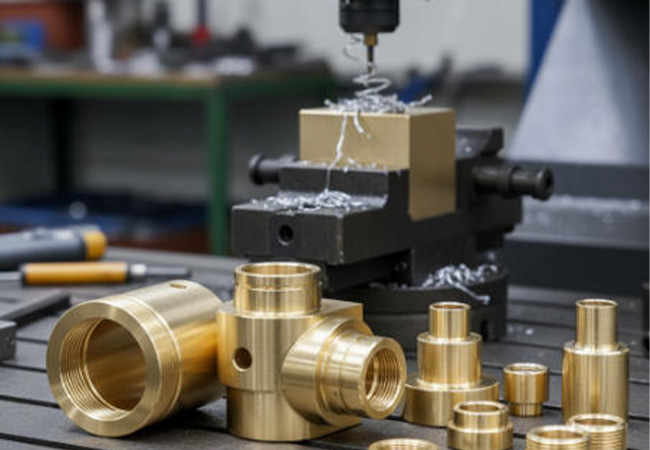
The production process for high-precision CNC brass components at Wuxi Lead Precision Machinery follows a disciplined, vertically integrated approach designed to achieve zero-defect manufacturing. Every stage—from initial design to mass production—is engineered for consistency, accuracy, and compliance with international quality standards. This structured workflow ensures that our clients receive components that meet exact functional and dimensional requirements, particularly for industries such as aerospace, medical devices, and high-end automation.
Design begins with close collaboration between our engineering team and the client. Utilizing advanced CAD/CAM software, we develop 3D models that incorporate critical tolerances, surface finishes, and material specifications. Finite element analysis (FEA) and design for manufacturability (DFM) reviews are conducted to identify potential risks and optimize part geometry before any material is cut. This proactive engineering phase reduces downstream errors and accelerates time-to-market.
Prototyping follows the finalized design and serves as a critical validation step. Using high-speed CNC lathes and multi-axis milling machines, we produce functional prototypes in the same brass alloy intended for mass production—typically C36000 or C37700. Each prototype undergoes full dimensional inspection via coordinate measuring machines (CMM), surface roughness testing, and, when required, metallurgical analysis. Feedback from prototype testing is integrated swiftly, ensuring design fidelity before transitioning to full-scale manufacturing.
Mass production leverages automated CNC cells equipped with tool presetters, in-process probing, and real-time monitoring systems. Our facility operates under ISO 9001-certified quality management protocols, with statistical process control (SPC) applied to every production run. Each batch is traceable, with material certifications, inspection reports, and process logs maintained for full transparency. Automated bar feeders and robotic part handling minimize human intervention, reducing variability and enhancing repeatability.
Throughout all phases, the zero-defect philosophy is enforced through layered quality checks. First-article inspections, random sampling per ANSI/ASQ Z1.4, and 100% visual inspection for critical features ensure compliance. Non-conforming parts are quarantined immediately, and root cause analysis is performed to prevent recurrence.
The result is a seamless transition from concept to volume production, where precision, reliability, and consistency define every brass component we deliver.
| Specification | Detail |
|---|---|
| Material Options | C36000, C37700, C46400, Custom Brass Alloys |
| Tolerance Range | ±0.005 mm to ±0.025 mm (depending on geometry) |
| Surface Finish | Ra 0.4 µm to Ra 3.2 µm (custom finishes available) |
| Maximum Part Size | Ø300 mm x 500 mm length |
| Production Capacity | Up to 50,000 units/month (scalable) |
| Quality Standards | ISO 9001:2015, ISO 13485 (medical), RoHS compliant |
| Inspection Tools | CMM, Optical Comparator, Roughness Tester, Micrometers, Calipers |
Why Choose Wuxi Lead Precision
Elevate Your Brass Component Production with Strategic Precision Engineering
In the demanding realm of high-performance brass components, tolerances measured in microns and material integrity are non-negotiable. Wuxi Lead Precision Machinery delivers more than machining; we provide engineered solutions for mission-critical applications in aerospace fluid systems, medical instrumentation, and advanced industrial automation. Our dedicated brass CNC division operates under stringent ISO 9001:2015 and IATF 16949 protocols, ensuring every part meets the exacting standards your industry requires. Partnering with Lead Precision means accessing specialized expertise in brass alloy behavior, thermal management during high-speed cutting, and secondary finishing processes that eliminate micro-fractures common in softer materials.
Our technical capabilities are built for brass-specific challenges. We maintain controlled environments to prevent work hardening and utilize proprietary toolpath strategies that optimize chip evacuation for C36000, C37700, and lead-free alloys like C69300. The table below details our core brass machining performance metrics:
| Capability | Specification | Industry Relevance |
|---|---|---|
| Dimensional Tolerance | ±0.0002″ (5µm) | Critical for hydraulic seals and sensor housings |
| Surface Finish (Ra) | 4µin to 16µin achievable | Ensures leak-tight performance in fluid systems |
| Max Part Size | Ø12″ x 10″ Height | Accommodates complex manifolds and valve bodies |
| Spindle Speed Range | 500 – 24,000 RPM | Optimized for brass chip control without burring |
| Material Grades Supported | C36000, C37700, C69300, C46400 | Full compliance with RoHS and NSF standards |
This precision is sustained through continuous investment in DMG MORI NLX 2500 SY turning centers with Y-axis and live tooling, coupled with Zeiss CONTURA metrology systems for in-process verification. Our engineers collaborate from the design phase, offering DFM analysis to minimize waste in expensive brass stock while enhancing structural integrity. Unlike commodity suppliers, we implement lot traceability down to the billet level and provide full material certification packages required for regulatory submissions.
Choosing Lead Precision as your brass machining partner mitigates supply chain risk through dedicated capacity allocation and dual-sourcing strategies for critical components. We understand that a single defective fitting can halt entire production lines—our zero-defect culture is enforced through statistical process control and real-time SPC dashboards accessible to clients. This commitment translates to 99.8% on-time delivery and a 40% reduction in field failures reported by our long-term partners.
Initiate a precision advantage for your brass components. Contact our engineering team directly at Contact [email protected] to schedule a technical consultation. Provide your component drawings and performance requirements; within 48 hours, you will receive a detailed capability assessment including recommended brass alloy selection, tolerance feasibility analysis, and a production timeline. For urgent RFQs, reference project code BRASS-LEAD-2024 to expedite engineering review. Let us transform your brass component challenges into validated manufacturing success.
⚙️ Precision Cost Estimator
Estimate relative manufacturing effort based on tolerance.