
Technical Contents
Engineering Guide: Blow Moulding Machine Price
Engineering Insight: The True Cost Drivers Behind Blow Moulding Machine Price
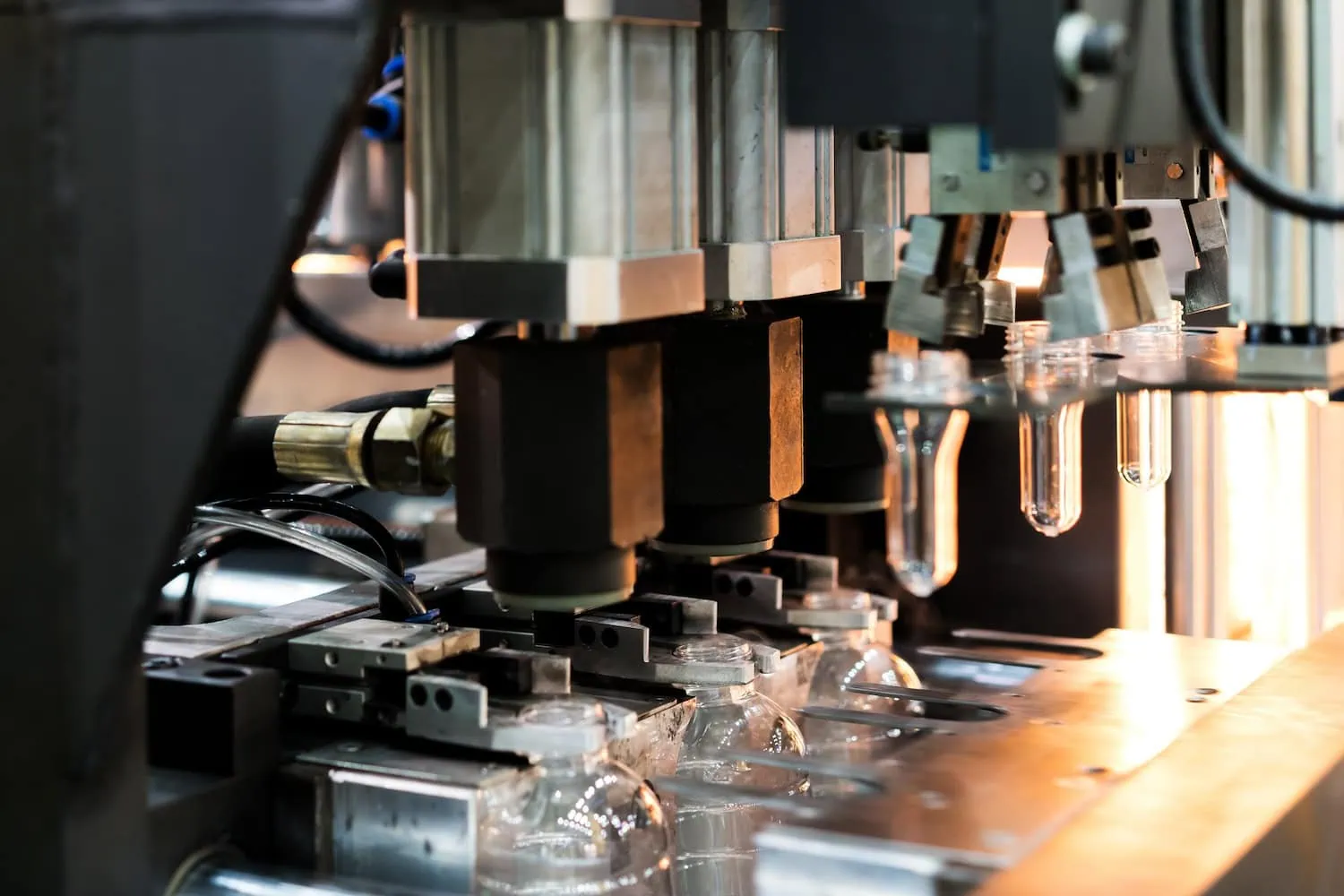
When evaluating blow moulding machine price, it is essential to move beyond the initial quotation and examine the engineering precision, material integrity, and long-term reliability that define true value. At Wuxi Lead Precision Machinery, we understand that high-performance blow moulding systems are not commoditized equipment—they are engineered solutions where micron-level tolerances and metallurgical consistency directly influence output quality, cycle efficiency, and total cost of ownership.
Precision in blow moulding begins with the core components: the parison control system, die head alignment, and clamping mechanism. Even minor deviations—measurable in microns—can result in inconsistent wall thickness, flash formation, or premature wear. These defects not only compromise product integrity but also increase scrap rates and downtime. Our in-house CNC machining centers, operating under ISO 13485 and ISO 9001 standards, ensure that every hydraulic manifold, guide rod, and platen is manufactured to ±0.005 mm accuracy. This level of control is not standard across the industry, particularly among budget-tier suppliers who prioritize cost reduction over dimensional stability.
Our expertise in custom metal manufacturing has been validated through high-stakes applications. Components produced by Wuxi Lead have supported infrastructure for Olympic venues and met the rigorous durability standards of military-grade deployment systems. These projects demanded zero-failure performance under extreme conditions—requirements that mirror the operational stresses of continuous-cycle blow moulding. The same metallurgical analysis, finite element simulation, and fatigue testing applied to defense projects inform our machine design philosophy.
When assessing blow moulding machine price, buyers must consider lifecycle performance. A lower initial investment may lead to higher operational costs due to energy inefficiency, frequent maintenance, or inconsistent output. In contrast, our machines integrate hardened alloy steels, servo-driven extrusion pumps, and real-time pressure feedback systems that extend service intervals and reduce energy consumption by up to 22% compared to conventional models.
Below are key technical specifications that reflect the engineering standards embedded in our blow moulding systems:
| Parameter | Specification |
|---|---|
| Clamping Force Range | 50–3000 kN |
| Parison Control Resolution | ±0.1 mm |
| Extrusion Screw Material | Nitrided Alloy Steel (38CrMoAlA) |
| Positioning Accuracy (Platen) | ±0.005 mm |
| Hydraulic System Pressure | 18 MPa (Max) |
| Control System | Siemens S7-1500 with HMI Integration |
| Energy Recovery System | Standard (Regenerative Circuit) |
| Lead Time (Custom Config) | 8–12 Weeks |
At Wuxi Lead Precision Machinery, we do not compete on price alone. We deliver precision-engineered systems where every component reflects decades of metallurgical expertise and a commitment to operational excellence. The blow moulding machine price reflects not just manufacturing cost, but the assurance of performance under continuous industrial demand.
Precision Specs & Tolerances
Technical Capabilities: Precision Engineering for Blow Moulding Excellence
At Wuxi Lead Precision Machinery, our technical capabilities are engineered to address the exacting demands of blow moulding machine manufacturing. We specialize in producing critical metal components where micron-level accuracy directly impacts mould performance, cycle efficiency, and final product integrity. Our integrated approach combines advanced 5-axis CNC machining with rigorous quality control protocols to deliver components that meet the most stringent industry standards. This precision foundation ensures minimal downtime, extended tool life, and consistent output for your production lines—directly influencing your total cost of ownership beyond initial machine pricing.
Our 5-axis CNC machining centers operate with sub-micron repeatability, enabling complex geometries in hardened tool steels, aluminum alloys, and specialty materials. This capability is essential for crafting seamless mould cavities, parison controllers, and neck ring assemblies where thermal stability and surface finish dictate blow moulding success. Simultaneous multi-axis movement eliminates secondary setups, reducing cumulative error and ensuring critical features like cooling channel alignment and parting line integrity are maintained within tight tolerances. All machining processes are supported by in-house thermally stable environments and real-time tool wear compensation systems, guaranteeing dimensional consistency across production runs.
Quality assurance is non-negotiable in blow moulding applications. Every component undergoes comprehensive CMM inspection using Zeiss CONTURA systems, calibrated to ISO 17025 standards with NIST-traceable artifacts. Our inspection protocols extend beyond basic dimensional checks to include geometric tolerancing (GD&T), surface roughness validation, and material hardness verification. This data is documented in full inspection reports, providing auditable proof of compliance for automotive, medical, and packaging industry requirements. By integrating CMM feedback directly into our CNC programs, we achieve closed-loop process control—proactively correcting deviations before they affect batch output.
The following table details our standard achievable tolerances, reflecting real-world production capability for blow moulding machine components:
| Feature | Capability | Standard Tolerance | Critical Application Impact |
|---|---|---|---|
| Linear Dimensions | 5-Axis Machining | ±0.005 mm | Ensures parison thickness consistency |
| Geometric Form (GD&T) | CMM Verified | 0.01 mm | Maintains cavity symmetry for uniform wall distribution |
| Surface Roughness | Precision Finish | Ra 0.4 μm | Reduces product sticking and cycle times |
| Hole Positioning | Multi-Setup | ±0.008 mm | Guarantees core pin alignment and sealing |
| Angular Features | Simultaneous 5-Axis | ±0.001° | Critical for neck finish and closure compatibility |
This technical rigor translates to measurable value: tighter tolerances reduce material waste during production trials, minimize post-machining handwork, and extend mould service life. When evaluating blow moulding machine price, prioritize suppliers whose capabilities demonstrably reduce your operational risks. Wuxi Lead Precision Machinery delivers this assurance through engineering discipline—not just equipment, but a complete quality ecosystem. Partner with us to transform precision into productivity.
Material & Finish Options
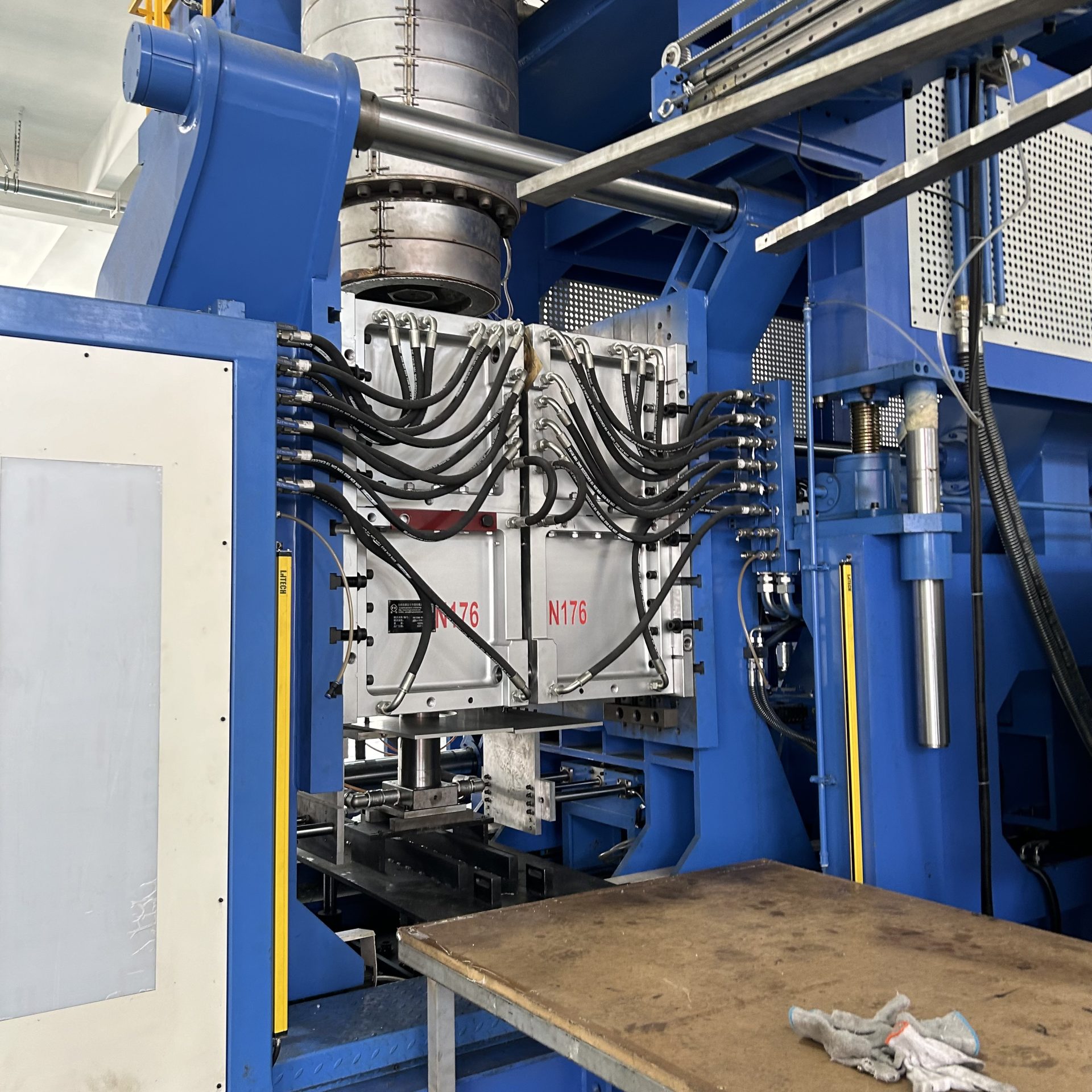
Material selection plays a pivotal role in the performance, durability, and cost-efficiency of blow moulding machine components, especially within custom metal manufacturing applications. At Wuxi Lead Precision Machinery, we engineer high-precision parts using premium-grade aluminum, steel, and titanium—each offering distinct mechanical and thermal properties suited to specific operational demands. The choice of material directly influences machine longevity, dimensional stability under thermal cycling, and resistance to wear and corrosion, all critical in high-speed, high-pressure blow moulding environments.
Aluminum is widely favored for mold frames, base plates, and non-critical mold cavities due to its excellent thermal conductivity, lightweight nature, and machinability. It enables faster cooling cycles, improving production throughput. However, aluminum is less durable than steel or titanium under abrasive or high-wear conditions, making it best suited for low- to medium-volume production runs or prototype development. When enhanced surface hardness and corrosion resistance are required, aluminum components are often treated with anodizing—a controlled electrochemical process that thickens the natural oxide layer. Hard anodizing, in particular, can increase surface hardness up to 60 HRC, significantly improving wear resistance while maintaining thermal efficiency.
Steel, particularly tool steels like P20, H13, and 420 stainless, is the standard for high-volume blow moulding molds. Its superior strength, wear resistance, and ability to maintain dimensional accuracy under repeated thermal stress make it ideal for long production cycles. Stainless steel variants also offer excellent resistance to corrosion from moisture and chemical residues common in polymer processing. While heavier and more expensive to machine than aluminum, steel molds deliver unmatched durability and are often the choice for precision-critical applications in the packaging and automotive sectors.
Titanium is used selectively in specialized components requiring extreme strength-to-density ratios and exceptional corrosion resistance. Though cost-prohibitive for full mold construction, titanium alloys are occasionally employed in core pins, ejector mechanisms, or inserts exposed to aggressive environments. Its biocompatibility and resistance to chloride-induced stress cracking also make it suitable for medical and marine-grade blow moulded products.
Surface finishing, particularly anodizing for aluminum, is not merely cosmetic—it is a functional enhancement. Anodized layers are integral to the base metal, providing uniform protection without risk of flaking. Options range from Type II (standard sulfuric acid anodizing) for mild corrosion resistance to Type III (hard anodizing) for industrial-grade wear performance.
Below is a comparative overview of key material properties relevant to blow moulding machine components:
| Material | Density (g/cm³) | Tensile Strength (MPa) | Thermal Conductivity (W/m·K) | Common Applications | Typical Surface Treatment |
|---|---|---|---|---|---|
| Aluminum 6061 | 2.7 | 310 | 167 | Mold bases, fixtures, prototypes | Hard anodizing (Type III) |
| Steel P20 | 7.8 | 980 | 28–36 | Mold cavities, cores, inserts | Nitriding, polishing |
| Steel H13 | 7.8 | 1,560 | 30–35 | High-temperature molds | PVD coating, chrome plating |
| Titanium Gr5 | 4.5 | 1,000 | 7.2 | Ejector pins, corrosive inserts | None or TiN coating |
Selecting the optimal material and finish requires a balance of performance requirements, production volume, and total cost of ownership. Wuxi Lead Precision Machinery supports clients in making informed decisions based on application-specific engineering analysis and decades of CNC manufacturing expertise.
Manufacturing Process & QC

Precision Engineering Pathway: From Concept to Zero-Defect Production
At Wuxi Lead Precision Machinery, our approach to manufacturing blow moulding machines transcends mere assembly; it is a meticulously controlled engineering pathway designed to eliminate cost-draining defects and ensure optimal machine longevity. We understand that the initial machine price is only one component of total cost of ownership. Hidden expenses from downtime, scrap, and premature wear often dwarf the purchase cost. Our integrated Design-Prototyping-Mass Production process is engineered to mitigate these risks, delivering machines that perform reliably at peak efficiency for years.
The journey begins with Rigorous Design Engineering. Our in-house team utilizes advanced CAD/CAM and finite element analysis (FEA) software to simulate machine performance under extreme operational loads and thermal cycles. Every component, from the robust platens to the intricate parison control system, is optimized for strength, thermal stability, and serviceability. Material selection adheres strictly to aerospace-grade alloys and hardened tool steels, validated for fatigue resistance and dimensional stability. Crucially, design reviews incorporate decades of field failure data, proactively addressing potential weak points before metal is cut. This phase ensures the foundational blueprint inherently supports zero-defect operation.
Validated Prototyping is the critical checkpoint. We fabricate and assemble a full-scale prototype using the exact materials and processes intended for production. This machine undergoes exhaustive validation testing far exceeding standard industry protocols. Hydraulic systems are cycled for 10,000+ operations under maximum pressure. Clamp force is measured dynamically at multiple points. Parison control accuracy is verified across the entire speed and temperature range. Dimensional inspections employ CMMs and laser trackers to confirm micron-level tolerances. Only when every parameter consistently meets or exceeds the stringent specifications defined in the design phase does the prototype receive approval for mass production. This step eliminates theoretical flaws and guarantees process capability.
Zero-Defect Mass Production leverages the validated prototype data to govern every stage. Our ISO 9001-certified facility employs Statistical Process Control (SPC) on all critical machining operations. Key parameters like spindle load, coolant pressure, and tool wear are monitored in real-time, with automatic process correction triggered at the first sign of deviation. Component traceability is absolute, from raw material heat number through final assembly. Final machine testing is exhaustive, including a 72-hour continuous run-in cycle under simulated production load, comprehensive leak testing, and verification of all safety interlocks. This systematic approach ensures every Wuxi Lead blow moulding machine shipped meets our uncompromising zero-defect standard.
The following table details the core precision specifications underpinning our zero-defect commitment:
| Specification Category | Target Tolerance/Requirement | Verification Method | Frequency |
|---|---|---|---|
| Platen Flatness (1000mm) | ≤ 0.015 mm | Laser Interferometer | Per Machine |
| Clamp Force Accuracy | ± 1.5% Full Scale | Hydraulic Load Cell Calibration | Per Machine |
| Parison Wall Thickness Ctrl. | ± 0.05 mm | Online Laser Gauging System Test | Per Machine |
| Critical Machined Bore ID | H6 Tolerance (ISO 286-2) | Air Gaging / CMM | 100% of Components |
| Weld Seam Integrity | Zero Porosity/Cracks | Ultrasonic Testing (UT) | 100% of Welds |
| Hydraulic System Leak Rate | ≤ 5 ml/hour @ Max Pressure | Precision Flow Meters | Per Machine |
This disciplined engineering pathway transforms the initial machine price into a strategic investment. By eliminating defects at the source through design integrity, prototype validation, and process-controlled manufacturing, Wuxi Lead delivers blow moulding machines that maximize uptime, minimize total cost of ownership, and provide a definitive competitive advantage in demanding production environments.
Why Choose Wuxi Lead Precision
Partner with Lead Precision for Precision-Engineered Blow Moulding Solutions
At Wuxi Lead Precision Machinery, we understand that in high-volume, high-accuracy industrial manufacturing, the performance of your blow moulding machine directly impacts product consistency, production efficiency, and long-term profitability. As a trusted leader in custom metal manufacturing and precision engineering based in China, we specialize in delivering fully customized blow moulding machines engineered to meet the exact specifications of global OEMs, packaging manufacturers, and industrial processors.
Our engineering team combines decades of mechanical design expertise with advanced CNC fabrication techniques to produce robust, reliable, and scalable blow moulding systems. Whether you require high-speed production for PET containers, precision parison control for industrial IBC tanks, or custom configurations for specialty polymers, our machines are built to integrate seamlessly into your production line while maximizing uptime and minimizing energy consumption.
We don’t just sell machines—we deliver engineered partnerships. From initial concept and 3D simulation to prototype validation and final installation, our project managers and field engineers work closely with your team to ensure every technical detail aligns with your operational demands. Our in-house manufacturing capabilities allow for strict quality control, shorter lead times, and full traceability across all components.
When evaluating blow moulding machine price, it’s essential to look beyond the initial cost. Long-term value is determined by durability, energy efficiency, maintenance requirements, and technical support. At Lead Precision, we build machines using premium-grade steel, servo-driven hydraulics, and intelligent control systems that reduce wear, improve repeatability, and extend service life—delivering measurable ROI over time.
Our clients across Europe, North America, and Southeast Asia rely on us not only for superior build quality but also for responsive after-sales service, remote diagnostics, and comprehensive training programs. We offer full documentation, spare parts availability, and on-site support to keep your operations running without interruption.
Below are key specifications from our standard high-performance blow moulding machine series. All models are customizable based on output volume, material type, and container geometry.
| Specification | Standard Range | Customization Option |
|---|---|---|
| Output Capacity | 500 – 12,000 bottles/hour | Up to 20,000 bottles/hour |
| Bottle Volume Range | 0.1 – 20 liters | Up to 100 liters (IBC tanks) |
| Material Compatibility | PET, HDPE, PP, LDPE | Multi-layer co-extrusion |
| Parison Control | 5 – 7 head servo control | Up to 9 heads with AI feedback |
| Machine Frame | Reinforced steel with anti-corrosion coating | Stainless steel upgrade |
| Control System | Siemens PLC with touchscreen HMI | IoT-enabled remote monitoring |
| Power Supply | 380V / 50Hz (standard) | 220V, 440V, 60Hz available |
| Energy Recovery | Standard heat recirculation | Optional servo energy-saving package |
Partnering with Wuxi Lead Precision Machinery means investing in a solution built to your exact needs, backed by engineering excellence and global service support. For a detailed quotation, technical consultation, or machine customization proposal, contact us today at [email protected]. Let us help you optimize your blow moulding operations with precision, reliability, and long-term value.
⚙️ Precision Cost Estimator
Estimate relative manufacturing effort based on tolerance.