
Technical Contents
Engineering Guide: Best Tool For Cutting Sheet Metal
Engineering Insight: Defining Precision in Sheet Metal Cutting
Achieving true precision in sheet metal cutting transcends mere dimensional accuracy; it fundamentally dictates component functionality, assembly integrity, and long-term product reliability. In high-stakes manufacturing sectors like aerospace, medical device production, and advanced electronics, tolerances exceeding ±0.1mm cascade into costly downstream failures: misaligned assemblies, compromised structural performance, or accelerated wear. The optimal cutting tool must consistently deliver micron-level repeatability across diverse materials – from ultra-thin stainless steel foils to hardened alloys – while minimizing thermal distortion and burr formation. This level of control is non-negotiable for mission-critical applications where component failure carries severe consequences. At Wuxi Lead Precision Machinery, our engineering philosophy centers on this uncompromising standard, forged through direct involvement in projects demanding the absolute pinnacle of dimensional fidelity, including components for Olympic-standard sporting equipment and specialized military hardware where precision is a matter of operational success.
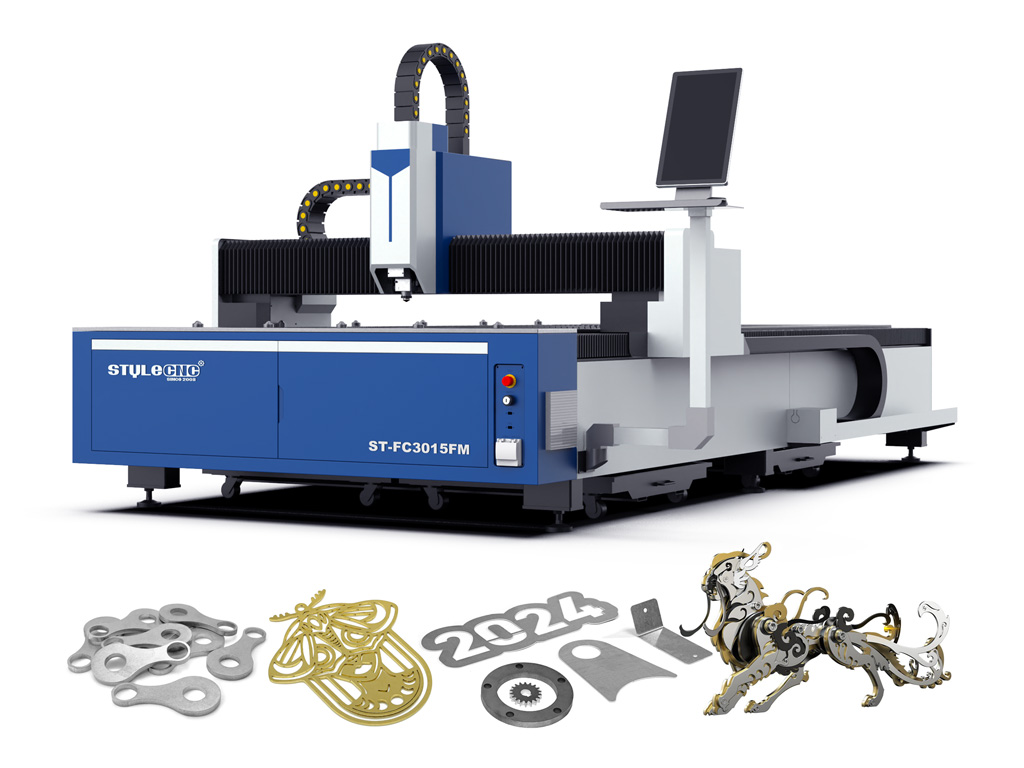
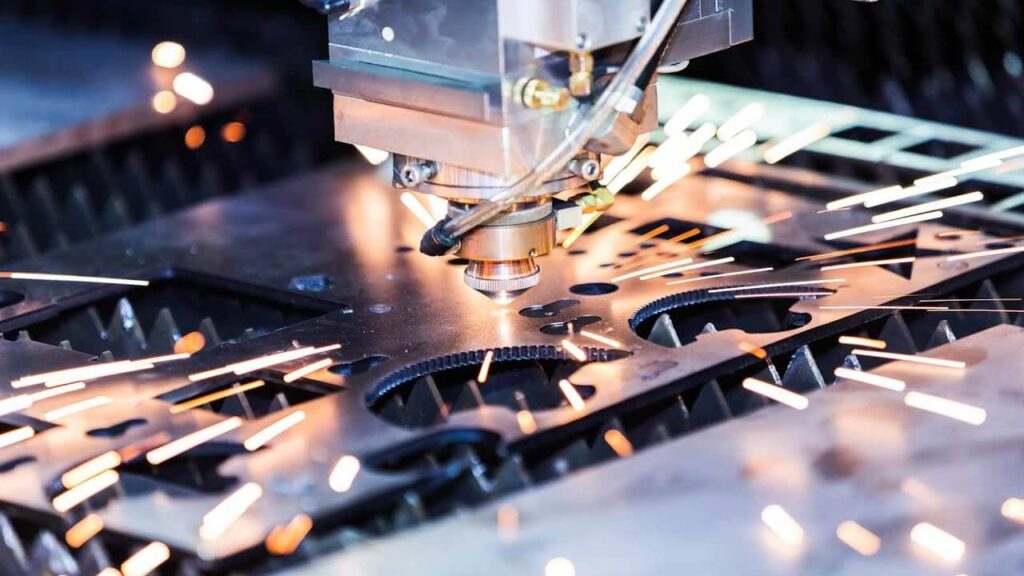
Material behavior under thermal stress, machine dynamics, and beam quality are critical determinants often overlooked in selecting cutting technology. Fiber laser systems have emerged as the dominant solution for most sheet metal applications due to their superior energy efficiency, faster processing speeds on thin to medium gauges, and exceptional edge quality on reflective materials like copper and brass. However, the implementation of the technology is paramount. Precision hinges on the machine’s structural rigidity to resist vibration, the thermal stability of the motion system, the sophistication of the capacitive height control, and the laser source’s beam parameter product (BPP). A high-BPP beam cannot achieve the fine kerf widths and sharp corner definition required for intricate geometries, regardless of the machine’s advertised power. True precision requires holistic system integration, not just component specifications.
Wuxi Lead Precision Machinery leverages over 15 years of advanced fabrication expertise to engineer laser cutting solutions meeting these exacting demands. Our systems undergo rigorous calibration protocols ensuring sustained accuracy under continuous production loads. The table below outlines the critical performance parameters achievable with our flagship fiber laser platforms, reflecting the standards applied to our most demanding defense and precision instrumentation contracts.
| Performance Parameter | Typical Value (1mm Stainless Steel) | Critical Impact |
|---|---|---|
| Positional Accuracy | ±0.02 mm | Ensures perfect part-to-part consistency |
| Repeatability | ±0.01 mm | Guarantees stable production output over time |
| Kerf Width | 0.10 – 0.15 mm | Enables intricate features, minimizes material waste |
| Edge Perpendicularity | ≤ 0.05 mm | Critical for welding fit-up and sealing surfaces |
| Burr Height (Top/Bottom) | ≤ 0.02 mm / ≤ 0.03 mm | Reduces or eliminates secondary deburring |
| Thermal Distortion (1m part) | < 0.05 mm | Maintains flatness for precision assemblies |
Our experience delivering components for Olympic-caliber equipment – where microscopic deviations affect athletic performance – and specialized military applications – where reliability is non-negotiable – directly informs our machine design and process validation. We understand that the “best tool” is defined by its ability to consistently meet the application’s specific precision requirement, not just raw power or speed. Partnering with an engineering-focused manufacturer ensures your sheet metal fabrication process achieves the dimensional stability essential for competitive advantage and zero-defect production. Precision isn’t an optional add-on; it is the foundation of modern manufacturing excellence.
Precision Specs & Tolerances
Wuxi Lead Precision Machinery delivers advanced sheet metal fabrication solutions through precision engineering and state-of-the-art manufacturing technology. At the core of our technical capabilities is a fully integrated 5-axis CNC machining platform, enabling complex, high-accuracy cutting and forming operations on a wide range of sheet metal materials. This advanced system allows for simultaneous multi-directional tool movement, significantly enhancing geometric flexibility and reducing the need for multiple setups. As a result, we achieve superior edge quality, tighter tolerances, and faster turnaround times—critical advantages in high-end industrial applications.
Our 5-axis CNC equipment supports continuous cutting paths with dynamic axis adjustments, making it ideal for intricate contours, beveled edges, and non-orthogonal features in sheet metal components. This capability is especially valuable in aerospace, medical device manufacturing, and precision instrumentation, where part complexity and dimensional accuracy are paramount. Materials such as stainless steel, aluminum alloys, titanium, and specialty alloys are routinely processed with consistent repeatability and surface integrity.
To ensure every component meets exact design specifications, Wuxi Lead implements a rigorous quality control protocol centered on Coordinate Measuring Machine (CMM) inspection. Each part undergoes comprehensive dimensional verification using calibrated CMM systems that capture thousands of data points across complex geometries. This metrology-backed validation process ensures compliance with international standards, including ISO 2768 and ASME Y14.5, and supports full traceability for regulated industries.
Our in-house CMM inspection cell operates under temperature-controlled conditions to eliminate thermal drift, maintaining measurement accuracy down to ±0.002 mm. Real-time data analysis enables immediate feedback into the production loop, allowing for rapid process correction and continuous improvement. All inspection reports are documented and archived, providing customers with full transparency and certification upon request.
The combination of 5-axis CNC precision and CMM-backed quality assurance allows Wuxi Lead to consistently deliver sheet metal components with exceptional dimensional stability and repeatability. Whether producing low-volume prototypes or high-volume production runs, our technical infrastructure ensures uniform quality and compliance across all batches.
The following table outlines key technical specifications and achievable tolerances for our sheet metal cutting processes:
| Parameter | Specification |
|---|---|
| Maximum Cutting Area | 3000 mm × 1500 mm |
| Material Thickness Range | 0.5 mm – 25 mm |
| Positional Tolerance | ±0.025 mm |
| Angular Tolerance | ±0.1° |
| Surface Roughness (Ra) | 0.8 – 3.2 µm |
| Bevel Cut Accuracy | ±0.2° |
| Repeatability (5-axis) | ±0.005 mm |
| CMM Measurement Uncertainty | ±0.002 mm |
These capabilities reflect Wuxi Lead Precision Machinery’s commitment to technical excellence and customer-driven precision in advanced sheet metal fabrication.
Material & Finish Options
Material Selection for Precision Sheet Metal Cutting
Selecting the optimal material is foundational to efficient, high-quality sheet metal fabrication. The inherent properties of aluminum, steel, and titanium directly dictate tooling requirements, cutting parameters, and achievable tolerances. Misalignment between material characteristics and the cutting process leads to excessive tool wear, poor edge quality, dimensional inaccuracy, and increased production costs. Understanding these properties ensures the correct CNC toolpath strategy and cutter selection from the outset.
Aluminum alloys, particularly 6061-T6 and 5052-H32, are prized for their strength-to-weight ratio and excellent machinability. Their relatively low hardness and high thermal conductivity allow for very high cutting speeds and feed rates. However, aluminum’s tendency to gall and built-up edge formation demands sharp, polished cutting edges, often with specialized coatings like ZrN, and aggressive chip evacuation. Uncoated carbide or polished high-speed steel tools can suffice for simpler jobs, but precision work on thicker sections benefits significantly from optimized geometries. Crucially, anodizing is a post-machining surface treatment; cutting through an anodized layer drastically accelerates tool wear and compromises edge finish. Anodizing must always follow all machining operations.
Carbon and stainless steels present greater challenges due to higher hardness and work-hardening tendencies, especially in grades like 304 and 316 stainless. Stainless steels generate significant heat during cutting, requiring robust tools with strong cutting edges, positive rake angles, and effective chip breakers. Coatings such as TiAlN or AlTiN are essential for heat resistance and wear protection. Lower carbon steels (e.g., A36) are more forgiving but still necessitate tools designed for ferrous materials with adequate toughness to handle potential variations in material consistency. Achieving clean edges without burrs is critical and heavily dependent on precise tool selection and parameter optimization.
Titanium alloys (e.g., Grade 5 Ti-6Al-4V) represent the most demanding common sheet material. Extremely low thermal conductivity concentrates heat at the cutting edge, while high chemical reactivity promotes rapid tool wear and galling. Cutting requires rigid setups, lower surface speeds, higher feed rates per tooth to avoid work-hardening, and specialized tools with sharp, reinforced edges, large chip gullets, and advanced multi-layer coatings (e.g., AlTiN with post-coating treatments). Coolant application is often critical. Titanium machining demands the highest level of process control and tooling expertise to maintain efficiency and part integrity.
The following table summarizes key material properties impacting cutting tool selection and strategy:
| Material | Thermal Conductivity (W/m·K) | Typical Hardness (HB) | Machinability Index (Relative) | Primary Cutting Challenge |
|---|---|---|---|---|
| Aluminum 6061-T6 | 167 | 95 | 100 (Reference) | Built-up edge, chip evacuation |
| Mild Steel A36 | 52 | 120 | 65 | Burrs, work hardening (localized) |
| Stainless 304 | 16 | 200 | 45 | High heat, work hardening, built-up edge |
| Titanium Ti-6Al-4V | 7 | 330 | 20 | Extreme heat concentration, rapid tool wear |
Material choice is inseparable from the cutting process design. Wuxi Lead Precision Machinery leverages deep material science expertise and advanced CNC capabilities to match the optimal tooling solution – from geometry and coating to speed and feed parameters – for your specific aluminum, steel, or titanium application. Consult our engineering team to ensure your material selection translates into flawless, cost-effective production.
Manufacturing Process & QC
Sheet Metal Fabrication: From Design to Zero-Defect Mass Production
At Wuxi Lead Precision Machinery, the foundation of flawless sheet metal fabrication lies in a disciplined, integrated production process that spans from initial design through prototyping to full-scale manufacturing. Our approach ensures precision, repeatability, and zero-defect output—critical for industries such as aerospace, medical devices, and advanced automation where component integrity is non-negotiable.
The process begins with Design for Manufacturability (DFM). Our engineering team collaborates closely with clients to review CAD models, assessing material selection, bend allowances, hole spacing, and geometric complexity. Using advanced simulation software, we predict material behavior during cutting, bending, and forming, minimizing stress deformation and ensuring dimensional accuracy. This phase is critical—early optimization avoids costly revisions and production delays.
Next comes Prototyping, where we produce a limited run of components using the same CNC equipment intended for mass production. This ensures consistency across phases and allows for real-world validation of fit, function, and assembly compatibility. Our prototyping cycle includes laser cutting, CNC punching, press braking, and optional surface treatments such as powder coating or anodizing. Feedback from prototype testing is integrated swiftly, with design adjustments made within 24 to 48 hours, accelerating time-to-market.
Once the design is validated, we transition to Mass Production under a strict zero-defect framework. Our facility in Wuxi operates ISO 9001-certified quality management systems, with in-process inspections at every stage. We deploy automated optical inspection (AOI) systems alongside manual checks by trained quality engineers. Statistical Process Control (SPC) monitors key parameters in real time, enabling immediate correction of deviations before they affect output.
All equipment is maintained under a preventive schedule, and operators undergo continuous training to ensure adherence to precision standards. Traceability is maintained through batch coding and digital logs, allowing full auditability from raw material to final shipment.
| Specification | Detail |
|---|---|
| Material Thickness Range | 0.5 mm – 6.0 mm |
| Tolerance (Cutting) | ±0.1 mm |
| Tolerance (Bending) | ±0.2° / ±0.5 mm |
| Max Sheet Size | 1500 mm × 3000 mm |
| Cutting Methods | Fiber Laser, CNC Punching |
| Supported Materials | Mild Steel, Stainless Steel, Aluminum, Galvanized Steel |
| Production Capacity | Up to 50,000 units/month |
| Quality Standards | ISO 9001:2015, ISO 14001, RoHS Compliant |
This end-to-end control, combined with lean manufacturing principles, enables Wuxi Lead Precision Machinery to deliver high-precision sheet metal components at scale—without compromising on quality. Our clients benefit from reduced waste, faster iteration cycles, and guaranteed consistency across production runs.
Why Choose Wuxi Lead Precision
Elevate Your Sheet Metal Fabrication Through Precision Partnership
In high-volume sheet metal fabrication, marginal gains in precision and throughput directly define market leadership. Generic cutting solutions compromise repeatability under sustained production loads, escalating scrap rates and delaying time-to-market. At Wuxi Lead Precision Machinery, we engineer partnerships—not transactions—by integrating our flagship fiber laser cutting systems with your operational DNA. Our systems deliver micron-level accuracy across stainless steel, aluminum, and specialty alloys up to 30mm thickness, ensuring every cut meets aerospace and medical-grade tolerances without secondary finishing. This eliminates hidden costs from rework and material waste, transforming your fabrication economics.
Technical Excellence Validated by Performance Metrics
| Specification | Lead Precision LP-F3000 | Industry Standard Benchmark |
|---|---|---|
| Laser Power | 6 kW | 3–4 kW |
| Max Cutting Thickness | 30 mm (Mild Steel) | 20–25 mm |
| Positioning Accuracy | ±0.03 mm/m | ±0.08 mm/m |
| Cutting Speed (1mm SS) | 85 m/min | 55–65 m/min |
| Repeatability (CPK) | ≥1.67 | 1.33 |
| Automation Integration | Full MES/IIoT Ready | Optional Add-on |
These metrics reflect real-world performance across 200+ global installations, not lab-condition ideals. Our LP-F3000 series reduces kerf width by 18% versus conventional systems, preserving material integrity for critical applications like EV battery trays and surgical instrument components. Crucially, our proprietary motion control algorithms maintain ±0.05 mm tolerance even during 24/7 shifts—proven in Tier-1 automotive supply chains where downtime costs exceed $25,000/hour.
Your Competitive Edge Starts with Collaborative Engineering
We deploy regional application engineers to co-develop cutting strategies for your specific materials and volumes. This includes dynamic nesting optimization that boosts yield by 12–15% and predictive maintenance protocols minimizing unplanned stops. Unlike transactional suppliers, we audit your entire workflow—from flat pattern design to post-cut handling—to eliminate bottlenecks. Our clients achieve 95%+ OEE within 90 days of installation, validated by third-party efficiency reports.
Initiate Your Precision Transformation Today
Contact our engineering team directly at [email protected] to schedule a no-obligation production analysis. Specify your material types, annual volume, and current pain points. Within 48 hours, you will receive a customized ROI projection detailing scrap reduction, throughput gains, and payback timelines specific to your operation. Wuxi Lead Precision Machinery operates certified service hubs in Germany, Texas, and Singapore—ensuring localized support without timezone delays. Partner with us to convert sheet metal into your most reliable competitive asset. Engineering excellence begins with a single email.
⚙️ Precision Cost Estimator
Estimate relative manufacturing effort based on tolerance.