
Technical Contents
Engineering Guide: Aluminum Automotive Parts
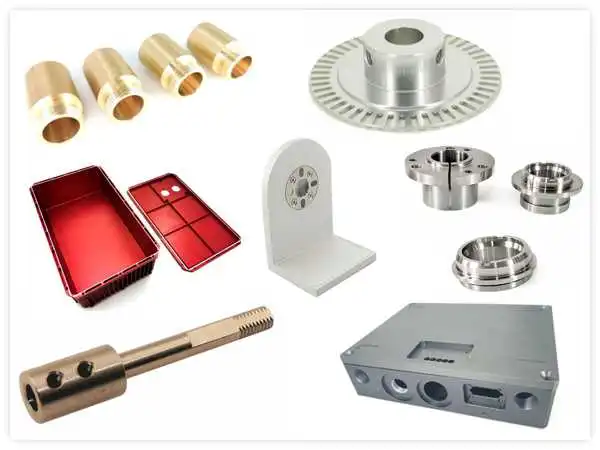
Engineering Insight: Precision in Aluminum Automotive Parts Manufacturing
In the evolving landscape of automotive engineering, aluminum has emerged as a cornerstone material for lightweighting, fuel efficiency, and performance enhancement. As manufacturers push the boundaries of design and functionality, the demand for precision in aluminum automotive components has never been higher. At Wuxi Lead Precision Machinery, we understand that tolerances measured in microns can determine the success of a drivetrain housing, suspension component, or electric vehicle battery tray. Precision is not merely a metric—it is a standard that defines reliability, safety, and long-term performance in automotive applications.
Aluminum, while advantageous for its strength-to-weight ratio and corrosion resistance, presents unique machining challenges. Its thermal expansion characteristics, varying alloy behaviors, and susceptibility to deformation under improper tooling require a deep understanding of material science and process control. At Lead Precision, we leverage over a decade of experience in high-integrity manufacturing, including mission-critical components for Olympic-standard equipment and military defense systems. These sectors demand uncompromising accuracy, traceability, and repeatability—values we directly transfer to our automotive clients.
Our CNC machining centers operate under strict ISO 9001 and IATF 16949 standards, ensuring every aluminum part meets exact dimensional and surface finish requirements. From prototype development to high-volume production, our engineers utilize advanced simulation software and in-process metrology to maintain consistency across batches. Whether it’s a complex control arm or a high-pressure die-cast transmission case, our process integrates material selection, fixture design, and tool path optimization to eliminate variability.
The integration of precision-manufactured aluminum components directly impacts vehicle dynamics, energy efficiency, and emissions reduction. In electric vehicles, for example, battery enclosures must provide structural rigidity, thermal management, and ingress protection—all while minimizing weight. A deviation of even 0.05 mm in mounting interfaces can compromise sealing integrity or alignment with chassis systems. Our experience in producing such components ensures that form, fit, and function are guaranteed at every production stage.
We partner with automotive OEMs and Tier 1 suppliers to deliver not just parts, but engineered solutions. Our technical team collaborates from design for manufacturability (DFM) through final inspection, offering feedback on wall thickness, draft angles, and tolerancing to optimize both performance and cost.
The following table outlines typical specifications we achieve in aluminum automotive component manufacturing:
| Specification | Capability |
|---|---|
| Material Types | 6061, 6082, 7075, A356, ADC12 |
| Tolerance Range | ±0.01 mm to ±0.05 mm |
| Surface Finish | Ra 0.8 µm to Ra 3.2 µm (customizable) |
| Max Part Size | 1200 mm × 800 mm × 600 mm |
| Production Volume | Prototypes to 500,000+ units/year |
| Certifications | ISO 9001, IATF 16949, ISO 14001 |
At Wuxi Lead Precision Machinery, precision is engineered into every component. Our heritage in high-stakes manufacturing disciplines ensures that when it comes to aluminum automotive parts, we deliver not only accuracy—but trust.
Precision Specs & Tolerances
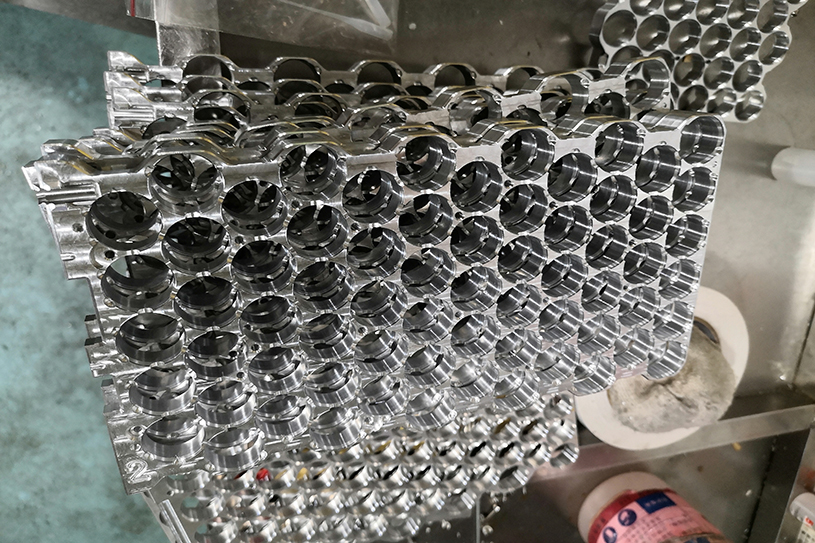
Technical Capabilities for Precision Aluminum Automotive Components
Wuxi Lead Precision Machinery delivers uncompromising precision for the most demanding aluminum automotive applications. Our core strength lies in advanced multi-axis CNC machining, specifically optimized for aerospace-grade aluminum alloys like 6061-T6, 7075-T6, and A356 castings prevalent in powertrain, suspension, and structural safety components. We understand that automotive OEMs and Tier 1 suppliers require absolute dimensional integrity, surface finish consistency, and material property retention. Our integrated manufacturing and quality ecosystem is engineered to meet these exacting standards consistently.
Our facility is anchored by a strategic fleet of state-of-the-art 5-axis CNC machining centers. These systems enable the complete, high-precision fabrication of complex geometries—such as transmission housings, bracket assemblies, and lightweight structural nodes—in significantly fewer setups. Simultaneous 5-axis interpolation allows for optimal tool engagement, minimizing vibration and thermal distortion critical for maintaining tight tolerances on thin-walled aluminum features. Advanced high-speed spindles and rigid machine structures ensure exceptional surface finishes directly off the machine, reducing secondary operations while preserving the fatigue strength essential for safety-critical automotive parts. Material-specific cutting strategies and coolant management protocols prevent work hardening and thermal warpage, guaranteeing part integrity throughout production.
Quality assurance is not a final checkpoint but an embedded process at Wuxi Lead. Every critical aluminum automotive component undergoes rigorous dimensional verification using calibrated Coordinate Measuring Machines (CMM). Our Zeiss and Hexagon CMMs, operating within ISO 17025-accredited environmental controls, provide full 3D geometric dimensioning and tolerancing (GD&T) analysis traceable to NIST standards. First-article inspection reports detail comprehensive measurement data against customer CAD models, including critical-to-function datums and profile tolerances. Statistical process control (SPC) is actively monitored during production runs, ensuring real-time capability and immediate corrective action if trends approach tolerance limits. Full material certification and heat-treat documentation accompany every shipment, providing complete supply chain transparency demanded by automotive quality systems like IATF 16949.
The following table details our standard achievable geometric tolerances for machined aluminum automotive components, reflecting typical production capabilities under controlled conditions. Specific project requirements may allow for tighter control upon engineering review.
| Feature Type | Standard Tolerance | Precision Capability | Measurement Method |
|---|---|---|---|
| Linear Dimensions | ±0.05 mm | ±0.0125 mm | CMM, High-Precision Micrometers |
| Geometric Position | ±0.05 mm | ±0.025 mm | CMM (Full 3D Analysis) |
| Profile of a Surface | 0.05 mm | 0.025 mm | CMM, Optical Comparator |
| Surface Roughness (Ra) | 1.6 μm | 0.4 μm | Portable Surface Roughness Tester |
Wuxi Lead Precision Machinery operates as a true engineering partner, not merely a supplier. Our technical team collaborates early in the design phase to optimize manufacturability, ensuring your aluminum automotive components achieve the required performance, durability, and regulatory compliance without sacrificing production efficiency. We provide the precision, documentation, and process rigor demanded by the global automotive supply chain. Partner with us for components where dimensional certainty directly translates to vehicle safety and performance.
Material & Finish Options
Material Selection for High-Performance Aluminum Automotive Parts
In the production of precision automotive components, material selection directly impacts performance, weight, durability, and cost-efficiency. At Wuxi Lead Precision Machinery, we specialize in custom metal manufacturing with a focus on aluminum, steel, and titanium—each offering distinct advantages depending on the application. For high-end automotive systems such as suspension components, transmission housings, and structural brackets, aluminum stands out due to its optimal strength-to-weight ratio and excellent machinability.
Aluminum alloys, particularly 6061-T6 and 7075-T6, are widely preferred in automotive engineering for their corrosion resistance, lightweight properties, and suitability for high-stress environments. 6061-T6 offers good weldability and moderate strength, making it ideal for chassis parts and brackets. In contrast, 7075-T6 delivers superior tensile strength, often used in performance-critical areas such as suspension arms and engine mounts. When weight reduction is a primary objective without sacrificing structural integrity, aluminum provides an unmatched balance.
Steel remains a strong contender in applications requiring extreme durability and impact resistance. Alloys like 4140 and 1045 offer high tensile and yield strength, commonly used in drivetrain components and safety-critical systems. However, steel’s higher density increases overall vehicle mass, which can negatively affect fuel efficiency and handling—key considerations in modern automotive design.
Titanium, while significantly more expensive, offers exceptional strength-to-density ratios and outstanding corrosion resistance. Grade 5 (Ti-6Al-4V) is frequently used in high-performance racing and aerospace-influenced automotive systems. Though less common due to cost and machining complexity, titanium is selected when maximum performance under extreme conditions is non-negotiable.
Surface finishing plays a critical role in enhancing both functionality and appearance. Anodizing is the preferred post-processing method for aluminum components. This electrochemical process thickens the natural oxide layer, improving wear resistance, corrosion protection, and adhesion for paint or primers. Type II (sulfuric acid) anodizing is standard for decorative and moderate-duty applications, while Type III (hardcoat anodizing) provides a dense, wear-resistant surface ideal for high-friction environments. Anodized finishes also allow for color customization, supporting branding and part identification needs.
Below is a comparative overview of key material properties relevant to automotive part manufacturing.
| Material | Alloy/Grade | Tensile Strength (MPa) | Yield Strength (MPa) | Density (g/cm³) | Common Applications |
|---|---|---|---|---|---|
| Aluminum | 6061-T6 | 310 | 276 | 2.70 | Brackets, housings, chassis parts |
| Aluminum | 7075-T6 | 572 | 503 | 2.81 | Suspension, engine components |
| Steel | 4140 | 655 | 415 | 7.85 | Drivetrain, axles, fasteners |
| Steel | 1045 | 570 | 310 | 7.85 | Shafts, gears, structural parts |
| Titanium | Ti-6Al-4V | 900 | 830 | 4.43 | Racing components, aerospace parts |
At Wuxi Lead Precision Machinery, we guide clients through material and finish selection based on functional requirements, environmental exposure, and lifecycle demands. Our expertise ensures optimal performance and manufacturability for every custom aluminum automotive component.
Manufacturing Process & QC
Precision Aluminum Automotive Component Manufacturing: From Concept to Zero-Defect Delivery
At Wuxi Lead Precision Machinery, we execute a rigorously controlled production process for critical aluminum automotive components, engineered to eliminate defects before they reach the assembly line. Our methodology integrates advanced engineering with real-time quality assurance, ensuring every part meets the exacting demands of modern vehicle platforms. This seamless transition from design intent through validation to high-volume production forms the backbone of our zero-defect commitment.
The process initiates with collaborative engineering design review. Our technical team works directly with your CAD models, performing comprehensive manufacturability analysis and tolerance stack-up simulations specific to aluminum alloys like A356-T6 and 6061-T6. We identify potential stress points, optimize wall thicknesses for casting or CNC machining, and refine features to ensure structural integrity under dynamic automotive loads. This phase leverages finite element analysis (FEA) to preempt thermal distortion or fatigue issues, significantly reducing downstream rework risk. Concurrently, we establish precise material certification requirements and define critical-to-quality (CTQ) characteristics for in-process monitoring.
Prototyping serves as the definitive validation step. Utilizing high-speed 5-axis CNC machining centers with sub-micron positioning accuracy, we produce functional prototypes directly from production-intent materials. These prototypes undergo rigorous dimensional verification against your master CAD data using calibrated coordinate measuring machines (CMM) and structured light scanners. Material properties are confirmed through certified lab testing for tensile strength, elongation, and microstructure. Crucially, we conduct assembly trials with mating components to validate fit, function, and interface tolerances within your specified assembly envelope. Only after full dimensional, material, and functional sign-off does the process advance.
Mass production deployment integrates the lessons from prototyping into a closed-loop manufacturing system. Our automated production cells feature in-process gauging on CNC machines, monitoring key dimensions after every machining cycle. Statistical process control (SPC) charts track critical parameters like hole diameter, flatness, and positional tolerances in real-time, triggering immediate corrective action if trends approach specification limits. Every component receives 100% automated visual inspection for surface defects, coupled with selective CMM validation. Full material traceability—from ingot batch to finished part—is maintained via laser-etched serial numbers and integrated ERP systems. This ensures absolute accountability and enables rapid root-cause analysis should any anomaly arise, though our systemic controls consistently achieve defect rates below 10 PPM.
Critical Process Specifications for Aluminum Automotive Components
| Parameter | Standard Capability | Verification Method | Industry Requirement |
|---|---|---|---|
| Dimensional Tolerance | ±0.005 mm | CMM, In-Process Gauging | ±0.020 mm |
| Surface Roughness (Ra) | 0.8 μm | Profilometer | 3.2 μm |
| Material Standard | A356-T6, 6061-T6 | Certified Mill Test Report | A356.0-T6 |
| Positional Tolerance | ±0.010 mm | Vision System, CMM | ±0.050 mm |
| Defect Rate | < 10 PPM | SPC, Final Audit | < 100 PPM |
| Traceability | Full Batch to Part | Laser Marking, ERP | Batch Level |
This disciplined progression—grounded in proactive engineering, validated prototyping, and intelligently monitored mass production—ensures Wuxi Lead delivers aluminum components that perform flawlessly in safety-critical automotive applications. We transform design specifications into guaranteed quality, safeguarding your production uptime and brand reputation.
Why Choose Wuxi Lead Precision
Partner with Lead Precision for Unmatched Excellence in Aluminum Automotive Manufacturing
When sourcing high-performance aluminum automotive components, precision, consistency, and engineering expertise are non-negotiable. At Wuxi Lead Precision Machinery, we specialize in delivering custom metal manufacturing solutions tailored to the rigorous demands of the global automotive industry. Our integrated approach combines advanced CNC machining, die casting, and precision finishing to produce lightweight, high-strength aluminum parts that meet exact OEM specifications.
We understand that automotive manufacturers require more than just parts—they need a reliable partner capable of scaling production, ensuring compliance, and maintaining zero-defect quality. With over a decade of experience serving Tier 1 suppliers and international OEMs, Lead Precision has built a reputation for technical agility, on-time delivery, and engineering collaboration. From prototyping to high-volume series production, our facility in Wuxi, China, operates under stringent ISO 9001 and IATF 16949 standards, ensuring every component meets the highest benchmarks for performance and reliability.
Our engineering team works closely with clients to optimize part design for manufacturability, material efficiency, and structural integrity. Whether you require complex transmission housings, suspension components, or EV battery enclosures, we leverage state-of-the-art 5-axis CNC centers and high-pressure die casting equipment to achieve tight tolerances down to ±0.02 mm. In-house anodizing, powder coating, and leak testing further ensure durability under extreme operating conditions.
Below are key technical capabilities that define our manufacturing excellence:
| Specification | Capability |
|---|---|
| Material Types | A380, A360, ADC12, 6061, 7075, and custom aluminum alloys |
| Machining Tolerance | ±0.02 mm |
| Part Weight Range | 0.05 kg – 25 kg |
| Maximum Part Size | 1200 mm × 800 mm × 600 mm |
| Production Capacity | Up to 2 million units annually |
| Process Technologies | High-pressure die casting, CNC milling, turning, drilling, tapping, surface finishing |
| Quality Standards | ISO 9001, IATF 16949, RoHS compliant |
| Secondary Operations | Heat treatment, T6 tempering, shot blasting, anodizing, powder coating, ultrasonic cleaning |
Every project at Lead Precision begins with a technical consultation to align on design intent, volume requirements, and quality expectations. We support global logistics with containerized shipping, customs documentation, and real-time production tracking. Our clients benefit from reduced lead times, lower total cost of ownership, and access to a manufacturing partner invested in long-term success.
For automotive innovators pushing the boundaries of efficiency and performance, the right manufacturing partner makes all the difference. Contact us today to discuss your next aluminum component project. Email us at [email protected] and receive a detailed technical review and quotation within 48 hours. Let Lead Precision power your production with precision, reliability, and engineering integrity.
⚙️ Precision Cost Estimator
Estimate relative manufacturing effort based on tolerance.