

Technical Contents
Engineering Guide: Aluminium Titanium
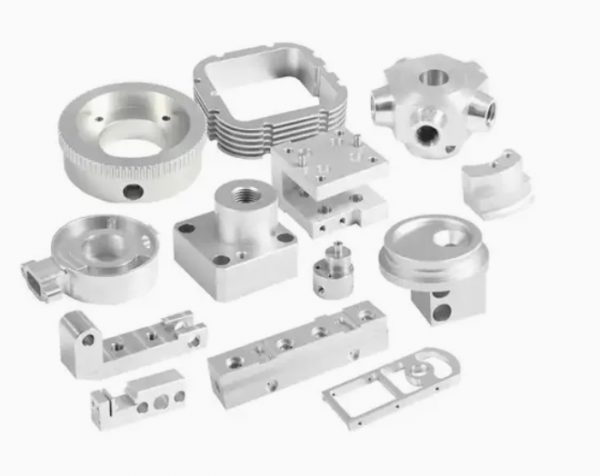
Engineering Insight: Aluminium Titanium in High-Precision Manufacturing
In the realm of advanced aerospace, defense, and high-performance industrial applications, the integration of aluminium and titanium represents a pinnacle of material engineering. These two lightweight, high-strength metals are often used in tandem to achieve optimal strength-to-weight ratios, thermal resistance, and structural integrity under extreme conditions. However, working with aluminium titanium combinations demands more than just access to premium raw materials—it requires micron-level precision, advanced machining expertise, and a deep understanding of material behavior under stress, temperature, and fatigue.
At Wuxi Lead Precision Machinery, we specialize in custom metal manufacturing for mission-critical sectors where failure is not an option. Our experience spans decades and includes precision components for military systems and Olympic-grade equipment, where performance, reliability, and repeatability are non-negotiable. These high-profile projects underscore our ability to meet the most stringent tolerances and quality standards, particularly when handling challenging material pairings such as aluminium and titanium.
One of the primary challenges in machining aluminium titanium assemblies lies in their divergent physical properties. Titanium is significantly harder and more abrasion-resistant than aluminium, requiring slower cutting speeds and specialized tooling to prevent galling and heat buildup. Aluminium, while softer and more malleable, is prone to burring and dimensional instability if not machined with controlled feeds and precise coolant application. When these materials are joined—whether through mechanical fastening, welding, or adhesive bonding—micro-misalignments or residual stresses can compromise performance. Only through high-accuracy CNC machining, in-process metrology, and rigorous post-processing inspection can these risks be mitigated.
Our facility employs 5-axis CNC machining centers with sub-micron repeatability, complemented by coordinate measuring machines (CMM) and optical inspection systems. Every component undergoes strict quality validation to ensure compliance with international standards such as ISO 2768 and AS9100, particularly for aerospace clients.
The following table outlines key material and machining specifications relevant to aluminium titanium components produced at Wuxi Lead:
| Parameter | Aluminium (6061-T6) | Titanium (Grade 5, Ti-6Al-4V) | Machining Tolerance (Typical) |
|---|---|---|---|
| Density (g/cm³) | 2.7 | 4.43 | ±0.005 mm |
| Tensile Strength (MPa) | 310 | 900 | |
| Thermal Conductivity (W/m·K) | 167 | 6.7 | |
| Common Applications | Structural frames, housings | Landing gear, engine mounts | Hybrid assemblies, actuator systems |
Our work with Olympic engineering teams has demanded not only precision but innovation—lightweighting components without sacrificing strength, often through topology-optimized designs realized via precision CNC. Similarly, military contracts have required us to maintain full traceability, from raw material certification to final inspection reports.
In the world of aluminium titanium manufacturing, precision is not a luxury—it is the foundation. At Wuxi Lead Precision Machinery, we bring proven expertise, state-of-the-art technology, and unwavering attention to detail to every custom project we undertake.
Precision Specs & Tolerances

Advanced Machining Capabilities for Aluminum-Titanium Hybrid Components
Wuxi Lead Precision Machinery delivers uncompromising precision for critical aluminum-titanium hybrid components demanded by aerospace, medical, and defense sectors. Our integrated manufacturing ecosystem addresses the unique challenges of these dissimilar metal combinations, where thermal expansion variances, material reactivity, and stringent geometric tolerances require specialized expertise. We leverage cutting-edge 5-axis CNC machining centers equipped with high-torque spindles (24,000 RPM), rigid tapping, and adaptive control systems to maintain stability during deep cavity milling and thin-wall fabrication. This eliminates secondary operations, minimizing datum shifts and ensuring feature alignment across multi-material interfaces. Material-specific toolpath strategies mitigate titanium’s work-hardening tendencies and aluminum’s propensity for built-up edge, while optimized coolant delivery manages heat generation without compromising part integrity.
Our quality assurance protocol begins at material certification and extends through final inspection. Every component undergoes rigorous first-article inspection using Zeiss CONTURA G3 coordinate measuring machines (CMM) with 0.5 µm volumetric accuracy. This metrology-grade verification captures full 3D geometry, surface finish, and positional tolerances against CAD models, generating AS9102-compliant reports with full traceability. Statistical process control (SPC) data from in-process probing and post-machining CMM scans feed continuous improvement loops, ensuring sustained capability for high-mix, low-volume production runs.
The following table defines achievable tolerances for critical features in aluminum (6061-T6, 7075-T73) and titanium (Grade 5 Ti-6Al-4V) under controlled production conditions. These values reflect our standard capability; tighter tolerances are attainable for mission-critical applications through specialized fixturing and extended inspection protocols.
| Feature Type | Aluminum Tolerance | Titanium Tolerance | Measurement Method |
|---|---|---|---|
| Linear Dimensions | ±0.005 mm | ±0.008 mm | CMM / Air Gage |
| Hole Diameter | +0.005 / -0.000 mm | +0.008 / -0.000 mm | CMM / Plug Gage |
| Positional Tolerance | ±0.005 mm | ±0.008 mm | CMM (GD&T Analysis) |
| Surface Roughness (Ra) | 0.4 µm | 0.8 µm | Profilometer |
| Flatness | 0.005 mm / 100 mm | 0.008 mm / 100 mm | CMM / Optical Flat |
Process control extends beyond dimensional accuracy. We implement in-process thermal compensation algorithms to counteract aluminum’s 23.6 µm/m°C expansion coefficient versus titanium’s 8.6 µm/m°C, ensuring assembly-ready fit during multi-stage fabrication. Dedicated tooling libraries with carbide and polycrystalline diamond (PCD) inserts address material-specific wear mechanisms, while vacuum chucks prevent distortion in thin-walled titanium structures. Our engineers collaborate with clients during DFM reviews to optimize part geometry for manufacturability, reducing lead times by up to 30% without sacrificing performance.
Wuxi Lead’s technical infrastructure transforms complex aluminum-titanium design concepts into flight-certified or implant-grade realities. By unifying 5-axis precision, metrology-grade validation, and material science expertise, we deliver components that meet the most exacting industry standards while mitigating program risk for global OEMs. Partner with us to navigate the intricacies of hybrid material manufacturing with confidence.
Material & Finish Options
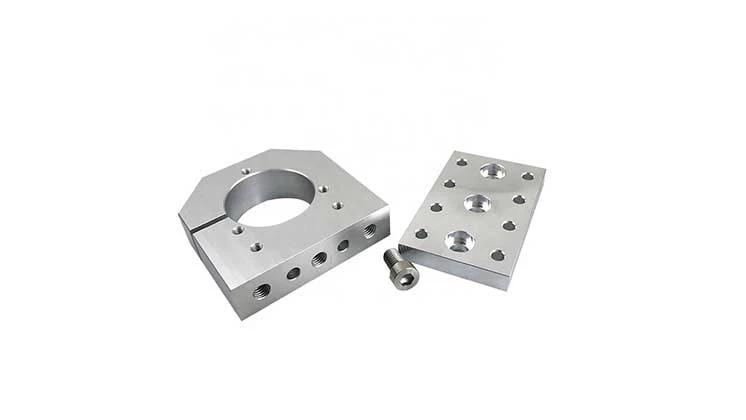
Material Selection Guide: Aluminum, Steel, and Titanium for Precision Manufacturing
In high-performance custom manufacturing, selecting the right material is critical to achieving optimal strength, weight, corrosion resistance, and cost-efficiency. At Wuxi Lead Precision Machinery, we specialize in precision components using aluminum, steel, and titanium—each offering distinct advantages depending on application requirements. Understanding the mechanical properties and compatibility with finishing processes such as anodizing is essential for informed decision-making in aerospace, automotive, medical, and industrial sectors.
Aluminum is widely favored for its excellent strength-to-weight ratio, electrical conductivity, and machinability. It is particularly suitable for applications where weight reduction is a priority without sacrificing structural integrity. Common aluminum alloys used in precision machining include 6061-T6 and 7075-T6. 6061-T6 offers good weldability and moderate strength, making it ideal for structural frames and housings. 7075-T6, while less corrosion-resistant, delivers superior strength, often used in aerospace components. Aluminum is highly compatible with anodizing, a process that enhances surface hardness and corrosion resistance. Type II (sulfuric acid) and Type III (hardcoat) anodizing are standard options, with Type III providing thicker, wear-resistant coatings suitable for high-stress environments.
Steel remains the backbone of industrial manufacturing due to its high tensile strength, durability, and cost-effectiveness. Alloy steels such as 4140 and stainless steels like 304 and 316 are commonly machined for heavy-duty applications. 4140 offers excellent toughness and is often used in shafts and tooling. Stainless steels provide superior corrosion resistance, with 316 offering enhanced performance in marine and chemical environments. Unlike aluminum, steel cannot be anodized but benefits from alternative surface treatments such as passivation, plating, or powder coating to improve longevity and appearance.
Titanium, particularly Grade 5 (Ti-6Al-4V), is the premium choice for extreme environments. It combines exceptional strength-to-density ratio, outstanding corrosion resistance, and biocompatibility. These properties make it indispensable in aerospace, defense, and medical implant applications. While more challenging to machine due to low thermal conductivity and high reactivity, titanium delivers unmatched performance under stress and temperature extremes. Surface treatments like anodizing are applicable to titanium, primarily for color coding or minor corrosion enhancement, though not for significant wear resistance.
Below is a comparative overview of key mechanical properties for common materials used in precision manufacturing.
| Material | Density (g/cm³) | Tensile Strength (MPa) | Yield Strength (MPa) | Corrosion Resistance | Anodizing Compatible |
|---|---|---|---|---|---|
| Aluminum 6061-T6 | 2.7 | 310 | 276 | Moderate | Yes (Type II/III) |
| Aluminum 7075-T6 | 2.8 | 572 | 503 | Low | Yes (Type III preferred) |
| Steel 4140 | 7.85 | 655 | 415 | Low | No |
| Stainless 304 | 8.0 | 515 | 205 | High | No |
| Stainless 316 | 8.0 | 580 | 290 | Very High | No |
| Titanium Ti-6Al-4V | 4.43 | 900 | 830 | Excellent | Yes (decorative/functional) |
At Wuxi Lead Precision Machinery, we support clients in selecting the optimal material and finish based on functional demands, environmental exposure, and lifecycle requirements. Our engineering team ensures every component meets the highest standards of precision and reliability.
Manufacturing Process & QC

Precision Manufacturing Process: Aluminum & Titanium Components
At Wuxi Lead Precision Machinery, our aluminum and titanium production process is engineered for uncompromising quality in high-stakes industries like aerospace, medical, and defense. We integrate advanced CNC technology with rigorous quality protocols across three phases to achieve Zero Defects outcomes.
Design Phase: Precision from Blueprint
Engineering begins with collaborative design analysis. Our team reviews CAD models for manufacturability, optimizing geometry for material behavior—accounting for aluminum’s thermal conductivity and titanium’s work-hardening tendencies. Finite Element Analysis (FEA) simulates stress points and thermal deformation, ensuring designs meet AS9100 or ISO 13485 standards before prototyping. Material-specific toolpath strategies are developed to minimize vibration and tool wear, critical for titanium’s low thermal conductivity.
Prototyping: Validation Under Real Conditions
Rapid prototyping using 5-axis CNC milling verifies design integrity. For aluminum alloys (e.g., 6061-T6, 7075-T7351), we prioritize high-speed machining to prevent built-up edge. Titanium prototypes (Ti-6Al-4V, CP Grade 2) undergo strict coolant management protocols to avoid contamination and heat-induced microcracking. Every prototype undergoes First Article Inspection (FAI) per AS9102, with CMM reports validating tolerances down to ±0.005 mm. Client feedback drives iterative refinements, eliminating errors before scale-up.
Mass Production: Sustained Zero Defects Execution
Full-scale production leverages automated CNC cells with real-time SPC (Statistical Process Control). Our Zero Defects framework includes:
In-process laser probing for on-machine dimensional verification.
Automated tool-wear monitoring with AI-driven replacement alerts.
100% post-machining CMM inspection for critical features.
Environmental controls maintaining ±1°C temperature stability to counter aluminum/titanium thermal expansion variances.
Each batch includes material traceability reports (mill certificates, heat treatment logs) and SPC charts demonstrating Cpk ≥1.67.
Material-Specific Production Capabilities
| Parameter | Aluminum Alloys | Titanium Alloys |
|---|---|---|
| Typical Grades | 6061-T6, 7075-T7351 | Ti-6Al-4V, CP Grade 2 |
| Tolerance Range | ±0.005 mm to ±0.025 mm | ±0.005 mm to ±0.020 mm |
| Surface Finish | Ra 0.4 µm to Ra 1.6 µm | Ra 0.8 µm to Ra 3.2 µm |
| Max Work Envelope | 1250 x 800 x 600 mm | 1000 x 600 x 500 mm |
| Key Process Focus | Chip evacuation, HSM | Coolant purity, RPM control |
This closed-loop methodology ensures every component meets mission-critical requirements. By embedding quality at each phase—from simulation-validated design to SPC-governed production—we eliminate scrap, reduce time-to-market, and deliver components where failure is not an option. Partner with Wuxi Lead for manufacturing that turns engineering ambition into flawless reality.
Wuxi Lead Precision Machinery
Senior CNC Engineer & Sales Director
Why Choose Wuxi Lead Precision
Partner with Lead Precision for Unmatched Expertise in Aluminium-Titanium Manufacturing
At Wuxi Lead Precision Machinery, we specialize in delivering high-precision, custom-engineered solutions for advanced materials such as aluminium and titanium—two of the most critical metals in modern aerospace, automotive, medical, and defense applications. When you choose to partner with us, you gain access to over a decade of manufacturing excellence, cutting-edge CNC technology, and a dedicated engineering team committed to precision, repeatability, and performance. Our facility in Wuxi, China, is equipped with multi-axis machining centers, advanced quality inspection systems, and material-specific processing protocols that ensure every component meets the most stringent international standards.
Aluminium and titanium present unique machining challenges due to their differing thermal conductivity, strength-to-weight ratios, and reactivity during processing. Our engineers apply deep material science knowledge to optimize cutting parameters, tooling strategies, and fixturing to prevent warping, maintain tight tolerances, and extend tool life. Whether you require high-volume production runs or low-volume prototypes, our agile manufacturing model allows rapid turnaround without compromising quality.
We understand that in high-end industrial applications, specifications are non-negotiable. That is why every project begins with a detailed engineering review, where our team collaborates with yours to assess design for manufacturability, material selection, surface finish requirements, and compliance with industry certifications such as ISO 9001 and AS9100. This proactive approach minimizes risk, reduces time-to-market, and ensures consistent part performance under extreme conditions.
Our clients rely on us not just as a supplier, but as a strategic manufacturing partner. From initial concept and prototyping to full-scale production and logistics support, we provide end-to-end service with full traceability and real-time project updates. With in-house capabilities spanning 5-axis CNC milling, precision turning, EDM, and automated inspection, we deliver components that perform reliably in mission-critical environments.
Below are key technical specifications we routinely achieve for aluminium and titanium components:
| Parameter | Capability (Aluminium) | Capability (Titanium) |
|---|---|---|
| Tolerance | ±0.005 mm | ±0.008 mm |
| Surface Finish (Ra) | 0.4 – 1.6 µm | 0.8 – 2.0 µm |
| Max Part Size (mm) | 1200 x 800 x 600 | 1000 x 700 x 500 |
| Machining Axes | Up to 5-axis simultaneous | Up to 5-axis simultaneous |
| Material Grades Supported | 6061, 7075, 2024, etc. | Grade 2, Grade 5 (Ti-6Al-4V), etc. |
| Secondary Processes | Anodizing, Passivation, Deburring, CMM Inspection | Same as Aluminium |
When performance, precision, and reliability matter, trust Wuxi Lead Precision Machinery to deliver. Contact us today at [email protected] to discuss your next aluminium-titanium manufacturing project. Let our expertise become your competitive advantage.
⚙️ Precision Cost Estimator
Estimate relative manufacturing effort based on tolerance.