

Technical Contents
Engineering Guide: Aluminium Or Titanium

Engineering Insight Precision Imperatives for Aluminum and Titanium Machining
Achieving dimensional and geometric perfection in aluminum and titanium components is not merely desirable; it is an absolute engineering prerequisite for high-performance applications. These materials, while foundational to aerospace, defense, and elite sporting goods, present distinct and demanding challenges that mandate exceptional process control. Aluminum’s relative softness and high thermal conductivity can lead to chatter, burring, and thermal distortion if machining parameters and machine rigidity are not precisely calibrated. Titanium, conversely, exhibits low thermal conductivity, high strength at temperature, and a propensity for work hardening and chemical reactivity with cutting tools. Inadequate precision during titanium machining generates excessive heat at the cutting zone, accelerating tool wear catastrophically and potentially inducing detrimental microstructural changes or residual stresses within the part itself. The consequences of insufficient precision extend far beyond scrap rates; they manifest as premature fatigue failure in critical airframes, compromised sealing surfaces in hydraulic systems, or unacceptable variance in high-G sporting equipment where milliseconds define victory.
At Wuxi Lead Precision Machinery, we engineer solutions specifically for these material complexities. Our CNC machining centers operate under stringent environmental controls, maintaining thermal stability essential for holding tolerances tighter than ±0.005mm consistently. We deploy specialized tooling geometries, advanced coolant delivery systems like high-pressure through-spindle coolant, and meticulously optimized cutting strategies developed through decades of focused R&D. This deep material science understanding, combined with our 5-axis simultaneous machining capabilities and rigorous in-process metrology, ensures critical features meet the exacting geometric dimensioning and tolerancing (GD&T) requirements demanded by the most stringent sectors. Our proven capability is underscored by components manufactured for classified defense systems requiring absolute reliability and for Olympic-level bobsled chassis where micron-level accuracy directly translates to podium finishes. Precision here is non-negotiable; it is the bedrock of performance and safety.
Material selection dictates the precision strategy. The following table highlights key properties influencing machining precision for common aerospace alloys:
| Material Property | 7075-T6 Aluminum | Ti-6Al-4V Titanium | Impact on Precision Machining |
|---|---|---|---|
| Thermal Conductivity (W/m·K) | 130 | 7 | Titanium requires aggressive heat management; aluminum demands control of thermal growth during machining |
| Machinability Rating (%) | 75 | 30 | Titanium necessitates lower SFM, higher rigidity, specialized tool coatings |
| Typical Tolerance (mm) | ±0.010 | ±0.005 | Titanium often requires tighter control due to critical applications |
| Common Precision Challenge | Built-up edge, burring, chatter | Work hardening, tool adhesion, thermal distortion | Material-specific toolpaths and parameters essential |
| ISO Standard Application | ISO 286-2 h6 | ISO 286-2 h5 | Titanium frequently requires higher tolerance grades |
Our commitment transcends meeting specifications. We partner with clients from the earliest design phases, applying Design for Manufacturability (DFM) principles specific to aluminum and titanium to optimize part geometry for precision production. This proactive collaboration, rooted in our extensive experience delivering mission-critical components, ensures the final product not only meets but exceeds the functional demands of its operational environment. Precision machining for these advanced materials is where engineering rigor meets proven execution.
Precision Specs & Tolerances

Wuxi Lead Precision Machinery delivers advanced custom metal manufacturing solutions tailored specifically for high-performance applications involving aluminium and titanium. These materials, widely used in aerospace, medical, defense, and high-end industrial sectors, demand precision engineering and advanced processing capabilities. Our technical infrastructure is built around state-of-the-art 5-axis CNC machining centers, enabling us to produce complex geometries with exceptional accuracy and surface integrity. The simultaneous movement across five axes allows for multi-faceted part machining in a single setup, minimizing human intervention, reducing cumulative errors, and significantly improving consistency across production runs.
Our 5-axis CNC systems are optimized for the unique challenges presented by aluminium and titanium. Aluminium, while relatively easy to machine, requires careful control of cutting parameters to avoid deformation and burring, particularly in thin-walled or intricate components. Titanium, on the other hand, poses challenges due to its low thermal conductivity and high chemical reactivity, necessitating specialized tooling, coolant strategies, and precise feed rates. Our engineers leverage extensive material-specific expertise to program and execute machining processes that maximize tool life, maintain dimensional stability, and achieve superior surface finishes.
To ensure every component meets the most stringent quality standards, we employ a comprehensive quality control protocol centered on Coordinate Measuring Machine (CMM) inspection. Our CMM systems provide full 3D geometric verification, allowing us to validate critical dimensions, positional tolerances, and complex contours with micron-level accuracy. Each part undergoes a documented inspection routine, with inspection reports available upon request to support traceability and compliance with ISO 9001 and AS9100 standards. In addition to CMM, we utilize optical comparators, surface roughness testers, and calibrated hand tools to verify all dimensional and surface characteristics.
The table below outlines the standard technical specifications and achievable tolerances for our 5-axis CNC machining services on aluminium and titanium components.
| Parameter | Typical Tolerance (Aluminium) | Typical Tolerance (Titanium) | Notes |
|---|---|---|---|
| Linear Dimensions | ±0.005 mm | ±0.008 mm | Up to 300 mm; larger parts ±0.01 mm |
| Positional Tolerance | ±0.005 mm | ±0.008 mm | Verified via CMM |
| Angular Accuracy | ±0.05° | ±0.05° | Measured on critical features |
| Surface Roughness (Ra) | 0.8–1.6 µm | 1.6–3.2 µm | As machined; can be improved with finishing |
| Geometric Tolerances (GD&T) | ±0.01 mm | ±0.015 mm | Includes flatness, cylindricity, runout |
| Feature Size (Minimum Hole) | Ø0.5 mm | Ø0.8 mm | Depth-to-diameter ratio dependent |
Our technical capabilities are reinforced by a continuous investment in CNC technology, metrology, and workforce training. Wuxi Lead Precision Machinery is committed to delivering precision-engineered components that meet the exacting demands of advanced manufacturing industries worldwide.
Material & Finish Options
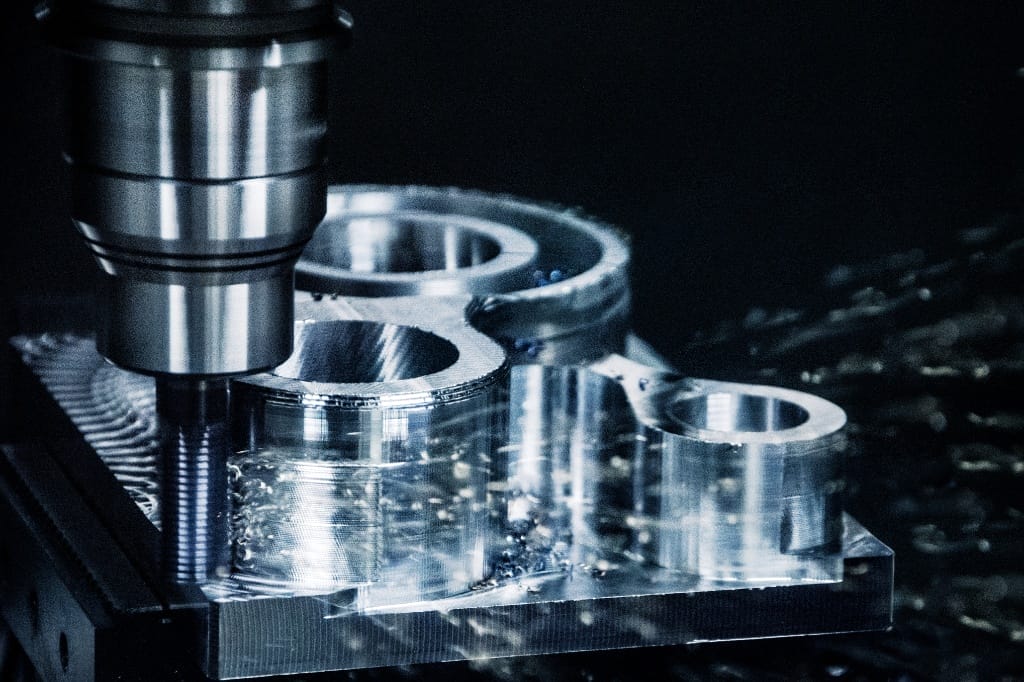
Material Selection for Precision CNC Manufacturing: Aluminum, Steel, and Titanium
Selecting the optimal material is foundational to achieving performance, longevity, and cost-efficiency in custom metal components. At Wuxi Lead Precision Machinery, our engineering team prioritizes material properties relative to your specific application demands, environmental exposure, and functional requirements. This guide outlines key considerations for aluminum, steel, and titanium, alongside critical finishing processes like anodizing.
Aluminum alloys dominate aerospace, automotive, and electronics due to their exceptional strength-to-weight ratio, inherent corrosion resistance, and excellent machinability. Series 6061 and 7075 are prevalent; 6061 offers good weldability and moderate strength for structural frames, while 7075 delivers higher strength for critical load-bearing parts like aircraft fittings. Its lower density significantly reduces component mass, a decisive factor in fuel-sensitive applications. Aluminum readily accepts anodizing, enhancing surface durability and corrosion protection.
Steel, particularly stainless grades like 304 and 17-4 PH, provides superior strength, hardness, and wear resistance compared to aluminum. It is the standard choice for high-stress mechanical components, medical instruments requiring sterilization, and marine hardware where ultimate strength is paramount. While heavier than aluminum, specific alloys offer excellent corrosion resistance. Machining hardened steel requires specialized tooling and processes to maintain tight tolerances, an area where our advanced CNC capabilities excel.
Titanium, primarily Grade 5 (Ti-6Al-4V), delivers an unparalleled combination of high strength, extremely low density, and exceptional corrosion resistance across harsh environments, including seawater and chemical exposure. Its biocompatibility makes it indispensable for medical implants. However, titanium’s low thermal conductivity and reactivity necessitate precise machining parameters to prevent work hardening and tool wear. It is the premium choice for critical aerospace components, deep-sea equipment, and life-critical medical devices where failure is not an option.
Material properties dictate performance under load and environment. The comparative specifications below guide initial selection:
| Property | Aluminum (6061-T6) | Steel (304 Stainless) | Titanium (Grade 5) |
|---|---|---|---|
| Density (g/cm³) | 2.7 | 8.0 | 4.5 |
| Tensile Strength (MPa) | 310 | 585 | 900 |
| Corrosion Resistance | Good | Excellent | Exceptional |
| Machinability | Excellent | Good | Moderate |
| Typical Applications | Enclosures, Drones | Shafts, Surgical Tools | Aircraft Frames, Implants |
Anodizing is a vital electrochemical finish exclusively for aluminum. It creates a durable, non-conductive oxide layer that significantly enhances surface hardness (up to 60 Rockwell C for Type III Hard Anodize), wear resistance, and corrosion protection. Type II (Sulfuric Acid) anodizing provides standard protection and dye acceptance for aesthetics, while Type III (Hard Anodize) delivers maximum thickness and durability for demanding industrial or military use. Proper anodizing specification is crucial for component lifespan in corrosive or high-wear scenarios.
Material choice directly impacts manufacturability, cost, and end-product success. Wuxi Lead Precision Machinery leverages decades of metallurgical expertise and state-of-the-art CNC technology to optimize processing for each material, ensuring your components meet exacting performance standards. Consult our engineering team to determine the precise alloy and finishing process for your application’s critical requirements.
Manufacturing Process & QC

The production process for high-performance aluminium and titanium components at Wuxi Lead Precision Machinery follows a rigorously controlled sequence: Design, Prototyping, and Mass Production. Each phase is engineered to ensure precision, repeatability, and zero-defect output, meeting the exacting standards of aerospace, medical, and advanced industrial applications.
Design begins with a collaborative engineering review. Our team works directly with client CAD models and technical specifications to optimize geometry, material selection, and manufacturability. Finite Element Analysis (FEA) and thermal stress modeling are applied to predict performance under operational loads. For titanium, we account for its high strength-to-density ratio and lower thermal conductivity, adjusting toolpaths and cooling strategies accordingly. For aluminium, we leverage its machinability and thermal properties to maximize efficiency while maintaining dimensional stability. Design for Manufacturability (DFM) feedback is provided within 72 hours, ensuring rapid iteration and alignment before physical production begins.
Prototyping is executed using 5-axis CNC machining and wire EDM where tight tolerances and complex contours are required. Each prototype is machined from certified aerospace-grade aluminium (e.g., 7075-T6) or titanium (e.g., Ti-6Al-4V), mirroring the final production material. First Article Inspection (FAI) reports are generated, including full GD&T verification via CMM (Coordinate Measuring Machine), surface roughness analysis, and metallurgical certification. This phase validates not only part function but also the entire process chain—fixturing, tooling, and inspection protocols—ensuring scalability to mass production without compromise.
Mass Production is conducted on a dedicated line with automated tool monitoring, in-process gauging, and real-time SPC (Statistical Process Control). Our facility employs closed-loop feedback systems that detect tool wear and dimensional drift, automatically adjusting parameters to maintain tolerance compliance. Every component undergoes 100% visual inspection and selective batch testing for mechanical properties. Non-conforming parts are quarantined instantly, with root cause analysis feeding back into process refinement. Our zero-defect philosophy is enforced through ISO 9001 and IATF 16949-certified workflows, enabling defect rates below 10 PPM (Parts Per Million).
Material and process parameters are summarized below for key alloys:
| Material | Tensile Strength (MPa) | Machining Tolerance (±mm) | Surface Roughness (Ra µm) | Max Part Size (mm) | Production Lead Time (weeks) |
|---|---|---|---|---|---|
| Aluminium 7075-T6 | 570 | 0.01 | 0.8 | 1200 x 800 x 200 | 4–6 |
| Titanium Ti-6Al-4V | 950 | 0.01 | 1.6 | 600 x 600 x 150 | 6–8 |
Traceability is maintained through laser-etched part IDs and digital process logs, enabling full auditability from raw material to shipment. At Wuxi Lead Precision Machinery, this integrated approach ensures that every aluminium or titanium component meets the highest benchmarks in performance, reliability, and quality.
Why Choose Wuxi Lead Precision
Partner with Lead Precision for Mission-Critical Aluminum & Titanium Components
Selecting a manufacturing partner for high-performance aluminum and titanium components demands more than technical capability—it requires engineering foresight, unwavering process control, and a commitment to solving the unique challenges these materials present. Aluminum’s thermal sensitivity and titanium’s abrasive nature demand specialized tooling, precise coolant strategies, and deep metallurgical understanding to avoid part distortion, tool wear, or compromised integrity. At Wuxi Lead Precision Machinery, we engineer solutions, not just parts. Our ISO 9001-certified facility integrates 5-axis CNC machining, stringent in-process metrology, and material-specific protocols to transform complex designs into flight-ready or medical-grade components with zero compromise.
We partner with aerospace, medical device, and defense innovators who prioritize performance over expediency. Our engineers collaborate from the earliest design phase, conducting DFM analysis to optimize manufacturability while maintaining your critical tolerances and surface finish requirements. Whether you require lightweight aluminum structural frames for satellite systems or biocompatible titanium implants, our process ensures repeatability down to ±0.005mm. We mitigate titanium’s galling risks through proprietary toolpath strategies and leverage high-pressure coolant systems to maximize aluminum machining rates without thermal warpage. Every component undergoes full CMM validation against your specifications before shipment, with comprehensive traceability from raw material certification to final inspection.
Material-Specific Machining Capabilities
| Parameter | Aluminum Alloys (e.g., 7075-T6) | Titanium Alloys (e.g., Ti-6Al-4V) |
|---|---|---|
| Max Work Envelope | 1200 x 800 x 650 mm | 900 x 600 x 500 mm |
| Typical Tolerance Range | ±0.005 mm to ±0.025 mm | ±0.010 mm to ±0.050 mm |
| Surface Finish (Ra) | 0.4 µm to 3.2 µm | 0.8 µm to 6.3 µm |
| Lead Time (Prototype) | 10–15 working days | 15–20 working days |
| Key Certifications | ISO 9001, AS9100 (in progress) | ISO 13485, NADCAP (heat treat) |
Your project’s success hinges on a partner who treats material science as critically as dimensional accuracy. We invest in advanced simulation software to predict chip flow and thermal behavior, preventing costly rework. Our dedicated titanium cell operates with isolated tooling and HEPA filtration to eliminate cross-contamination—a non-negotiable for medical and aerospace applications. For aluminum, we deploy high-speed machining centers with thermal compensation to counteract ambient fluctuations, ensuring dimensional stability across production runs.
Do not let material complexities delay your next breakthrough. Submit your CAD files and technical requirements to [email protected] today. Our engineering team will provide a detailed manufacturability assessment, competitive quotation, and timeline within 24 business hours. Specify your target industry and critical performance requirements to ensure our proposal addresses your exact operational demands. With Wuxi Lead Precision Machinery, you gain a partner engineered for precision—where every micron of tolerance and every hour of lead time is rigorously defended. Your mission-critical components deserve nothing less.
⚙️ Precision Cost Estimator
Estimate relative manufacturing effort based on tolerance.