

Technical Contents
Engineering Guide: Aluminium Cnc Machining
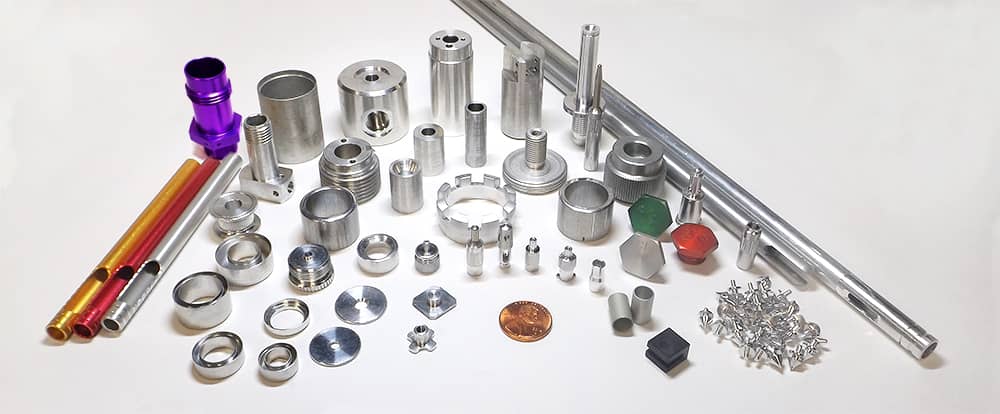
Engineering Insight: Precision in Aluminium CNC Machining
In the realm of high-performance manufacturing, aluminium CNC machining stands as a cornerstone for industries where weight, strength, and dimensional accuracy are non-negotiable. From aerospace components to high-speed rail systems and advanced military equipment, the demand for precision-machined aluminium parts continues to rise. At Wuxi Lead Precision Machinery, we understand that achieving excellence in this domain requires more than advanced machinery—it demands engineering mastery, process control, and a deep understanding of material behavior under exacting conditions.
Aluminium, while inherently lightweight and corrosion-resistant, presents unique challenges in CNC machining. Its softness and thermal conductivity can lead to tool deflection, burring, and dimensional instability if not managed with precision. Maintaining tight tolerances—often within ±0.005 mm—requires optimized cutting strategies, rigid tooling setups, and real-time process monitoring. At Lead Precision, our decades-long experience in machining aerospace-grade aluminium alloys such as 6061, 7075, and 2024 ensures that every component meets the highest standards of geometric accuracy and surface integrity.
Our commitment to precision is validated through our involvement in mission-critical projects, including components for Olympic-standard sports equipment and certified military hardware. These applications demand zero-defect manufacturing, where even microscopic deviations can compromise performance. Our CNC machining centers, equipped with high-speed spindles and multi-axis capabilities, are operated by engineers trained in advanced metrology and process validation. Every stage—from raw material inspection to final CMM verification—is governed by ISO 9001 and AS9100 standards.
Beyond equipment, precision is embedded in our workflow. We employ adaptive machining techniques that adjust feed rates and depths of cut based on real-time feedback, minimizing thermal distortion in aluminium. Our toolpath optimization software reduces cycle times while enhancing surface finish, a critical factor in components requiring secondary treatments such as anodizing or painting.
The following table outlines key specifications achievable in our aluminium CNC machining operations:
| Parameter | Typical Capability | High-Precision Capability |
|---|---|---|
| Tolerance | ±0.01 mm | ±0.005 mm |
| Surface Finish (Ra) | 3.2 µm | 0.8 µm |
| Maximum Part Size | 1200 x 800 x 600 mm | 800 x 500 x 400 mm |
| Spindle Speed | Up to 24,000 rpm | Up to 30,000 rpm |
| Axis Configuration | 3-axis, 4-axis, 5-axis | 5-axis simultaneous |
| Materials | 6061, 7075, 2024, 5052, 7050 | 7075-T7351, 2024-T3 |
| Lead Time (Prototype) | 7–10 working days | 5–7 working days |
At Wuxi Lead Precision Machinery, we combine technical expertise with rigorous quality assurance to deliver aluminium components that perform under the most demanding conditions. Whether supporting innovation in transportation or national defense, our precision machining services reflect a legacy of engineering excellence.
Precision Specs & Tolerances
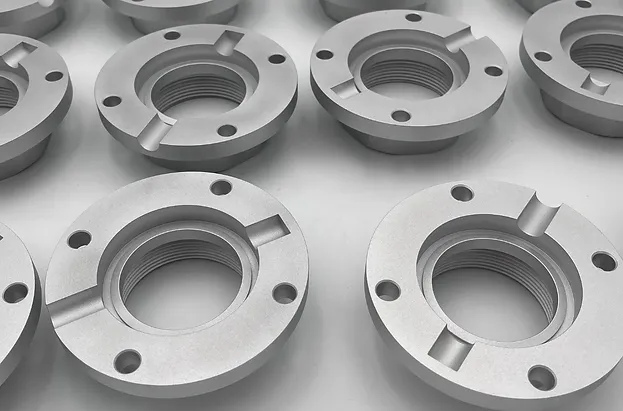
Technical Capabilities: Precision Aluminum CNC Machining at Wuxi Lead Precision Machinery
Wuxi Lead Precision Machinery delivers uncompromising quality in aluminum CNC machining for mission-critical aerospace, medical, and industrial applications. Our technical foundation centers on advanced multi-axis machining and rigorous metrology, engineered to transform complex aluminum components from design to certified reality. Aluminum’s unique properties—lightweight strength, thermal conductivity, and corrosion resistance—demand specialized process control. We address these challenges through optimized toolpaths, high-speed machining strategies, and material-specific coolant management, ensuring minimal thermal distortion and superior surface integrity across all alloys including 6061, 7075, and 2024.
Our core manufacturing capability resides in a modern fleet of 5-axis CNC machining centers. These systems enable simultaneous multi-directional tool movement, eliminating the need for multiple setups and preserving critical geometric relationships. This capability is essential for producing intricate aluminum components such as turbine blades, hydraulic manifolds, and surgical instrument housings with continuous, high-precision contours. The elimination of repositioning errors directly translates to tighter tolerances, reduced lead times, and enhanced repeatability. All machining processes leverage high-rigidity spindles and adaptive control systems to maintain dimensional stability during extended production runs, even with challenging thin-wall geometries common in aluminum fabrication.
Quality assurance is non-negotiable. Every critical aluminum component undergoes comprehensive inspection using state-of-the-art Coordinate Measuring Machines (CMMs) operating under ISO/IEC 17025 accredited protocols. Our CMM cells provide full 3D geometric validation, verifying complex profiles, positional tolerances, and datums against original CAD models. This metrology-driven approach generates detailed inspection reports with full traceability, ensuring compliance with AS9100, ISO 13485, and customer-specific requirements. Process capability studies (Cp/Cpk) are routinely performed to validate sustained production control, providing clients with documented confidence in part consistency.
The following table details our standard achievable tolerances for machined aluminum components, reflecting the precision enabled by our 5-axis platform and CMM validation system. These values represent typical production capability; tighter tolerances are attainable for critical features through dedicated process refinement.
| Feature Type | Standard Tolerance | Notes |
|---|---|---|
| Linear Dimensions | ±0.025 mm | Up to 300 mm; ±0.05 mm for >300 mm |
| Angular Dimensions | ±0.1° | Verified via CMM vector measurement |
| Positional Tolerance | ±0.02 mm | Relative to primary datums |
| Surface Roughness (Ra) | 0.8 µm | Typical; 0.4 µm achievable on critical surfaces |
| Hole Diameter | H7 (±0.015 mm) | Reamed/precision bored features |
This integrated capability—combining 5-axis machining agility with metrology-grade verification—ensures Wuxi Lead consistently delivers aluminum components that meet the most stringent functional and regulatory demands. We prioritize process transparency, providing clients with actionable data to mitigate supply chain risk and accelerate time-to-market for high-value aluminum assemblies. Partner with us for precision where dimensional accuracy directly impacts performance and safety.
Material & Finish Options
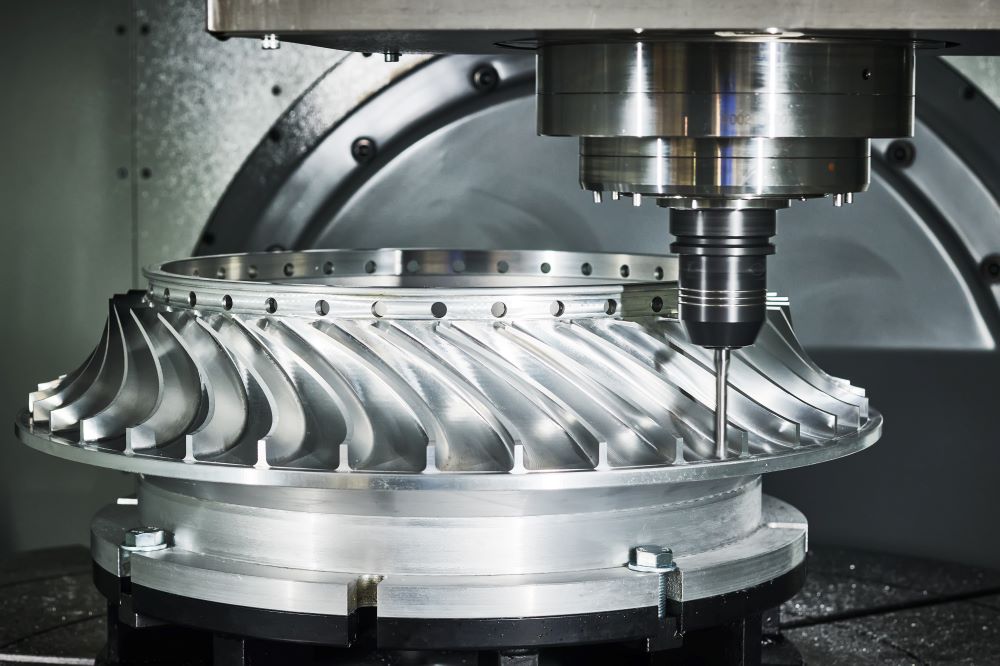
Material Selection in Precision CNC Machining: Aluminum, Steel, and Titanium
In high-precision CNC machining, material selection is a critical factor that directly influences part performance, durability, cost-efficiency, and manufacturability. At Wuxi Lead Precision Machinery, we specialize in machining a range of advanced materials, with aluminum, steel, and titanium being the most widely used in aerospace, automotive, medical, and industrial applications. Each material offers distinct mechanical properties, making them suitable for specific engineering requirements.
Aluminum stands out for its excellent strength-to-weight ratio, corrosion resistance, and machinability. It is particularly favored in applications where weight reduction is essential without compromising structural integrity. The most commonly machined aluminum alloys include 6061, 7075, and 2024. 6061 offers good weldability and moderate strength, ideal for general-purpose components. 7075, with higher tensile strength, is preferred in aerospace and high-stress environments. 2024 is known for its fatigue resistance, often used in aircraft structures. Due to its softness and thermal conductivity, aluminum allows for high-speed machining with tight tolerances, reducing production time and tool wear.
Steel, particularly stainless steel grades such as 304 and 17-4 PH, provides superior strength, hardness, and resistance to high temperatures and corrosion. While more challenging to machine than aluminum due to its toughness, steel is essential for components requiring long-term durability and wear resistance. It is commonly used in medical devices, automotive shafts, and industrial tooling. The higher cutting forces and heat generation during steel machining demand robust tooling and precise process control—capabilities we maintain at Wuxi Lead through advanced CNC systems and in-house quality monitoring.
Titanium, especially Grade 5 (Ti-6Al-4V), offers an exceptional strength-to-density ratio and outstanding resistance to corrosion and extreme temperatures. It is the material of choice in critical aerospace and medical implant applications. However, its low thermal conductivity and high chemical reactivity require specialized tooling and slower machining parameters to prevent work hardening and tool degradation. Our facility employs optimized cutting strategies and coolant techniques to ensure precision and surface integrity when machining titanium components.
Mechanical Properties Comparison
| Material | Tensile Strength (MPa) | Density (g/cm³) | Common Grades | Typical Applications |
|---|---|---|---|---|
| Aluminum | 310 (7075-T6) | 2.8 | 6061, 7075, 2024 | Aerospace frames, enclosures |
| Stainless Steel | 1000 (17-4 PH) | 7.8 | 304, 17-4 PH | Medical instruments, valves |
| Titanium | 900 (Ti-6Al-4V) | 4.5 | Grade 2, Grade 5 | Aircraft engines, prosthetics |
Surface finishes further enhance performance and aesthetics. Anodizing, especially Type II and Type III (hard coat), is widely applied to aluminum parts to improve corrosion and wear resistance while allowing for color coding. Our anodizing processes meet international standards, ensuring uniform coating thickness and adhesion.
At Wuxi Lead Precision Machinery, we combine material expertise with advanced CNC capabilities to deliver components that meet the highest industry specifications. Proper material and finish selection ensures optimal function, longevity, and cost-effectiveness in every machined part.
Manufacturing Process & QC
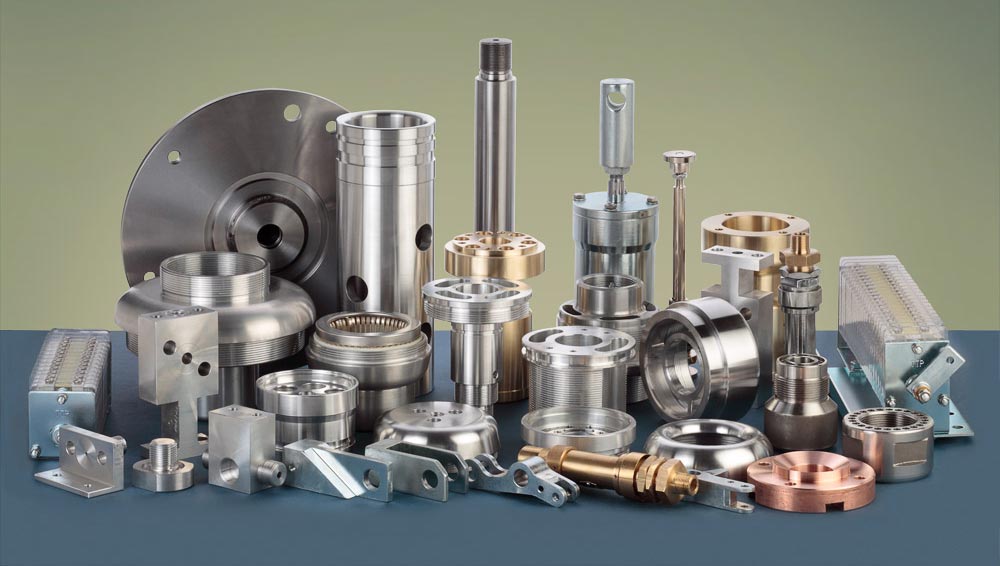
Aluminium CNC Machining Production Process: Precision from Concept to Volume
At Wuxi Lead Precision Machinery, our aluminium CNC machining process is engineered for uncompromising quality and repeatability, ensuring Zero Defects from initial design through to high-volume production. We integrate advanced engineering with rigorous process control, specifically optimized for the unique properties of aluminium alloys like 6061-T6 and 7075-T6. This systematic approach guarantees parts meet exacting aerospace, medical, and industrial specifications while maximizing material yield and operational efficiency.
The process begins with Engineering & Design Validation. Our engineering team conducts thorough Design for Manufacturability (DFM) analysis on client CAD models, identifying potential machining challenges specific to aluminium, such as thermal expansion, chip evacuation, or thin-wall stability. We collaborate closely with clients to refine geometries, ensuring optimal tool access, minimal fixturing complexity, and inherent structural integrity. Material selection is critically assessed for grade, temper, and grain structure to guarantee metallurgical integrity under operational loads and environmental conditions. This phase prevents costly errors before metal is cut.
Precision Prototyping follows, serving as the critical validation step. Utilizing our 5-axis vertical and horizontal machining centers with high-speed spindles, we produce functional prototypes mirroring final production methods. Advanced CAM simulation verifies toolpaths, preventing collisions and optimizing cutting parameters for aluminium’s tendency to gall or built-up edge. Every prototype undergoes comprehensive First Article Inspection (FAI) per AS9102 standards, including full geometric dimensioning and tolerancing (GD&T) verification, surface roughness measurement, and material certification review. Rapid iteration based on prototype feedback ensures the design is flawless and production-ready.
Zero Defects Mass Production leverages the validated process under stringent statistical process control (SPC). Our production cells feature automated tool presetters, in-process probing for real-time dimensional feedback, and integrated coolant management systems to maintain thermal stability during extended aluminium runs. Each operation employs calibrated CMMs, optical comparators, and surface profilometers for 100% critical feature inspection at defined intervals. Real-time data from machine sensors monitors tool wear, vibration, and power consumption, triggering automatic adjustments or tool changes before deviations occur. Full traceability, from raw billet lot to finished part serial number, is maintained, supported by comprehensive quality documentation packages. This closed-loop system, combined with our ISO 9001:2015 certified processes, guarantees consistent output where every part meets specification without rework.
Wuxi Lead Aluminium CNC Machining Process Specifications
| Process Phase | Key Parameters | Tolerance Range | Surface Finish (Ra) | Typical Lead Time |
|---|---|---|---|---|
| Precision Prototyping | 3-5 Axis Milling, FAI per AS9102 | ±0.010 mm | 0.8 – 3.2 μm | 3-5 Working Days |
| Zero Defects Mass Production | SPC-Controlled 5-Axis, In-Process Probing | ±0.005 mm (Critical) | 0.4 – 1.6 μm | Volume Dependent |
This disciplined progression—grounded in deep aluminium machining expertise and relentless process verification—ensures Wuxi Lead delivers production-ready, defect-free components, minimizing client risk and accelerating time-to-market for mission-critical applications.
Why Choose Wuxi Lead Precision
Partner with Lead Precision for Unmatched Expertise in Aluminium CNC Machining
At Wuxi Lead Precision Machinery, we understand that in high-performance industries such as aerospace, automotive, medical, and advanced electronics, precision is non-negotiable. When it comes to aluminium CNC machining, our engineering team combines decades of experience with state-of-the-art technology to deliver components that meet the most stringent requirements. Our commitment to quality, repeatability, and on-time delivery has made us a trusted partner for global OEMs and Tier-1 suppliers. If your project demands tight tolerances, complex geometries, and flawless surface finishes in aluminium alloys, partnering with Lead Precision ensures a competitive edge.
Our facility in Wuxi, China, is equipped with advanced 3-, 4-, and 5-axis CNC machining centers, integrated CMM inspection systems, and automated tooling management. We specialize in high-speed machining of aerospace-grade aluminium materials such as 6061-T6, 7075-T6, and 2024-T3, ensuring optimal material removal rates while maintaining dimensional accuracy down to ±0.005 mm. Our process-driven approach includes comprehensive DFMEA analysis, first-article inspection reports (FAIR), and full traceability for every batch—critical for industries where compliance and reliability are paramount.
We don’t just manufacture parts—we engineer solutions. From prototype development to high-volume production, our engineering team collaborates closely with clients to optimize designs for manufacturability, reduce cycle times, and lower total cost of ownership. Whether you’re developing lightweight structural components, heat sinks, or precision enclosures, our expertise in aluminium machining allows us to meet demanding specifications while accelerating time to market.
Our quality management system is ISO 9001:2015 certified, and we adhere to international standards including AS9100 for aerospace and ISO 13485 for medical devices. Every component undergoes rigorous in-process and final inspection, supported by digital documentation and real-time production monitoring. We also offer value-added services such as anodizing, bead blasting, and custom packaging to meet your exact requirements.
Choose a partner who combines technical precision with operational reliability. At Wuxi Lead Precision Machinery, we are fully equipped to handle your most challenging aluminium CNC machining projects with consistency, transparency, and engineering excellence.
Contact us today at [email protected] to discuss your next project. Let our team provide you with a detailed quotation, technical feedback, and production planning support—ensuring your components are manufactured to the highest global standards.
| Specification | Detail |
|---|---|
| Materials | 6061-T6, 7075-T6, 2024-T3, 5052, 6082, and custom alloys |
| Tolerances | ±0.005 mm (standard), down to ±0.002 mm (tight-tolerance) |
| Max Work Envelope | 1200 x 800 x 600 mm (5-axis) |
| Surface Finish | Ra 0.8 µm standard, down to Ra 0.4 µm with polishing |
| Quality Standards | ISO 9001:2015, AS9100, ISO 13485 |
| Lead Time | 7–15 days for prototypes, 15–30 days for production runs |
| Value-Added Services | Anodizing, bead blasting, engraving, assembly, custom packaging |
⚙️ Precision Cost Estimator
Estimate relative manufacturing effort based on tolerance.