Technical Contents
Engineering Guide: Machining Shop Materials

Engineering Insight: Machining Shop Materials and the Foundation of Precision
Material selection is not merely a procurement decision; it is the foundational engineering variable determining the ultimate precision, performance, and longevity of a machined component. In high-stakes applications across aerospace, defense, and advanced medical sectors, tolerances measured in microns are non-negotiable. The inherent properties of the base material – thermal expansion coefficient, microstructure homogeneity, residual stress levels, and machinability – directly dictate the achievable geometric accuracy and surface integrity during CNC processing. Ignoring these material-centric factors inevitably leads to dimensional drift, warpage post-machining, or premature in-service failure, regardless of machine tool capability. Precision engineering begins long before the spindle rotates; it starts with rigorous material qualification and understanding how specific alloys behave under the intense thermal and mechanical loads of high-speed milling, turning, and grinding.
At Wuxi Lead Precision Machinery, our decades of experience machining mission-critical components for Olympic-caliber sporting equipment and stringent military/aerospace programs have ingrained a profound respect for material science. We recognize that sourcing certified stock is the baseline; true precision requires proactive material management. This includes stress-relieving critical forgings or billets prior to rough machining, implementing specialized cutting strategies for difficult alloys like Inconel 718 to minimize heat-induced distortion, and employing in-process metrology to compensate for material-specific thermal behavior. Our facility maintains strict traceability from mill certificate through every processing stage, ensuring the material’s documented properties align with the physics of the machining process. This disciplined approach, forged through delivering components where failure is not an option, transforms raw material potential into guaranteed micron-level accuracy.
The table below highlights key material properties critical for precision machining in demanding applications. Understanding these parameters guides optimal process planning and fixture design.
| Material Grade | Typical Application | Key Machinability Challenge | Critical Precision Factor |
|---|---|---|---|
| Ti-6Al-4V (Grade 5) | Aerospace structural | Low thermal conductivity | Thermal expansion control |
| Inconel 718 | Jet engine components | Work hardening tendency | Vibration damping strategies |
| 7075-T6 Aluminum | High-performance sporting | Chip evacuation | Fixture pressure optimization |
| 17-4 PH Stainless | Medical implants, defense | Sensitivity to heat input | Coolant pressure/temperature |
Material is the silent partner in precision manufacturing. Its characteristics set the boundaries within which even the most advanced CNC systems must operate. Wuxi Lead Precision Machinery leverages deep material science expertise, honed through Olympic and military-grade projects, to navigate these boundaries consistently. We partner with clients not just to machine parts, but to engineer solutions where material integrity and micron-level accuracy are inseparable. This commitment ensures components perform flawlessly in the most demanding environments, meeting the exacting standards required by global leaders in advanced manufacturing. Precision is not an outcome; it is a process rooted in the intelligent selection and handling of the material itself.
Precision Specs & Tolerances

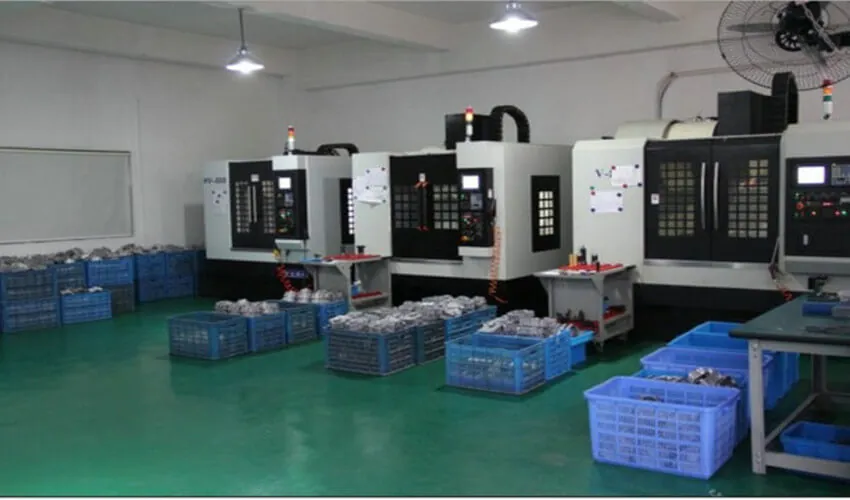
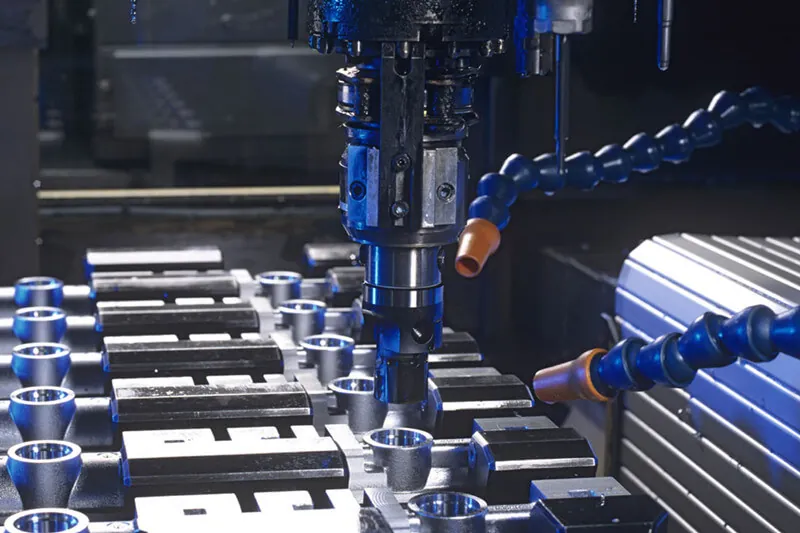
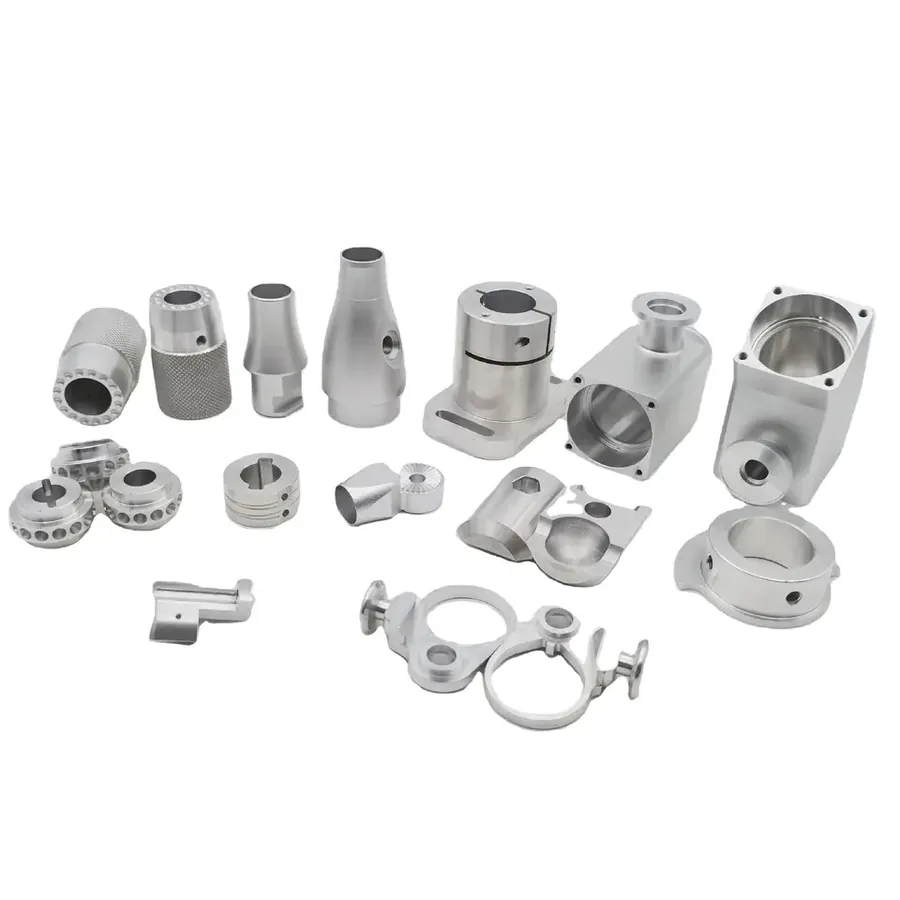
Wuxi Lead Precision Machinery delivers advanced custom metal manufacturing solutions for industries requiring the highest levels of precision, consistency, and material integrity. Our technical capabilities are anchored in state-of-the-art 5-axis CNC machining technology, enabling us to produce complex geometries with superior surface finishes and tight tolerances. These systems allow simultaneous multi-directional cutting, significantly reducing setup times and part handling while improving dimensional accuracy across intricate components. From aerospace turbine blades to medical implant fixtures, our 5-axis platforms support a broad range of high-performance alloys, including titanium, Inconel, aluminum, stainless steel, and hardened tool steels.
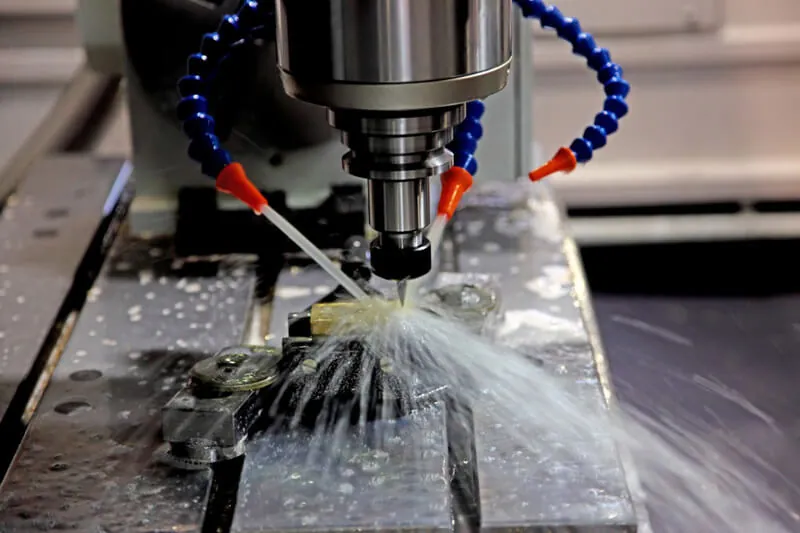
Our machining centers are operated by experienced CNC engineers who apply deep process knowledge to optimize toolpaths, spindle speeds, and coolant strategies for each unique workpiece. This ensures minimal thermal distortion, maximum tool life, and consistent repeatability across production runs. All programs are developed using industry-leading CAM software, enabling simulation-driven verification before any material is cut. This proactive approach reduces errors, accelerates time-to-part, and enhances overall process control.
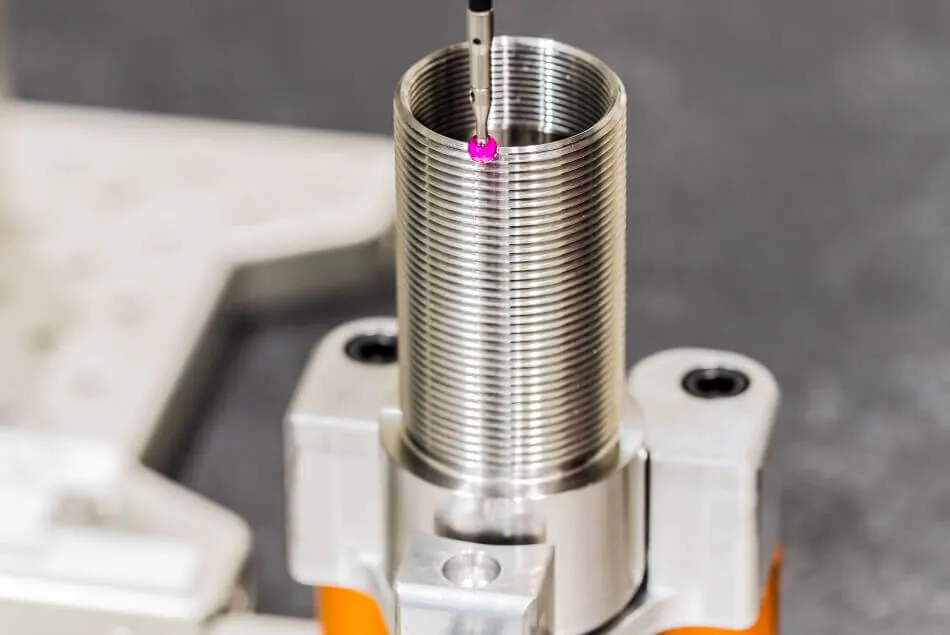
Quality assurance is fully integrated into our manufacturing workflow. Every critical dimension is verified using a Zeiss DuraMax Bridge-type Coordinate Measuring Machine (CMM), providing metrology-grade inspection with micron-level resolution. Our CMM system supports both touch-trigger and scanning probe technologies, allowing for comprehensive geometric dimensioning and tolerancing (GD&T) validation on freeform surfaces, bores, and complex contours. Inspection reports are generated in alignment with ISO 10360 standards and can be customized to meet customer-specific requirements, including PPAP, FAI, and AS9102 documentation.
We maintain strict environmental controls within our metrology lab to eliminate thermal drift and vibration interference during measurement cycles. This, combined with regular calibration of all equipment to national standards, ensures traceable, repeatable, and auditable quality data. Our quality management system is ISO 9001 certified, reflecting our commitment to continuous improvement and customer confidence.
The following table outlines our standard machining tolerances, which can be further refined based on design intent and functional requirements.
| Feature Type | Standard Tolerance | Precision Capability | Notes |
|---|---|---|---|
| Linear Dimensions | ±0.010 mm | ±0.005 mm | Up to 500 mm length |
| Hole Diameter | ±0.012 mm | ±0.008 mm | Reamed or honed finishes |
| Positional Tolerance | ±0.015 mm | ±0.010 mm | GD&T compliant |
| Surface Roughness (Ra) | 1.6 μm | 0.4 μm | As machined or polished |
| Angular Features | ±0.005° | ±0.002° | 5-axis simultaneous control |
| Flatness | 0.010 mm | 0.005 mm | Per 100 mm² area |
These capabilities are not static; they are continuously enhanced through equipment upgrades, staff training, and close collaboration with clients during the design-for-manufacturability phase. At Wuxi Lead Precision Machinery, we combine engineering expertise with cutting-edge technology to deliver custom metal components that meet the most demanding technical specifications.
Material & Finish Options

Material Selection for Precision Machined Components
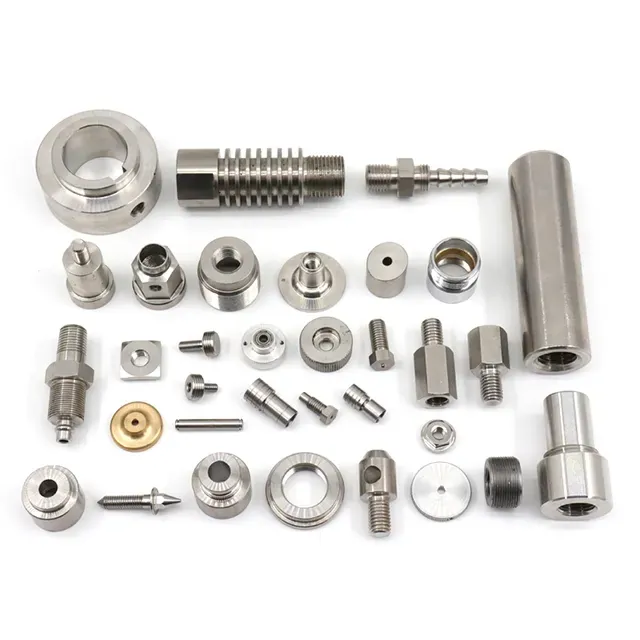
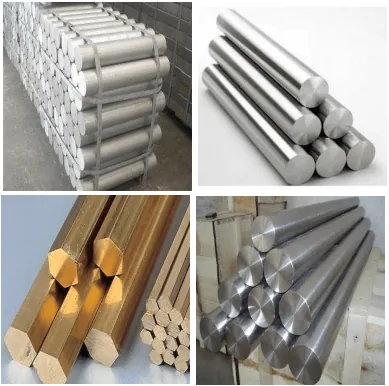
Selecting the optimal material is foundational to achieving performance, longevity, and cost efficiency in custom metal manufacturing. At Wuxi Lead Precision Machinery, we prioritize material properties aligned with your application’s mechanical demands, environmental exposure, and functional requirements. This guide outlines key considerations for aluminum, steel, and titanium, alongside critical insights on anodizing finishes.
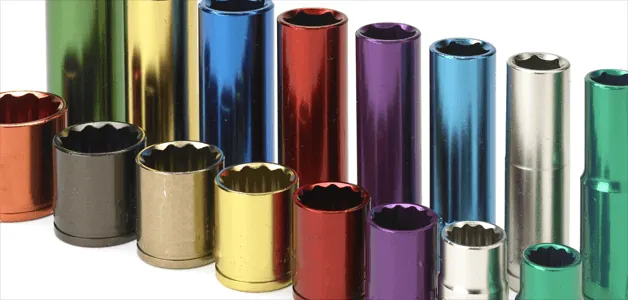
Aluminum alloys, particularly 6061-T6 and 7075-T6, dominate aerospace, automotive, and electronics due to their exceptional strength-to-weight ratio and thermal conductivity. These alloys machine efficiently, minimizing tool wear and cycle times. However, untreated aluminum lacks surface hardness for high-wear applications. Anodizing transforms this limitation: Type II (sulfuric acid) anodizing provides moderate corrosion resistance and dye receptivity for aesthetics, while Type III (hardcoat) anodizing delivers a wear-resistant ceramic layer up to 100 µm thick, essential for hydraulic components or structural brackets exposed to abrasion.
Carbon and stainless steels (e.g., 4140, 304, 17-4 PH) offer superior strength, hardness, and temperature resistance. Stainless grades excel in corrosive environments like medical or marine equipment. Steel’s higher density and thermal mass suit high-load applications but increase machining complexity and cost versus aluminum. Post-machining treatments such as passivation for stainless steel or nitriding for carbon steel further enhance durability.
Titanium (Grade 5, Ti-6Al-4V) is indispensable for extreme conditions—high strength-to-weight ratio, biocompatibility, and corrosion resistance in saltwater or chemical exposure. Its low thermal conductivity and tendency to gall demand specialized tooling and rigid setups. While inherently corrosion-resistant, titanium components in critical medical or aerospace roles often receive precision bead blasting for uniform surface texture without dimensional compromise.
Below are comparative specifications for common grades:
| Material | Density (g/cm³) | Tensile Strength (MPa) | Corrosion Resistance | Machinability Rating |
|---|---|---|---|---|
| Aluminum 6061-T6 | 2.7 | 310 | Moderate | Excellent (70) |
| Stainless 304 | 8.0 | 515 | Excellent | Fair (45) |
| Steel 4140 | 7.85 | 655 | Poor | Good (65) |
| Titanium Ti-6Al-4V | 4.43 | 900 | Excellent | Poor (25) |
Note: Machinability Rating is relative to AISI 1212 steel (100 = best).
Anodizing is not merely cosmetic; it is an engineering solution. For aluminum parts requiring electrical insulation, wear resistance, or salt-spray endurance exceeding 1,000 hours, Type III anodizing is non-negotiable. Wuxi Lead integrates anodizing within our certified supply chain, ensuring precise thickness control and adhesion testing per ASTM B580 and AMS 2469.
Material choice directly impacts manufacturability and total cost. Aluminum suits lightweight, high-volume components where anodizing meets environmental needs. Steel delivers uncompromised strength for static loads, while titanium justifies its cost in mission-critical, weight-sensitive systems. Consult our engineering team early—we optimize material selection against your functional tolerances, lifecycle requirements, and production volume to eliminate downstream compromises. Precision begins with the right foundation.
Manufacturing Process & QC

From Concept to Completion: The Precision Manufacturing Process at Wuxi Lead Precision Machinery
At Wuxi Lead Precision Machinery, we engineer excellence through a disciplined, end-to-end production process designed to deliver zero-defect components for high-performance industries. Our methodology spans three critical phases: Design, Prototyping, and Mass Production. Each stage integrates advanced technology, rigorous quality control, and deep engineering expertise to ensure precision, repeatability, and full compliance with international standards.
The journey begins with Design Engineering, where our technical team collaborates closely with clients to transform concepts into manufacturable designs. Utilizing CAD/CAM software such as SolidWorks, AutoCAD, and Siemens NX, we conduct detailed geometric analysis, tolerance stack-up studies, and manufacturability assessments. Design for Manufacturing (DFM) principles are applied early to optimize material use, reduce cycle times, and eliminate potential failure points before any metal is cut.
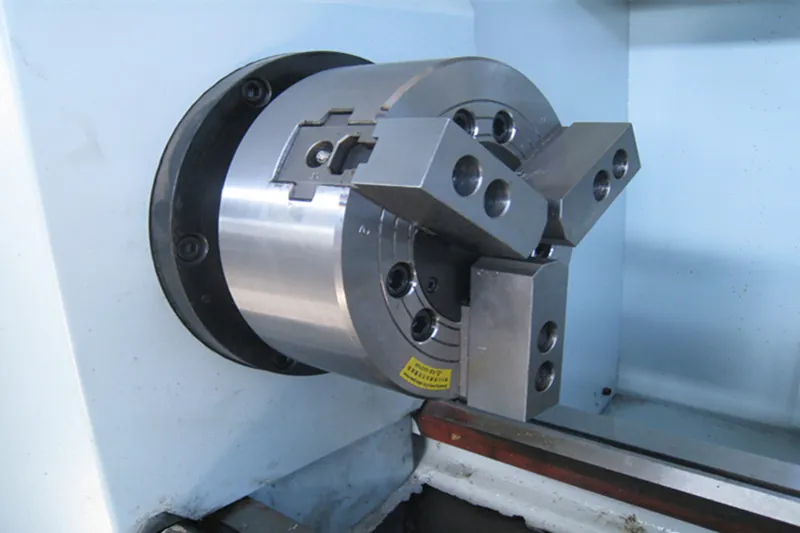
Next, we move into Prototyping, a phase essential for validation and refinement. Using CNC milling, turning, and multi-axis machining centers, we produce functional prototypes from the actual production-grade materials—aluminum, stainless steel, titanium, or specialty alloys. These prototypes undergo comprehensive inspection using coordinate measuring machines (CMM), optical comparators, and surface roughness testers. Dimensional accuracy, fit, function, and material properties are verified against the original specifications. Any deviations trigger immediate design or process adjustments, ensuring the final design is fully optimized for mass production.
Once prototype approval is secured, we transition seamlessly into High-Volume Mass Production. Our automated CNC cells, supported by robotic loading systems and real-time process monitoring, maintain consistent output with minimal human intervention. Statistical Process Control (SPC) is implemented at every stage, tracking key parameters such as tool wear, spindle load, and dimensional drift. Every batch is subject to first-article inspection and ongoing in-process checks, with full traceability maintained through our ERP system.
Our zero-defect philosophy is enforced through a multi-tiered quality assurance framework. Non-conforming parts are not reworked—they are rejected. This uncompromising standard ensures that every component shipped meets the highest levels of precision and reliability.
Below are key capabilities supporting our production process:
| Parameter | Specification |
|---|---|
| Materials | Aluminum, Stainless Steel, Titanium, Brass, PEEK, Inconel |
| Tolerances | ±0.005 mm (standard), down to ±0.001 mm (precision) |
| Surface Finish | Ra 0.4 µm to Ra 3.2 µm (customizable) |
| Maximum Work Envelope | 1200 x 800 x 600 mm (3-axis), 600 mm diameter (5-axis) |
| Inspection Equipment | CMM, Optical Comparator, Roughness Tester, Hardness Tester |
| Production Capacity | Up to 50,000 units/month (automated lines) |
| Quality Standards | ISO 9001:2015, IATF 16949 (automotive), PPAP Level 3 |
From initial sketch to final shipment, Wuxi Lead Precision Machinery ensures every component is manufactured with uncompromising precision and consistency—delivering not just parts, but performance.
Why Choose Wuxi Lead Precision
Partner with Lead Precision for Uncompromised Metal Manufacturing Excellence
Global supply chain volatility and inconsistent quality outputs remain critical pain points for OEMs and tier-one suppliers. At Wuxi Lead Precision Machinery, we eliminate these risks through engineered manufacturing solutions rooted in German-inspired process discipline and Chinese operational agility. Our facility in Wuxi operates under ISO 9001:2015 and IATF 16949 standards, delivering complex metal components where failure is not an option. We specialize in mission-critical applications for aerospace, medical device, and semiconductor equipment industries—sectors demanding micron-level repeatability and full material traceability.
Our technical capabilities are quantifiable and rigorously validated. The following specifications demonstrate our capacity to meet the most stringent engineering requirements. Each parameter reflects actual production data from recent client projects, not theoretical benchmarks.
| Capability | Specification | Application Impact |
|---|---|---|
| Material Range | Aluminum 6061-T6 to Inconel 718 | Supports thermal stability in extreme environments |
| Geometric Tolerance | ±0.005 mm (2σ) | Ensures fit/function in multi-axis assemblies |
| Surface Finish | Ra 0.4 µm to Ra 0.8 µm | Critical for fluid dynamics and sealing interfaces |
| Equipment Fleet | 5-axis DMG MORI, Makino, Okuma | Eliminates secondary operations; reduces lead time 30% |
| In-Process Verification | On-machine probing + Zeiss CMM | Real-time SPC data prevents batch deviations |
This precision is sustained through our closed-loop quality management system. Every component undergoes material certification verification, first-article inspection per AS9102, and final reporting with GD&T callouts. Our engineers collaborate from DFMA stage to delivery, identifying manufacturability risks before metal hits the spindle. This proactive approach has reduced client scrap rates by 47% year-over-year while maintaining on-time delivery at 99.2%.
The true value of partnering with Lead Precision lies in our accountability for your end-product performance. We do not merely machine parts—we guarantee that each component integrates seamlessly into your final assembly. Our technical team provides actionable feedback during prototyping, optimizing tool paths and fixture designs to minimize burr formation and thermal distortion. This level of engagement transforms us from a vendor into a strategic extension of your engineering department.
Initiate your precision project with documented engineering support. Contact [email protected] to submit your RFQ with 3D models and tolerance stack-up requirements. Our application engineers will respond within 4 business hours with a manufacturability assessment and timeline validation. For urgent requirements, reference case number EMG-2024 in your subject line to activate our 72-hour rapid prototyping protocol. Lead Precision Machinery—where dimensional integrity defines our reputation.
⚙️ Precision Cost Estimator
Estimate relative manufacturing effort based on tolerance.