Technical Contents
Engineering Guide: Prototype Cnc Machining Services

Engineering Insight: The Critical Role of Precision in Prototype CNC Machining Services
In the realm of advanced manufacturing, prototype CNC machining services serve as the foundation for innovation, enabling engineers and designers to transform conceptual designs into tangible, functional components. At Wuxi Lead Precision Machinery, we understand that the success of any product development cycle hinges on precision—not merely as a performance metric, but as a core engineering principle. Precision in prototyping ensures that form, fit, and function are validated under real-world conditions, minimizing downstream risks during mass production.
Our experience in delivering mission-critical components for Olympic-standard equipment and military-grade systems has reinforced the non-negotiable nature of dimensional accuracy, surface integrity, and material consistency. In these high-stakes applications, even micrometer-level deviations can lead to catastrophic performance failures. This rigor is directly applied to every prototype we produce, regardless of industry. Whether supporting aerospace innovation, medical device development, or industrial automation, our approach remains consistent: treat every prototype as if it were destined for deployment in the most demanding environments.
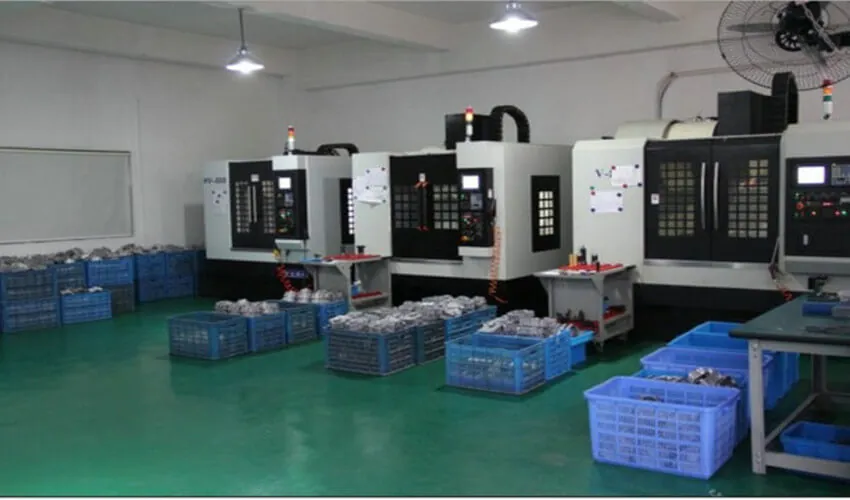
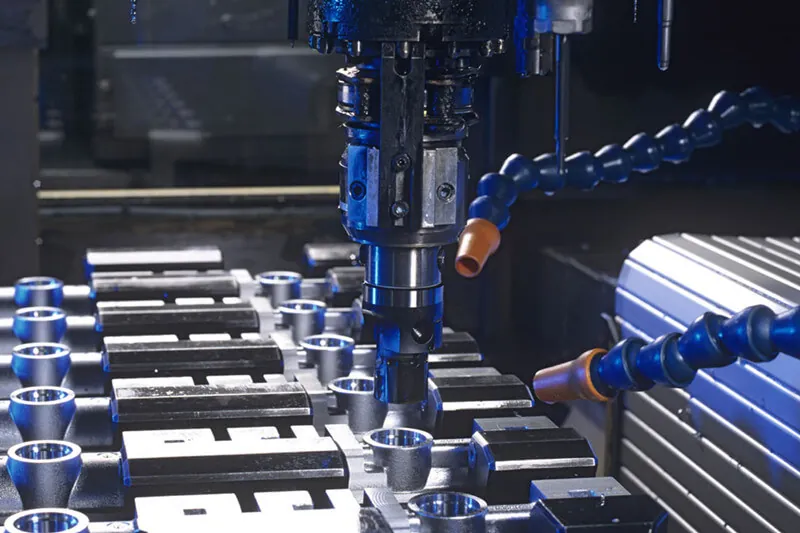
Precision begins with advanced CNC equipment—our facility is equipped with multi-axis machining centers featuring sub-micron positioning accuracy and real-time thermal compensation. However, machinery alone does not guarantee excellence. It is the integration of skilled engineering oversight, rigorous process validation, and continuous quality monitoring that elevates prototype outcomes. Our team employs GD&T (Geometric Dimensioning and Tolerancing) analysis, first-article inspection reports (FAIR), and CMM-based verification to ensure every component meets or exceeds design intent.
Material selection and handling are equally critical. We maintain strict environmental controls to prevent material stress and deformation, particularly when working with exotic alloys, composites, or high-performance polymers. Our engineers collaborate closely with clients during the DFM (Design for Manufacturability) phase to optimize geometry, reduce lead times, and enhance structural performance—all while maintaining tight tolerances.
The following table outlines key performance specifications achievable through our prototype CNC machining services:
| Specification | Capability |
|---|---|
| Positioning Accuracy | ±0.002 mm |
| Repeatability | ±0.001 mm |
| Standard Tolerances | ±0.005 mm (typical) |
| Tight Tolerance Machining | Down to ±0.001 mm |
| Surface Roughness (Ra) | As low as 0.2 µm |
| Maximum Work Envelope | 1200 x 800 x 600 mm |
| Materials Supported | Aluminum, Stainless Steel, Titanium, Inconel, PEEK, Delrin, Brass, and custom alloys |
| Quality Standards | ISO 9001:2015, AS9100 (aerospace compliance available) |
At Wuxi Lead Precision Machinery, our legacy in high-reliability sectors informs every prototype we produce. We do not simply manufacture parts—we engineer confidence in design. For global OEMs and R&D teams, this means reduced iteration cycles, accelerated time-to-market, and prototypes that truly represent final production quality.
Precision Specs & Tolerances

Wuxi Lead Precision Machinery: Technical Capabilities for Prototype CNC Machining
Wuxi Lead Precision Machinery delivers advanced prototype CNC machining services engineered for the exacting demands of high-performance industries including aerospace, medical device development, and advanced defense systems. Our core strength lies in integrating sophisticated multi-axis machining with rigorous, metrology-grade quality control, ensuring prototypes meet functional requirements and accelerate time-to-market. This technical foundation is critical for validating complex geometries and material behaviors early in the product lifecycle.
Our primary machining platform centers on state-of-the-art 5-axis CNC machining centers, predominantly featuring DMG MORI and MAZAK equipment. These systems provide simultaneous 5-axis interpolation, enabling the precise fabrication of intricate organic shapes, deep cavities, and compound angled features in a single setup. Key specifications include work envelopes up to 1,000 x 800 x 600 mm (X, Y, Z travel), high-speed spindles reaching 24,000 RPM with HSK-A63 tooling, and sub-micron linear scale feedback for positional accuracy. This capability significantly reduces secondary operations, minimizes part handling errors, and ensures superior surface integrity on challenging materials such as titanium alloys, Inconel 718, medical-grade PEEK, and high-strength aluminum alloys. The elimination of fixture repositioning is paramount for maintaining critical feature relationships in complex prototypes.
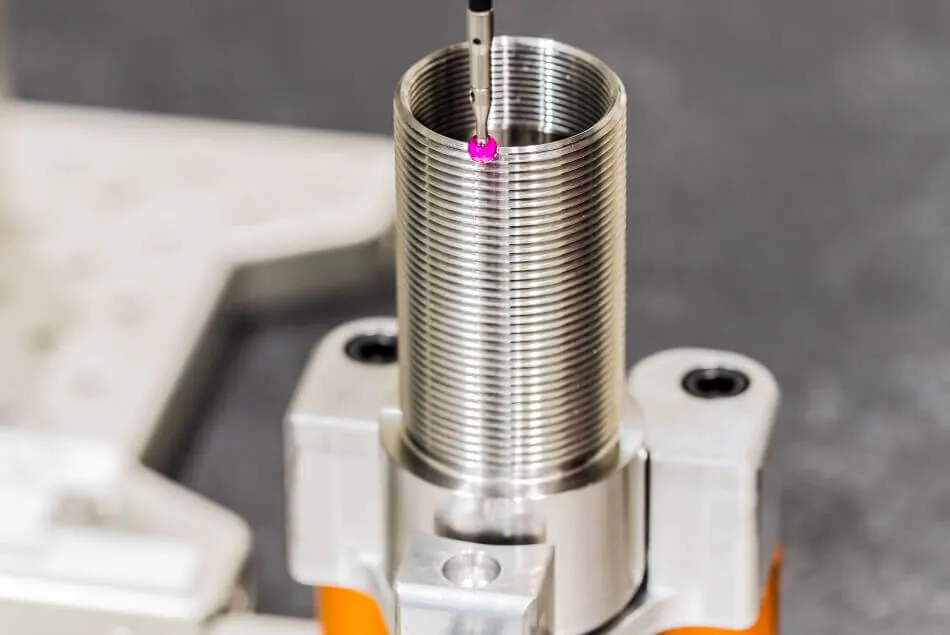
Quality verification is non-negotiable in prototype validation. Every critical dimension undergoes comprehensive inspection using Zeiss CONTURA and GLOBAL S coordinate measuring machines (CMMs). These systems operate within a certified ISO 17025 metrology lab, maintained at 20°C ±0.5°C. Our inspection protocols follow AS9102 First Article Inspection (FAI) standards where applicable, generating detailed reports with full traceability to customer CAD models and engineering drawings. This metrology-grade verification provides objective evidence that the physical prototype conforms precisely to the digital design intent, mitigating downstream assembly or performance risks.
The achievable precision for prototype components is consistently maintained within the tolerance ranges detailed below. These values represent our standard capability for features machined under controlled conditions on suitable materials; tighter tolerances are achievable for specific applications upon engineering review.
| Feature Type | Standard Capability (mm) | Typical Capability (mm) |
|---|---|---|
| Linear Dimensions | ±0.010 | ±0.005 |
| Positional Tolerance | ±0.015 | ±0.008 |
| Profile of Surface | 0.020 | 0.010 |
| Hole Diameter | +0.010 / -0.000 | +0.005 / -0.000 |
| Surface Roughness (Ra) | 1.6 µm | 0.8 µm |
Wuxi Lead’s integrated approach—combining high-precision 5-axis machining with metrology-backed inspection—provides engineering teams with physically accurate prototypes that reliably predict final production performance. This technical rigor ensures design validation is based on verifiable data, de-risking the transition from concept to volume manufacturing. Contact our engineering team to discuss the specific tolerances and material requirements for your next critical prototype project.
Material & Finish Options

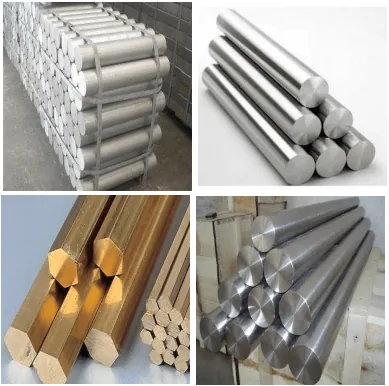
Material selection is a critical phase in the prototype CNC machining process, directly influencing performance, durability, and cost-efficiency. At Wuxi Lead Precision Machinery, we specialize in high-precision CNC machining services tailored to meet the exacting demands of industries such as aerospace, medical, automotive, and industrial equipment. Our expertise enables clients to make informed decisions when selecting between aluminum, steel, and titanium—three of the most widely used materials in advanced prototyping.
Aluminum is often the first choice for prototyping due to its excellent strength-to-weight ratio, thermal conductivity, and machinability. Grade 6061-T6 is particularly popular for general-purpose prototypes, offering good weldability and corrosion resistance. For applications requiring higher strength, 7075-T6 provides superior mechanical properties, though with slightly reduced corrosion resistance. Aluminum’s lightweight nature makes it ideal for aerospace and consumer electronics prototypes where weight reduction is crucial.
Steel, particularly in grades such as 4140 and 17-4 PH stainless, delivers high tensile strength, wear resistance, and dimensional stability under load. These properties make steel suitable for functional prototypes subjected to mechanical stress or elevated temperatures. 17-4 PH stainless steel also offers excellent corrosion resistance, making it appropriate for medical and marine applications. While heavier than aluminum, steel’s robustness ensures reliable performance during rigorous testing phases.
Titanium, specifically Grade 5 (Ti-6Al-4V), stands out for its exceptional strength-to-density ratio and resistance to extreme environments. It maintains structural integrity at high temperatures and exhibits outstanding corrosion resistance, even in saline or acidic conditions. These characteristics make titanium the material of choice for critical aerospace, defense, and biomedical components. However, its high cost and challenging machinability require advanced CNC capabilities—expertise we provide at Wuxi Lead.
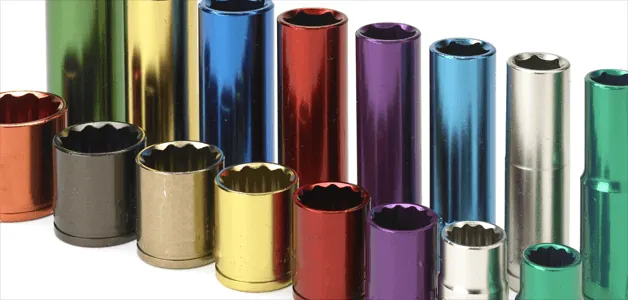
Surface finishes further enhance prototype functionality and appearance. Anodizing is a widely used electrochemical process, especially for aluminum. It increases surface hardness, improves wear resistance, and allows for color coding through dye integration. Type II (sulfuric acid anodizing) is standard for decorative and moderate protective needs, while Type III (hardcoat anodizing) delivers thick, durable layers for industrial applications. Anodizing does not work on steel or titanium, which typically receive alternatives such as passivation, plating, or coating.
Below is a comparison of key material properties for common prototyping alloys:
| Material | Grade | Tensile Strength (MPa) | Yield Strength (MPa) | Density (g/cm³) | Common Applications |
|---|---|---|---|---|---|
| Aluminum | 6061-T6 | 310 | 276 | 2.7 | Enclosures, brackets |
| Aluminum | 7075-T6 | 572 | 503 | 2.8 | Aerospace structures |
| Steel | 4140 | 655 | 415 | 7.85 | Tooling, shafts |
| Stainless Steel | 17-4 PH | 1000 | 860 | 7.75 | Medical devices, valves |
| Titanium | Ti-6Al-4V | 950 | 880 | 4.43 | Aircraft, implants |
At Wuxi Lead Precision Machinery, we support clients from material selection through final finishing, ensuring prototypes meet both functional and aesthetic requirements. Our advanced CNC infrastructure and engineering insight enable precise, repeatable results across all material types.
Manufacturing Process & QC

Precision Production Process: From Concept to Zero Defect Mass Production
At Wuxi Lead Precision Machinery, our CNC machining services transform client designs into flawless production realities through a rigorously controlled three-phase workflow. This integrated approach ensures dimensional accuracy, material integrity, and process repeatability from the earliest concept through high-volume manufacturing, eliminating costly errors and delays. We prioritize seamless transition between stages, treating prototyping not as a separate step but as the critical foundation for scalable, zero-defect production.
The process begins with collaborative engineering during the Design phase. Our applications engineers work directly with client CAD models, conducting comprehensive Design for Manufacturability (DFM) analysis. We identify potential machining constraints, material suitability issues, and tolerance stack-up risks before metal is cut. This proactive review optimizes toolpaths, selects appropriate alloys or composites, and ensures geometric dimensioning aligns with our machine capabilities, preventing downstream rework. Client feedback is integrated iteratively, establishing a shared understanding of critical-to-quality characteristics.
Prototyping transitions the validated design into physical form under full production conditions. Unlike vendors using simplified setups, we machine prototypes on the same high-precision multi-axis CNC centers intended for mass production—employing identical tooling, fixturing, and cutting parameters. This generates not just a functional sample, but a validated process blueprint. Every prototype undergoes First Article Inspection (FAI) per AS9102 standards, with full CMM reporting against all critical dimensions. Material certifications and surface finish verification are mandatory. This phase confirms the design’s manufacturability and provides the baseline data for production SPC control limits.
Mass Production leverages the fully qualified prototype process without modification. Our automated production cells run under real-time statistical process control, with in-process gauging at defined intervals. Machine health is monitored continuously via IoT sensors tracking vibration, thermal drift, and tool wear. Any parameter deviation beyond established control limits triggers immediate corrective action, preventing non-conforming parts from progressing. Final inspection employs automated optical comparators alongside manual CMM validation for critical features, ensuring 100% compliance with the approved prototype specification. Batch traceability is maintained from raw material lot to finished component.
This closed-loop methodology guarantees zero defects by design. By eliminating process requalification between prototype and production, we eradicate variation sources inherent in typical vendor workflows. The result is accelerated time-to-market with uncompromised quality, reducing total cost of ownership for our clients.
Wuxi Lead Precision Production Capabilities
| Parameter | Specification | Application Impact |
|————————–|———————————–|—————————————-|
| Max Work Envelope | 1200 x 800 x 650 mm | Complex aerospace & medical assemblies |
| Positioning Accuracy | ±0.002 mm | Critical sealing surfaces, optics |
| Repeatability | ±0.001 mm | High-volume interchangeability |
| Material Range | Aluminum Alloys, Titanium, Inconel, PEEK, Brass | Broad industry suitability |
| Surface Finish (Ra) | 0.2 µm to 3.2 µm controllable | Hydraulic, fluidic, cosmetic surfaces |
| Tolerance Capability | ±0.005 mm standard; ±0.001 mm on request | Mission-critical components |
| In-Process Inspection | On-machine probing + CMM FAI | Real-time process correction |
Why Choose Wuxi Lead Precision
Partner with Lead Precision for Unmatched Prototype CNC Machining Excellence
At Wuxi Lead Precision Machinery, we understand that the success of your product development cycle hinges on precision, speed, and reliability—especially during the prototyping phase. As a leader in high-accuracy CNC machining services, we specialize in transforming complex engineering concepts into fully functional, production-ready prototypes with exceptional consistency and turnaround efficiency. Our advanced manufacturing capabilities, combined with decades of engineering expertise, position us as the strategic partner of choice for global innovators in aerospace, medical devices, robotics, and high-performance industrial equipment.
When you choose to partner with Lead Precision, you gain access to a fully integrated prototype development ecosystem. Our facility in Wuxi, China, is equipped with state-of-the-art 3-axis, 4-axis, and 5-axis CNC milling and turning centers, enabling us to handle intricate geometries and tight tolerances down to ±0.002 mm. We support a broad range of engineering-grade materials, including aluminum alloys, stainless steel, titanium, brass, PEEK, and polycarbonate, ensuring your prototype performs under real-world conditions.
Our process is engineered for speed without compromise. From initial CAD review to final inspection, every prototype undergoes rigorous quality control using calibrated CMMs, optical comparators, and surface finish testers. This ensures dimensional accuracy, repeatability, and compliance with ISO 9001:2015 standards. Whether you require a single prototype or low-volume pre-production batches, our agile manufacturing model reduces lead times and accelerates your time-to-market.
We recognize that collaboration is key to innovation. Our engineering team works closely with your design staff to provide real-time DFM feedback, material recommendations, and cost-optimization strategies—ensuring your prototype is not only manufacturable but scalable for future production.
Below are the core technical specifications that define our prototype CNC machining capabilities:
| Specification | Detail |
|---|---|
| Machining Types | 3-axis, 4-axis, 5-axis CNC milling, CNC turning, multi-axis Swiss machining |
| Tolerances | ±0.002 mm (±0.00008″) |
| Materials | Aluminum (6061, 7075), Stainless Steel (303, 304, 316), Titanium (Grade 5), Brass, PEEK, Delrin, Polycarbonate |
| Maximum Work Envelope | 1200 x 600 x 500 mm (47 x 23.6 x 19.7 in) |
| Surface Finishes | As-machined, bead blast, anodizing (Type II & III), passivation, powder coating |
| Quality Standards | ISO 9001:2015, First Article Inspection (FAI), Full CMM reporting |
| Lead Times | As fast as 5–7 days for standard prototypes |
Partnering with Wuxi Lead Precision Machinery means aligning with a team committed to engineering integrity, technical excellence, and long-term collaboration. We don’t just manufacture prototypes—we help bring innovations to life.
For immediate support on your next prototype project, contact us at [email protected]. Our engineering team is ready to review your designs, provide rapid quotations, and help you move from concept to physical reality with confidence.
⚙️ Precision Cost Estimator
Estimate relative manufacturing effort based on tolerance.