Cnc Machining With Tight Tolerances Manufacturer | Precision CNC Guide

Engineering Guide: Cnc Machining With Tight Tolerances

cnc machining with tight tolerances manufacturing

Engineering Insight: The Critical Imperative of Tight Tolerance CNC Machining

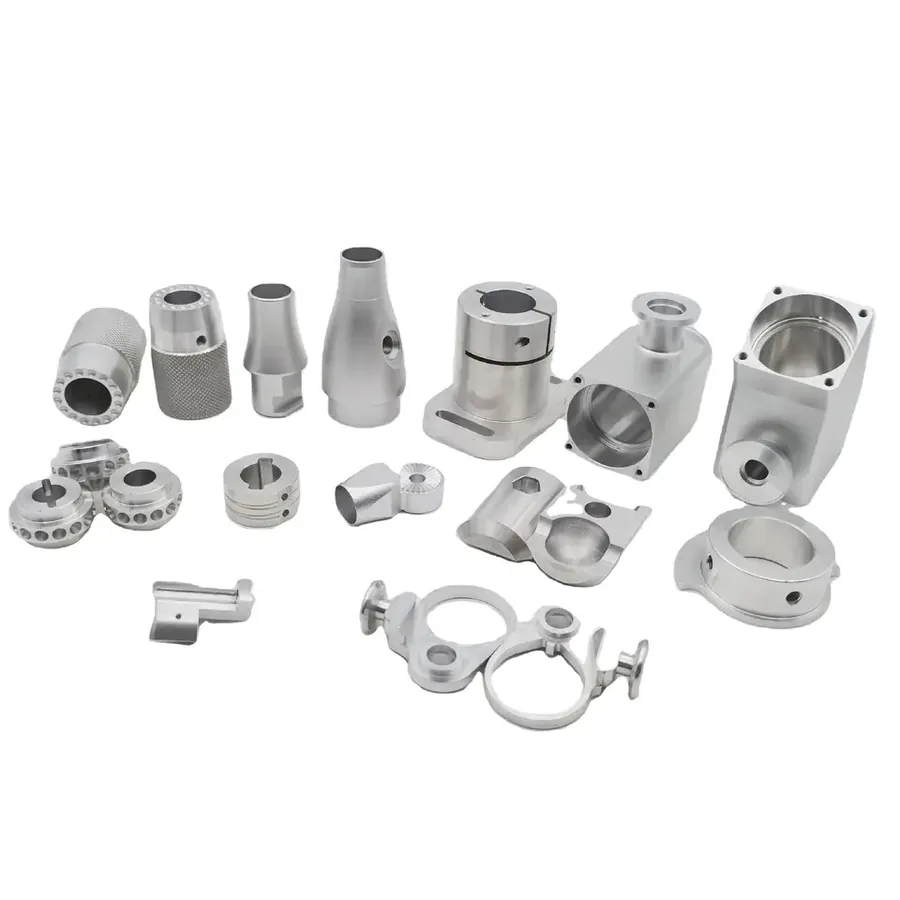
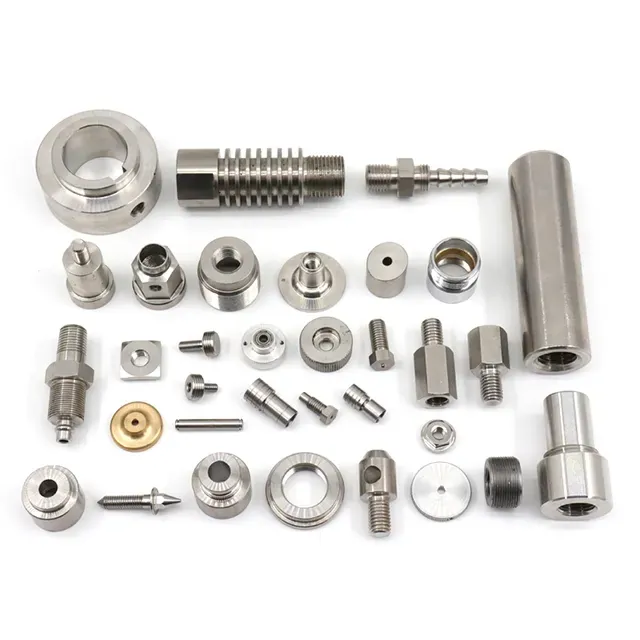
Achieving and maintaining tight tolerances in CNC machining transcends basic dimensional accuracy; it is a fundamental requirement for functionality, reliability, and safety in the most demanding advanced manufacturing sectors. Components operating under extreme conditions – whether in aerospace propulsion systems enduring intense heat and pressure, medical implants requiring biocompatibility and flawless integration, or semiconductor manufacturing equipment demanding atomic-level precision – cannot tolerate deviation. Even microscopic variations can trigger catastrophic failure, accelerated wear, or system inefficiency. The pursuit of tight tolerances necessitates a holistic engineering approach far beyond standard machining. It demands exceptional machine tool stability, meticulously controlled thermal environments, advanced metrology for in-process verification, specialized fixturing to eliminate part movement, and profound material science understanding to anticipate and compensate for behavior during cutting. Crucially, it requires a culture of precision ingrained in every technician and engineer, where process validation and continuous improvement are non-negotiable.

At Wuxi Lead Precision Machinery, we operate at this pinnacle of precision manufacturing daily. Our commitment is proven through rigorous partnerships where failure is not an option. We are a trusted supplier for critical components within timing systems deployed at the Beijing Winter Olympics, where split-second accuracy was paramount. Furthermore, we consistently deliver mission-critical parts for advanced military guidance and communication systems, adhering to the most stringent national and international defense specifications. These projects demand not only meeting tight tolerances but proving repeatability and reliability under exhaustive quality audits. Our facility is engineered for this challenge, featuring temperature-stabilized machining cells, multi-sensor CMMs with nanometer resolution, and a team whose expertise is forged in solving the industry’s most complex tolerance challenges. We understand that tight tolerances are not merely a drawing note; they are the cornerstone of performance and trust.

The following table outlines the precision capabilities consistently achieved within our controlled production environment for qualified materials and geometries:

Specification Parameter Capability Range Measurement Standard
Linear Dimensional Tolerance ±0.00004″ (±0.001 mm) ASME Y14.5, ISO 2768
Geometric Tolerance (GD&T) ±0.00008″ (±0.002 mm) ASME Y14.5-2018
Surface Roughness (Ra) 2 – 16 μin (0.05 – 0.4 μm) ISO 4287
Positional Repeatability ±0.00002″ (±0.0005 mm) Per Machine Calibration
Material Stability Control < 2 ppm/°C (Alloys) In-house Thermal Analysis

Achieving such levels requires moving beyond standard CNC machining practices. It demands an engineering partnership where material selection, process planning, fixture design, and real-time quality control are seamlessly integrated from the initial design review. At Lead Precision, we bring this integrated precision engineering capability to every project, ensuring your most demanding tight-tolerance components meet the highest standards of performance and reliability, backed by proven experience in the world’s most exacting applications. Partner with us for precision that performs when it matters most.


Precision Specs & Tolerances

cnc machining with tight tolerances manufacturing

Advanced 5-Axis CNC Machining for Mission-Critical Applications

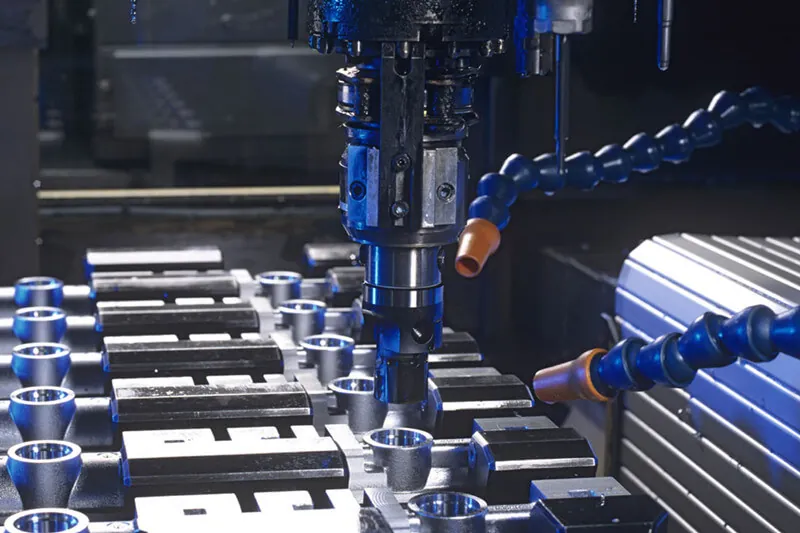
At Wuxi Lead Precision Machinery, our technical capabilities are engineered to meet the most demanding requirements in precision manufacturing. Specializing in CNC machining with tight tolerances, we leverage state-of-the-art 5-axis CNC machining centers to deliver complex, high-accuracy components for aerospace, medical, semiconductor, and advanced industrial applications. Our multi-axis platforms enable simultaneous movement across X, Y, Z, A, and B axes, allowing for uninterrupted tool access to complex geometries. This eliminates the need for multiple setups, reduces cumulative error, and ensures superior dimensional consistency across high-mix, low-volume, and production runs.

Our 5-axis machining systems are equipped with high-precision spindles, thermal compensation technology, and advanced CNC controls to maintain accuracy during extended operations. These machines support a wide range of engineering-grade materials, including aluminum alloys, titanium, stainless steel, Inconel, PEEK, and other high-performance composites. The integration of high-speed machining (HSM) techniques further enhances surface finish and feature definition, critical for components operating in extreme environments.

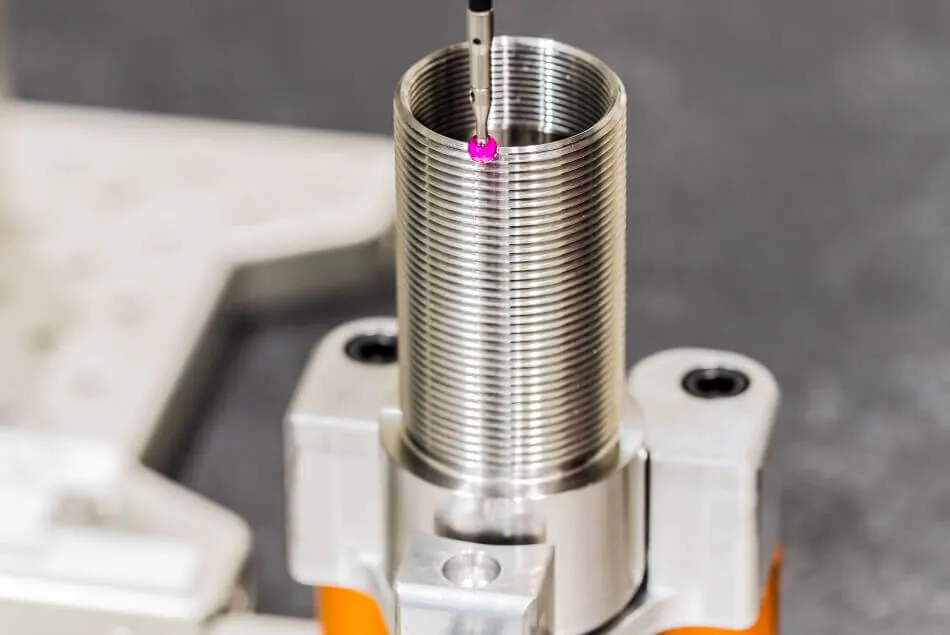
To guarantee conformance to design intent, every production run undergoes rigorous quality control, anchored by Coordinate Measuring Machine (CMM) inspection. Our metrology lab is equipped with multi-sensor CMM systems capable of non-contact probing, tactile measurement, and 3D scanning. These systems provide full first-article inspection (FAI) reports, process capability (Cp/Cpk) analysis, and real-time SPC data. All inspections are traceable to international standards (ISO 17025), ensuring compliance with AS9100, ISO 13485, and other industry-specific quality mandates.

Our commitment to precision extends beyond equipment and processes. Our engineering team collaborates closely with clients during design for manufacturability (DFM) reviews, identifying potential tolerance stack-up risks and recommending optimized tool paths and fixturing strategies. This proactive approach ensures that tight-tolerance requirements are not only achievable but repeatable across batches.

The following table outlines our standard and precision tolerance capabilities across critical dimensions:

Feature Type Standard Tolerance Precision Tolerance Measurement Method
Linear Dimensions ±0.010 mm ±0.005 mm CMM, High-Precision Micrometers
Hole Diameter ±0.012 mm ±0.003 mm Air Gauges, CMM
Positional Tolerance ±0.015 mm ±0.008 mm CMM with GD&T Analysis
Surface Finish (Ra) 1.6 µm 0.4 µm Profilometer
Flatness 0.010 mm 0.003 mm Optical Flats, CMM
Angular Features ±0.05° ±0.02° CMM, Sine Bar with Gauge Blocks

Wuxi Lead Precision Machinery combines cutting-edge 5-axis technology with metrology-grade validation to deliver components where micron-level accuracy is non-negotiable. Our technical capabilities are built for industries where performance, reliability, and repeatability define success.


Material & Finish Options

cnc machining with tight tolerances manufacturing

Material Selection for Precision CNC Machining with Tight Tolerances

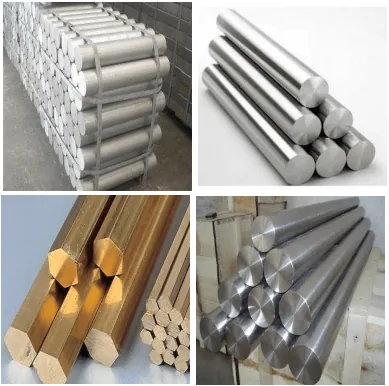
Selecting the optimal material is fundamental to achieving consistent, high-precision results in CNC machining, especially when holding tight tolerances below ±0.005mm. Material properties directly influence dimensional stability during machining, thermal behavior, tool wear, and final part performance. At Wuxi Lead Precision Machinery, we prioritize materials that balance machinability, stability, and end-use requirements to minimize scrap rates and ensure repeatability. Aluminum alloys, alloy steels, and titanium alloys represent the core choices for demanding applications, each with distinct characteristics critical for precision work.

Aluminum 6061-T6 is a premier choice for prototypes and production parts requiring excellent strength-to-weight ratio and superior machinability. Its low density reduces cutting forces, enhancing stability during fine feature machining. However, aluminum’s relatively high coefficient of thermal expansion demands strict temperature control in the machining environment and careful consideration of fixture design to prevent distortion during extended operations. It is highly receptive to anodizing for enhanced surface hardness and corrosion resistance.

Alloy steels like 4140 and 1045 offer exceptional strength, wear resistance, and dimensional stability, making them ideal for high-stress components such as hydraulic manifolds or precision shafts. Their lower thermal expansion compared to aluminum improves tolerance retention during machining. Achieving tight tolerances requires rigid setups, specialized tooling for hard materials, and controlled cutting parameters to manage heat generation and minimize residual stresses that could cause post-machining distortion. Post-machining heat treatment may be necessary but introduces additional distortion risks requiring compensation strategies.

Titanium Ti-6Al-4V provides an unmatched strength-to-weight ratio and corrosion resistance for aerospace and medical implants. Its low thermal conductivity causes heat concentration at the cutting edge, accelerating tool wear and demanding aggressive coolant application and slower feed rates. Titanium’s tendency for work hardening necessitates sharp tools and consistent, uninterrupted cuts. Achieving micron-level tolerances requires extreme machine stability, meticulous process control, and often specialized fixturing to counteract springback effects.

Anodizing is a critical surface finish for aluminum parts requiring enhanced wear resistance, corrosion protection, or electrical insulation. Type II (sulfuric acid) anodizing provides a standard decorative and protective layer, while Type III (hardcoat) anodizing delivers significantly thicker, harder coatings suitable for high-wear applications. Crucially, anodizing adds dimensional thickness. For tight tolerance features, engineers must account for this growth (typically 0.0002″ to 0.001″ per side for Type II, up to 0.002″ per side for Type III) by machining undersized or masking critical surfaces. Wuxi Lead integrates anodizing process knowledge directly into our CNC programming and tolerance allocation.

Material selection must be evaluated holistically against tolerance requirements, production volume, and functional demands. The table below highlights key comparative properties influencing precision machining outcomes.

Material CTE (µm/m°C) Machinability Rating (1-10, 10=Best) Key Tolerance Consideration
Aluminum 6061-T6 23.6 9 High thermal expansion requires strict thermal control
Steel 4140 12.2 6 Lower expansion; manage heat/distortion during cutting
Titanium Ti-6Al-4V 8.6 3 Low conductivity/work hardening demands precise thermal management

Consult Wuxi Lead’s engineering team early in your design phase. We provide material-specific process validation and tolerance analysis to ensure your precision components meet exacting specifications reliably and cost-effectively.


Manufacturing Process & QC

cnc machining with tight tolerances manufacturing

At Wuxi Lead Precision Machinery, our production process for CNC machining with tight tolerances is engineered for precision, consistency, and zero-defect outcomes. We adhere to a rigorously structured workflow that spans from initial design to prototyping and full-scale mass production. Each phase is integrated with advanced quality controls and real-time monitoring to ensure every component meets the stringent requirements of high-end industrial applications.

The process begins with collaborative design engineering. Our team works closely with clients to analyze CAD/CAM models, perform Design for Manufacturability (DFM) reviews, and optimize geometries for precision machining. Material selection, thermal stability, toolpath efficiency, and tolerance stack-up are evaluated at this stage to prevent downstream deviations. Finite element analysis (FEA) and simulation tools are employed to predict performance under operational loads, ensuring the design is robust before any material is cut.

Once the design is finalized, we proceed to prototyping. This phase is critical for validating both form and function. Using high-accuracy 5-axis CNC machines with sub-micron repeatability, we produce initial prototype batches under the same environmental conditions as mass production. Every prototype undergoes comprehensive inspection using coordinate measuring machines (CMM), optical comparators, and surface roughness testers. Dimensional reports are compared against nominal values, and any deviations trigger immediate process refinement. This iterative validation ensures that only fully qualified designs advance to full production.

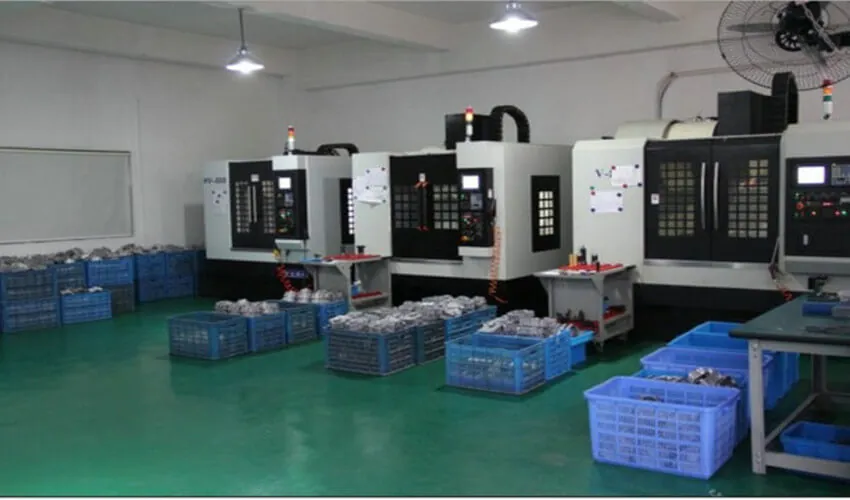
Mass production is executed on our automated CNC production lines, where process stability is maintained through Statistical Process Control (SPC) and real-time in-process gauging. Each machine is calibrated daily, and tool wear is monitored using laser tool setters and adaptive control systems. Environmental controls, including temperature-stabilized workshops and humidity regulation, minimize thermal expansion effects—critical when holding tolerances as tight as ±0.001 mm. Every component is traceable via our digital manufacturing execution system (MES), which logs machine parameters, inspection data, and operator inputs for full auditability.

Our zero-defect philosophy is enforced through multi-stage quality gates. First-article inspections (FAI) are conducted at the start of each production run, followed by periodic sampling and final batch certification. Non-conforming parts are quarantined instantly, and root cause analysis is performed using Six Sigma methodologies to prevent recurrence.

The table below outlines key process capabilities for tight-tolerance CNC machining at Wuxi Lead:

Parameter Capability
Dimensional Tolerance Up to ±0.001 mm
Surface Roughness (Ra) As low as 0.2 µm
Positional Accuracy ±0.002 mm over 300 mm
Material Compatibility Aluminum, Stainless Steel, Titanium, Inconel, Engineering Plastics
Max Work Envelope (XYZ) 1200 x 800 x 600 mm
Inspection Equipment CMM, Optical Comparator, Laser Scanning, Roughness Tester
Process Control Standard ISO 9001, IATF 16949, PPAP, SPC, FAI

Through seamless integration of design intelligence, precision prototyping, and defect-proof mass production, Wuxi Lead delivers components that meet the highest standards of performance and reliability.


Why Choose Wuxi Lead Precision

Partner with Lead Precision for Mission-Critical Tolerance Achievement

Achieving consistent micron-level tolerances in CNC machining demands more than advanced machinery; it requires integrated engineering expertise, rigorous process control, and unwavering commitment to dimensional integrity. At Wuxi Lead Precision Machinery, we specialize in transforming complex, high-precision components for aerospace, medical device, and semiconductor industries where failure is not an option. Our AS9100-certified facility combines German-engineered DMG MORI and Makino platforms with statistically validated processes to deliver parts held to ±0.00008″ (2μm) reliably. Unlike generalist suppliers, we invest in purpose-built metrology—featuring Zeiss CONTURA CMMs and laser interferometers—to validate every critical feature against your blueprint, ensuring first-article approval and zero scrap in serial production.

Our engineering team collaborates from design feasibility through final inspection, identifying tolerance stack-ups and material behaviors early to prevent costly iterations. We understand that your reputation hinges on part performance under extreme conditions—whether a titanium surgical implant requiring Ra 0.4μm surface finish or an Inconel aerospace bracket surviving 1,000°C thermal cycles. Lead Precision’s closed-loop manufacturing system continuously monitors tool wear, thermal drift, and vibration, automatically compensating to maintain ±1.5μm process stability across 500+ hour production runs. This level of control eliminates the guesswork that plagues tolerance-critical projects at conventional shops.

Consider the technical foundation enabling our precision:

Capability Specification Industry Benchmark
Positional Tolerance ±0.00008″ (2μm) typical ±0.0002″ (5μm)
Surface Finish (Ra) 0.4μm to 3.2μm achievable 1.6μm to 6.3μm
Material Range Titanium, Inconel, PEEK, Ceramics Standard alloys only
Machine Fleet DMG MORI NLX 2500, Makino D200Z Legacy 3-axis
In-Process Metrology On-machine probing + CMM validation Post-process only

Partnering with Lead Precision means gaining a technical extension of your engineering team. We document every process parameter in cloud-based quality records accessible to you in real time, providing full traceability from raw billet to certified shipment. When your project demands tolerances that push the limits of CNC technology, our zero-defect culture and ISO 17025-accredited metrology lab become your competitive advantage—reducing time-to-market while eliminating field failure risks.

Do not compromise on precision when your application requires absolute certainty. Contact our engineering team directly at Contact [email protected] to discuss your tight-tolerance challenge. Include your part drawing and volume requirements for a detailed capability analysis within 24 hours. Let us prove why global leaders in critical-component manufacturing trust Lead Precision for tolerances others cannot consistently achieve. Your next breakthrough begins with a single email.


⚙️ Precision Cost Estimator

Estimate relative manufacturing effort based on tolerance.

Cnc Machining With Tight Tolerances Manufacturer | Precision CNC Guide

Contents of Table

Contact [email protected] Whatsapp 86 15951276160