1018 Mild Steel Manufacturer | Precision CNC Guide

Engineering Guide: 1018 Mild Steel

1018 mild steel manufacturing

Engineering Insight: 1018 Mild Steel in High-Precision Manufacturing

In the realm of custom metal manufacturing, 1018 mild steel stands as one of the most widely specified materials due to its balanced mechanical properties, cost-effectiveness, and exceptional machinability. At Wuxi Lead Precision Machinery, we recognize that while 1018 may be classified as a low-carbon steel, its performance in precision-critical applications hinges not on the material alone, but on the engineering rigor applied during machining and finishing. The true value of 1018 mild steel emerges only when processed with exacting standards—standards we have refined through decades of delivering components for Olympic-grade equipment and military-grade systems.

Precision transforms 1018 from a commodity material into a high-performance solution. Its relatively low carbon content (approximately 0.18%) ensures excellent weldability and formability, but also means the steel does not respond to heat treatment in the same way as higher-carbon or alloy steels. Therefore, dimensional accuracy, surface integrity, and consistency in tolerances must be achieved through advanced CNC machining rather than post-treatment corrections. At Lead Precision, our multi-axis machining centers operate under strict environmental and calibration protocols to maintain tolerances as tight as ±0.001 mm, ensuring that every 1018 component meets the functional demands of dynamic assemblies.

Our experience with mission-critical projects has taught us that even minor deviations in flatness, concentricity, or thread accuracy can cascade into system-level failures. This is particularly true in automated Olympic timing systems and military deployment mechanisms, where we have supplied 1018 steel parts subjected to rigorous fatigue and environmental testing. In these applications, material uniformity and process repeatability are non-negotiable. We employ in-process metrology, statistical process control (SPC), and full material traceability to guarantee consistency across production runs—whether producing a single prototype or thousands of units.

Beyond machining, we optimize secondary operations such as deburring, passivation, and precision cleaning to preserve the integrity of the final component. While 1018 steel is not inherently corrosion-resistant, we apply surface treatments like zinc plating or black oxide when required, always ensuring that coatings do not compromise dimensional precision.

The following table outlines key mechanical and physical properties of 1018 mild steel relevant to precision engineering applications:

Property Value
Carbon Content 0.15–0.20%
Tensile Strength 440–540 MPa
Yield Strength ≥370 MPa
Elongation at 2 in (50 mm) 15% minimum
Hardness (Brinell) 121–131 HB
Density 7.87 g/cm³
Machinability Rating 72% (relative to B1112)
Typical Applications Shafts, pins, fasteners, brackets

At Wuxi Lead Precision Machinery, we treat every 1018 mild steel component not as a standard part, but as a precision-engineered element within a larger, high-stakes system. Our commitment to accuracy, backed by proven performance in Olympic and military applications, ensures that our clients receive more than just machined metal—they receive reliability, consistency, and engineered excellence.


Precision Specs & Tolerances

1018 mild steel manufacturing

Precision Manufacturing Capabilities for 1018 Mild Steel Components

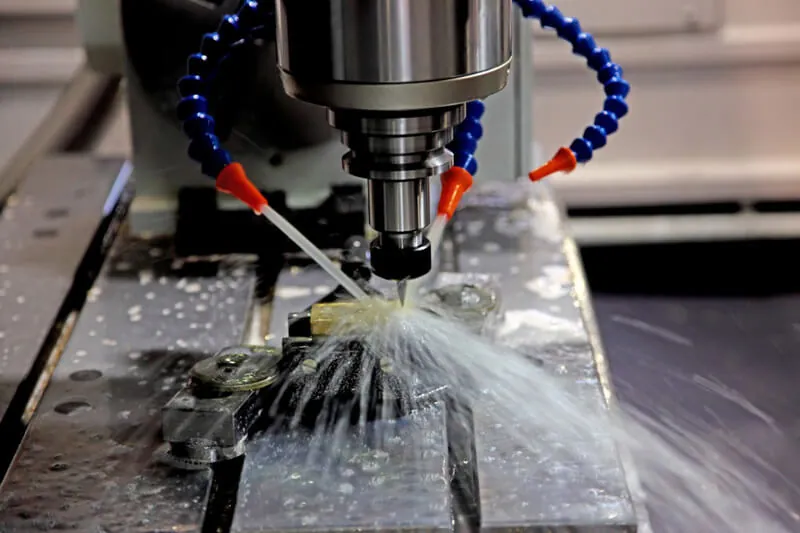
Wuxi Lead Precision Machinery delivers exceptional dimensional accuracy and surface integrity for custom 1018 mild steel components, leveraging advanced multi-axis machining technology. Our dedicated fleet of 5-axis CNC machining centers forms the core of this capability, enabling the production of highly complex geometries in a single setup. This eliminates cumulative errors inherent in multi-operation workflows, critical for maintaining tight tolerances on features like intersecting angles, deep cavities, and contoured surfaces common in 1018 steel applications such as precision shafts, bushings, and structural brackets. The inherent machinability of 1018 steel is optimized through our proprietary toolpath strategies and coolant management systems, ensuring consistent chip evacuation, minimized burring, and superior surface finishes down to Ra 0.8 µm. Material traceability from certified mills is standard, guaranteeing compliance with ASTM A108 specifications for chemical composition and mechanical properties.

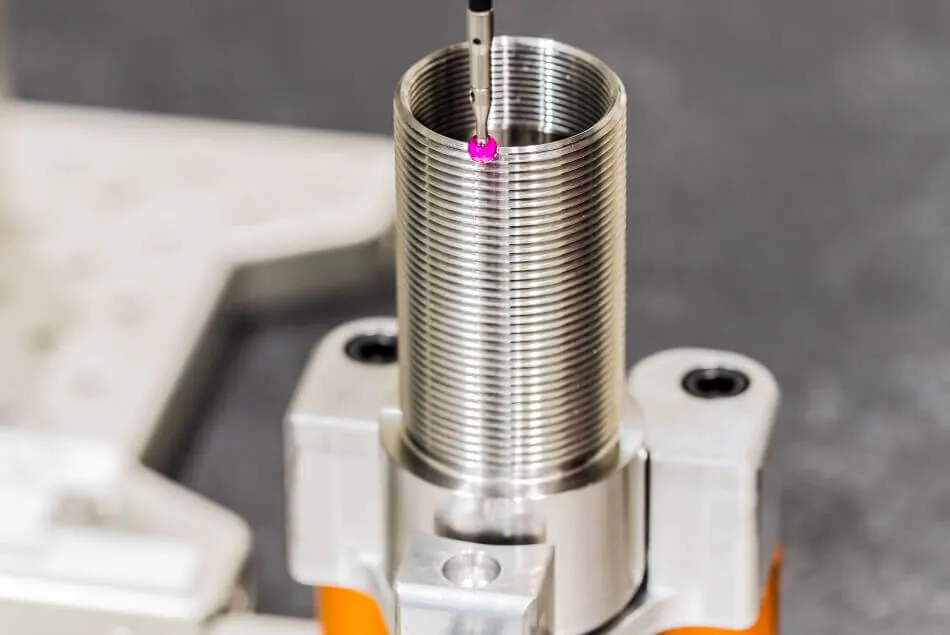
Rigorous quality control is non-negotiable in our 1018 steel manufacturing process. Every critical dimension undergoes verification using state-of-the-art Coordinate Measuring Machines (CMM). Our Zeiss and Hexagon CMM systems, operating within ISO 17025 accredited environmental controls, provide full 3D geometric dimensioning and tolerancing (GD&T) validation. This metrology backbone ensures comprehensive inspection coverage, from basic linear dimensions to complex profile and positional tolerances, with measurement uncertainty consistently below 0.0025 mm. All inspection data is digitally recorded and integrated into client-specific quality reports, providing full traceability and audit readiness. This systematic approach guarantees that every 1018 steel part shipped meets or exceeds the stringent requirements of aerospace, automation, and industrial equipment sectors.

The achievable tolerances for 1018 mild steel components manufactured on our 5-axis CNC platforms, verified by CMM, are detailed below. These represent our standard production capabilities under controlled conditions; tighter tolerances are achievable for specific features through process refinement.

Tolerance Class Linear Dimensions (mm) Geometric Tolerances (mm) Surface Roughness (Ra µm)
Standard ±0.05 ±0.05 (Flatness/Profile) 3.2
Precision ±0.025 ±0.025 (Position/Concentricity) 1.6
High Precision ±0.01 ±0.01 (Runout/Parallelism) 0.8

Our integrated 5-axis CNC machining and CMM inspection workflow ensures 1018 mild steel components consistently achieve the dimensional stability and feature accuracy demanded by high-performance applications. We transform design intent into tangible, reliable parts through unwavering process control and metrology-driven validation.


Material & Finish Options

1018 mild steel manufacturing

Material Selection Guide: 1018 Mild Steel and Alternatives for Precision Manufacturing

When selecting materials for custom metal manufacturing, 1018 mild steel stands out as a widely used carbon steel due to its balanced mechanical properties, weldability, and cost-effectiveness. At Wuxi Lead Precision Machinery, we recognize that material choice directly impacts performance, manufacturability, and total project cost. This guide provides an overview of 1018 mild steel in context with aluminum and titanium, along with surface finish considerations such as anodizing.

1018 mild steel is a low-carbon steel containing approximately 0.18% carbon, which gives it excellent machinability and formability. It is commonly used in applications requiring moderate strength, such as shafts, pins, fixtures, and structural components. Its low carbon content allows for easy welding and cold forming, making it ideal for parts that require post-machining operations. However, 1018 lacks inherent corrosion resistance and typically requires surface treatments such as zinc plating, powder coating, or oil-based passivation to ensure longevity in humid or corrosive environments.

In comparison, aluminum alloys—particularly 6061 and 7075—offer a superior strength-to-weight ratio and natural corrosion resistance due to the formation of a protective oxide layer. Aluminum is frequently selected for aerospace, automotive, and consumer electronics applications where weight reduction is critical. One of the most effective surface treatments for aluminum is anodizing, which enhances wear resistance, improves corrosion protection, and allows for color coding. Type II and Type III (hardcoat) anodizing are commonly used depending on the operational demands.

Titanium, specifically Grade 5 (Ti-6Al-4V), delivers exceptional strength-to-density ratio, outstanding corrosion resistance, and performance at elevated temperatures. It is often used in aerospace, medical implants, and high-performance automotive systems. While titanium offers superior performance in extreme environments, it is more expensive and challenging to machine compared to both 1018 steel and aluminum.

Below is a comparative summary of key mechanical and physical properties for these materials:

Material Tensile Strength (MPa) Yield Strength (MPa) Density (g/cm³) Machinability Rating Corrosion Resistance Common Finishes
1018 Mild Steel 440 370 7.87 70% Low Zinc plating, painting, oil
Aluminum 6061 310 275 2.70 90% High Anodizing, powder coating
Titanium Ti-6Al-4V 950 880 4.43 30% Very High Passivation, bead blasting

At Wuxi Lead Precision Machinery, we support clients in selecting the optimal material and finish based on application requirements, environmental exposure, and lifecycle demands. Whether you require the economy and versatility of 1018 mild steel, the lightweight durability of aluminum, or the high-performance characteristics of titanium, our engineering team ensures precision manufacturing with strict adherence to international quality standards.


Manufacturing Process & QC

1018 mild steel manufacturing

1018 Mild Steel Production Process: From Design to Zero-Defect Delivery

At Wuxi Lead Precision Machinery, our production process for 1018 mild steel components is engineered for uncompromising precision and zero-defect outcomes. This seamless workflow integrates advanced engineering with rigorous quality control, ensuring every part meets exacting industrial specifications. The journey begins with collaborative design refinement. Our engineering team utilizes advanced CAD/CAM software to optimize part geometry for 1018’s specific properties, analyzing stress points, material flow, and manufacturability. This phase includes critical tolerancing adjustments and fixture planning, leveraging 1018’s excellent machinability to maximize efficiency while preventing potential deformation. Material certification verification is mandatory, confirming ASTM A29/A29M compliance before any physical work commences.

Prototyping serves as the definitive validation step before mass production. We fabricate initial units using the exact production tooling and CNC programs intended for the full run. This prototype undergoes comprehensive metrology, including CMM inspection against the refined CAD model, dimensional verification of critical features, and functional testing where applicable. Any deviations trigger immediate root cause analysis and process correction. This stage is non-negotiable for achieving zero defects; it confirms the design’s manufacturability, validates the machining strategy, and ensures the process capability meets our stringent Cpk > 1.67 standard for critical dimensions. Client approval of the qualified prototype is required prior to launch.

Mass production executes the perfected process under continuous statistical process control. Our CNC machining centers, equipped with high-precision spindles and in-process probing, maintain tight tolerances consistently. Real-time monitoring tracks key parameters like tool wear, cutting forces, and thermal stability, with automatic tool compensation ensuring dimensional integrity across the entire batch. Every component undergoes 100% first-article inspection followed by systematic in-process checks based on criticality. Final inspection employs calibrated optical comparators and CMMs against the full drawing specification. Comprehensive material traceability, from heat number to finished part, is maintained throughout. This integrated approach, combining predictive process control with exhaustive verification, is the foundation of our zero-defect commitment for 1018 mild steel components.

Critical 1018 Mild Steel Specifications for Precision Machining

Property Value Relevance to Precision Manufacturing
Carbon Content 0.15-0.20% Optimal balance for weldability, formability, and machinability without excessive hardness
Tensile Strength 440 MPa (63.8 ksi) min Adequate strength for structural components; predictable deformation under load
Yield Strength 320 MPa (46.4 ksi) min Ensures dimensional stability during machining and in-service; ideal for press-fit assemblies
Elongation (50mm) 15% min Critical for forming operations; indicates material ductility and resistance to cracking
Brinell Hardness 121 HB max Enables high-speed machining, excellent surface finish, and minimal tool wear
Machinability Rating 70% (1212 = 100%) Free-machining grade; allows aggressive feeds/speeds, reducing cycle times significantly
Surface Finish (Typ) Ra 0.8 – 1.6 µm (32-63 µin) Achievable with standard tooling; critical for sealing surfaces and bearing fits

Why Choose Wuxi Lead Precision

Partner with Wuxi Lead Precision Machinery for your next high-precision manufacturing project involving 1018 mild steel. As a trusted leader in custom metal fabrication, we specialize in delivering engineered components that meet the strictest industry standards for quality, consistency, and performance. Our advanced CNC machining, turning, milling, and finishing capabilities are optimized for 1018 mild steel, ensuring tight tolerances, superior surface finishes, and repeatable accuracy across both prototyping and high-volume production runs.

1018 mild steel is a low-carbon alloy renowned for its excellent machinability, weldability, and versatility in structural and mechanical applications. At Wuxi Lead, we leverage decades of metallurgical expertise to maximize the performance of this material. Whether you require shafts, pins, brackets, or complex custom geometries, our engineering team works closely with yours to select optimal processing parameters, heat treatments, and inspection protocols. Our ISO-certified facility in Wuxi, China, is equipped with state-of-the-art machinery and supported by rigorous quality control systems, including CMM inspection, material traceability, and first-article reporting.

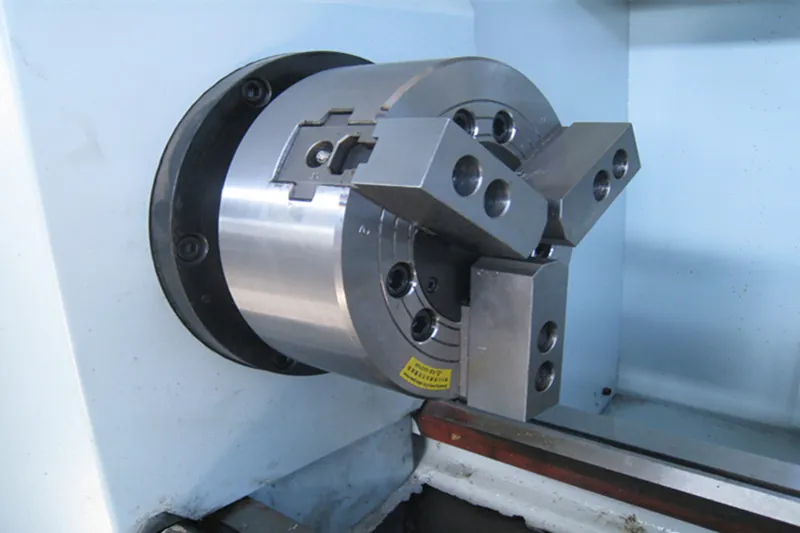
We understand that in high-end manufacturing, precision is non-negotiable. Our CNC Swiss lathes, multi-axis machining centers, and automated production lines ensure micron-level accuracy and exceptional part-to-part consistency. Every component produced from 1018 mild steel undergoes thorough dimensional verification and material validation to meet your exact specifications. With a focus on lean manufacturing and on-time delivery, we provide scalable solutions that reduce lead times and total project costs without compromising quality.

Below are key mechanical and physical properties of 1018 mild steel processed under our controlled manufacturing environment:

Property Value Test Standard
Tensile Strength 440 MPa (63.8 ksi) ASTM A370
Yield Strength 370 MPa (53.7 ksi) ASTM A370
Elongation (in 50 mm) 15% min ASTM E8
Hardness (Brinell) 126 HB ASTM E10
Density 7.87 g/cm³ ISO 17025
Machinability Rating 72% (relative to 160 Brinell steel) AISI
Typical Surface Finish Ra 0.8 – 1.6 µm ASME B46.1

Our commitment extends beyond manufacturing—we are your engineering partner. From DFM analysis and material selection to post-processing and global logistics, we provide end-to-end support tailored to your application needs. Clients across automation, robotics, energy, and transportation industries rely on Wuxi Lead for mission-critical components where reliability is paramount.

For technical inquiries, quotes, or to discuss your 1018 mild steel project, contact us today at [email protected]. Let Wuxi Lead Precision Machinery be the foundation of your next precision manufacturing success.


⚙️ Precision Cost Estimator

Estimate relative manufacturing effort based on tolerance.

1018 Mild Steel Manufacturer | Precision CNC Guide

Contents of Table

Contact [email protected] Whatsapp 86 15951276160