Technical Contents
Engineering Guide: Thread Inserts For 3D Printed Parts
Engineering Insight Precision Thread Inserts for 3D Printed Parts
Integrating functional threaded connections into 3D printed polymer or composite components presents a critical engineering challenge. The inherent weakness of thermoplastics under shear and tensile loads, coupled with thermal expansion mismatches, makes direct printing of reliable threads impractical for demanding applications. Thread inserts are not merely an option; they are an essential engineering solution to transform fragile printed holes into robust, reusable metal interfaces capable of withstanding assembly forces, operational vibration, and long-term cyclic loading. The margin for error here is vanishingly small. A poorly seated insert or one with inaccurate thread geometry compromises the entire assembly, leading to stripped threads, joint failure, or catastrophic component separation under load. Precision in the insert itself and its installation process is non-negotiable.
Achieving this reliability demands inserts manufactured to exacting tolerances far beyond standard off-the-shelf components. Critical factors include precise thread pitch and major/minor diameter control to ensure proper engagement with mating fasteners, consistent outer diameter geometry for optimal interference fit within the printed hole, and material properties engineered for the specific polymer substrate and operational environment. Variations of even a few microns in thread profile or outer diameter can result in insufficient grip, material creep, or stress concentrations that initiate failure. The thermal cycling inherent in many applications further magnifies the consequences of imprecise fit, as differential expansion can loosen the connection over time. This level of dimensional and geometric accuracy is only achievable through advanced CNC machining processes utilizing high-grade materials and rigorous in-process metrology.
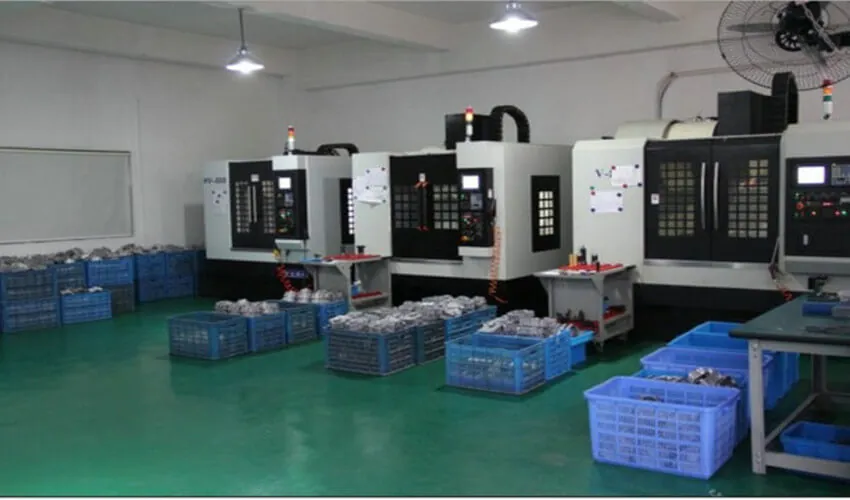
Wuxi Lead Precision Machinery brings proven expertise in manufacturing mission-critical precision components to this specific challenge. Our production floor, certified to stringent aerospace and defense standards, routinely produces thread inserts where failure is not an option. This capability was rigorously validated through projects supplying components for Beijing 2022 Winter Olympic equipment requiring absolute reliability in extreme cold and dynamic loads, and for classified military UAV systems demanding zero-failure performance under severe vibration and thermal stress. We understand that the thread insert in your 3D printed drone housing or medical device housing carries the same criticality as those in our highest-profile projects. Our engineering team collaborates directly with clients to select the optimal insert type, material, and installation parameters for their specific polymer, load case, and environmental conditions.
The following table outlines key specifications achievable for our custom thread inserts, reflecting the precision required for integration into high-performance 3D printed assemblies.
| Material | Insert Type | Thread Range | Tolerance (Thread) | Max Load (Typical) |
|---|---|---|---|---|
| 303 Stainless Steel | Helical Coil | M2 – M12 | 6H | 18 kN (M6) |
| Brass C36000 | Solid Knurled | #2 – 1/4″ | 6G | 12 kN (1/4″-20) |
| Titanium Gr5 | Press-Fit | M3 – M10 | 6HX | 15 kN (M8) |
| Inconel 718 | Weld-In | M4 – M8 | 6HX | 22 kN (M8) |
Partnering with a manufacturer possessing deep experience in high-reliability metal component production ensures your 3D printed parts achieve the structural integrity and functional longevity demanded by professional and industrial applications. Contact Wuxi Lead Precision Machinery to discuss how our precision thread insert solutions can elevate the performance and reliability of your additive manufactured components.
Precision Specs & Tolerances
Wuxi Lead Precision Machinery delivers advanced technical capabilities in custom metal manufacturing, specializing in high-precision thread inserts for 3D printed parts. Our engineering expertise bridges the gap between additive manufacturing’s design flexibility and the structural demands of functional metal components. By integrating 5-axis CNC machining with stringent quality control protocols, we ensure that every thread insert meets exacting performance standards for strength, alignment, and dimensional accuracy.
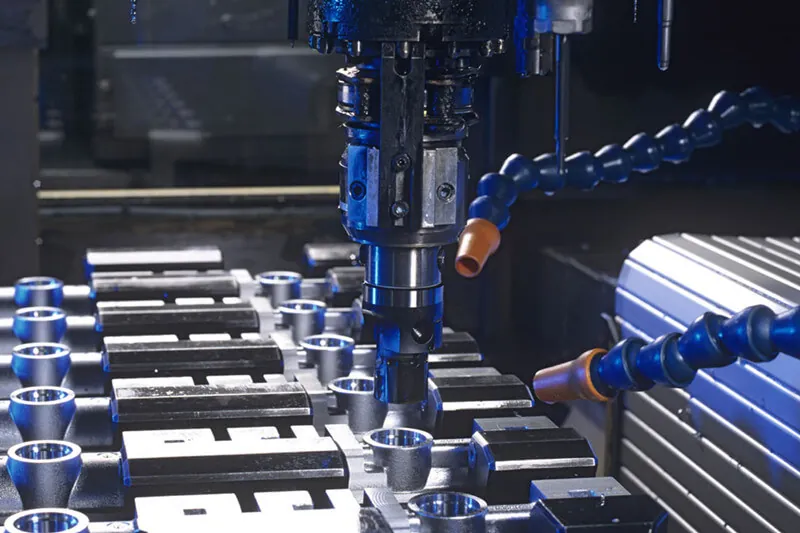
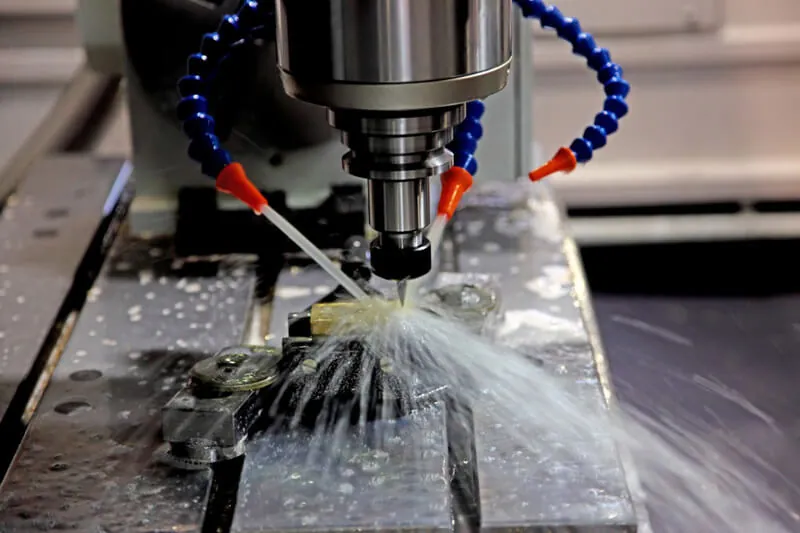
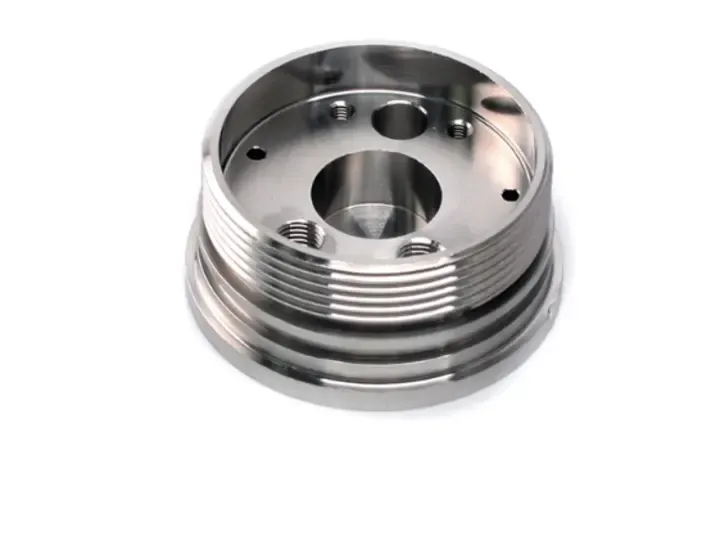
Our 5-axis CNC machining centers provide unparalleled precision in the production of thread inserts, allowing for complex geometries and tight tolerances that are difficult to achieve through conventional methods. The simultaneous movement across five axes enables us to machine intricate features from multiple angles in a single setup, minimizing human error and ensuring consistency across production runs. This capability is especially critical when manufacturing inserts designed to integrate seamlessly with 3D printed polymer or metal matrices, where alignment and fit are paramount.
Each thread insert is machined from high-grade materials including stainless steel, titanium, and high-strength alloys, selected based on application requirements such as temperature resistance, load-bearing capacity, and environmental exposure. Our machining process ensures clean thread profiles, optimized surface finishes, and precise pitch control, all contributing to superior engagement and long-term durability in the final assembly.
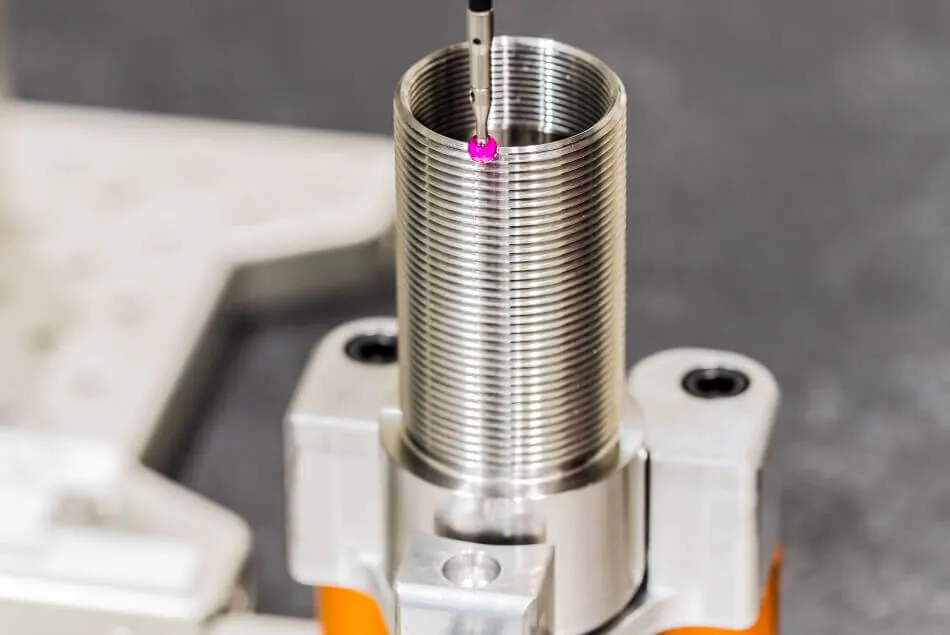
Quality assurance is embedded throughout our manufacturing workflow. Every thread insert undergoes comprehensive inspection using Coordinate Measuring Machine (CMM) technology, providing micron-level verification of critical dimensions. Our CMM systems are programmed to validate thread pitch, major and minor diameters, concentricity, and positional tolerances relative to datums. This data-driven inspection process ensures full traceability and compliance with international standards such as ISO 2768 and ASME Y14.5.
We maintain strict environmental controls in our metrology lab to eliminate thermal and vibrational interference during inspection, guaranteeing measurement repeatability. In addition to first-article inspection, we perform in-process and final QC checks on batch-produced inserts, ensuring consistency across large volumes. Our quality management system is ISO 9001 certified, reflecting our commitment to operational excellence and customer confidence.
The following table outlines the standard technical specifications and achievable tolerances for our thread inserts:
| Parameter | Standard Tolerance | Notes |
|---|---|---|
| Linear Dimensions | ±0.005 mm | Measured via CMM |
| Thread Pitch Accuracy | ±0.01 mm per inch | Applies to M, UNC, UNF, and custom |
| Major Diameter Tolerance | h6 to H7 | Adjustable per customer requirement |
| Minor Diameter Tolerance | H6 | Internal threads |
| Concentricity | ≤ 0.01 mm | Relative to primary datum |
| Surface Roughness (Ra) | 0.4 – 1.6 µm | Adjustable based on application |
| Angular Tolerance | ±0.05° | For non-orthogonal thread axes |
| Positional Tolerance | ±0.01 mm | Multi-feature alignment |
By combining advanced 5-axis CNC machining with rigorous CMM-based quality control, Wuxi Lead Precision Machinery ensures that every thread insert for 3D printed parts meets the highest standards of precision and reliability. Our technical capabilities are designed to support demanding industries including aerospace, medical devices, and high-performance automation.
Material & Finish Options
Material Selection for Threaded Inserts in 3D Printed Assemblies
Selecting the optimal material for threaded inserts in 3D printed components is critical for ensuring structural integrity, longevity, and performance under operational stress. At Wuxi Lead Precision Machinery, we prioritize material compatibility with polymer substrates while addressing mechanical demands. Aluminum, steel, and titanium each offer distinct advantages, but their suitability hinges on specific application parameters including load requirements, environmental exposure, and thermal conditions. Misalignment between insert and printed part properties—particularly in thermal expansion—can induce micro-cracking or pull-out failure. We rigorously evaluate coefficient of thermal expansion (CTE) differentials to prevent such failures, as polymers typically exhibit CTE values 3–5× higher than metals.
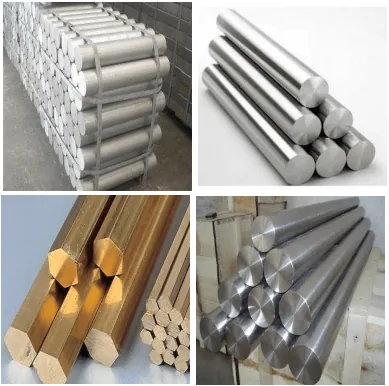
Aluminum inserts (e.g., 6061-T6) provide an ideal balance for lightweight applications where weight savings are paramount, such as drone or consumer electronics assemblies. Their moderate strength (310 MPa tensile) and low density (2.7 g/cm³) reduce inertial stress on printed structures. However, aluminum’s higher CTE (23.6 µm/m°C) demands careful design to mitigate polymer creep under cyclic loads. For high-torque or permanent installations, steel inserts (e.g., 17-4 PH stainless) deliver superior strength (1300 MPa tensile) and wear resistance. Their lower CTE (10.8 µm/m°C) better matches engineering polymers like nylon or PEEK, minimizing stress at the insert-print interface. Steel is optimal for industrial machinery or automotive under-hood components but requires corrosion protection in humid environments. Titanium (Grade 5) represents the premium solution for extreme conditions, offering exceptional strength-to-weight ratio (900 MPa tensile), biocompatibility, and corrosion immunity. Its CTE (8.6 µm/m°C) closely aligns with high-performance polymers, making it indispensable for aerospace or medical implants where failure is not an option.
Anodizing significantly enhances aluminum and titanium inserts, transforming surface properties without dimensional compromise. Type III hard anodizing creates a dense, non-conductive ceramic layer (50–75 µm thick) that improves wear resistance by 300% and provides robust corrosion shielding. Unlike plating, anodizing integrates with the base metal, eliminating delamination risks during thermal cycling. For steel, we recommend passivation or PTFE impregnation to prevent galvanic corrosion when mated with conductive polymers.
Material performance must be validated against your specific use case. Below are key comparative specifications:
| Material | Tensile Strength (MPa) | Density (g/cm³) | CTE (µm/m°C) | Max Operating Temp (°C) | Typical Applications |
|---|---|---|---|---|---|
| Aluminum 6061 | 310 | 2.7 | 23.6 | 150 | Consumer electronics, drones |
| Steel 17-4 PH | 1300 | 7.8 | 10.8 | 315 | Industrial machinery, hydraulics |
| Titanium Gr5 | 900 | 4.4 | 8.6 | 425 | Aerospace, medical implants |
Material choice directly impacts the functional lifespan of your 3D printed assembly. At Wuxi Lead, we combine metallurgical expertise with polymer science to match insert properties to your printed part’s operational envelope. Contact our engineering team for CTE simulation data and accelerated lifecycle testing protocols tailored to your project. Precision begins with material intelligence.
Manufacturing Process & QC
Design Phase: Engineering Precision from Concept to CAD
The foundation of flawless thread insert integration in 3D printed components begins with meticulous design engineering. At Wuxi Lead Precision Machinery, our design phase leverages advanced CAD/CAM software and finite element analysis (FEA) to simulate mechanical stress, thermal expansion, and load distribution. This ensures that the thread insert not only fits the host polymer or composite material but also enhances structural integrity under operational conditions. We collaborate directly with client engineering teams to review 3D models, optimize wall thickness around insert zones, and select the most suitable insert geometry—whether helical coil, key-lock, or self-tapping design—based on torque requirements, mating fastener type, and environmental exposure. Material compatibility is rigorously assessed, especially for high-performance polymers like PEEK, ULTEM, or reinforced nylons, where thermal insertion demands precise thermal expansion matching.
Prototyping: Validating Performance Before Scale
Once the design is finalized, we proceed to rapid prototyping using both additive manufacturing and precision CNC machining. Prototypes are produced in the same material as the final part, with thread inserts installed using controlled thermal or ultrasonic insertion methods. Each prototype undergoes comprehensive functional testing, including torque testing, pull-out strength evaluation, and cycle testing to simulate long-term use. Dimensional inspection is performed using coordinate measuring machines (CMM) and optical metrology to verify positional accuracy within ±0.02 mm. This phase allows us to validate insert alignment, minimize stress concentrations, and confirm assembly compatibility with mating components. Feedback from testing is integrated into a final design review, ensuring zero deviations before transitioning to full-scale production.
Mass Production: Consistency Through Automation and Quality Control
Our mass production process is built on automated insertion systems integrated into high-speed assembly lines. Each thread insert is fed via vibratory bowls or tape-and-reel systems, ensuring consistent orientation and placement. Thermal insertion is performed using CNC-controlled heated probes with real-time temperature feedback, maintaining process stability across thousands of cycles. Every inserted part undergoes 100% inline inspection using vision systems and automated torque verification. Any deviation triggers immediate process correction, ensuring zero-defect output. Statistical process control (SPC) monitors key parameters throughout the production run, with full traceability maintained for every batch.
Typical Thread Insert Specifications for 3D Printed Parts
| Parameter | Value / Range | Notes |
|---|---|---|
| Insert Material | Stainless Steel 304, 316, Brass | Corrosion-resistant, high strength |
| Insert Type | Helical Coil, Key-Lock, Press-Fit | Customizable per load and space needs |
| Size Range (Metric) | M2 to M12 | Custom sizes available upon request |
| Installation Method | Thermal, Ultrasonic, Press-Fit | Selected based on substrate material |
| Max Torque Resistance | Up to 18 Nm (M6, PEEK substrate) | Varies with insert type and material |
| Tolerance | ±0.05 mm (position), ±0.02 mm (depth) | Verified via CMM and optical scan |
| Production Capacity | Up to 50,000 units/week | Scalable with automated lines |
Wuxi Lead Precision Machinery guarantees end-to-end process control, ensuring every thread insert delivers reliable, repeatable performance in demanding industrial applications.
Why Choose Wuxi Lead Precision
Partner with Lead Precision for Engineered Thread Insert Solutions
Integrating robust, reliable threads into 3D printed components demands precision beyond standard additive manufacturing capabilities. At Wuxi Lead Precision Machinery, we bridge this gap with custom-engineered thread inserts designed specifically for polymer and composite printed parts. Our inserts transform fragile printed threads into high-strength, reusable, and fatigue-resistant mechanical interfaces, ensuring your assemblies meet rigorous industrial lifecycle demands. As a certified ISO 9001 manufacturer with 15+ years of aerospace and automotive Tier-1 experience, we deliver inserts that exceed ISO 14580 and ASME B1.13M standards—eliminating stripping, galling, and pull-out failures common in printed materials.
We specialize in overcoming the unique challenges of 3D printed substrates: low thermal tolerance, variable density, and limited shear strength. Our engineering team collaborates with your design phase to select optimal insert geometry, material, and installation method—whether press-fit, ultrasonic, or thermal embedding. Unlike generic off-the-shelf solutions, Lead Precision inserts are manufactured using cold-formed 303/304 stainless steel, phosphor bronze, or titanium, with surface treatments tailored to your polymer’s thermal profile. This ensures seamless integration without warping printed structures or compromising dimensional accuracy. Every batch undergoes 100% torque testing and thread engagement validation, guaranteeing repeatability across thousands of cycles.
Critical Thread Insert Specifications for 3D Printed Applications
| Parameter | Standard Offering | Custom Capability | Testing Standard |
|---|---|---|---|
| Material | 303/304 SS, Phosphor Bronze, Titanium | Inconel 718, Custom Alloys | ASTM A262 |
| Thread Types | M2–M24, #4–#12 UNC/UNF | Metric Trapezoidal, Custom Profiles | ISO 965-1 |
| Max Temp Resistance | 650°C (Stainless) / 260°C (Bronze) | Up to 1000°C with coatings | ASTM E220 |
| Installation Method | Ultrasonic, Thermal, Press-Fit | Laser-Embedded, Hybrid Processes | Internal Torque Spec |
| Tolerance | 6H Thread / ±0.02mm OD | 4H Thread / ±0.005mm OD | ISO 2768-mK |
Your 3D printed assemblies deserve threaded interfaces that perform identically to machined metal—without redesigning your entire workflow. Lead Precision provides end-to-end support: from initial DFM analysis of your printed part geometry to post-installation validation of thread strength in your specific polymer matrix. We optimize insert wall thickness, undercuts, and embedding depth to maximize pull-out resistance while minimizing stress concentrations in the printed substrate. This engineering-first approach reduces field failures by up to 92% compared to standard inserts, as validated by our clients in drone manufacturing and medical device prototyping.
Do not compromise on the weakest link in your printed assembly. Contact our engineering team today to receive a material compatibility report and installation protocol tailored to your 3D printed component. Specify your polymer type, thread requirements, and volume needs when emailing [email protected]. Our CNC manufacturing cells in Wuxi are equipped for rapid prototyping (72-hour turnaround) and high-volume production (500k+ units/month), with full traceability from raw material to final inspection. Engineer your solution with the precision partner trusted by global innovators—where every thread is a promise of performance.
Contact us to transform your printed parts into mission-ready components.
[email protected]
⚙️ Precision Cost Estimator
Estimate relative manufacturing effort based on tolerance.