Technical Contents
Engineering Guide: Automated Machining Services
Engineering Insight: The Uncompromising Value of Precision in Automated Machining Services
In high-stakes custom metal manufacturing, precision transcends mere specification adherence; it is the foundational element dictating product performance, longevity, and total cost of ownership. Automated machining services deliver unparalleled consistency, but their true strategic value emerges only when paired with rigorous metrology and process control capable of sustaining micron-level tolerances across high-volume production. Sub-micron deviations in aerospace actuators, medical implants, or defense subsystems cascade into catastrophic field failures, warranty liabilities, and irreparable brand damage. True precision engineering demands an integrated ecosystem where machine capability, environmental stability, real-time in-process gauging, and material science converge. It requires understanding that tolerances are not isolated numbers but interdependent variables influenced by thermal dynamics, tool wear compensation, and fixturing integrity. For mission-critical components, the cost of achieving 5-micron repeatability is negligible compared to the cost of failure.
Wuxi Lead Precision Machinery operates at this critical precision frontier, validated through decades of delivering components where failure is not an option. Our automated machining cells have produced intricate titanium structural elements for Olympic Winter Games equipment subjected to extreme alpine conditions, demanding zero variance under thermal shock. More significantly, we maintain long-standing partnerships with Tier-1 defense contractors, manufacturing classified critical components where tolerances below 3µm and surface finishes under Ra 0.4µm are non-negotiable requirements for operational reliability in defense systems. These projects are not merely production runs; they are continuous validations of our process discipline under stringent AS9100 and ITAR-compliant frameworks. Every spindle rotation, coolant parameter, and probing cycle is logged and analyzed, transforming raw capability into auditable, certified precision.
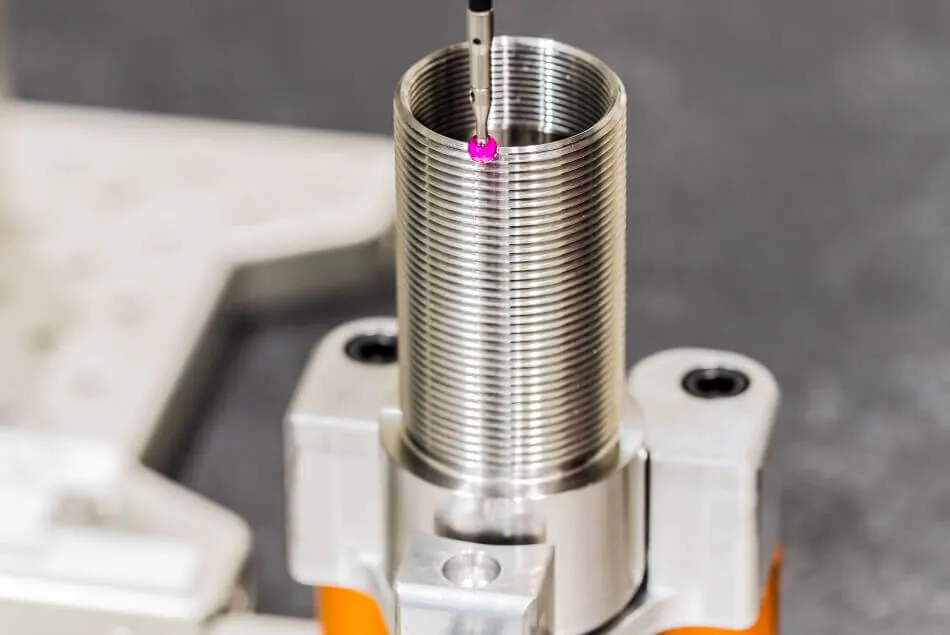
Achieving this standard requires more than advanced machinery. It necessitates a closed-loop manufacturing philosophy. At Lead Precision, automated machining integrates seamlessly with coordinate measuring machines (CMMs) and on-machine laser scanning, enabling real-time dimensional feedback that dynamically adjusts tool paths within the same production cycle. Our climate-controlled production cells maintain ±0.5°C stability, while proprietary tool management systems predict wear-induced drift before it impacts part geometry. This systematic approach ensures that the first part equals the ten-thousandth part, eliminating costly post-process sorting and rework. The result is not just precision, but predictable precision – a quantifiable reduction in your supply chain risk.
Our typical production capabilities for complex automated machining services are demonstrated below:
| Parameter | Capability Range | Typical Tolerance | Surface Finish (Ra) |
|---|---|---|---|
| Feature Size | 0.5 mm – 500 mm | ±0.005 mm | 0.2 µm – 1.6 µm |
| Geometric Tolerance | Position, True Position | ±0.003 mm | N/A |
| Material Range | Aluminum, Titanium, Stainless Steel, Inconel, Brass | N/A | N/A |
| Max Part Weight | 200 kg | N/A | N/A |
| Process Integration | Milling, Turning, Multi-Tasking | N/A | N/A |
When your application demands more than standard machining output, when the cost of imperfection outweighs the investment in perfection, automated machining services must deliver certified, repeatable precision. Wuxi Lead Precision Machinery provides this assurance through proven experience in the world’s most demanding applications. Contact our engineering team to discuss how our precision ecosystem can secure your next critical component program.
Precision Specs & Tolerances
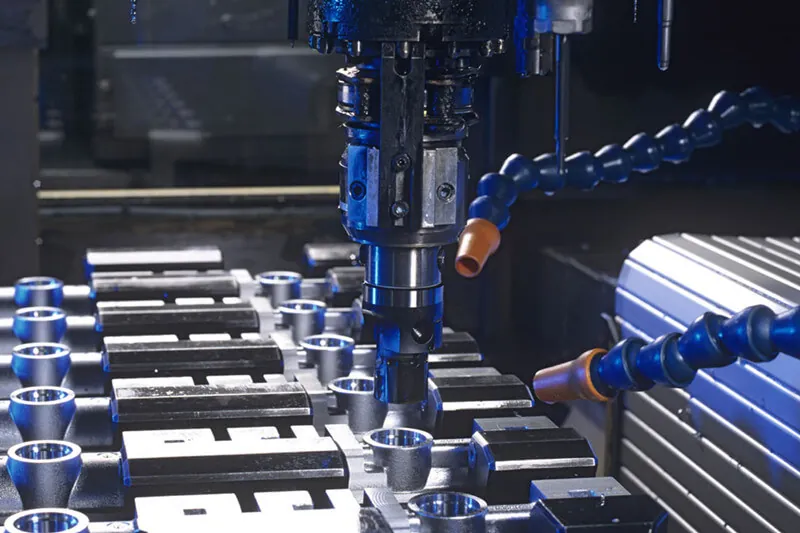
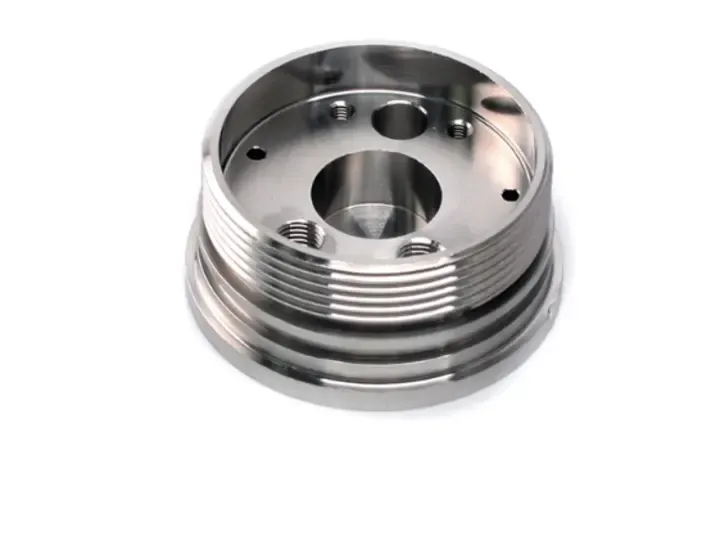
Wuxi Lead Precision Machinery delivers advanced automated machining services tailored for high-complexity, precision-critical components in aerospace, medical, energy, and industrial automation sectors. Our technical capabilities are anchored in state-of-the-art 5-axis CNC machining centers, which enable the production of intricate geometries with exceptional surface integrity and dimensional consistency. These multi-axis systems allow simultaneous movement across five planes, significantly reducing setup times and part handling while improving accuracy. This capability is especially critical for components requiring undercuts, deep cavities, or compound angles that cannot be achieved through conventional 3-axis methods.
Our machining fleet includes horizontal and vertical 5-axis platforms equipped with high-speed spindles, automatic tool changers, and real-time tool wear compensation. These features ensure sustained precision during long production runs and support a wide range of materials, including titanium alloys, Inconel, stainless steel, aluminum, and engineered composites. The integration of automated pallet systems further enhances throughput, enabling lights-out manufacturing and rapid job changeover—key advantages for clients requiring scalable, just-in-time delivery without compromising quality.
Precision is non-negotiable in our operation. Every component undergoes rigorous quality control, with Coordinate Measuring Machine (CMM) inspection as a standard process for first-article and in-process checks. Our Zeiss and Hexagon CMM systems provide micron-level verification of critical dimensions, geometric tolerances, and surface profiles. These machines are operated by certified metrology technicians and supported by advanced CAD comparison software, allowing direct overlay of actual scan data onto nominal 3D models for immediate deviation analysis. This closed-loop inspection process ensures full traceability and compliance with ISO 17025 and AS9100 standards.
In addition to CMM, we employ optical comparators, surface roughness testers, and calibrated hand tools across all stages of production. Our quality management system is integrated across departments, enabling real-time feedback from inspection to machining, which minimizes scrap and rework. All inspection reports are delivered with shipment, providing clients with complete documentation for audit and validation purposes.
The following table outlines our standard machining tolerances and capabilities:
| Parameter | Standard Capability | Tight Tolerance (Holdable) | Notes |
|---|---|---|---|
| Linear Tolerances | ±0.025 mm | ±0.005 mm | Up to 300 mm |
| Geometric Tolerances (GD&T) | ±0.02 mm (Position) | ±0.008 mm | Per ASME Y14.5 |
| Surface Roughness (Ra) | 3.2 µm | 0.8 µm (machined) | 0.2 µm with polishing |
| Hole Diameter Tolerance | H7 | H6 | Reamed/precision bored |
| Angular Tolerance | ±0.05° | ±0.02° | 5-axis simultaneous control |
| Maximum Work Envelope | 1200 x 800 x 600 mm | — | For 5-axis machining |
| Minimum Feature Size | 0.5 mm | — | Slot width or radius |
Our technical infrastructure is designed for repeatability, scalability, and compliance. Whether producing single prototypes or high-volume lots, Wuxi Lead Precision Machinery ensures that every component meets the highest standards of accuracy and reliability.
Material & Finish Options
Material Selection for Precision Automated Machining
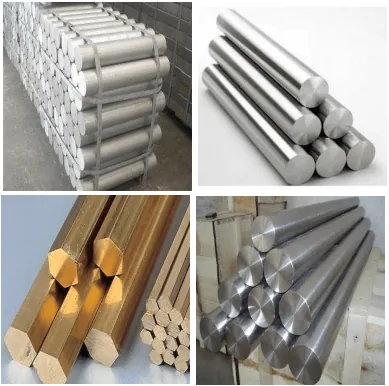
Material selection critically impacts part performance, manufacturability, and cost in high-volume automated machining. At Wuxi Lead Precision Machinery, we prioritize understanding your application’s mechanical, thermal, and environmental demands to recommend optimal metals. This ensures components meet stringent tolerances while maximizing production efficiency on our CNC platforms. Aluminum, steel, and titanium dominate aerospace, medical, and industrial applications, each offering distinct advantages and machining considerations.
Aluminum Alloys are preferred for lightweight structural components requiring high strength-to-weight ratios and excellent thermal/electrical conductivity. Series 6061 and 7075 are common; 6061 offers good weldability and corrosion resistance for general use, while 7075 provides superior strength for critical aerospace fittings. Aluminum machines rapidly with high feed rates, minimizing cycle times. However, its softness requires careful tool geometry to prevent burring, and thermal expansion must be accounted for in tight-tolerance features. Anodizing is essential for surface hardening and corrosion protection.
Carbon and Alloy Steels deliver exceptional strength, wear resistance, and fatigue performance for high-stress applications like shafts, gears, and tooling. Grades like 4140 and 1045 are widely used. Steels generally exhibit good machinability but generate significant heat, demanding robust coolant strategies and rigid setups to maintain accuracy. Hardened steels (e.g., 4340) require pre-machining before final heat treatment. Post-machining processes like plating or passivation are typical for corrosion resistance, though anodizing is not applicable.
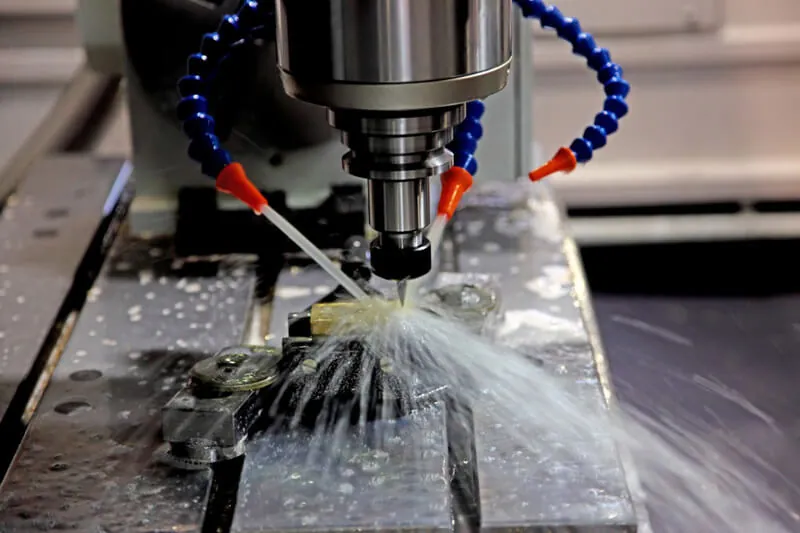
Titanium Alloys, particularly Grade 5 (Ti-6Al-4V), are indispensable in extreme environments due to outstanding strength-to-weight ratios, biocompatibility, and corrosion resistance at high temperatures. Titanium’s low thermal conductivity causes heat concentration at the cutting edge, accelerating tool wear and requiring lower speeds, specialized carbide tools, and consistent coolant flow. Its high chemical reactivity also necessitates strict chip control to prevent galling. Anodizing titanium enhances surface hardness and provides color-coding for medical parts.
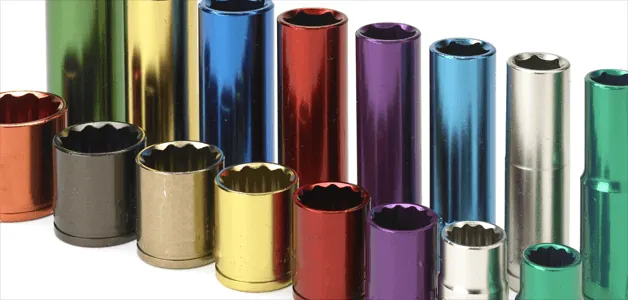
Anodizing Finishes for Aluminum are non-negotiable for functional aluminum components. Type II (sulfuric acid) anodizing provides standard corrosion resistance and dye acceptance for identification. Type III (hardcoat) anodizing creates a significantly thicker, harder ceramic layer for extreme wear resistance in hydraulic or moving parts. Precise control of voltage, temperature, and bath chemistry is critical; inconsistent anodizing leads to dimensional drift or poor adhesion. Wuxi Lead integrates anodizing parameters into our machining process planning to ensure final dimensions meet print specifications after treatment.
Material choice directly influences automated production viability. Below are key comparative specifications:
| Material | Typical Grades | Tensile Strength (MPa) | Machinability Rating | Key Applications | Critical Machining Consideration |
|---|---|---|---|---|---|
| Aluminum Alloys | 6061, 7075 | 310 (6061) / 570 (7075) | Excellent (A9) | Enclosures, brackets | Thermal expansion control; burr minimization |
| Carbon/Alloy Steel | 1045, 4140 | 600 (1045) / 655 (4140) | Good (B8) | Shafts, gears, tooling | Heat management; vibration damping |
| Titanium Alloys | Gr 2, Gr 5 | 345 (Gr 2) / 900 (Gr 5) | Fair (C6) | Aerospace fittings, implants | Low thermal conductivity; chip control |
Selecting the right material and finish requires balancing performance needs with automated production realities. Wuxi Lead’s engineering team analyzes your design intent, volume requirements, and end-use environment to specify materials and processes that ensure yield, precision, and cost-effectiveness. Consult our experts early in your design phase to optimize for automated machining success.
Manufacturing Process & QC
At Wuxi Lead Precision Machinery, our automated machining services are engineered for precision, repeatability, and zero-defect output in custom metal manufacturing. We follow a rigorously controlled production process that spans from initial design to prototyping and finally to full-scale mass production. Each phase is optimized to ensure dimensional accuracy, material integrity, and compliance with international quality standards, serving high-demand sectors such as aerospace, medical devices, and advanced industrial automation.
The process begins with collaborative design engineering. Our team works closely with clients to analyze CAD/CAM models, perform design for manufacturability (DFM) reviews, and optimize part geometry for CNC automation. We assess material selection, tolerance requirements, surface finishes, and assembly integration to eliminate potential production risks before any metal is cut. This proactive approach ensures that designs are not only functional but also optimized for high-efficiency machining.
Once the design is finalized, we move into the prototyping phase. Utilizing high-precision 5-axis CNC machining centers and automated tooling systems, we produce functional prototypes that mirror final production quality. These prototypes undergo comprehensive inspection using coordinate measuring machines (CMM), optical comparators, and surface roughness testers. We validate fit, form, and function, providing clients with physical samples for testing and approval. Any necessary design refinements are implemented digitally and re-validated in a closed-loop feedback system to ensure perfection before scale-up.
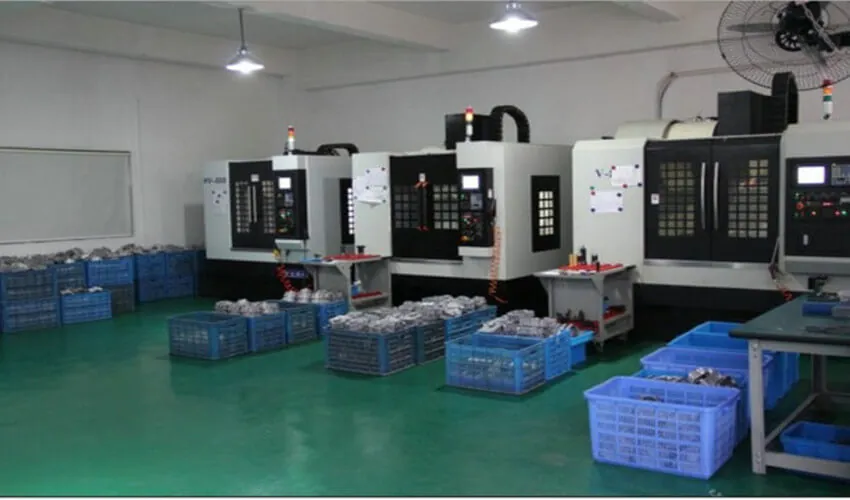
With prototype approval, we transition seamlessly into automated mass production. Our facility leverages FANUC and SIEMENS-controlled machining cells integrated with robotic part handling and in-process gauging systems. These automated lines operate 24/7 with real-time monitoring through IoT-enabled sensors that track tool wear, thermal drift, and dimensional consistency. Every production run follows a documented process plan with Statistical Process Control (SPC) protocols to maintain tight tolerances and prevent deviations. Batch traceability is ensured through laser part marking and digital logbooks that record machining parameters for every component.
Our zero-defect philosophy is enforced through multi-stage quality checkpoints. Incoming raw materials are certified and logged. In-process inspections occur at critical stages, and final inspection includes full dimensional reporting and material certification. Non-conforming parts are automatically quarantined via our quality management system, ensuring only flawless components are shipped.
The table below outlines key production capabilities:
| Parameter | Specification |
|---|---|
| Machining Tolerance | ±0.005 mm |
| Surface Roughness (Ra) | As low as 0.4 µm |
| Max Work Envelope (XYZ) | 2000 x 1000 x 800 mm |
| Materials Supported | Aluminum, Stainless Steel, Titanium, Inconel, Brass, Engineering Plastics |
| Automation Integration | Robotic loading/unloading, pallet systems |
| Quality Standards | ISO 9001:2015, PPAP, FAIR, SPC, Full CMM reports |
Wuxi Lead Precision Machinery delivers unmatched consistency in automated metal manufacturing by unifying advanced technology with disciplined process control. From design to delivery, we ensure every component meets the highest standards of precision and reliability.
Why Choose Wuxi Lead Precision
Partner with Lead Precision: Your Engineered Path to Manufacturing Excellence
In the demanding landscape of high-precision metal components, selecting a machining partner transcends simple vendor selection. It requires aligning with an engineering extension of your own team—one possessing the technical depth, process rigor, and unwavering commitment to quality necessary to transform complex designs into flawless, mission-critical parts. At Wuxi Lead Precision Machinery, we operate at this elevated tier, serving global leaders in aerospace, medical device, semiconductor, and advanced industrial sectors where tolerances are non-negotiable and reliability is paramount.
Our automated machining services integrate cutting-edge multi-axis CNC technology with closed-loop quality systems, ensuring micron-level consistency across volumes from prototypes to high-rate production. We eliminate the guesswork inherent in traditional outsourcing by embedding our engineering expertise early in your design phase—performing rigorous manufacturability analysis to optimize for precision, cost, and speed without compromising integrity. This proactive collaboration mitigates risk, accelerates time-to-market, and secures supply chain resilience for your most challenging projects.
The foundation of this partnership is our demonstrable capability, validated through stringent industry certifications and measurable performance metrics. Consider the precision envelope we consistently deliver:
| Critical Specification | Lead Precision Performance |
|---|---|
| Positional Accuracy | ±0.0002 inches (5µm) |
| Surface Finish (Ra) | As low as 0.4 µm |
| Material Range | Titanium, Inconel, Stainless Steels, Aluminum Alloys, Exotic Metals |
| Max Work Envelope (mm) | 1200 x 800 x 600 |
| Key Certifications | ISO 9001:2015, ISO 13485, NADCAP (Pending) |
| Traceability | Full lot/batch documentation with material certs & inspection reports |
This technical capability is matched by our operational philosophy. We understand that your success hinges on more than just hitting a dimension; it requires responsive communication, transparent process control, and a partner willing to take ownership of outcomes. Our dedicated engineering project managers act as your single point of contact, providing real-time production updates, proactive issue resolution, and data-driven insights to continuously refine your component’s manufacturability.
The cost of precision failure in critical applications is incalculable. Partnering with Lead Precision means investing in a supplier whose processes are engineered for impact—not just meeting specifications, but exceeding the reliability demands of your end-use application. We transform the complexities of advanced metal manufacturing into a strategic advantage for your business.
Initiate your precision assessment today. Contact our engineering team directly at [email protected] to discuss your specific component challenges, material requirements, and volume needs. Provide your design files or specifications, and we will deliver a comprehensive manufacturability report within 48 hours—detailing achievable tolerances, lead time projections, and actionable optimization recommendations. Do not navigate high-stakes machining alone; leverage our precision engineering ecosystem to secure your competitive edge. Your journey toward zero-defect, on-time delivery starts with a single, decisive connection.
⚙️ Precision Cost Estimator
Estimate relative manufacturing effort based on tolerance.