Satellite Machining Services Manufacturer | Precision CNC Guide

Engineering Guide: Satellite Machining Services

Engineering Insight Satellite Machining Services

Precision in satellite component manufacturing transcends standard tolerances—it defines mission success. In orbital environments, thermal cycling, micro-vibrations, and zero-gravity conditions amplify even micron-level deviations. A misaligned antenna bracket or imperfectly finished optical mount can cascade into signal degradation, sensor failure, or catastrophic structural resonance. At Wuxi Lead Precision Machinery, we treat satellite machining not as a production task but as a physics-bound engineering commitment. Our processes account for material behavior in vacuum conditions, coefficient of thermal expansion mismatches, and long-term dimensional stability under radiation exposure. This demands more than advanced CNC equipment; it requires predictive modeling of in-orbit performance during the machining phase.

Our facility’s foundation in mission-critical projects directly informs satellite work. Having produced timing system components for the Beijing Olympics—where sub-millisecond accuracy was non-negotiable—and structural housings for military-grade satellite communication arrays, we operate under stringent protocols where traceability and zero-defect culture are mandatory. Every titanium gyroscope housing or aluminum alloy radiator panel undergoes multi-axis interferometric validation, not merely post-process inspection. We integrate thermal stability protocols during machining to preempt in-orbit distortion, a practice honed through decades of aerospace collaboration. Material integrity is equally paramount; our vacuum-brazed aluminum and Inconel 718 components undergo non-destructive testing per ASTM E505 Level 3 standards to eliminate internal voids that could propagate in vacuum.

Critical Satellite Machining Specifications

Parameter Industry Requirement Wuxi Lead Precision Capability
Dimensional Tolerance ±0.005 mm ±0.001 mm (CMM verified)
Surface Finish (Ra) ≤0.8 µm ≤0.4 µm (optical grade)
Geometric Accuracy ISO 2768-mK ISO 10110-7 Class 2
Material Certification AMS/ASTM standard Full heat lot traceability + batch-specific tensile reports
Cleanliness Standard ISO 14644-8 Class 8 ISO 14644-8 Class 5 (particle-counted)
Compliance AS9100D AS9100D + ISO 27001 (data security)

Satellite programs demand supply chain resilience as much as technical prowess. Our dual-source spindle systems and redundant metrology labs ensure schedule continuity despite geopolitical disruptions—a necessity proven during recent global semiconductor shortages. Every component ships with a digital twin dataset, including thermal distortion simulations and residual stress maps, enabling integrators to model orbital performance with empirical data. For satellite OEMs, partnering with a manufacturer that treats precision as a systems-engineering challenge—not a checklist—eliminates costly redesigns and launch delays. At Wuxi Lead, we don’t just machine parts; we validate orbital readiness on Earth.


Precision Specs & Tolerances

Wuxi Lead Precision Machinery delivers advanced satellite machining services tailored to the stringent demands of aerospace, defense, and high-performance industrial sectors. Our technical capabilities are built around precision, repeatability, and full-process control, ensuring that every component meets the exacting standards required for mission-critical applications. At the core of our machining operations is a fleet of state-of-the-art 5-axis CNC machining centers, enabling us to produce complex geometries with exceptional accuracy and surface integrity. These multi-axis systems allow simultaneous movement across all five axes, facilitating the machining of intricate contours, undercuts, and deep cavities without the need for multiple setups. This not only enhances precision but also reduces lead times and minimizes potential alignment errors.

Our 5-axis machining platforms are equipped with high-speed spindles, advanced tool management systems, and real-time monitoring software, ensuring optimal performance across a wide range of aerospace-grade materials. We routinely machine aluminum alloys such as 7075 and 6061, titanium grades including Ti-6Al-4V, nickel-based superalloys like Inconel 718, and high-strength stainless steels. Each machining program is developed using industry-leading CAM software, allowing for precise toolpath optimization and collision avoidance, even in the most complex part configurations.

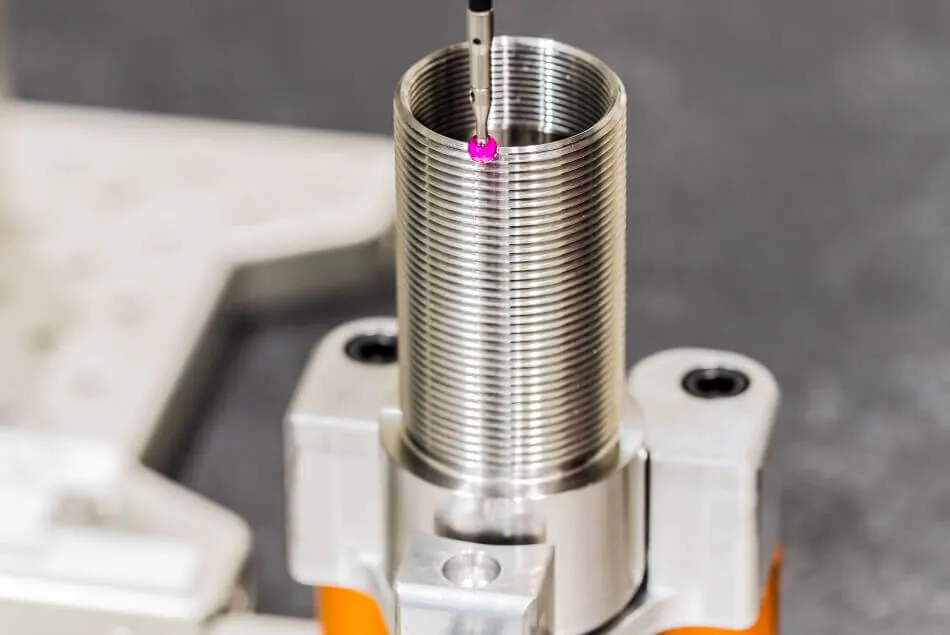
Quality assurance is integral to our satellite machining process. Every component undergoes comprehensive dimensional verification using coordinate measuring machines (CMM) with sub-micron accuracy. Our CMM inspection routines are fully programmable and aligned with AS9100 and ISO 9001 standards, ensuring consistent compliance with aerospace quality requirements. In addition to CMM-based metrology, we employ surface roughness testers, optical comparators, and hardness testing equipment to validate material and finish specifications.

To maintain the highest level of process control, we implement first-article inspection (FAI) and production part approval process (PPAP) documentation as standard practice. Our quality engineers work in close collaboration with customers to define critical-to-quality characteristics and establish inspection plans that align with program-specific requirements. All inspection data is documented and archived for full traceability, supporting long-term component reliability and regulatory compliance.

The following table outlines our standard machining tolerances and capabilities:

Parameter Specification
Positional Tolerance ±0.005 mm
Linear Dimensional Tolerance ±0.01 mm
Angular Tolerance ±0.05°
Surface Roughness (Ra) As low as 0.4 μm (16 μin)
Feature Repeatability ±0.003 mm over multiple batches
Maximum Work Envelope 1200 mm × 800 mm × 750 mm (5-axis)
Minimum Wall Thickness 0.5 mm (aluminum), 0.8 mm (titanium)

With our integrated approach to precision machining and quality control, Wuxi Lead Precision Machinery provides satellite manufacturers with a trusted source for high-integrity components that meet the challenges of extreme environments and demanding performance criteria.


Material & Finish Options

Material Selection for Satellite Machining: Precision Engineering for Space Applications

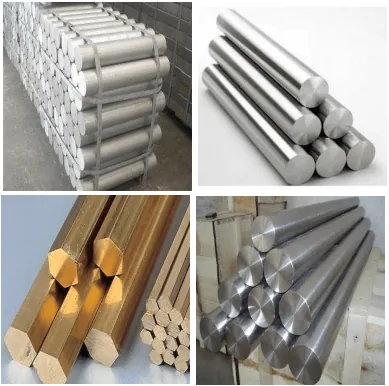
Selecting optimal materials for satellite components demands rigorous analysis of thermal stability, strength-to-weight ratios, and environmental resilience. At Wuxi Lead Precision Machinery, we prioritize materials that withstand vacuum exposure, extreme thermal cycling, and radiation while maintaining micron-level dimensional integrity. Aluminum alloys dominate structural elements due to their lightweight nature and thermal conductivity, while titanium offers unparalleled strength in high-stress assemblies. Steel variants provide critical hardness for mechanisms requiring wear resistance. Each material must comply with outgassing standards (e.g., ASTM E595) to prevent optical contamination in orbital environments.

Aluminum 7075-T7351 is our standard for brackets and housings, balancing machinability with fatigue resistance. Its low density (2.81 g/cm³) reduces launch mass, though it requires anodizing for corrosion protection in ground handling phases. For load-bearing components like antenna mounts, Titanium Grade 5 (Ti-6Al-4V) delivers superior strength-to-weight performance and near-zero thermal expansion mismatch with composite structures. Stainless steel 17-4 PH is reserved for precision gears and actuators where hardness (HRC 38–42) and magnetic neutrality are non-negotiable. Material certifications include full traceability to AMS, ASTM, and ECSS standards, with batch-specific test reports validating mechanical properties.

Critical material specifications for satellite applications are summarized below:

Material Key Properties CTE (10⁻⁶/K) UTS (MPa) Satellite Application Examples
Aluminum 7075-T7351 High strength, good fatigue resistance 23.6 503 Structural brackets, optical benches
Titanium Ti-6Al-4V Exceptional strength-to-weight, corrosion-resistant 8.6 900 Reaction wheel hubs, propulsion mounts
Stainless 17-4 PH High hardness, non-magnetic, wear-resistant 10.8 1000 Actuator pins, fastening systems

Surface finishing is equally mission-critical. Anodizing transforms aluminum surfaces into electrically insulating, wear-resistant layers while preventing galvanic corrosion. For satellites, we exclusively implement Type III Hard Anodizing per AMS 2469, achieving 50–75 μm thickness with 90% sulfuric acid electrolyte. This process yields a dense, non-porous oxide layer (hardness 500–600 HV) that survives thermal vacuum cycling without microcracking. Crucially, all anodized parts undergo NASA-approved outgassing testing (TML <1.0%, CVCM <0.10%) to eliminate molecular contamination risks. Chromic acid sealing further enhances corrosion resistance for ground-sea-level handling phases.

Wuxi Lead’s ISO 9001:2015-certified facility controls every variable—from bath chemistry to temperature ramp rates—to ensure anodized finishes meet ECSS-Q-ST-70-08C standards. We provide certified test data for adhesion, porosity, and secondary outgassing, guaranteeing your components survive launch and operate flawlessly in orbit. Partner with us to transform material science into orbital reliability.


Manufacturing Process & QC

At Wuxi Lead Precision Machinery, our satellite machining services are engineered to meet the most demanding precision requirements in aerospace, defense, and advanced communications systems. Each component we produce supports mission-critical applications where performance, reliability, and consistency are non-negotiable. Our production process is structured into three core phases: Design, Prototyping, and Mass Production—each meticulously controlled to ensure zero defects.

The process begins with collaborative design engineering. Our team works closely with clients to analyze technical drawings, material specifications, and functional requirements. Utilizing advanced CAD/CAM software and GD&T (Geometric Dimensioning and Tolerancing) principles, we optimize part geometry for manufacturability, structural integrity, and thermal stability. This phase includes comprehensive Design for Manufacturability (DFM) reviews, ensuring that every satellite component—whether a waveguide housing, antenna bracket, or structural frame—is optimized for precision machining and long-term performance in extreme environments.

Once the design is finalized, we proceed to prototyping. This stage is critical for validating form, fit, and function. Using 5-axis CNC machining, wire EDM, and high-speed milling technologies, we produce initial prototypes from flight-grade materials such as aluminum 7075-T6, titanium Ti-6Al-4V, and Inconel 718. Each prototype undergoes rigorous inspection using coordinate measuring machines (CMM), optical comparators, and laser scanning to verify dimensional accuracy down to ±0.002 mm. Environmental testing, including thermal cycling and vibration analysis, ensures the part performs under real-world orbital conditions. Client feedback is integrated at this stage to finalize the design before scaling to volume production.

Mass production is executed under a Zero Defects framework, integrating statistical process control (SPC), real-time tool wear monitoring, and 100% in-process inspection at critical control points. Our ISO 9001 and AS9100-certified facility employs automated part handling and closed-loop feedback systems to minimize human error and maintain consistency across production runs. Every component is traceable through our digital manufacturing execution system (MES), with full material and inspection documentation provided.

Throughout all stages, quality is not a checkpoint—it is embedded into every operation. This disciplined approach ensures that satellite systems built with Wuxi Lead components achieve maximum reliability in orbit, where failure is not an option.

Specification Detail
Materials Aluminum 7075-T6, Ti-6Al-4V, Inconel 718, Stainless Steel 17-4 PH, Copper Alloys
Tolerance ±0.002 mm (typical), up to ±0.001 mm with special controls
Surface Finish Ra 0.8 µm standard, down to Ra 0.2 µm for critical RF surfaces
Max Work Envelope 1200 x 800 x 600 mm (5-axis), 400 x 300 x 200 mm (EDM)
Production Capacity 50,000+ components annually with scalable lot sizing
Quality Standards ISO 9001, AS9100D, NADCAP (pending), Full CMM & NDT reporting

Why Choose Wuxi Lead Precision

Partner with Lead Precision for Mission-Critical Satellite Components

In the demanding realm of satellite manufacturing, component failure is not an option. Every bracket, housing, and structural element must withstand extreme thermal cycles, vacuum conditions, and intense vibration during launch. Wuxi Lead Precision Machinery delivers the uncompromising precision and reliability satellite programs demand. As your dedicated manufacturing partner, we merge decades of aerospace-specific CNC expertise with rigorous quality systems to transform your complex designs into flight-ready hardware. Our facility operates under a zero-defect culture, understanding that your mission’s success hinges on the integrity of every machined part.

We specialize in producing high-integrity components from advanced aerospace alloys including Invar 36, Kovar, Aluminum 7075-T7351, and Titanium Grade 5. Our multi-axis CNC machining centers achieve tolerances down to ±0.0002 inches (5 microns) with surface finishes as fine as Ra 0.4 µm, critical for optical mounts and sensor interfaces. Full material traceability, non-destructive testing (NDT), and strict adherence to AS9100D and ITAR compliance protocols are standard for every order. Below are key capabilities supporting satellite subsystem production.

Specification Category Capability Detail
Materials Expertise Invar 36, Kovar, Aluminum 7075-T7351, Ti-6Al-4V, Stainless Steel 17-4PH, Beryllium Copper
Dimensional Tolerance ±0.0002 inches (5 microns) for critical features
Surface Finish Ra 0.4 µm to Ra 1.6 µm achievable per requirement
Max Part Size 800 x 600 x 500 mm (3-axis); 500 mm diameter (5-axis)
Quality Standards AS9100D, ISO 9001:2015, ITAR Registered, Full FAI (First Article Inspection)
Secondary Processes Precision cleaning (class 100 cleanroom), passivation, anodizing coordination, CMM reporting

Beyond technical execution, we integrate seamlessly into your engineering workflow. Our team engages early during design for manufacturability (DFM) reviews, identifying potential thermal stress points or assembly challenges before metal is cut. This proactive collaboration reduces prototyping iterations and accelerates time-to-orbit. We maintain secure data protocols for IP protection and provide real-time production updates through customer portals, ensuring transparency from raw material certification to final shipment.

Global satellite integrators choose Lead Precision because we treat your mission as our own. Our China-based facility offers strategic supply chain advantages without compromising Western aerospace quality expectations. All processes are validated under controlled environmental conditions, with humidity and temperature stabilized to prevent material drift during machining. When your project requires components where micron-level deviations impact orbital performance, partner with an engineering team that has delivered 98.7% on-time delivery for Tier-1 aerospace clients over the past five years.

Initiate your technical consultation today. Contact our Aerospace Solutions Team at [email protected] to discuss material specifications, review NDA-protected drawings, or request a capability portfolio. Include your project timeline and critical tolerances for a tailored production assessment within 24 business hours. Let Lead Precision become the extension of your engineering department you can rely on for flawless execution in the final frontier. Your satellite’s journey to orbit begins with a single precision-machined component—ensure it meets the standard.


⚙️ Precision Cost Estimator

Estimate relative manufacturing effort based on tolerance.

Satellite Machining Services Manufacturer | Precision CNC Guide

Contents of Table

Contact [email protected] Whatsapp 86 15951276160