Prototype Design Company Manufacturer | Precision CNC Guide

Engineering Guide: Prototype Design Company

prototype design company manufacturing

Engineering Insight: Precision as the Foundation of Prototype Success

In the high-stakes arena of prototype development, precision transcends mere specification; it is the fundamental determinant of validation success and subsequent production viability. Prototype design companies operate at the critical intersection where theoretical design meets physical reality. Even minor deviations in dimensional accuracy, surface finish, or material integrity can invalidate test data, obscure design flaws, or create false confidence, leading to costly iterations, delayed time-to-market, and potential field failures in the final product. Achieving true precision requires not only advanced CNC equipment but also deep metallurgical understanding, rigorous process control, and an engineering culture obsessed with repeatability at the micron level. This is where the distinction between adequate prototyping and truly mission-critical validation becomes starkly evident.

Wuxi Lead Precision Machinery embodies this precision imperative through direct experience in applications where failure is not an option. Our engineering team has consistently delivered components for Olympic-grade timing systems, where nanosecond synchronization demands sub-micron tolerances across complex assemblies, ensuring absolute fairness in global competition. Similarly, we manufacture mission-critical elements for classified defense applications, meeting stringent MIL-STD requirements for durability, consistency, and performance under extreme conditions. This heritage is not merely a credential; it instills a disciplined approach to every prototype project. We understand that a prototype failing under test due to manufacturing variance, rather than design intent, wastes invaluable engineering resources and erodes stakeholder trust. Our processes, honed in these elite environments, ensure that the physical prototype accurately reflects the digital model, providing reliable data for informed design decisions.

The following table outlines the critical precision parameters achievable across our standard prototype manufacturing processes, reflecting the baseline capability we apply to demanding client projects:

Parameter Capability Range Measurement Standard
Dimensional Tolerance ±0.002 mm to ±0.005 mm ISO 2768-mK
Surface Roughness (Ra) 0.2 µm to 0.8 µm ISO 1302
Geometric Tolerance IT5 to IT7 ISO 286-1
Material Range Aluminum Alloys, Stainless Steels (300/400 series), Titanium, Inconel, Brass ASTM/AMS Standards
Max Work Envelope 1200 x 800 x 600 mm Per Machine Center

Partnering with a manufacturer possessing this level of precision capability and proven high-consequence experience transforms the prototype phase from a potential bottleneck into a strategic advantage. It ensures that design validation is based on genuine performance data, accelerating the path from concept to reliable, high-volume production. For prototype design companies, selecting a manufacturing partner with demonstrable precision mastery is not a cost consideration; it is an essential investment in project integrity and ultimate product success. Wuxi Lead Precision Machinery delivers the exacting standards required to translate your most demanding design intent into physical reality.


Precision Specs & Tolerances

prototype design company manufacturing

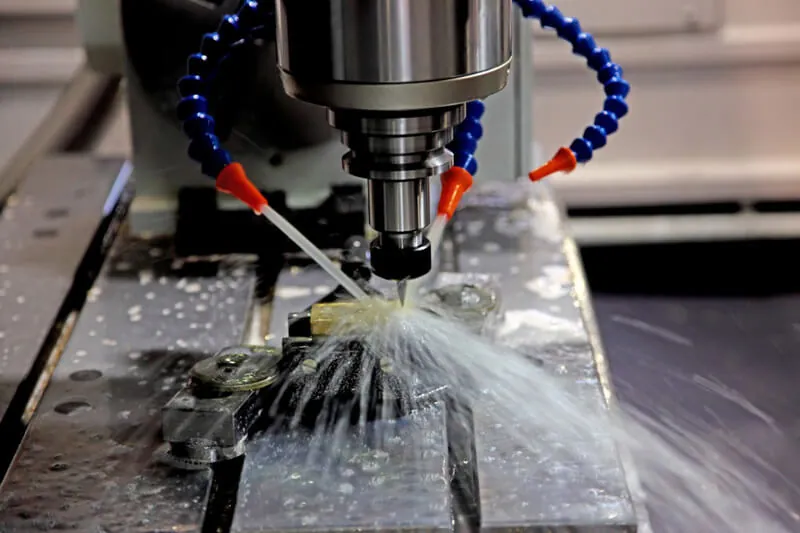
Wuxi Lead Precision Machinery delivers advanced technical capabilities in custom metal manufacturing, serving global industries that demand precision, repeatability, and engineering excellence. At the core of our production floor is a fleet of state-of-the-art 5-axis CNC machining centers, enabling us to produce highly complex geometries with superior surface finishes and minimal setup requirements. These multi-axis systems allow simultaneous movement across five planes, providing unmatched flexibility for intricate contours, deep cavities, and compound angles that are common in aerospace, medical, and industrial automation components. Our machines are maintained to OEM standards and operated by certified CNC programmers and machinists with over a decade of experience in high-mix, low-volume production environments.

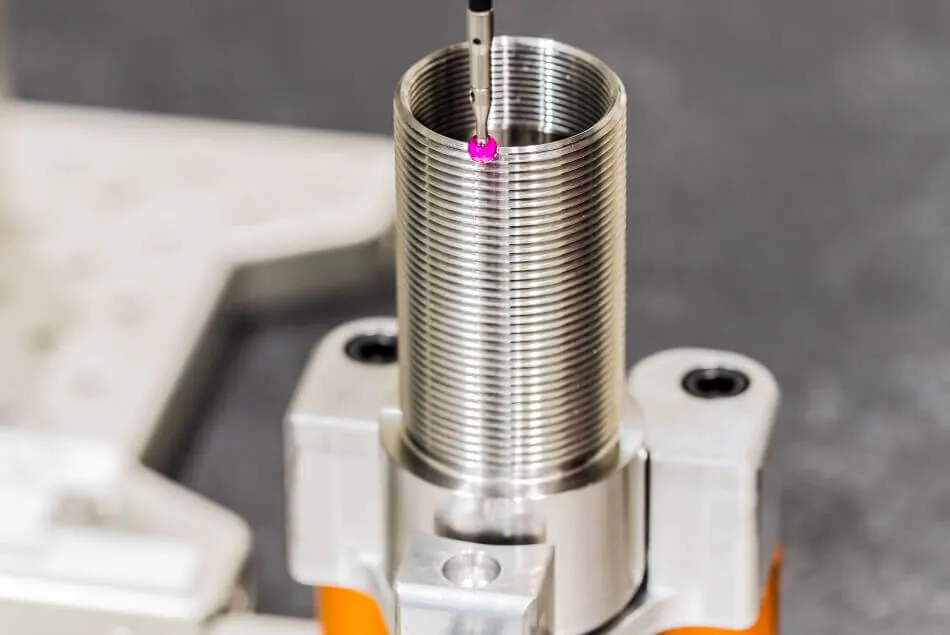
Precision is non-negotiable in prototype and production part manufacturing. To ensure every component meets or exceeds client specifications, we integrate comprehensive quality control protocols throughout the manufacturing process. All critical dimensions are verified using a Zeiss DuraMax and ACCURA CMM (Coordinate Measuring Machine), delivering micron-level accuracy in three-dimensional space. Our CMM inspection routines are fully programmed and documented, supporting first-article inspection reports (FAIR), production part approval processes (PPAP), and full traceability for every batch. In addition to CMM, we employ optical comparators, surface roughness testers, and calibrated handheld metrology tools to validate dimensional integrity and surface quality.

Our engineering team works closely with clients during the design-for-manufacturability (DFM) phase to optimize part geometry, material selection, and tolerancing for both performance and cost-efficiency. We specialize in machining a wide range of metals, including aluminum alloys (6061, 7075), stainless steels (303, 304, 316), titanium (Grade 5), brass, and specialty alloys such as Inconel and tool steels. With in-house CAD/CAM software and seamless data exchange via STEP, IGES, and native SolidWorks files, we ensure rapid turnaround from digital model to physical prototype—often within 5 to 10 business days, depending on complexity.

We maintain strict adherence to international quality standards, including ISO 9001:2015, and all inspection data is archived for full audit readiness. Our facility is equipped for both one-off prototypes and bridge production runs, with scalable capacity to support volume increases without compromising precision.

The following table outlines our standard machining tolerances and surface finish capabilities under controlled conditions.

Feature Standard Tolerance Tight Tolerance Capability Notes
Linear Dimensions ±0.05 mm ±0.01 mm Up to 500 mm
Hole Diameter ±0.025 mm ±0.01 mm Reamed or honed
Positional Tolerance ±0.05 mm ±0.02 mm GD&T compliant
Angular Features ±0.1° ±0.05° 5-axis simultaneous
Surface Roughness Ra 3.2 μm Ra 0.8 μm As machined or polished
Flatness 0.05 mm per 100 mm 0.02 mm per 100 mm Verified via CMM

Wuxi Lead Precision Machinery combines advanced equipment, rigorous quality assurance, and deep technical expertise to deliver custom metal parts that meet the highest standards of performance and reliability.


Material & Finish Options

prototype design company manufacturing

Strategic Material Selection for High-Fidelity Metal Prototypes

Material choice fundamentally dictates the performance, manufacturability, and cost trajectory of your metal prototype. At Wuxi Lead Precision Machinery, we guide design teams through this critical decision by aligning material properties with functional requirements, environmental exposure, and production intent. Selecting the optimal alloy early prevents costly redesigns and accelerates validation. Aluminum, steel, and titanium dominate aerospace, medical, and industrial prototyping, each offering distinct advantages.

Aluminum alloys, particularly 6061-T6 and 7075-T6, deliver an exceptional strength-to-weight ratio and inherent corrosion resistance. They are highly machinable, reducing prototype lead times and costs significantly. 6061-T6 offers good weldability and is ideal for structural components where moderate strength suffices. 7075-T6 provides near-steel strength for demanding applications like drone frames or high-stress fixtures but is less weldable. Aluminum’s thermal conductivity also benefits heat-sensitive prototypes. Steel variants address higher strength and wear needs. 303 stainless steel prioritizes machinability for complex geometries in non-critical corrosive environments. 304 stainless steel offers superior corrosion resistance for medical or food-grade prototypes. 17-4 PH stainless steel delivers high strength through heat treatment, essential for aerospace actuators or surgical tools requiring hardness. Titanium Grade 5 (Ti-6Al-4V) is the premium choice for extreme strength-to-weight ratio, biocompatibility, and exceptional corrosion resistance in harsh environments like saltwater or chemical exposure. Its use in medical implants and aerospace components is critical, though machining requires specialized tooling and processes due to low thermal conductivity and galling tendencies, impacting prototype cost and timeline.

Critical material properties for prototype evaluation include:

Material Typical Density (g/cm³) Tensile Strength (MPa) Key Corrosion Resistance Primary Prototype Applications
Aluminum 6061-T6 2.7 310 Good (atmospheric) Enclosures, brackets, drone components
Aluminum 7075-T6 2.8 570 Moderate High-stress structural parts, fixtures
Stainless 303 8.0 620 Moderate (chlorides) Shafts, fasteners, non-critical parts
Stainless 304 8.0 585 Excellent Medical housings, marine components
Stainless 17-4 PH 7.8 1000+ (H900) Excellent Aerospace fittings, surgical instruments
Titanium Ti-6Al-4V 4.4 900 Exceptional Implants, aerospace brackets, marine

Surface finish, particularly anodizing for aluminum, is integral to prototype functionality and testing. Type II sulfuric acid anodizing provides durable corrosion and wear resistance with dyeing options for identification, adding approximately 0.0002″ per surface. Type III hardcoat anodizing delivers significantly enhanced abrasion resistance for wear surfaces but requires tighter initial tolerances. Wuxi Lead Precision Machinery controls anodizing bath parameters and masking to ensure consistent coating thickness and adherence to critical dimensions, validated through ASTM B117 salt spray testing. We collaborate with your team to specify the exact anodizing type, thickness, and color based on prototype test objectives. Material selection is not merely a technical checkbox; it is a strategic lever. Consult our engineering team early to evaluate your application’s thermal, mechanical, and environmental demands against these core materials and finishes. We ensure your prototype accurately reflects final production intent, minimizing iteration risk.


Manufacturing Process & QC

prototype design company manufacturing

At Wuxi Lead Precision Machinery, our production process is engineered for precision, consistency, and zero-defect delivery across custom metal manufacturing projects. We specialize in serving prototype design companies that demand seamless transitions from concept to volume production. Our integrated workflow ensures every component meets exacting standards while maintaining scalability and repeatability.

The process begins with collaborative design review. Our engineering team works closely with clients to evaluate CAD models, material selections, tolerances, and manufacturability. Utilizing advanced simulation software, we identify potential stress points, thermal behavior, and assembly compatibility early in the cycle. This proactive analysis reduces downstream iterations and accelerates time-to-market. Design for Manufacturing (DFM) feedback is provided within 48 hours, ensuring rapid alignment before any metal is cut.

Prototyping follows immediately after design validation. Using 5-axis CNC machining, wire EDM, and precision sheet metal fabrication, we produce functional prototypes in the same materials intended for final production. This ensures accurate performance testing and form-fit verification. Each prototype undergoes full dimensional inspection using coordinate measuring machines (CMM) and 3D scanning to confirm compliance with GD&T specifications. Typical lead time for prototype delivery is 7–10 business days, with expedited options available.

Once the prototype is approved, we transition directly into mass production. Our factory in Wuxi is equipped with automated CNC cells, robotic material handling, and real-time process monitoring systems. Every production run is governed by documented quality plans that include first-article inspection, in-process checks, and final audit protocols. Statistical process control (SPC) is applied to critical dimensions, ensuring process capability (Cp/Cpk ≥ 1.67) is maintained across batches. Our quality management system is ISO 9001:2015 certified, and we support AS9100 and IATF 16949 requirements for aerospace and automotive clients.

To ensure zero defects, we implement a closed-loop corrective action (CLCA) system. Any non-conformance triggers immediate containment, root cause analysis, and process adjustment. All components are traceable via serialized lot tracking, and comprehensive inspection reports are provided with every shipment.

The table below outlines our standard production capabilities:

Parameter Specification
Materials Aluminum (6061, 7075), Stainless Steel (303, 304, 316), Steel (1018, 4140), Titanium, Brass, Copper
Tolerances ±0.005 mm (precision grinding), ±0.025 mm (CNC machining)
Surface Finish Ra 0.8 µm (machined), Ra 0.2 µm (polished), anodizing, plating
Max Work Envelope 1200 x 800 x 650 mm (5-axis CNC)
Production Capacity Up to 50,000 units/month (automated lines)
Lead Times Prototypes: 7–10 days; Production: 15–25 days
Quality Standards ISO 9001:2015, CMM inspection, SPC, FAI reports

From design through mass production, Wuxi Lead delivers precision-engineered metal components with uncompromising quality—enabling prototype design companies to scale with confidence.


Why Choose Wuxi Lead Precision

Partner with Lead Precision for Uncompromised Prototype Excellence

In the high-stakes realm of advanced product development, your prototype design demands more than standard manufacturing. It requires a strategic partner with deep engineering insight, rigorous process control, and the capacity to transform intricate concepts into physically validated components. Wuxi Lead Precision Machinery operates at the intersection of innovation and industrial precision, serving global leaders in aerospace, medical technology, and semiconductor equipment. We understand that a prototype is not merely a part—it is the critical validation step that de-risks your entire product lifecycle. Partnering with us means embedding manufacturing expertise directly into your design phase, eliminating costly iterations, and accelerating time-to-market without sacrificing fidelity.

Our dedicated engineering team collaborates from day one, reviewing DFM feedback within 24 hours and leveraging proprietary simulation tools to preempt production challenges. We specialize in low-volume, high-complexity metal components where tolerances below ±0.0002″ and material integrity are non-negotiable. Unlike volume-focused shops, we prioritize your technical objectives over throughput, utilizing advanced 5-axis milling, Swiss turning, and wire EDM with real-time SPC monitoring. This ensures every prototype meets functional testing requirements while maintaining full traceability—essential for regulated industries. Our ISO 9001:2015-certified facility in Wuxi integrates seamless communication protocols, allowing direct engineering dialogue and transparent progress tracking at every stage.

The following table summarizes our core capabilities for demanding prototype applications:

Specification Capability Range
Material Expertise Titanium, Inconel, 17-4PH, MP35N, Aluminum 7075-T6, Tool Steels
Tolerance Control ±0.0002″ (5µm) for critical features
Max Part Dimensions 24″ x 20″ x 16″ (600 x 500 x 400 mm)
Surface Finishes Ra 0.4µm to 3.2µm; Passivation; Anodizing
Lead Time (Prototype) 7–12 business days from approved CAD
Quality Documentation Full CMM reports, Material certs, Process validation logs

When your design pushes material and geometric boundaries, generic suppliers become liabilities. At Lead Precision, we treat your intellectual property with military-grade confidentiality and apply the same meticulous standards to a single prototype as we would to a production run. Our engineers proactively identify opportunities to enhance manufacturability while preserving your performance targets—turning theoretical designs into test-ready hardware that performs as intended.

Initiate a technical consultation today to experience how our precision-first approach elevates your prototyping outcomes. Contact our engineering team directly at [email protected] with your CAD files and requirements. We will provide actionable DFM analysis within one business day, including a detailed manufacturing plan and timeline. For projects requiring urgent validation, request our Express Prototype Protocol during your inquiry. Let Lead Precision become your trusted extension in bringing next-generation innovations to life—where engineering excellence meets execution certainty.


⚙️ Precision Cost Estimator

Estimate relative manufacturing effort based on tolerance.

Prototype Design Company Manufacturer | Precision CNC Guide

Contents of Table

Contact [email protected] Whatsapp 86 15951276160