17-4 Stainless Steel Vs 316 Manufacturer | Precision CNC Guide

Engineering Guide: 17-4 Stainless Steel Vs 316

17-4 stainless steel vs 316 manufacturing

Engineering Insight: 17-4 Stainless Steel vs 316

In high-performance industrial applications, material selection is not merely a matter of corrosion resistance or strength—it is a strategic decision that directly impacts precision, longevity, and operational reliability. Two of the most frequently specified stainless steels in custom manufacturing are 17-4 PH and 316. While both offer distinct advantages, understanding their metallurgical behavior under machining and service conditions is critical for achieving micron-level accuracy and repeatable performance.

17-4 PH stainless steel is a precipitation-hardening alloy known for its exceptional strength, typically achieving yield strengths over 1,000 MPa after heat treatment. This makes it ideal for aerospace components, military hardware, and high-stress mechanical systems where dimensional stability under load is paramount. Its high chromium and copper content provide moderate corrosion resistance, though less than 316 stainless steel. However, 17-4’s real advantage lies in its ability to maintain tight tolerances after heat treatment, a critical factor in precision CNC machining. At Wuxi Lead Precision Machinery, we have leveraged this property in manufacturing Olympic-grade track components and defense-system actuators, where deviations of even a few microns could compromise performance.

In contrast, 316 stainless steel is an austenitic alloy with superior corrosion resistance, particularly in chloride-rich environments. Its molybdenum content enhances resistance to pitting and crevice corrosion, making it the preferred choice for marine applications, pharmaceutical equipment, and chemical processing systems. While 316 is not as strong as 17-4 in its standard annealed condition, its excellent machinability and weldability make it highly suitable for complex geometries requiring high surface finish and dimensional consistency. The challenge with 316 lies in managing work hardening during machining—a factor that demands advanced toolpath strategies and rigid CNC setups to prevent dimensional drift.

Precision in manufacturing is not solely about equipment—it’s about material intelligence. At Wuxi Lead, our decades of experience in machining both alloys have enabled us to develop proprietary cutting parameters, fixturing methods, and in-process inspection protocols that ensure every component meets the most stringent international standards. Whether producing a high-cycle valve stem from 17-4 or a sterile fluid manifold from 316, our process control is rooted in deep metallurgical understanding and real-world application feedback.

Below is a comparative overview of key mechanical and chemical properties:

Property 17-4 PH Stainless Steel 316 Stainless Steel
Yield Strength (min) 965 MPa 275 MPa
Tensile Strength (typical) 1,000–1,200 MPa 570–620 MPa
Hardness (HRC, typical) 28–32 70–90 HRB
Corrosion Resistance Moderate Excellent
Heat Treatable Yes (H900, H1025, etc.) No
Machinability Good (with optimized tools) Good (prone to work hardening)
Common Applications Aerospace, Defense, Tooling Marine, Medical, Chemical

Material choice must align with both functional requirements and manufacturability. At Wuxi Lead Precision Machinery, we combine advanced CNC technology with metallurgical expertise to ensure that every part—whether forged from 17-4 or 316—is produced to the highest standard of precision and reliability.


Precision Specs & Tolerances

17-4 stainless steel vs 316 manufacturing

Precision Machining Capabilities for 17-4 PH and 316 Stainless Steel Alloys

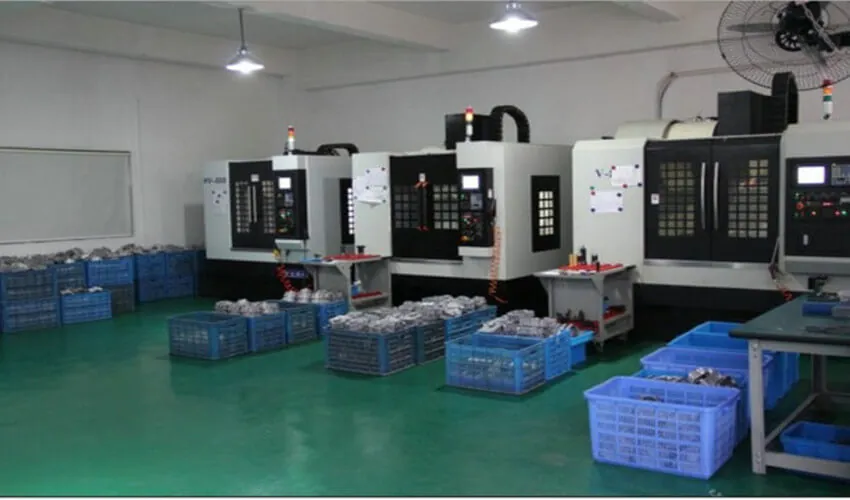
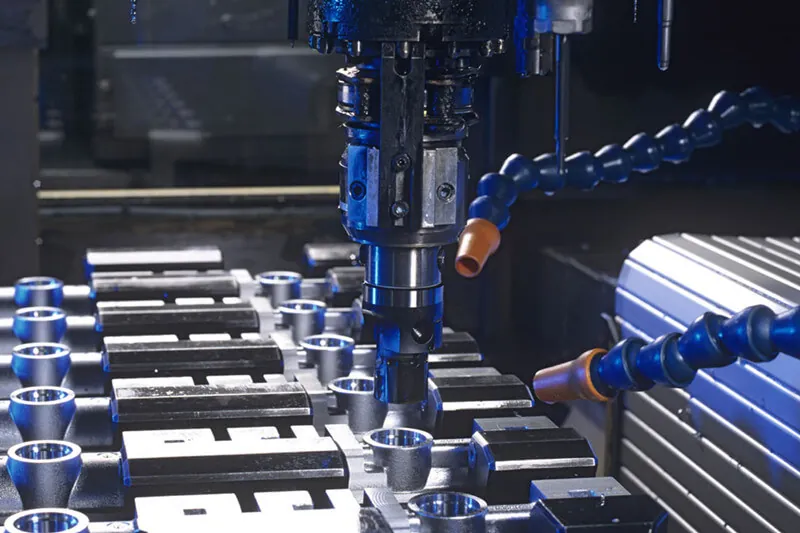
Wuxi Lead Precision Machinery delivers uncompromising quality in the custom manufacturing of critical components from advanced stainless steel alloys, specifically 17-4 PH precipitation hardening stainless and 316 austenitic stainless steel. Our technical foundation rests upon state-of-the-art 5-axis CNC machining centers, enabling the production of highly complex geometries with exceptional accuracy and surface integrity. These multi-axis platforms provide simultaneous contouring capabilities essential for intricate aerospace brackets, medical implant fixtures, and fluid handling components where both material performance and dimensional fidelity are non-negotiable. Mastery of these distinct alloys is paramount; 17-4 PH requires precise thermal management during machining to accommodate its post-heat treatment hardening and potential for distortion, while 316 demands optimized toolpaths and coolant strategies to manage its inherent galling tendency and maintain superior corrosion resistance in the final part.

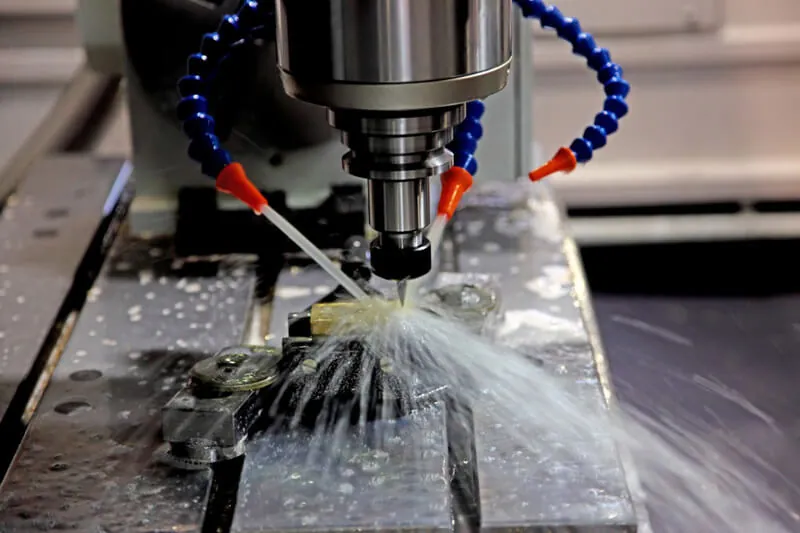
Material selection directly impacts achievable tolerances and surface finish. Our engineering team possesses deep metallurgical knowledge to tailor processes for each alloy’s unique behavior. For 17-4 PH, we implement controlled machining sequences around solution treatment and aging cycles to minimize residual stress and achieve the tightest possible dimensional stability. With 316 stainless, we focus on maintaining passive layer integrity through precise coolant application and tool selection to ensure the part meets stringent biocompatibility or chemical exposure requirements without compromising form. This material-specific process engineering is integral to our capability, not an afterthought.

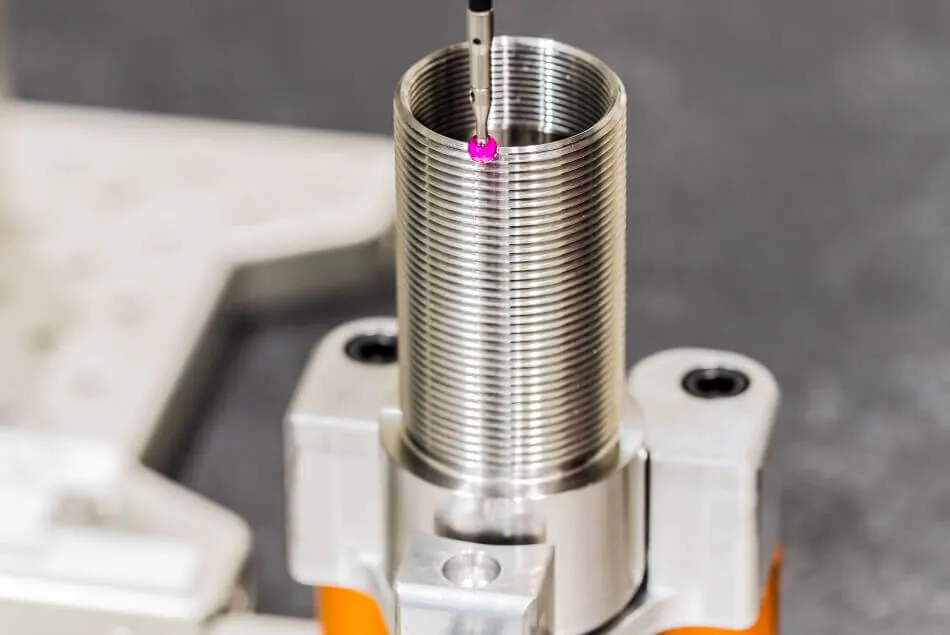
Rigorous quality control is embedded at every stage, culminating in comprehensive Coordinate Measuring Machine (CMM) inspection. All critical features on finished 17-4 PH and 316 components undergo full 3D verification against CAD models using calibrated Zeiss and Hexagon CMM systems. This data-driven validation provides objective evidence of conformance to the most demanding aerospace (AS9100), medical (ISO 13485), and industrial specifications. Statistical process control data from CMM reports is actively used to refine machining parameters, ensuring continuous capability improvement and long-term process stability for high-volume production runs.

The following table details the standard and precision tolerance ranges consistently achievable on critical features for both 17-4 PH and 316 stainless steel components within typical size envelopes (up to 300mm), reflecting our integrated machining and inspection capability:

Tolerance Type Standard Range Precision Range Material Notes
Linear Dimensions ±0.05 mm ±0.01 mm Precision range typical for critical features on 17-4 PH after aging; 316 requires optimized fixturing
Angular Tolerances ±0.1° ±0.02° Achieved via 5-axis simultaneous interpolation
Positional Tolerance ±0.08 mm ±0.025 mm Verified via full CMM scan; critical for hole patterns
Surface Finish (Ra) 1.6 µm 0.4 µm As-machined; 316 may require specific tooling for finest finishes

This documented capability, combining advanced 5-axis machining expertise with material science understanding and metrology-grade verification, ensures Wuxi Lead delivers components that meet the exacting performance demands of high-value applications. We partner with clients from the design phase to select the optimal alloy and process strategy, guaranteeing functional reliability and seamless integration into your most challenging assemblies.


Material & Finish Options

17-4 stainless steel vs 316 manufacturing

When selecting materials for precision manufacturing applications, understanding the mechanical, chemical, and environmental performance of alloys is critical. Among stainless steels, 17-4 PH and 316 stand out for their distinct advantages in high-performance industries such as aerospace, medical devices, and marine engineering. At Wuxi Lead Precision Machinery, we support clients in making informed decisions by evaluating material properties in the context of application demands.

17-4 precipitation-hardening stainless steel offers exceptional strength and good corrosion resistance, making it ideal for components requiring high yield strength and moderate environmental resistance. It can be heat treated to achieve tensile strengths exceeding 1,300 MPa, which is significantly higher than standard austenitic grades. This makes 17-4 PH a preferred choice for shafts, valves, and aerospace fittings where dimensional stability under load is essential. Its chromium-nickel-copper composition provides adequate resistance to atmospheric and mildly corrosive environments, though it is less suited for prolonged exposure to chlorides.

In contrast, 316 stainless steel is an austenitic alloy renowned for its superior corrosion resistance, particularly against chlorides and acidic compounds. The addition of molybdenum enhances its performance in marine and chemical processing environments. While its tensile strength is lower than 17-4 PH—typically in the range of 570–680 MPa—316 maintains excellent toughness and weldability. It is commonly used in medical implants, food processing equipment, and offshore components where long-term durability in aggressive environments is paramount.

For applications involving lightweight design and high strength-to-density ratios, aluminum and titanium remain indispensable. Aluminum alloys such as 6061 and 7075 are widely used in aerospace and transportation for their machinability and responsiveness to anodizing, which enhances surface hardness and wear resistance. Titanium, particularly Grade 5 (Ti-6Al-4V), offers exceptional strength, biocompatibility, and resistance to extreme temperatures, making it suitable for critical aerospace and medical applications.

Surface finishes further influence performance. Anodizing, primarily applied to aluminum, creates a durable, non-conductive oxide layer that improves corrosion and wear resistance. Hard anodizing can achieve surface hardness approaching that of tool steel. For stainless steels, electropolishing is often preferred to remove surface impurities and enhance corrosion resistance without altering dimensional accuracy.

Below is a comparative overview of key mechanical properties:

Material Tensile Strength (MPa) Yield Strength (MPa) Elongation (%) Corrosion Resistance Heat Treatable
17-4 PH SS 1,300–1,500 1,100–1,300 10–12 Moderate Yes
316 SS 570–680 240–310 40–50 Excellent No
Aluminum 7075 540–570 480–500 5–11 Moderate (anodized) Yes
Titanium Ti-6Al-4V 900–950 830–860 10–15 Excellent Yes

At Wuxi Lead Precision Machinery, we integrate material science with precision CNC manufacturing to deliver components that meet exacting performance standards. Our engineering team collaborates with clients to select the optimal material and finish, ensuring reliability and cost-efficiency across the product lifecycle.


Manufacturing Process & QC

17-4 stainless steel vs 316 manufacturing

Production Process: From Precision Design to Zero-Defect Mass Production

At Wuxi Lead Precision Machinery, our production process for 17-4 PH and 316 stainless steel components is engineered to eliminate defects before they occur. We begin with Design Phase Integration, where material properties dictate every parameter. 17-4 PH’s martensitic structure demands precise heat treatment sequencing to achieve H900/H1150 strength levels, while 316’s austenitic composition requires strict control of interpass temperatures during welding to prevent sensitization. Our engineers analyze thermal expansion coefficients and work-hardening rates early in CAD/CAM programming, ensuring toolpaths avoid residual stress zones critical for 17-4’s fatigue resistance or 316’s marine corrosion performance. Finite element analysis validates stress distribution under operational loads, preventing microcrack initiation in high-pressure aerospace or medical applications.

Prototyping transitions theory to empirical validation through our accelerated qualification protocol. For 17-4 PH, we conduct solution annealing followed by proprietary aging cycles in vacuum furnaces, then verify hardness (40–45 HRC) and Charpy impact values via ASTM A564 testing. 316 prototypes undergo ASTM A262 Practice E ferric sulfate tests to confirm immunity to intergranular corrosion after TIG welding. Each prototype undergoes 100% CMM inspection against GD&T callouts, with microstructure analysis via optical microscopy to detect delta ferrite in 316 or retained austenite in 17-4. This phase identifies micro-machining adjustments—such as reduced feed rates for 17-4’s abrasive wear resistance or cryogenic stress relief for 316 thin-walled geometries—before scaling.

Mass Production executes Zero Defects through closed-loop control. Raw material certs (mill test reports per ASTM A582/A480) are cross-verified upon receipt. CNC machining employs in-process probes for real-time dimensional feedback, while 17-4 PH components undergo post-machining precipitation hardening in N₂-purged ovens to avoid surface scaling. For 316, we implement electropolishing with controlled current density to enhance passive layer formation. Every lot undergoes 100% PMI (positive material identification) via handheld XRF, helium leak testing for fluid-handling parts, and batch-traceable mechanical testing. Our ERP system logs every parameter—from coolant concentration to tool wear offsets—enabling root-cause analysis if deviations approach control limits. This systematic rigor ensures 17-4 PH achieves 1300 MPa tensile strength with ±0.005mm tolerances, while 316 maintains pitting resistance equivalent number (PREN) >25 in chloride environments.

Critical Material Specifications for Precision Manufacturing

Property 17-4 PH Stainless Steel 316 Stainless Steel Relevance to Production
Tensile Strength (MPa) 1300 (H900) 580 (Annealed) Dictates tooling rigidity & feed rates
Corrosion Resistance Moderate (PREN 17) High (PREN 26) Determines passivation/electropolish needs
Machinability Rating 40% of 303 SS 60% of 303 SS Influences chip evacuation & tool life
Heat Treatment Solution + Aging (482°C) Solution Annealing (1095°C) Requires vacuum/N₂ control to avoid scaling
Key Applications Aerospace actuators, valves Marine pumps, medical implants Drives GD&T complexity & inspection depth

This integrated approach—where material science informs process design, prototyping validates metallurgical integrity, and production executes with atomic-level traceability—ensures your components meet mission-critical standards. Wuxi Lead’s Zero Defects mandate isn’t aspirational; it’s the non-negotiable output of our engineered workflow.


Why Choose Wuxi Lead Precision

When selecting the right stainless steel for high-performance applications, the decision between 17-4 PH and 316 stainless steel is more than a materials choice—it’s a strategic engineering decision. At Wuxi Lead Precision Machinery, we understand that precision, durability, and environmental resistance define the success of your custom metal components. Whether you’re designing aerospace actuators, marine instrumentation, or medical device housings, our expertise in advanced CNC machining and material science ensures your project meets exacting standards.

17-4 PH stainless steel delivers exceptional strength and hardness, thanks to its precipitation-hardening properties. With a yield strength that can exceed 1,000 MPa after heat treatment, it is ideal for applications demanding high mechanical performance under moderate corrosive conditions. On the other hand, 316 stainless steel offers superior corrosion resistance, particularly in chloride-rich environments, making it the preferred choice for marine, chemical processing, and pharmaceutical applications. Its austenitic structure provides excellent toughness and weldability, though at lower yield strength compared to 17-4 PH.

Understanding these differences is critical. At Wuxi Lead, we don’t just machine metal—we engineer solutions. Our team collaborates with design engineers to evaluate operational stress, environmental exposure, and lifecycle requirements, ensuring the optimal material selection and machining process for your application. From prototype development to full-scale production, our ISO 9001-certified facility leverages state-of-the-art CNC milling, turning, and multi-axis machining centers to deliver tight-tolerance components with repeatable accuracy.

We specialize in handling both 17-4 PH and 316 stainless steel with precision heat treatment, passivation, and surface finishing options tailored to your performance needs. Our quality control protocols include full material traceability, CMM inspection, and metallurgical reporting—ensuring every component meets international standards.

Below is a comparative overview of key mechanical and chemical properties:

Property 17-4 PH Stainless Steel 316 Stainless Steel
Composition 17% Cr, 4% Ni, 4% Cu, 0.3% Nb 16-18% Cr, 10-14% Ni, 2-3% Mo
Tensile Strength (typical) 1,300 MPa 570 MPa
Yield Strength (typical) 1,100 MPa 240 MPa
Corrosion Resistance Moderate Excellent (chloride resistant)
Hardness (HRC, after H900) ~38 HRC ~75 HRB
Common Applications Aerospace, defense, tooling Marine, medical, chemical
Machinability Good (with proper tooling) Excellent

Partner with Wuxi Lead Precision Machinery to transform your design intent into high-precision reality. Our engineering team is ready to support your next project with technical consultation, rapid prototyping, and scalable manufacturing solutions. Contact us today at [email protected] to discuss your material selection, receive a competitive quote, or schedule a production review. Let Lead Precision be your trusted partner in advanced metal manufacturing.


⚙️ Precision Cost Estimator

Estimate relative manufacturing effort based on tolerance.

17-4 Stainless Steel Vs 316 Manufacturer | Precision CNC Guide

Contents of Table

Contact [email protected] Whatsapp 86 15951276160