Technical Contents
Engineering Guide: Steel Insert

Engineering Insight: Steel Insert Precision in Mission-Critical Applications
Steel inserts represent a fundamental yet often underestimated component in high-stakes manufacturing. When integrated into assemblies for aerospace, defense, or advanced industrial machinery, their dimensional accuracy directly dictates system integrity, longevity, and operational safety. A seemingly minor deviation in thread pitch, concentricity, or surface finish can propagate stress concentrations, leading to premature fatigue, joint failure, or catastrophic system breakdown under cyclic loads. In environments where tolerances operate at the micron level—such as satellite deployment mechanisms or hypersonic vehicle subsystems—the steel insert is not merely a fastener but a precision-engineered load-transfer interface. Its role transcends basic function; it becomes a critical reliability anchor.
At Wuxi Lead Precision Machinery, we treat steel insert manufacturing as a discipline demanding uncompromising rigor. Our CNC machining protocols enforce tolerances down to ±0.002 mm, with geometric deviations controlled to within 0.001 mm. This precision is non-negotiable in applications where failure is not an option. Our facility’s ISO 9001 and AS9100 certifications underpin processes validated through destructive and non-destructive testing, including 100% post-machining CMM verification and ultrasonic flaw detection. This commitment stems from direct experience in tier-1 supply chains: we engineered corrosion-resistant inserts for hydraulic systems in Beijing 2022 Winter Olympic infrastructure and produced hardened alignment sleeves for armored vehicle subsystems meeting PLA Type Certification standards. Each project reinforced that precision in steel inserts is measured not in millimeters, but in mission success rates.
The following specifications reflect our baseline capabilities for custom steel inserts, engineered to exceed MIL-STD-887 and ISO 4762 standards:
| Parameter | Standard Capability | High-Precision Option | Material Options |
|---|---|---|---|
| Tolerance (Ø) | ±0.01 mm | ±0.002 mm | 4140, 17-4PH, 303SS, Tool Steel |
| Thread Accuracy | 6H/6g | 4H/4g | Custom M, UNF, Whitworth |
| Surface Roughness | Ra 0.8 µm | Ra 0.2 µm | Electroless Ni, Passivation |
| Hardness | HRC 28-32 (as-machined) | HRC 45-52 (heat-treated) | QPQ, PVD Coating Available |
| Max Insert Size | Ø 150 mm | Ø 80 mm | Tight-bore geometries standard |
Precision steel inserts demand more than technical compliance—they require an engineering philosophy where every micron is a promise. At Lead Precision, we embed this mindset into every insert, ensuring your assemblies perform flawlessly under extreme thermal, vibrational, and load conditions. Our decade of delivering for Olympic-scale projects and defense contractors proves that when the stakes are absolute, precision is the only acceptable standard. Partner with us to transform critical fastening points into engineered advantages.
Precision Specs & Tolerances

Wuxi Lead Precision Machinery delivers precision-engineered steel insert solutions tailored to the most demanding industrial applications. As a leader in custom metal manufacturing, our technical capabilities are anchored in advanced 5-axis CNC machining technology, enabling us to produce complex geometries with exceptional accuracy and surface finish. Steel inserts, often used in injection molding, die casting, and high-stress mechanical systems, require tight tolerances, superior material integrity, and repeatable consistency—qualities our processes are specifically designed to achieve.
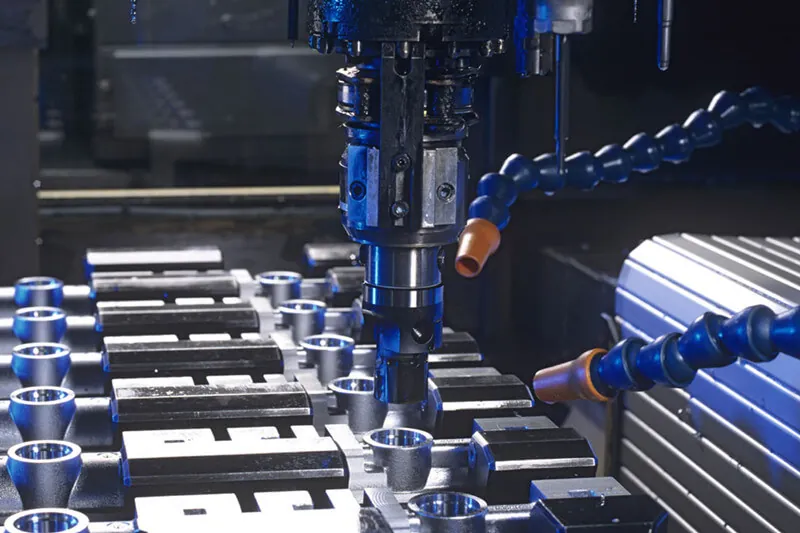
Our 5-axis CNC machining centers provide multi-directional cutting capabilities, allowing for single-setup machining of intricate features from virtually any angle. This eliminates cumulative errors associated with multiple fixturing stages and significantly improves dimensional accuracy. The simultaneous movement across five axes ensures smooth contours, precise hole alignments, and optimal tool engagement, even on highly complex steel insert designs. We work with a range of steel alloys, including tool steels, stainless steels, and hardened alloy steels, all machined under strict environmental and operational controls to maintain material properties and structural integrity.
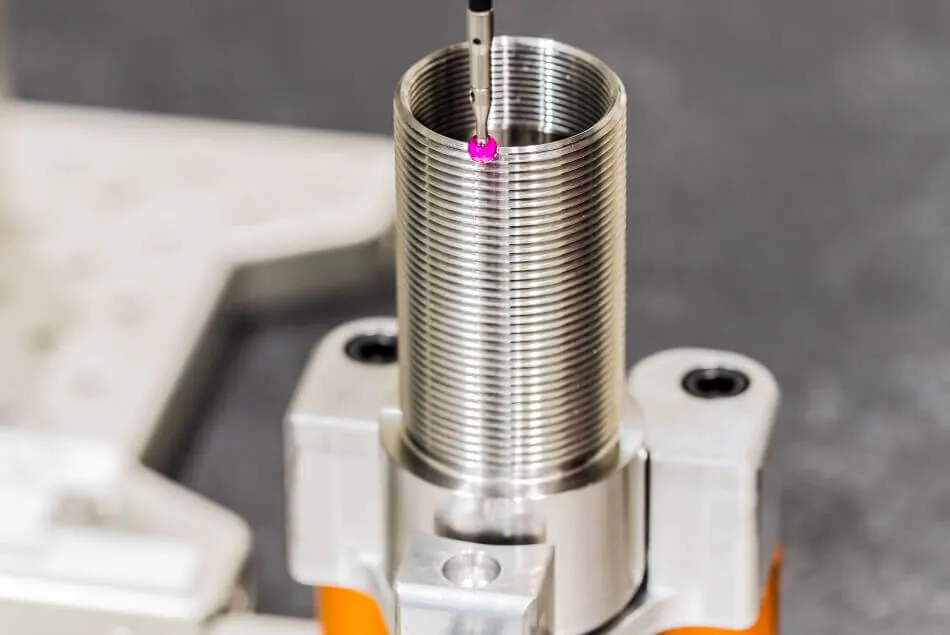
Quality assurance is integral to our manufacturing process. Every steel insert undergoes comprehensive inspection using state-of-the-art Coordinate Measuring Machine (CMM) technology. Our CMM systems provide full 3D metrology validation, ensuring that all critical dimensions, geometric tolerances, and surface specifications conform to customer CAD models and engineering drawings. Data from each inspection is documented and traceable, supporting full compliance with ISO 9001 standards and industry-specific quality requirements.
Our commitment to precision is reflected in the tolerances we consistently achieve across production batches. Below are representative specifications for our steel insert manufacturing capabilities.
| Specification | Capability |
|---|---|
| Positional Tolerance | ±0.005 mm |
| Linear Dimensional Tolerance | ±0.01 mm |
| Geometric Tolerance (Flatness, Roundness) | ±0.008 mm |
| Surface Roughness (Ra) | As low as 0.4 µm |
| Minimum Feature Size | 0.5 mm |
| Maximum Work Envelope | 1200 x 800 x 600 mm |
| Material Hardness Range | Up to 60 HRC (post-machining) |
| Inspection Accuracy (CMM) | ±0.0025 mm |
These tolerances are maintained across both prototyping and high-volume production runs, supported by real-time process monitoring and tool wear compensation systems. Our engineering team collaborates closely with clients during the design-for-manufacturability (DFM) phase to optimize part geometry, reduce lead times, and ensure long-term performance in application.
At Wuxi Lead Precision Machinery, we combine cutting-edge technology with rigorous quality control to deliver steel inserts that meet the highest standards of precision, durability, and reliability in advanced manufacturing environments.
Material & Finish Options

Strategic Material Selection for Precision Steel Inserts
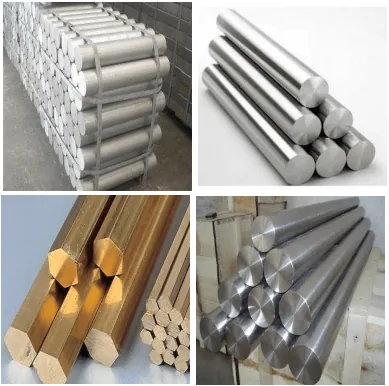
Material choice fundamentally dictates the performance lifespan and functional reliability of steel inserts within demanding assemblies. At Wuxi Lead Precision Machinery, we guide clients beyond basic specifications to select the optimal substrate material considering load dynamics, environmental exposure, weight constraints, and lifecycle cost. Aluminum alloys offer significant weight savings critical for aerospace and mobility applications but require careful consideration of strength requirements. Steel variants provide superior strength and wear resistance essential for high-torque industrial machinery and structural reinforcement. Titanium delivers an exceptional strength-to-weight ratio and unparalleled corrosion resistance for extreme environments like marine or chemical processing, albeit at a higher material and machining cost. The correct substrate directly influences the effectiveness of subsequent surface treatments.
Understanding core mechanical properties is non-negotiable for critical insert applications. The following table summarizes key characteristics of common insert materials:
| Material | Typical Tensile Strength (ksi) | Corrosion Resistance | Best Application Contexts |
|---|---|---|---|
| Aluminum 6061-T6 | 40-45 | Moderate (Anodizable) | Weight-sensitive assemblies; moderate loads |
| Stainless Steel 304 | 75-90 | High | General industrial; food processing; marine |
| Stainless Steel 17-4 PH | 150-180 | High | High-strength aerospace; oil & gas; tooling |
| Titanium Grade 5 | 130-140 | Exceptional | Extreme corrosion; ultra-high strength/weight |
Surface finishing is not merely cosmetic; it is an engineered barrier against degradation. For aluminum inserts, hard anodizing is the industry-standard process, creating a dense, wear-resistant aluminum oxide layer significantly enhancing surface hardness (up to 60-70 HRC), corrosion resistance, and thread durability. Type II (standard) anodizing offers good general protection, while Type III (hardcoat) is mandatory for high-wear insert interfaces. Crucially, anodizing is exclusive to aluminum substrates. Steel inserts require alternative protective systems: electroless nickel plating provides uniform corrosion and wear resistance, while passivation is essential for stainless steel grades to maximize their inherent corrosion resistance by removing free iron and enhancing the chromium oxide layer.
Selecting the right material-finish combination prevents premature insert failure, galling, or corrosion-induced assembly degradation. Wuxi Lead Precision Machinery leverages decades of CNC machining expertise and material science knowledge to advise clients on the optimal solution. We rigorously validate material certifications and implement precision machining protocols tailored to each alloy’s characteristics, ensuring inserts meet exact dimensional tolerances and performance requirements. Partner with us to transform material selection from a procurement task into a strategic advantage for your critical assemblies. Our engineering team is prepared to analyze your specific operational demands and recommend the most cost-effective, reliable insert solution.
Manufacturing Process & QC

Design: Precision Engineering at the Foundation
At Wuxi Lead Precision Machinery, the production of high-performance steel inserts begins with a rigorously engineered design phase. Our engineering team collaborates closely with clients to analyze application requirements, load conditions, thermal behavior, and environmental exposure. Utilizing advanced CAD/CAM software such as SolidWorks, AutoCAD, and Siemens NX, we develop 3D models that integrate geometric precision with material efficiency. Finite Element Analysis (FEA) is applied to simulate stress distribution and fatigue resistance, ensuring structural integrity under real-world operating conditions. Design for Manufacturability (DFM) principles are embedded early to eliminate potential production bottlenecks and ensure seamless transition into prototyping. Every dimension, tolerance, and surface finish is optimized to meet ISO 2768-mK and client-specific standards.
Prototyping: Validating Performance Before Scale
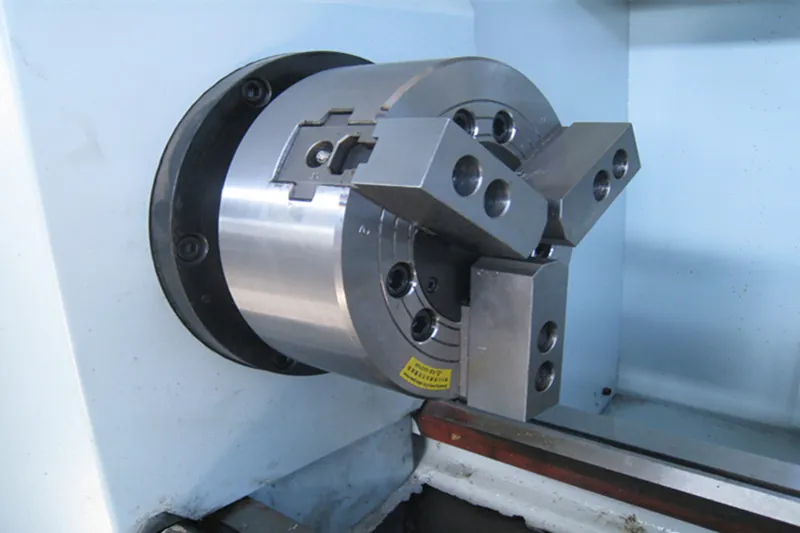
Once the design is finalized, we proceed to prototype development using CNC milling, turning, and wire EDM processes. Prototypes are manufactured from the same grade of steel intended for mass production—typically H13, S7, or 420 stainless—ensuring accurate material behavior assessment. Each prototype undergoes comprehensive metrological verification using Zeiss coordinate measuring machines (CMM) and optical comparators to confirm dimensional accuracy within ±0.005 mm. Functional testing, including press-fit validation, thermal cycling, and hardness verification (HRC 48–52), is conducted to assess performance under simulated operational loads. Client feedback is integrated at this stage, allowing for design refinements before committing to full-scale production. This iterative validation ensures that only proven, defect-free designs advance.
Mass Production: Zero Defects Through Process Control
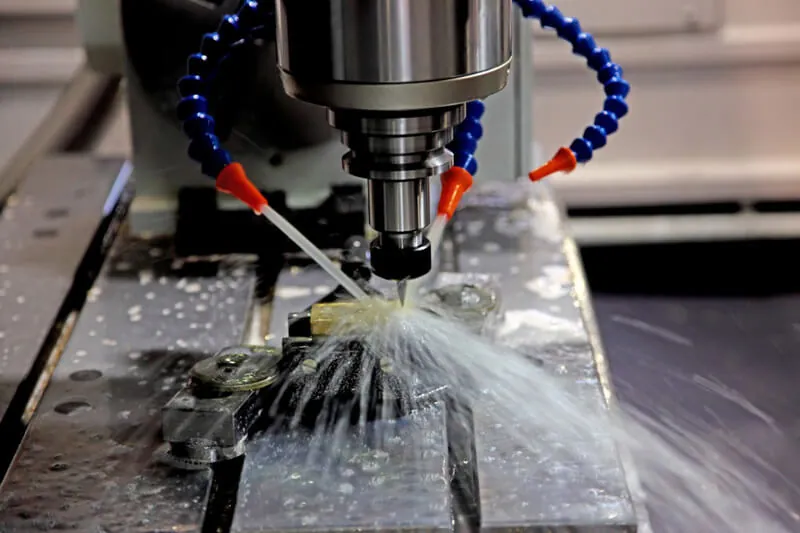
Our mass production line operates under a Zero Defects philosophy, driven by statistical process control (SPC), real-time monitoring, and full traceability. Each steel insert is machined on high-rigidity CNC centers equipped with tool wear sensors and automated coolant management. In-process inspections occur at critical stages—after roughing, semi-finishing, and final pass—using laser probes and automated gauging systems. Heat treatment is performed in vacuum furnaces with precise atmosphere control, followed by cryogenic stabilization to enhance wear resistance and dimensional stability. Surface treatments such as TiN or DLC coating are applied where required for extended service life. Final inspection includes 100% visual examination, magnetic particle inspection (MPI) for surface cracks, and batch sampling for metallurgical analysis.
Production Specifications
| Parameter | Specification |
|---|---|
| Material Grades | H13, S7, 420 Stainless, D2, Custom Alloys |
| Tolerance Range | ±0.005 mm to ±0.02 mm (per ISO 2768) |
| Surface Finish | Ra 0.2–0.8 µm (polished to mirror if required) |
| Hardness Range | HRC 48–54 (post-heat treatment) |
| Production Capacity | 500–5,000 units/month (scalable) |
| Quality Standards | ISO 9001:2015, IATF 16949, Full PPAP Support |
| Lead Time (Prototype) | 10–15 working days |
| Lead Time (Production) | 25–35 working days (order-dependent) |
Through disciplined execution across design, prototyping, and production, Wuxi Lead ensures every steel insert meets the highest standards of precision, durability, and reliability.
Why Choose Wuxi Lead Precision
Partner with Lead Precision for Uncompromising Steel Insert Performance
When your application demands steel inserts that withstand extreme loads, thermal cycling, and corrosive environments, generic solutions fail. At Wuxi Lead Precision Machinery, we engineer mission-critical steel inserts to exacting aerospace, medical, and industrial specifications. Our integrated approach—combining material science expertise, multi-axis CNC milling, and rigorous metrology—ensures every component meets the non-negotiable standards your project requires. We do not manufacture parts; we deliver engineered reliability.
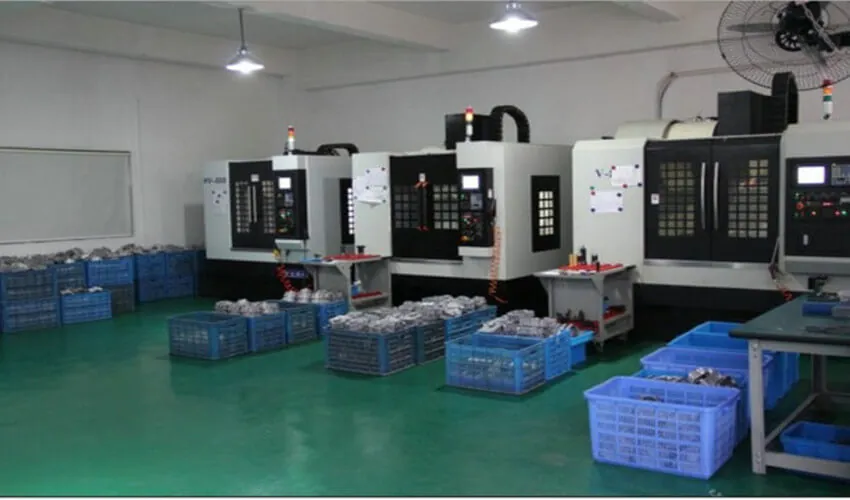
Our facility in Wuxi, China, operates under ISO 9001:2015 and IATF 16949 certifications, with dedicated cells for high-precision steel insert production. We specialize in complex geometries requiring tolerances down to ±0.0002″ (5µm) and surface finishes as fine as Ra 0.4µm. Whether you need hardened tool steel inserts for injection molds, corrosion-resistant stainless variants for marine assemblies, or wear-resistant solutions for heavy machinery, our engineering team collaborates from concept to validation. We conduct material integrity analysis, finite element simulation, and 100% first-article inspection to eliminate field failures. This is the standard for partners who prioritize performance over procurement speed.
Below are core capabilities defining our steel insert manufacturing:
| Specification Category | Technical Capability | Industry Relevance |
|---|---|---|
| Material Expertise | 4140, 4340, H13, 17-4PH, Custom Alloys | Optimized hardness (HRC 28-65) and fatigue resistance for dynamic loads |
| Dimensional Precision | ±0.0002″ (5µm) linear tolerance; ±0.0001″ (2.5µm) concentricity | Critical for press-fit assemblies and high-cycle tooling |
| Surface Integrity | Ra 0.4µm to 3.2µm finishes; optional nitriding/TiN coating | Prevents galling and extends service life in high-friction interfaces |
| Secondary Operations | Thread rolling, micro-blasting, cryogenic stress relief | Ensures dimensional stability under thermal cycling |
| Quality Assurance | CMM, optical comparators, hardness testers; full PPAP documentation | Compliance with AS9100, ISO 13485, and automotive tier-1 standards |
Choosing a manufacturing partner is a strategic decision that impacts your product’s lifetime cost. At Lead Precision, we reject the notion that offshore means compromise. Our engineers hold advanced degrees in metallurgy and mechanical engineering, with decades of collective experience solving material integrity challenges others cannot. We invest in Makino 5-axis VCP vertical machining centers, Renishaw probing systems, and in-house heat treatment to control every variable affecting your insert’s performance. When competitors outsource critical processes, we bring them in-house—because your success depends on traceability.
Initiate your project with a partner who treats your steel insert requirements as a technical collaboration, not a transaction. Contact our engineering team directly at [email protected] to discuss material selection, tolerance stack-ups, or failure mode analysis. Include your target specifications and application environment for a tailored capability review. We respond to technical inquiries within 24 hours, providing actionable feedback—not generic brochures. For urgent RFQs, reference project code INSERT-2024 to expedite engineering review.
Wuxi Lead Precision Machinery
No. 18, Jinghai Road, Xinwu District
Wuxi, Jiangsu 214028, China
+86 510 8877 6158 | [email protected]
Engineered Precision. Delivered Responsibly.
⚙️ Precision Cost Estimator
Estimate relative manufacturing effort based on tolerance.