Technical Contents
Engineering Guide: Sheet Metal Beading

Engineering Insight: The Critical Role of Precision in Sheet Metal Beading
In the realm of sheet metal fabrication, beading is far more than a simple forming operation—it is a precision-critical process that directly influences the structural integrity, rigidity, and aesthetic quality of the final component. At Wuxi Lead Precision Machinery, we define sheet metal beading as the controlled deformation of metal to create raised or recessed linear profiles along a surface. These beads serve multiple engineering functions: enhancing stiffness without adding mass, improving resistance to buckling, guiding assembly alignment, and even contributing to noise dampening in dynamic environments.
Precision in beading is non-negotiable. Even minor deviations in bead height, width, or positional alignment can compromise the functional performance of a part, particularly in high-stakes applications. A variation of just 0.05 mm in bead depth can alter the load distribution across a panel, leading to premature fatigue or failure under cyclic stress. This level of accuracy demands not only advanced CNC press brake technology but also deep process understanding, material science expertise, and rigorous quality control—capabilities that Wuxi Lead has refined over decades of serving aerospace, defense, and infrastructure sectors.
Our engineering team has supported projects where beading precision was mission-critical, including structural components used in Olympic-grade sports facilities and military-grade enclosures. In these environments, performance under extreme conditions is paramount. For instance, in military vehicle housings, bead patterns are engineered to absorb shock and resist deformation during impact, requiring exact repeatability across thousands of production units. Similarly, in large-scale architectural installations for Olympic venues, aesthetic consistency and structural reliability are equally vital—beads must align perfectly across modular panels to ensure both visual continuity and wind-load resistance.
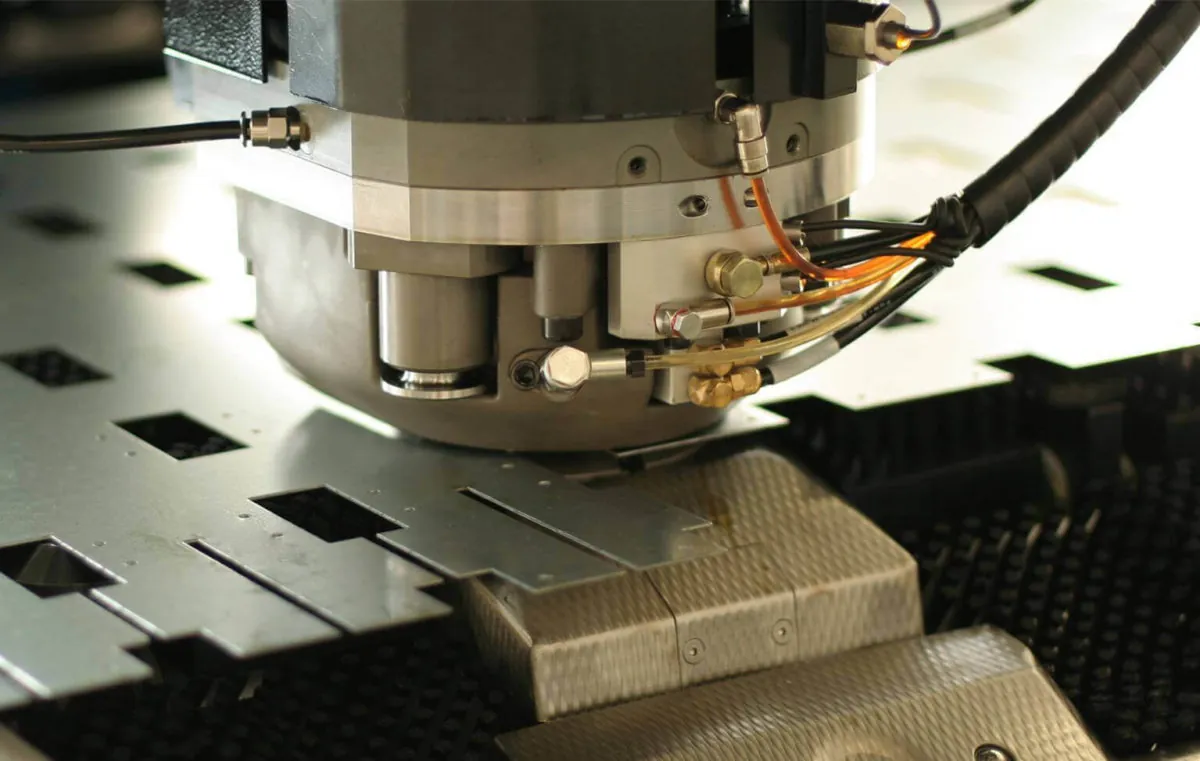
At Wuxi Lead, we achieve this level of precision through a combination of high-resolution servo-electric press brakes, laser-guided backgauges, and proprietary tooling geometries optimized for specific alloys and thicknesses. Our process begins with finite element analysis (FEA) simulation to predict material behavior, followed by iterative prototyping and in-process metrology using coordinate measuring machines (CMM). This ensures that every bead meets exact dimensional and geometric specifications.
The following table outlines typical beading capabilities achievable with our advanced forming systems:
| Parameter | Range / Specification |
|---|---|
| Material Thickness | 0.5 mm – 3.0 mm (mild steel, aluminum, stainless steel) |
| Bead Height | 1.0 mm – 10.0 mm (custom profiles available) |
| Bead Width (Base) | 3.0 mm – 25.0 mm |
| Positional Tolerance | ±0.1 mm per 300 mm length |
| Angular Accuracy | ±0.5° |
| Surface Finish Retention | Ra ≤ 1.6 µm (with polished tooling) |
| Production Repeatability | Cp ≥ 1.67 (statistical process control) |
Sheet metal beading, when executed with uncompromising precision, transforms flat, flexible sheets into engineered components capable of meeting the most demanding performance criteria. At Wuxi Lead Precision Machinery, our experience in high-reliability sectors underscores our commitment to excellence in every formed feature—because in advanced manufacturing, the smallest detail can define the difference between success and failure.
Precision Specs & Tolerances

Advanced Sheet Metal Beading Capabilities at Wuxi Lead Precision Machinery
Sheet metal beading is a critical precision forming process that enhances structural rigidity, improves aesthetic finish, and enables complex part assembly without additional hardware. At Wuxi Lead Precision Machinery, we execute this operation with uncompromising accuracy using industry-leading 5-axis CNC press brake technology. Our integrated approach transforms flat sheet metal into components with engineered beads that resist deformation under load while meeting stringent dimensional requirements for aerospace, medical, and high-end industrial applications.
Our 5-axis CNC press brakes deliver unparalleled control over bead geometry, enabling continuous or segmented bead profiles with variable depth, width, and curvature across complex contours. Unlike conventional tooling, our systems dynamically adjust ram position, backgauge orientation, and tooling alignment in real-time, eliminating secondary operations and ensuring consistency across high-mix, low-volume production runs. This capability supports materials ranging from thin-gauge aluminum alloys to hardened stainless steel up to 6.0 mm thickness, with bead heights precisely controlled from 0.5 mm to 15.0 mm. The elimination of manual setup variables reduces lead times by 40% while maintaining geometric complexity unachievable through stamping or roll forming.
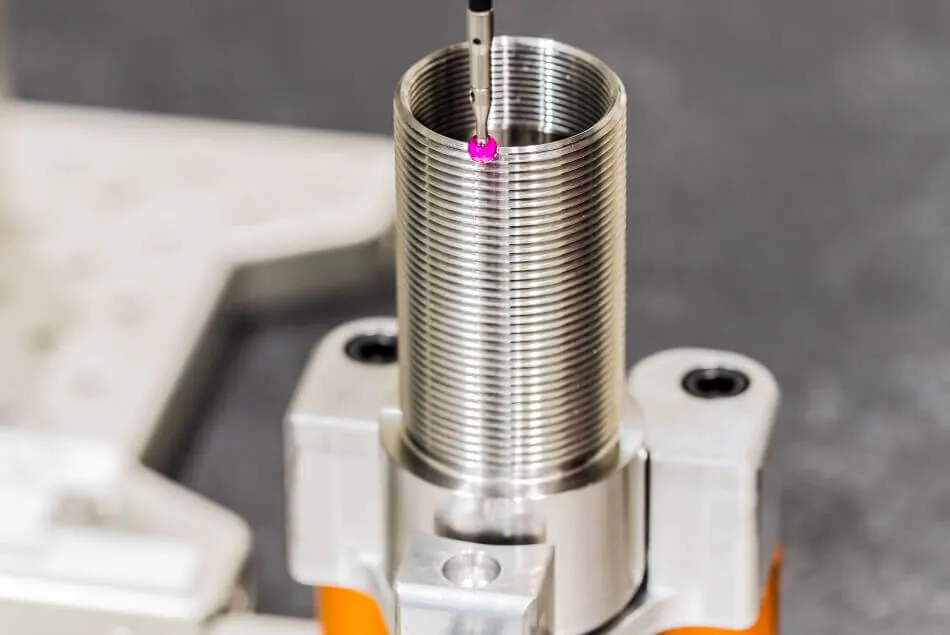
Quality assurance is embedded at every stage through our CMM (Coordinate Measuring Machine) inspection protocol. Each beaded component undergoes full 3D scanning against CAD nominal data, verifying critical parameters including bead profile conformity, angular integrity at intersections, and positional accuracy relative to datums. This closed-loop verification process ensures compliance with AS9100 and ISO 1302 surface finish standards, with real-time data fed back to CNC programs for automatic compensation. Our metrology lab’s temperature-controlled environment (20±0.5°C) and calibrated Renishaw probes guarantee measurement uncertainty below ±0.003 mm, providing clients with traceable certification for mission-critical assemblies.
The following table details our certified tolerance capabilities for sheet metal beading operations:
| Parameter | Standard Tolerance | Precision Tolerance (CMM Verified) |
|---|---|---|
| Material Thickness Range | 0.5 mm – 6.0 mm | 0.8 mm – 4.0 mm |
| Bead Height | ±0.15 mm | ±0.05 mm |
| Bead Width | ±0.20 mm | ±0.10 mm |
| Angular Accuracy | ±0.5° | ±0.2° |
| Positional Accuracy | ±0.15 mm | ±0.05 mm |
| Surface Roughness (Ra) | ≤ 1.6 µm | ≤ 0.8 µm |
Wuxi Lead’s beading process is engineered for zero-defect delivery in applications where flexural strength and dimensional stability are non-negotiable. By combining adaptive 5-axis forming with metrology-grade validation, we solve challenges like warpage in large panels or micro-bead precision for electronic enclosures. Our technical team collaborates with clients during DFM analysis to optimize bead placement and geometry, reducing material usage while exceeding performance targets. Contact us to integrate certified beading precision into your next high-integrity sheet metal component.
Material & Finish Options

Material Selection for Sheet Metal Beading in Precision Fabrication
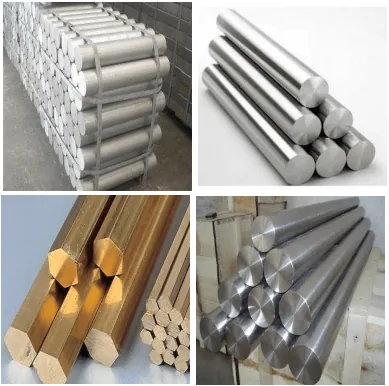
In high-precision sheet metal beading applications, material selection plays a critical role in determining both the structural integrity and functional performance of the final component. At Wuxi Lead Precision Machinery, we emphasize a science-driven approach to material choice, ensuring compatibility with forming processes, environmental exposure, and end-use requirements. The most widely used materials in beading operations are aluminum, steel, and titanium, each offering distinct mechanical and chemical properties.
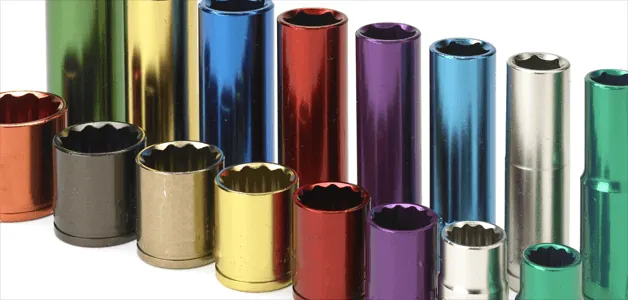
Aluminum is a preferred choice for lightweight, corrosion-resistant components. Its high strength-to-weight ratio and excellent formability make it ideal for applications in aerospace, transportation, and electronics enclosures. The 5000 and 6000 series aluminum alloys, such as 6061-T6, are particularly well-suited for beading due to their balanced ductility and tensile strength. When enhanced surface durability is required, aluminum components are often anodized. Anodizing creates a controlled oxide layer that improves wear resistance, enables color coding, and provides superior adhesion for paint primers.
Steel, particularly cold-rolled steel (CRS) and stainless steel (e.g., 304 and 316 grades), offers superior strength and durability. CRS is commonly used in industrial enclosures and structural components where rigidity is paramount. Stainless steel variants provide inherent corrosion resistance, making them suitable for harsh environments such as marine, medical, and food processing applications. While steel is less malleable than aluminum, modern CNC press brakes and beading tools allow precise deformation without compromising material integrity.
Titanium, though more costly, is selected for extreme performance demands. Its exceptional strength-to-density ratio and resistance to high-temperature oxidation make it indispensable in aerospace and defense applications. Grade 2 and Grade 5 titanium (Ti-6Al-4V) are typically used in beading processes where reliability under stress and weight reduction are critical. However, titanium’s high springback and work-hardening rate require specialized tooling and process calibration.
Surface finishing, particularly anodizing for aluminum, significantly enhances the functional lifespan of beaded components. Type II (sulfuric acid) anodizing is standard for decorative and protective finishes, while Type III (hardcoat anodizing) provides a thicker, more abrasion-resistant layer for industrial use. Anodized layers do not peel or flake and maintain dimensional stability, which is essential when tight tolerances are required around beaded edges.
Below is a comparative overview of key material properties relevant to sheet metal beading:
| Material | Tensile Strength (MPa) | Yield Strength (MPa) | Elongation (%) | Common Grades | Typical Applications |
|---|---|---|---|---|---|
| Aluminum | 290–350 | 240–300 | 8–12 | 6061-T6, 5052-H32 | Enclosures, aerospace panels |
| Cold-Rolled Steel | 340–520 | 300–420 | 10–15 | CR1018, CR1022 | Industrial frames, machinery |
| Stainless Steel | 505–760 | 275–500 | 30–40 | 304, 316 | Medical devices, marine hardware |
| Titanium | 760–1000 | 650–900 | 10–15 | Grade 2, Grade 5 | Aerospace, defense systems |
Selecting the appropriate material and finish ensures optimal performance in sheet metal beading operations. At Wuxi Lead Precision Machinery, we support our clients with material consultation and precision tooling to achieve repeatable, high-quality results across all fabrication stages.
Manufacturing Process & QC

Sheet Metal Beading: Precision Process from Concept to Zero-Defect Production
Achieving flawless sheet metal beading demands a rigorously controlled workflow, eliminating defects before they reach the customer. At Wuxi Lead Precision Machinery, our integrated process ensures geometric integrity and structural performance meet the highest aerospace, medical, and industrial standards. This begins with meticulous Design Phase engineering. Our application engineers utilize advanced CAD/CAM suites to model bead profiles, accounting for material springback, tensile strength, and final assembly fit. Finite Element Analysis (FEA) validates stress distribution and rigidity gains, while Design for Manufacturability (DFM) reviews optimize tool paths and prevent micro-cracking. Critical tolerances are defined against ISO 2768-mK or customer-specific standards, ensuring the design is inherently producible at scale without compromise.
Prototyping Phase transforms validated designs into physical proof. We employ dedicated offline programming stations to simulate the entire beading sequence on virtual machine tools, identifying potential collisions or material flow issues. Physical prototypes are then produced on our high-precision CNC press brakes equipped with real-time angle measurement systems. Each prototype undergoes comprehensive First Article Inspection (FAI) per AS9102 requirements. Coordinate Measuring Machines (CMM) verify bead height, width, radius, and positional accuracy against the 3D model, while destructive testing confirms enhanced stiffness and fatigue resistance. This phase is non-negotiable; only prototypes meeting 100% of dimensional and functional criteria proceed.
Mass Production Phase leverages our closed-loop manufacturing ecosystem for zero-defect output. Production runs commence on automated press brakes integrated with in-process monitoring. Laser micrometers continuously measure bead geometry during formation, feeding data to the machine controller for instantaneous force and stroke adjustments. Statistical Process Control (SPC) charts track key parameters like tonnage and bend angle, with automatic process hold if trends approach tolerance limits. Every 50th part undergoes full CMM verification, and final inspection includes 100% visual and dimensional checks for surface integrity and profile consistency. Our traceability system logs material lot, machine parameters, and inspector data for every component, ensuring complete accountability.
This disciplined progression from validated design through rigorous prototyping to monitored mass production is the foundation of Wuxi Lead’s zero-defect commitment. We transform sheet metal beading from a simple forming operation into a certified value-add process.
Wuxi Lead Precision Sheet Metal Beading Capabilities
| Parameter | Specification Range | Precision Standard |
|---|---|---|
| Material Thickness | 0.5 mm – 3.0 mm | ±0.05 mm |
| Bead Height | 1.0 mm – 15.0 mm | ±0.1 mm |
| Bead Width | 2.0 mm – 25.0 mm | ±0.15 mm |
| Positional Tolerance | ±0.2 mm per 100 mm length | ISO 2768-mK or tighter |
| Max. Part Length | 3000 mm | Straightness ±0.3 mm |
| Process Capability | Cp/Cpk ≥ 1.67 | Sustained control |
Why Choose Wuxi Lead Precision
Partner with Wuxi Lead Precision Machinery for Advanced Sheet Metal Beading Solutions
In the competitive landscape of precision sheet metal fabrication, achieving structural integrity, dimensional accuracy, and repeatable quality is paramount. At Wuxi Lead Precision Machinery, we specialize in high-performance sheet metal beading systems engineered to meet the exacting demands of aerospace, automotive, electronics, and industrial equipment manufacturers. Our expertise in beading technology transforms flat metal panels into reinforced components with enhanced rigidity, reduced material usage, and superior resistance to deformation—critical advantages in high-stress applications.
Sheet metal beading is more than a forming process—it is a precision engineering solution that adds value across the manufacturing chain. By introducing controlled ridges or channels into metal surfaces, beading improves part strength without increasing weight, enabling lighter assemblies and optimized material efficiency. Our CNC-controlled beading machines integrate seamlessly with existing production lines, offering programmable tooling, high-speed operation, and micron-level repeatability. Whether you are producing enclosures, chassis components, or HVAC ducting, our systems deliver consistent, burr-free results across stainless steel, aluminum, galvanized steel, and other engineered alloys.
At Wuxi Lead, we understand that every fabrication environment is unique. That’s why our engineering team works closely with clients to customize beading solutions tailored to specific material thicknesses, bead profiles, and production volumes. From prototype support to full-scale deployment, we provide end-to-end technical consultation, machine validation, and post-installation support to ensure maximum uptime and performance.
Our commitment to innovation is reflected in the precision and durability of every machine we build. Constructed with high-grade components and advanced servo-hydraulic systems, our beading equipment delivers long-term reliability under continuous operation. Real-time monitoring, tool wear compensation, and intuitive HMI interfaces further enhance operational efficiency, reducing setup times and minimizing operator dependency.
Below are key technical specifications of our flagship sheet metal beading systems:
| Parameter | Specification |
|---|---|
| Material Thickness Range | 0.5 – 3.0 mm |
| Max Bead Length | Up to 3000 mm (customizable) |
| Bead Profile Options | Round, U-shape, V-groove, custom profiles |
| Positioning Accuracy | ±0.02 mm |
| Control System | Siemens or Mitsubishi CNC |
| Tool Change Time | < 5 minutes (quick-change turret system) |
| Power Supply | 380V, 50/60 Hz, 3-phase |
| Machine Frame Construction | Reinforced cast iron with anti-vibration base |
| Supported Materials | Mild steel, stainless steel, aluminum, copper |
Partnering with Wuxi Lead Precision Machinery means gaining access to more than advanced equipment—it means aligning with a team dedicated to your manufacturing success. Our global service network ensures rapid response, remote diagnostics, and comprehensive training programs to keep your operations running at peak efficiency.
For detailed technical consultations or to request a sample processing demonstration, contact us today at [email protected]. Let us help you elevate your sheet metal fabrication capabilities with intelligent beading solutions built for precision, performance, and productivity.
⚙️ Precision Cost Estimator
Estimate relative manufacturing effort based on tolerance.