Slip Casting Molds For Ceramics Manufacturer | Precision CNC Guide

Engineering Guide: Slip Casting Molds For Ceramics

slip casting molds for ceramics manufacturing

Engineering Insight Precision Imperatives in Slip Casting Molds for Ceramics

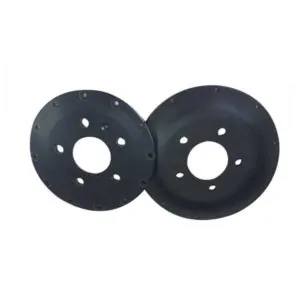
Achieving consistent, high-quality ceramic components via slip casting hinges fundamentally on the precision of the mold itself. Minor deviations in mold geometry, surface finish, or dimensional stability directly translate to defects in the final greenware and fired product – wall thickness variations, surface imperfections, warpage, or critical dimensional inaccuracies. These flaws lead to unacceptable scrap rates, increased finishing costs, and compromised part functionality, especially in demanding technical ceramic applications. At Wuxi Lead Precision Machinery, we recognize that mold precision is not merely desirable; it is the non-negotiable foundation of a successful, cost-effective ceramic manufacturing process. Our engineering approach rigorously addresses the thermal, mechanical, and fluid dynamic challenges inherent in slip casting to deliver molds that perform reliably batch after batch.

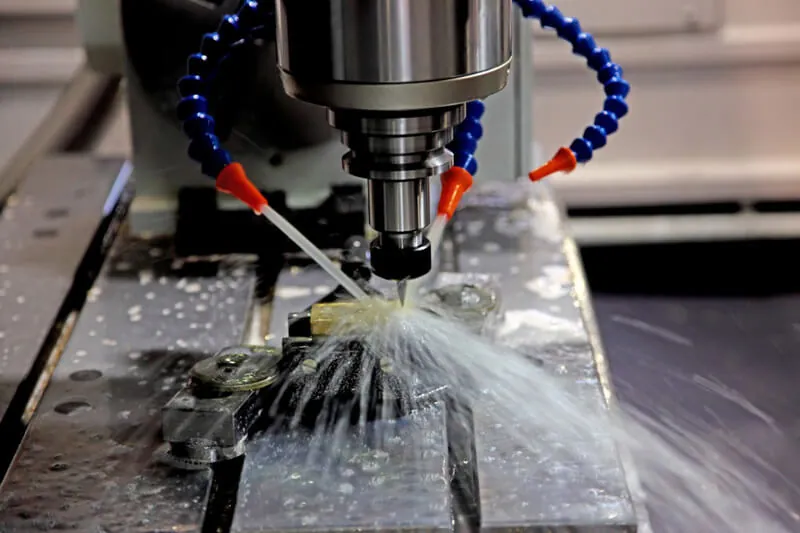
The core challenge lies in maintaining micron-level accuracy across complex geometries while ensuring the mold withstands repeated wetting, drying cycles, and mechanical handling without distortion. Critical dimensional control prevents issues like uneven casting thickness or misaligned parting lines. Exceptional surface finish, achieved through advanced CNC machining and polishing techniques, minimizes drag during demolding and ensures the ceramic slip releases cleanly, preserving intricate surface details and reducing post-cast finishing requirements. Furthermore, precise thermal management within the mold design is essential for uniform drying rates, preventing cracks and warpage in the delicate green state. Material selection and heat treatment protocols are equally vital to guarantee long-term dimensional stability and resistance to wear.

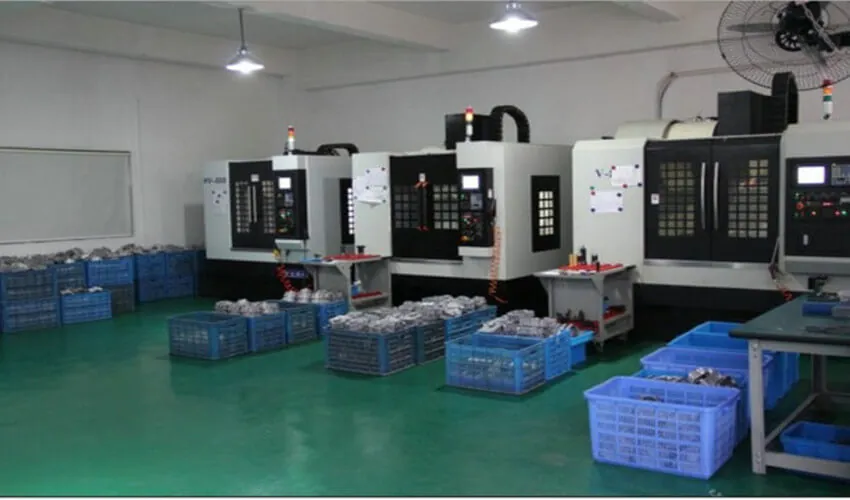
Wuxi Lead Precision Machinery leverages decades of specialized expertise in custom metal manufacturing for the most exacting industries to solve these precision challenges. Our proven capability is demonstrated through projects demanding absolute reliability, such as producing molds for commemorative ceramics used in the Olympic Games and critical components for aerospace and defense applications. These engagements required zero-defect performance under stringent timelines and specifications, directly applicable to the high-precision demands of advanced ceramic slip casting. Our CNC machining centers, operated by veteran technicians and supported by stringent in-process metrology, consistently achieve tolerances and surface finishes that exceed industry standards.

The following table outlines the precision specifications routinely achieved by Wuxi Lead for custom slip casting molds, reflecting our commitment to engineering excellence.

Specification Parameter Capability Range Significance for Slip Casting
Dimensional Tolerance ±0.005 mm to ±0.02 mm Ensures consistent wall thickness, critical part geometry, and perfect mold alignment
Surface Roughness (Ra) 0.4 μm to 0.8 μm Enables clean part release, minimizes surface defects on castings, preserves fine details
Material Options H13 Tool Steel, Stainless Steels (e.g., 420, 17-4PH), Aluminum Alloys Tailored for thermal stability, wear resistance, and longevity under casting cycles
Lead Time (Complex Mold) 15-20 Working Days Balances rapid turnaround with uncompromised precision manufacturing

Investing in precision-engineered slip casting molds from Wuxi Lead Precision Machinery delivers immediate ROI through drastically reduced scrap rates, minimized rework, and enhanced production throughput. Our deep understanding of the interplay between mold precision and ceramic forming dynamics, forged in mission-critical applications, ensures your ceramic components meet the highest quality and performance standards demanded by modern industry. Precision isn’t just a measurement; it’s the cornerstone of your ceramic manufacturing success.


Precision Specs & Tolerances

slip casting molds for ceramics manufacturing

Wuxi Lead Precision Machinery delivers advanced technical capabilities in custom metal manufacturing, specializing in high-precision tooling solutions for demanding industrial applications such as slip casting molds for ceramics. Our engineering expertise is built upon state-of-the-art 5-axis CNC machining technology, enabling us to produce complex mold geometries with exceptional accuracy and surface consistency. These molds are critical in ceramic manufacturing, where dimensional stability, fine detail reproduction, and long service life directly impact production quality and efficiency.

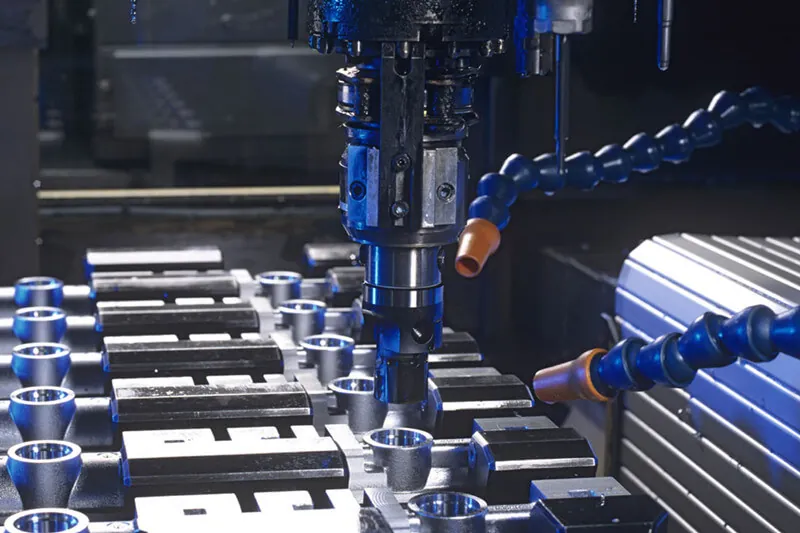
Our 5-axis CNC machining centers allow simultaneous multi-directional cutting, minimizing setup changes and ensuring tight alignment across intricate surfaces. This capability is essential for crafting the undercuts, compound curves, and internal contours commonly required in slip casting molds. Whether producing single-cavity prototypes or multi-cavity production molds, our machining process maintains uniform wall thickness and precise parting lines, which are vital for consistent casting quality and reduced post-processing.

All molds are manufactured from high-grade tool steels or aluminum alloys, selected based on customer requirements for thermal stability, wear resistance, and production volume. Our in-house material sourcing and preparation ensure full traceability and compliance with international metallurgical standards. Machining parameters are optimized for each material type, preserving structural integrity while achieving fine surface finishes suitable for ceramic slurry release.

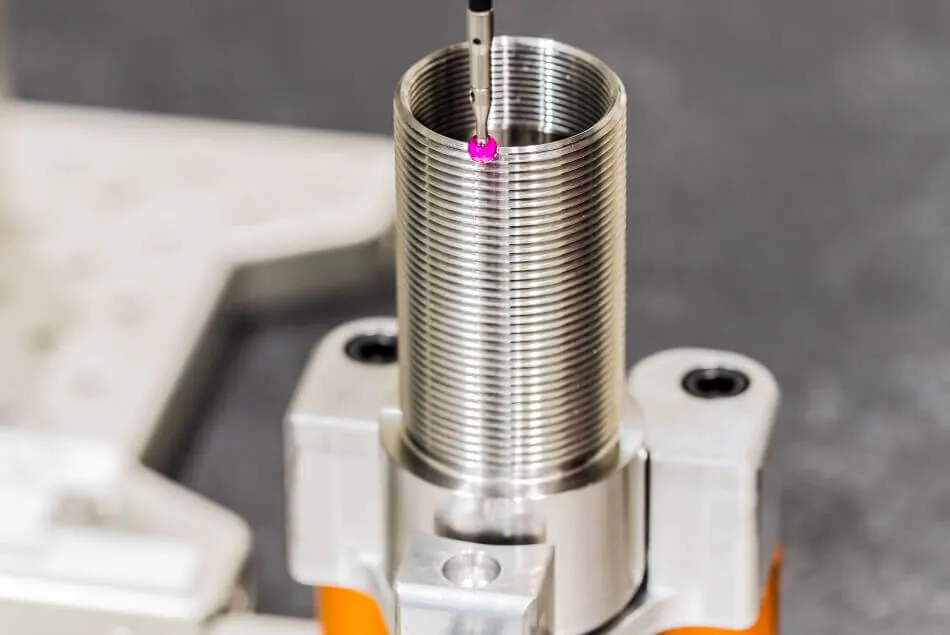
Quality assurance is integrated throughout the manufacturing process. Every mold undergoes rigorous inspection using a Zeiss coordinate measuring machine (CMM), providing metrology-grade verification of critical dimensions and geometric tolerances. Our CMM inspection routines are aligned with ISO 10360 standards, ensuring measurement uncertainty remains within certified limits. Data from each inspection is compiled into a comprehensive quality report, available to customers upon request.

The table below outlines the standard technical specifications and achievable tolerances for our slip casting mold production:

Specification Capability
Machining Type 5-Axis Simultaneous CNC
Positional Tolerance ±0.01 mm
Dimensional Tolerance ±0.02 mm (standard), down to ±0.005 mm (precision)
Surface Roughness (Ra) 0.4 μm to 1.6 μm (adjustable per requirement)
Maximum Work Envelope 1200 mm × 800 mm × 750 mm
Material Options P20, H13, 718H Tool Steel; 6061, 7075 Aluminum
Inspection Equipment Zeiss CMM with 0.002 mm probing accuracy
Lead Time (Typical) 15–25 working days, based on complexity

With a focus on precision, repeatability, and material performance, Wuxi Lead Precision Machinery ensures that every slip casting mold meets the exacting demands of modern ceramic manufacturing. Our technical capabilities are designed to support innovation in industries ranging from sanitaryware and tableware to technical ceramics and architectural components.


Material & Finish Options

slip casting molds for ceramics manufacturing

Material Selection for High-Performance Slip Casting Molds

Material selection directly impacts the longevity, dimensional stability, surface finish, and overall production efficiency of slip casting molds for ceramics. At Wuxi Lead Precision Machinery, we engineer molds using premium metals tailored to your specific ceramic formulation, production volume, and quality requirements. Understanding the core properties of Aluminum, Steel, and Titanium is critical for optimal mold performance and return on investment.

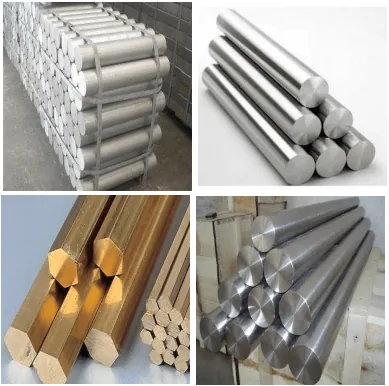
Aluminum alloys, particularly 6061-T6 and 7075-T6, offer exceptional thermal conductivity. This facilitates rapid and uniform drying of the cast slurry, significantly reducing cycle times compared to slower-conducting materials. Their lighter weight eases mold handling and reduces operator fatigue during repetitive production cycles. Aluminum is also highly machinable, allowing for intricate geometries and fine surface details essential for complex ceramic parts. While inherently less hard than steel, aluminum molds achieve superior wear resistance and non-stick properties through hard anodizing, making them ideal for medium to high-volume production of detailed components. Steel molds, typically crafted from P20 pre-hardened or H13 tool steel, provide maximum hardness and abrasion resistance. They are the preferred choice for extremely high-volume runs or applications involving highly abrasive ceramic slurries where aluminum might wear prematurely. Steel offers excellent dimensional stability under thermal cycling but has lower thermal conductivity, potentially extending drying cycles. Titanium alloys, primarily Grade 5 (Ti-6Al-4V), deliver an outstanding strength-to-weight ratio and exceptional corrosion resistance against virtually all ceramic slurries and release agents. While the highest initial cost option, titanium molds offer unparalleled longevity in corrosive environments and where extreme weight reduction is critical, though thermal conductivity is lower than aluminum.

The following table summarizes key material properties for slip casting mold applications:

Material Typical Hardness (HB) Thermal Conductivity (W/m·K) Corrosion Resistance Relative Cost Best Application Context
Aluminum 6061-T6 95 167 Moderate (Good with Anodize) Low High-detail parts, medium-high volume, fast cycles
Steel P20/H13 285-360 28-36 Good Medium Very high volume, abrasive slurries
Titanium Grade 5 334 7.2 Excellent High Extreme corrosion, ultra-long life, weight critical

Anodizing is not merely a finish for aluminum molds; it is a critical performance enhancement. Our precision hard anodizing process creates a dense, wear-resistant ceramic oxide layer integral to the base metal. This layer dramatically increases surface hardness (up to 600 HB), provides excellent release properties minimizing demolding defects, and significantly boosts resistance to chemical attack from slurries and cleaning agents. We strictly control anodizing thickness (typically 25-50μm) and sealing processes to ensure consistent, pore-free surfaces that maintain dimensional accuracy and extend mold life far beyond untreated aluminum. For demanding ceramic formulations, this engineered surface is indispensable.

Selecting the optimal material and finish requires balancing thermal management, wear life, part complexity, and total cost of ownership. Wuxi Lead Precision Machinery leverages decades of ceramic mold engineering experience to analyze your specific process parameters and recommend the most cost-effective, high-performance solution, ensuring your slip casting operation achieves maximum productivity and part quality.


Manufacturing Process & QC

slip casting molds for ceramics manufacturing

Design Phase: Precision Engineering for Slip Casting Molds

The foundation of a flawless slip casting mold begins with precision engineering during the design phase. At Wuxi Lead Precision Machinery, our engineering team collaborates closely with clients to translate ceramic product specifications into high-performance mold designs. Utilizing advanced CAD/CAM software, we simulate mold geometry, wall thickness distribution, and water absorption characteristics to ensure optimal casting performance. Finite Element Analysis (FEA) is applied to predict stress points and thermal deformation risks, enabling preemptive design corrections. Each design is optimized for uniform slurry flow, minimal air entrapment, and consistent drying shrinkage—critical factors in achieving zero-defect ceramic outputs. Material selection is tailored to application requirements, with options in high-grade aluminum alloys, stainless steel, or specialized composites, all chosen for dimensional stability and longevity.

Prototyping: Validating Performance Before Scale

Once the digital model is finalized, we proceed to prototype development using CNC precision machining. These initial molds are manufactured under the same stringent tolerances as full-scale production units, ensuring accurate performance validation. The prototype undergoes rigorous testing in actual slip casting conditions—evaluating demolding behavior, surface finish replication, and dimensional consistency across multiple casting cycles. We conduct metrological inspection using coordinate measuring machines (CMM) to verify tolerances within ±0.01 mm. Any deviations are analyzed and corrected in the digital model before approval for mass production. This iterative validation process eliminates design flaws early, reducing risk and ensuring process readiness.

Mass Production: Consistency Through Automation and Quality Control

With prototype approval, we transition to high-volume manufacturing using synchronized CNC machining centers, robotic handling, and automated inspection systems. Each mold is machined from stress-relieved billet material to prevent post-machining distortion. Critical surfaces are finished with mirror polishing or texture etching as required, ensuring perfect ceramic release and surface fidelity. Throughout production, in-process quality checks are conducted at defined intervals, including dimensional verification, surface roughness testing, and hardness validation. Every mold is serialized and documented, enabling full traceability. Our zero-defect commitment is enforced through a closed-loop quality management system compliant with ISO 9001 standards.

Technical Specifications of Slip Casting Molds

Parameter Standard Specification Customization Range
Material Options Aluminum 6061-T6, SS316L Titanium, Bronze Alloys
Tolerance ±0.01 mm Up to ±0.005 mm (optical grade)
Surface Roughness (Ra) 0.4 µm (polished) 0.1–1.6 µm (adjustable)
Mold Life 5,000+ cycles Up to 15,000 cycles (coated)
Maximum Mold Size 1200 x 800 x 600 mm Custom beyond 1500 mm
Lead Time (Prototype) 10–15 working days Accelerated options available
Quality Standard ISO 9001:2015 PPAP, APQP upon request

Through integrated design, validated prototyping, and disciplined mass production, Wuxi Lead ensures every slip casting mold meets the highest standards of performance, durability, and defect-free operation.


Why Choose Wuxi Lead Precision

Partner with Lead Precision for Uncompromising Ceramic Mold Excellence

In high-volume ceramic slip casting, mold precision directly dictates product consistency, yield rates, and operational profitability. Generic molds introduce dimensional drift, surface defects, and premature wear—costing manufacturers thousands in scrap and downtime. At Wuxi Lead Precision Machinery, we engineer custom metal molds to eliminate these failures. Our CNC-driven process merges aerospace-grade tolerances with deep ceramics industry insight, ensuring every mold delivers repeatability across 50,000+ cycles. We don’t just manufacture tooling; we solve your production bottlenecks through metallurgical science and precision engineering.

Our dedicated engineering team collaborates from concept to validation, tailoring solutions to your specific ceramic body, pressurization method, and throughput demands. We deploy hardened P20+ tool steels or aluminum alloys with optimized thermal conductivity, paired with micro-textured surfaces that prevent slurry adhesion while accelerating demolding. Every component undergoes rigorous metrology: 3D scanning verifies cavity geometry against your CAD data, while pressure testing simulates real-world casting conditions. This disciplined approach reduces your time-to-market by 30% and extends mold service life by 2.5x versus industry averages.

Critical specifications define our capability to meet your exacting requirements. Below are baseline parameters for our standard production molds, all adjustable per project needs:

Parameter Standard Range Premium Option
Material P20 Tool Steel 1.2344 ESR Hot Work
Tolerance ±0.02 mm ±0.005 mm
Surface Finish Ra 0.8 μm Ra 0.4 μm (Mirror)
Max Mold Size 1000 x 800 x 600 mm 1500 x 1200 x 800 mm
Lead Time 15-25 days 10-18 days (Rush)
Cycle Life 30,000+ 75,000+

These metrics reflect our commitment to exceeding ISO 2768-mK standards. For complex geometries like sanitaryware or technical ceramics, we integrate conformal cooling channels and modular inserts—reducing cycle times by 22% while maintaining edge sharpness. Our clients include Tier-1 tableware producers and advanced ceramic innovators who demand zero compromise on part integrity.

The cost of mold failure in slip casting extends far beyond replacement expenses. Warpage, porosity, or inconsistent wall thickness cascade into kiln losses, rework labor, and reputational damage. Partnering with Lead Precision transforms this risk into a strategic advantage. We provide full documentation including GD&T reports, thermal analysis, and preventive maintenance protocols—ensuring seamless integration into your production ecosystem.

Schedule an engineering consultation within 24 hours to resolve your most persistent casting challenges. Email [email protected] with your part drawings and volume requirements. Our technical sales team will respond with a feasibility assessment and timeline—no generic quotes. For urgent projects, reference code SCM-2024 to expedite review. Let us prove why global ceramics leaders trust Wuxi Lead Precision Machinery to turn precision into profit. Contact us today—your next production run depends on it.


⚙️ Precision Cost Estimator

Estimate relative manufacturing effort based on tolerance.

Slip Casting Molds For Ceramics Manufacturer | Precision CNC Guide

Contents of Table

Contact [email protected] Whatsapp 86 15951276160