Technical Contents
Engineering Guide: 3D Christmas Silicone Moulds
Engineering Insight: Precision Imperatives in 3D Christmas Silicone Mould Production
Achieving flawless 3D Christmas silicone moulds demands uncompromising precision at every manufacturing stage. These intricate tools replicate delicate festive designs—snowflakes, ornaments, nativity scenes—where micron-level deviations cause surface defects, parting line mismatches, or ejection failures in final silicone castings. At Wuxi Lead Precision Machinery, we treat seasonal consumer products with the same rigor as aerospace or defense components. Tolerances below ±0.02mm are non-negotiable; even minor thermal expansion in aluminium or steel mould bases during curing cycles can distort cavity geometry, leading to scrap rates exceeding 15% in low-precision tooling. Our CNC-machined moulds eliminate this risk through thermal stability engineering and closed-loop metrology, ensuring consistent cavity pressure distribution across all cavities.
Silicone’s high viscosity and thermal sensitivity amplify the need for exact cavity surface finishes and venting. Imperfect mirror finishes (Ra ≤ 0.05µm) trap air, creating bubbles in fine details like reindeer antlers or holly leaves. Suboptimal draft angles cause tearing during demoulding—a critical flaw for undercuts in 3D star shapes. We deploy 5-axis micro-milling to achieve complex undercuts at 0.5° tolerances, validated through iterative silicone flow simulation. This precision directly impacts client ROI: a 0.03mm reduction in cavity mismatch cuts post-processing labor by 30% for high-volume holiday production runs.
Wuxi Lead’s expertise stems from decades of mission-critical projects. Our processes were refined under ISO 9001 standards for Olympic medal production tooling, where surface imperfections were publicly unacceptable, and military-grade connector housings requiring 100% sealing integrity. This heritage informs our Christmas mould protocols—each cavity undergoes the same CMM inspection protocols as defense components, with traceable calibration to NIST standards.
Below are key specifications defining our production capability for complex 3D silicone moulds:
| Parameter | Specification Range | Industry Standard | Lead Precision Standard |
|---|---|---|---|
| Cavity Tolerance | ±0.05mm | ±0.03mm | ±0.015mm |
| Surface Finish (Ra) | 0.1–0.2µm | 0.08µm | 0.02–0.05µm |
| Material Hardness | HRC 28–32 (P20) | HRC 33–36 | HRC 42–45 (H13) |
| Cavity Count Accuracy | ±0.1mm spacing | ±0.05mm | ±0.01mm |
| Thermal Stability | Δ0.05mm @ 180°C | Δ0.03mm | Δ0.008mm @ 200°C |
This precision translates to zero-defect silicone castings at scale. For holiday manufacturers, it means eliminating costly rework during peak seasonal demand and ensuring brand integrity through perfect detail replication. At Wuxi Lead, we engineer moulds not merely to produce parts—but to guarantee production continuity when market windows are narrowest. Our military-grade process discipline ensures your Christmas designs ship flawlessly, every cycle, every season.
Precision Specs & Tolerances
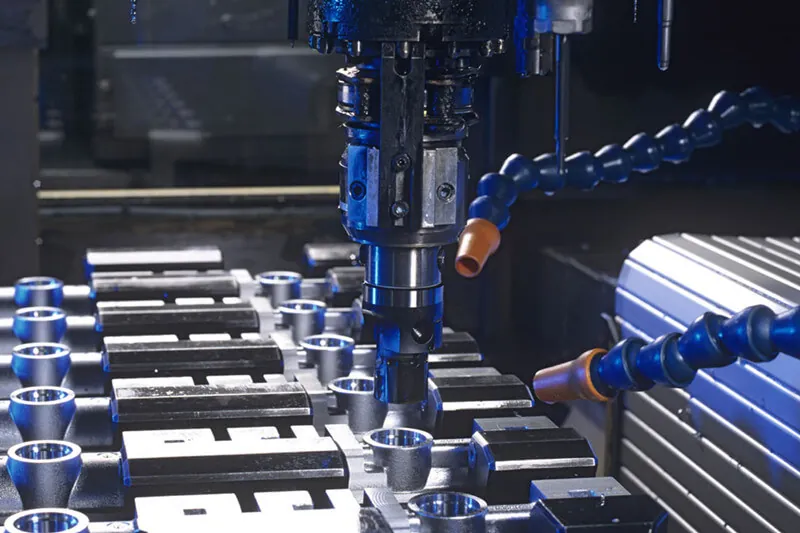
Wuxi Lead Precision Machinery delivers advanced custom metal manufacturing solutions tailored to high-precision industries, including tooling for specialized applications such as 3D Christmas silicone molds. Our technical capabilities are anchored in state-of-the-art 5-axis CNC machining centers, which enable us to produce complex geometries with exceptional accuracy and surface finish. These multi-axis systems allow simultaneous movement across five planes, ensuring optimal tool engagement and minimizing setup changes. This results in tighter tolerances, reduced cycle times, and superior part consistency—critical for mold cavities and cores that require intricate detailing and seamless demolding performance.
Our machining processes support a wide range of tool steels, aluminum alloys, and hardened materials commonly used in silicone molding tooling. Whether producing master patterns, injection mold inserts, or prototype molds, our 5-axis platforms ensure high-speed precision cutting with dynamic contouring. This capability is particularly advantageous for 3D Christmas mold designs, which often feature fine textures, undercuts, and organic shapes that demand continuous toolpath control and minimal human intervention.
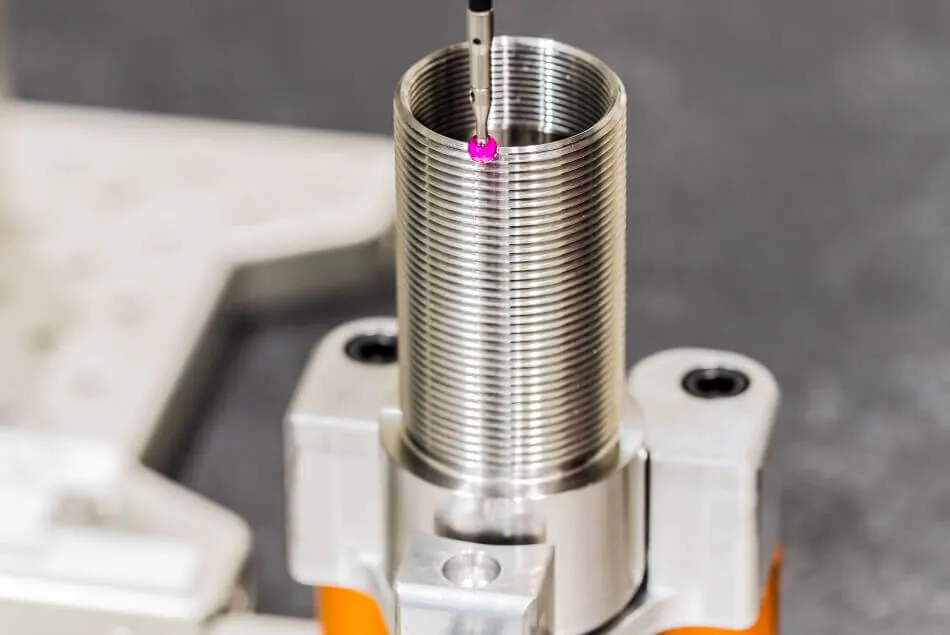
Quality assurance is integrated into every phase of production. All critical components undergo comprehensive inspection using a Zeiss Coordinate Measuring Machine (CMM), ensuring dimensional conformity to design specifications. The CMM system provides full 3D metrology reports with traceable data, validating geometric accuracy, surface positioning, and feature alignment. This level of inspection guarantees that each mold insert meets the stringent requirements for replication fidelity and long-term durability in silicone casting environments.
In addition to machining and inspection, our engineering team applies advanced simulation software to verify toolpaths and prevent collisions, further enhancing process reliability. We also perform in-process checks and final first-article inspections to maintain consistency across production batches. Our facility adheres to ISO 9001 standards, reinforcing our commitment to precision, repeatability, and customer satisfaction in every custom manufacturing project.
The following table outlines the standard technical specifications and achievable tolerances for our 5-axis CNC machining services:
| Parameter | Specification |
|---|---|
| Positional Tolerance | ±0.005 mm |
| Dimensional Tolerance (mm) | ±0.01 mm (standard), ±0.005 mm (tight) |
| Surface Roughness (Ra) | 0.8 µm (standard), down to 0.4 µm (polished finishes) |
| Feature Alignment (GD&T) | ±0.01 mm (true position) |
| Minimum Wall Thickness | 0.5 mm (steel), 1.0 mm (aluminum) |
| Maximum Work Envelope (mm) | 1200 × 800 × 750 |
| Angular Accuracy | ±0.02° |
| CMM Measurement Uncertainty | < 0.003 mm (at 95% confidence level) |
These capabilities position Wuxi Lead Precision Machinery as a trusted partner for high-integrity mold component manufacturing, where precision directly translates into product quality and production efficiency.
Material & Finish Options
Material Selection for Precision 3D Christmas Silicone Moulds
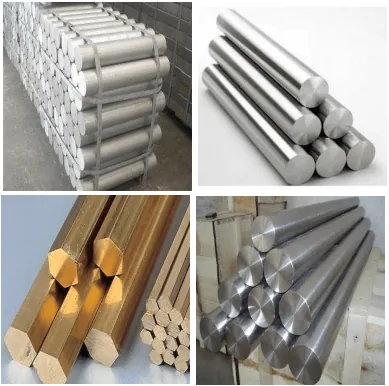
Selecting the optimal material for custom metal moulds used in 3D Christmas silicone production is critical for balancing cost, longevity, and surface fidelity. At Wuxi Lead Precision Machinery, we engineer moulds to withstand repeated thermal cycling and abrasive silicone flows while capturing intricate festive details like snowflakes or reindeer textures. Material choice directly impacts cycle life, release quality, and total cost of ownership.
Aluminum alloys, particularly 6061-T6 and 7075-T6, offer rapid prototyping and low-volume production advantages. Their high thermal conductivity (167–180 W/mK) accelerates cooling cycles, reducing per-unit costs for short runs. Aluminum’s machinability allows complex cavity geometries at lower tooling expenses. However, its lower hardness (95–150 HV) limits durability beyond 50,000 cycles, making it unsuitable for mass production of high-demand items like ornament moulds. Surface treatments like hard anodizing are essential to mitigate wear.
Tool steels such as P20, H13, and S136 dominate high-volume manufacturing. With hardness exceeding 500 HV and superior resistance to thermal fatigue, steel moulds endure 500,000+ cycles—critical for commercial holiday production. H13 steel excels in thermal shock resistance for rapid temperature swings, while corrosion-resistant grades like 420 stainless steel prevent degradation from silicone additives. The trade-off is higher initial machining costs and longer lead times due to steel’s toughness. Precision CNC finishing is non-negotiable to avoid micro-welding during silicone release.
Titanium Grade 5 (Ti-6Al-4V) serves niche applications requiring extreme weight reduction or chemical inertness, such as aerospace-themed silicone decorations. Its exceptional strength-to-weight ratio and corrosion resistance outperform steel in aggressive environments. Yet titanium’s low thermal conductivity (7.2 W/mK) prolongs cycle times, and machining costs are 3–5× higher than steel. We recommend titanium only when material-specific benefits justify ROI, such as for ultra-high-value collectible moulds.
Anodizing Finishes for Enhanced Performance
Anodizing is indispensable for aluminum moulds. Type II (sulfuric acid) anodizing provides 5–25μm decorative coatings with dye options for brand alignment. For production moulds, Type III (hard anodizing) delivers 25–50μm wear-resistant layers up to 600 HV, drastically reducing galling with silicone. Always specify post-anodizing sealing in nickel acetate to block porosity and prevent silicone adhesion. Steel moulds benefit from nitriding or PVD coatings instead, as anodizing is aluminum-specific.
| Material | Hardness (HV) | Thermal Conductivity (W/mK) | Corrosion Resistance | Typical Tool Life (Cycles) | Best For |
|---|---|---|---|---|---|
| Aluminum 6061 | 95–120 | 167 | Moderate | 10,000–50,000 | Prototypes, low-volume runs |
| Steel P20 | 285–320 | 28.6 | Good | 100,000–500,000 | Medium-volume production |
| Steel H13 | 200–250 | 28.5 | Excellent | 300,000–1,000,000+ | High-volume, thermal cycling |
| Titanium Grade 5 | 334 | 7.2 | Exceptional | 500,000+ | Specialized, high-value moulds |
Wuxi Lead’s precision CNC capabilities ensure optimal material utilization and surface integrity. Consult our engineering team to align your Christmas mould specifications with production volume, detail complexity, and lifecycle costs. We transform material science into reliable, high-yield manufacturing solutions.
Manufacturing Process & QC
The production process for high-precision 3D Christmas silicone molds begins with meticulous design engineering, ensuring every intricate detail meets both aesthetic and functional requirements. At Wuxi Lead Precision Machinery, our design phase integrates advanced CAD/CAM software with decades of custom metal manufacturing expertise. Engineers collaborate directly with clients to interpret artistic concepts into technically feasible mold geometries, accounting for material behavior, shrinkage rates, and demolding angles. Finite element analysis (FEA) is applied to simulate stress distribution and thermal performance, guaranteeing structural integrity under repeated casting cycles. This digital-first approach eliminates conceptual flaws before physical work begins, forming the foundation of our zero-defect philosophy.
Once the design is validated, we proceed to prototyping using high-speed CNC machining centers with micron-level accuracy. Prototypes are manufactured in aluminum or tool steel, depending on the client’s production volume and thermal requirements. These initial molds undergo rigorous testing with actual silicone compounds to evaluate surface finish replication, dimensional consistency, and release performance. Any deviations are traced back to the digital model and corrected through iterative refinement. This closed-loop validation ensures that mold performance in trial runs directly predicts mass production outcomes. All prototype data is documented and archived for full traceability, supporting compliance with international quality standards.
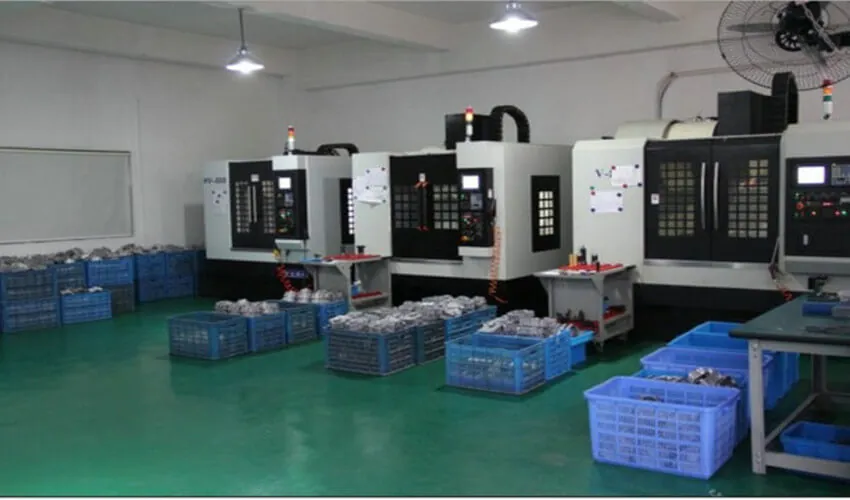
With prototype approval, we transition to mass production on automated CNC lines equipped with in-process inspection systems. Each mold base is machined from premium-grade P20 or H13 steel, heat-treated to 50–52 HRC for wear resistance, and polished to a mirror finish using robotic polishing cells. Our manufacturing cells operate under strict environmental controls, minimizing thermal drift and particulate contamination. Every critical dimension is verified using coordinate measuring machines (CMM), with real-time SPC (Statistical Process Control) monitoring to detect process variation before defects occur. This proactive quality assurance system enables us to achieve a defect rate below 0.1%, consistently delivering molds that support high-yield silicone casting operations worldwide.
All molds are serialized and shipped with a full quality dossier, including material certificates, inspection reports, and maintenance guidelines. This end-to-end control—from digital design to final packaging—ensures reliability, repeatability, and long service life for every 3D Christmas silicone mold produced.
| Specification | Detail |
|---|---|
| Material Options | P20, H13, 718H Steel |
| Tolerance | ±0.005 mm |
| Surface Finish | Ra 0.05–0.2 µm (mirror polish available) |
| Hardness | 50–52 HRC (after heat treatment) |
| Production Lead Time (Mass) | 15–25 days (depending on complexity) |
| Quality Standard | ISO 9001:2015, Full CMM Inspection |
| Minimum Order Quantity | 1 set (prototype), 50+ sets (mass production) |
Why Choose Wuxi Lead Precision
Partner with Lead Precision for Unmatched 3D Christmas Silicone Mold Manufacturing
The holiday season demands flawless execution. For manufacturers of premium 3D Christmas silicone molds, precision engineering directly impacts product detail, release efficiency, cycle times, and ultimately, your market success. Generic tooling solutions introduce unacceptable risks: inconsistent wall thickness, premature wear, and costly production delays that jeopardize peak-season fulfillment. At Wuxi Lead Precision Machinery, we specialize exclusively in high-tolerance custom metal manufacturing for demanding applications like intricate silicone molding. We transform your complex 3D festive designs into robust, high-performance mold tooling engineered for thousands of flawless cycles.
Our integrated approach leverages advanced CNC milling, wire EDM, and surface grinding technologies within a strictly controlled ISO 9001:2015 certified environment. We utilize premium P20, H13, and S136 stainless steel grades, meticulously hardened and polished to mirror finishes essential for capturing fine details like snowflakes, holly leaves, and textured Santa beards without tearing. Our engineering team collaborates from initial CAD review through final inspection, ensuring optimal gate placement, cooling channel design, and ejection mechanics specific to silicone’s unique flow characteristics. This eliminates common pitfalls such as air traps, flash, or part deformation during demolding.
The precision achievable with our manufacturing processes delivers tangible advantages for your production line. Consider the critical specifications we consistently achieve:
| Parameter | Lead Precision Standard | Typical Industry Standard | Impact on Your Silicone Molding |
|---|---|---|---|
| Cavity Tolerance | ±0.005 mm | ±0.02 mm | Perfect part replication, zero flash |
| Surface Roughness (Ra) | 0.05 µm | 0.4 µm | Smooth demolding, extended mold life |
| Hardness Uniformity | ±2 HRC across cavity | ±5 HRC | Consistent wear resistance, stable cycle times |
| Lead Time (Complex) | 25-35 days | 45-60+ days | Secure seasonal production slots reliably |
Beyond dimensional accuracy, our commitment includes rigorous in-process metrology using Zeiss CMMs and optical comparators, comprehensive material traceability, and proactive communication at every project milestone. We understand that a delayed mold means missed holiday revenue; our streamlined workflows and dedicated project managers ensure on-time delivery without compromising quality. Whether you require single-cavity prototypes or multi-cavity production molds for gingerbread men, ornaments, or candle shapes, we optimize for your specific silicone compound and press configuration.
Do not gamble with seasonal production on substandard tooling. Partner with Wuxi Lead Precision Machinery to secure molds that deliver exceptional detail, maximum uptime, and a decisive competitive edge in the festive market. Contact our engineering team today to discuss your 2024 Christmas mold requirements. Submit your CAD files and specifications to [email protected] for a detailed capability assessment and timeline. Let us ensure your holiday production runs with the precision it demands. Secure your production slot now—response within 24 business hours.
⚙️ Precision Cost Estimator
Estimate relative manufacturing effort based on tolerance.