Required Cnc Machining Parts Manufacturer | Precision CNC Guide

Engineering Guide: Required Cnc Machining Parts

required cnc machining parts manufacturing

Engineering Insight: The Non-Negotiable Imperative of Precision in Required CNC Machining Parts

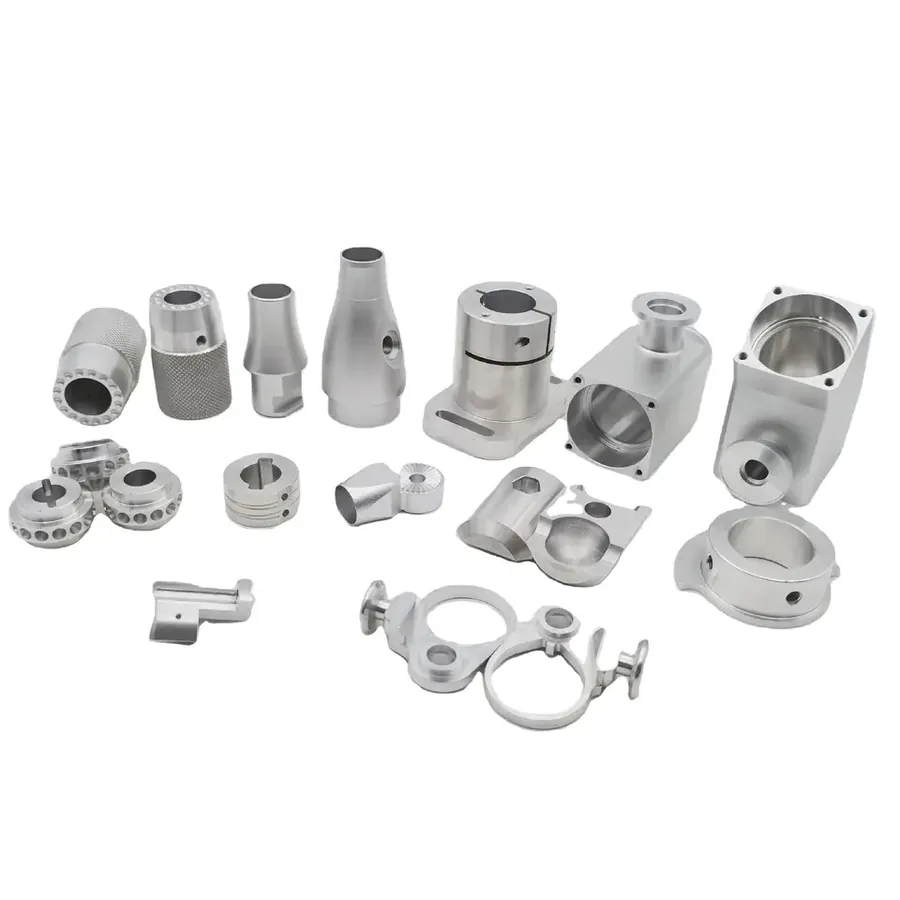
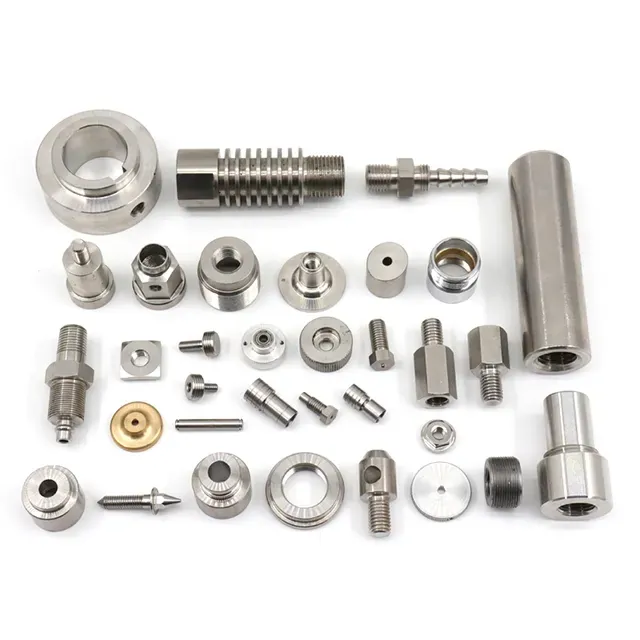
In high-stakes manufacturing sectors, the term “required CNC machining parts” transcends basic componentry. It signifies mission-critical elements where dimensional accuracy, material integrity, and geometric conformity are not merely desirable attributes but absolute prerequisites for system functionality, safety, and regulatory compliance. The margin for error vanishes when parts operate under extreme stress, within nanosecond timing sequences, or in life-supporting environments. Precision machining at the micron level directly dictates performance ceilings, operational lifespan, and ultimately, the viability of the entire assembly. Tolerances specified as “required” are engineering mandates derived from rigorous physics-based calculations; deviations, however minor, cascade into catastrophic system failure, costly downtime, or compromised safety. This uncompromising standard separates functional prototypes from certified production components.

Wuxi Lead Precision Machinery operates at this critical threshold daily. Our engineering heritage is forged in projects demanding absolute fidelity to specification, where reputational and physical risks are immense. We supplied precision-machined timing system components for the Beijing 2022 Winter Olympics, where split-millisecond accuracy was non-negotiable for event integrity. Similarly, our work within the defense sector involves machining structural and actuation parts for advanced systems, adhering to stringent MIL-STD and ITAR requirements where failure is not an option. These experiences instill a profound understanding: when a drawing specifies a ±0.002mm tolerance or a Ra 0.4µm surface finish, it is a technical command, not a suggestion. Our processes are engineered to consistently meet and exceed these mandates through rigorous material science application, thermal stability control, and closed-loop in-process inspection.

Our capability to deliver these required parts is grounded in quantifiable machining performance. The following table details core precision parameters achievable across our multi-axis milling and turning platforms for critical aerospace, defense, and medical applications:

Parameter Capability Range Measurement Standard Typical Application Context
Linear Tolerance ±0.002 mm to ±0.005 mm ISO 2768-mK / GD&T Hydraulic manifolds, sensor mounts
Geometric Tolerance ±0.001 mm (Position) ASME Y14.5 Actuator linkages, optical mounts
Surface Roughness (Ra) 0.2 µm to 0.8 µm ISO 4287 Sealing surfaces, bearing journals
Material Removal Rate Optimized per spec N/A High-integrity structural components
Material Compatibility Titanium, Inconel, 17-4PH, Aerospace Alloys AMS, ASTM, MIL specs Critical flight/safety hardware

Achieving these specifications requires more than advanced machinery. It demands a holistic systems approach: certified raw material traceability, environmental controls minimizing thermal drift, multi-stage CMM validation against master artifacts, and engineering oversight that anticipates micro-deformation during clamping and cutting. Every required part we produce carries full inspection documentation and process traceability, providing clients with auditable confidence. For applications where performance boundaries are defined by physics itself, Wuxi Lead Precision Machinery delivers the dimensional certainty that transforms engineering intent into operational reality. Partner with us when precision isn’t a target—it’s the foundation.


Precision Specs & Tolerances

required cnc machining parts manufacturing

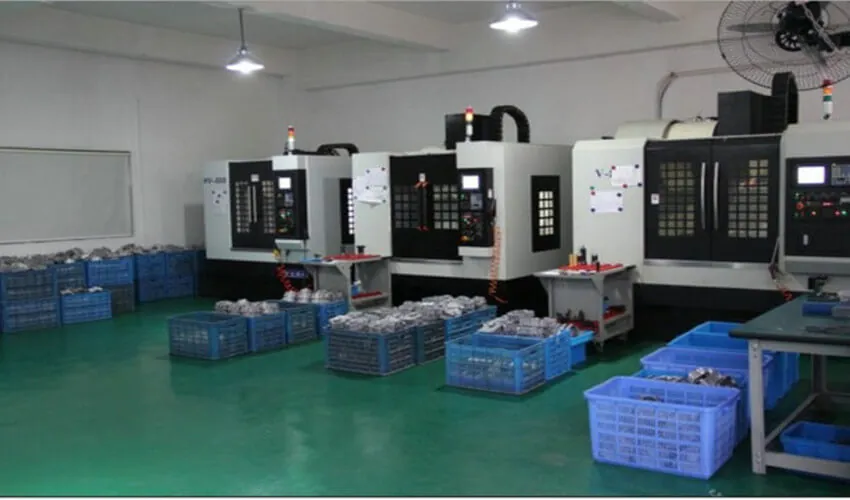
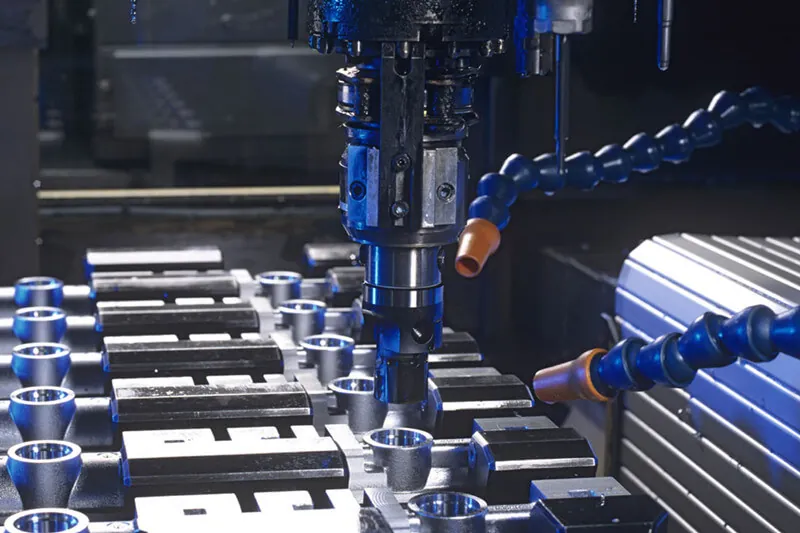
Wuxi Lead Precision Machinery delivers advanced precision CNC machining solutions tailored for high-performance industries including aerospace, medical, energy, and advanced automation. Our technical capabilities are built around a foundation of cutting-edge equipment, rigorous process control, and a deep commitment to dimensional accuracy and repeatability. At the core of our production floor are state-of-the-art 5-axis CNC machining centers, enabling us to execute complex geometries with superior surface finish and minimal setup transitions. This multi-axis capability allows for simultaneous machining from multiple angles, significantly enhancing part accuracy while reducing lead times and secondary operations.

Our 5-axis platforms are equipped with high-speed spindles, automated tool changers, and real-time monitoring systems to ensure consistent performance across both prototyping and high-volume production runs. These machines are operated by certified CNC programmers and machinists who utilize advanced CAM software to optimize toolpaths, material removal rates, and fixture strategies. This integration of hardware and expertise ensures that even the most intricate components are machined to exacting specifications.

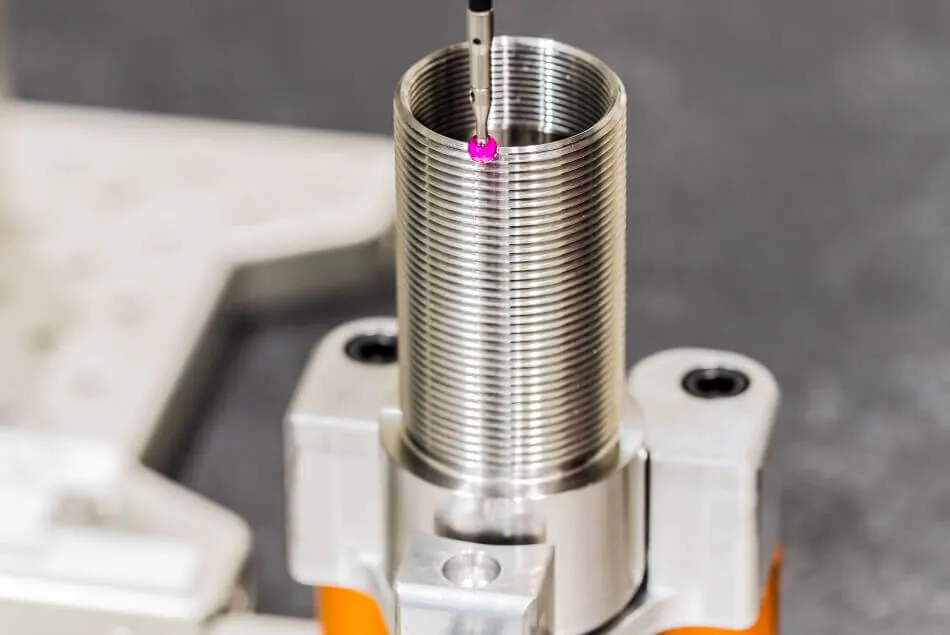
Quality is non-negotiable in precision manufacturing. To uphold the highest standards, every critical dimension is verified using Coordinate Measuring Machine (CMM) inspection. Our metrology lab is equipped with Zeiss and Hexagon CMM systems, capable of micron-level accuracy. Full first-article inspection reports (FAIR) and production batch certifications are provided as standard, ensuring full traceability and compliance with ISO 9001 and customer-specific quality requirements. In addition to CMM, we employ optical comparators, surface roughness testers, and calibrated handheld instruments to validate dimensional and surface integrity across all machined components.

The table below outlines our standard and advanced tolerance capabilities, reflecting the precision achievable through our integrated machining and inspection processes.

Feature Standard Tolerance High-Precision Tolerance Notes
Linear Dimensions ±0.025 mm ±0.005 mm Up to 500 mm
Diameter ±0.02 mm ±0.008 mm Internal and external
Positional Tolerance ±0.03 mm ±0.01 mm GD&T compliant
Flatness 0.03 mm 0.005 mm Over 100 mm span
Surface Roughness (Ra) 3.2 µm 0.4 µm As specified
Angular Features ±0.1° ±0.05° 5-axis simultaneous control
Bore Concentricity 0.03 mm 0.01 mm Multi-feature alignment

These capabilities are supported by robust material traceability, in-process inspections, and a closed-loop corrective action system. Whether machining titanium alloys for aerospace actuators or stainless steel components for surgical instruments, Wuxi Lead Precision Machinery ensures every part meets the functional and regulatory demands of its application. Our technical team collaborates closely with engineering partners to optimize designs for manufacturability, ensuring performance, precision, and cost-efficiency in every production cycle.


Material & Finish Options

required cnc machining parts manufacturing

Material Selection for Precision CNC Machined Components

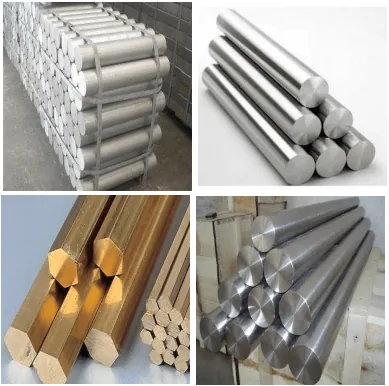
Selecting the optimal material is fundamental to achieving performance, durability, and cost-efficiency in precision CNC machined parts. At Wuxi Lead Precision Machinery, we guide clients through this critical decision based on application demands, environmental exposure, mechanical requirements, and budget constraints. Understanding the core properties and trade-offs of common engineering metals and finishes ensures the final component meets exacting specifications.

Aluminum alloys, particularly 6061-T6 and 7075-T6, dominate aerospace, automotive, and electronics due to their exceptional strength-to-weight ratio, excellent machinability, and inherent corrosion resistance. Aluminum 6061-T6 offers a balanced profile for structural components and enclosures, while 7075-T6 provides higher strength for critical load-bearing applications. Its low density significantly reduces weight, a crucial factor in mobility-focused industries. Aluminum readily accepts various surface treatments, with anodizing being paramount for enhanced wear and corrosion resistance.

Steel variants, including stainless steels (303, 304, 316) and alloy steels (4140, 4340), deliver superior strength, hardness, and wear resistance essential for tooling, hydraulic systems, and high-stress mechanical parts. Stainless grades 304 and 316 are preferred for medical, food processing, and marine environments due to outstanding corrosion resistance, with 316 offering enhanced performance in chloride-rich settings. Alloy steels like 4140 provide exceptional toughness and fatigue strength when heat-treated, suitable for shafts and gears. Machining stainless steel requires optimized parameters to manage work hardening and heat generation.

Titanium alloys, primarily Grade 5 (Ti-6Al-4V), are indispensable in aerospace, medical implants, and high-performance motorsports where ultimate strength-to-weight ratio, biocompatibility, and resistance to extreme temperatures and corrosion are non-negotiable. While significantly more expensive and challenging to machine than aluminum or steel due to low thermal conductivity and high reactivity, titanium’s unique properties justify its use in mission-critical applications where failure is not an option. Specialized tooling and processes are mandatory.

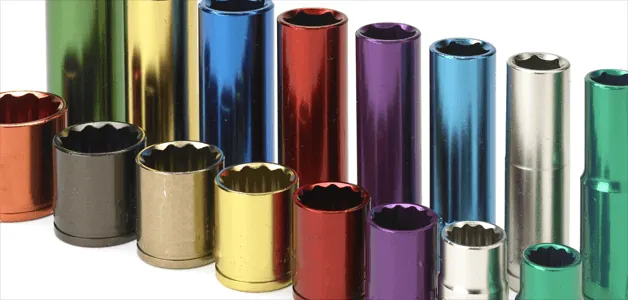
Anodizing is the premier surface finish for aluminum components, transforming the surface into a durable, corrosion-resistant aluminum oxide layer. Type II (Sulfuric Acid) anodizing provides good corrosion and wear resistance with dyeing capability for identification. Type III (Hardcoat) anodizing delivers significantly thicker, harder, and more abrasion-resistant coatings essential for high-wear applications like hydraulic pistons or aerospace fittings. Proper masking and process control are critical for dimensional accuracy and consistent results.

The following table summarizes key material characteristics for rapid comparison:

Material Key Properties Common Grades Typical Applications
Aluminum Lightweight, good strength, excellent machinability, corrosion resistant 6061-T6, 7075-T6 Aerospace brackets, electronic housings, automotive parts
Stainless Steel High strength, excellent corrosion resistance, good wear resistance 304, 316, 17-4PH Medical instruments, marine hardware, valve bodies
Alloy Steel Very high strength/toughness (heat treated), good wear resistance 4140, 4340, 8620 Gears, shafts, tooling, high-stress structural parts
Titanium Exceptional strength-to-weight, biocompatible, extreme corrosion/temp resistance Ti-6Al-4V (Gr5) Aircraft structural components, medical implants, racing components

Material selection directly impacts manufacturability, performance, and total cost of ownership. We strongly advise consulting with Wuxi Lead Precision Machinery engineers early in the design phase. Our expertise in machining diverse materials and applying critical finishes like precision anodizing ensures your components meet the highest standards of quality and functionality for demanding global applications.


Manufacturing Process & QC

required cnc machining parts manufacturing

The production process at Wuxi Lead Precision Machinery is engineered for precision, consistency, and zero-defect delivery across all CNC machining projects. Our methodology integrates advanced technology with rigorous quality control to ensure every component meets exacting standards from concept to volume production.

Design is the foundational phase, where engineering accuracy and manufacturability converge. Our team collaborates with clients to analyze CAD models, assess material suitability, and optimize geometries for CNC efficiency. Utilizing industry-leading software such as Siemens NX and SolidWorks, we perform in-depth Design for Manufacturability (DFM) reviews to identify potential issues before production begins. This proactive approach reduces risk, accelerates time-to-market, and ensures dimensional stability in the final part.

Prototyping follows design validation, serving as a critical checkpoint for functionality, fit, and performance. We produce high-fidelity prototypes using 3-, 4-, and 5-axis CNC machining centers, replicating the exact materials and tolerances of final production runs. These prototypes undergo comprehensive inspection using coordinate measuring machines (CMM), optical comparators, and surface roughness testers. Feedback from this stage is incorporated into final design adjustments, ensuring seamless transition to mass production.

Mass production is executed on a scalable, fully documented process that enforces zero-defect standards. Our CNC fleet, equipped with automated tool changers and real-time monitoring systems, operates under strict ISO 9001-compliant procedures. Each production batch is subjected to first-article inspection (FAI), in-process checks, and final quality audits. Statistical process control (SPC) is implemented to monitor variation and maintain consistency across thousands of parts.

Throughout the entire workflow, traceability is maintained via barcode tracking and digital work orders, ensuring full accountability from raw material to shipment. Our production environment supports tight tolerances down to ±0.005 mm and surface finishes as fine as Ra 0.4 µm, accommodating complex components for aerospace, medical, and industrial automation sectors.

The following table outlines key production capabilities:

Parameter Specification
Machining Tolerance ±0.005 mm
Surface Finish (Ra) As low as 0.4 µm
Maximum Work Envelope 1200 x 800 x 650 mm (5-axis)
Materials Supported Aluminum, Stainless Steel, Titanium, PEEK, Brass, Carbon Steel
Inspection Equipment CMM, Optical Comparator, Micrometers, Calipers, Roughness Tester
Production Capacity Up to 50,000 units/month (depending on complexity)
Quality Standards ISO 9001:2015, RoHS, PPAP, FAI compliant

Wuxi Lead Precision Machinery’s end-to-end process ensures that every CNC-machined part is produced with uncompromising precision, repeatability, and quality—delivering reliability you can measure.


Why Choose Wuxi Lead Precision

Partner with Lead Precision for Mission-Critical CNC Machining Excellence

At Wuxi Lead Precision Machinery, we engineer certainty into every component. For over two decades, global leaders in aerospace, medical technology, and advanced automation have entrusted us with their most demanding CNC machining requirements. Our commitment transcends manufacturing; we integrate as an extension of your engineering team, transforming complex specifications into flawless, production-ready parts. When tolerances reach sub-micron levels and material integrity is non-negotiable, our processes deliver repeatability you can validate, not just promise.

Our technical foundation rests on a rigorously maintained fleet of multi-axis milling and turning centers, operating under stringent environmental controls. This infrastructure enables us to consistently achieve the precision benchmarks demanded by next-generation applications. The table below outlines our core machining capabilities for critical components:

Specification Category Capability Range Industry Standard Alignment
Material Expertise Titanium alloys, Inconel, Hastelloy, PEEK, 400/500 series stainless, hardened tool steels AMS, ASTM, ISO, ASTM F138
Dimensional Tolerance ±0.0002″ (5µm) for critical features; ±0.0005″ (13µm) for secondary features AS9100, ISO 2768-mK
Maximum Work Envelope 60″ x 40″ x 30″ (1524 x 1016 x 762 mm) Accommodates complex assemblies
Surface Finish Ra 0.1 µm to 1.6 µm (4µin to 63µin) Meets aerospace & implant-grade requirements
Certifications ISO 9001:2015, IATF 16949, Nadcap AC7102 Full traceability with material certs & FAI

We recognize that your CNC machining partner must mitigate risk while accelerating time-to-market. Our engineering collaboration protocol begins at the RFQ stage, where our applications team conducts Design for Manufacturability (DFM) analysis to identify potential production hurdles before metal is cut. This proactive approach prevents costly revisions and ensures first-article approval rates exceeding 98%. Throughout production, real-time SPC data is accessible via secure client portals, providing transparency into process stability without compromising intellectual property.

Your specifications become our blueprint, not a suggestion. Whether you require 50 prototype units for validation testing or 10,000 production parts with lot traceability, our lean manufacturing cells maintain consistent quality through rigorous in-process inspection protocols. We invest in your success through dedicated project management, flexible capacity allocation, and zero-defect accountability built into every workflow.

Initiate your next high-stakes machining project with the precision engineering partner trusted by Fortune 500 innovators. Contact our engineering team directly at Contact [email protected] to submit detailed specifications or request a confidential capability review. Include your target tolerances, material requirements, and volume expectations for a tailored process plan within 24 business hours. Let Lead Precision become the silent force behind your product’s reliability—where extreme precision meets uncompromising execution.


⚙️ Precision Cost Estimator

Estimate relative manufacturing effort based on tolerance.

Required Cnc Machining Parts Manufacturer | Precision CNC Guide

Contents of Table

Contact [email protected] Whatsapp 86 15951276160