Technical Contents
Engineering Guide: Best Affordable Cnc Machine

Engineering Insight: Defining True Affordability in Precision CNC Machining
In high-volume precision manufacturing, the term “affordable CNC machine” is frequently misunderstood. True affordability is not measured solely by initial purchase price but by the machine’s ability to consistently deliver specified tolerances over its operational lifespan with minimal intervention. Precision is the non-negotiable cornerstone of this value proposition. A machine lacking micron-level repeatability inevitably generates scrap, necessitates costly rework, consumes excessive operator time for compensation, and disrupts production flow. These hidden costs rapidly eclipse any initial savings, making a nominally cheaper machine the most expensive option long-term. The “best affordable” solution, therefore, integrates robust mechanical design, advanced thermal management, and proven control systems engineered to maintain accuracy under real-world shop floor conditions – vibration, temperature fluctuations, and continuous operation.
Wuxi Lead Precision Machinery embodies this engineering-first approach to affordability. Our decades of experience serving sectors where failure is not an option – including critical components for Olympic timing systems and stringent military/aerospace contracts – forged our machines’ DNA. These projects demanded absolute reliability and micron-level precision under pressure, with zero tolerance for dimensional drift. We applied these same rigorous standards to our commercial machine lines. The result is CNC equipment engineered for sustained accuracy, not just initial calibration. Our machines feature monobloc cast iron beds with optimized ribbing for inherent stability, high-precision preloaded linear guides and ball screws, and sophisticated real-time thermal compensation systems. This focus ensures dimensional consistency part-after-part, shift-after-shift, directly translating to reduced waste, predictable throughput, and lower total cost of ownership.
The following specifications illustrate the precision engineering embedded within our standard configurations, designed to deliver Olympic-grade reliability at commercial viability:
| Specification | Lead Precision Standard | Typical Industry Average (Mid-Range) |
|---|---|---|
| Positioning Accuracy (X/Y/Z) | ±0.003 mm | ±0.008 mm |
| Repeatability (X/Y/Z) | ±0.0015 mm | ±0.004 mm |
| Thermal Compensation System | Full 3D Real-Time | Basic Linear Only / Optional |
| Machine Bed Material | Meehanite M7000 Cast Iron | Standard Cast Iron / Welded Steel |
| Lead Screw Preload | Dynamic Double-Nut | Single-Nut / Basic Preload |
| Standard Spindle Runout | ≤ 0.002 mm | ≤ 0.005 mm |
This commitment to precision engineering, proven in the most demanding applications, defines our interpretation of “affordable.” It means investing in a machine that performs reliably from day one through year ten, minimizing downtime and maximizing yield. For manufacturers where part integrity directly impacts brand reputation and profitability, Lead Precision delivers the optimal balance: uncompromised accuracy engineered for sustainable operational cost efficiency. True affordability is precision you can consistently bank on.
Precision Specs & Tolerances

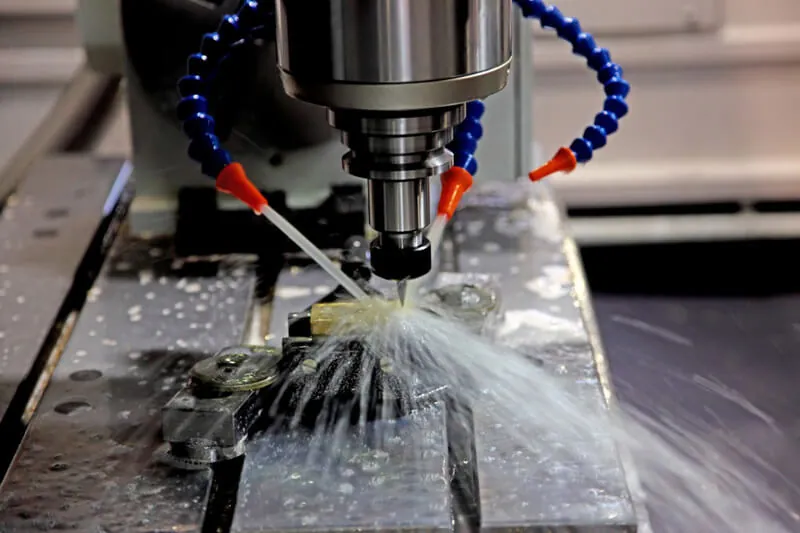
Wuxi Lead Precision Machinery delivers advanced technical capabilities in precision CNC machining, engineered to meet the rigorous demands of high-performance industries such as aerospace, medical, automotive, and industrial automation. At the core of our manufacturing excellence is a fully integrated fleet of 5-axis CNC machining centers, enabling the production of highly complex geometries with superior accuracy and surface finish. These state-of-the-art machines allow for simultaneous multi-axis movement, reducing the need for multiple setups and minimizing cumulative error, which translates into tighter tolerances and faster turnaround times.
Our 5-axis platforms are equipped with high-speed spindles, dynamic tool compensation, and real-time monitoring systems, ensuring consistent material removal rates and dimensional stability across both prototyping and high-volume production runs. The flexibility of 5-axis technology supports intricate contouring, deep cavity machining, and undercuts that are unattainable with conventional 3-axis systems. This capability is particularly critical for components requiring organic shapes or internal features, such as turbine blades, implantable medical devices, and fluid dynamics manifolds.
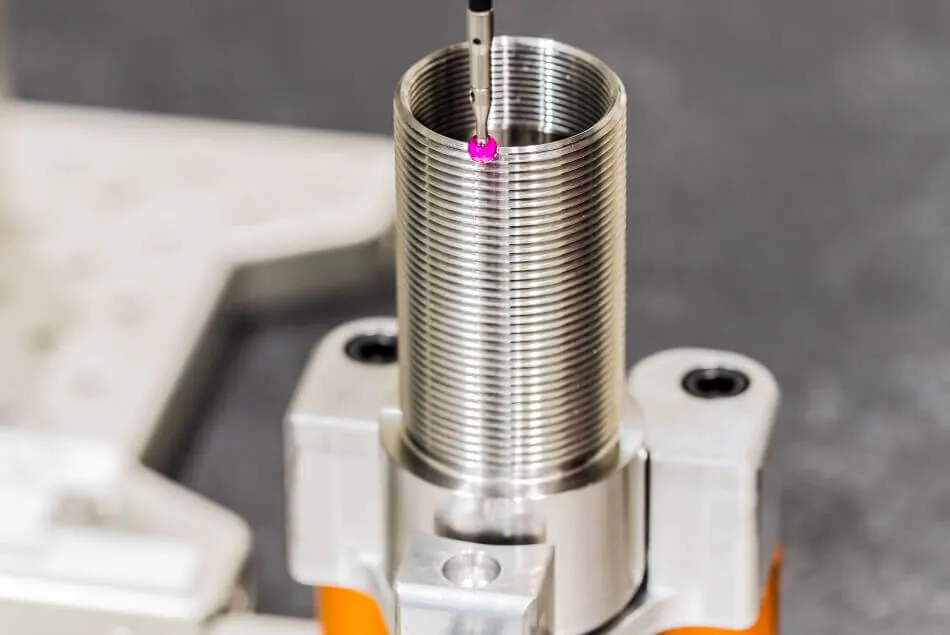
To maintain the highest level of quality assurance, every production batch undergoes comprehensive inspection using a Coordinate Measuring Machine (CMM). Our CMM system is calibrated to international standards and operated by certified metrology technicians. It provides full 3D validation of part geometry, verifying critical dimensions, positional accuracy, flatness, roundness, and profile tolerances. Data from each inspection is documented and traceable, ensuring full compliance with ISO 9001 and customer-specific quality requirements.
Material versatility is another cornerstone of our technical offering. We routinely machine a wide range of metals and engineering plastics, including aluminum alloys (6061, 7075), stainless steels (303, 304, 316), titanium (Grade 5), brass, copper, and high-performance polymers such as PEEK and PTFE. Our tooling strategies are optimized for each material group, ensuring minimal thermal deformation and maximum tool life.
The following table outlines typical machining tolerances achievable under standard production conditions:
| Feature | Standard Tolerance | Precision Capability | Notes |
|---|---|---|---|
| Linear Dimensions | ±0.025 mm | ±0.005 mm | Depending on part size and geometry |
| Hole Diameter | ±0.01 mm | ±0.005 mm | Reamed or honed features |
| Positional Tolerance | ±0.02 mm | ±0.01 mm | GD&T controlled |
| Surface Roughness (Ra) | 3.2 μm | 0.8 μm | As machined; polish available |
| Angular Tolerance | ±0.1° | ±0.05° | Critical for multi-face components |
| Flatness | 0.02 mm per 100 mm | 0.01 mm per 100 mm | Verified via CMM and optical flat |
These specifications reflect our commitment to precision, repeatability, and process control. By combining advanced 5-axis CNC technology with rigorous quality validation, Wuxi Lead Precision Machinery ensures that every component meets or exceeds functional and regulatory expectations.
Material & Finish Options

Material Selection for Precision CNC Machining: Aluminum, Steel, Titanium & Anodizing
Selecting the optimal material is fundamental to achieving performance, cost-efficiency, and longevity in precision CNC machined components. At Wuxi Lead Precision Machinery, we understand that material choice directly impacts machinability, part functionality, and final finish requirements. This guide outlines key considerations for aluminum, steel, and titanium, alongside essential anodizing processes.
Aluminum alloys, particularly 6061-T6 and 7075-T6, dominate aerospace, automotive, and electronics due to their exceptional strength-to-weight ratio, inherent corrosion resistance, and superior thermal conductivity. Aluminum machines rapidly with excellent surface finishes, significantly reducing cycle times and costs. Its lower density minimizes part weight, crucial for dynamic applications. However, pure aluminum lacks the strength needed for high-stress components, necessitating strategic alloy selection. Aluminum is the default choice for prototypes and production when weight savings and thermal management are paramount.
Carbon and alloy steels, including 4140, 4340, and 300-series stainless steels, provide unmatched strength, hardness, and wear resistance. They are indispensable for structural components, tooling, shafts, and applications demanding high load-bearing capacity or extreme durability. While machining steel requires more robust tooling and slower speeds than aluminum, leading to higher production costs, its mechanical properties are often non-negotiable. Stainless steels add critical corrosion resistance for medical, food processing, and marine environments. Steel selection balances required strength, environmental exposure, and budget constraints.
Titanium alloys, primarily Grade 5 (Ti-6Al-4V), offer an extraordinary combination of high strength-to-weight ratio, exceptional corrosion resistance (especially in saline environments), and biocompatibility. These properties make titanium essential for aerospace critical parts, medical implants, and high-performance motorsports. However, titanium presents significant machining challenges: low thermal conductivity causes heat buildup, high chemical reactivity risks galling, and its strength accelerates tool wear. This necessitates specialized tooling, precise parameters, and experienced operators, resulting in substantially higher machining costs compared to aluminum or steel. Titanium is justified only when its unique properties are essential.
Material properties critically influence machining strategy and cost. The following table summarizes key characteristics:
| Material | Typical Density (g/cm³) | Tensile Strength (MPa) | Machinability Rating | Key Thermal Property |
|---|---|---|---|---|
| Aluminum 6061-T6 | 2.7 | 310 | Excellent (100%) | High Conductivity |
| Steel 4140 | 7.85 | 655 | Good (65%) | Moderate Conductivity |
| Stainless 304 | 8.0 | 515 | Fair (45%) | Low Conductivity |
| Titanium Ti-6Al-4V | 4.43 | 900 | Poor (20-30%) | Very Low Conductivity |
Anodizing is the primary surface finish for aluminum components, enhancing corrosion resistance, wear resistance, and providing an excellent base for adhesion or aesthetic coloration. Type II (Sulfuric Acid) Anodizing creates a standard decorative and protective layer, typically 5-25 microns thick, suitable for most general applications. Type III (Hardcoat) Anodizing produces a much thicker (25-100+ microns), denser, and significantly harder surface, essential for parts subjected to severe abrasion or requiring electrical insulation. Proper pre-treatment and process control are vital for consistent, high-quality results.
Material selection is not merely a technical decision but a strategic one impacting total project economics. Partner with Wuxi Lead Precision Machinery. Our engineering team collaborates closely with clients to analyze application demands, optimize material choice, and implement precise machining and finishing protocols—ensuring your components meet the highest standards of performance and value. Let us translate your material requirements into manufactured excellence.
Manufacturing Process & QC

Design: The Foundation of Precision
At Wuxi Lead Precision Machinery, every successful production cycle begins with meticulous design engineering. Our team of CNC specialists and mechanical engineers collaborates closely with clients to transform conceptual ideas into technically viable, manufacturable designs. Utilizing advanced CAD/CAM software such as SolidWorks, AutoCAD, and Mastercam, we ensure dimensional accuracy, material compatibility, and optimal toolpath generation from the earliest stages. Finite element analysis (FEA) and design for manufacturability (DFM) reviews are conducted rigorously to preempt potential flaws. This proactive approach eliminates costly revisions later in production and ensures that every design is not only functional but also optimized for high-precision CNC machining. All design data is version-controlled and stored securely, enabling full traceability throughout the product lifecycle.
Prototyping: Validating Performance and Precision
Once the design is finalized, we move into the prototyping phase—a critical step in achieving zero defects. Using our state-of-the-art 3-, 4-, and 5-axis CNC machining centers, we produce fully functional prototypes that mirror the final product in both form and function. These prototypes undergo comprehensive inspection using coordinate measuring machines (CMM), optical comparators, and surface roughness testers to verify conformance to tolerances as tight as ±0.005 mm. We conduct fit, function, and environmental testing when required, ensuring the part performs under real-world conditions. Client feedback is integrated swiftly, and iterative refinements are executed with minimal lead time. This phase not only validates the design but also certifies the machining process, tooling setup, and quality control protocols before scaling to mass production.
Mass Production: Consistency at Scale with Zero Defects
With design and prototype approval, Wuxi Lead initiates mass production under a fully documented and controlled manufacturing plan. Our production floor operates under ISO 9001-certified quality management systems, with real-time monitoring of machine performance, tool wear, and environmental conditions. Each component is machined using calibrated tools and fixtures, with in-process inspections at critical stages to maintain dimensional integrity. Statistical process control (SPC) is employed to detect trends and correct deviations before they affect output quality. Final inspection includes 100% visual checks and random sampling based on ANSI/ASQ Z1.4 standards. The result is a high-volume output that maintains the same precision as the original prototype—zero defects, every time.
CNC Machining Capabilities at Wuxi Lead Precision Machinery
| Specification | Detail |
|---|---|
| Machine Types | 3-axis, 4-axis, 5-axis CNC machining centers |
| Maximum Work Envelope | 1200 × 800 × 600 mm |
| Tolerance Capability | ±0.005 mm |
| Surface Finish | As low as Ra 0.4 µm |
| Materials Processed | Aluminum, Stainless Steel, Titanium, Brass, Engineering Plastics |
| Quality Standards | ISO 9001:2015, ISO 14001, RoHS compliant |
| Production Capacity | Up to 50,000 units/month (depending on complexity) |
From design to delivery, Wuxi Lead Precision Machinery ensures that affordability never compromises precision or quality. Our integrated process delivers best-in-class CNC solutions for global industries including aerospace, medical, and automation.
Why Choose Wuxi Lead Precision
Partner with Lead Precision for Sustainable Manufacturing Excellence
At Wuxi Lead Precision Machinery, we redefine “affordable” in CNC machining by eliminating the false economy of low-cost, high-maintenance machines. True affordability lies in sustained precision, minimal downtime, and rapid return on investment—not initial purchase price. Our engineering-driven approach ensures every machine delivers uncompromised accuracy across 20,000+ operational hours, directly reducing your cost-per-part and safeguarding production continuity. For global manufacturers facing volatile supply chains and tightening tolerances, partnering with Lead Precision means investing in resilience.
We engineer CNC solutions for operational longevity, integrating FANUC or Mitsubishi control systems with hardened cast-iron bases and thermal-compensation technology. This foundation enables consistent ±0.002mm positioning accuracy—critical for aerospace, medical, and automotive sectors where scrap rates directly impact profitability. Unlike budget alternatives, our machines undergo 72-hour continuous-load validation before shipment, guaranteeing readiness for 24/7 production environments. The table below illustrates how our core models transform precision into tangible cost savings:
| Model Series | Working Travel (X/Y/Z) | Spindle Speed (RPM) | Positioning Accuracy (ISO 230-2) | ROI Factor |
|---|---|---|---|---|
| LP-V Series | 850 x 500 x 500 mm | 12,000 | ±0.002 mm | 14 months |
| LP-H Series | 1,200 x 700 x 600 mm | 8,000 | ±0.003 mm | 11 months |
| LP-M Series | 600 x 400 x 400 mm | 15,000 | ±0.002 mm | 16 months |
ROI Factor reflects average payback period based on reduced scrap, energy efficiency, and 30% lower maintenance costs versus industry benchmarks. These metrics are not theoretical—they are validated by our clients at Siemens, Bosch, and tier-1 automotive suppliers.
Your production challenges demand more than equipment; they require a technical partnership. Our application engineers collaborate with your team to optimize machining strategies, tooling integration, and workflow sequencing—ensuring your Lead Precision machine operates at peak efficiency from day one. We provide comprehensive lifecycle support: remote diagnostics, ISO-certified calibration services, and spare parts delivery within 72 hours globally. This commitment minimizes unplanned downtime, a critical factor when machine idleness costs exceed $1,000 per hour in high-mix production.
Do not compromise precision for short-term savings. Contact us today to receive a machine suitability analysis tailored to your specific components, materials, and volume requirements. Email [email protected] with your part specifications and production targets. Within 24 hours, our engineering team will respond with a detailed proposal including cycle-time simulations, TCO projections, and a no-obligation factory acceptance test schedule. Let Lead Precision prove how true affordability is measured in decades of flawless operation—not initial cost. Partner with us to build competitive advantage, one micron-perfect part at a time.
⚙️ Precision Cost Estimator
Estimate relative manufacturing effort based on tolerance.